
Válvula Gaveta: Tipos, Dimensionamento e Como Especificar para o Seu Projeto
Um guia completo sobre válvulas gaveta: haste ascendente vs haste não ascendente, cunha vs faca paralela, materiais (latão, ferro fundido, ferro dúctil, aço inoxidável), dimensionamento de DN15 a DN600, classes de pressão (PN10-PN25, Classe 150-300), conexões de extremidade e como especificar uma para o seu projeto.
Válvula Gaveta: Tipos, Dimensionamento e Como Especificar para o Seu Projeto
Principais Conclusões
- Uma válvula gaveta usa uma cunha ascendente ou deslizante para iniciar ou interromper o fluxo; não é projetada para estrangulamento.
- Especifique o material do corpo conforme o tipo de fluido, temperatura e pressão: latão para água potável, ferro fundido para serviço geral, ferro dúctil para pressões mais altas, aço inoxidável para meios corrosivos.
- As dimensões face a face são regidas pela DIN 3352 (válvulas PN), API 600 (válvulas gaveta de aço) e BS 5163 (válvulas gaveta de ferro fundido). Sempre confirme a norma antes de encomendar substituições.
- PN16 é uma classe de pressão padrão frequente em licitações de distribuição de água em muitos mercados africanos e do Oriente Médio (sempre confirme a especificação do consultor por projeto); Classe 150 cobre a maioria das aplicações gerais de óleo e gás.
- Em tamanhos maiores, as válvulas gaveta são geralmente a opção de isolamento mais econômica em comparação com as válvulas esfera; a diferença exata de preço depende do diâmetro, classe de pressão e fornecedor, então confirme com as cotações do seu projeto. Isso as mantém como a escolha preferida de isolamento para linhas de água e efluentes de grande diâmetro.
O que é uma Válvula Gaveta?
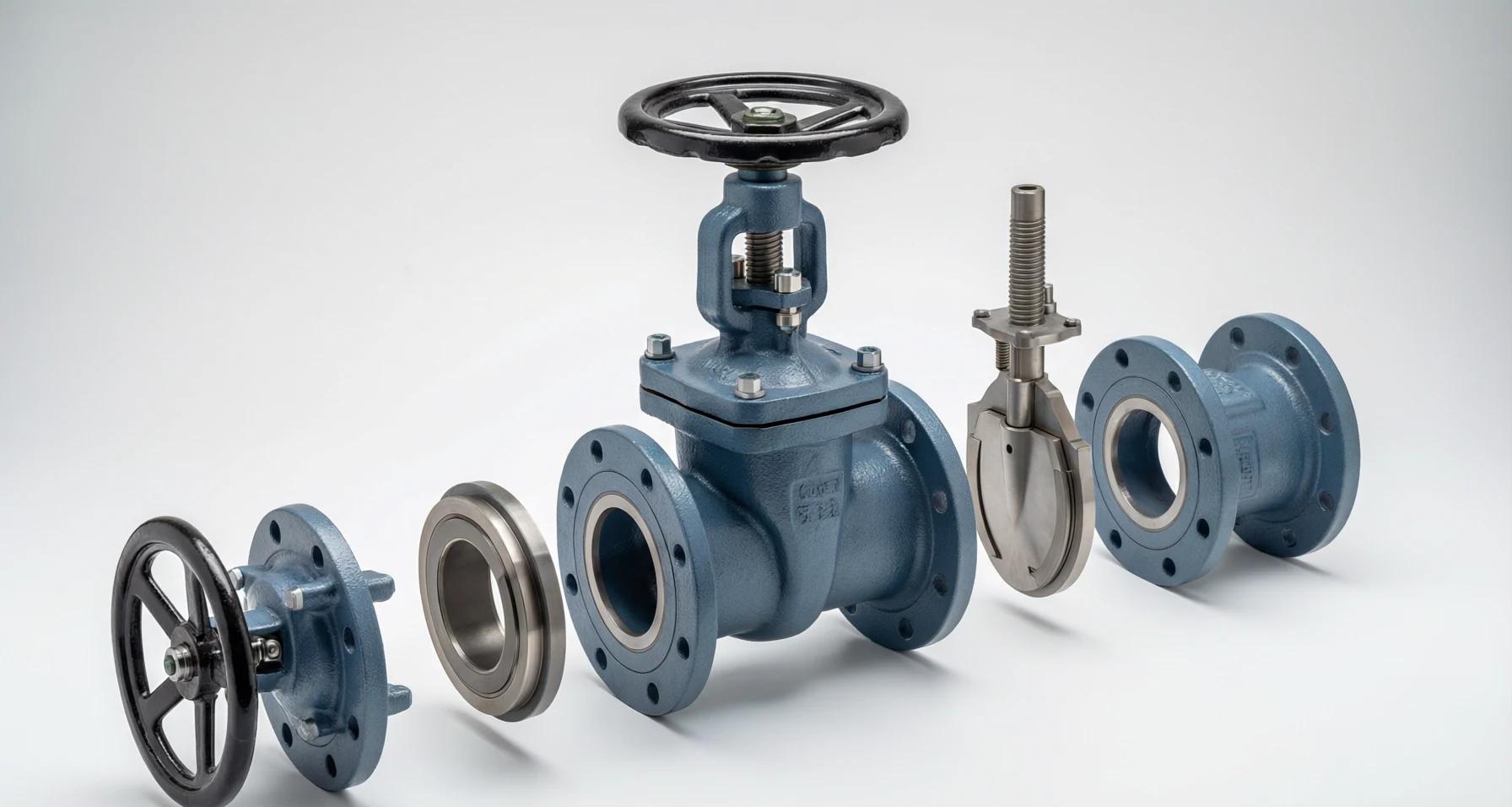
Uma válvula gaveta é uma válvula de movimento linear projetada para iniciar ou interromper o fluxo de fluido com restrição mínima. Dentro do corpo da válvula, uma gaveta plana ou em forma de cunha se move perpendicularmente ao caminho do fluxo. Quando totalmente aberta, a gaveta se retrai completamente para dentro do castelo, e o furo fica desobstruído, produzindo uma queda de pressão muito baixa através da válvula. Quando totalmente fechada, a gaveta assenta contra duas superfícies de sede paralelas ou anguladas, criando um fechamento estanque.
Válvulas gaveta são usadas em quase todos os sistemas de tubulação industrial e municipal. Você as encontrará em linhas principais de transmissão de água, colunas de proteção contra incêndio, circuitos de água de resfriamento, linhas de óleo combustível e tubulações de processo em plantas químicas. A válvula não é destinada a estrangulamento. Operar uma válvula gaveta em posição parcialmente aberta causa erosão da sede e da gaveta, levando a vazamento prematuro.
O design é regido por várias normas internacionais, dependendo do material e serviço: API 600 cobre válvulas gaveta de aço com extremidades flangeadas ou de solda de topo para uso nas indústrias de petróleo e gás. BS 5163 cobre válvulas gaveta de ferro fundido para aplicações de água. EN 1074 aborda válvulas gaveta de ferro para abastecimento de água na Europa. DIN 3352 define dimensões face a face e testes para válvulas gaveta com classificação PN. API 602 cobre válvulas gaveta compactas de aço (tipicamente com extremidades de solda de soquete ou roscadas) para tamanhos DN15 a DN50.
Tipos de Válvulas Gaveta
As válvulas gaveta são classificadas de várias maneiras: pelo movimento da haste, pelo design do castelo e pela forma da gaveta. Cada combinação atende a diferentes condições de instalação e serviço.
Haste Ascendente (OS&Y) vs. Haste Não Ascendente (NRS)
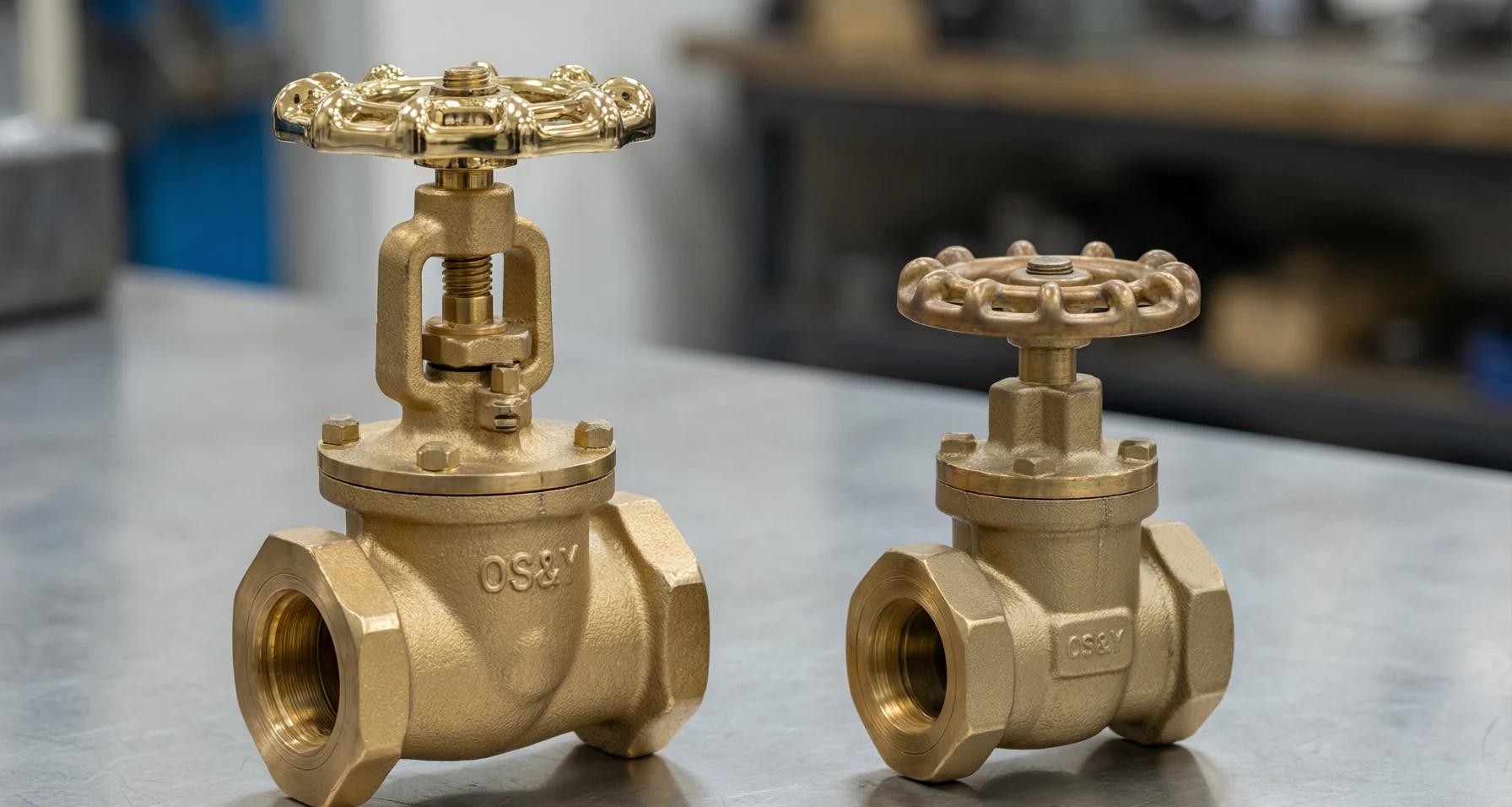
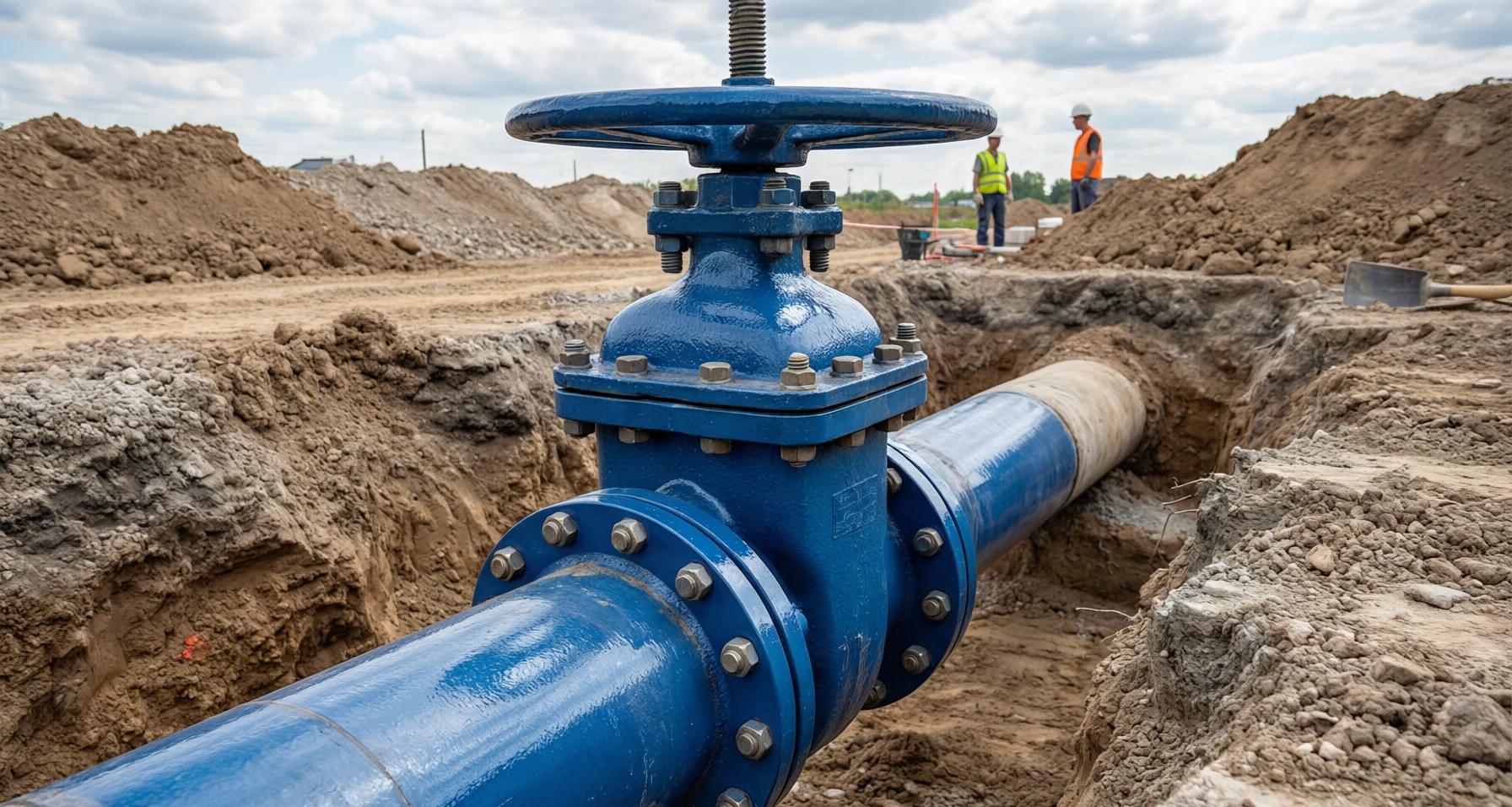
Em uma válvula gaveta de haste ascendente, também chamada de válvula de parafuso externo e jugo (OS&Y), as roscas da haste estão localizadas fora do corpo da válvula, no jugo. Conforme o volante gira, a haste sobe acima do volante quando a válvula abre. Isso dá uma indicação visual clara da posição da válvula à distância, o que é crítico em sistemas de proteção contra incêndio e plantas de processo onde os operadores devem confirmar o status da linha de relance.
Em uma válvula gaveta de haste não ascendente (NRS), as roscas da haste estão dentro do corpo da válvula, em contato com o fluido. O volante e a haste giram juntos, e a gaveta se move para cima ou para baixo nas roscas internas. A haste não sobe. As válvulas NRS são preferidas onde o espaço vertical é limitado, como em instalações subterrâneas, câmaras de válvulas e poços abaixo do nível do solo. A desvantagem é que você não pode confirmar visualmente a posição pela haste.
Gaveta em Cunha vs. Gaveta Paralela Deslizante
Uma válvula gaveta de cunhausa uma cunha cônica que se encaixa entre duas superfícies de sede anguladas. A cunha se aperta firmemente nas sedes quando a válvula fecha, o que produz fechamento confiável mesmo em baixa pressão diferencial. As cunhas vêm em três variantes: cunha sólida (peça única, mais comum), cunha flexível (peça única com um corte ao redor do perímetro que permite leve flexão para compensar desalinhamento da sede) e cunha dividida (duas peças que se ajustam automaticamente às superfícies da sede).
Uma válvula gaveta de deslizamento paralelo usa uma gaveta plana que desliza entre duas superfícies de sede paralelas. O fechamento é obtido pela pressão da linha empurrando a gaveta contra a sede a jusante. Válvulas de deslizamento paralelo são comuns em sistemas de água de baixa pressão e são o projeto padrão sob a norma BS 5163 para serviço de água potável. Elas exigem menos torque de operação do que válvulas de cunha em tamanhos maiores.
Materiais: Quando Especificar Latão, Ferro Fundido, Ferro Dúctil ou Aço Inoxidável
O material do corpo e da tampa determina a faixa de pressão-temperatura da válvula, resistência à corrosão e custo. Aqui está um guia prático de seleção baseado em condições comuns de projeto.
| Material | Faixa de Pressão | Faixa de Temperatura | Melhor Para | Evitar Quando |
|---|---|---|---|---|
| Latão C37700 / CZ122 | PN20-PN25 | -20 °C a +150 °C | Água potável, abastecimento doméstico quente e frio, ar comprimido | Água do mar, amônia, água com alto teor de cloreto, vapor acima de 150 °C |
| Ferro Fundido (GG25 / A126 Cl. B) | PN10-PN16 | -10 °C a +120 °C | Água municipal, irrigação, água industrial geral, drenagem | Vapor de alta pressão, serviço com golpe de aríete, zonas sísmicas (frágil) |
| Ferro Dúctil (GGG40 / A536 65-45-12) | PN16-PN25 | -10 °C a +150 °C | Adutoras de água de maior pressão, proteção contra incêndio, águas residuais, petróleo e gás | Ácidos fortes, água do mar não diluída sem revestimento |
| Aço Inoxidável (CF8 / CF8M / 304 / 316) | PN16-Classe 150 a Classe 300 | -40 °C a +400 °C | Processos químicos, água do mar, alimentos e bebidas, farmacêutico, água de alta pureza | Projetos sensíveis a custo onde aço carbono ou ferro são suficientes |
Nota de compra: Para projetos na África Ocidental (Gana, Nigéria, Camarões) e África Oriental (Quênia, Tanzânia), válvulas gaveta de ferro dúctil com revestimento epóxi (mínimo 250 micrômetros DFT) são a especificação mais comum em licitações de concessionárias de água. Válvulas gaveta de latão nos tamanhos DN15-DN50 dominam o mercado de construção civil e encanamento doméstico. Sempre confirme que o certificado de material do corpo da válvula atende à EN 1074-1 ou BS 5163, conforme exigido pela especificação do engenheiro consultor.
Dimensionamento e Classes de Pressão de Válvulas Gaveta
Válvulas gaveta estão disponíveis de DN15 (½”) até DN600 (24”), e tamanhos maiores estão disponíveis para grandes projetos de transmissão. Os tamanhos mais comumente estocados para serviços de construção e distribuição de água são DN15 a DN300.
As classes de pressão seguem duas convenções de nomenclatura, e as duas não são diretamente conversíveis. O sistema PN (usado na Europa, África e Oriente Médio) marca uma pressão nominal em bar à temperatura ambiente: PN10 (10 bar), PN16 (16 bar), PN25 (25 bar). O sistema Classe ASME B16.5 (usado nas Américas e em petróleo e gás globalmente) funciona de forma diferente: designações como Classe 150 e Classe 300 são classificações de pressão-temperatura, não valores fixos em bar. A pressão de trabalho admissível depende do grupo de material da válvula e da temperatura de operação; uma válvula de aço carbono Classe 150, por exemplo, é classificada para cerca de 19,6 bar à temperatura ambiente, mas essa classificação cai à medida que a temperatura sobe. Como os dois sistemas classificam válvulas de maneiras diferentes, um valor PN não pode simplesmente ser trocado por um valor Classe; sempre especifique a designação completa que a classe de tubulação do projeto exige.
A tabela abaixo mostra tamanhos comuns com dimensões face a face conforme DIN 3352 (para válvulas PN) e pesos aproximados. Esses valores são representativos; sempre confirme as dimensões exatas com a ficha técnica do fabricante antes de pedir.
| Tamanho (DN) | Tamanho (polegadas) | Face a Face (mm) DIN 3352 | Peso Aprox. (kg) | Cv (aprox.) |
|---|---|---|---|---|
| DN15 | ½” | 130 | 1,2 | 12 |
| DN20 | ¾” | 150 | 1,6 | 22 |
| DN25 | 1” | 160 | 2,1 | 36 |
| DN32 | 1¼” | 180 | 3,0 | 58 |
| DN40 | 1½” | 200 | 3,8 | 75 |
| DN50 | 2” | 250 | 5,5 | 120 |
| DN65 | 2½” | 265 | 8,2 | 195 |
| DN80 | 3” | 280 | 11,5 | 270 |
| DN100 | 4” | 300 | 17,0 | 440 |
| DN150 | 6” | 350 | 38,0 | 1.000 |
| DN200 | 8” | 400 | 65,0 | 1.800 |
| DN250 | 10” | 450 | 105,0 | 2.800 |
| DN300 | 12” | 500 | 155,0 | 4.100 |
Nota: Os pesos mostrados são para válvulas gaveta de ferro dúctil, com extremidades flangeadas, PN16. Válvulas de latão, ferro fundido e aço diferem. Os valores de Cv assumem posição totalmente aberta.
Conexões de Extremidade: Rosqueadas, Flangeadas e Soldadas
A conexão de extremidade deve corresponder ao sistema de tubulação. Três tipos dominam o mercado.
Extremidades rosqueadas (BSP ou NPT). Válvulas gaveta de pequeno diâmetro (DN15-DN50) são comumente fornecidas com extremidades rosqueadas. Roscas BSP (British Standard Pipe) são padrão no Reino Unido, África, Oriente Médio e na maioria dos países da Commonwealth. Roscas NPT (National Pipe Taper) são padrão na América do Norte e em partes da América Latina. Válvulas rosqueadas são rápidas de instalar e não requerem solda. Sempre use selante de rosca ou fita PTFE em conexões NPT; conexões BSP dependem da conicidade ou de um selo adesivo.
Extremidades flangeadas. Válvulas gaveta a partir de DN50 são quase sempre flangeadas. A furação do flange segue EN 1092-2 (válvulas de ferro) ou ASME B16.1 / B16.5 (válvulas de aço). Válvulas flangeadas são aparafusadas diretamente entre flanges de tubo com uma junta no meio, o que facilita a remoção para manutenção. Para projetos na África, confirme se o consultor especifica flanges DIN/EN ou flanges ASME, pois ambos estão em uso e não são intercambiáveis.
Extremidades para solda de topo. Válvulas gaveta de aço conforme API 600 são fornecidas com extremidades para solda de topo para instalação permanente em tubulações de alta pressão ou alta temperatura. Válvulas com extremidades soldadas eliminam possíveis caminhos de vazamento na junção corpo-tubo. São padrão em petróleo e gás, geração de energia e serviço de vapor de alta pressão.
Válvula Gaveta vs. Válvula Esfera: Qual Especificar
Esta é uma das perguntas mais comuns dos especificadores de projeto. Ambas as válvulas fornecem isolamento liga/desliga, mas diferem em design, custo e características de desempenho.
Uma válvula esfera usa uma esfera rotativa com um furo. Um quarto de volta (90 graus) move a válvula de totalmente aberta para totalmente fechada. Válvulas esfera proporcionam fechamento rápido e são naturalmente adequadas para estrangulamento em designs com porta em V. São compactas, leves e geralmente menos caras em tamanhos pequenos (DN15-DN50).
Uma válvula gaveta usa um movimento linear da gaveta e requer múltiplas voltas do volante para operar. Proporciona menor perda de carga quando totalmente aberta, pois o furo é reto e sem obstrução. Em tamanhos acima de DN150, válvulas gaveta são geralmente a opção de isolamento mais econômica em comparação com válvulas esfera de passagem total, embora a diferença exata de preço dependa do diâmetro, classe de pressão e fornecedor, devendo ser confirmada com cotações do projeto. É por isso que concessionárias de água e engenheiros civis usam válvulas gaveta por padrão em adutoras de grande diâmetro.
| Característica | Válvula Gaveta | Válvula Esfera |
|---|---|---|
| Operação | Multivoltas (linear) | Quarto de volta |
| Perda de carga (totalmente aberta) | Muito baixa | Baixa (passagem reduzida) a muito baixa (passagem total) |
| Estrangulamento | Não recomendado | Aceitável (porta em V) |
| Custo em DN200+ | Menor | Maior (passagem total) |
| Requisito de espaço | Face a face mais longo | Compacto |
| Padrão típico | API 600, BS 5163, EN 1074 | API 608, API 6D, EN 1171 |
Regra prática para especificadores: Use válvulas gaveta para isolamento em linhas de grande diâmetro de água, esgoto e serviços gerais onde a perda de carga importa e o espaço permite. Use válvulas esfera para isolamento de pequeno diâmetro em instrumentação, fechamento rápido e aplicações onde é necessário estrangulamento.
Aplicações por Indústria
Abastecimento municipal de água. Válvulas gaveta são a válvula de isolamento padrão para adutoras e redes de distribuição de água. Válvulas gaveta de ferro dúctil conforme EN 1074-1 com revestimento epóxi fundido (FBE) são especificadas pela maioria das concessionárias de água em todo o mundo. Tamanhos DN100-DN600 são comuns em adutoras tronco.
Proteção contra incêndio. Válvulas gaveta OS&Y são exigidas pela NFPA 13 e NFPA 24 em colunas de sistemas de proteção contra incêndio e redes subterrâneas de água para incêndio. A haste ascendente fornece confirmação visual de que a válvula está aberta, um requisito de código para serviço de incêndio.
Serviços prediais e hidráulica. Válvulas gaveta de latão em DN15-DN50 são usadas para isolamento de água doméstica em edifícios comerciais, hospitais e torres residenciais. Corpos de latão forjado conforme EN 1254-4 ou equivalente são padrão.
Petróleo e gás / petroquímico. Válvulas gaveta de aço API 600 em aço carbono (WCB) ou aço inoxidável (CF8M) são usadas em linhas de processo, tubulações de cabeça de poço e manifolds de parque de tanques. Classes 150 e 300 são as classificações de pressão mais comuns.
Irrigação e agricultura. Válvulas gaveta de ferro fundido ou ferro dúctil em PN10 ou PN16 são usadas em estações de bombeamento, saídas de reservatórios e conexões de linhas principais em grandes esquemas de irrigação na África subsaariana.
Como Especificar uma Válvula Gaveta para Seu Projeto
Ao incluir uma válvula gaveta em uma especificação de projeto ou pedido de cotação, inclua os seguintes dados para evitar idas e vindas com fornecedores:
- Tipo de válvula:Haste ascendente (OS&Y) ou haste não ascendente (NRS); cunha ou disco paralelo.
- Material do corpo:Latão (C37700/CZ122), ferro fundido (GG25/A126 Cl.B), ferro dúctil (GGG40/A536) ou aço inoxidável (CF8/CF8M).
- Tamanho:Designação DN (ex.: DN100) ou equivalente em polegadas.
- Classe de pressão:PN10, PN16, PN25, Classe 150 ou Classe 300.
- Conexão de extremidade:Rosqueada (BSP ou NPT), flangeada (EN 1092-2 ou ASME B16.5) ou solda de topo.
- Norma de projeto:BS 5163, EN 1074, API 600 ou DIN 3352.
- Revestimento:Tipo de epóxi, espessura mínima de película seca (DFT) (ex.: 250 mícrons), cor se especificada.
- Testes:Teste de carcaça e teste de sede conforme a norma aplicável (ex.: EN 12266-1 para taxa de vazamento da sede A ou B).
- Quantidade:Informe a quantidade total e qualquer detalhamento por tamanho. Os fornecedores oferecem preços mais competitivos em pedidos consolidados.
- Certificação:Especifique se você precisa de certificado de material (EN 10204 3.1), teste testemunhado ou inspeção de terceiros (SGS, Bureau Veritas, Intertek).
A IFAN Group fabrica válvulas gaveta em latão, ferro fundido e ferro dúctil nos tamanhos DN15 a DN300, com mais de 3.000 SKUs em nossa linha de válvulas e conexões. Nossa fábrica em Zhuji, China, está em operação desde 1993, e exportamos para mais de 120 países, com forte presença na África Ocidental e Oriental. Fornecemos válvulas para projetos com rastreabilidade total de materiais e suporte de inspeção de terceiros.
Perguntas Frequentes
1. Qual é a diferença entre uma válvula gaveta e uma válvula globo?
Uma válvula gaveta move uma cunha perpendicularmente ao fluxo para iniciar ou interromper o fluxo, produzindo uma perda de pressão muito baixa quando aberta. Uma válvula globo move um plugue ou disco para baixo sobre um assento para restringir o fluxo, o que cria maior perda de pressão, mas permite estrangulamento preciso. Válvulas gaveta são usadas para isolamento; válvulas globo são usadas para regulação de fluxo. Elas servem a propósitos fundamentalmente diferentes em um sistema de tubulação.
2. Quanto tempo dura uma válvula gaveta?
Uma válvula gaveta devidamente especificada e instalada em serviço de água limpa pode proporcionar décadas de operação confiável. A vida útil exata varia amplamente e depende da química da água, frequência de ciclos e manutenção, portanto, quaisquer números de anos que você possa ver citados são regras práticas da experiência de campo, não garantias. Os principais modos de falha a observar são erosão do assento (devido a estrangulamento ou meios abrasivos), corrosão da haste e degradação da gaxeta. O ajuste regular da gaxeta e evitar operação parcialmente aberta prolongam a vida útil.
3. Uma válvula gaveta pode ser usada para estrangulamento?
Não. Válvulas gaveta são projetadas apenas para serviço totalmente aberto ou totalmente fechado. Operar uma válvula gaveta em posição parcialmente aberta causa vibração da cunha e dos assentos, levando à erosão por fio de desenho das superfícies de assentamento. Uma vez que os assentos são erodidos, a válvula não vedará firmemente quando fechada. Para aplicações de estrangulamento, especifique uma válvula globo, válvula borboleta ou válvula esfera com porta em V.
4. Qual é a quantidade mínima de pedido para válvulas gaveta de projeto?
A IFAN Group fornece válvulas gaveta para projetos de todos os tamanhos. Para válvulas gaveta padrão de latão (DN15-DN50), as quantidades mínimas de pedido típicas começam em 500 peças por tamanho. Para válvulas gaveta flangeadas de ferro dúctil e ferro fundido (DN50-DN300), os MOQs começam em 50-100 peças por tamanho, dependendo da especificação. Entre em contato com nossa equipe de vendas no WhatsApp em +86 173 6968 5997 com sua lista de tamanhos e especificação para receber uma cotação de projeto.
Precisa de Válvulas Gaveta para o Seu Próximo Projeto?
A IFAN Group fabrica válvulas gaveta de latão, ferro fundido e ferro dúctil desde 1993. Fornecemos DN15-DN300 para projetos na África, Oriente Médio e além. Envie-nos sua especificação e lista de quantidades para um preço competitivo de projeto.
Solicite uma Cotação de Válvula Gaveta Fale Conosco pelo WhatsAppRelated Briefings
uPVC Pressure Pipe Class B, C, D and E: What the BS 3505 Classes Mean in East and West African Tenders, and How They Map to PN

Importing PP-R Pipe to Tanzania: TBS PVoC, TZS 2344 and the TRA Levy Stack