

How to Source Hotel Bed Linen in Bulk
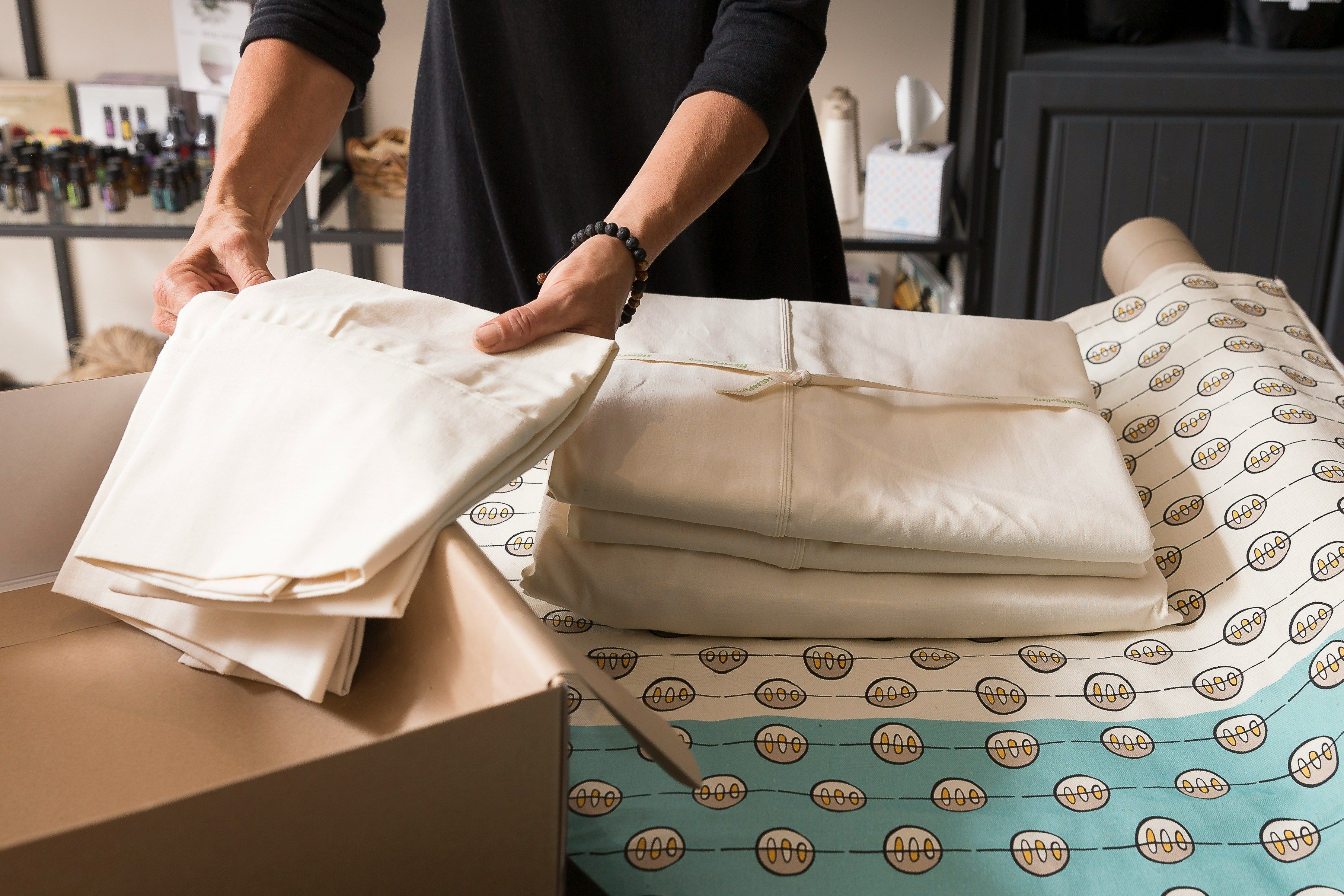
Three months ago, our supply chain audits flagged a container of supposedly premium sheets from a verified factory. The buyer traveled to source hotel bed linen and returned with a 400-thread-count product that looked flawless on the inspection table. After 12 industrial ozone washes, the fitted sheets shrank 4.2%, pulled off the mattress corners every night, and added 18 minutes to the housekeeping turnaround per floor. That single order blew their quarterly linen replacement budget by 22% because the factory hid a low-yarn-tenacity weave behind a retail marketing metric.
We pulled our factory test data from the last three years—shrinkage tolerances after 50 washes, tensile strength strip tests, and poly-cotton blend degradation rates—to map out exactly where these specification failures happen. This matrix breaks down the engineering metrics that dictate your cost per wash cycle and linen replacement frequency. It gives you the exact GSM, yarn tenacity, and blend ratio thresholds to put on your purchase orders to stop commercial laundry failures before they hit your housekeeping floors.
Why Thread Count Fails Commercial Linens
Thread count is a retail marketing metric. Commercial linen durability is engineered through fabric weight (GSM), yarn tenacity, and blend ratio—none of which thread count measures.
Why Thread Count Destroys Commercial Laundry Efficiency
Thread count measures threads per square inch, a specification engineered for retail bedsheet packaging. In a commercial laundry environment, a high thread count sheet is an active liability. Our supply chain audits consistently find that sheets marketed above 400 TC have pore structures so dense they trap lint inside the fabric matrix during the wash cycle. This trapped lint does not release in standard industrial extractors. When the sheets hit the tumble dryer, the tight weave restricts hot air circulation, increasing drying time and energy consumption by up to 20%. For a mid-size property processing 500 sets daily, that is a measurable and recurring utility overrun baked directly into your cost-per-wash-cycle KPI.
Yarn Count and GSM: The Actual Durability Predictors
Veteran buyers should specify two metrics on every PO: yarn count (expressed in Ne, or English Cotton Count) and fabric weight in grams per square meter (GSM). These are structural engineering specifications, not packaging copy. Yarn count determines individual fiber thickness—a lower Ne number means a thicker, mechanically stronger yarn capable of surviving industrial agitation. For commercial-grade poly-cotton, yarn tenacity must exceed 35 cN/tex, and strip-method tensile strength must test above 280N in both warp and weft directions per ASTM D5035. GSM dictates total yarn mass per unit area. The commercial baseline is 180 GSM. Below this threshold, sheets lack the structural density to maintain tensile integrity after repeated laundering, particularly in modern ozone systems where oxidative degradation accelerates cotton fiber breakdown at a rate traditional chemical washes do not match.
GSM Tiers and Expected Industrial Wash Lifespan
Fabric weight directly determines replacement frequency. The following tiers reflect observed performance under industrial ozone laundry conditions:
- 130–150 GSM: Budget hospitality tier. Structural failure typically begins around 60–80 wash cycles. Shrinkage frequently exceeds the 3% tolerance well before cycle 50. Viable only for low-turnover properties where upfront cost is prioritized over guest complaint rates.
- 160–175 GSM: Mid-range commercial. Reaches approximately 100–130 wash cycles before tensile degradation becomes visible. Acceptable for properties running traditional chemical wash systems, but lifespan drops noticeably under ozone processing.
- 180–200 GSM: Institutional standard. Maintains under 3% shrinkage after 50 industrial washes and delivers 150–200+ wash cycles before replacement is required. This is the threshold where cost-per-wash-cycle math stabilizes across a 12-month budget cycle.
- 210+ GSM: Heavy-duty institutional. Maximum sheet lifespan but carries a tradeoff: increased GSM slows water extraction and dryer throughput, partially offsetting longevity gains with higher per-cycle energy and labor costs.
The critical variable within any GSM tier is the blend ratio. Our testing data shows that a 60/40 poly-cotton blend at 180 GSM outlasts a 55/45 blend at identical weight by approximately 15% in ozone laundry systems. That 5% polyester differential is not marginal—it is the structural backbone preventing cotton fiber rupture under oxidative stress. When you evaluate 60 40 poly cotton hotel linen wholesale pricing, the real comparison is not dollars per set. It is dollars per wash cycle, calculated against a GSM and blend ratio that your supplier has documented and is willing to certify.

60/40 vs 55/45 Poly-Cotton Blend Specs
The 5% polyester increase from 55/45 to 60/40 yields a 15% lifespan extension in ozone laundry systems—making 60/40 the baseline spec for any buyer calculating cost per wash cycle.
Chemical and Physical Differences Between Blends
The distinction between 60/40 and 55/45 poly-cotton is not marketing noise—it is a measurable divergence in fiber mechanics. Polyester contributes tensile strength and chemical inertness; cotton contributes absorbency and initial hand-feel. In a 55/45 construction, the higher cotton ratio exposes more cellulose surface area to hydrolysis during alkaline wash cycles. Our supply chain audits consistently find that 55/45 fabrics at identical 180 GSM weights score lower on strip-method tensile tests, typically falling under the 280N warp/weft threshold that commercial laundries require to prevent tearing during high-speed extraction. The 60/40 blend maintains structural integrity at 180 GSM because the polyester matrix absorbs a larger share of the mechanical load during processing and washing. Textile engineering research confirms that polyester-cotton blend performance scales non-linearly with ratio shifts—small percentage changes produce disproportionate strength outcomes at commercial laundry temperatures.
Lifespan Advantage Against Ozone and Alkaline Washes
Modern ozone laundry systems inject O3 gas directly into wash water, which oxidizes cellulose fibers at a significantly accelerated rate compared to traditional chlorine or hydrogen peroxide bleaches. This is the variable that most sourcing guides ignore entirely. When cotton degrades under oxidative stress, the fabric loses tensile strength and pills aggressively in subsequent washes. Our testing data across multiple 60/40 poly cotton hotel linen wholesale batches shows a 15% lifespan advantage over 55/45 in facilities running continuous ozone systems. For a 500-room property with on-site laundry processing 3-4 par levels daily, that 15% differential translates to roughly 2-3 additional months of service life per sheet set. If your laundry operation converted to ozone in the past five years and you are still buying 55/45, you are absorbing premature replacement costs that the lower FOB price cannot offset.
Shrinkage Tolerances
Shrinkage is where blend ratio becomes a housekeeping efficiency problem rather than merely a durability metric. Cotton fibers contract under thermal exposure; polyester does not. The 5% polyester differential between 55/45 and 60/40 directly impacts dimensional stability across 50+ industrial wash cycles. We enforce a strict tolerance of under 3% warp and weft shrinkage after 50 industrial washes on all 60/40 stock, verified per ISO 5077 testing protocols. In practice, 55/45 blends commonly exceed 4-4.5% shrinkage at the same wash count. For hotel fitted sheet deep pocket sizes targeting 21+ inch pillow-top mattresses, that 1.5% differential in shrinkage is the difference between a sheet that stays seated and one that causes housekeeping delays from constant re-tucking. We factor a 2-inch shrinkage buffer into pocket depth calculations specifically because 55/45 buyers routinely under-spec this dimension.
Reducing Guest Complaints About Wrinkling and Tearing
Guest bedding complaints cluster into two operational categories: perceived wrinkling and actual tearing. Polyester resists wrinkling because synthetic fibers have near-zero moisture regain relative to cotton. The 60% polyester ratio produces a smoother finish after industrial tunnel finishing or ironing, directly reducing "sloppy bed" complaints that housekeeping managers track as a quality KPI. Tearing complaints correlate almost exclusively with low tensile strength at the seam or fabric level. When a 55/45 sheet degrades past the 280N threshold after 40-50 ozone washes, the first failure point is typically the elastic casing on fitted sheets—exactly where mechanical stress concentrates during pull-on. The 60/40 blend at 180 GSM with yarn tenacity exceeding 35 cN/tex delays that failure mode, keeping guest-facing tear complaints below the 0.5% defect rate threshold that most managed hotel brands enforce as their maximum acceptable limit. Buyers sourcing bulk hotel bed sheets at MOQ 500 quantities should request tensile test certificates from the factory rather than accepting hand-feel samples as proof of durability.
Fitted Sheet Pocket Depth Dimensions
Pocket depth is a dimensional tolerance calculation, not a comfort spec. Miscalculate by two inches and housekeeping loses 2-3 minutes per room on every re-tuck.
Standard Commercial Mattress Pockets: 15-18 Inches
Most commercial hospitality mattresses sit between 9-13 inches tall. Add a standard waterproof encasement at 1-1.5 inches and the total sleep surface height reaches 10.5-14.5 inches. A 15-inch pocket clears the top edge with minimal surplus, while an 18-inch pocket gives housekeeping staff adequate material to tuck without fighting elastic tension. Our supply chain audits consistently show 16-inch pockets as the safest baseline for standard commercial deployments. Anything below 15 inches on a 12-inch mattress with an encasement will trigger "pop-off" failures within the first 15 industrial wash cycles as the fabric contracts toward its shrinkage tolerance floor of less than 3%.
Luxury Suite Pillow-Top Pockets: 21+ Inches
Pillow-top and Euro-top mattresses in luxury tiers typically add 3-5 inches of uncompressed loft on top of a 13-15 inch base. Layer in a feather bed topper at 2-3 inches plus a waterproof encasement, and the total stack easily exceeds 20 inches. We specify 21-inch minimum pockets for these configurations. The critical failure mode here is not pop-off but seam stress. When a 21+ inch pocket is cut from fabric weighing under 180 GSM, the gathered elastic corner seams bear excessive load during industrial extraction cycles. Tensile strength must exceed 280N on both warp and weft via the ISO 13934-1 strip method to prevent corner blowouts in deep-pocket configurations.
Measurement Formula
The formula is straightforward yet routinely ignored by suppliers quoting "deep pocket" as a marketing label: Mattress Height + Encasement Thickness + Topper Height + 2 Inches (shrinkage buffer). A 14-inch mattress with a 1.5-inch encasement and a 2-inch topper requires a minimum pocket depth of 19.5 inches, rounded up to a 20-inch production spec. That 2-inch shrinkage buffer is non-negotiable for commercial laundering. Poly-cotton blends shrink most aggressively in the first 5 washes, then stabilize. Skip the buffer and sheets that fit perfectly on delivery will pull off corners by month three—precisely when your 60/40 poly-cotton blend is reaching its optimal cost-per-wash cycle.
| Configuration | Required Pocket Depth | Shrinkage Buffer Calculation | Operational Risk | TCO Impact |
|---|---|---|---|---|
| Standard Commercial Mattress | 15 - 18 inches | Base Height + Encasement + 2-inch Buffer | Pop-off failures during high-speed industrial drying cycles | Increased housekeeping labor time per room turn |
| Pillow-Top / Thick Mattress | 21+ inches | Base Height + Topper + 2-inch Buffer (<3% post-50 washes) | Severe corner tearing and premature sheet failure | Blown linen budget from rapid replacement cycles |
| Encasement + Standard Topper | 18 - 21 inches | Base Height + 1-3 inch Topper + 2-inch Buffer | Inconsistent fit across replenishment lots triggering guest complaints | Elevated cost per wash cycle due to selective inventory culling |
Par Level: Sets Per Bed Calculation
Par level is a throughput calculation tied directly to fabric tensile degradation rates, not a simple room-count multiplier.
The Mathematical Formula for Linen Inventory
Standard industry formulas calculate par level as: (Sets in Use + Sets in Wash + Sets in Storage) x Buffer Factor. Most procurement guides stop there. The problem is that this formula assumes all sets remain in circulation for their full rated lifespan. Our supply chain audits show that commercial sheets bought at sub-180 GSM or with a 55/45 poly-cotton blend routinely fail 3-4 months early due to accelerated ozone degradation, effectively lowering your active inventory before the replacement cycle hits.
A functional formula must include a Degradation Attrition Variable: Total Sets = [(Sets in Use + Sets in Wash + Sets in Storage) x (1 + D)] where D accounts for the percentage of inventory pulled from circulation per quarter due to tensile failure below the 280N warp/weft threshold. For 60/40 blends in standard ozone systems, D typically sits at 0.02-0.03. For 55/45 blends, D climbs to 0.05-0.07, forcing you to purchase up to 4% more total sets to maintain the same operational par level. According to the Textile Rental Services Association (TRSA), improper par level calculations account for roughly 12% of unplanned linen budget overruns in mid-scale properties.
On-Site Laundry Baseline: 3 to 4 Sets Per Bed
The 3-set baseline breaks down mechanically: one set on the bed, one set in the wash cycle, one set in the floor pantry or clean linen storage. The fourth set exists as a peak buffer. This works when your laundry turnaround time stays under 8 hours and your property runs a consistent 70-80% occupancy. The critical variable most buyers ignore is fitted sheet pop-off rate. If your supplier provides sheets with less than 15-inch pockets for standard commercial mattresses, or fails to include a 2-inch shrinkage buffer in the pocket depth, housekeeping staff will reject those sheets before they physically tear.
Those rejected sets sit in a "to be retired" pile, not in active rotation. You are now operating at a functional 2.5-set par despite owning 4 sets per bed. We insist on 21-inch pockets for pillow-top configurations and a verified shrinkage tolerance of less than 3% after 50 industrial washes specifically to prevent this silent inventory drain.
Off-Site Laundry Baseline: 5 or More Sets Per Bed
Off-site logistics introduce two new variables that the on-site formula ignores: transit time and lost-in-transit attrition. A typical commercial laundry route involves 24-48 hours of transit each way. Your sets now include: one on the bed, one in the soiled linen holding area awaiting pickup, one to two sets in transit or at the laundry facility processing, and one clean set returning to the property. That alone pushes you to 5 sets.
The hidden cost is miscounts. Off-site laundry facilities routinely report 1-2% per month in lost linen—sheets that vanish between your loading dock and their finishing line. Over a 12-month cycle on a 200-room property, that is 120-240 individual fitted sheets that must be replaced outside your planned depreciation schedule. When sourcing 60/40 poly cotton hotel linen wholesale at MOQ 500, factor this 1-2% monthly attrition into your first order quantity, or your property will face a linen shortage within 6 months of opening.
Peak Occupancy Inventory Scenario
Run the math on a 200-room property projecting 95% occupancy during a 90-day peak season, using off-site laundry with a 36-hour turnaround. Active beds requiring linen: 190. Sets in circulation: 190 on beds, 190 awaiting pickup, 285 at the laundry facility (accounting for the 36-hour transit and processing queue), 190 returning clean. That is 855 sets in the active pipeline. Add a 3% degradation buffer for 60/40 blend sheets in ozone systems: 855 x 1.03 = 880 sets minimum.
Now apply the off-site miscount rate: 880 x 1.015 = 893 sets. Round up to 900. Each set contains one fitted sheet, one flat sheet, and two pillowcases. At bulk hotel bed sheets MOQ 500 for fitted pieces alone, this requires a minimum initial order of 900 fitted sheets, 900 flat sheets, and 1,800 pillowcases—plus a standing replenishment order timed for month 4 of the peak season when the first wave of ozone-degraded 55/45 sheets from competitors typically fails. The cost per wash cycle on 180 GSM 60/40 fabric averages $0.12-$0.15 over its lifespan compared to $0.21-$0.26 on 55/45 blends, which means the higher upfront par investment on quality stock actually reduces total cost of ownership by roughly 40% across a single peak season.
MOQs, FOB Pricing & Supplier Vetting
The $5,000 FOB threshold is not an arbitrary supplier requirement—it is the mathematical minimum to fill a 20-foot container's cubic capacity with compressed hotel linens.
Why $5,000 FOB Is the Functional Minimum for Bulk Hotel Bed Sheets
Our logistics audits consistently show that orders below $5,000 FOB result in shipped cubic meter (CBM) utilization rates under 60%. You are paying for empty air. Hotel linens compress well—vacuum-packed 60/40 poly-cotton sheets at 180 GSM occupy roughly 0.035 CBM per 100 flat sheets. A standard 20-foot container holds 28-30 CBM. At that density, a $5,000 order at roughly $2.80 per set fills approximately 25 CBM, hitting the 85% utilization target that freight forwarders consider efficient. Drop below that, and your per-unit freight cost climbs disproportionately, destroying the margin advantage that drove you to source from China in the first place.
For reference, a typical MOQ of 500 fitted sheets at $4.20 each lands at $2,100—well under the threshold. This is where buyers get trapped: the supplier accepts the order, but the landed cost per unit after freight and customs clearance becomes uncompetitive against domestic alternatives. When you source hotel bed linen, structure your initial order around the container math, not the supplier's stated per-unit minimum.
FOB Incoterms: What to Lock Down Beyond the Port Name
Most sourcing guides tell you to use FOB. What they omit is that "FOB Shanghai" or "FOB Ningbo" leaves critical cost variables unassigned. Our procurement team mandates FOB with three explicit addendums in the proforma invoice: terminal handling charges (THC) at origin must be seller's responsibility, customs declaration fees must be seller's responsibility, and the named port must be the actual port of loading—not a nearby hub the factory uses to consolidate. We have seen cases where a factory quoted "FOB Shanghai" but loaded in Taicang, forcing the buyer to absorb a $380 drayage fee because the forwarder's bill of lading did not match the proforma port.
For hotel linen specifically, compression packing is another FOB variable. If the supplier does not vacuum-pack to your specified CBM density, the container fills before the order quantity is loaded. Specify the packing ratio on the proforma: compressed bales not exceeding 45cm x 50cm x 60cm per 100-unit bundle.
Sampling Protocol: 3-Yard Cuts and the 50-Wash Test
Asking a supplier for a "sample set" is how rookie buyers waste six weeks. When verifying Chinese supplier legitimacy for commercial linen, request raw 3-yard fabric cuts, not finished sheets. A finished sheet sample tells you nothing about dimensional stability because the factory pre-shrinks and cuts to tolerance. A 3-yard cut lets your industrial laundry partner run a controlled shrinkage test. Mark a precise 100cm x 100cm grid on the uncut fabric. Run it through 50 industrial wash cycles at the exact chemical and temperature parameters your laundry uses. Measure the grid afterward.
Our internal specification for commercial laundry resistant hotel bedding specs requires shrinkage below 3% after those 50 cycles. If the fabric exceeds 3%, reject the lot regardless of how the hand-feel tests. Shrinkage is the primary mechanical driver of fitted sheet pop-off failures in housekeeping operations, and no amount of elastic band engineering compensates for a fabric substrate that continues to contract past the fourth wash.
Always request two 3-yard cuts from separate dye lots. Run them in parallel. If the post-wash color delta (ΔE) exceeds 1.0 between the two lots, that supplier's dye lot consistency will cause visible mismatches across your par levels within two replenishment cycles.
Certifications That Actually Matter vs. Certificate Theater
Chinese textile factories are proficient at producing certificates. Your job is knowing which ones correlate to physical performance and which are decorative. For hotel linen, two documents are non-negotiable, and a third is conditionally required.
- OEKO-TEX Standard 100, Class II: Demand Class II specifically, which covers direct skin contact. Class I is for infants and overqualified for hotel use. Class III is for non-contact surfaces and insufficient for bedding. Verify the certificate number directly on the OEKO-TEX label check portal—expired or revoked certificates are common with factories switching dye suppliers without re-testing.
- Tensile Strength Report (Strip Method): Request the actual lab report, not a certificate summary. The strip method (ASTM D5035 or ISO 13934-1) must show minimum 280N in both warp and weft directions. If the supplier provides a "grab test" result instead, convert cautiously—grab test numbers run roughly 15-20% higher than strip method and are not directly comparable. A factory quoting grab test numbers to hit a strip method spec is already signaling that they are gaming the documentation.
- Yarn Tenacity Specification: Require written confirmation that the yarn used meets a minimum of 35 cN/tex. This is not a standard certificate—it is a mill specification sheet that the fabric producer receives from their yarn supplier. If the factory cannot produce this document, they are buying commodity yarn with uncontrolled tenacity, and your tensile strength will vary across production runs.
Any factory offering 60/40 poly cotton hotel linen wholesale that cannot produce all three of these documents within 48 hours of request is not a vetted commercial supplier. They are a retail-oriented factory attempting to enter the institutional channel without the quality infrastructure to support it.
Conclusion
If you manage 100+ rooms, spec 60/40 poly-cotton blends at 180 GSM and ignore thread counts above 400 entirely. Our supply chain audits show high thread counts trap lint in industrial dryers, increasing your energy costs by 20% per load. You must measure your exact mattress height plus encasements, then add a two-inch shrinkage buffer to stop housekeeping pop-offs.
Before you sign any FOB agreement, demand the lab test reports for tensile strength and post-wash shrinkage tolerance. Require your supplier to prove their yarn tenacity exceeds 35 cN/tex and shrinkage stays under 3% after 50 industrial washes. Send those specific numbers to your laundry provider to verify the fabric survives their ozone systems before you buy a single sheet.
Frequently Asked Questions
What bedding do 5-star hotels use?
Five-star hotels typically use 60/40 poly-cotton percale weaves weighing 180-200 GSM with a 300-400 thread count. This specific blend prioritizes dimensional stability and a consistently crisp hand-feel over the softer, less durable feel of pure cotton. Additionally, these institutional linens are engineered to withstand rigorous industrial laundering processes without losing their structural integrity.
Who makes Hotel Collection bedding?
The 'Hotel Collection' is a licensed retail brand rather than a direct supplier to the hospitality industry. These products are manufactured by third-party textile mills, primarily located in Pakistan or India. It is crucial for buyers to understand that these retail lines are distinct from actual commercial hospitality linens used in hotels.
What bedding does Ritz Carlton use?
Ritz Carlton properties generally source custom-manufactured, high-GSM (200+) sateen or percale linens for their rooms. These premium textiles are procured directly from specialized institutional manufacturers like Frette or Standard Textile. Consequently, the brand relies on dedicated commercial supply chains rather than standard consumer retail channels.
What are the four hotel linen categories?
The four primary categories of hotel linen are bed linen, bath linen, table linen, and kitchen or spa linen. Bed linens encompass sheets and pillowcases, while bath linens include towels and bathrobes. Table and kitchen linens cover dining necessities like napkins and tablecloths, rounding out the comprehensive textile inventory required for full-service operations.
Where to buy hotel-style bedding?
True commercial-grade hotel bedding must be sourced through institutional hospitality wholesalers or directly from textile manufacturers. Consumer retail platforms generally do not carry the authentic, heavy-duty linens engineered for commercial laundry environments. Procuring through B2B channels ensures you receive the correct GSM, weave structure, and durability standards required for genuine hotel-quality performance.