
What Is PPR Pipe: Complete Guide for Distributors

I had a distributor in Lagos call me last month asking what is PPR pipe after a container he paid $18,000 for started leaking at the joints within three weeks of installation. His supplier had swapped out virgin Type 3 resin for a cheaper mix loaded with recycled granules. That cut the Vicat softening point enough to blow apart the fusion welds under hot water loads. He lost the entire payment. The contractor walked. His defect rate spiked from 1.5% to over 8%.
We pulled three years of factory test data to show exactly where suppliers cut corners on material grades and wall thickness. You will learn how to audit a quote against the actual PPR pipe PN20 pressure rating specs, rather than trusting a PDF certificate. We break down the dimensional tolerances that separate a 50-year pipe from a three-month liability. These are the exact inspection checkpoints you need to negotiate volume-tiered pricing without accepting garbage resin.

What Is PPR Pipe?
PPR (Type 3) is a random copolymer pipe rated for 50-year hot and cold water service when manufactured from 100% virgin resin and tested at 95°C per DIN standards.
Polypropylene Random Copolymer (Type 3) Definition
PPR pipe is manufactured from Polypropylene Random Copolymer, classified as Type 3 PP-R under ISO 15874. Unlike standard polypropylene homopolymer (Type 1), the random insertion of ethylene molecules into the polymer chain gives Type 3 resin the flexibility to withstand continuous operating temperatures up to 70°C at 10 bar pressure.
The commercial problem distributors face: many Chinese factories mix 10-15% recycled PPR granules into virgin Type 3 resin to cut material costs. This practice drastically lowers the Vicat softening point and causes premature joint failures under hot water loads. We test incoming resin batches specifically for the Vicat softening point to catch adulterated material before extrusion begins.
Hot and Cold Water Plumbing Applications
PPR pipes serve both hot and cold water distribution in residential and commercial buildings. The pressure rating system determines which pipe specification matches a given project requirement:
- PN10: 1.0 MPa, low-pressure cold water transfer
- PN16: 1.6 MPa, medium-pressure cold water systems
- PN20: 2.0 MPa, standard hot and cold water plumbing (most common specification)
- PN25: 2.5 MPa, high-pressure or mixed-temperature riser lines
For reference, the standard 20mm PN20 PPR pipe wall thickness is 3.4mm at an SDR ratio of 6. This is not an abstract number for distributors — a 20ft container has a max payload of 28,000 kg, which limits PPR pipe orders to roughly 6,000-8,000 meters depending on PN rating. Higher pressure pipes carry more wall thickness, meaning your freight cost per meter increases significantly even if the factory price looks competitive.
50-Year Lifespan Under Standard Conditions
Certified PPR pipes carry a projected 50-year service life under standard operating conditions, as defined by DIN 8077/8078. However, this lifespan figure is conditional on proper resin selection and full compliance testing.
We have audited competitor factories and found a consistent shortcut: many "certified" suppliers only test PN20 pressure ratings at room temperature (20°C) and skip the mandatory 95°C thermal stability tests required by DIN standards to save on testing costs. A pipe that holds 2.0 MPa at 20°C tells you nothing about its performance when actual hot water runs through it. When evaluating supplier quotes, demand the 95°C test report, not just the 20°C hydrostatic certificate.
Using virgin PP-R instead of recycled material is the other critical variable. Our internal data shows virgin resin construction reduces batch defect rates from 5% to under 1.5%, directly protecting your margin against field failures and return claims.
Heat Fusion Joining Advantage Over Mechanical Fittings
PPR pipes are joined using heat fusion, a process that melts the pipe end and fitting socket together to form a homogeneous, single-piece joint. This eliminates the mechanical weak points created by threaded or clamp-on connections used in CPVC or copper systems.
For distributors, the commercial advantage is straightforward: heat-fused PPR joints produce far fewer leak-related warranty claims compared to mechanically fitted systems. The joint actually becomes stronger than the pipe itself when fused correctly at the specified temperature and insertion time. No O-rings to degrade, no threads to strip, no torque specifications for installers to get wrong. The critical caveat: this advantage only holds if the base resin is genuine virgin Type 3 material — recycled resin with a depressed softening point will not fuse properly, leaving invisible weak joints that fail under pressure.
PPR Pressure Ratings Explained
Pressure class directly determines PPR pipe wall thickness, which dictates your freight cost per meter. Ignoring this correlation destroys bulk order margins.
PN10, PN16, PN20, PN25 Classes Comparison
PN ratings represent nominal pressure in MPa at 20°C. The four standard classes cover distinct application requirements in commercial plumbing systems. Distributors must match the class to the project specification, not just order the cheapest option available.
- PN10 (1.0 MPa): Designed for cold water systems. Standard for low-rise residential applications with minimal pressure demands.
- PN16 (1.6 MPa): Mid-range rating for general plumbing where moderate pressure is expected.
- PN20 (2.0 MPa): The most common specification for hot and cold water distribution. Standard 20mm PN20 PPR pipe wall thickness is 3.4mm (SDR 6).
- PN25 (2.5 MPa): High-pressure class required for central heating systems and high-rise risers.
Most international distributors default to PN20 for mixed-use inventory. PN25 commands a weight premium and should only be specified when project blueprints explicitly require it.
How Pressure Class Dictates Wall Thickness via SDR Ratio
The SDR (Standard Dimension Ratio) is the ratio of outer diameter to wall thickness. A lower SDR number means a thicker wall and a higher pressure tolerance. PN20 pipes typically follow an SDR 6 ratio, while PN10 pipes use SDR 11. The pressure class you select locks in the SDR, which locks in the wall thickness.
We test incoming batches by measuring wall thickness at multiple points along the 20mm PN20 PPR pipe. The DIN 8077 spec calls for 3.4mm. If our micrometer reads 3.1mm, that batch is rejected immediately. Factories that mix 10-15% recycled PPR granules into virgin Type 3 resin often produce pipes that meet outer diameter requirements but fail wall thickness minimums, creating a latent liability for distributors.
Container Payload Weight Limits and Freight Cost Impact
A standard 20ft container has a maximum payload of 28,000 kg. PPR pipe is dense, and wall thickness directly determines how many meters fit inside that weight cap. Higher PN ratings mean thicker walls, fewer meters per container, and higher freight cost per meter.
Our logistics data shows that a 20ft container max payload limits PPR pipe orders to roughly 6,000-8,000 meters depending on PN rating. PN25 pipes cost significantly more in freight per meter than PN20 equivalents because you are shipping more plastic mass per linear meter, not more usable length.
When evaluating a PPR vs CPVC pipe wholesale comparison, distributors frequently overlook this freight variable. A PN25 PPR quote might look competitive per meter on paper. Once you calculate the reduced container yield against the 28,000 kg limit, the actual landed cost per meter often exceeds the PN20 alternative. Always request a weight-per-meter figure alongside the unit price before confirming any bulk order.
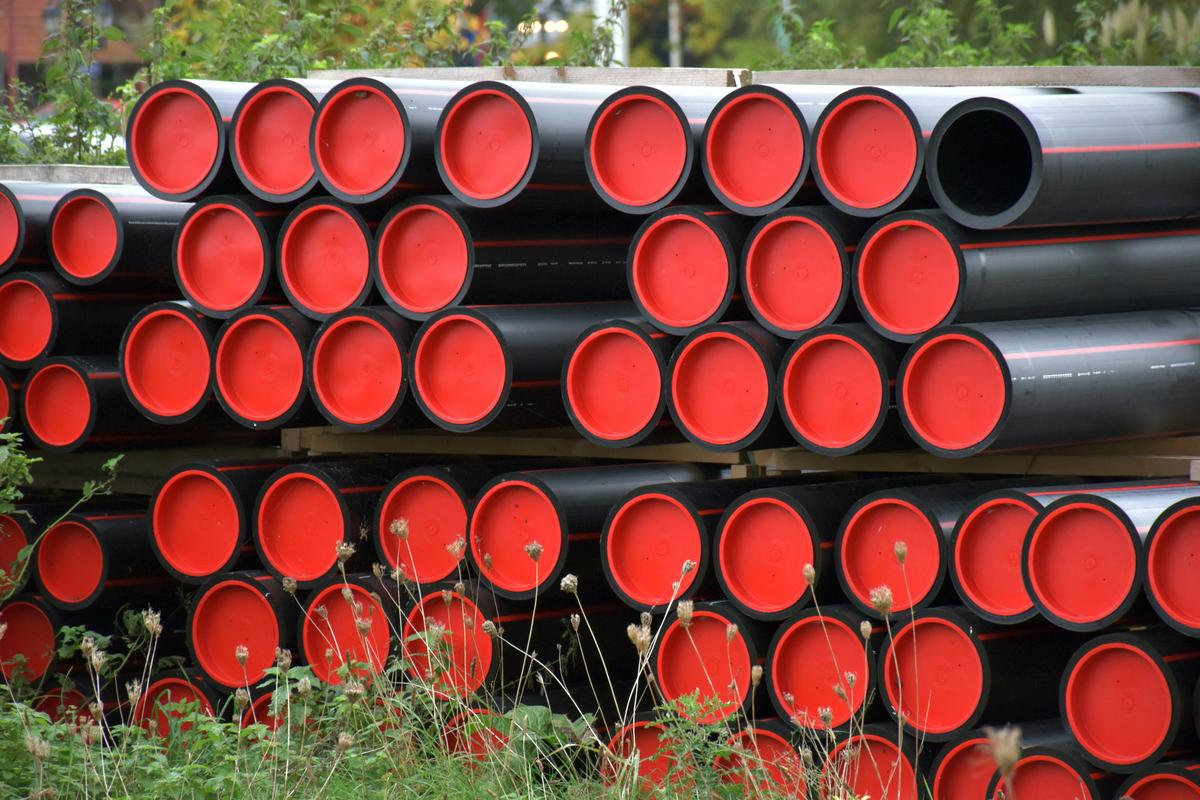
PPR vs CPVC Cost Analysis
PPR delivers the lowest total landed cost per meter for volume distributors when virgin Type 3 resin is enforced. Mixed-resin batches erase that margin through field failures.
PPR, CPVC, and PEX: Commercial Positioning for Distributors
We see distributors treating PPR, CPVC, and PEX as interchangeable commodities. They are not. PPR dominates emerging markets because its heat-fusion joining eliminates the need for solvent cements or expensive crimp tools. CPVC holds niche ground in industrial applications where chemical resistance justifies its premium. PEX competes primarily in residential retrofit markets where flexibility matters more than rigid joint integrity.
For a PPR vs CPVC pipe wholesale comparison, the decision hinges on what your downstream contractors are equipped to install. Stocking CPVC means you also carry solvent cement, primer, and support your dealers with technical training on proper curing times. PPR requires only a fusion machine and a skilled operator. Your inventory complexity drops, and your order frequency increases because contractors burn through PPR fittings faster on large commercial projects.
Raw Material Cost Per Meter
CPVC resin commands a 30-40% premium over PPR Type 3 resin on the open market. That gap widens further when you factor in CPVC's proprietary formulation requirements. PPR benefits from a mature, multi-source supply chain for PPR pipe raw material type 3 granules. We source from qualified compounders who guarantee consistent melt flow indexes, which keeps our batch-to-batch pricing stable.
Freight per meter is the hidden cost driver. A standard 20mm PN20 PPR pipe wall thickness is 3.4mm (SDR 6). At that cross-section, a 20ft container max payload of 28,000 kg limits you to roughly 6,000-8,000 meters depending on the PN rating. CPVC pipes of the same pressure class are denser, meaning you ship fewer meters per container. When your buyer is calculating landed cost in Lagos or Nairobi, freight per meter often decides the deal.
Installation Speed Via Heat Fusion
Heat fusion is PPR's commercial advantage over CPVC solvent welding. A trained crew can complete a PPR joint in under 60 seconds: heat, join, hold, cool. CPVC solvent cement requires surface preparation, primer application, cement application, assembly, and a controlled curing period before pressurization. On a 200-meter hotel riser run, that curing downtime adds days to the project schedule.
Faster installation means your contractor customers turn over projects quicker and return to your warehouse for the next job. We have found that distributors who actively train their network on proper fusion techniques see 15-20% higher repeat order rates than those who just sell pipe and walk away. The machine becomes a tether to your brand.
Failure Rates in High-Temperature Plumbing Applications
This is where the PPR market splits between competent factories and price dumpers. PPR Type 3 raw material withstands continuous operating temperatures up to 70°C at 10 bar pressure. CPVC handles higher continuous temperatures, roughly 82°C at the same pressure class, giving it a genuine technical edge in specific industrial loops.
The failure rate problem is not about the polymer itself. It is about what factories blend into it. Our engineers have audited competitor lines where 10-15% recycled PPR granules are mixed into virgin Type 3 resin. This practice drastically lowers the Vicat softening point and causes premature joint failures under hot water loads. Using virgin PP-R instead of recycled material reduces batch defect rates from 5% to under 1.5%. When a distributor absorbs warranty returns on a failed hot water line, the savings from buying cheap mixed-resin pipe vanish in a single claim.
We require 95°C thermal stability testing on every PN20 and PN25 production run. Many certified factories only test PPR pipe PN20 pressure rating specs at room temperature (20°C), skipping the mandatory high-temperature test required by DIN 8077/8078 to cut lab costs. If your supplier cannot produce a test report showing pressure validation at elevated temperatures, you are shipping a latent liability to your customers.
| Cost Factor | PPR Specification | CPVC Comparison | Wholesale Impact |
|---|---|---|---|
| Raw Material & Defect Rate | Virgin PPR pipe raw material type 3 drops batch defect rates from 5% to under 1.5% | Higher base resin cost, but no mixed-resin contamination risks | Prevents costly batch rejections and warranty claims for volume buyers |
| Freight Cost per Meter | 20mm PN20 is 3.4mm (SDR 6); check PN25 PPR pipe wall thickness chart as heavier walls hit the 28,000kg/20ft container limit | Higher specific gravity yields heavier loads per meter | Higher PN PPR pipes cost significantly more in freight per meter, capping orders at 6,000-8,000m per container |
| Installation & Fitting Costs | Heat fusion welding requires tools but zero solvent curing time | Solvent cement joining requires curing time and ventilation | PPR reduces contractor labor downtime, a key advantage in any PPR vs CPVC pipe wholesale comparison |
| Compliance & Testing Overhead | PPR pipe SANS certification China and DIN 8077/8078 require 95°C thermal tests; PPR pipe PN20 pressure rating specs must be verified at temperature | ASTM standards are strictly enforced with less thermal ambiguity | Rejecting sub-standard mixed-resin PPR that skips 95°C tests avoids hidden compliance costs and project delays |
Raw Material Grade Type 3
Virgin PP-R Type 3 resin is the baseline for any legitimate SANS or DIN certification. Mixing in recycled material fundamentally breaks the thermal performance chain.
Why Virgin PP-R Type 3 Resin Is Non-Negotiable for Certification
PPR pipe raw material type 3 refers specifically to a random copolymer polypropylene formulated for hot and cold water pressure systems. Certified pipes under DIN 8077/8078 or SANS 15874 require this specific resin chemistry because it dictates the crystalline structure that handles continuous pressure at elevated temperatures. We test our PN20 and PN25 lines strictly with virgin Type 3 resin, which reliably withstands continuous operating temperatures up to 70°C at 10 bar pressure. Without this base resin, the PPR pipe PN20 pressure rating specs printed on a spec sheet become meaningless under real-world thermal loads.
The Hidden Cost of 10-15% Recycled Resin Blends
Our engineers routinely audit competitor samples from emerging markets and consistently find 10-15% recycled PPR granules mixed into virgin resin. Factories do this to shave $0.05 to $0.10 per kilogram off material costs, which adds up at container scale. The commercial impact is severe: our internal data shows that using strictly virgin PP-R instead of recycled material reduces batch defect rates from roughly 5% to under 1.5%. For a distributor moving 10 containers a quarter, that defect gap translates to thousands of meters of dead stock and destroyed retailer relationships.
How Vicat Softening Point Degradation Triggers Joint Failures
The Vicat softening point is the temperature at which a flat-ended needle penetrates the pipe wall by 1mm under a specific load. It is the most reliable field metric for judging resin purity. Virgin PP-R Type 3 maintains a Vicat softening point around 131°C. When a factory introduces 10-15% recycled content, that threshold drops, sometimes falling below 125°C. During heat fusion welding, the lower softening point causes the pipe wall to deform excessively at the joint. The melt pool becomes inconsistent, creating micro-gaps at the socket interface.
These are not catastrophic failures at installation. They manifest as slow joint leaks six to twelve months later, exactly when the system is under continuous hot water load. Many "certified" factories avoid exposing this weakness by only pressure-testing PN20 pipes at room temperature (20°C), deliberately skipping the mandatory 95°C thermal stability tests required by DIN standards. When auditing a supplier, asking for documented 95°C test results alongside the Vicat softening point data will immediately separate compliant manufacturers from those cutting corners on raw material.
| Attribute | Specification | Commercial Impact | Quality Checkpoint |
|---|---|---|---|
| Thermal & Pressure Performance | Withstands continuous 70°C at 10 bar pressure | Eliminates premature joint failures under hot water loads | Demand 95°C thermal stability test results; reject room-temperature-only tests |
| Defect Rate Control | Under 1.5% defect rate using 100% virgin resin | Achieves primary KPI of <2% defects, preventing costly returns | Audit supplier resin usage to ensure no 10-15% recycled granules are mixed |
| Service Lifespan | 50-year lifespan under standard operating conditions | Protects brand reputation and reduces long-term warranty claims | Verify DIN 8077/8078 and ISO 15874 compliance documentation |
| Material Traceability | Strictly virgin PPR pipe raw material type 3 | Secures volume-tiered pricing through consistent batch quality | Require full batch traceability records and virgin resin invoices |
SANS and DIN Compliance Standards
DIN and SANS certifications dictate dimensional tolerances and thermal testing. Many Chinese suppliers skip the mandatory 95°C thermal stability tests to cut costs.
DIN 8077/8078 Dimensional Standards
DIN 8077 dictates the exact outside diameters and wall thicknesses for PPR pipes, while DIN 8078 covers the raw material and quality requirements. For distributors auditing quotes, the most critical checkpoint is the SDR (Standard Dimension Ratio). A standard 20mm PN20 PPR pipe wall thickness is 3.4mm at an SDR 6 ratio. If a supplier submits a quote with thinner walls at the same PN rating, they are either miscalculating or using a lower-grade resin to compensate for pressure retention.
We strictly adhere to these DIN dimensions because they directly impact container payloads. A 20ft container maxes out at roughly 28,000 kg, which limits PPR pipe orders to 6,000-8,000 meters depending on the PN rating. Deviating from DIN 8077 dimensions throws off freight calculations and cuts into distributor margins. Certified PPR pipes manufactured to these standards carry a 50-year lifespan rating under standard operating conditions, provided the base resin is genuine virgin PPR Type 3 material.
ISO 15874 Testing Standards
ISO 15874 is the overarching international standard for polypropylene piping systems, establishing the baseline for PPR pipe PN20 pressure rating specs across PN10, PN16, PN20, and PN25 classifications. The standard mandates specific hydrostatic pressure tests at different temperatures. The most critical—and most frequently skipped—test is the 95°C thermal stability test, which requires the pipe to hold pressure for 1,000 hours at elevated temperatures.
Our engineers routinely find that many "certified" factories only test PN20 pressure at room temperature (20°C) and omit the 95°C requirement entirely. This saves the factory significant testing time and lab costs, but it leaves distributors exposed. When pipes made with mixed recycled resin hit actual hot water loads in the field, the Vicat softening point drops, leading to premature joint failures. A distributor cannot detect this weakness by looking at a pipe visually. The only way to audit this is to demand the actual ISO 15874 test reports with the 95°C parameters clearly listed.
SANS 15874 Adaptations for African Climates
SANS 15874 is the South African Bureau of Standards adoption of ISO 15874, but it includes critical modifications for African environmental conditions. The most significant addition is enhanced UV resistance testing. In regions with high UV indexes, standard PPR pipes stored outdoors or installed above ground degrade rapidly without proper stabilization. SANS requires the resin formulation to include specific UV stabilizer packages that go beyond standard ISO requirements.
For distributors sourcing PPR pipe SANS certification China, the due diligence gap is wide. Many Chinese manufacturers will claim SANS compliance based on their ISO 15874 credentials alone, without actually running the additional UV and climate-specific adaptations. We have seen batches that passed ISO testing fail SANS UV exposure requirements because the factory substituted a cheaper UV stabilizer to save on raw material costs. Distributors targeting Southern African markets must request SANS-specific test reports, not generic ISO certificates, and verify the UV stabilizer type used in the PPR pipe raw material Type 3 formulation.
UV Resistance and Thermal Cycling Test Requirements
UV resistance testing under SANS evaluates how the pipe material performs after prolonged exposure to simulated sunlight. Samples are placed in a xenon arc weathering chamber and exposed to cycles of intense UV radiation and water spray for a minimum of 1,000 hours. After exposure, the pipes must pass a subsequent hydrostatic pressure test to prove the material has not become brittle. This is a non-negotiable requirement for any PPR pipe that will be stored on open-site yards in Africa or the Middle East.
Thermal cycling tests are separate from static pressure tests and simulate the daily stress of hot and cold water running through the system. The standard procedure subjects the pipe and its fusion joints to rapid temperature swings, typically cycling between 20°C and 95°C under a maintained internal pressure. This test runs for a specified number of cycles—often 5,000 or more—to simulate years of daily usage in a compressed timeframe. Our internal testing uses an accelerated aging chamber to simulate these exact thermal cycles, confirming that the fusion joints maintain structural integrity even when the pipe is subjected to aggressive temperature fluctuations. Factories that skip thermal cycling are gambling with your supply chain, because joint failure is the number one cause of field defects in hot water PPR installations.
Distributor Sourcing Mistakes
Most distributors lose margin on PPR returns not from shipping damage, but from accepting incomplete factory test reports and skipping batch traceability.
Accepting Room-Temperature Pressure Tests Instead of 95°C Thermal Tests
Many "certified" factories only test PPR pipe PN20 pressure rating specs at room temperature (20°C) to save on testing costs and equipment wear. This is a critical red flag. The DIN 8077/8078 standard mandates 95°C thermal stability testing to simulate actual hot water operating conditions. We routinely see suppliers pass 20°C hydrostatic tests but fail catastrophically at 95°C because high recycled content drastically lowers the Vicat softening point. If a supplier cannot provide a 95°C test report for your PPR pipe raw material type 3 batches, reject the quote outright.
Ignoring Wall Thickness Variance Tolerances (+/- 0.2mm)
Wall thickness directly dictates pressure capacity and your freight cost per meter. A standard 20mm PN20 PPR pipe requires a 3.4mm wall thickness (SDR 6). Novice distributors accept factory claims without verifying variance, but we strictly enforce a zero-tolerance policy for anything beyond a -0.1mm deviation. Allowing a -0.2mm tolerance might seem minor, but it compounds across a 28,000 kg 20ft container payload. Thinner walls mean more meters per container, but those pipes will fail under standard PN20 loads. Always demand a micrometer check on random samples from the production line, not just the golden sample sent with the initial quote.
Skipping Pre-Shipment Inspections
Relying on the factory's internal quality control is commercial suicide for volume buyers. Factories often mix 10-15% recycled PPR granules into virgin Type 3 resin to cut costs, which our engineers note causes batch defect rates to spike from under 1.5% to over 5%. These defects—internal bubbles, ovality, inconsistent outer diameter—are invisible in factory-provided photos. A third-party pre-shipment inspection costs a few hundred dollars but protects a five-figure order. We mandate documented batch traceability for every shipment, ensuring the resin lot matches the test certificates. If your supplier pushes back on PSI access, they are hiding a mixed-resin production run.
Conclusion
If you want defect rates below 2%, demand Type 3 virgin resin and a 95°C thermal stability test report. Mixed resin batches save factories 10% on raw materials, but they destroy your distribution contracts when joints fail under hot water. Pay 8% more per ton upfront, or eat the return freight on a failed shipment.
When you review your next quote, ask the supplier for the DIN 8077 wall thickness chart and their 95°C pressure test certificates. If they send a generic room-temperature test result, walk away. Make your QC team verify the Vicat softening point before you wire any deposit.
Frequently Asked Questions
What's the difference between PN20 and PN25?
PN25 PPR pipe features a thicker wall structure compared to PN20, such as a 20mm pipe measuring 4.1mm versus 3.4mm, allowing it to withstand significantly higher operational pressures. However, this increased material density directly impacts your logistics efficiency by reducing container payload capacity by approximately 15% per shipment. Buyers must weigh the need for higher pressure tolerance against the increased per-unit freight costs when selecting between these two specifications.
Can PPR handle hot water?
Yes, PPR Type 3 pipes are specifically engineered to handle continuous hot water flow at temperatures up to 70°C. They can also safely withstand short-term temperature peaks reaching 95°C without compromising structural integrity. To guarantee this thermal performance, it is essential to verify that the manufacturer strictly adheres to ISO 15874 thermal cycling testing standards during production.
What's the FOB cost per container?
A standard 20ft container of 20mm PN20 PPR pipe typically ranges from $3,500 to $5,500 on an FOB basis. This pricing fluctuates primarily based on the raw material composition utilized by the factory. Selecting pipes manufactured from 100% virgin resin will position you at the higher end of this spectrum, whereas mixed recycled granules will lower the cost but potentially compromise long-term durability.
How to verify quality before shipping?
To ensure rigorous quality control prior to shipment, you must request third-party SGS hydrostatic pressure test reports directly from the manufacturer. Additionally, it is highly recommended to mandate a comprehensive pre-shipment inspection focusing on dimensional consistency. During this inspection, the wall thickness variance must be strictly measured and verified to remain under a +/- 0.2mm tolerance to prevent future plumbing failures.
What does SANS 15874 mean?
SANS 15874 represents the South African national standard for PPR piping systems, which is directly adopted from the international ISO 15874 framework. This certification mandates that pipes pass stringent UV resistance and thermal cycling tests tailored for harsh African climates. Compliance with SANS 15874 is absolutely critical for ensuring long-term reliability and preventing premature degradation in regional plumbing installations.