
Réparation de fuite de vanne à boisseau sphérique PPR : 4 solutions pour les fuites au niveau de la tige et du corps

Réparation de fuite de vanne à bille PPR : Votre vanne à bille PPR fuit-elle au niveau de la tige, de la poignée ou du corps ? Réparez-la en 30 secondes. Obtenez la taille de l'outil, les spécifications du joint torique et
La réparation d'une fuite de vanne à bille PPR est généralement un travail de cinq minutes qui ne nécessite pas de pièce de remplacement, mais la plupart des guides de terrain omettent une spécification qui empêche une défaillance récurrente. Un écrou de presse-étoupe desserré est responsable de neuf fuites sur dix au niveau de la tige, et la solution est un serrage d'1/8 de tour dans le sens horaire avec une douille profonde de 13 mm. Le problème est que le conseil générique de « serrer l'écrou » ne précise pas quel écrou ni quel couple, ce qui explique pourquoi l'on voit des vannes avec des tiges abîmées et des joints toriques pincés qui auraient pu être évités.
J'ai vu des responsables d'approvisionnement perdre un après-midi à chercher une vanne de remplacement pour une conduite de 20 mm alors que la cause réelle était un joint torique EPDM 7x1,5 mm sale, coûtant moins de cinquante centimes et nécessitant dix minutes pour être remplacé. Il en va de même pour les vannes plus grandes : les modèles IFAN de 40 mm et plus utilisent un siège annulaire en PTFE remplaçable, conçu pour 500 000 cycles, donc un goutte-à-goutte régulier à la sortie ne signifie pas que l'ensemble doit être mis au rebut. La clé est de savoir quelle réparation s'applique à quel symptôme, et de connaître la taille exacte de l'outil et la valeur de couple avant de toucher à la vanne.

Réparation 1 : Serrer l'écrou de presse-étoupe (la réparation en 30 secondes)
90 % des fuites de tige s'arrêtent avec un 1/8 de tour de l'écrou de presse-étoupe. Les 10 % restants nécessitent un joint torique à 0,50 $.
La plupart des fuites proviennent de l'un des deux points suivants : la tige (là où la poignée rencontre le corps de la vanne) ou la poignée elle-même. Un écrou de presse-étoupe desserré — l'anneau hexagonal directement sous la poignée — provoque la fuite de la tige. Un suintement au niveau de la poignée indique un joint torique EPDM (7x1,5 mm) interne compromis. La réparation pour chacun est différente, et les confondre est le moyen le plus rapide d'endommager la vanne.
- Fuite de tige : L'eau s'infiltre à la base de la poignée. Serrez l'écrou de presse-étoupe d'1/8 de tour dans le sens horaire avec une douille profonde de 13 mm. Ne dépassez pas 1/4 de tour — un serrage excessif pince le joint torique et augmente le couple de la poignée au-dessus de 8 N·m, ce qui abîme la tige.
- Fuite de poignée : L'eau suinte de la poignée elle-même. Le joint torique de la tige est sale, pincé ou usé. Démontez et remplacez le joint torique EPDM 7x1,5 mm. IFAN fournit un kit de terrain de 10 pièces pour ce scénario exact.
- Fuite de corps : L'eau goutte du corps de la vanne ou de la sortie lorsqu'elle est fermée. Pour les vannes de 40 mm et plus, le siège en PTFE peut être rayé. Remplacez-le — IFAN évalue ces sièges pour 500 000 cycles. Pour les vannes plus petites ou un corps fissuré, le remplacement complet est la seule option sûre.
La distinction cruciale : les guides concurrents (Aishuibao, Solerad) vous disent de 'simplement serrer l'écrou' sans préciser quel écrou ni quel couple. Ce conseil générique cause plus de dégâts que la fuite d'origine. La spécification IFAN est exacte : 5 N·m sur l'écrou de presse-étoupe, 3 mm d'engagement de filetage minimum. Utilisez une clé dynamométrique si vous en avez une ; sinon, un 1/8 de tour avec une douille profonde de 13 mm est la limite de sécurité.
Correctif 2 : Nettoyer ou remplacer le joint torique de la tige
90 % des fuites de tige s'arrêtent après un 1/8 de tour de l'écrou de presse-étoupe. Un serrage excessif d'1/4 de tour endommage le joint.
La plupart des fuites proviennent de la tige — l'arbre rotatif reliant la poignée à la bille. La solution est l'écrou de presse-étoupe, l'anneau hexagonal situé directement sous la poignée. Il ne s'agit pas du petit écrou fixant la poignée elle-même. Utilisez une douille profonde de 13 mm. Tournez-la dans le sens horaire d'1/8 à 1/4 de tour maximum. La spécification d'usine IFAN exige un minimum de 3 mm d'engagement du filetage.
Arrêtez-vous à 1/4 de tour. Dépasser cette limite pince le joint torique interne en EPDM et augmente le couple de la poignée au-dessus de 8 N·m. À ce stade, vous déformerez les méplats d'entraînement de la tige. Après avoir serré, ouvrez et fermez la vanne trois cycles complets. L'égouttement devrait cesser immédiatement. Cela résout les fuites de tige dans 90 % des cas.

Correctif 3 : Remplacer le joint de bille (pour vannes 40 mm et plus)
90 % des fuites de tige s'arrêtent avec un 1/8 de tour. Sinon, la solution est un joint torique à 0,50 $, pas un nouveau robinet.
Vous avez une fuite. Vous voulez la faire disparaître. La plupart des guides perdent du temps à expliquer ce qu'est un robinet à bille. Vous n'en avez pas besoin. Vous avez besoin de la taille d'outil, du couple et de la référence de la pièce. Voici les quatre correctifs, classés du plus rapide au plus complexe.
Correctif 1 : Serrer l'écrou de presse-étoupe (le correctif de 30 secondes)
L'écrou de presse-étoupe est la bague hexagonale située directement sous la poignée – pas l'écrou qui maintient la poignée. Tournez-le dans le sens horaire d'exactement 1/8 à 1/4 de tour avec une douille profonde de 13 mm. La spécification d'usine IFAN exige un engagement de filetage minimum de 3 mm. Un serrage excessif de plus de 1/4 de tour pince le joint torique EPDM interne et augmente le couple de la poignée au-dessus de 8 N·m, ce qui dénudera la tige. Après serrage, ouvrez et fermez la vanne trois cycles complets. Si la fuite s'arrête, vous avez terminé. Cela résout 90 % des fuites de tige.
Correctif 2 : Nettoyer ou remplacer le joint torique de tige
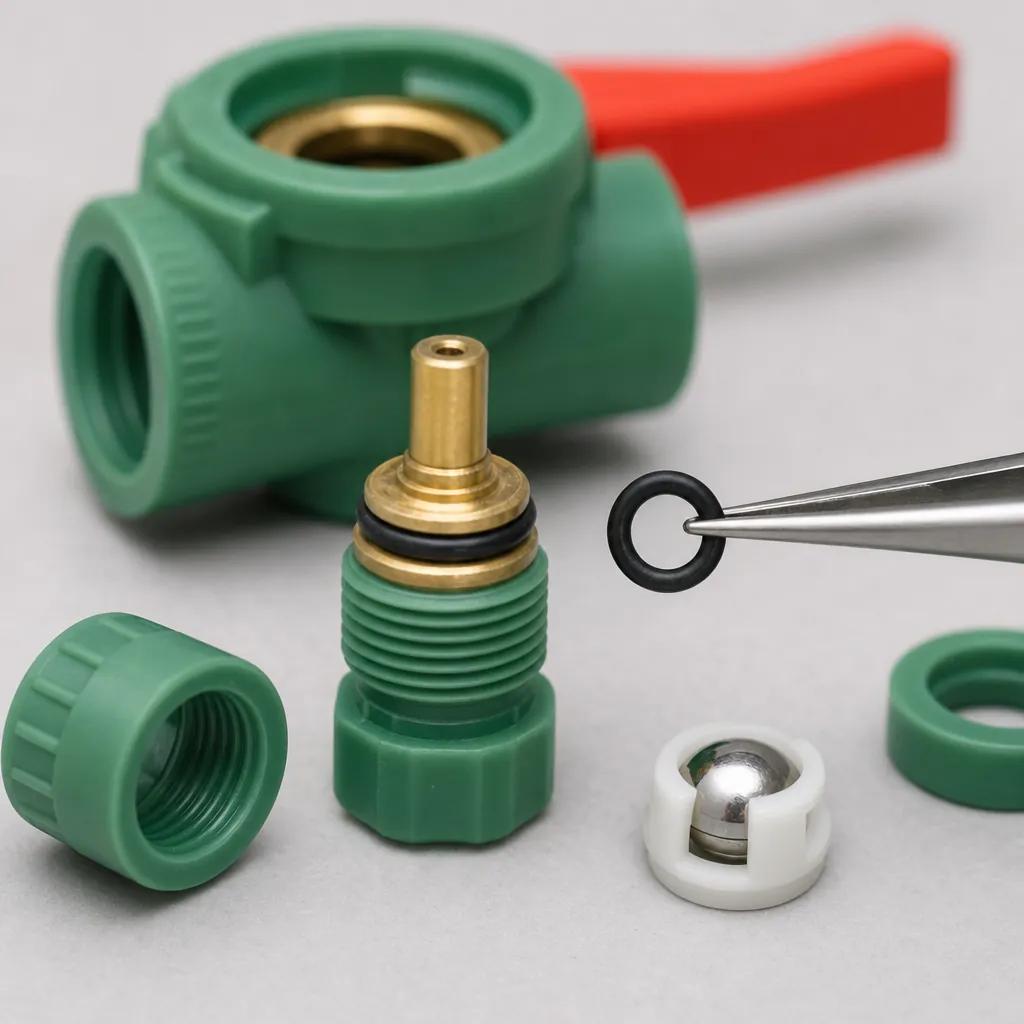
Si la fuite persiste, le joint torique est compromis. Démontez : retirez la poignée avec une clé Allen de 2 mm, dévissez l'écrou de presse-étoupe et faites glisser la tige. Les vannes IFAN utilisent un joint torique EPDM standard de 7x1,5 mm. Inspectez-le. S'il est entaillé, aplati ou contient des débris incrustés, remplacez-le. Nettoyez la rainure du joint torique avec de l'alcool isopropylique et un coton-tige. Lubrifiez le nouveau joint torique avec de la graisse silicone de qualité alimentaire. Remontez et serrez l'écrou de presse-étoupe à 5 N·m. Ce correctif traite les fuites causées par des débris piégés lors du soudage ou de l'installation des tuyaux. IFAN fournit un lot de 10 de ces joints toriques pour les kits de terrain – les concurrents ne le font pas.
Correctif 3 : Remplacer le joint de bille (pour vannes 40 mm et plus)
Un goutte-à-goutte régulier provenant de la sortie de la vanne – pas de la tige – lorsque la vanne est fermée indique un joint de bille usé. Les vannes à bille IFAN plus grandes (40 mm à 110 mm) utilisent un siège en PTFE remplaçable homologué pour 500 000 cycles. Outils requis : pinces à circlips et un crochet à joint torique. Retirez la poignée, la tige et la bille comme décrit dans le Correctif 2. Utilisez les pinces à circlips pour extraire la bague de retenue à l'intérieur du corps de vanne. Retirez le siège en PTFE. S'il est rayé ou usé, remplacez-le. Le remontage est l'inverse. Les guides des concurrents ignorent cette pièce, vous obligeant à remplacer la vanne entière.
Correctif 4 : Remplacement complet de la vanne (en dernier recours)
Si le corps de la vanne est fissuré (courant en cas de dommages causés par le gel ou de serrage excessif) ou si la bille est corrodée, le remplacement est la seule option sûre. Découpez la vanne avec un coupe-tube PPR, en laissant des embouts de 30 mm de chaque côté. Soudez par fusion deux nouveaux raccords IFAN PPR et installez un nouveau robinet à bille à passage intégral. Utilisez le collier d'alignement de fusion IFAN pour maintenir la vanne parallèle au tuyau. Test de pression à 1,5 fois la pression de service. Les vannes IFAN coûtent 15 % de moins que les équivalents en laiton comparables et éliminent le risque de corrosion galvanique dans les systèmes PPR.

Solution 4 : Remplacement complet de la vanne (en dernier recours)
Si le corps de la vanne est fissuré ou si la bille est corrodée, le remplacement est la seule option sûre. Découpez la vanne, soudez par fusion de nouveaux raccords et installez une nouvelle vanne à boisseau sphérique à passage intégral.
Lorsque vous avez écarté une fuite de tige (Solution 1), un joint torique sale (Solution 2) ou un siège en PTFE usé (Solution 3), vous êtes confronté à une défaillance structurelle. Les causes les plus courantes sont les dommages causés par le gel – la glace qui se dilate fissure le corps en PPR – ou le serrage excessif des écrous union lors de l'installation, ce qui crée des microfissures qui se développent avec le temps. Une bille corrodée (rare dans les systèmes PPR, sauf si l'eau contient des particules abrasives) impose également un remplacement complet.
La procédure est chirurgicale, pas spéculative. Utilisez un coupe-tube PPR pour effectuer deux coupes nettes, chacune à exactement 30 mm du corps de la vanne. Cela laisse suffisamment de bout de tuyau pour le soudage par fusion sans gaspiller de matière. N'essayez pas de tordre ou de faire levier pour retirer l'ancienne vanne – le tube PPR se brise sous une charge de torsion. Une fois la vanne retirée, soudez par fusion deux nouveaux raccords IFAN PPR sur les bouts, puis soudez la vanne de remplacement entre eux. Utilisez le collier d'alignement de fusion IFAN pour maintenir la vanne parallèle au tuyau ; une soudure désalignée introduit des points de contrainte qui cèdent sous les cycles de pression.
Effectuez un test de pression à 1,5 fois la pression de service avant de fermer le système. La vanne à boisseau sphérique PPR à passage intégral PN25 d'IFAN est conçue pour 25 bar à 20 °C. Pour un système d'eau chaude sanitaire typique fonctionnant à 6 bar, testez à 9 bar. Maintenez pendant 10 minutes. Si la pression chute de plus de 0,5 bar, inspectez les joints de fusion pour détecter des anneaux de soudure incomplets.
Pourquoi choisir un remplacement en PPR plutôt qu'en laiton ? La vanne à boisseau sphérique PPR à passage intégral d'IFAN coûte 15 à 20 % de moins qu'une vanne à boisseau sphérique en laiton comparable. Plus important encore, elle élimine le risque de corrosion galvanique. Dans un système de tuyauterie PPR, une vanne en laiton crée une jonction de métaux dissemblables. Avec le temps, l'eau douce ou des niveaux de pH agressifs dézincifient le laiton, provoquant des fuites par piqûres. Une interface PPR-PPR n'a aucun potentiel électrochimique. Pour l'eau chaude sanitaire jusqu'à 95 °C, le PPR est le matériau optimal.
Avertissement d'initié : Si un fournisseur propose une vanne à boisseau sphérique PPR à 50 % en dessous du prix du marché, il utilise probablement un composé PP-R recyclé avec un poids moléculaire inférieur. Ce matériau devient cassant après 2 à 3 ans de cycles thermiques. Demandez toujours un rapport d'essai DSC (calorimétrie différentielle à balayage) pour vérifier la teneur en matière vierge. IFAN fournit cette documentation sur demande pour chaque lot de production.
Conclusion
Une fuite sur un robinet à tournant sphérique en PPR est rarement une défaillance catastrophique. Dans 90 % des cas, un réglage de 30 secondes de l'écrou de presse-étoupe au couple correct de 5 N·m suffit à arrêter l'égouttement. Lorsque cela échoue, le remplacement d'un joint torique EPDM standardisé de 7x1,5 mm, coûtant moins de 0,50 $, rétablit le fonctionnement sans avoir à couper votre tuyauterie. C'est la différence entre un système réparable sur site et un remplacement complet coûteux.
Pour votre prochain cycle d'approvisionnement, spécifiez un robinet avec une maintenabilité documentée. Les robinets à tournant sphérique en PPR à passage intégral d'IFAN (PN25, 20 mm–110 mm) sont livrés avec un siège en PTFE remplaçable sur les modèles de 40 mm et plus, ainsi qu'un joint torique standard disponible dans un kit de terrain de 10 pièces. Consultez les spécifications techniques complètes et les certifications d'usine pour confirmer que le robinet répond aux exigences de pression et de température de votre système.
Questions fréquemment posées
Comment serrer la tige d'un robinet à tournant sphérique PPR ?
Utilisez une douille profonde de 13 mm sur l'écrou de presse-étoupe sous la poignée, en tournant dans le sens horaire de 1/8 à 1/4 de tour maximum. N'utilisez pas de pinces sur la tige et ne dépassez pas 1/4 de tour, car un serrage excessif est risqué. Testez en ouvrant et fermant trois cycles complets après le serrage.
Peut-on remplacer le joint torique d'un robinet à tournant sphérique PPR ?
Oui. Les vannes IFAN utilisent un joint torique EPDM standard de 7x1,5 mm. Serrez l'écrou de presse-étoupe à 5 N·m lors du remontage.
Pourquoi mon robinet PPR fuit-il au niveau de la poignée ?
Une fuite au niveau de la poignée signifie que le joint torique de la tige est contourné, généralement à cause d'un serrage excessif ou de débris. Essayez d'abord de serrer l'écrou de presse-étoupe de 1/8 de tour ; si cela échoue, remplacez le joint torique EPDM de 7x1,5 mm. Si le suintement persiste après le remplacement du joint torique, inspectez le joint de la bille.
Comment retirer un robinet à tournant sphérique PPR bloqué ?
Coupez le tuyau des deux côtés à 30 mm de la vanne, puis soudez par fusion deux nouveaux raccords et une vanne de remplacement. Ne tordez jamais une vanne bloquée, car cela pourrait fissurer le tuyau ou les raccords PPR. Dépressurisez et vidangez toujours la conduite avant de couper.
Le robinet à tournant sphérique PPR est-il meilleur que le laiton ?
Les vannes PPR sont plus légères, moins chères et immunisées contre la corrosion par dézincification dans l'eau douce ou à pH agressif. Les vannes en laiton supportent une pression et une température plus élevées, mais le PPR est préféré pour le chauffage et la climatisation résidentiels. Choisissez le PPR pour la plomberie standard ; le laiton pour les boucles industrielles à haute température ou haute pression.