
Types de raccordement de tuyaux HDPE : toutes les méthodes pour connecter un tuyau HDPE
Explication des types de raccordement de tuyaux HDPE : soudage bout à bout, électrosoudage, soudage par emboîtement, raccords à compression, brides et raccords en selle — comment chaque méthode fonctionne, les limites de taille et de pression, et comment choisir la bonne méthode.
Sur une conduite en HDPE, c'est rarement le tuyau qui cède — c'est le joint. Le tuyau en HDPE est conçu pour 50 ans de service, mais cette durée de vie n'est garantie que si chaque raccordement sur la ligne est réalisé avec la bonne méthode et correctement exécuté. Ce qui déroute les acheteurs et les installateurs, c'est que « comment assembler le HDPE » a au moins six réponses valables, et elles ne sont pas interchangeables : la méthode idéale pour une conduite principale de 400 mm est le mauvais choix pour un té d'irrigation de 32 mm, et la méthode qui permet de se raccorder sur une conduite en charge est inutile pour boulonner une pompe. Ce guide cartographie chaque type de joint HDPE — les deux familles de soudage, les raccords mécaniques et les connexions de transition — et vous donne une règle claire pour choisir la bonne méthode pour chaque connexion.
Si vous devez encore déterminer les dimensions du tuyau et la classe de pression, réglez d'abord cela — la méthode de joint dépend du diamètre et du SDR. Commencez par le guide des dimensions et SDR des tuyaux HDPE, puis revenez ici pour choisir comment tout connecter.

Points clés
- Deux familles : les joints fusionnés (aboutage, électrofusion, emboîtement) sont permanents et de pleine résistance ; les joints mécaniques (compression, bride) sont démontables mais leur performance dépend de la quincaillerie, pas du tuyau.
- L'aboutage est la méthode principale pour les conduites de DN63 et plus — une soudure monolithique, selon ASTM F2620 avec une plaque à 204–232 °C et une pression de soudage de 0,41–0,62 MPa.
- L'électrofusion (ASTM F1055 / ISO 21307) fusionne de l'intérieur d'un raccord enroulé — la solution idéale pour les espaces restreints, les petits diamètres, les réparations et les branchements sous charge.
- Les raccords à compression (ISO 14236) ne nécessitent pas d'alimentation électrique et peuvent être démontés — à réserver de préférence aux diamètres ≤ 110 mm et à des pressions plus faibles.
- Les joints à bride (embout + bague de renfort, perçage selon ANSI/ASME B16.5) connectent le HDPE aux vannes, pompes et conduites métalliques.
- Choisissez en fonction du diamètre, de la pression, de la permanence et de ce à quoi vous vous connectez — pas par habitude. Faites correspondre le grade de résine et le SDR sur chaque joint fusionné.
Les deux familles : joints fusionnés vs joints mécaniques
Chaque méthode de connexion des tuyaux HDPE appartient à l'une de ces deux familles, et comprendre cette distinction est plus utile que de mémoriser une liste de raccords. Un joint fusionné fait fondre le polyéthylène du tuyau et de la pièce à assembler en une masse continue unique. Une fois refroidi, il n'y a plus d'interface, ni joint d'étanchéité, ni pince mécanique — le joint est le même matériau que le tuyau et se comporte comme une longueur flexible, entièrement résistante aux efforts axiaux. Une soudure par fusion correctement exécutée est généralement aussi résistante, voire plus, que le tuyau lui-même, ce qui explique pourquoi les conduites principales enterrées sont presque toujours fusionnées : il n'y a tout simplement rien au niveau du joint qui puisse fuir, se corroder ou se séparer sous l'effet des coups de bélier.
Un joint mécaniqueLe raccord mécanique maintient le tuyau par des pièces métalliques — un écrou et une bague de serrage qui le pincent, ou une bride boulonnée qui comprime un joint. Le tuyau n'est pas modifié, la connexion peut donc être démontée à nouveau, et aucune puissance ni chaleur n'est nécessaire pour la réaliser. Le prix de cette commodité est que la pression nominale du joint et sa résistance aux efforts axiaux proviennent du matériel, et non du tuyau. Un raccord mécanique est donc presque toujours le point faible nominal de la ligne. Ce n'est pas un défaut — c'est exactement ce que vous voulez là où une ligne doit rencontrer une vanne, se raccorder à une conduite principale en acier, ou être ouverte pour maintenance — mais cela signifie que vous spécifiez le raccord en fonction du service, et non en prenant simplement le raccord le plus proche.
Tout cela repose sur le matériau du tuyau. Le tuyau sous pression moderne en HDPE est en résine PE100 avec une résistance minimale requise (MRS) de 10,0 MPa, classée selon ISO 12162, fabriqué selon ISO 4427 (eau) ou AWWA C906. Les méthodes par fusion et mécaniques reposent toutes deux sur cette résine cohérente et certifiée qui se comporte de manière prévisible lorsqu'elle est chauffée ou serrée — c'est la première raison pour laquelle un joint échoue sur un tuyau bon marché et hors spécifications bien avant d'échouer sur la conception du joint lui-même.
| Type de raccord | Famille | Permanent ? | Plage de tailles typique |
|---|---|---|---|
| Fusion bout à bout | Fusionné | Oui, pleine résistance | DN63 et plus |
| Électrofusion | Fusionné | Oui, pleine résistance | Toute taille ; idéal pour petits et moyens diamètres |
| Fusion par emboîtement | Fusionné | Oui, pleine résistance | ≤63 mm |
| Compression / mécanique | Mécanique | Non, démontable | ≤110 mm |
| Bride (collet + bague de renfort) | Mécanique | Non, démontable | 50–1200 mm |
| Selle d'électrofusion | Fusionné | Oui, pleine résistance | Dérivation sur toute conduite principale |
Fusion bout à bout : le joint de canalisation principale pleine résistance
La fusion bout à bout est la méthode de référence pour les HDPE de grand diamètre. Deux extrémités de tuyau — ou un tuyau et un bout mâle de raccord de même taille et SDR — sont dressées dans une machine de fusion, surfacées à plat, puis pressées contre une plaque chauffante. La plaque fait fondre les deux faces ; la machine la retire et presse les extrémités fondues ensemble sous une force contrôlée, et le joint refroidit sous pression pour former une pièce continue. Il n'y a ni manchon, ni joint, ni pièce ajoutée — le joint est le tuyau.
La raison pour laquelle cette méthode est fiable pour les conduites d'eau et de gaz est qu'elle est strictement procédurale. Selon ASTM F2620, la plaque chauffante fonctionne à 204–232 °C (400–450 °F), les extrémités sont pressées à une pression interfaciale de 0,41–0,62 MPa (60–90 psi), et le joint est ensuite maintenu sous cette pression pendant le refroidissement — selon une directive de terrain largement utilisée PPI TR-33, environ 11 minutes par pouce (25,4 mm) d'épaisseur de paroi — avant de pouvoir être desserré et déplacé. Ces chiffres ne sont pas des suggestions — si la plaque est trop froide, la pression de serrage incorrecte ou le temps de refroidissement trop court, vous obtenez un joint qui semble parfait et qui échoue des mois plus tard. C'est pourquoi les opérateurs de fusion sont certifiés et pourquoi un bon fournisseur enregistre le journal de données de fusion de la machine pour chaque soudure sur un projet sérieux.
Deux limites pratiques définissent le domaine d'application du soudage bout à bout. Premièrement, la taille : en dessous d'environ DN63, le tube est trop petit pour être serré, surfacé et aligné de manière répétable, c'est pourquoi les petits diamètres relèvent de l'électrofusion ou d'un raccord mécanique. Deuxièmement, la compatibilité : les deux extrémités doivent avoir le même diamètre extérieur et le même SDR — il est impossible de souder bout à bout un tube SDR11 avec un tube SDR17, car les parois ont des épaisseurs différentes et ne fondront pas ou ne fusionneront pas uniformément. Si vous devez assembler deux SDR différents, c'est une tâche pour un raccord de transition, pas pour une machine à souder. Pour une analyse complète paramètre par paramètre et pour comparer le soudage bout à bout avec la méthode au serpentin, voir soudage bout à bout vs électrofusion.
Électrofusion : le raccord pour espaces restreints et réparations
L'électrofusion transforme le raccord en source de chaleur. Un manchon, un coude, un té ou une réduction électrosoudable possède une bobine de fil résistif moulée dans son emboîture. Vous grattez et nettoyez l'extrémité du tube, vous l'insérez dans le raccord, vous serrez le tout pour l'alignement, et une boîte de commande fait passer un courant dans la bobine. La bobine chauffe et fait fondre le polyéthylène à l'interface tube-raccord, les fusionnant de l'intérieur vers l'extérieur. Le joint fini est entièrement soudé et de pleine résistance, identique au soudage bout à bout — mais comme l'équipement est une boîte de commande légère plutôt qu'une machine dimensionnée pour le tube, l'électrofusion fonctionne à tous les diamètres et dans les tranchées, les puits et les points de raccordement où une machine à souder bout à bout ne pourrait jamais être positionnée.
La méthode est régie par ASTM F1055 (la spécification du raccord) et ISO 21307 (le mode opératoire de soudage), et les raccords modernes portent un code-barres que la boîte de commande lit pour régler la tension et le temps de fusion exacts — éliminant ainsi toute une catégorie d'erreurs de l'opérateur. Ce que le code-barres ne peut pas faire pour vous, c'est préparer le tube. L'étape la plus importante de l'électrofusion est de gratter la couche d'oxyde de la surface du tube sur toute la profondeur d'insertion, tout autour, et de garder cette surface grattée propre et intacte. Le HDPE forme une fine couche d'oxyde au contact de l'air, et une bobine ne peut pas y souder — si vous sautez le grattage, vous obtenez un joint qui passe un examen visuel mais qui fuit sous pression. Comme l'électrofusion existe aussi en selle de prise en charge et en selle de dérivation, c'est la méthode standard pour ajouter un branchement de service à une conduite existante. Pour la plupart des réparations, les tubes de service de petit diamètre et les locaux techniques encombrés, l'électrofusion est le choix de soudage correct.
Soudage par emboîture : rapidité pour petits diamètres
Le soudage par emboîture est le cousin du soudage bout à bout pour les petits diamètres. Au lieu de presser deux faces plates l'une contre l'autre, vous chauffez simultanément l'extérieur de l'extrémité du tube et l'intérieur d'un raccord à emboîture sur un outil chauffant profilé, puis vous enfoncez le tube complètement dans l'emboîture, où les deux surfaces fondues fusionnent. C'est rapide et répétable pour les petites connexions qui constituent le travail de service et de distribution, généralement à 63 mm et en dessous, et ne nécessite qu'un outil chauffant portatif plutôt qu'une machine à souder.
Le point crucial est l'équerrage et la profondeur. Comme le tube s'emboîte dans un manchon fixe, une coupe non perpendiculaire ou un tube pas entièrement enfoncé produit une fusion inégale et une paroi de matière fondue fragile. Pour les applications sous pression en HDPE, la fusion par emboîtement a largement cédé la place à l'électrofusion pour les petits diamètres, car le raccord à spirale est plus tolérant aux conditions de chantier et autorégule sa chaleur — mais la fusion par emboîtement reste une méthode légitime et économique lorsque l'équipe est formée et que les connexions sont répétitives. Elle est plus familière pour de nombreux installateurs grâce à la plomberie en PPR, où la même technique domine ; si vous travaillez également en PPR, le parallèle est exact, et notre guide des raccords HDPE couvre les composants à emboîtement et à bout uni disponibles pour chaque gamme.
Raccords à compression et mécaniques : quand il faut pouvoir démonter
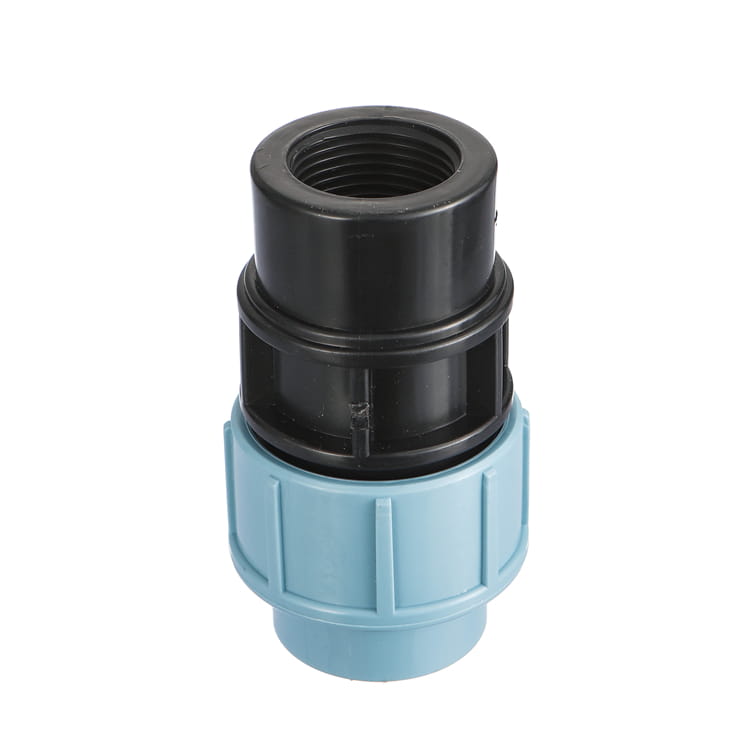
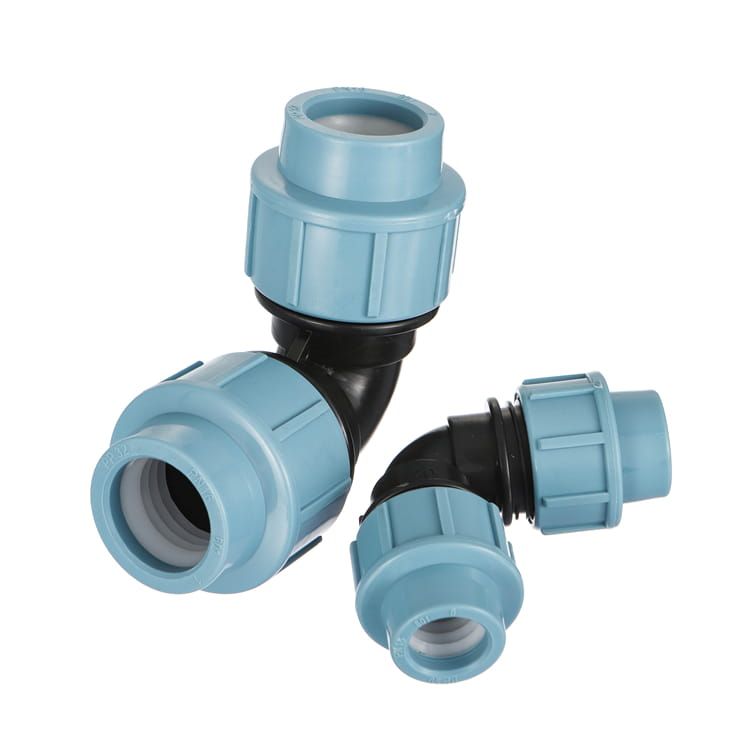
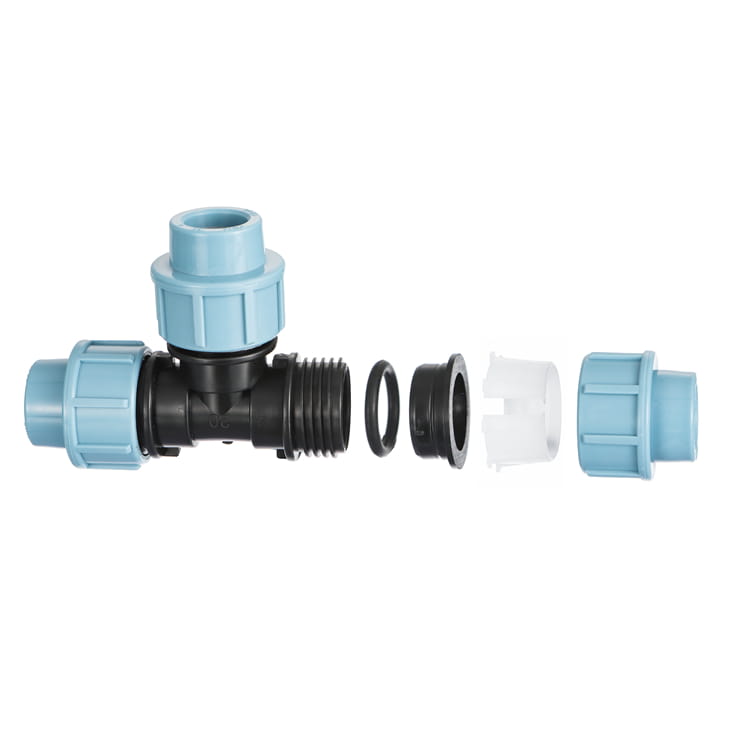
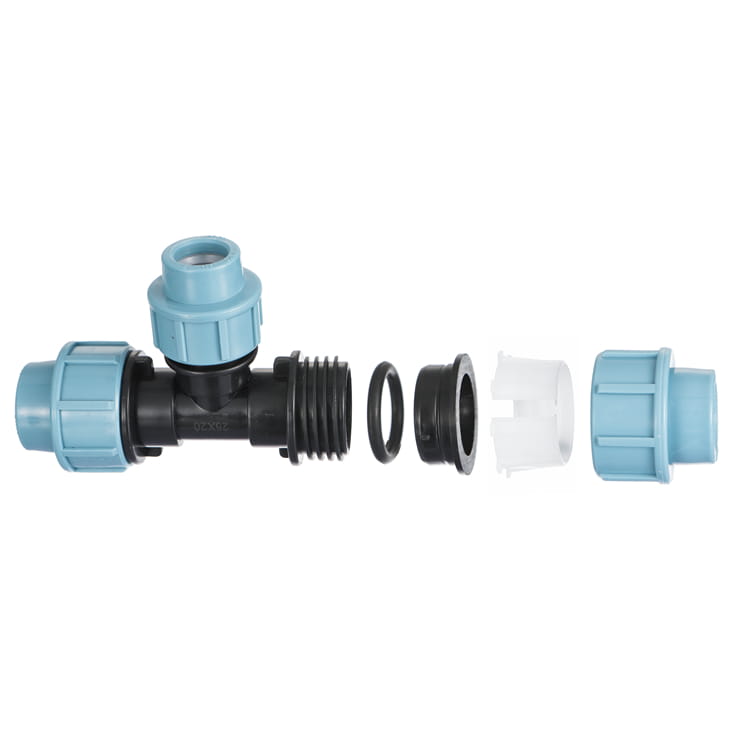
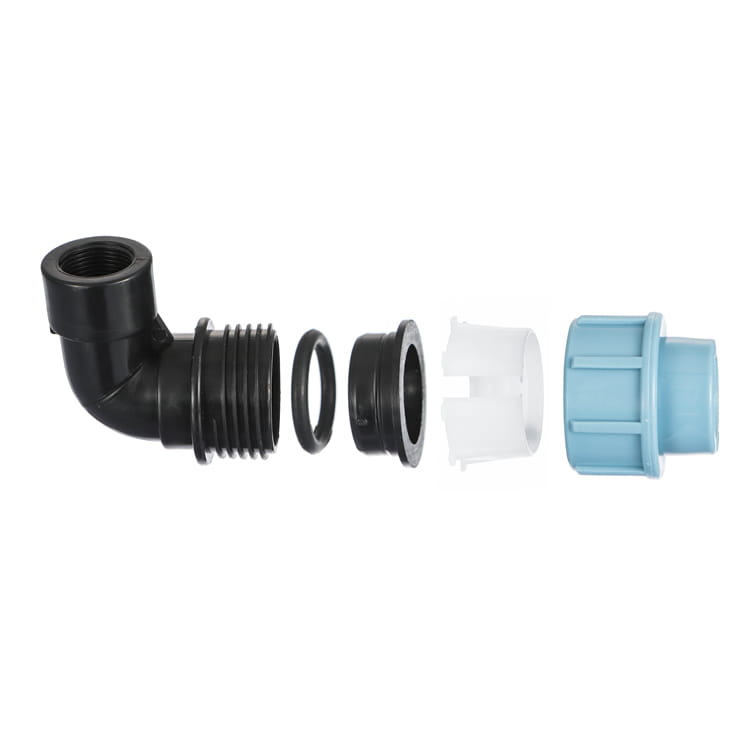
Les raccords à compression assurent l'étanchéité sans chaleur ni électricité. Le tube est poussé dans le corps du raccord, et le serrage de l'écrou entraîne une bague de grippage interne et un joint élastomère autour du tube — la bague le retient contre l'arrachement et le joint assure l'étanchéité sous pression. Conformes à l'ISO 14236 (qui couvre elle-même les raccords à compression en PE jusqu'à 160 mm), les raccords mécaniques pour tubes PE sous pression sont la solution pratique chaque fois qu'amener un poste de fusion sur site n'en vaut pas la peine : irrigation, eau agricole et rurale, conduites temporaires, petites branchements de service, et tout joint que vous pourriez devoir rouvrir plus tard. Tout ce qu'il faut, c'est une clé.
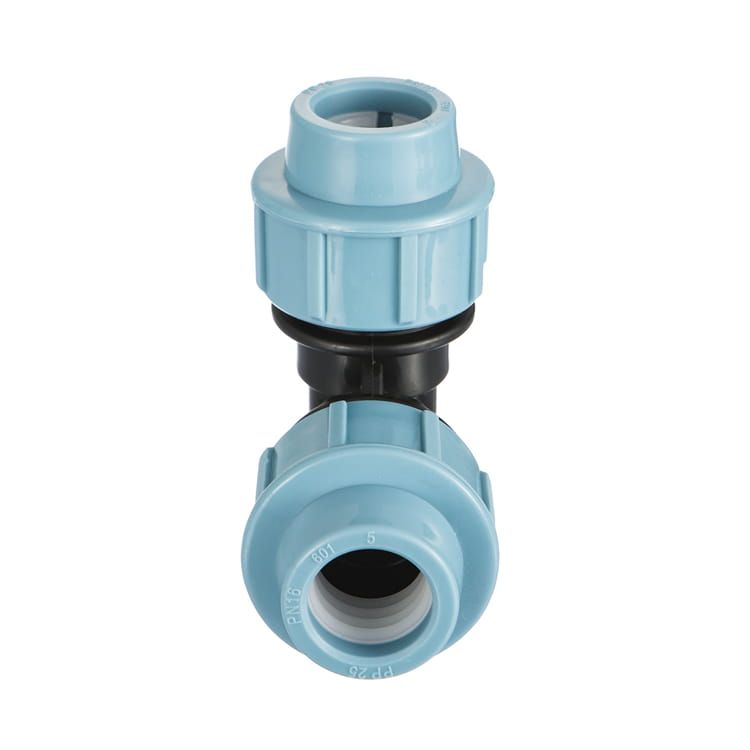
Les compromis concernent la taille et la pression. Les raccords à compression sont classés en dessous des joints par fusion, et bien que la norme aille jusqu'à 160 mm, la pratique sur le terrain les limite à environ 110 mm et moins — au-delà, les forces de serrage nécessaires deviennent irréalistes et la fusion est à la fois moins chère par joint et plus résistante. Les corps sont en polypropylène renforcé pour la gamme standard et en laiton pour les transitions filetées vers les vannes et les compteurs. L'erreur de terrain la plus courante est la sous-insertion : si le tube n'est pas poussé à fond avant le serrage de l'écrou, la bague de grippage mord au mauvais endroit et le joint saute sous les coups de bélier. Marquez d'abord la profondeur d'insertion sur le tube, puis poussez jusqu'au repère — une habitude de trente secondes qui élimine la défaillance de compression la plus fréquente. Pour le détail au niveau des composants sur les joints mécaniques, voir le guide raccords à compression pour tube poly.
Raccords à brides : connecter le HDPE aux vannes, pompes et métal
Presque chaque conduite en HDPE doit finalement rencontrer quelque chose qui n'est pas en HDPE — une pompe, une vanne, un collecteur en acier, un débitmètre. Le raccord à brides est la façon de réaliser cette connexion proprement et de la garder démontable. Il comporte trois parties : une extrémité à bride (un bout uni en HDPE avec une face de bride plate) qui est soudée bout à bout ou par électrofusion au tube, une bague d'appui libre en acier ou en fonte ductile qui s'enfile sur l'extrémité, et un joint. Vous boulonnez la bague d'appui sur la bride correspondante du côté métallique, en comprimant le joint entre les deux faces. Comme la bague est libre, vous pouvez la faire pivoter pour aligner les trous de boulons sans tordre le tube.
Le détail qui compte pour l'approvisionnement est le cercle de boulonnage. Les brides de serrage en HDPE sont percées selon une norme de bride reconnue — le plus souvent ANSI/ASME B16.5, avec AWWA C207 et EN 1092 également utilisées — et le cercle doit correspondre à celui de l'élément auquel il est boulonné. Les brides de serrage sont généralement disponibles de 50 mm à 1200 mm en classes PN10 et PN16, la pression nominale du raccord étant donc déterminée par la classe de bride et le joint, et non par le HDPE. C'est la règle clé : dimensionner la classe de bride, les boulons et le joint au moins à la pression du tuyau afin que la transition ne soit pas le point faible de tout le système. Lorsque vous spécifiez le tuyau, les bouts à souder et les brides de serrage comme un ensemble, les commander ensemble auprès d'un seul fabricant de la gamme de produits HDPE garantit que la face du bout à souder, le perçage et la classe de pression correspondent réellement sur le site.
Raccords en selle et dérivations : perçage d'une conduite en charge
Tous les raccordements ne sont pas en bout de tuyau. Il est souvent nécessaire de dériver une conduite secondaire d'une conduite principale existante — une nouvelle ligne de service sur une conduite de distribution, une bouche d'incendie, un purgeur d'air — sans couper la conduite principale et la ressouder. C'est à cela que servent les raccords en selle. Une selle de dérivation ou de piquage par électrosoudage est un raccord enroulé qui se fixe sur l'extérieur de la conduite ; on gratte la zone de contact, on soude la selle sur la paroi du tuyau, puis on perce la conduite principale à travers la fraise intégrée de la selle. Sur une selle de piquage, la fraise et une vanne intégrée permettent de réaliser cette opération sur une conduite en charge, sans interruption de service.
Le joint de la selle est de pleine résistance là où elle est soudée à la conduite, mais la connexion dépend entièrement de la préparation de surface — la zone de contact incurvée doit être grattée et propre exactement comme pour tout joint par électrosoudage, et la selle doit être fermement serrée contre le tuyau pendant tout le cycle de soudage et de refroidissement. Les selles sont la raison pour laquelle les réseaux de distribution en HDPE peuvent être étendus et réparés sans vidange, et elles contribuent largement à la domination de ce matériau dans les réseaux modernes d'eau et de gaz. Si vous planifiez un réseau plus étendu, le guide d'installation HDPE couvre l'intégration des raccordements dans le creusement de tranchées, les essais et la mise en service.
Choisir le bon raccord : diamètre, pression, permanence, transition
Avec six méthodes disponibles, la décision se résume à quatre questions, à traiter dans l'ordre. Répondez-y et le raccord correct se désignera presque toujours de lui-même.
1. Quel diamètre ?DN63 et plus sur une conduite droite relève du soudage bout à bout — c'est la méthode la plus rapide et la plus économique par joint sur une longue distance. À 63 mm et en dessous, le soudage bout à bout devient délicat, on passe donc à l'électrosoudage, au soudage par emboîture ou aux raccords à compression. L'électrosoudage couvre toute la gamme et est la solution par défaut pour tout diamètre moyen dans un espace restreint.
2. Quelle pression et quel service ? Une conduite principale enterrée sous pression exige un joint fondu, à pleine résistance et résistant aux charges axiales — par soudure bout à bout ou par électrofusion. Les canalisations à basse pression pour l'irrigation, les lignes temporaires ou les écoulements par gravité peuvent accepter un joint mécanique, lorsque la pression nominale inférieure n'est pas le facteur limitant.
3. Doit-il être démontable ? Si le raccordement doit être démonté un jour — au niveau d'une pompe, d'une vanne, d'un compteur, d'un équipement soumis à maintenance — vous voulez un joint démontable : une bride ou un raccord union à compression. Souder un joint que vous devrez plus tard découper est une fausse économie.
4. À quoi se raccorde-t-il ? HDPE vers HDPE, même diamètre et même SDR, se fait par soudure. HDPE vers métal ou HDPE vers vanne se fait par bride ou transition filetée. HDPE vers un SDR différent se fait par raccord de transition, jamais par soudure directe. Une dérivation sur une conduite en charge se fait par un manchon à électrofusion.
Les conditions de chantier départagent les cas. Pas d'électricité ou pas de place pour une machine vous oriente vers l'électrofusion ou la compression. Une tranchée ouverte avec électricité et un long tronçon rectiligne favorise le soudage bout à bout. Les réparations et les raccordements dans des zones encombrées favorisent l'électrofusion à chaque fois. La règle qui prime sur les quatre questions pour tout joint soudé : le tube et le raccord doivent être de la même nuance de résine (PE100 à PE100) et du même SDR, sinon la soudure est compromise avant même de commencer.
Vous spécifiez un système HDPE et les joints correspondants ?
Pour les entrepreneurs, importateurs et acheteurs de projets : obtenez un devis pour des tubes HDPE, raccords à souder, raccords à compression, bouts à souder et bagues de renfort assortis, selon une spécification garantie.
Demander un devisErreurs de type de joint qui causent des défaillances sur le terrain
Quelle que soit la méthode, les défaillances des joints HDPE remontent à une courte liste d'erreurs évitables — pas à la conception du joint. Connaître la signature de chacune vous aide à les détecter avant le remblai.
Sauter le grattage sur un joint par électrofusion ou sur un manchon. La surface oxydée doit être enlevée sur toute la zone de fusion. Un joint non gratté ressemble à un bon joint et cède sous pression des semaines plus tard. Grattez complètement, tout autour, et ne touchez pas la surface propre avec les mains nues.
SDR ou nuance incompatibles sur un joint soudé. Des épaisseurs de paroi ou des nuances de résine différentes fondent à des vitesses différentes et ne forment jamais une interface saine. Vérifiez que les marquages imprimés sur le tube et le raccord correspondent avant de serrer quoi que ce soit — c'est la cause la plus fréquente d'une soudure bout à bout "belle" qui se désolidarise.
Écourter le cycle de refroidissement. Déserrer un joint soudé bout à bout avant qu'il ait refroidi sous pression pendant toute la durée requise — environ 11 minutes par pouce de paroi — déforme la soudure encore molle. Le joint peut tenir à l'essai et s'ouvrir lentement en service. Laissez-le finir.
Insertion insuffisante d'un joint à compression. Si le tube n'est pas poussé à fond, la bague de grippage se place au mauvais endroit et le joint cède en cas de coup de bélier. Marquez la profondeur, poussez jusqu'au repère, puis serrez.
Boulonnage inégal des brides. Serrez les boulons de bride en étoile (en croisant) au couple spécifié afin que le joint comprime uniformément. Si vous serrez un côté en premier, vous déformez la face et provoquez un suintement lent qui n'apparaît qu'une fois la ligne sous pression.
Le fil conducteur est qu'un mauvais joint HDPE se signale rarement au moment où il est réalisé. C'est tout l'argument en faveur d'opérateurs certifiés, de paramètres de fusion enregistrés, de composants appariés provenant d'une seule source et d'un test de pression approprié avant le remblayage : le coût d'une bonne exécution est dérisoire par rapport à l'excavation d'un joint défaillant sous une route un an plus tard.
Questions fréquemment posées
Quel est le moyen le plus résistant pour assembler un tuyau HDPE ?
Le soudage bout à bout et l'électrosoudage produisent tous deux un joint entièrement soudé qui est généralement aussi résistant, voire plus résistant, que le tuyau lui-même, car le polyéthylène devient une masse continue. Aucun n'est « plus résistant » que l'autre lorsqu'il est réalisé selon la procédure : choisissez le soudage bout à bout pour les longues sections droites et l'électrosoudage pour les espaces restreints, les petits diamètres et les réparations. Les joints mécaniques (à compression et à brides) sont conçus pour être inférieurs au tuyau.
Peut-on assembler un tuyau HDPE sans machine de soudage ?
Oui. Les raccords à compression ne nécessitent qu'une clé et aucune alimentation électrique, ce qui en fait le choix standard pour l'irrigation, les petites conduites de service et les sites où une machine de soudage n'est pas pratique. L'électrosoudage ne nécessite qu'un boîtier de commande léger plutôt qu'une machine complète. Limitez la compression à environ 110 mm et en dessous, et aux applications à basse pression ; les conduites principales plus grandes et à haute pression doivent être soudées.
Peut-on souder bout à bout deux tuyaux HDPE de SDR différents ?
Non. Le soudage bout à bout exige que les deux extrémités aient le même diamètre extérieur et le même SDR, car des épaisseurs de paroi différentes fondent et se soudent de manière inégale, laissant une interface faible. Pour assembler deux SDR ou classes de pression différents, utilisez un raccord de transition ou un joint à brides plutôt qu'une soudure directe.
Comment connecter un tuyau HDPE à une vanne ou à une conduite en acier ?
Avec un joint à brides : un bout à souder est soudé au HDPE, et une bague de renfort libre (percée selon ANSI/ASME B16.5 ou la norme correspondante) est boulonnée à la bride du côté vanne ou acier, avec un joint d'étanchéité entre les deux. Dimensionnez la classe de bride, les boulons et le joint d'étanchéité au moins à la pression du tuyau afin que la transition ne soit pas le point faible. Pour les connexions plus petites, un adaptateur à compression fileté peut être utilisé à la place.
Comment ajouter un branchement à une conduite principale HDPE existante ?
Utilisez un piquage électrosoudable ou une selle de piquage. Elle se fixe sur la conduite principale, se soude à la paroi du tuyau sur une zone poncée, et son cutter intégré perce la conduite. Une selle de piquage avec vanne intégrée permet de le faire sur une conduite en service, sous pression, sans l'arrêter — c'est pourquoi les réseaux HDPE peuvent être étendus et réparés sans vidange.