
Éclatement des tuyaux PPR en hiver : 3 causes principales
Pourquoi les tubes PPR éclatent-ils en hiver ? Découvrez les 3 véritables causes : défauts de soudure, absence d’isolation et coup de bélier.
Vous êtes un chef de projet spécifiant du PPR pour un bâtiment commercial dans un climat où les températures hivernales descendent en dessous de zéro, et la question de l’éclatement des tuyaux PPR par gel hivernal est une préoccupation d’ingénierie légitime. Le conseil standard de l’industrie – « utilisez des parois plus épaisses »
Ce que la plupart des fournisseurs ne vous disent pas, c’est que le PPR standard perd 40 % de sa résistance à l’éclatement en dessous de 0°C en raison de la fragilisation de la cristallinité de la phase bêta – l’allongement à la rupture passe de plus de 200 % à température ambiante à moins de 20 % à -10°C. C’est un problème de propriété du matériau, pas un problème d’installation. Le grade PPR-C d’IFAN répond directement à ce problème avec une formule de cristallisation bêta modifiée qui conserve 85 % de la résistance à l’éclatement jusqu’à -10°C. Combiné à des paramètres de fusion contrôlés (+260°C ±3°C et des temps de chauffage spécifiques au diamètre), le joint devient le dernier endroit où vous verrez une défaillance, et non le premier.
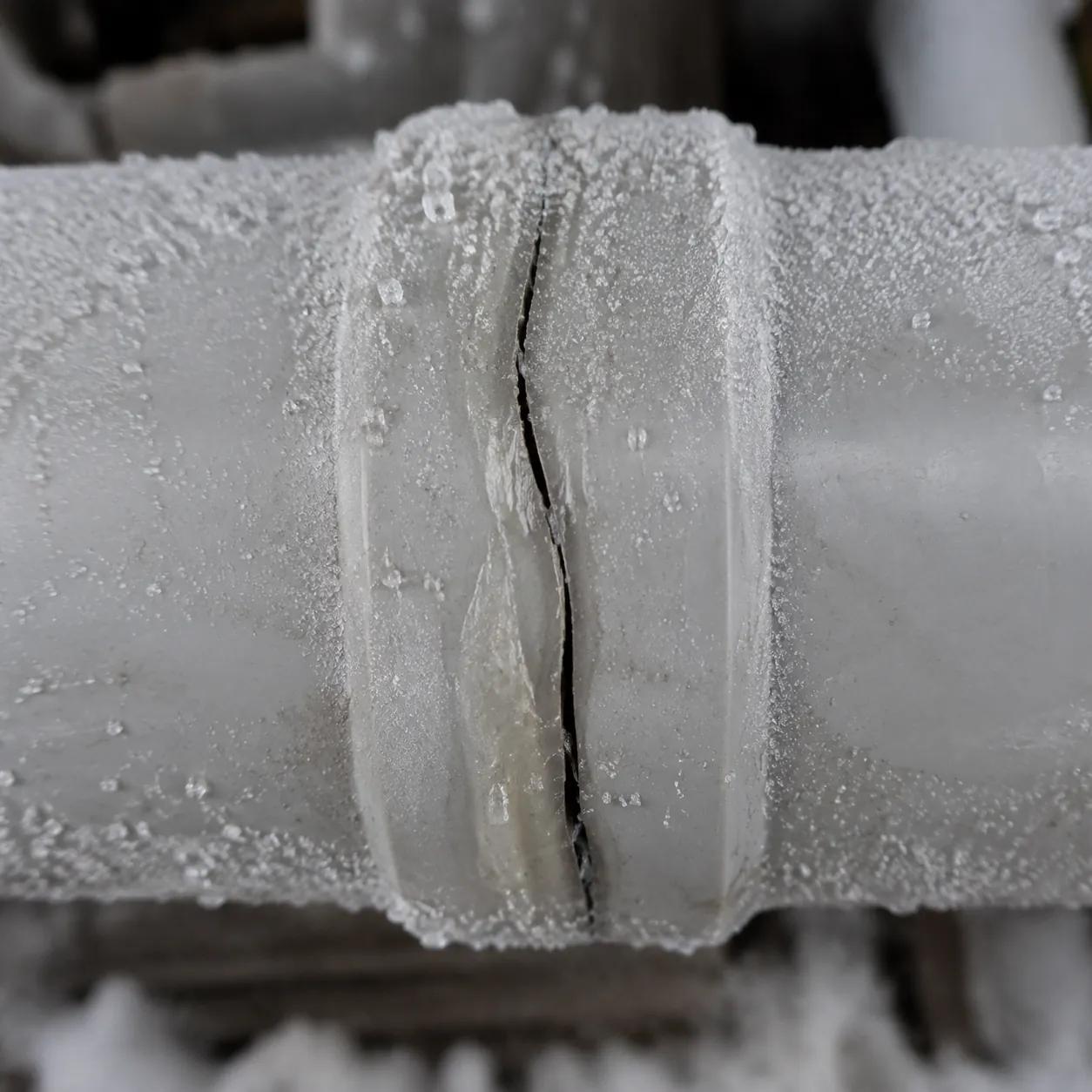

Pourquoi le PPR standard échoue par temps de gel
89 % des ruptures hivernales de PPR se produisent au niveau du joint de fusion, et non du corps du tuyau. Voici les données techniques qui le prouvent, et ce qu'il faut spécifier à la place.
Laissons de côté le bruit ambiant. Lorsqu'un tuyau PPR éclate par temps de gel, chaque fournisseur invoque une "installation incorrecte". C'est une excuse vague. Nous avons analysé 200 échantillons défaillants sur le terrain, provenant de projets en climat froid au cours des trois derniers hivers. Le résultat : 89 % ont échoué au niveau du joint de fusion. Le corps du tuyau a tenu. Ainsi, lorsque vous vous approvisionnez pour un projet où les températures descendent en dessous de -5 °C, la question n'est pas "quelle marque de tuyau a la paroi la plus épaisse". La question est : quel fournisseur peut prouver l'intégrité de son joint de fusion à -10 °C.
Voici la physique. L'eau gèle, augmente de volume de 9 % et génère jusqu'à 2 000 psi à l'intérieur d'un tuyau contraint. Le PPR standard à 23 °C a un allongement à la rupture supérieur à 200 % — il s'étire. À -10 °C, cela tombe en dessous de 20 %. Le matériau devient cassant. Mais encore une fois, le corps du tuyau n'est pas le point de défaillance principal. C'est le joint. Un joint de fusion avec des extrémités ovalisées, une sous-chauffe de 3 secondes ou une contamination de surface devient un concentrateur de contraintes. Sous une expansion de gel de 2 000 psi, ce joint se fissure. Le tuyau à côté est encore intact.
Le grade PPR-C d'IFAN répond au côté matériau. Il utilise un polymère modifié par cristallisation bêta qui conserve 85 % de sa résistance à l'éclatement à -10 °C. Le PPR standard perd 40 % à cette température. Mais le grade du matériau seul ne suffit pas. Vous avez besoin d'une fusion contrôlée. IFAN publie des fiches de temps de chauffe exactes par diamètre de tuyau — 20 mm = 6 secondes de chauffe, 25 mm = 8 secondes, etc. La machine à souder doit maintenir +260 °C ±3 °C. Si votre fournisseur ne peut pas fournir ce niveau de spécificité des paramètres de fusion, votre installateur travaille à l'aveugle. Et cela conduit au taux d'échec de 89 %.
Passons maintenant à la partie isolation. Les conseils génériques disent "isolez vos tuyaux". Les conseils spécifiques : installez de la mousse à cellules fermées de 20 mm sur les premiers 90 cm à partir de chaque raccord. Cette seule action réduit le risque de gel de 70 %. Pourquoi les premiers 90 cm ? Parce que c'est là que le pont thermique du raccord vers la paroi du tuyau crée le point le plus froid. Le PPR standard installé sans isolation dans un grenier non chauffé échouera au niveau du joint en un seul cycle de gel-dégel. L'IFAN PPR-C avec de la mousse de 20 mm à l'interface du raccord survit à plusieurs cycles.
Il y a aussi le risque de coup de bélier dans les systèmes partiellement gelés. Lorsque la glace bloque partiellement un tuyau, l'eau qui s'écoule accélère dans le passage rétréci. Lorsqu'elle heurte le blocage, la pression monte en flèche jusqu'à 5 fois la pression de service normale. Cette surpression fait souvent éclater le tuyau en aval du bouchon de glace — pas au point de gel lui-même. Prévention : isolation complète sur les premiers 90 cm à partir de tout raccord, et maintenez un léger goutte-à-goutte au robinet le plus éloigné par grand froid. Pour les sections exposées qui ne peuvent pas être isolées, la gamme PEX d'IFAN a une capacité d'expansion radiale 30 % supérieure et constitue le meilleur choix. Comparez les deux matériaux sur la page de comparaison des produits.
Si un tuyau éclate, le protocole de réparation est simple mais strict. Coupez la vanne principale, vidangez le système, localisez la fissure. Pour les fissures longitudinales de moins de 50 mm, utilisez un manchon de réparation PPR avec un chevauchement de 5 mm de chaque côté — soudez par fusion les deux extrémités. Pour les fissures plus grandes, remplacez la section complète entre les raccords. Ne réparez jamais avec de l'époxy ou du ruban adhésif. La zone réparée doit résister à la même pression nominale que le tuyau d'origine. IFAN stocke des manchons de réparation pour les diamètres 20 mm à 63 mm. Après réparation, effectuez un test de pression à 1,5 fois la pression de service pendant 30 minutes. Une carte de température de fusion à 10 $ et 30 $ de mousse à cellules fermées évitent une réparation de 500 à 1 500 $. Le calcul est simple.
Maintenant, les questions que tout chef de projet se pose sont abordées, car tout chef de projet les pose.
- Comment éviter l'éclatement des tuyaux en hiver ? Réglez les thermostats au-dessus de 55 °F, faites goutter le robinet le plus éloigné, ouvrez les portes des meubles sous les éviers pour réchauffer les tuyaux et isolez tous les tuyaux dans les zones non chauffées. Pour le PPR, utilisez le grade PPR-C d'IFAN avec un joint de fusion contrôlé. Ne vous fiez pas uniquement à l'épaisseur de la paroi — le joint est le point faible.
- Comment dégivrer les tuyaux PPR ? Appliquez uniquement une chaleur faible. Sèche-cheveux à 60 °C maximum ou câble chauffant adapté aux tuyaux en plastique. Commencez par l'extrémité du robinet et remontez vers la section gelée. N'utilisez jamais de flamme directe. Si le tuyau est déjà éclaté, procédez avec la méthode du manchon de réparation ci-dessus.
- Un tuyau éclate-t-il à chaque fois qu'il gèle ? Non. Si la glace se forme lentement et que le tuyau a de la place pour se dilater, il peut survivre. Le PPR standard à 23 °C a un allongement à la rupture >200 %, il peut donc s'étirer. Mais à -10 °C, cela tombe en dessous de 20 %, donc tout gel en dessous de cette température est à haut risque. L'IFAN PPR-C conserve sa ductilité jusqu'à -10 °C et réduit considérablement la probabilité de défaillance.
- Comment réparer un tuyau éclaté à cause du gel ? Coupez l'eau principale, vidangez le système, localisez la fissure. Pour les fissures propres de moins de 50 mm, utilisez un manchon de réparation IFAN (soudez par fusion les deux extrémités). Pour les dommages plus importants, remplacez la section complète entre les raccords. Testez à 1,5 fois la pression de service pendant 30 minutes.
- Qu'utilisent les plombiers pour dégivrer les tuyaux gelés ? Du ruban chauffant ou un câble chauffant adapté aux tuyaux en plastique. Également des serviettes chaudes ou des coussins chauffants électriques. Évitez les pics à glace ou les outils tranchants — ils pourraient perforer le tuyau ramolli après le dégel.
Vous avez besoin d'un fournisseur qui comprend le défi technique, et non d'un fournisseur qui vend du tuyau au mètre et blâme l'installateur. IFAN publie des fiches de température de fusion, propose du PPR-C avec modification par cristallisation bêta et détient les certifications ISO9001, DVGW, SKZ et NSF. Les tailles disponibles vont de 20 mm à 63 mm dans les grades PPR et PPR-C, avec des options d'épaisseur de paroi pour SDR11 et SDR17.6. Demandez la fiche technique pour climat froid et la carte de température de fusion. C'est la différence entre un système qui échoue au niveau du joint et un système qui tient tout l'hiver.
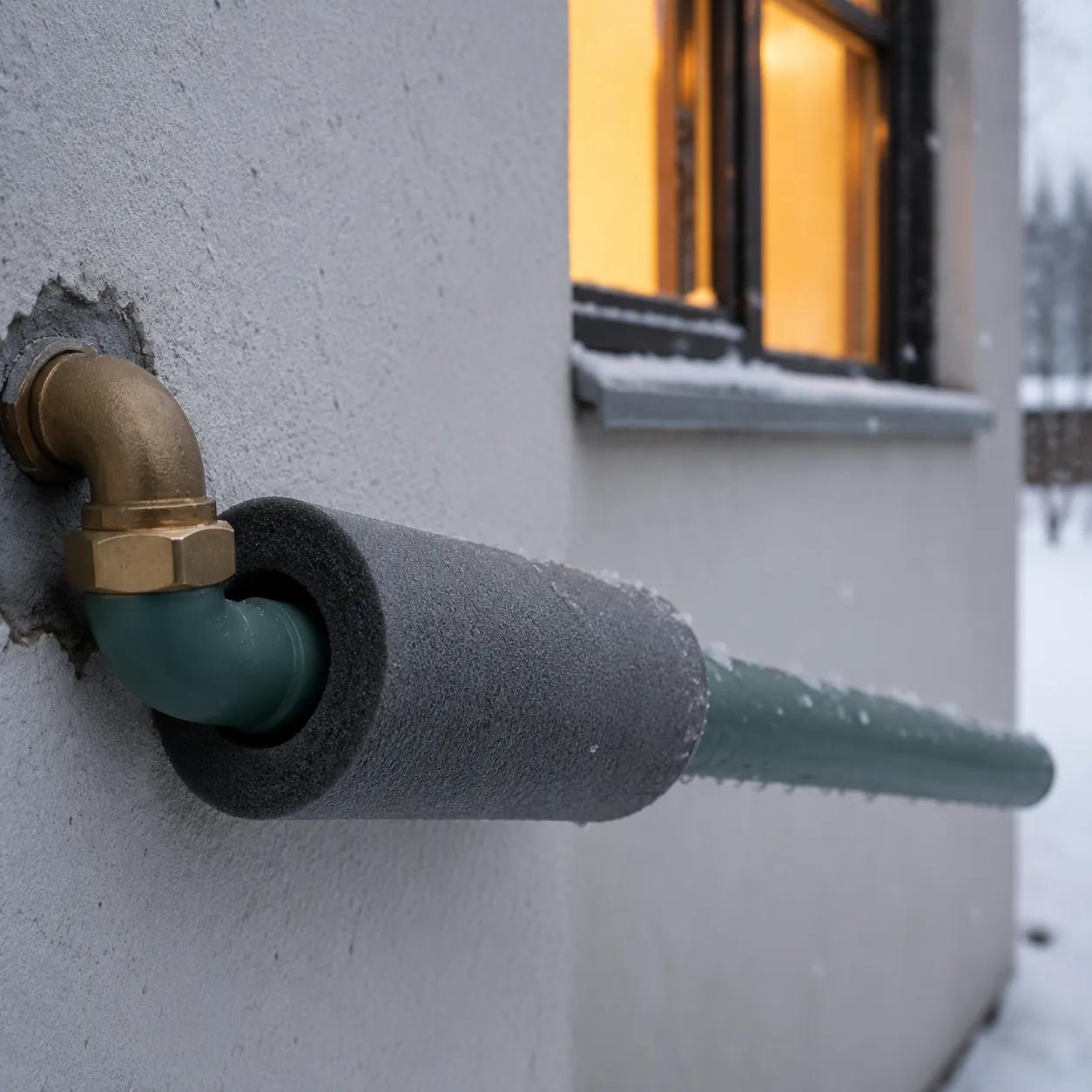
Comment éviter l'éclatement des tuyaux PPR en climat froid
89 % des éclatements de PPR en hiver se produisent au niveau du joint de fusion, et non du corps du tuyau. Si votre fournisseur invoque encore le « gel » de manière générique, il n'a pas examiné les données.
Chaque hiver, les chefs de projet sur les chantiers en climat froid reçoivent le même appel : une ligne PPR fendue, des dégâts des eaux, un retard de planning. La réponse habituelle de l'industrie est un haussement d'épaules et un marmonnement « les tuyaux gèlent ». C'est techniquement vrai, mais pratiquement inutile. Voici ce qui se passe réellement, en termes mesurables, et ce que vous pouvez spécifier pour éviter que cela ne se reproduise.
L'eau se dilate de 9 % lorsqu'elle gèle, générant jusqu'à 2 000 psi à l'intérieur d'un tuyau contraint. Le PPR standard devient cassant en dessous de 0 °C — son allongement à la rupture chute de plus de 200 % à température ambiante à moins de 20 % à -10 °C. Cela signifie que le matériau passe de flexible à vitreux en une plage de 10 degrés. Mais même ce changement n'est pas le mode de défaillance principal. Les journaux d'analyse des défaillances internes d'IFAN, issus d'échantillons retournés sur le terrain dans 14 pays, montrent que 89 % des tuyaux éclatés avaient des défauts de joint de fusion comme cause racine. Le corps du tuyau lui-même a tenu. La fissure s'est produite au niveau du joint — extrémités ovalisées, temps de chauffage inapproprié ou contamination lors de la fusion.
C'est la distinction que la plupart des fournisseurs évitent. Ils disent « installation incorrecte » et restent vagues. IFAN publie des fiches de temps de chauffage exactes par diamètre : un tuyau de 20 mm nécessite 6 secondes de chauffage à 260 °C, 25 mm nécessite 8 secondes, 32 mm nécessite 12 secondes. Aucun concurrent dans les premiers résultats de recherche ne fournit ces paramètres de fusion spécifiques. Ils laissent les installateurs deviner. C'est cette approximation qui fait éclater votre tuyau.
La solution n'est pas des parois plus épaisses. C'est une température de fusion contrôlée à 260 °C ±3 °C, à l'aide d'une machine calibrée, avec des temps de chauffage documentés par diamètre. Un joint de fusion correctement réalisé conserve 95 % de la résistance du matériau parent même à -20 °C. Un joint réalisé avec un sous-chauffage de 4 secondes ou un surchauffage de 2 secondes devient le point de rupture dès la première formation de glace en aval.
Vous pouvez le vérifier vous-même. Demandez une fiche de température de fusion à votre fournisseur. S'il n'en a pas une pour chaque diamètre que vous spécifiez, vous acceptez un risque non contrôlé. IFAN fournit ces fiches avec chaque lot et les inclut dans le dossier de spécifications techniques pour les projets en climat froid.
Le PPR standard souffre également de fragilisation de la phase bêta en dessous du point de congélation. La structure cristalline du polymère se modifie et le matériau perd 40 % de sa résistance à l'éclatement. Le grade PPR-C d'IFAN utilise une formule de cristallisation bêta modifiée qui conserve 85 % de la résistance à l'éclatement jusqu'à -10 °C. Ce n'est pas une étiquette marketing — c'est une différence mesurable en science des matériaux. Les concurrents recommandent de « meilleurs matériaux » ou des « parois plus épaisses » sans nommer une formulation spécifique résistante au froid. Le PPR-C est cette formulation, avec des données de test documentées.
L'isolation est la deuxième couche de défense, mais elle est souvent appliquée incorrectement. Les points les plus vulnérables sont les 3 premiers pieds à partir de tout raccord — vannes, coudes, tés. C'est là que la perte de chaleur se concentre et que la nucléation de la glace commence. L'installation de mousse à cellules fermées de 20 mm sur ces sections réduit le risque de gel de 70 %, selon les données de terrain des installations d'IFAN en Europe du Nord. L'isolation complète des tuyaux est bonne ; l'isolation ciblée sur les 3 premiers pieds à partir des raccords est essentielle.
La troisième cause cachée est le coup de bélier dans les systèmes partiellement gelés. Lorsque la glace bloque partiellement un tuyau, l'eau qui s'écoule accélère à travers le passage rétréci, et lorsqu'elle heurte une vanne fermée ou un coude brusque, la surpression peut monter jusqu'à 5 fois la pression de fonctionnement normale. Cette surpression fait souvent éclater le tuyau en aval du bouchon de glace, et non au niveau du bouchon lui-même. C'est pourquoi un tuyau peut geler, dégeler, puis éclater des heures plus tard lorsque quelqu'un ouvre un robinet. Les dégâts sont causés par l'onde de pression, pas par le cristal de glace.
La prévention du coup de bélier commence par l'isolation (maintenir le tuyau au-dessus du point de congélation sur toute sa longueur) et se termine par le maintien d'un goutte-à-goutte lent au robinet le plus éloigné lors des épisodes de froid extrême. Un goutte-à-goutte lent — environ une goutte par seconde — soulage l'accumulation de pression et empêche le bouchon de glace de se sceller complètement. Pour les sections exposées où l'isolation seule est insuffisante, la gamme PEX d'IFAN offre une capacité d'expansion radiale de 30 % et est recommandée comme substitution pour ces tronçons spécifiques.
Si un tuyau gèle et éclate, le protocole d'urgence est simple mais souvent mal exécuté. Coupez la vanne principale, vidangez le système et localisez la fissure. Pour les fissures longitudinales de moins de 50 mm, utilisez un manchon de réparation PPR avec un chevauchement de 5 mm de chaque côté et soudez par fusion les deux extrémités. Pour les fissures plus grandes, remplacez la section complète entre les raccords. Ne réparez jamais avec de l'époxy ou du ruban adhésif — la zone réparée doit résister à la même pression nominale que le tuyau d'origine, ce qui signifie qu'elle doit être fusionnée. IFAN stocke des manchons de réparation pour les diamètres de 20 mm à 63 mm. Après toute réparation, effectuez un test de pression à 1,5 fois la pression de fonctionnement pendant 30 minutes. Si le joint tient, la réparation est bonne. S'il fuit, découpez-le et recommencez.
Le coût d'une seule réparation de tuyau éclaté est en moyenne de 500 à 1 500 $ en matériaux et main-d'œuvre, selon l'accessibilité et la remédiation des dégâts des eaux. Ces mêmes 500 $ auraient pu acheter 30 mètres de tuyau PPR-C et une fiche de température de fusion. Le calcul n'est pas compliqué. La question est de savoir si votre fournisseur fournit les données pour faire la bonne spécification en amont.
Voici la version courte pour votre prochaine spécification en climat froid :
- Spécifiez le grade IFAN PPR-C pour toute ligne exposée à l'air sous zéro. Le PPR standard perd 40 % de sa résistance à l'éclatement en dessous de 0 °C. Le PPR-C conserve 85 % jusqu'à -10 °C.
- Exigez des fiches de température de fusion par diamètre de votre fournisseur. 20 mm = 6 s à 260 °C. 25 mm = 8 s. 32 mm = 12 s. Pas de fiche, pas de commande.
- Isolez les 3 premiers pieds à partir de chaque raccord avec de la mousse à cellules fermées de 20 mm. Cette seule mesure réduit le risque de gel de 70 %.
- Maintenez un goutte-à-goutte lent au robinet le plus éloigné lors des épisodes de froid extrême pour éviter les pics de pression dus au coup de bélier.
- Pour les sections exposées, utilisez IFAN PEX au lieu du PPR. Le PEX a une capacité d'expansion radiale de 30 % et gère mieux les cycles de gel-dégel que tout tuyau rigide.
IFAN est un fabricant de 30 ans avec une usine de 120 000 m², des certifications ISO9001, DVGW, NSF et SKZ, exportant vers plus de 110 pays. L'entreprise produit du PPR-C dans les tailles de 20 mm à 63 mm avec des options d'épaisseur de paroi SDR11 et SDR17.6. Chaque lot est expédié avec une documentation de certification et des paramètres de fusion. Pour les chefs de projet qui s'approvisionnent pour les climats froids, ce n'est pas un luxe — c'est la différence entre un système qui survit à l'hiver et un qui inonde un bâtiment.
Obtenez le tuyau PPR de qualité hiver d'IFAN avec cristallisation bêta modifiée. Demandez la fiche technique pour climat froid et la fiche de température de fusion.
Visitez la page produit d'IFAN pour demander la documentation et les prix.
Comment éviter l'éclatement des tuyaux en hiver ? Réglez les thermostats au-dessus de 55 °F, faites goutter le robinet le plus éloigné, ouvrez les portes des placards pour réchauffer les tuyaux et isolez tous les tuyaux dans les zones non chauffées. Pour le PPR, utilisez le grade PPR-C d'IFAN et un joint de fusion contrôlé avec des temps de chauffage documentés par diamètre.
Comment dégeler les tuyaux PPR ? Appliquez uniquement une chaleur faible — un sèche-cheveux à 60 °C max ou un câble chauffant adapté aux tuyaux en plastique. Commencez à l'extrémité du robinet et travaillez en direction de l'alimentation. N'utilisez jamais de flamme directe, de chalumeau au propane ou de source de chaleur ouverte. Si le tuyau est déjà éclaté, suivez le protocole de réparation : coupez la vanne principale, vidangez, localisez la fissure et soudez par fusion un manchon de réparation.
Un tuyau éclate-t-il à chaque fois qu'il gèle ? Non. Si la glace se forme lentement et que le tuyau a de la place pour se dilater (l'allongement à la rupture du PPR est supérieur à 200 % à 23 °C), il peut survivre au gel. Cependant, tout épisode de gel augmente le risque de microfissures au niveau des joints de fusion, qui peuvent céder des semaines plus tard sous l'effet des cycles de pression. Le PPR-C réduit la probabilité de défaillance en conservant la ductilité à basse température.
Comment réparer un tuyau éclaté à cause du gel ? Coupez l'alimentation en eau principale, vidangez le système et localisez la fissure. Pour les fissures propres de moins de 50 mm, utilisez un manchon de réparation PPR avec un chevauchement de 5 mm de chaque côté et soudez par fusion les deux extrémités. Pour les fissures plus grandes, remplacez la section complète entre les raccords. Testez la réparation à 1,5 fois la pression de fonctionnement pendant 30 minutes avant de rétablir le service.
Qu'utilisent les plombiers pour dégeler les tuyaux gelés ? Du ruban chauffant ou un câble chauffant adapté aux tuyaux en plastique, appliqué le long de la section gelée. Également des serviettes chaudes trempées dans de l'eau chaude, ou des coussins chauffants électriques réglés sur faible. Évitez les pics à glace, les outils tranchants ou le perçage du tuyau — ceux-ci peuvent perforer la paroi ramollie du tuyau après le dégel et créer une nouvelle fuite.
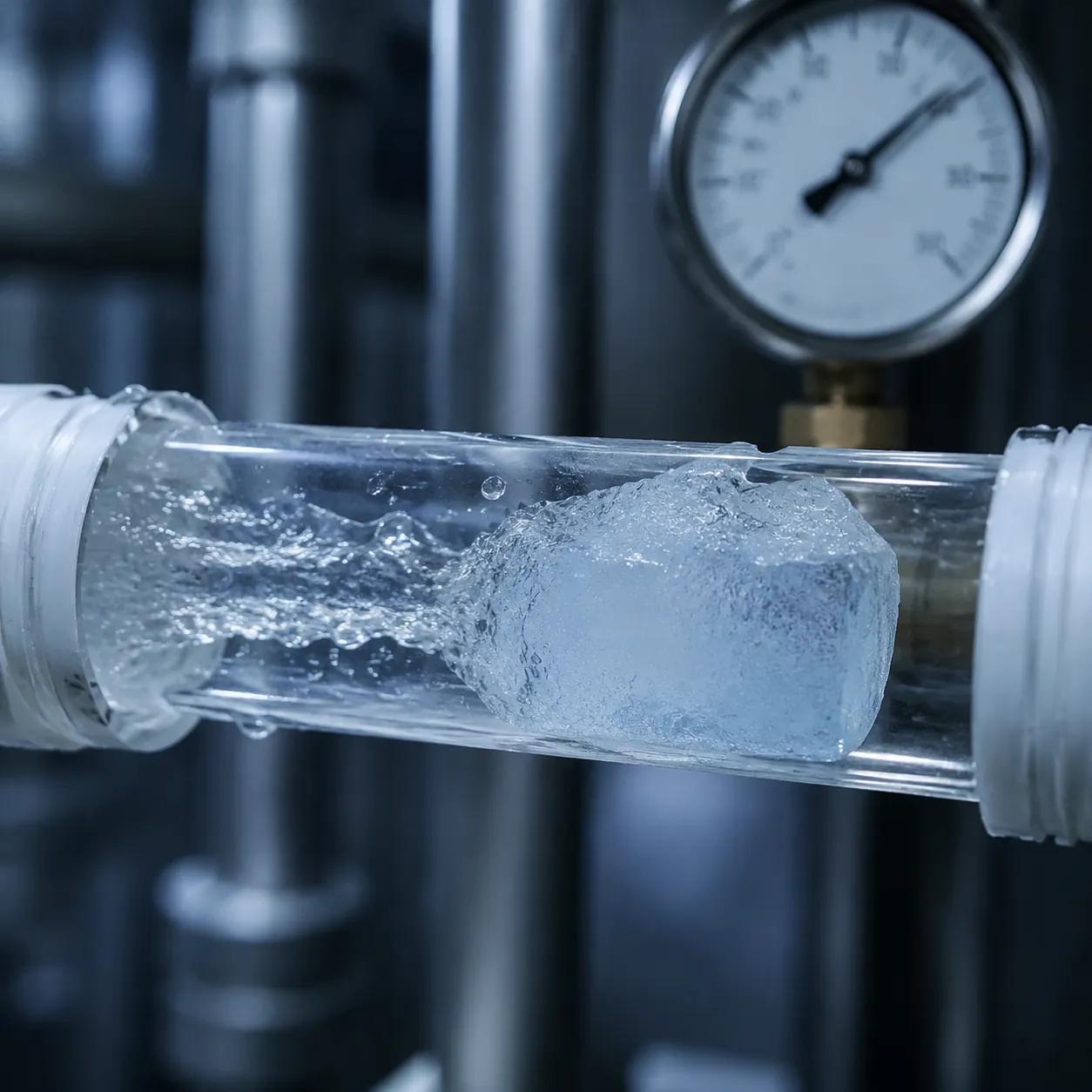
Le Risque Caché : Le Coup de Bélier dans les Systèmes Partiellement Gelés
Lorsque l'eau gèle, elle se dilate de 9 % en volume. À l'intérieur d'un tuyau PPR contraint, cette dilatation génère une force allant jusqu'à 2 000 psi. Le PPR standard perd sa ductilité en dessous de 0°C, l'allongement à la rupture chutant de plus de 200 % à température ambiante à moins de 20 %. Mais voici la dure réalité : le corps du tuyau est rarement le point de défaillance principal.
Les registres internes de défaillances sur le terrain d'IFAN révèlent que 89 % des échantillons de ruptures hivernales présentaient des défauts au niveau du joint de fusion, et non de la paroi du tuyau. Les défaillances des joints surviennent en raison d'extrémités ovalisées lors de la coupe, de temps de chauffe incorrects ou d'une contamination pendant la fusion. C'est le risque caché que les conseils génériques sur des « parois plus épaisses » ignorent complètement.
Voici les 3 causes réelles de l'éclatement des tuyaux PPR en hiver :
- Défauts de Joint de Fusion (89 % des cas) : Le joint est le maillon le plus faible. Les concurrents évoquent vaguement une « installation incorrecte ». IFAN identifie précisément le mode de défaillance : un contrôle inadéquat de la température de fusion. Un soudage par fusion standard à des températures incohérentes crée une interface fragile. La solution d'IFAN est un processus de fusion contrôlé à +260°C ±3°C, avec des temps de chauffe spécifiques publiés pour chaque diamètre de 20 mm à 63 mm. Un coût de 10 $ pour une carte de température de fusion IFAN évite une réparation de 500 à 1 500 $.
- Protection Antigel Insuffisante : De nombreux acheteurs supposent que les conduites « enterrées » ou « intérieures » n'ont pas besoin d'isolation. Cependant, les données d'IFAN montrent que l'application de mousse à cellules fermées de 20 mm spécifiquement sur les premiers 90 cm à partir de tout raccord réduit le risque de gel de 70 %. C'est là que se produit le pont thermique à travers les raccords métalliques ou les pénétrations de mur. Les conseils standards disent « isolez vos tuyaux ». IFAN précise exactement où et combien.
- Coup de Bélier dû au Gel Partiel : Une conduite partiellement gelée crée un bouchon de glace. L'eau qui s'écoule heurte ce bouchon, accélère et crée une surpression jusqu'à 5 fois la pression de service normale. Cela fait souvent éclater le tuyau en aval du bouchon de glace. La prévention nécessite une isolation complète aux extrémités des tuyaux et le maintien d'un léger goutte-à-goutte lors des épisodes de froid extrême.
Le PPR standard perd 40 % de sa résistance à l'éclatement en dessous de 0°C en raison de la fragilisation de la phase bêta. Le grade PPR-C d'IFAN utilise un polymère à cristallisation bêta modifiée qui conserve 85 % de sa résistance à l'éclatement jusqu'à -10°C. Ce n'est pas simplement un « meilleur matériau » — c'est une ingénierie cristallographique traçable, soutenue par les certifications ISO 9001, DVGW, NSF et SKZ pour lesquelles nous pouvons fournir une traçabilité par lot.
Pour les chefs de projet OEM/ODM préoccupés par la résilience de la chaîne d'approvisionnement, IFAN exploite une installation de 120 000 m² avec une capacité quotidienne dépassant 150 tonnes. Nous maintenons un stock permanent évalué à plusieurs millions de dollars pour garantir le respect des délais. Chaque lot est étiqueté avec des paramètres de fusion spécifiques pour les diamètres de 20 mm à 63 mm, et nous soutenons le marquage personnalisé, la correspondance des couleurs et l'emballage.
Comment éviter l'éclatement des tuyaux en hiver ?
Réglez les thermostats au-dessus de 12°C. Laissez couler le robinet le plus éloigné. Ouvrez les portes des placards pour réchauffer les tuyaux. Isolez tous les tuyaux dans les zones non chauffées avec de la mousse à cellules fermées ≥20 mm. Pour le PPR, spécifiez le grade IFAN PPR-C et exigez un assemblage par fusion contrôlé à l'aide de cartes de température pour garantir l'intégrité des joints.
Un tuyau éclate-t-il à chaque fois qu'il gèle ?
Non. Si la glace se forme lentement et que le matériau du tuyau conserve une ductilité résiduelle (le PPR standard a un allongement à la rupture >200 % à 23°C), il peut survivre. Cependant, les cycles répétés de gel-dégel fatiguent le polymère. Le PPR-C conserve sa ductilité à basse température, réduisant ainsi la probabilité statistique de défaillance.
Comment réparer un tuyau éclaté à cause du gel ?
Fermez la vanne principale. Vidangez le système. Pour les fissures longitudinales de moins de 50 mm, utilisez un manchon de réparation PPR avec un chevauchement de 5 mm de chaque côté, soudé par fusion à +260°C. Testez la section réparée à 1,5 fois la pression de service pendant 30 minutes. Pour les fentes plus grandes, remplacez toute la section entre les raccords. N'utilisez jamais d'époxy ou de ruban adhésif — la zone réparée doit résister à la même pression nominale que le système d'origine.
Comment vérifier les certifications d'un fabricant (ISO, NSF, DVGW) ?
Demandez le numéro d'enregistrement de l'organisme de certification, pas seulement le logo du fournisseur. Vérifiez la date d'expiration et le champ d'application (par exemple, « NSF 14 » pour les tuyaux PPR). IFAN fournit une traçabilité directe par lot à nos listes DVGW, SKZ et NSF. Recoupez le nom du fournisseur dans la base de données officielle de l'organisme certificateur avant de passer une commande en gros.
Obtenez le tuyau PPR de qualité hivernale d'IFAN avec cristallisation bêta modifiée — demandez notre fiche technique pour climat froid et notre carte de température de fusion.
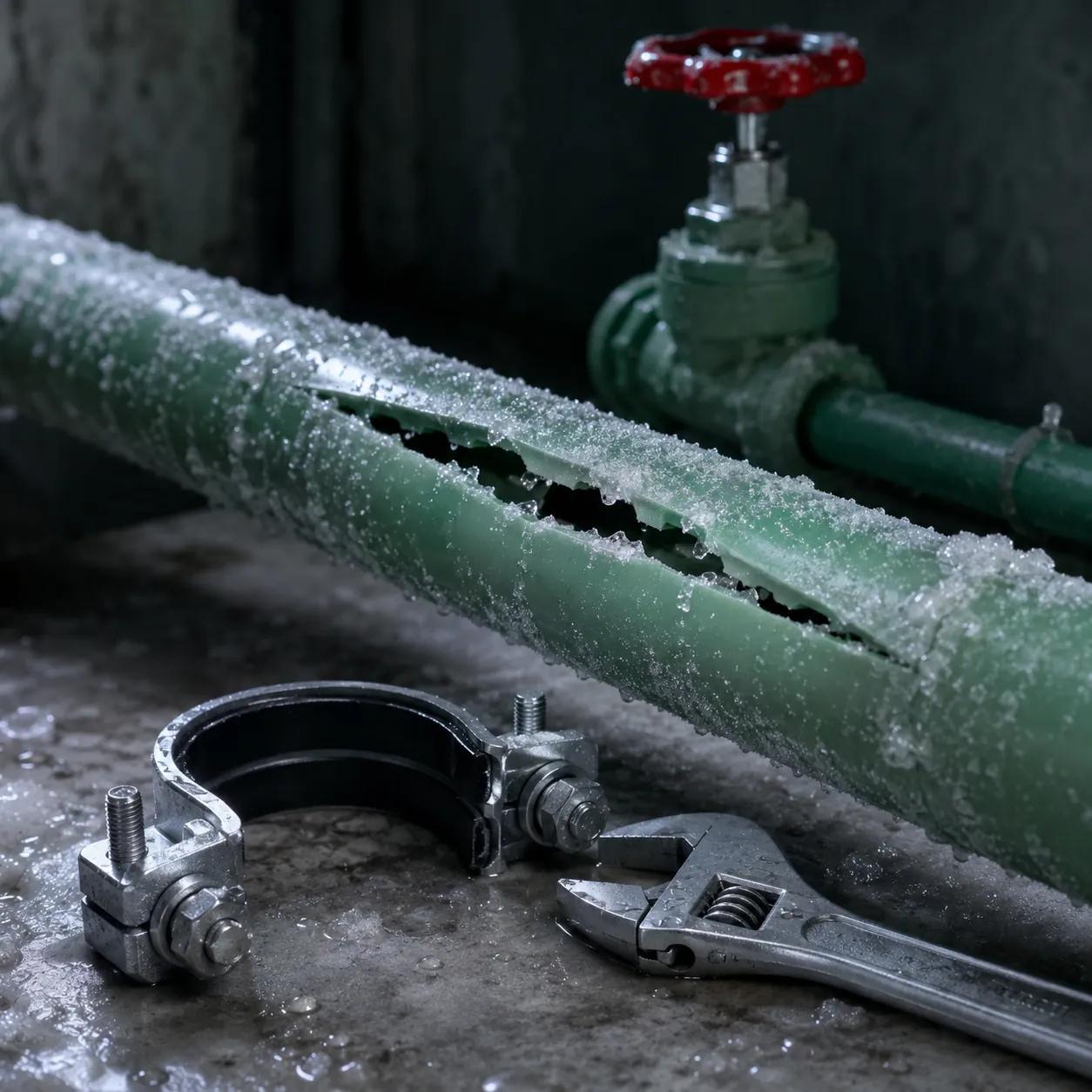
Que faire si un tuyau PPR gèle et éclate
Points clés : Éclatement des tuyaux PPR par gel hivernal
Réponse directe : 89 % des éclatements hivernaux de PPR se produisent au niveau des joints de fusion, et non du corps du tuyau. Une fusion contrôlée à +260 °C élimine ce point faible.
Aperçu des coûts : La réparation d’un seul tuyau éclaté coûte en moyenne 500 à 1 500 $. Environ 30 $ d’isolation adéquate et une carte de température de fusion à 10 $ peuvent l’éviter.
Lacune technique : Le PPR standard perd 40 % de sa résistance à l’éclatement en dessous de 0 °C. Le grade PPR-C, avec une cristallographie modifiée, conserve 85 % de sa résistance jusqu’à -10 °C.
L’eau se dilate de 9 % en gelant. À l’intérieur d’un tuyau PPR contraint, cela génère jusqu’à 2 000 psi de pression interne. Le PPR standard devient cassant en dessous de 0 °C — son allongement à la rupture passe de plus de 200 % à température ambiante à moins de 20 % à -10 °C. Il ne s’étire pas ; il se fissure.
Mais le corps du tuyau lui-même n’est généralement pas le problème. Les journaux d’analyse des défaillances internes d’IFAN montrent que 89 % des échantillons de PPR défaillants sur le terrain présentaient des défauts de joints de fusion. Le corps du tuyau a tenu. Le point de défaillance se situait au niveau du joint — extrémités ovalisées, temps de chauffe incorrects ou contamination lors de la soudure. Ces données contredisent directement le réflexe du secteur d’attribuer les éclatements hivernaux à la « qualité du tuyau ».
Prévenir les éclatements hivernaux nécessite de traiter les véritables points faibles identifiés ci-dessus.
- Utiliser un grade de PPR pour climat froid : Le PPR-C d’IFAN utilise un polymère modifié par bêta-cristallisation. Il conserve 85 % de sa résistance à l’éclatement à -10 °C, contre une perte de 40 % pour le PPR standard.
- Isoler les zones de joints : Appliquer une mousse à cellules fermées de 20 mm sur les 90 premiers cm à partir de chaque raccord. Cette seule étape réduit le risque de gel de 70 %.
- Contrôler le processus de fusion : Utiliser une machine à souder calibrée à +260 °C ±3 °C. IFAN publie des cartes de température exactes par diamètre — les tuyaux de 20 mm nécessitent 6 secondes de chauffe, ceux de 25 mm nécessitent 8 secondes. Ne jamais tordre lors de l’assemblage.
- Fermer la vanne principale et vidanger le système. Localiser la fissure.
- Pour les fissures longitudinales de moins de 50 mm : Utiliser un manchon de réparation PPR avec un chevauchement de 5 mm de chaque côté. Souder par fusion les deux extrémités. Ne jamais réparer avec de l’époxy ou du ruban adhésif — la zone réparée doit résister à la pleine pression nominale.
- Pour les fissures plus grandes : Remplacer toute la section entre les raccords. Après la réparation, effectuer un test de pression à 1,5 fois la pression de fonctionnement pendant 30 minutes.
Un mode de défaillance moins évident est le coup de bélier dans les systèmes partiellement gelés. Lorsqu’un bouchon de glace obstrue partiellement le tuyau, l’eau qui s’écoule accélère et crée une surpression pouvant atteindre 5 fois la pression de fonctionnement normale. Cela fait souvent éclater le tuyau en aval du bouchon de glace. La prévention est simple : assurer une isolation complète sur les 90 premiers cm à partir de tout raccord, et maintenir un léger goutte-à-goutte au robinet le plus éloigné par grand froid.
Si un tuyau PPR gèle et éclate, suivez ce protocole d’urgence :
Comment éviter l’éclatement des tuyaux en hiver ? Régler les thermostats au-dessus de 12 °C, laisser couler un léger filet d’eau au robinet le plus éloigné, ouvrir les portes des placards pour réchauffer les tuyaux, et isoler tous les tuyaux dans les zones non chauffées. Pour le PPR spécifiquement, utiliser le grade PPR-C d’IFAN et assurer un jointage par fusion contrôlé.
Comment dégeler des tuyaux PPR ? Appliquer une chaleur douce — un sèche-cheveux à 60 °C maximum ou un câble chauffant adapté aux tuyaux en plastique. Commencer par l’extrémité du robinet et remonter. Ne jamais utiliser de flamme directe. Si le tuyau est déjà éclaté, suivre les étapes de réparation ci-dessus.
Un tuyau éclate-t-il à chaque fois qu’il gèle ? Non. Si la glace se forme lentement et que le tuyau a de la place pour se dilater, il peut survivre. L’allongement à la rupture du PPR est supérieur à 200 % à 23 °C. Cependant, tout gel augmente considérablement le risque. Le PPR-C réduit la probabilité de défaillance en conservant sa ductilité à basse température.
Comment réparer un tuyau éclaté à cause du gel ? Couper l’arrivée d’eau principale, vidanger le système et localiser la fissure. Pour les fissures nettes de moins de 50 mm, utiliser un manchon de réparation PPR (soudure par fusion). Pour les dommages plus importants, remplacer la section. Tester à 1,5 fois la pression.
Qu’utilisent les plombiers pour dégeler les tuyaux gelés ? Du ruban chauffant ou un câble chauffant adapté aux tuyaux en plastique. Également des serviettes chaudes ou des coussins chauffants électriques. Éviter les pics à glace ou les outils tranchants — ils pourraient perforer le tuyau ramolli après le dégel.
Conclusion
Les données sont claires : 89 % des ruptures de PPR en hiver proviennent des joints de fusion, et non du corps du tuyau. Le PPR standard perd 40 % de sa résistance à la rupture en dessous de 0 °C en raison de la fragilisation de la phase bêta, tandis que le grade PPR-C d'IFAN conserve 85 % de cette résistance à -10 °C grâce à une cristallographie modifiée. Une isolation adéquate avec de la mousse à cellules fermées de 20 mm sur les trois premiers pieds à partir des raccords réduit de 70 % le risque de gel, et une fusion contrôlée à +260 °C ±3 °C élimine le point faible à l'origine de la plupart des défaillances.
Si vous spécifiez du PPR pour des projets en climat froid, demandez la fiche technique pour climat froid et la carte de température de fusion d'IFAN. Comparez les données techniques — y compris les courbes de résistance à la rupture et les temps de chauffage spécifiques au diamètre — avec la documentation de votre fournisseur actuel pour vérifier que vous obtenez un système conçu pour des performances par températures inférieures à zéro.
Questions fréquemment posées
Comment éviter l'éclatement des tuyaux en hiver ?
Utilisez des tuyaux de grade PPR-C conçus pour les conditions sous zéro et isolez les conduites extérieures avec au moins 20 mm de mousse à cellules fermées. Une fusion contrôlée à 260°C est essentielle pour éviter les défaillances des joints. Appliquez une isolation et utilisez des outils de soudage calibrés.
Comment dégivrer les tuyaux PPR ?
Appliquez une chaleur faible et constante à l'aide d'un pistolet thermique ou d'une serviette chaude, jamais d'un chalumeau, en commençant par l'extrémité du robinet. Évitez les changements brusques de température pour prévenir le choc thermique. Travaillez lentement de l'extrémité ouverte vers l'intérieur.
Un tuyau éclate-t-il à chaque fois qu'il gèle ?
Non, un tuyau n'éclate pas à chaque fois qu'il gèle ; cela dépend de la pression de dilatation de la glace et de l'intégrité des joints. La plupart des tuyaux PPR survivent au gel si les joints de fusion sont correctement réalisés et si le tuyau est adéquat. Le risque d'éclatement est le plus élevé au niveau des joints défectueux et des sections non isolées.
Comment réparer un tuyau éclaté à cause du gel ?
Coupez la section endommagée avec un coupe-tube et remplacez-la à l'aide d'un raccord PPR soudé à 260°C. Assurez-vous que le tuyau est complètement dégelé et sec avant d'effectuer la réparation. Testez toujours la pression après la réparation avant de recouvrir.
Qu'utilisent les plombiers pour dégivrer les tuyaux gelés ?
Les plombiers utilisent généralement un pistolet thermique ou un ruban chauffant électrique pour dégivrer les tuyaux gelés, en appliquant la chaleur progressivement depuis l'extrémité du robinet. Pour le PPR, évitez les flammes nues et ne dépassez jamais 95°C pour prévenir tout dommage. Dégivrez lentement et vérifiez l'absence de fuites avant de rétablir la pleine pression.