
Brass vs Stainless Steel Valves: When to Upgrade
One standard covers both materials. The upgrade is right in four cases: chloride over 200/1,000 ppm, heat, steam, or a market approval brass cannot hold.
A specifier returns the valve schedule with one line changed: brass to stainless, all sizes. No water analysis is attached and no service temperature is given.
On most building potable and heating service that upgrade buys nothing brass in the correct grade does not already deliver. One European product standard covers both materials, so stainless is no higher compliance tier. Dezincification, the failure buyers are usually trying to escape, has a named brass grade that solves it and a test that proves it. The upgrade is right in four situations: chloride above the grade screening threshold, temperature above the brass derating curve, steam or aggressive media, and a market approval a copper alloy cannot hold. Below those lines, write the grade on the order and keep the money.
Key Takeaways
- BS EN 13828:2025 covers copper alloy and stainless ball valves, DN 6 to DN 100, PN10 or PN16, to 65 °C.
- DZR grade CW602N answers dezincification inside brass, tested to ISO 6509-2 at 100 µm average depth.
- Published screening thresholds: 200 ppm chloride for grade 304, 1,000 ppm for grade 316.
- Brass derates hard: one published forged series runs 600 psi cold and 100 psi at 400 °F.
- Lead rules are jurisdictional: 0.25% weighted average in the US from 4 January 2014, EU positive lists from 31 December 2026.

| Service condition | Correct specification | Best for | Verdict |
|---|---|---|---|
| Potable water, chloride under 200 ppm | Brass CW617N or lead-free grade | Housing, risers, hotels | Brass. No upgrade needed |
| Soft, acidic, chloride 200–1,000 ppm | DZR brass CW602N, ISO 6509-2 | Coastal and borehole supply | Brass, grade changed |
| Chloride over 1,000 ppm | Stainless 316 (1.4401) | Desalinated supply | Stainless 316 |
| Continuous over 120 °C, or steam | Stainless, ASME B16.34 Class | Plant rooms, condensate | Stainless |
| Food, pharma, process media | Stainless 316 plus approval | Process and dairy lines | Stainless |
Source: BSSA Sheet 4.92 (2001), BS EN 13828:2025. Compiled 20 September 2026.
One Product Standard Already Covers Both Materials
The upgrade argument rests on an unspoken premise: that stainless sits in a higher regulatory class. In building potable service it does not. BS EN 13828:2025, published 28 February 2025, is titled for manually operated copper alloy and stainless steel ball valves and classifies both under the same PN and temperature envelope. Its envelope is DN 6 to DN 100, PN10 or PN16, distribution to 65 °C, with excursions to 90 °C for one hour.
The envelope carries a second lesson: IFAN publishes brass ball valves at PN16, PN25 and PN40 across DN8 to DN100, so the PN25 and PN40 sizes sit above this ceiling. Nor is a grade code a rating: BS EN 12165:2024 fixes the composition of forging stock and assigns the finished valve no pressure figure. Our rating guide covers the three rating systems.
Dezincification Is a Grade Problem, Not a Metal Problem
Ordinary hot-working brass in soft, acidic or chloride-bearing water loses zinc from the alloy. The remaining copper turns porous and the valve eventually weeps.
The answer lives inside brass. CW602N, EN designation CuZn36Pb2As, carries 35.0 to 37.0% zinc, 1.7 to 2.8% lead and a controlled 0.08 to 0.15% arsenic addition that inhibits the zinc loss. The resistance is measurable, which matters more than the adjective. ISO 6509-1:2014 sets the method, 1% copper chloride at 75 °C for 24 hours; ISO 6509-2 sets the pass marks, 100 µm average and 200 µm maximum for forgings and castings.
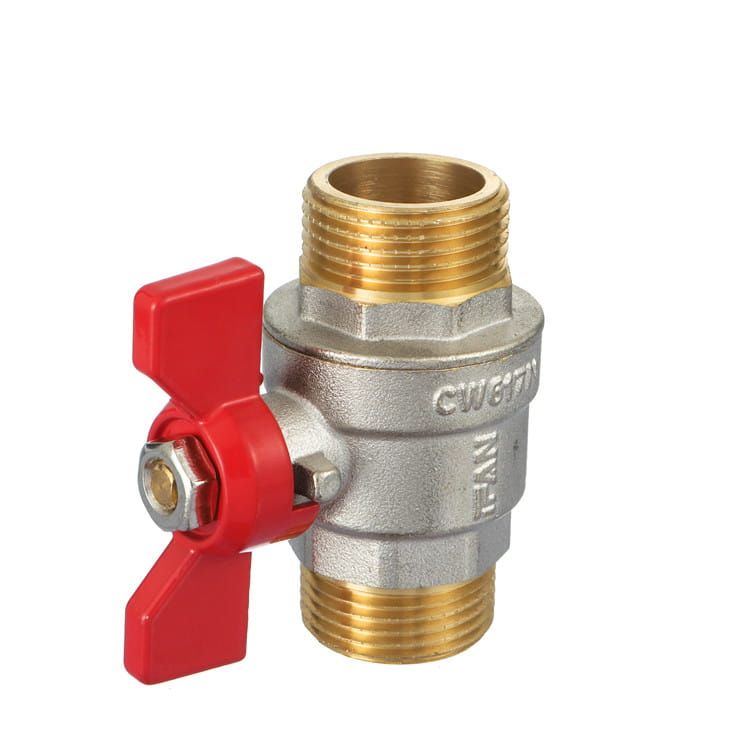
So a purchase order reading DZR brass is weak, and one reading CW602N, dezincification depth to ISO 6509-2 is enforceable. Our alloy grade guide sets out how the three grades differ.
The Chloride Number That Decides the Upgrade
If one number decides this specification, it is chloride. The British Stainless Steel Association sheet 4.92, issue 02 of 9 March 2001, states that crevice corrosion is rare below 200 ppm for grade 304 and below 1,000 ppm for grade 316. Read those as screening thresholds from a 2001 advisory document, not as code limits and not as immunity.
The gap between the two grades is molybdenum: grade 316 carries roughly 2 to 3%, per Boshart published material, while 304 has none, and that molybdenum is also why 316 costs more. Read your water analysis against Table 2.
| Parameter (unit) | Brass CW617N | DZR brass CW602N | Stainless 304 | Stainless 316 |
|---|---|---|---|---|
| Chloride screening limit (ppm) | Not the governing risk | Not the governing risk | 200 | 1,000 |
| Dezincification risk | Present in aggressive water | Inhibited by arsenic | Not applicable | Not applicable |
| Acceptance test | None specific | ISO 6509-2 | — | — |
| Molybdenum content (%) | 0 | 0 | 0 | 2–3 |
Source: BSSA Sheet 4.92 (2001); ISO 6509-1:2014 and ISO 6509-2; composition per Boshart. Read 20 September 2026.
Where Brass Genuinely Stops: Heat, Steam and Pressure
Temperature is the second line, and brass loses it on published numbers rather than reputation. One forged-brass full-port series, the Webstone 4470 and 5470 ranges, is rated 600 psi non-shock cold water and 150 psi saturated steam over -40 to 400 °F, with a catalogue maximum of 400 °F at 100 psi. That is 41.4 bar cold falling to 6.9 bar at 204 °C, a sixth of the cold figure.
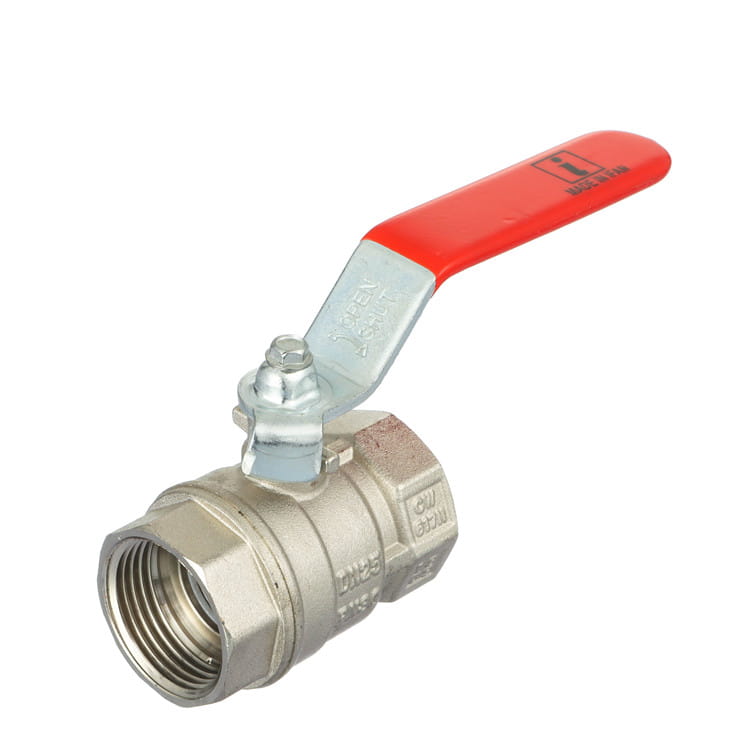
Stainless does not escape derating either. Under ASME B16.34 the same Class resolves differently by material group: for A182 F316 in the -20 to 100 °F band, Class 150 is 275 psig and Class 300 is 720 psig, both below the carbon-steel 285 and 740 psig. What stainless buys is headroom at temperature, which is why continuous duty above 120 °C, live steam and condensate return belong to it.
Lead Compliance Is Jurisdictional, and Neither Metal Wins It
Buyers reach for stainless to settle a drinking-water question, and it does not: these rules limit what the wetted surface may leach, not which metal family it belongs to. In the United States, section 1417 of the Safe Drinking Water Act defines lead free as a weighted average of 0.25% lead across wetted surfaces. The EPA summary records that the Reduction of Lead in Drinking Water Act cut the old 8% figure to that average, effective 4 January 2014. Exemptions catch people out: shower valves, tub fillers, service saddles and distribution-main gate valves of 2 inches and larger sit outside it. A threaded isolation ball valve on a potable line does not.
In the European Union the mechanism is a positive list instead. Commission Implementing Decision (EU) 2024/367 of 23 January 2024 applies from 31 December 2026. Substances approved nationally between 13 July 2021 and that date stay usable to 31 December 2032, against the 5 µg/l lead value at the tap.
| Destination | Rule | What it limits | Effective date |
|---|---|---|---|
| United States | SDWA section 1417, amended 2011 | 0.25% weighted average lead, wetted surfaces | 4 January 2014 |
| European Union | Implementing Decision (EU) 2024/367 | Authorised starting substances | 31 December 2026 |
| EU transitional route | Same decision, Article 3 | National approvals, 5 µg/l at tap | Until 31 December 2032 |
| United Kingdom | WRAS approval scheme | Product and material approval | In force |
Source: US EPA SDWA lead-free guidance; EUR-Lex, Implementing Decision (EU) 2024/367. Read 20 September 2026.
What the Upgrade Costs, and What We Check Before Quoting a Grade
The trade repeats a two-to-four multiple for the stainless premium. Inside one catalogue, series and size, it is narrower. Valworx prices on 20 September 2026 put its 1 inch NPT direct-mount valve at USD 78.40 in lead-free brass C69300, rated 600 psi; the same valve in 316 stainless, rated 1,000 psi, is USD 112.00. The list prices behind them, USD 98.00 and USD 140.00, run the same ratio. That is 1.43 times the price for 1.67 times the rating. Any wider multiple is an estimate; that pair is a premium actuator-ready line.
| Published price tier, Valworx 1 inch NPT female direct-mount series | Brass, lead-free C69300 (USD) | 316 stainless steel (USD) |
|---|---|---|
| List price | 98.0 | 140.0 |
| Discounted price | 78.4 | 112.0 |
Either way the order needs four lines, not a metal name: the grade (CW617N, CW602N, or 316 / 1.4401), the acceptance test where one exists, the market approval the destination demands, and the pressure class at a stated temperature. What we check before naming a grade is the other side of that list: the chloride figure, the continuous service temperature, and the destination rule with its date.
IFAN publishes CW617N bodies from DN8 to DN100 at PN16, PN25 and PN40, with CE, ACS, WRAS and SASO certification, and offers CW602N and lead-free alloys on the same product line. It makes no stainless valve, which is why the four cases in Table 1 send you elsewhere. Below those lines, ask us to price the grade, not the metal: send the water figures on WhatsApp.
Conclusion
Run this as a checklist, not a preference. Compare the chloride figure with 200 and 1,000 ppm. Read the continuous service temperature against the brass derating curve. Name the destination market and its lead rule with its date. Then write the grade, the test and the pressure class on the order, because those lines are what a supplier can be held to. Where the numbers point at stainless, buy stainless; where they do not, the grade change inside brass is cheaper and equally defensible. Our brass valve guide covers the rest.
Frequently Asked Questions
Is brass or stainless steel better for plumbing?
Neither is better in general. For building potable and heating service below 200 ppm chloride and 65 °C, brass in the correct grade is the right specification. Above those figures, or in steam, stainless is.
Why is brass preferred over stainless steel for valves?
Cost and fitness. A same-catalogue 1 inch comparison on 20 September 2026 showed USD 78.40 in brass against USD 112.00 in 316 stainless, and BS EN 13828:2025 classifies both materials under the same PN and temperature envelope in building potable service.
What chloride level means I need 316 rather than 304?
The BSSA advisory threshold is 200 ppm for grade 304 and 1,000 ppm for grade 316 in supply waters. Between those figures, specify 316; above 1,000 ppm, seek advice on a higher alloy.
Does a stainless valve meet drinking-water rules that brass cannot?
No. The US 0.25% weighted-average lead limit and the EU positive lists regulate what the wetted surface leaches, not the metal family. A lead-free brass or a DZR brass can hold the same approvals.
Is DZR brass the same as lead-free brass?
No. DZR brass such as CW602N resists dezincification and still contains 1.7 to 2.8% lead. Lead-free alloys address the potable lead limit. An aggressive-water potable job may need both properties specified.