
PPR Pipe Fittings Guide: Types, Compatibility & How to Order
PPR fittings look interchangeable and are not: DN20 and DN25 do not share sockets even at the same PN class, PN20 and PN25 share fittings but only for smaller diameters, and mixing brands mid-line is how fusion joints leak six months in. This guide covers fitting types, compatibility rules and how to spec a mixed-SKU container correctly.
Most problems with PPR pipe fittings don't show up on the catalog page — they show up three weeks after the container lands, when an installer can't get a clean weld between your pipe and a fitting from a different batch. The fitting types themselves are simple: elbows turn corners, tees split lines, couplings join two pipes. What separates a smooth project from a callback is knowing which fittings actually weld to your pipe, which sizes need a reducer, and where the cheap ones hide their corners.
A single DN20 socket weld holds at the same fusion temperature whether the pressure class is PN20 or PN25 — they share identical fittings. That one fact saves distributors from over-ordering two parallel fitting sets, and it's the kind of detail the generic "20 types of fittings" lists never mention. Sizes and their inch trade names are in the PPR pipe sizes chart (DN20–DN160 in mm and inches).
Key Takeaways
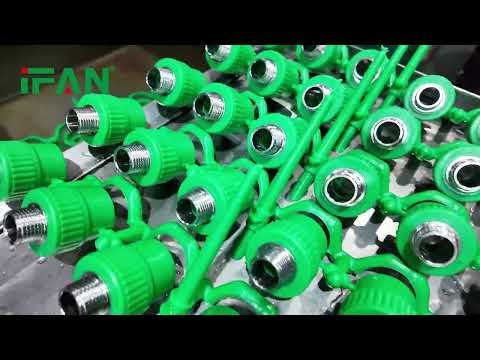
- The fittings you'll order 80% of the time: socket coupling, 90° elbow, equal tee, reducing tee, reducer, end cap, and threaded adapter.
- PN20 and PN25 pipe use the same fittings and weld together — you don't need two fitting inventories.
- DN20 and DN25 are different outer diameters (20mm vs 25mm). To join them you need a reducer or reducing socket, not a coupling.
- Mixing PPR with PPH or PB fittings is the top cause of fusion failure — match 100% virgin PP-R throughout.
- On threaded adapters, the brass insert quality — not the plastic — decides whether the joint leaks in year two.
- For a balanced container, plan roughly 2–3 fittings per pipe length, weighted toward elbows and couplings.
The PPR Fittings You'll Actually Order
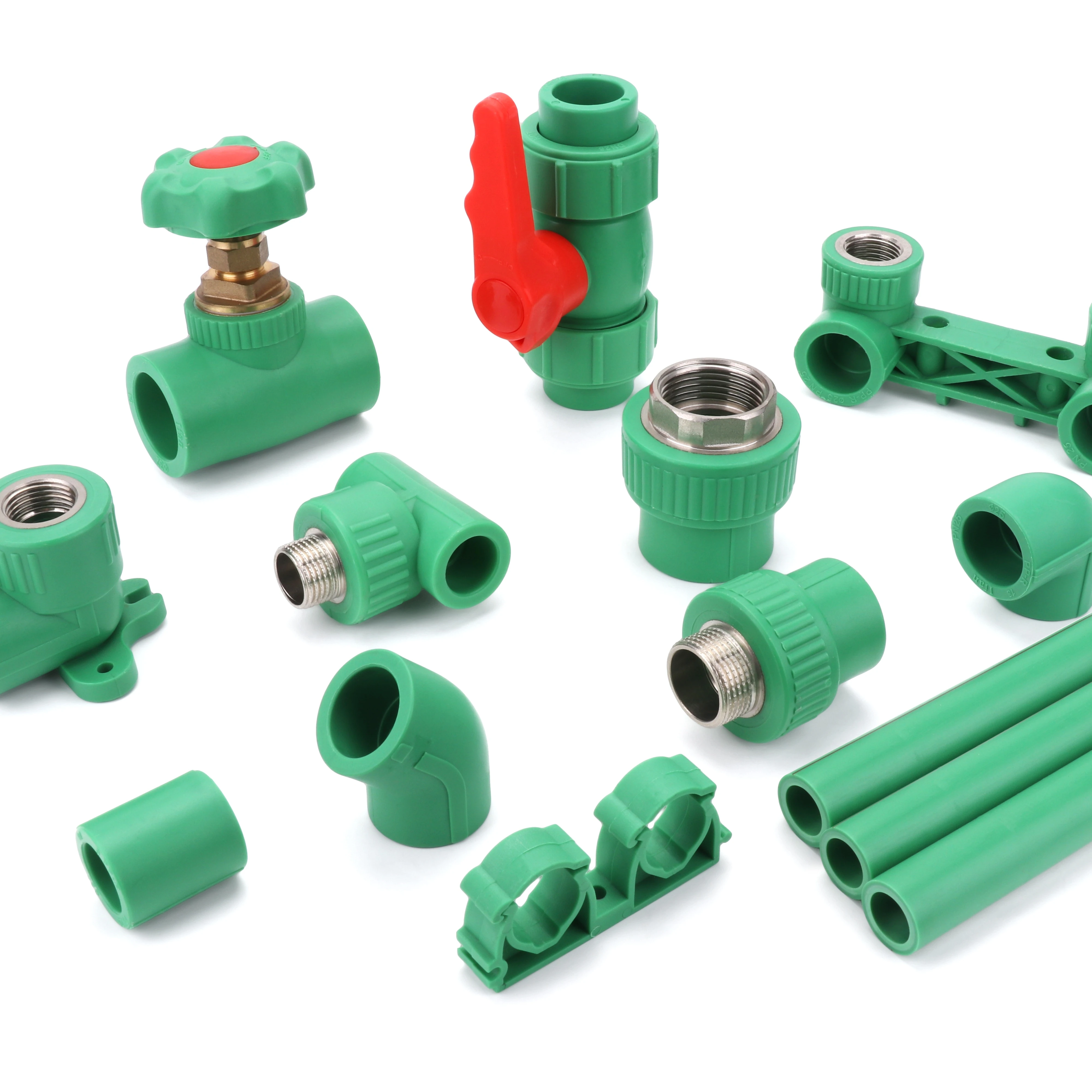
There are more than 20 fitting shapes in a full PPR catalog, but a normal water-supply project moves on about ten of them. The rest are edge cases. Here's the working set, with the job each one does and the sizes that move fastest.
When a valve fitting does leak, the fix is specific — see PPR ball valve leak repair.
A good fitting still leaks if the joint is wrong — see the six real causes of PPR joint leaks.
Connectors and direction-changers
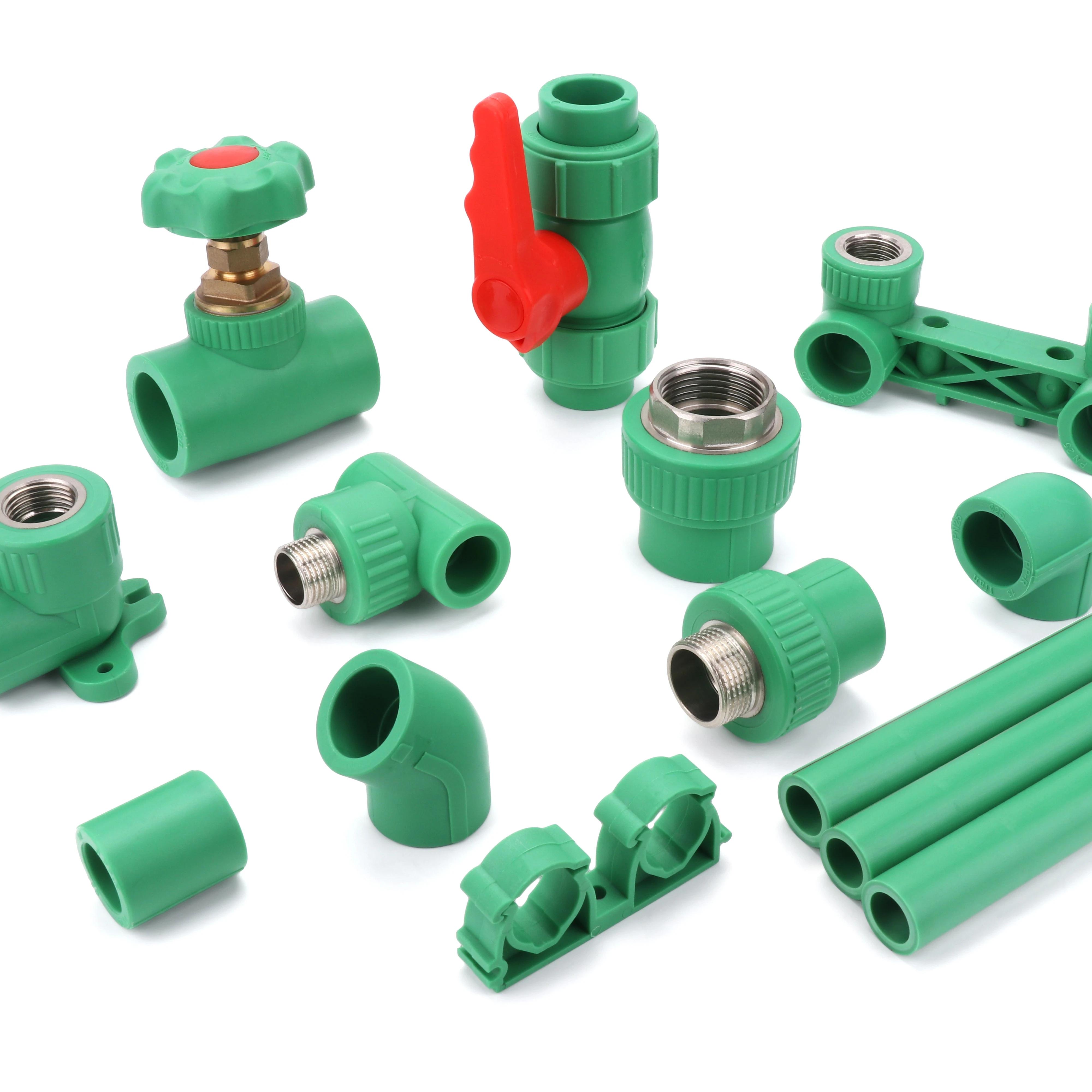
- Socket coupling: joins two pipes of the same diameter end to end. Your highest-volume fitting on any straight run.
- 90° and 45° elbows: turn the line around corners and risers. The 90° outsells the 45° several times over.
- Equal tee: splits one line into two of the same size — branch lines off a main.
- Reducing tee: branches a smaller line off a larger main (DN32 main → DN20 branch), so you don't drop the whole run to the smaller size.
Size changes and line ends
- Reducer (reducing socket): steps one diameter up or down — DN25 to DN20 is the common one. This is the part installers forget to order and then improvise badly.
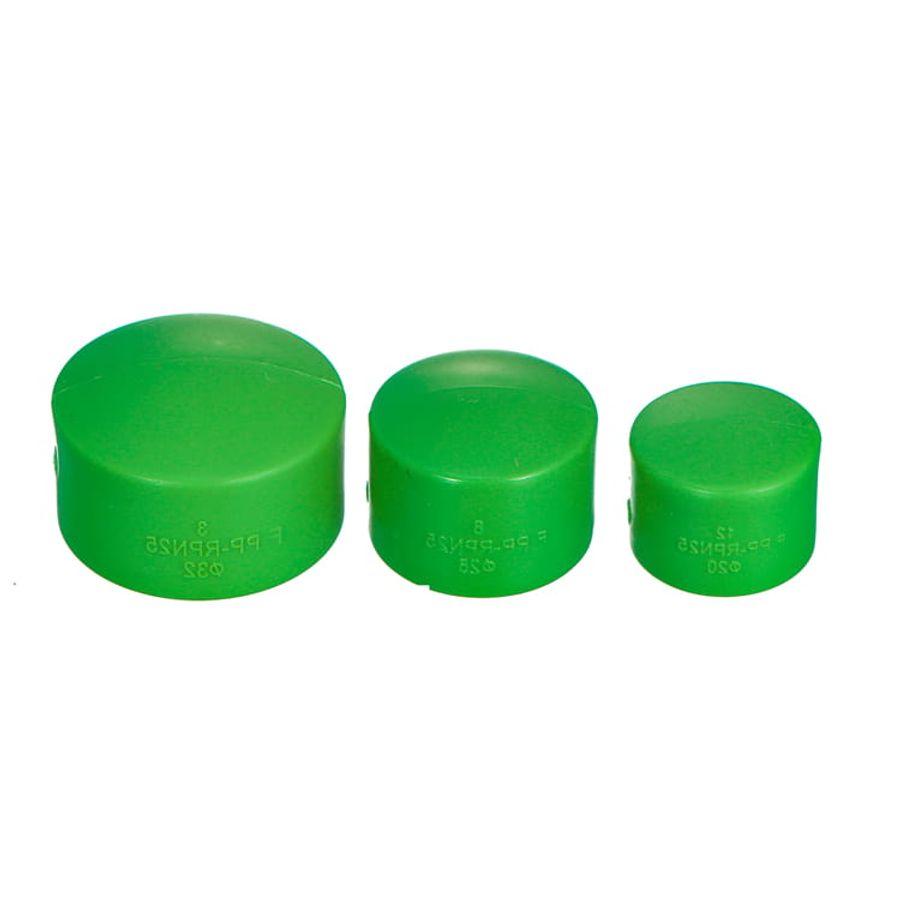
- End cap: seals a line for pressure testing or a future tap-in.
- Cross: four-way junction. Niche — most layouts use two tees instead.
Transition and control parts
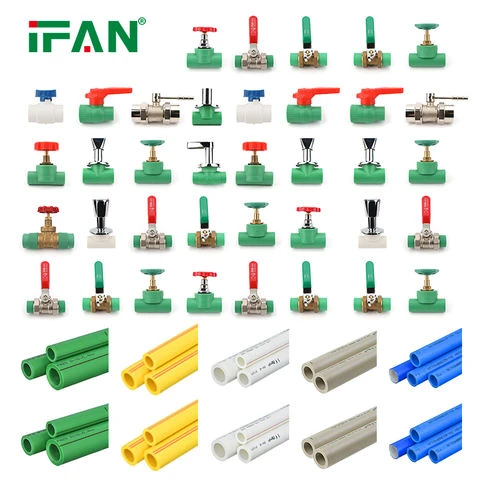
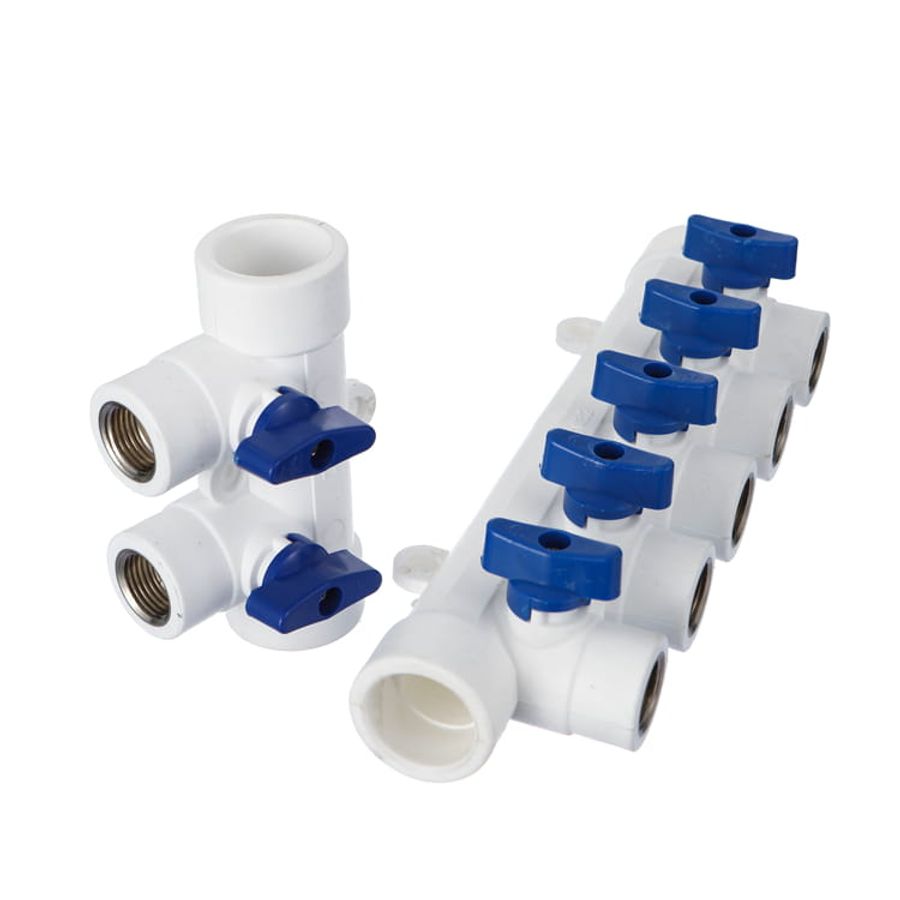
- Male/female threaded adapter: connects a welded PPR line to threaded metal — taps, meters, pumps, water heaters.
- Union: a screwed coupling that lets you break the line for maintenance without cutting pipe.
- Ball / stop valve: shut-off and flow control, covered in its own section below.
Compatibility: Where Container Orders Go Wrong
A fitting that looks identical can still refuse to bond. PPR joints are heat-fused, not glued — the pipe wall and the fitting socket melt into one piece. That only works if the materials and dimensions agree. Three mismatches cause almost every weld failure.
If a fitting and pipe come from different material grades, the weld can look perfect and still split under pressure months later. The joint never truly fused — it cooled as two layers pressed together.
Material must match: PP-R to PP-R
All fittings and pipe must be the same polymer family — 100% virgin PP-R, or a compatible PP-R copolymer. The fittings half of this is governed by ISO 15874-3, the international standard for PP fittings in hot- and cold-water systems. Mixing in PPH (homopolymer) or PB (polybutylene) fittings to save a few cents is the classic field disaster: the melt temperatures differ, so the two surfaces never fully bond. Recycled-content fittings cause the same problem because the melt behavior drifts batch to batch. This is why buyers ask for batch certificates — the certificate is what tells you the fitting will weld like the pipe.
Wall thickness (the S-series) has to agree
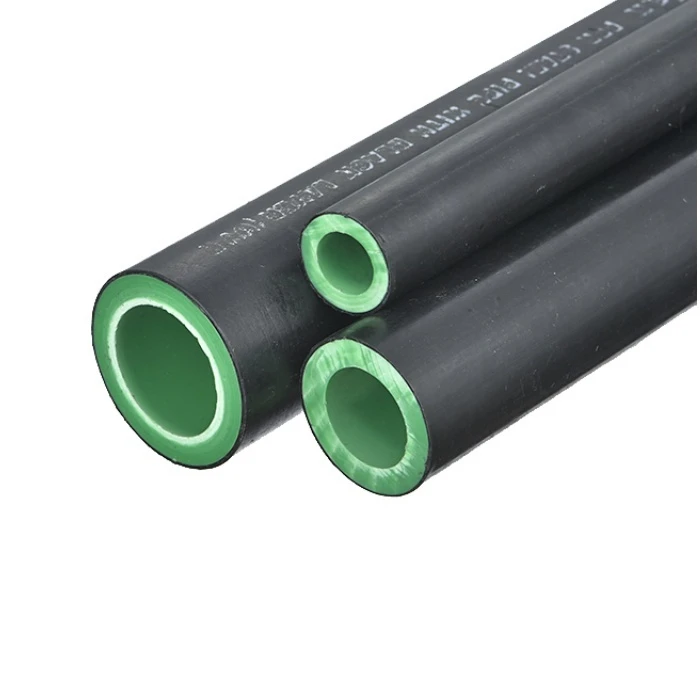
Pipes and fittings carry an S-series rating that maps to wall thickness. Pair an S2.5 pipe with an S2.5-or-thicker fitting. A thinner fitting on a thicker pipe leaves too little material to fuse cleanly. Match the rating and the fusion depth stays consistent across the whole system.
PN20 and PN25 share fittings — DN sizes don't
Here's the part that trips up first-time importers. Pressure class is about the pipe: PN20 handles 20 bar, PN25 handles 25 bar, and they use the exact same fittings — order one fitting set, not two. Diameter is the opposite story. DN20 (20mm OD) and DN25 (25mm OD) are physically different and will not couple directly. Crossing sizes always needs a reducer.
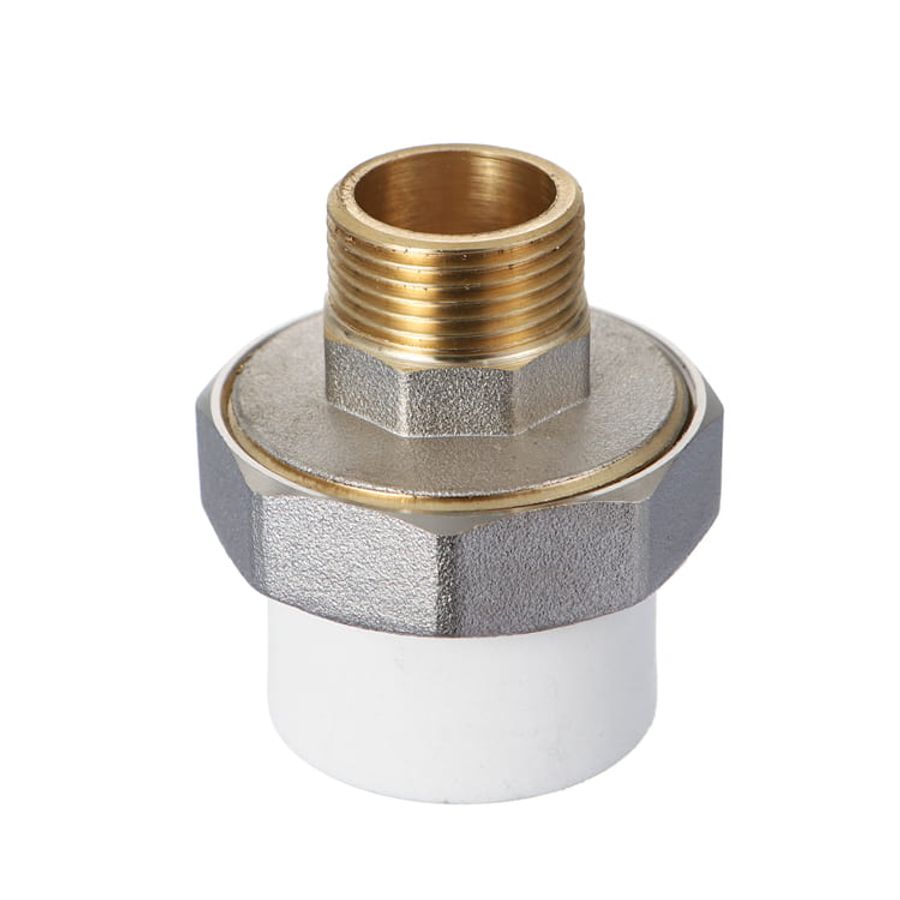
Threaded Adapters: The Brass Insert Decides Everything
Anywhere PPR meets metal — a tap, a water heater, a pump, a meter — the joint runs through a threaded adapter with a brass insert moulded into the plastic. The plastic body is rarely the failure point. The brass is.
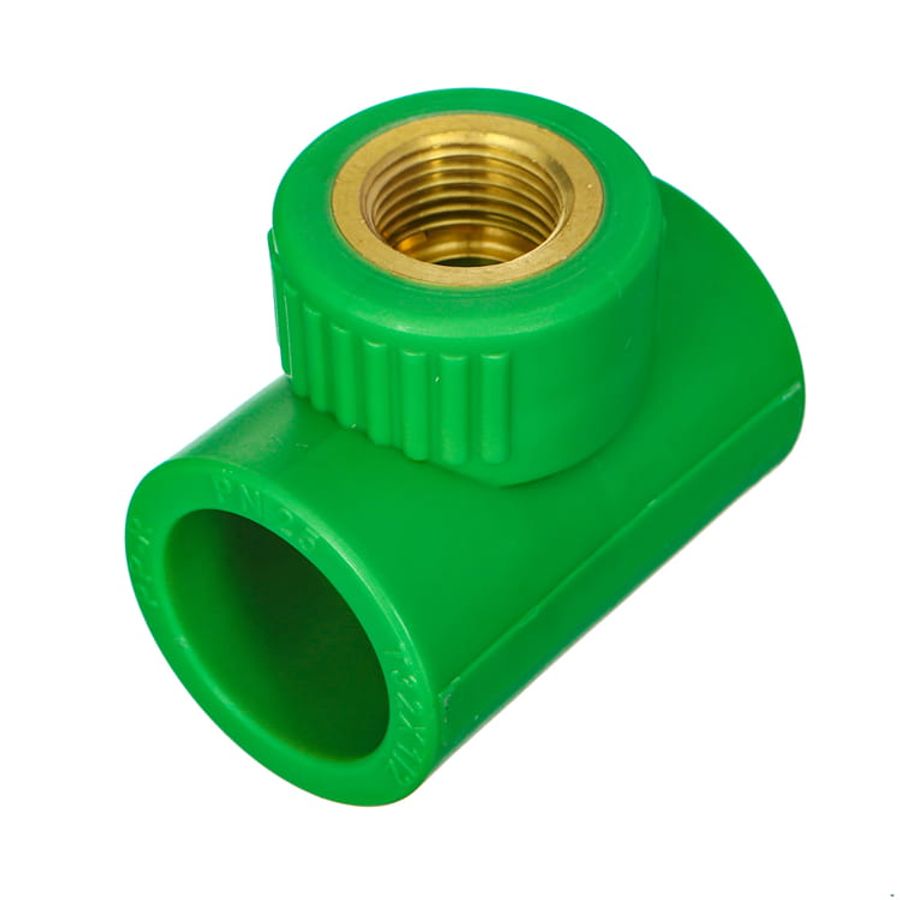
Low-grade adapters use thin or low-copper brass that corrodes and loses its thread grip, and some use a smooth insert that spins inside the plastic once you torque a fitting onto it. Both leak within a year or two — long after the installer has left. Two checks separate the good from the cheap:
- Knurled, not smooth: the brass insert should have a ridged or hexagonal outer profile so it locks into the plastic and can't rotate under torque.
- Weight and thread feel: quality brass has heft and clean, sharp threads. Light, soft, rough-threaded inserts signal low copper content.
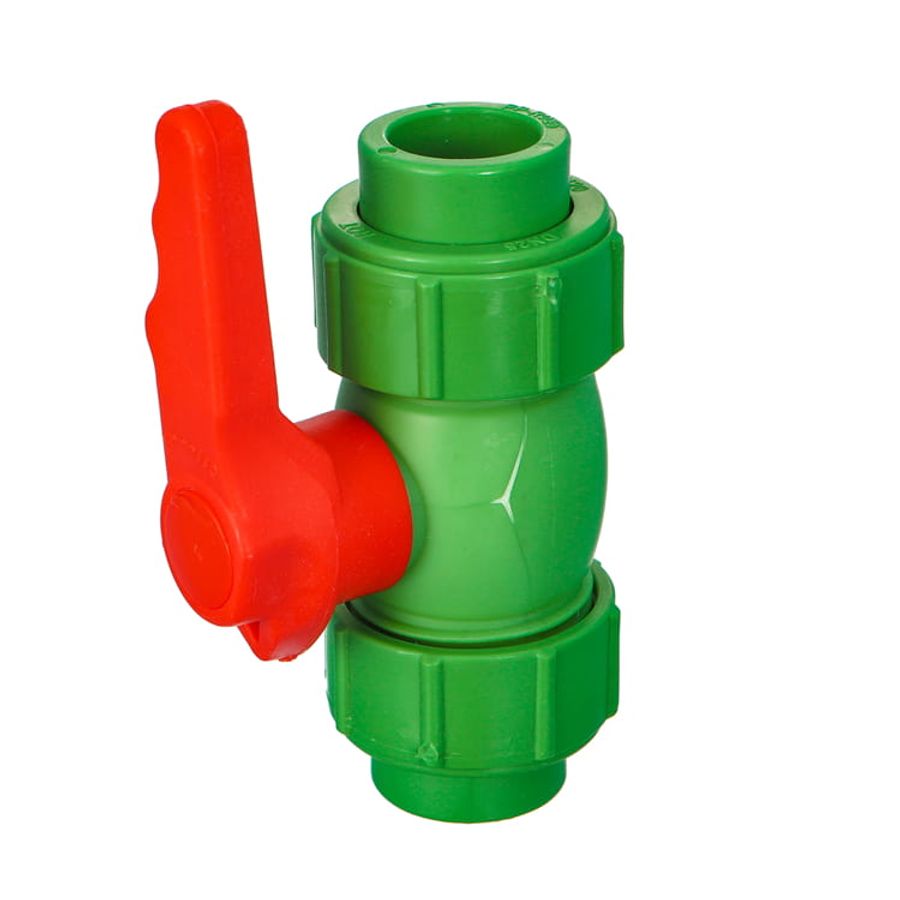
Choosing Valves: Ball vs Stop vs Union
Three valve types cover almost every plumbing line. Picking the wrong one means either poor flow or no clean way to service the line later.
| Valve | Best for | Flow resistance | Watch out for |
|---|---|---|---|
| Ball valve | Quick full shut-off on mains and risers | Low | On/off only — not for throttling flow |
| Stop valve | Fine flow control at fixtures | Higher | Slower to fully close than a ball valve |
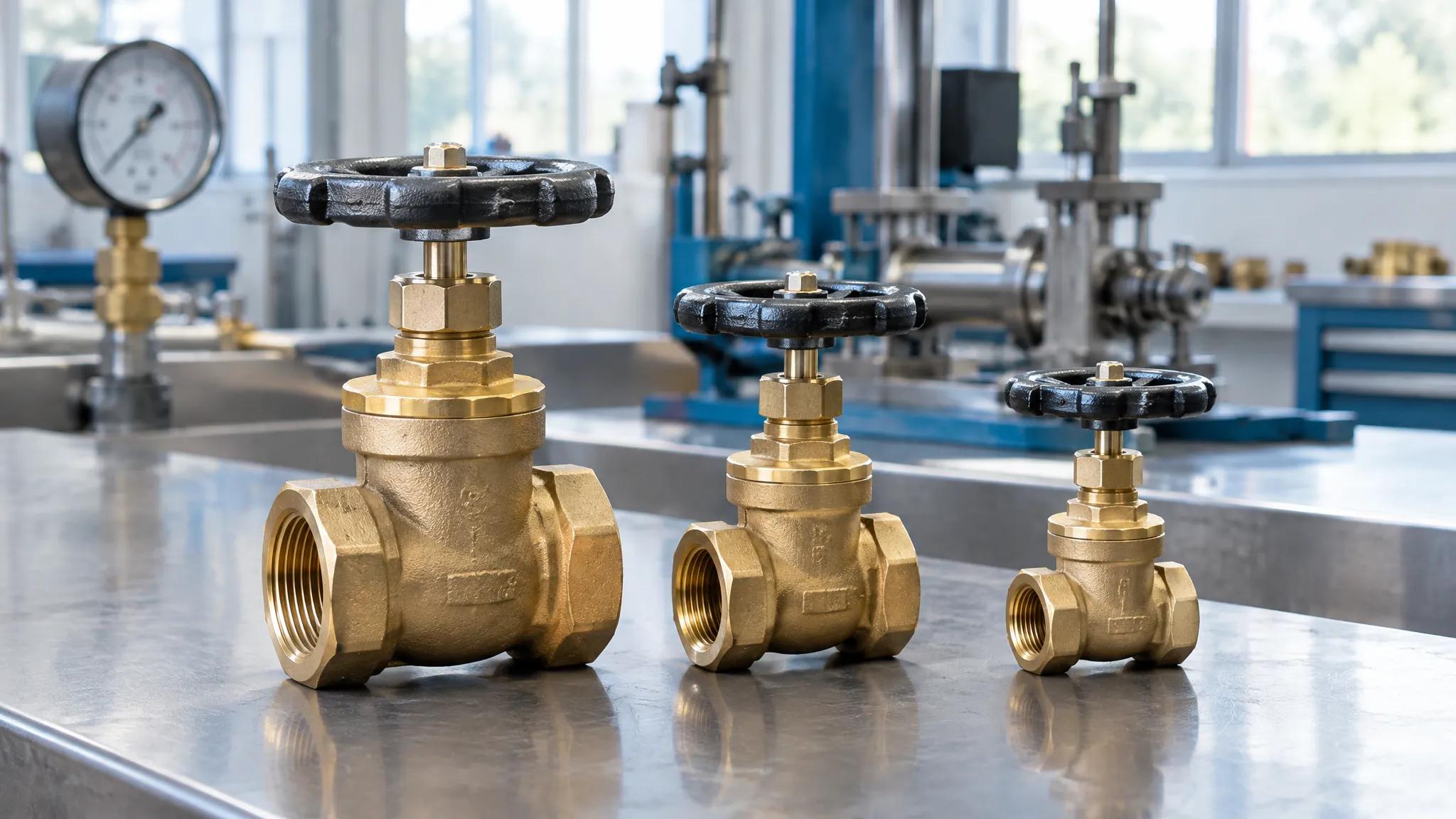
| Union ball valve (brass thread) | Connecting PPR to metal equipment, serviceable | Low | Inspect the brass insert quality first |
For most water-supply mains, the ball valve wins — it's a quarter-turn to fully open or closed and barely restricts flow. Reach for a stop valve only where someone needs to fine-tune pressure at a fixture. Where the line ties into a pump or heater, the union ball valve earns its higher cost because it unscrews for service without cutting the pipe.
Speccing a Fittings Order for a Container
Distributors lose money two ways on fittings: ordering by guesswork and ending up with dead stock, or under-ordering elbows and reducers so installers stall mid-job. A rough planning ratio keeps both in check.
- Start from pipe volume: budget roughly 2–3 fittings for every pipe length, then weight the mix.
- Lead with elbows and couplings: together they're usually well over half the fitting count on a water-supply job.
- Don't skimp on reducers: any project that mixes DN20, DN25 and DN32 needs reducers at every size change — the part most often short-ordered.
- Carry a spread of threaded adapters: every fixture and appliance connection is a PPR-to-metal transition.
- Mix sizes in one container: a low order minimum that allows mixed DN20–DN160 sizes lets you match real demand instead of buying full pallets of one size.
The size profile that sells fastest in most residential and light-commercial markets sits in the DN20–DN32 band. Larger diameters up to DN160 move on project and infrastructure work, so stock those to order rather than holding deep shelves.
Conclusion
Fitting types are the easy part. What protects your project — and your reputation as a supplier — is matching material grade and wall thickness across pipe and fittings, getting the reducers right at every size change, and not letting a cheap brass insert sink an otherwise solid system. Those are the details that decide whether a container of fittings welds clean or generates callbacks.
If you're building an order, start by listing your sizes and the pipe-to-fitting ratio you expect, then confirm every fitting ships from the same PP-R grade as your pipe. You can review matched pipe-and-fitting specs and request a quote whenever your list is ready.
Frequently Asked Questions
Do PN20 and PN25 PPR pipes use the same fittings?
Yes. PN20 and PN25 share identical fittings and weld together cleanly. The pressure class describes the pipe's rating, not the fitting, so you only need one fitting inventory for both.
Can I connect DN20 and DN25 PPR pipe directly?
No. They have different outer diameters (20mm vs 25mm), so they won't couple directly. Use a reducer or reducing socket to step between the two sizes.
Can I mix PPR fittings from different brands?
It's risky. Fusion depends on matching material grade and wall thickness, and quality varies between brands. If you must mix, weld a test joint first to confirm the melt behavior before committing a whole job.
Which PPR valve is best for hot water?
A ball valve handles hot-water shut-off well with low flow resistance. Where the line connects to a heater or pump, a union ball valve with a quality brass insert lets you service the equipment without cutting pipe.
How do I stop threaded PPR adapters from leaking?
Choose adapters with a knurled (ridged) brass insert that locks into the plastic and won't spin under torque. Thin, smooth, or soft brass is the usual cause of slow leaks that appear a year or two after install.