
Why PPR Joints Fail: 6 Causes of Leaks & How to Prevent Them
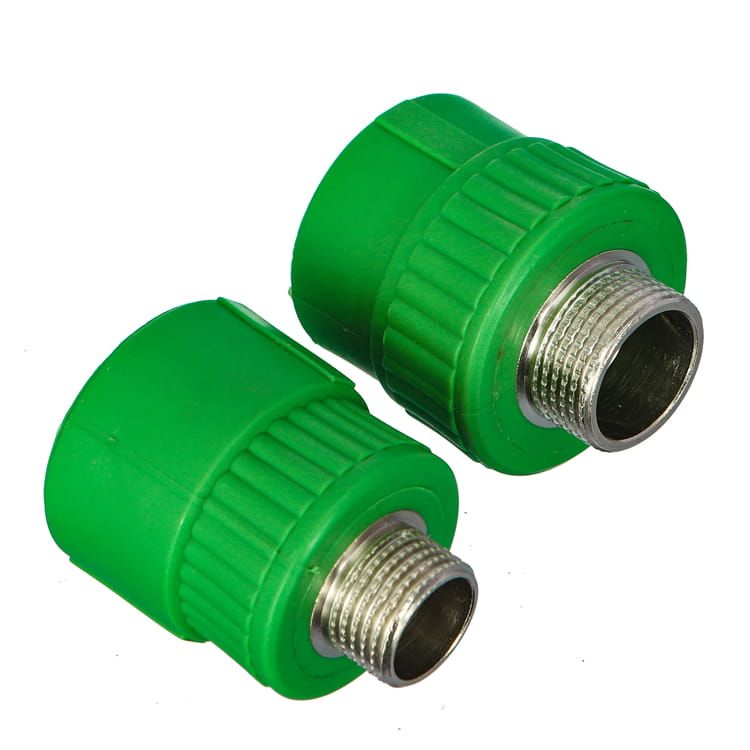
A PPR system almost never leaks through the pipe wall — it leaks at a joint, and nearly every one of those failures traces back to the same handful of mistakes at the fusion iron. The good news for a contractor: PPR socket fusion is simple and, done to procedure, produces a joint stronger than the pipe itself. The bad news: it's unforgiving of shortcuts, and a bad weld often looks fine until the line is pressurised and the callback comes. This guide breaks down the six real causes of PPR joint leaks and exactly how to prevent each — plus how to spot a suspect joint before you close the wall.
This is the failure-mode companion to the full PPR installation guide; here we focus specifically on why joints leak and how to stop it.
Key Takeaways
- Nearly all PPR leaks are joint failures, not pipe failures — and almost all are preventable.
- Under-heating (cold weld) and over-heating are the two most common causes — both come from wrong time/temperature.
- Every diameter has a specified heating and cooling time — don't guess, and don't rush cooling.
- Clean, dry, square-cut pipe ends are non-negotiable — dust, water, or grease ruins the weld.
- Don't twist or move the joint while it cools; hold it straight and still.
- A suspect joint gets cut out and redone — never buried and hoped over.
- Under pressure, only a repair clamp can hold a PP-R leak, and only as a stopgap; every permanent repair means isolating, draining and drying the section first.
On this page
How a Good PPR Joint Is Made (the baseline)
Every failure below is a deviation from one correct sequence, so it's worth stating the baseline. Socket fusion heats the outside of the pipe end and the inside of the fitting socket simultaneously on the welding iron, for a time set by the diameter. Both surfaces melt to a controlled depth; you remove them from the iron, push the pipe fully into the fitting without twisting, hold it straight while it cools, and don't disturb or pressurise it until cool. Done right, the two melt layers fuse into one homogeneous mass. Every leak cause is a way that fusion didn't fully happen — or happened too much.
Weak joints are also where cold-weather failures start — see how to prevent PPR pipe bursts from winter freezing.
Cause 1: Under-Heating (the cold weld)
The most common failure. If the iron is too cool, the heating time is too short, or the iron is worn/dirty, the surfaces don't reach full melt and the two parts don't truly fuse — they just stick. A cold weld can hold at zero pressure and pass a casual look, then weep or blow when the system is pressurised or heats up. Prevention: let the iron reach full temperature (around 260°C) before the first joint, keep the heating dies clean, and hold each joint on the iron for the full time its diameter requires — larger pipe needs longer.
Cause 2: Over-Heating (the collapsed joint)
The opposite error. Leave the pipe and fitting on the iron too long and too much material melts: when you push them together, molten PPR squeezes inward and forms a bead or ridge that constricts — or completely blocks — the bore. That restriction cuts flow, traps stress, and can crack later. It also deforms the socket so the fit is loose. Prevention: respect the maximum heating time for the size, and don't "add a few seconds for safety" — more heat is not better. If you see a heavy internal bead when you look through a test joint, you're over-heating.
Cause 3: Dirty, Wet or Greasy Surfaces
Fusion only bonds clean plastic to clean plastic. Dust, mud, water, or the oil from a worker's hands on the pipe end or inside the socket contaminates the melt and leaves a weak, porous weld that leaks. This is especially common on site in dust and rain. Prevention: cut the pipe square, wipe the pipe end and the socket clean and dry immediately before heating, and don't touch the cleaned surfaces. Never weld a wet joint — if it's raining, shelter the work.
Cause 4: Misalignment and Moving the Joint
Push the pipe in crooked, or twist it as you seat it, and the melt layers don't marry evenly — you get a thin spot that leaks. Worse is disturbing the joint before it cools: PPR stays soft for several seconds after assembly, and nudging, rotating, or hanging weight on it in that window distorts the fusing plastic and locks in a stressed, leak-prone joint. Prevention: push straight in without rotating, align the fitting to its final orientation as you seat it (you have a couple of seconds to adjust), then hold it still and straight until it's cool. Don't pull the next length off the iron while this one is still setting.
Cause 5: Wrong Heating Time for the Diameter
This underlies both cold welds and collapsed joints: crews weld by feel instead of by the size. Each diameter has a specified heating time, insertion depth, and cooling time — a DN20 and a DN63 are not welded to the same count. Guessing means under-heating the big ones and over-heating the small ones. Prevention: keep the fusion time chart for your welder to hand and follow it by diameter; count deliberately. On bigger diameters especially, the extra heating and the longer cooling before pressure-testing are not optional.
Cause 6: Bad Pipe or Cheap Fittings
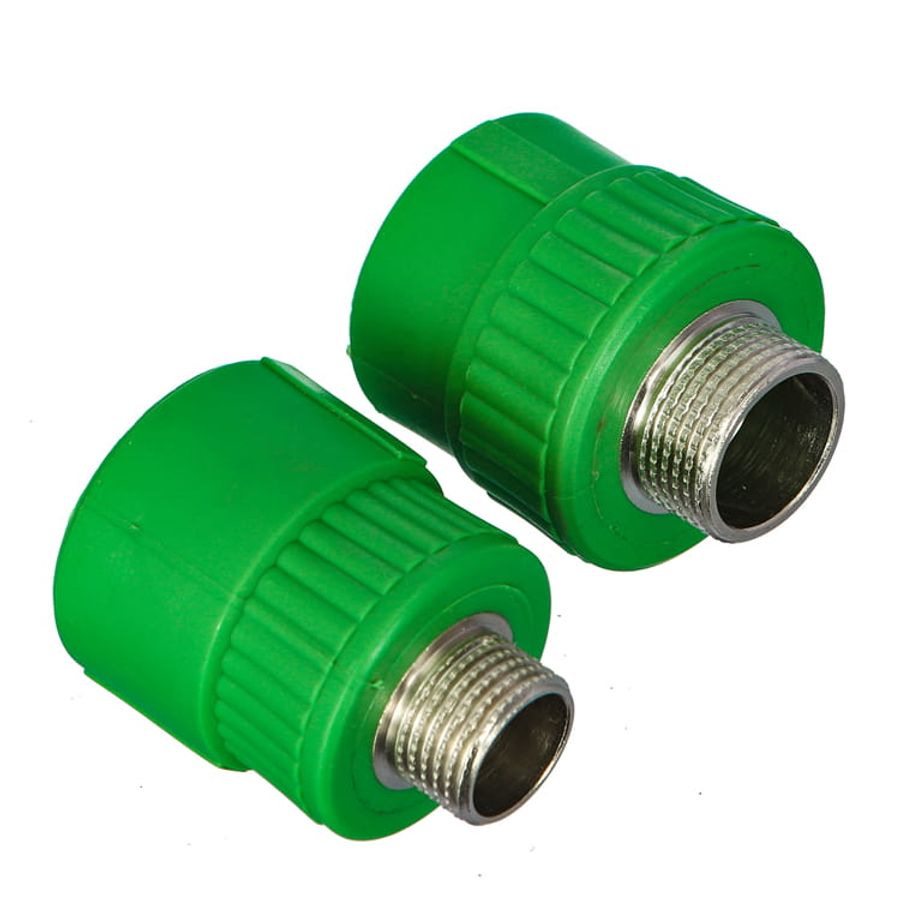
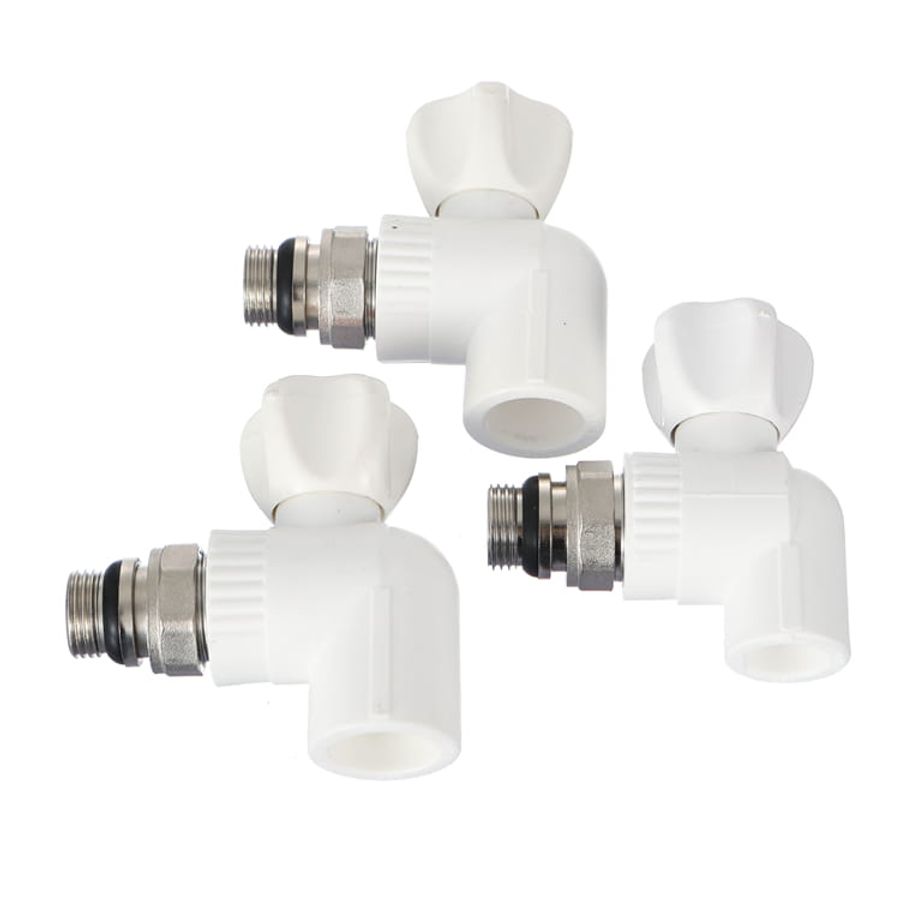
Even a perfect technique can't save bad material. An oxidised or gouged pipe surface, an out-of-round pipe, or a cheap fitting with a thin, warped socket won't fuse cleanly. Recycled-resin fittings behave unpredictably on the iron and are a frequent hidden cause of leaks. Mixing brands can also mean slightly different socket dimensions that don't seat properly. Prevention: use undamaged pipe cut fresh, and quality fittings in virgin material matched to the pipe — ideally the same brand. The savings on cheap fittings vanish the first time a wall is opened for a leak. See the PPR fittings guide for what to look for.
Spotting a Bad Joint Before You Close the Wall
A good socket-fusion joint shows a small, even weld bead all the way around where the pipe meets the fitting, the pipe seated to full depth, and the fitting square and correctly oriented. Warning signs: no visible bead (under-heated), a heavy or uneven bead and a constricted bore (over-heated), the pipe not fully inserted, a crooked fitting, or scorch marks. If a joint looks wrong, cut it out and redo it — a suspect PPR joint cannot be repaired in place (what can and cannot be done on a live line is covered below), and burying it guarantees a callback. Always pressure-test the system before closing walls, and give bigger joints their full cooling time before you test.
Want PPR pipe and fittings that fuse right?
For contractors and distributors ordering by the container: PP-R pipe DN20–DN160 in PN12.5–PN25 with matched fittings, 100% virgin PP-R with batch certificates.
Request a QuoteLeak Repair Without Draining: What Works on a Live PP-R Line and What Never Does
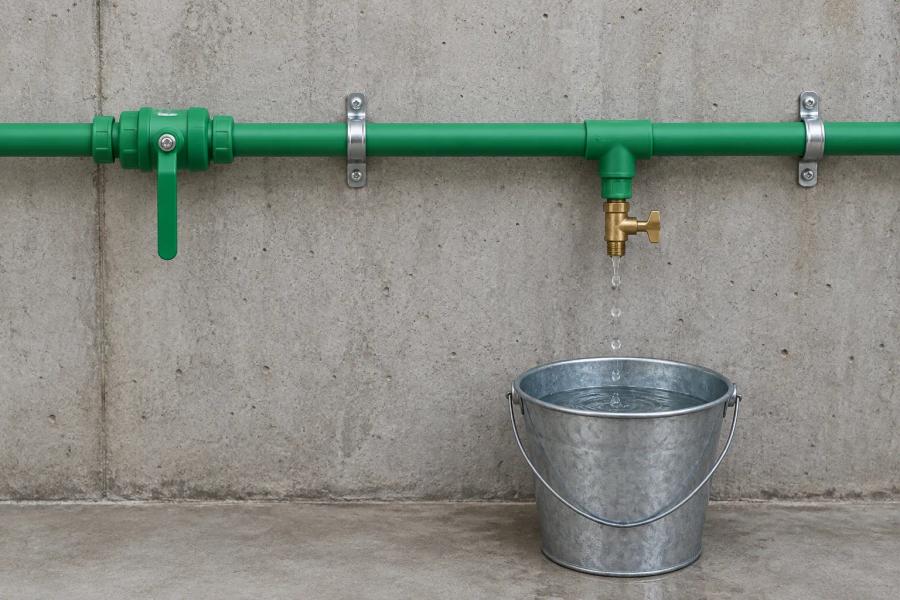
Crews ask for a way to fix a PP-R leak without draining the riser, usually because they have watched a water utility tap a live HDPE main. That practice does not carry over. On a pressurised PP-R line nothing permanent can be done: a repair clamp can hold a leak for a while, and every lasting repair is a fusion joint made on a section that has been isolated, drained and dried.
The Aquatherm North America installer manual (October 2024) gives the reason: polypropylene is hydrophobic, and “any water contact on the fusion area will interfere with proper fusion and create a potential leak path.”
The HDPE method is real, and that is the trap. Plasson’s UK electrofusion range states that its PE100 saddles “can be welded in place on pressurised or de-pressurised mains”, which is how PE networks are tapped and repaired live (see our HDPE joint types guide).
Those saddles are polyethylene, and the SIMONA welding manual (10/2023) is explicit that “only plastics of the same kind, e. g. PP and PP” can be welded to one another. A PE saddle on PP-R pipe will not fuse, whatever the control box reads. Plasson’s own repair saddle is built for PE mains of 250 mm to 900 mm with walls of 14.7 mm and above, nothing like a DN25 PP-R branch.
A stainless-steel repair clamp is the one tool that works with water still in the pipe, and its data sheet decides how long it may stay. GF’s Multi/Clamp brochure lists steel, cast iron, asbestos cement, PVC, PE and GRP, and adds “for the use on plastic pipes please contact your supplier”; PP-R is not on the list.
Its potable-water EPDM gasket is rated −10 °C to +55 °C, while ISO 10508:2006 Class 2, the hot-water supply class, is built on a 70 °C design temperature. On a hot line running at the Class 2 temperature, a potable-water clamp is outside its own gasket rating.
On a cold line, treat it as the temporary measure the FAQ below describes, and put it on straight pipe only: Aquatherm’s rule is that “a leaking joint must be repaired with a new fitting.”
| Repair method | Works with water in the pipe? | Limit that decides it | Verdict |
|---|---|---|---|
| Stainless repair clamp, potable EPDM gasket | Yes | Gasket −10 °C to +55 °C; PP-R not on GF’s list | Cold-line stopgap until a shutdown |
| PE100 electrofusion saddle or tapping tee | Yes, on PE pipe only | PE and PP do not weld together | Never on PP-R |
| Socket-fusion coupler after cutting out | No | Fusion faces must be dry | Permanent fix once the section is drained |
| PP-R electrofusion coupler | No | Moisture is an adverse weld condition | Permanent fix; PP-R fitting on a drained section |
| Repair pin in the pipe wall | No | Small holes only, never at a fusion joint | Nail and screw holes in drained pipe |
Source: GF Multi/Clamp brochure WA2064/1018/EN; Plasson UK Specialist Electrofusion Solutions PUK-SEFS-2105v6; SIMONA work.info Welding 10/2023, sections 2.6 and 3.2 (DVS 2207-11 for PP); Aquatherm North America Installer Manual, October 2024, pages 2.21 and 2.28; Aquatherm Australia PP-R pipe repair sheet; ISO 10508:2006 Table 1.
The permanent repair, in order
- Isolate the smallest section you can and open a drain below the leak. A riser that cannot be drained cannot be worked on, which is why the riser sizing guide pairs every zone isolation with a drain.
- Let the section empty and dry the pipe ends. SIMONA lists moisture as an adverse weld condition for socket and electrofusion welding alike; a dripping pipe end means the section is not isolated yet.
- Cut out the leaking joint and fuse in a new length with couplers. Aquatherm’s Australian repair sheet lists PP-R electrofusion sockets from Ø20 to Ø250 among its repair routes. A nail or screw hole in the pipe wall can take a repair pin (7 mm and 11 mm heads), never at a fusion location.
- Let the joints cool, then pressure-test before the line goes back into service, following the test in the PPR installation guide.
Hold the repair stock before the leak happens: couplers from the same series as the installed pipe, a few metres of pipe and the matching heating dies. Lead time on a factory order depends on order size, customisation and whether the sizes are in stock, as the IFAN PP-R supplier page states, so a repair kit is a stock decision rather than a purchase made while the riser weeps.
When the fittings come from a new source, fuse a sample coupler onto an offcut of the installed pipe and cut it open before trusting it in a wall; SIMONA’s basic conditions call for trial welds to be made and tested where needed. If you cannot tell which route your leak needs, send a photo of the leak and the pipe’s print line to our technical team on WhatsApp.
Frequently Asked Questions
Why does my PPR joint leak after it passed at first?
Almost always a cold weld — under-heated so the parts stuck but didn't fully fuse. It holds at low pressure or cold, then weeps or blows when the system is pressurised or carries hot water. Cold welds can't be repaired in place; cut out the joint and redo it with the correct heating time and a fully hot iron.
Can you repair a leaking PPR fusion joint?
Not in place — a failed socket-fusion joint has to be cut out and a new section fused in with a coupler. Sealants or clamps are only a temporary emergency measure. Because the fix means opening the line, it's far cheaper to make the joint correctly the first time and pressure-test before closing walls.
Can you repair a PP-R pipe without draining the system?
Not permanently. A repair clamp can hold a leak on the straight pipe of a cold line until a shutdown, but fusion needs a dry pipe: isolate the smallest section, drain it, then fuse in a new length. PE electrofusion saddles do not weld to PP-R.
How long should a PPR joint cool before pressure testing?
Follow the fusion chart for the diameter — larger pipe needs longer, and rushing the cooling is a real cause of failure. As a rule, let joints cool fully (minutes, not seconds, scaling with size) before applying pressure, and give the whole system its full set time before the test rather than testing joint-by-joint hot.
Does the fitting brand matter for leaks?
Yes. Cheap, recycled-resin or warped fittings fuse unpredictably and are a frequent hidden cause of leaks, and mixing brands can mean socket dimensions that don't seat cleanly. Use quality virgin-material fittings matched to the pipe — ideally the same brand — so the socket depth and melt behaviour are consistent.