
How to Tell 100% Virgin PP-R From Recycled Pipe (Field + Lab Tests)
PP-R 100-grade resin is expensive enough that regrind substitution is the single most common quality fraud in the pipe trade — and it only surfaces after six or twelve months of hot-water cycling. These are five field checks you can run on the pipe you receive and three lab tests you can request before you accept a container, so you know exactly what is in the extrusion.
Specifying virgin ppr material is one of the first lines of defense a procurement manager has against shipments that look compliant on paper and fail in the wall. The problem is that recycled-blend pipe and 100% virgin PP-R 100 grade pipe are nearly indistinguishable at the loading dock — same green or white color, same printed specs, often the same factory letterhead. The gap between them only shows up months or years later, in a burst joint or a failed hydrostatic test at the project handover.
IFAN Group has manufactured PP-R pipe since 1993, running 30+ automated extrusion lines on virgin PP-R 100 pellets with batch certificates per shipment. What follows is a practical breakdown of how a buyer — without a polymer lab on site — can separate genuine virgin-grade product from recycled-blend stock, and what lab reports to demand before any money moves.

Key Takeaways
- Virgin PP-R 100 grade has a density of 0.898–0.920 g/cm³ and tensile strength of 25–33 MPa; recycled blends routinely fall outside this range.
- Melt Flow Index (MFI) tested at 230°C / 2.16 kg should fall within the manufacturer's declared window — irregular MFI is the clearest lab-level sign of recycled content.
- Oxidation Induction Time (OIT) drops sharply in recycled blends because each reprocessing cycle consumes the antioxidant package — pipes with low OIT will degrade prematurely under heat.
- Recycled-blend pipe may pass a 24-hour site pressure test, but independent studies show it fails at the 5–10 year mark as de-polymerization progresses.
- Pricing 30–50% below the market average is a reliable early indicator that the resin is not virgin grade — raw PP-R 100 pellet cost sets a hard floor.
- A genuine per-shipment batch certificate names the resin grade, lot number, and declares compliance with DIN 8077/8078 or ISO 15874 — generic "SGS certificate" images shared on WhatsApp prove nothing.
Why Recycled Blends Are a Hidden Infrastructure Risk
The chemistry behind degraded performance
Polypropylene degrades each time it is melted. Each reprocessing cycle breaks polymer chains and depletes the antioxidant package that protects against oxidative attack under service conditions. Virgin PP-R 100 grade has never been through an extrusion cycle before your order — the chain length and antioxidant loading are at factory specification. A blend containing even 20–30% post-consumer or post-industrial regrind carries degraded chains and depleted stabilizers from whoever processed it before.
The mechanical consequence is measurable. Research published in peer-reviewed polymer journals shows that impact strength in recycled PP blends drops by up to 35% compared to virgin feedstock under equivalent conditions. For hot-water pressure lines running at 60–80°C in a residential or commercial building, that loss in toughness directly increases the probability of stress-cracking at fittings and joints under thermal cycling.
Why a 24-hour pressure test does not protect you
Most site acceptance tests hold the system at 1.5× working pressure for 24 hours and call it compliant if there is no visible drop. Recycled-blend pipe passes this test. The degradation mode for sub-spec PP-R is long-term hydrostatic creep, not immediate burst. Without the antioxidant reserve to resist oxygen-induced chain scission, the pipe undergoes slow de-polymerization over 5–10 years. Then joints fail suddenly — at 2 AM, behind finished ceilings, mid-project warranty period.
The 24-hour pressure test is a leakage check, not a material verification. Confirming virgin grade requires a document trail and lab data, not just site acceptance.
5 Field Checks Any Buyer Can Run Before the Container Ships
1. Surface texture and interior bore
Cut a 10 cm section and inspect the cut face and bore. Virgin PP-R has a uniform, mirror-smooth interior with no streaks, voids, or discolored bands. Recycled-blend pipe shows surface striations, small surface craters from contamination particles, or layered color bands where different regrind batches merged in the extruder. Any visible heterogeneity on the bore is a rejection trigger — particulate contamination accelerates creep failure under pressure.
2. Color uniformity across the full pipe run
Pull pipes from five different boxes in the delivery. Virgin-grade pipe with a consistent pigment loading will have the same color tone — green, white, or grey — across all of them. Recycled blends use variable regrind input: the color varies noticeably stick-to-stick, from batch to batch. If you line up ten pipes and the shade shifts from pale to saturated green (or shows yellow-brown tints in nominally white pipe), the resin is not consistent virgin stock.
3. Welding behavior and odor during fusion
Virgin PP-R melts cleanly at the fusion temperature of 260°C for typical DN20–DN63, producing a uniform, circular melt bead and no significant odor beyond mild plastic warming. Recycled blends produce a sharp, acrid odor during welding — a byproduct of burning degraded additives and impurity volatiles. The melt bead is also uneven: some areas flow prematurely (low-MW chains) while adjacent zones barely soften (high-MW virgin remnants still in the blend). An uneven melt ring means a compromised joint.
4. Brittleness under manual impact
At room temperature (20–25°C), virgin PP-R pipe does not shatter under a sharp mallet blow against a hard surface — it dents and deforms without cracking through. A recycled-blend pipe with depleted impact modifiers will show brittle fracture or craze cracking under the same impact. This is a rough field test, not a calibrated standard, but a pipe that shatters like a ceramic when hit at ambient temperature is not passing ISO 15874 impact resistance requirements regardless of what the certificate says.
5. Printed text permanence
Run a cloth dampened with isopropyl alcohol over the pipe's printed legend — the line showing DN size, pressure class, standard, and manufacturer. Genuine inkjet or hot-stamp printing on virgin PP-R does not wipe off. Cheap labeling applied to conceal sub-spec stock smears or lifts under solvent. Also check that the printed PN rating and DN size match the actual wall thickness you can measure with a digital caliper — recycled-blend pipe is sometimes extruded thin and labeled at a higher pressure class to hit price points.

Three Lab Reports to Demand Before You Release Payment
Melt Flow Index (MFI / MFR)
The Melt Flow Rate test (run per ISO 1133 at 230°C / 2.16 kg for polypropylene) measures polymer fluidity and indirectly indicates molecular weight distribution. Virgin PP-R 100 grade has a declared MFI band — a reputable manufacturer publishes this in their technical data sheet. Recycled blends show MFI values outside the declared band and, critically, inconsistent MFI across tests on the same batch: the mix of different polymer generations in the regrind produces variable chain lengths that flow differently every time. If a supplier cannot provide a lot-specific MFI result matching their TDS, treat that as a red flag.
Oxidation Induction Time (OIT)
OIT is measured by differential scanning calorimetry (DSC) and quantifies the residual antioxidant capacity of the resin. Every time polypropylene is melted and reprocessed, the antioxidant package is consumed. Virgin PP-R 100 exits the compounding stage with a full antioxidant loading designed for the pipe's 50-year service life at rated temperatures. Recycled material has already spent part of that reserve in a previous product's life. Low OIT means the pipe will oxidize and embrittle faster under operating conditions — this is the chemical mechanism behind the 5–10 year deferred failure observed in field studies. ISO 11357-6 governs the OIT test method; ask suppliers for the actual OIT value in minutes, not just a pass/fail stamp.
Hydrostatic pressure and impact resistance per ISO 15874
ISO 15874 — the governing standard for PP pipe systems for hot and cold water — specifies hydrostatic pressure tests at 20°C and 95°C, dimensional tolerances, and impact resistance at 0°C. A genuine ISO 15874 test report from an accredited third-party lab carries the lab's accreditation number (ISO 17025), the exact test temperatures, specimen batch reference, and pass/fail against the standard's table. A certificate without these fields is a marketing document, not a test report. Request the raw test data, not the summary page.
| Property | Virgin PP-R 100 | Recycled Blend (typical) | Field Implication |
|---|---|---|---|
| Density | 0.898–0.920 g/cm³ | Variable, often outside this range | Wall thickness calculations and pressure rating assumptions break down |
| Tensile Strength | 25–33 MPa | Often below 22 MPa | Pipe stretches rather than holds under sustained pressure |
| Impact Strength | Per ISO 15874 at 0°C | Up to 35% lower vs virgin | Shatters on site during cold-weather installation or transport |
| MFI Consistency | Within declared TDS band | Varies batch-to-batch | Fusion quality inconsistent — some joints bond, others don't |
| Oxidation Induction Time | Full factory specification | Partially depleted | Oxidative failure at 5–10 years instead of the rated 50 years |
How to Read a Batch Certificate — and Spot a Fake
What a genuine per-shipment certificate contains
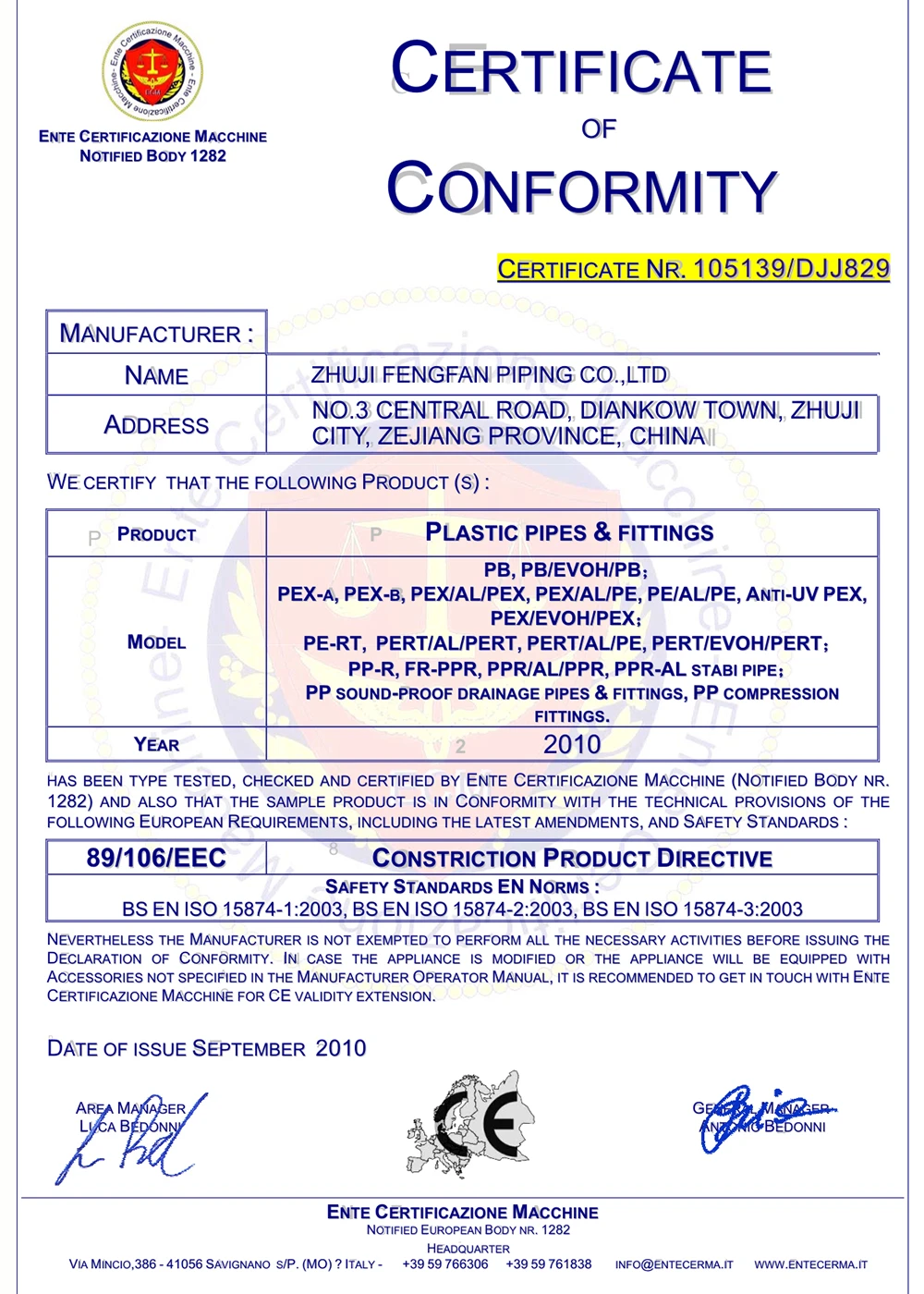
A real batch certificate is not a brand image or a corporate-quality logo sheet. It names the specific lot number for your shipment, the raw resin grade (PP-R 100 or equivalent), the declared MFI value for that lot, and the applicable standard — DIN 8077/8078 or ISO 15874 — with the test result tied to your order number. Responsible manufacturers like IFAN issue one per container, signed by a quality controller, with the production date and the shift supervisor's verification. If the certificate your supplier sends is a PDF that could apply to any order in any month, it is a company certificate, not a batch certificate.
Red flags in supplier documentation
Watch for these specific warning signs. Certificates that reference only a brand name, not a resin grade designation. SGS or third-party reports dated more than 18 months before your order — these prove historical production met the spec, not that your specific batch does. Lab report numbers you cannot verify by calling the lab directly. Test results that show only "pass" without the measured value (a genuine ISO 15874 hydrostatic result shows the exact pressure and temperature at which the pipe held, not just a tick box). Any supplier who resists sharing raw test data with lot numbers is protecting something.
See also how to screen the factory itself before placing an order: How to Verify a Real PPR Pipe Manufacturer covers the factory audit steps that complement the material checks described here.
Three Questions to Add to Your PO Before Any Deposit Moves
Verifying material starts before the order is placed. These three contractual requirements shift the burden of proof onto the supplier and give you a documented basis for a claim if the goods arrive sub-spec.
- Require a per-shipment batch certificate as a document against payment: Add language to the commercial invoice or LC terms that the balance is released only upon presentation of a lot-specific certificate confirming PP-R 100 grade and MFI within the TDS range. This is the same mechanism used for steel mill certificates in construction procurement — apply it to polymer pipe.
- Ask for the resin supplier's name and grade designation: A genuine virgin-grade pipe manufacturer buys PP-R 100 resin from a petrochemical producer and can tell you who. Common European and Asian suppliers include LyondellBasell, SABIC, and Sinopec's pipe-grade PP-R product lines. A factory that cannot name their resin source is almost certainly blending regrind. You don't need to verify the resin supply chain yourself — the willingness to answer is the test.
- Commission a pre-shipment MFI test on a retained sample: Ask the factory to retain 2 kg of pipe material from your production run. Arrange for an SGS or Bureau Veritas pre-shipment inspection that includes a single MFI test on that retained sample before the container is sealed. The cost is under USD 150. If the MFI is outside the declared band, you have cause to hold shipment before it enters your country and generates import duties on goods you will reject.
Conclusion
The difference between virgin PP-R 100 and a recycled blend is invisible at inspection but decisive over a building's service life. Field checks — surface texture, color consistency, welding behavior — filter out obvious mislabeling. Lab reports on MFI and OIT confirm compliance at the molecular level. A contractual batch certificate requirement, tied to payment, is the mechanism that keeps suppliers honest across multiple orders.
If you are sourcing pipe for a project that carries a multi-year warranty or serves hot-water pressure applications, the material verification steps above are worth the time. Confirming virgin grade before goods ship costs less than one day of rework after a joint failure behind a finished ceiling.
Frequently Asked Questions
Can recycled PP-R pipe pass ISO 15874 certification tests?
A batch with modest recycled content may pass the short-duration tests specified in ISO 15874, including the 24-hour hydrostatic check. The standard's long-term hydrostatic test at 95°C is more discriminating, but even then, a supplier can submit a cherry-picked production run to the lab while shipping recycled-blend stock commercially. The safest protection is a per-shipment MFI test on the actual delivery lot, not a standing certification from a past audit.
What MFI value should I look for in virgin PP-R pipe?
The exact MFI target depends on the manufacturer's resin grade and extrusion specification — there is no universal single number. What matters is that the supplier's technical data sheet declares a specific MFI range for their product, and that the lot-specific test result falls within it. A supplier who cannot provide a declared MFI range in their TDS is not working with a consistently specified resin, which is itself a warning sign.
Is green PP-R pipe more likely to be virgin grade than white?
Color does not indicate grade — both green and white pipe can be produced from virgin or recycled material. Color is a pigment choice, not a quality signal. Some buyers believe green pipe is more reliably virgin because green is a less common regrind color in the waste stream, but this is not a reliable test. Verify the resin grade through documentation and MFI testing, not by color.
How much cheaper is recycled-blend PP-R pipe compared to virgin grade?
Market pricing for virgin PP-R pipe follows the cost of PP-R 100 pellets from petrochemical producers — that cost sets a hard floor. Offers priced 30–50% below the prevailing market for the same DN and PN specification are almost always achieved by substituting recycled or lower-grade resin, since there is no other input cost that can be reduced that dramatically at scale. If a price looks too good, ask for the resin name and lot certificate before negotiating further.
What is the difference between PP-R 80 and PP-R 100 grade?
PP-R 80 and PP-R 100 refer to the long-term hydrostatic strength (MRS — Minimum Required Strength) classification under ISO 9080. PP-R 100 has an MRS of 10.0 MPa at 20°C, allowing thinner walls for the same pressure rating or higher rated pressure at the same wall thickness compared to PP-R 80. For hot-water systems and higher-pressure applications, PP-R 100 is the correct specification — it is the grade referenced in DIN 8077/8078 and used by manufacturers who meet ISO 15874 for potable water systems.