
How to Verify a Real PPR Pipe Manufacturer (Not a Trading Company): 7 Checks
Industry estimates put a third to four-fifths of the PPR manufacturers on sourcing platforms in the reseller category — trading companies with no production line, adding a markup and offering no recourse when a container arrives with thin walls. These are seven checks that separate a real factory from a reseller in about thirty minutes, before you pay a deposit.
Most buyers who think they're dealing with a PPR pipe manufacturer are actually talking to a trading company. Industry estimates of how many "factories" on sourcing platforms are really traders run anywhere from a third to four-fifths — and the gap costs you twice. You pay a middleman markup folded into the unit price, and when a container arrives with thin walls or bad welds, the trader has no production line to fix it, only a phone number for the factory that does.
The good news: separating a real PPR pipe manufacturer from a reseller takes about thirty minutes of checks you can do before you ever pay a deposit. Here are the seven that actually catch a trader pretending to be a factory.

Key Takeaways
- Read the Chinese business license name — one ending in "Trading Co., Ltd" is a reseller, not a maker.
- A real factory's registered address sits in an industrial zone, not a commercial office tower.
- Match the registration date to claimed experience — "20 years" registered three years ago is a lie.
- A factory's catalog is deep in one category (all PPR), not three SKUs each of ten unrelated products.
- The name on the test certificate and the factory gate must match the business license.
- Offer to audit or send a third-party inspector — a real factory welcomes it; a trader stalls.
- Before a visit, pull the insured headcount from the supplier's public annual report; on the day, photograph extruder nameplates, resin receipts and the production schedule.
On this page
The 7 Checks
1. Read the Chinese business license name
Ask for the business license and look at the Chinese company name, not the English marketing name. A name ending in "贸易有限公司" (Trading Co., Ltd) is a reseller. A real maker's name typically carries "管业" (piping), "塑业" (plastics) or a manufacturing term. The English brand on the website tells you nothing — the registered Chinese entity tells you everything.
Once you know how to verify a factory, see who the major Chinese PPR manufacturers actually are and how they compare.
2. Verify the registered address
Run the company name through China's National Enterprise Credit Information Publicity System or an equivalent registry and check the registered address. A genuine pipe factory sits in an industrial zone with space for extrusion lines and warehousing. A registered address that resolves to a small office in a commercial tower or a "creative park" is the signature of a trading company renting a room.
3. Match the registration date to claimed years
The registry also shows when the company was registered and its registered capital. A supplier claiming two decades of manufacturing but registered three years ago is an immediate red flag — either they're a new trader borrowing someone else's story, or they recently rebranded to hide a history. Cross-check the founding year they advertise against the official record.
4. Look at how deep the catalog goes
Factories invest in machinery for one thing and go deep. A real PPR maker offers dozens of SKUs across pipe diameters, pressure classes and the full fitting range. A catalog that lists a few PPR items next to faucets, water tanks and unrelated hardware is a trader aggregating other people's products. Depth in one category beats breadth across many.
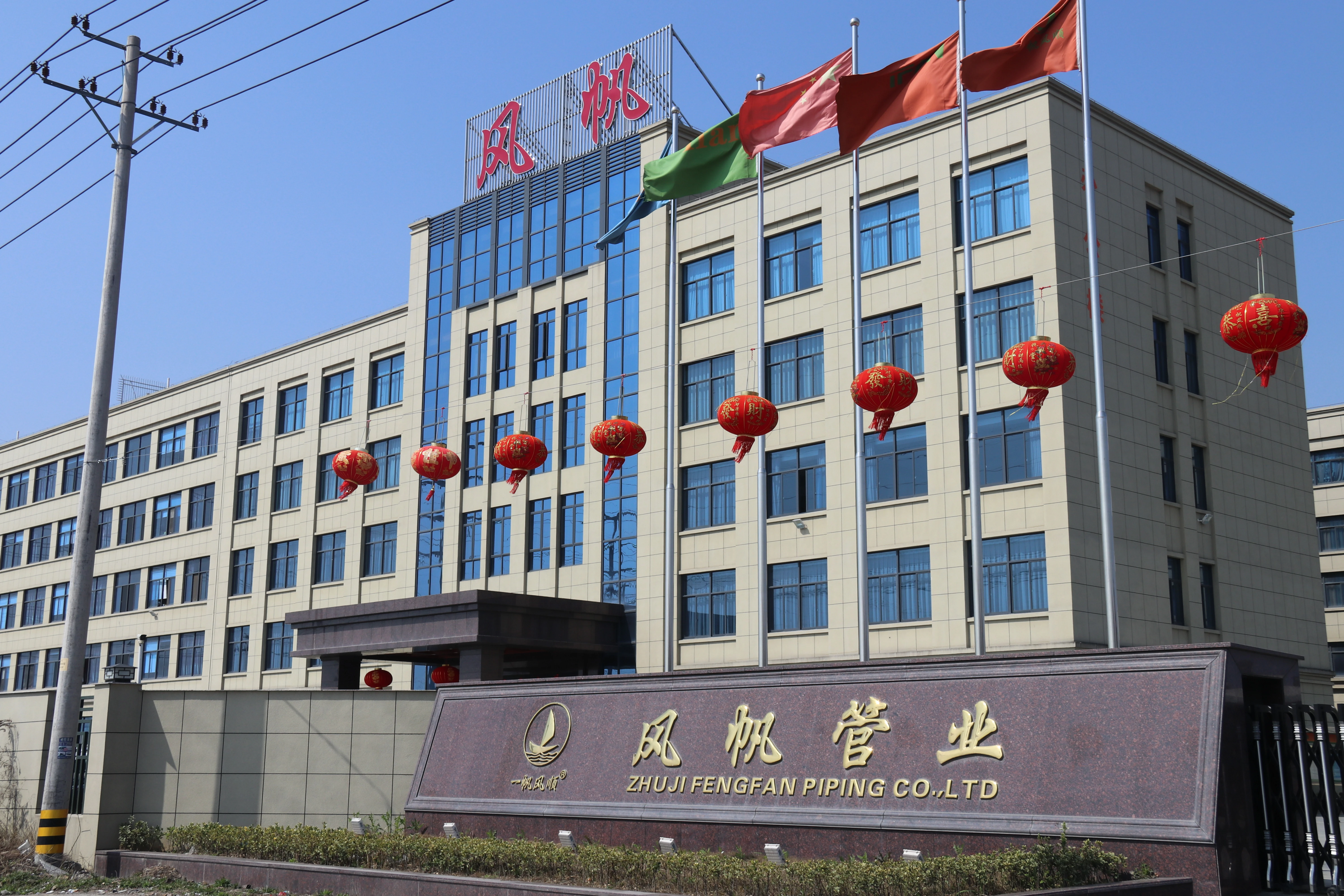
5. Make the name on the gate match the license
Ask for a live video call that walks the production floor — not a polished promo, a real-time call. Have them show the company sign at the factory entrance and confirm it matches the name on the business license. Traders often show a factory they don't own; a name mismatch between the gate, the license and the invoice is the clearest tell that the "factory" is borrowed.
6. Demand real test certificates with matching names
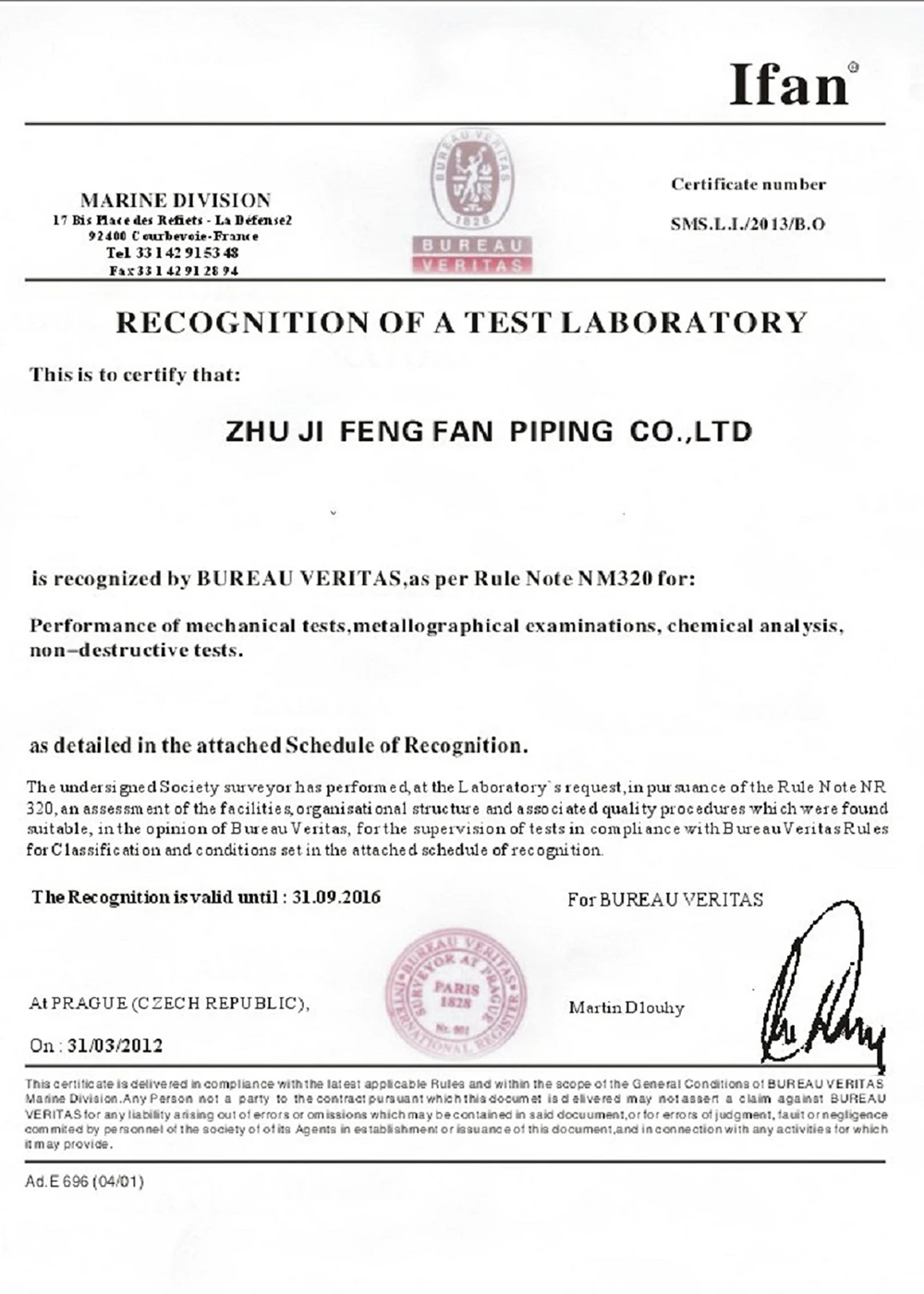
Genuine makers hold third-party recognitions — SGS, Bureau Veritas, TUV — and per-batch material certificates. Check that the legal name on those certificates matches the business license. A certificate in a different company's name is a borrowed document. Real PPR standards to ask about are DIN 8077/8078 and ISO 15874, plus a CE mark or any regional certificate your market requires.
7. Offer to audit — then watch the reaction
Tell the supplier you'd like to visit or send a third-party inspector before the balance payment. A third-party factory audit from SGS, Bureau Veritas or similar typically runs a few hundred to around fifteen hundred US dollars — cheap insurance on a container order. A real factory says "welcome." A trader discourages it, insists "our agent will handle everything," or suddenly the factory is "too busy." The reaction tells you more than any brochure.
Red Flags at a Glance
| Signal | Real factory | Likely trader |
|---|---|---|
| License name | "Piping / Plastics Co." | "Trading Co." |
| Address | Industrial zone | Office tower |
| Catalog | Deep in PPR only | Mixed unrelated goods |
| Certificates | Name matches license | Different / missing name |
| Audit request | Welcomed | Discouraged or stalled |
Treat any one of these as a question, not a verdict. Stack two or three together and you're almost certainly looking at a reseller. Requirements and entity types vary, so confirm the specifics against the official registry rather than taking a sales rep's word.
Two rows are missing because they need a register lookup, not a conversation: the insured headcount in the supplier's annual report and the province on any drinking-water hygiene licence. The next section covers both, plus six things to photograph on the day.
Before the Visit and on the Day: Evidence a Trader Cannot Stage
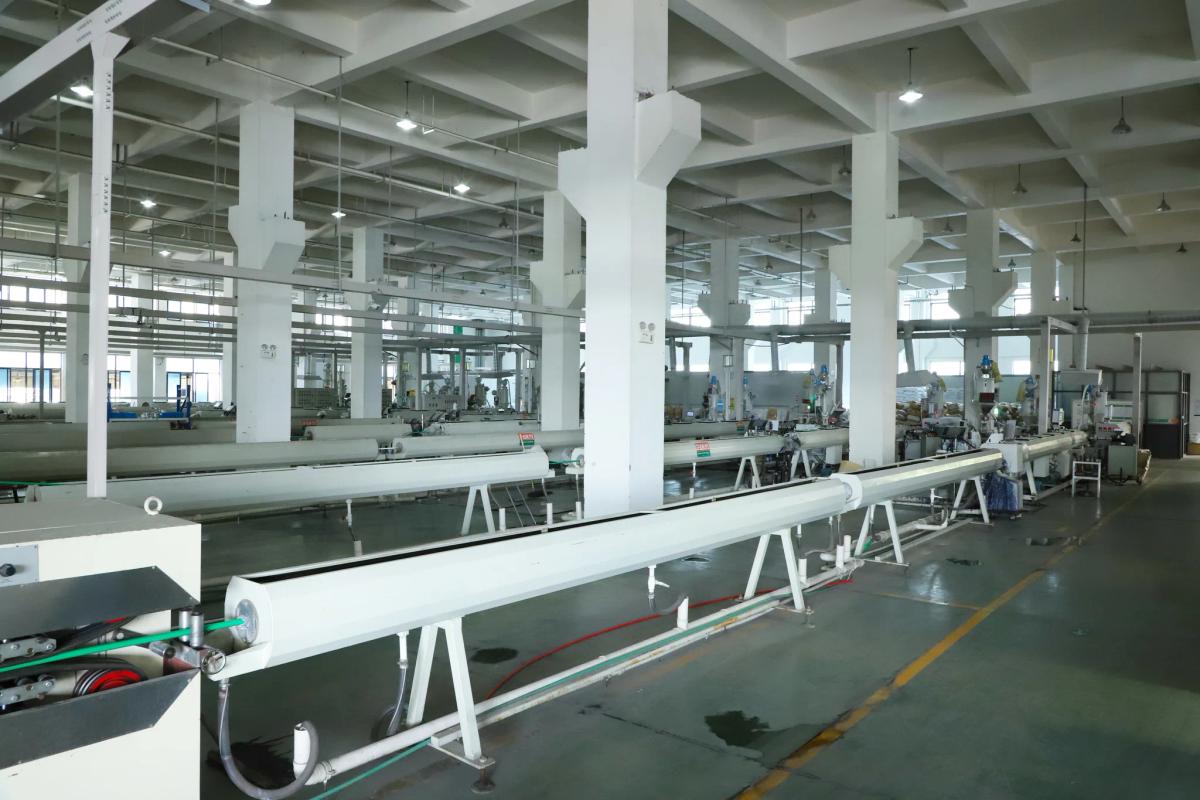
Stand at the end of a running line, business licence open on your phone. The ink-jet head is printing the ISO 15874-2 marking fields onto pipe that has just left the cooling bath, and the only question that matters is whether the entity on that licence made it.
Check 7 gets you through the gate; it does not define what to verify once you are inside. A trading company can rent a showroom for an afternoon and hand you a folder of certificates. It cannot rewrite what China's public registers hold about the entity, or make a borrowed floor run a line on demand. So split the work into two test sets: register records the week before, physical evidence at the line on the day.
The week before: four records and two negative checks
Checks 1 to 3 use the basic registry entry. Treat each record below as a pass/fail item with a single lookup key: the company name, a certificate number or a registration number.
| Record | Where to check it | What a factory shows | Verdict if it does not match |
|---|---|---|---|
| Annual report: insured staff | gsxt.gov.cn, latest annual report | An insured headcount that fits the lines it claims | Sales office or shell, not a plant |
| In-house lab accreditation | CNAS registration number, cnas.org.cn | Accreditation held in the factory's own name | "Our lab" is someone else's lab |
| Management-system certificate | cx.cnca.cn, by certificate number | Certified entity and site match the licence | Borrowed certificate |
| Drinking-water hygiene licence | Health commission of the production province | Holder and province match the plant | Goods are made somewhere else |
| CCC or production licence | CNCA CCC table; 2024 licence catalogue | Nothing: neither scheme covers PP-R pipe | Document covers another product |
Source: Interim Regulations on Enterprise Information Publicity, Art. 8 (revised 10 March 2024); AIC notice Gongshang Qijianzi [2016] No. 226 as restated by Shenzhen AMR (2026); CNAS FAQ (27 July 2026); CNCA certificate platform; Ministry of Health notice Weijiandufa [2007] No. 261; SAMR announcement 2023 No. 36; State Council Guofa [2024] No. 11. Jurisdiction: People's Republic of China.
Traders forget the first row exists. The annual report is filed between 1 January and 30 June for the previous year. Since the 2016 reporting year it has carried a social-insurance block, and two of its lines, the insurance types and the number of insured staff, must be made public; contribution amounts may be withheld. A company that claims a hall of extrusion lines but reports an insured headcount that would fit in one office is telling you where its people actually sit. Treat it as a question, not a verdict, because staff employed by a sister company in the same group will not appear.
The lab row has a limit worth knowing. A CNAS mark on a test report carries the lab's registration number, and the CNAS lookup confirms whether that lab is accredited; whether the specific report is genuine, you confirm with the lab itself. The hygiene licence works the other way round: a domestically made pipe or fitting for drinking water needs a licence from the health authority of the province where it is produced, so an export-only plant may simply not hold one. Absence is neutral. A licence from a different province than the plant you are visiting is not.
The last row is a negative check. PP-R pipe is in neither China's CCC catalogue (SAMR announcement 2023 No. 36) nor the industrial production-licence catalogue (State Council Guofa [2024] No. 11, in force 30 September 2024). A "CCC certificate" in a PP-R supplier's pack was issued for some other product; read which one.
On the day: what to photograph, and what it settles
| Evidence | Where on site | What to record | Verdict it supports |
|---|---|---|---|
| Extruder nameplates | Every running line | Maker, model, serial number, build year | The claimed lines exist here |
| Resin receiving records | Raw-material store | Grade and lot on the bags against the receipt | This entity buys the resin |
| Work in progress | Extrusion hall and cooling baths | Sizes running today, with their print line | Pipe is made here, not bought in |
| Print-line change | Ink-jet printer at the line end | Operator edits the text while you watch | The site controls its own lines |
| Retained samples | QC lab store | Batch labels; pull one and match its certificate | Batch certificates tie to real pipe |
| Production schedule | Planning office or line board | Next run of your sizes; changeover plan | Lead time and MOQ come from a schedule |
Source: IFAN buyer checklist built on the checks above; a method, not a standard. Photograph each item with the date and the licence name in frame.
Do not over-read the print line. ISO 15874-2 lists the manufacturer's name and/or trade mark as one marking field, and on an OEM order that field can carry the buyer's brand, so a name on the pipe proves less than a hand on the printer. Our guide to PP-R pipe marking and batch traceability decodes the rest of the line.
The last row is where lead time and MOQ stop being sales answers. A plant quotes lead time from a schedule it can show you: which line, when your sizes next run, whether they are in stock. IFAN's published position is that lead time depends on order size, customisation and whether the sizes are in stock, with the production and shipping schedule confirmed alongside the quotation. Ask any supplier for the same in dates.
The minimum works the same way. A maker's MOQ follows from changeovers and filling the container; IFAN states one container, mixed sizes accepted, and the stowage arithmetic is in our PP-R MOQ, samples and payment terms guide. A trader's MOQ is whatever its source factory told it, and a changeover question sends it to the phone.
If you would rather not fly, hand both tables to an inspector; our third-party inspection guide covers what they test on the pipe itself, and the pipe supplier shortlist framework covers the registry basics. Once a plant passes, send the size list to our PP-R pipe supplier desk for an itemised factory-direct quote.
What a Real Factory Looks Like
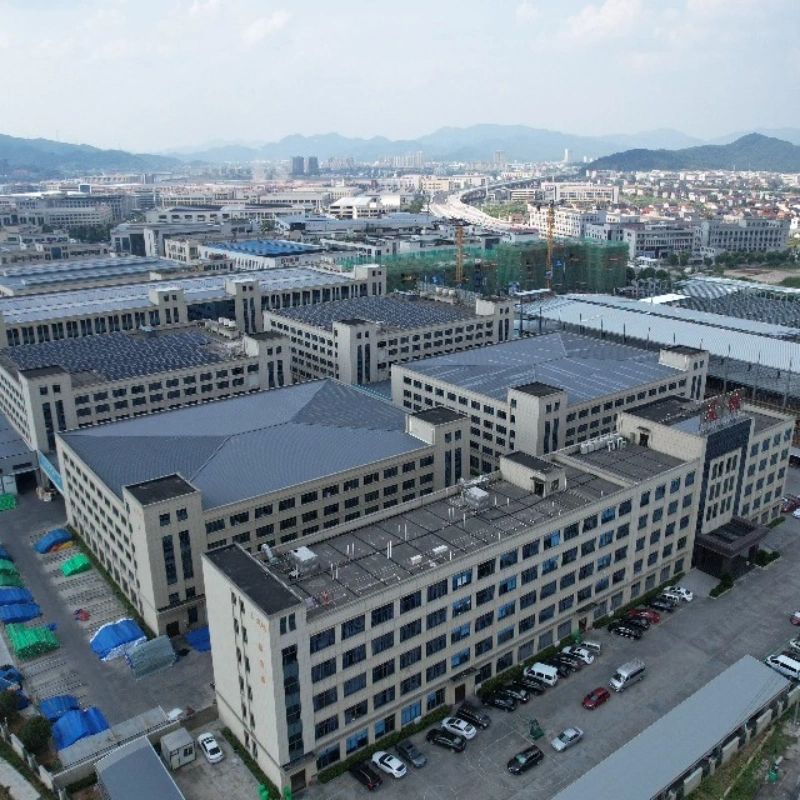
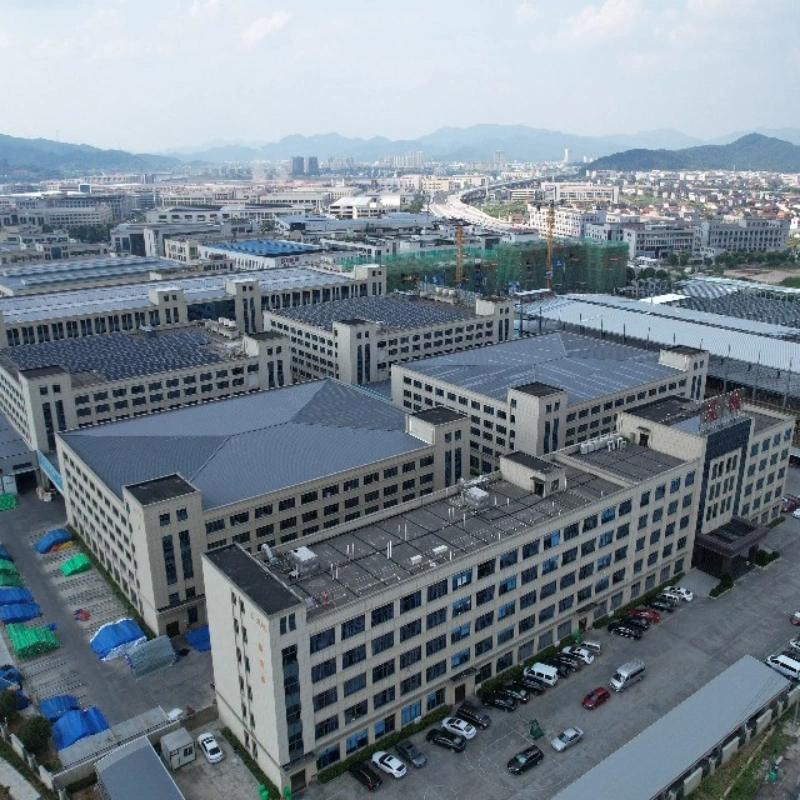
For a worked example, run these checks on IFAN's own supply. The pipe is made by Zhuji Fengfan Piping in Zhejiang — a registered manufacturer producing PPR since 1993, with a single deep PPR catalog rather than a scattered product mix, and recognitions held in the manufacturing entity's own name. The factory invites audits and sells strictly to importers and projects, not on consumer marketplaces. That last point matters for distributors: a maker that doesn't resell into your market on Amazon or Alibaba retail isn't competing with the customers it supplies.
Once you've confirmed the factory is real, the next questions are technical — what to order and how it has to match. Start with the PPR fittings guide and the pipe sizes and pressure chart.
Conclusion
A trading company can copy a factory's photos, badges and brochure, but it can't pass the name-matching tests: the license, the gate, the certificates and the invoice all have to read the same registered entity, sitting at a real industrial address, with a history that matches the claim. Run the seven checks and most resellers fall out before you've paid anything.
When you find a genuine maker, hold onto it — direct factory pricing and a production line that can actually fix a problem are worth far more than the lowest quote from a middleman you can't verify.
Frequently Asked Questions
How do I tell a PPR factory from a trading company?
Check the Chinese business license name and registered address. A "Trading Co." name or an office-tower address signals a reseller; a "Piping/Plastics Co." registered in an industrial zone with a deep PPR-only catalog signals a real maker.
Does an Alibaba "Verified Supplier" badge mean it's a factory?
No. Trading companies can carry the badge too. It confirms some business details were checked, not that the company manufactures the product. Verify the license and address separately.
How much does a China factory audit cost?
A third-party on-site audit from firms like SGS or Bureau Veritas typically runs from a few hundred to around 1,500 US dollars, depending on scope. On a full container order, that's low-cost insurance against a fake factory.
Why does buying from a trader cost more?
A trader adds a markup on top of the factory price and gives you no production line to fix defects. You pay more and get weaker quality control than dealing with the maker directly.
What documents should I ask a PPR supplier for?
The business license, third-party test certificates (SGS, Bureau Veritas, or equivalent) and per-batch material reports. Confirm the legal name matches across all of them and against the official registry.
Does a PP-R pipe factory need a CCC certificate?
No. PP-R pipe is in neither China's CCC catalogue (SAMR announcement 2023 No. 36) nor the industrial production-licence catalogue (State Council Guofa [2024] No. 11, in force 30 September 2024). A CCC certificate offered for PP-R pipe covers another product.