
Dimensionamento de coluna montante em PPR para edifícios altos: altura, calor e o limite
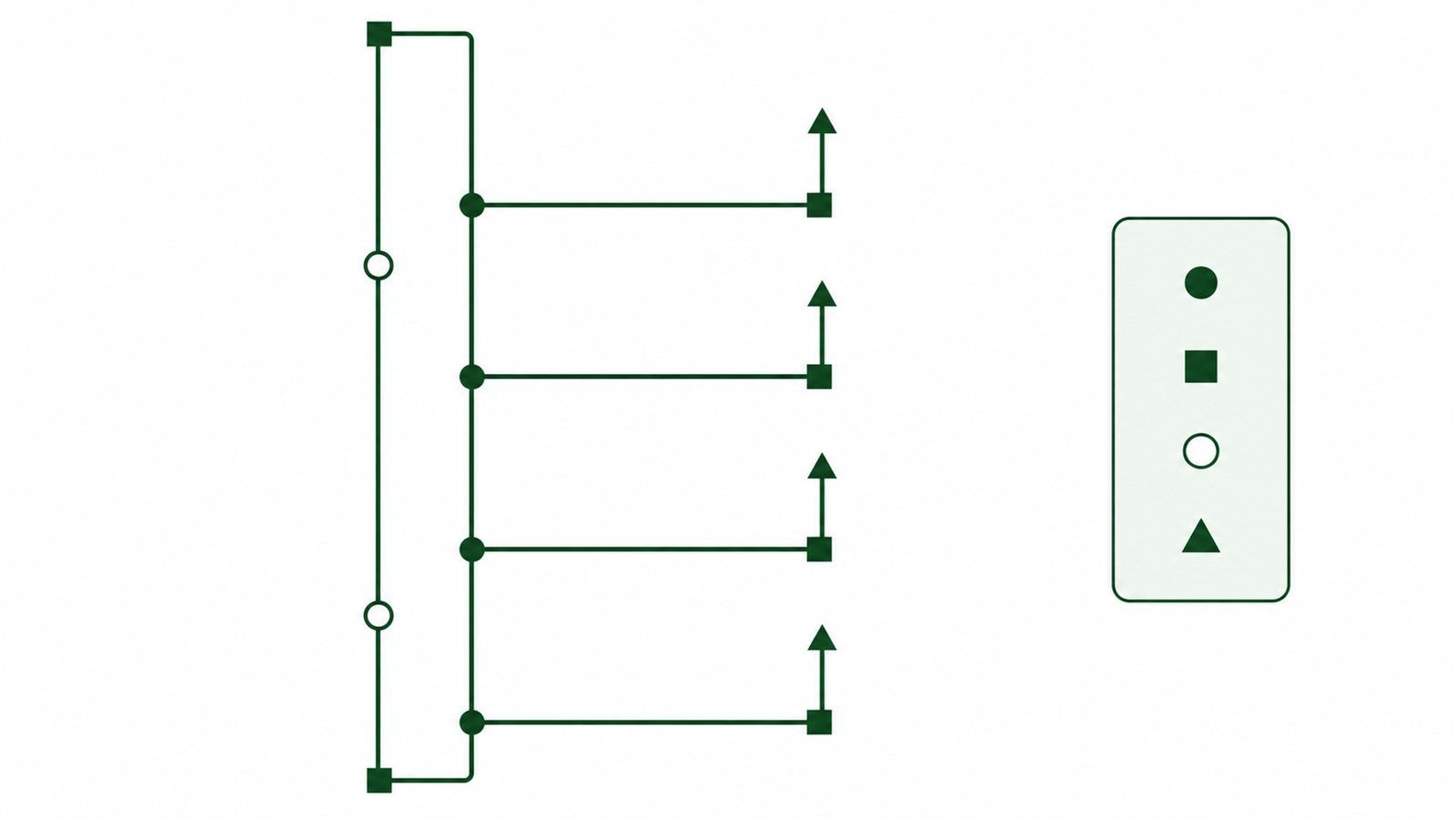
Tubulação PPR para um edifício alto: quanto custa em pressão um andar, onde a norma te impede antes da tubulação, e a classe PN que cada zona precisa.
Um tubo PP-R PN20 tem uma classificação de 20 bar a 20 °C. A 70 °C, o mesmo tubo é publicado a 6,7 bar. Um piso de 3,0 m de água acrescenta 0,29 bar de carga estática, e acrescenta-a para baixo, pelo que a pressão é mais elevada no fundo da coluna montante, enquanto a temperatura que reduz a classificação é mais elevada na linha de água quente. Estes dois factos são o que decide se o tubo PPR para um edifício em altura funciona, e quase nada do que se escreve sobre PP-R em edifícios altos os coloca na mesma frase.
Faça a aritmética e surge um número que altera a especificação. Reserve 2,5 bar no ponto de consumo mais elevado, utilize água quente a 70 °C, e uma coluna montante PN20 tem cerca de 14 pisos de carga estática disponíveis. A mesma coluna montante a funcionar com água fria tem cerca de 60. O edifício não mudou; a temperatura da água mudou.
Pontos-chave
- O ponto condicionante é o piso mais baixo da coluna montante de água quente, não o topo do edifício. A carga estática é maior aí e a pressão admissível já está reduzida pela temperatura.
- Um piso de 3,0 m custa 0,2934 bar. Isto resulta de 0,09778 bar por metro de coluna de água, que é p = ρgh com água a 25 °C.
- 18,8 pisos atingem 552 kPa, o limite estático que um código de instalações adotado fixa em qualquer ponto de consumo. Outro fixa 586 kPa. O número é local, por isso verifique o seu.
- O PN20 cruza essa linha do código a cerca de 65 °C. Abaixo disso, é o código que o trava primeiro; acima disso, é o tubo com classificação reduzida.
- O PN25 dá aproximadamente mais seis pisos a 70 °C do que o PN20, nas tabelas publicadas aqui utilizadas.
- Melhor para empreiteiros e compras de projeto que especificam uma coluna montante num edifício de média a grande altura. Não é para dimensionamento de tubagem para caudal, que é um cálculo separado.
Nesta página
- O ponto mais solicitado é o fundo da coluna montante de água quente
- Quanto lhe custa um piso em pressão
- Ler uma classificação PN à temperatura a que realmente opera
- Onde o código o trava antes do tubo
- Zoneamento: onde quebrar a coluna
- A lista de verificação da especificação da coluna montante
- O que este cálculo não abrange
- Conclusão
- Perguntas frequentes
Um clip antes da aritmética. O próprio vídeo de ensaio da IFAN submete tubos e acessórios PP-R a cargas de pressão e temperatura, que é exatamente o par em torno do qual gira toda esta página; veja o que os acessórios fazem, e não o tubo.

Ensaios de desempenho da série completa PPR da IFAN. A pressão e a temperatura são ensaiadas em conjunto porque atuam em conjunto, o que é exatamente a razão pela qual uma coluna montante tem de ser verificada no seu ponto mais quente e mais baixo, e não em cada um deles isoladamente.
O ponto mais solicitado é a base da coluna montante de água quente
Dois fatores variam em sentidos opostos ao longo de uma coluna montante, e um dimensionamento que verifique apenas um deles aprovará um edifício que não deveria ter sido construído.
A carga estática aumenta à medida que se desce. Cada metro de coluna de água vertical abaixo do ponto onde a pressão é mantida acresce à pressão que a parede da tubagem suporta, pelo que o ponto de consumo mais baixo de uma coluna montante está sujeito à pressão mais elevada dessa zona. A pressão admissível evolui no sentido inverso: o PP-R é um termoplástico, a sua resistência a longo prazo diminui à medida que a água aquece, e a pressão de serviço publicada para uma determinada classe PN decresce com a temperatura. A tabela publicada por um fabricante indica PN20 a 20,0 bar a 20 °C e 6,7 bar a 70 °C. O mesmo tubo, a mesma parede, um terço da capacidade nominal.
Combinando os dois fatores, o ponto mais solicitado num edifício é específico: o piso mais baixo da coluna montante de água quente. É o que suporta a coluna mais alta acima de si e opera à temperatura que já retirou dois terços da capacidade nominal do tubo. A coluna montante de água fria no mesmo piso suporta a mesma coluna contra uma capacidade nominal que praticamente não se alterou.
O catálogo técnico de um segundo fabricante indica claramente o envelope térmico: carga térmica contínua até 60 °C, carga térmica de curta duração até 90 °C. Um sistema de água quente sanitária que circula a 60 °C para controlo de legionela opera nesse limite contínuo em todas as horas de todos os dias, e é essa a condição pela qual a coluna montante deve ser verificada, não os 20 °C a que o valor PN foi declarado.
O que um piso custa em pressão
A pressão estática de uma coluna de água é p = ρgh. Com água a 25 °C, densidade de 997,05 kg/m³, e gravidade padrão de 9,80665 m/s², um metro de coluna produz 9,778 kPa, o que equivale a 0,09778 bar por metro. Com um pé-direito de piso a piso de 3,0 m, isso corresponde a 0,2934 bar por piso, e vale a pena memorizar este número porque converte um desenho numa pressão com uma única multiplicação.
Dois ajustes antes de o utilizar. A água quente é mais leve: a 70 °C a densidade é de cerca de 977,8 kg/m³, pelo que uma coluna de água quente produz aproximadamente 2 % menos de altura estática do que a mesma coluna de água fria. O valor acima é o da água fria e é deliberadamente a escolha conservadora. E piso a piso não é piso a teto, pelo que deve retirar os 3,0 m do corte do desenho e não da altura da divisão.
Aplique-o. Dez pisos correspondem a 2,93 bar de altura estática. Vinte pisos correspondem a 5,87 bar. Este segundo valor já está acima do limite máximo que um código de instalações adotado estabelece num ponto de utilização, o que é o tema de uma secção posterior e a primeira restrição com que a maioria das colunas se depara efetivamente.
Leitura de uma classe PN à temperatura real de operação
PN é uma classe de pressão nominal, declarada para uma condição de referência. Tratá-la como uma capacidade fixa é o erro mais comum em PP-R para edifícios altos, e a correção consiste em ler a tabela pressão-temperatura do próprio fabricante em vez do número gravado no tubo. A diferença entre PN, SDR e schedule também é relevante aqui, porque uma classe expressa num sistema não diz nada diretamente noutro.
Duas tabelas publicadas, lado a lado, demonstram-no melhor do que uma só. A diferença entre elas a 20 °C é de 0,4 bar, o que é pouco; na base de uma coluna montante de água quente com 20 pisos, essa mesma diferença representa mais de um piso de altura manométrica.
| Temperatura da água (°C) | C-Tube PN20 (bar) | C-Tube PN25 (bar) | Pestan PN20 (bar) | Veredicto para uma coluna montante |
|---|---|---|---|---|
| 20 | 20,0 | 25,0 | 20,4 | Coluna de água fria: o tubo não é o limitante |
| 40 | 13,7 | 17,1 | 14,5 | Retorno morno: ainda folgado |
| 60 | 9,3 | 11,6 | não utilizado | Limite de serviço contínuo; verificar a zona |
| 70 | 6,7 | 8,4 | 6,8 | O tubo passa a ser o fator limitante |
| 80 | 5,1 | 6,4 | não utilizado | Apenas curto prazo; não é condição de projeto |
Fonte: gráfico pressão-temperatura publicado da C-Tube (vida útil de projeto de 50 anos; a sua linha de 80 °C é indicada para 25 anos) e catálogo técnico Pestan PPR, Tabela 19 (ISO 15874:2013, fator de segurança SF = 1,5). Consulta em 2 de setembro de 2026. As linhas de 60 °C e 80 °C da Pestan não puderam ser transcritas com fiabilidade a partir desse PDF e foram deliberadamente omitidas em vez de estimadas.
Três conclusões a retirar da tabela. As duas tabelas coincidem de perto a 20 °C, 40 °C e 70 °C, o que garante que nenhuma delas é um caso isolado. São tabelas declaradas pelos fabricantes que fazem referência à ISO 15874, não à própria norma, e um dos dois não publica o fator de segurança subjacente. E as diferenças que existem são suficientemente grandes para serem relevantes na base de uma coluna montante alta, o que justifica especificar com base na tabela declarada do próprio fornecedor em vez de um gráfico genérico.
O princípio mais amplo por trás da curva, e o que uma classe de serviço declara efetivamente, é abordado no guia sobre desclassificação de pressão de PP-R por classe de serviço. Para uma coluna montante, um único valor desse guia é determinante: a temperatura que o sistema mantém continuamente, não a temperatura que atinge na caldeira.
Onde o código o impede antes de o tubo o fazer
Antes de o tubo esgotar a sua classe de pressão, o código de instalações hidráulicas costuma esgotar a paciência. O código de instalações hidráulicas de Chicago resume-o numa frase: "Onde a pressão da água dentro de um edifício exceder 80 psi (552 kPa) estáticos em qualquer ponto de consumo ou saída, deve ser instalada uma válvula redutora de pressão de água aprovada, em conformidade com a ASSE 1003, com filtro, para reduzir a pressão em qualquer ponto de consumo ou saída na tubagem de distribuição de água do edifício para 80 psi (552 kPa) estáticos ou menos."
O código de instalações hidráulicas de Nova Iorque estabelece o mesmo requisito com um valor diferente, 85 psi (586 kPa), com uma válvula ASSE 1003 ou CSA B356. Dois códigos adotados, dois limites, o que serve de lembrete de que este limiar é local. Os requisitos variam consoante a jurisdição e a autoridade competente sobre o projeto, pelo que deve confirmar o valor aplicável ao seu edifício antes de dimensionar segundo qualquer um destes valores.
Tome 552 kPa e divida por 9,778 kPa por metro, e a altura da coluna resulta: 56,4 m, o que corresponde a 18,8 pisos com 3,0 m de pé-direito. Essa é a altura de uma coluna ininterrupta que chega ao seu ponto de consumo mais baixo exatamente no limite. Nada tem a ver com o tubo.
Agora coloque a curva do tubo e a linha do código nos mesmos eixos, usando a aritmética de pisos anterior e reservando 2,5 bar no ponto de consumo mais alto da zona.
| Temperatura da água (°C) | PN20 PP-R (pisos) | PN25 PP-R (pisos) | Limite de código, 552 kPa (pisos) |
|---|---|---|---|
| 20 | 59.7 | 76.7 | 18.8 |
| 40 | 38.2 | 49.8 | 18.8 |
| 60 | 23.2 | 31.0 | 18.8 |
| 70 | 14.3 | 20.1 | 18.8 |
| 80 | 8.9 | 13.3 | 18.8 |
Fonte: tabela de pressão PN20/PN25 publicada pela C-Tube e código de instalações prediais de Chicago 18-29-604.8, convertidos a 0,2934 bar por piso de 3,0 m com 2,5 bar reservados no ponto de utilização mais elevado. Consulta em 2 de setembro de 2026.
Os pressupostos são apresentados de propósito: 3,0 m de piso a piso, 2,5 bar reservados no ponto de utilização mais elevado da zona, massa volúmica da água fria para a altura estática e a tabela C-Tube para a tubagem. Altere qualquer deles e a curva desloca-se. Substitua-os pelos seus antes de utilizar uma contagem de pisos.
A interseção é a conclusão. Abaixo de cerca de 65 °C a linha do código é inferior à curva da tubagem, pelo que a exigência de redução de pressão é a que condiciona primeiro e a tubagem ainda tem margem. Acima de 65 °C a curva PN20 desce abaixo da linha do código e a tubagem passa a ser o fator limitante. Uma coluna de água fria é um problema de código. Uma coluna de água quente a 70 °C é um problema de tubagem, e nenhuma redução de pressão na base o resolve, porque reduzir a pressão para cumprir o código deixa na mesma a coluna acima.
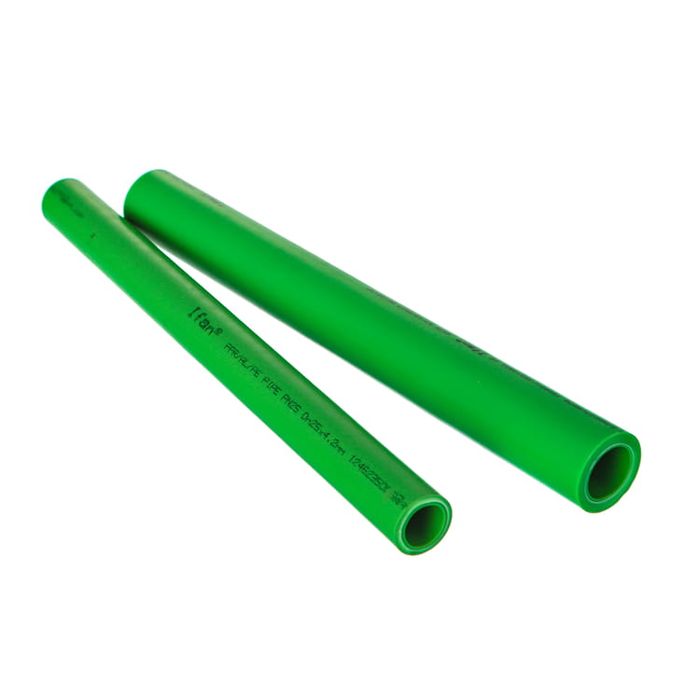
É isso que o PN25 resolve. A 70 °C o valor publicado para o PN25 de 8,4 bar dá cerca de 20 pisos de altura estática contra os 14 do PN20, pelo que a subida de classe vale aproximadamente seis pisos com estes pressupostos. É a alteração mais barata disponível em fase de projeto e a mais dispendiosa depois de a caixa de coluna estar fechada. A IFAN fabrica PN12.5, PN16, PN20 e PN25 de DN20 a DN160, pelo que o salto de classe é uma decisão de especificação e não um problema de aprovisionamento; a gama completa de produtos PP-R mostra o que cada classe abrange.
O que o gráfico não diz
É um cálculo de triagem em condições estáticas. Não inclui a altura de fecho da bomba, o golpe de aríete, nem a pressão que um grupo sobrepressor mantém no topo da zona para além dos 2,5 bar aqui reservados. Esses fatores aumentam o valor a que a tubagem está sujeita, nunca o diminuem, pelo que uma coluna que falhe esta verificação já falhou. Uma que passe ainda requer que o caso dinâmico seja analisado pelo engenheiro do projeto.
Zoneamento: onde quebrar a coluna
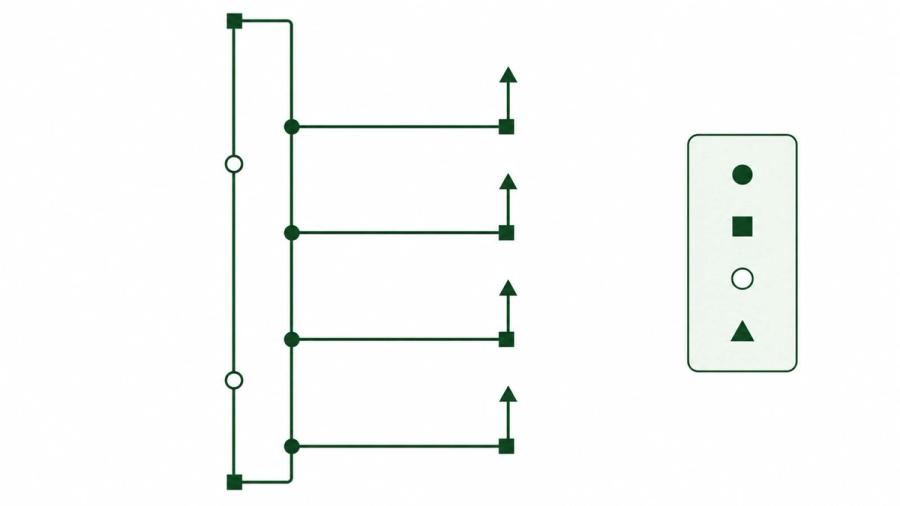
O zoneamento é a aritmética de pavimentos usada ao contrário. Se uma coluna ininterrupta atinge o teto de 552 kPa a 18,8 pavimentos, então uma zona nessa jurisdição tem no máximo cerca de 18 pavimentos de altura, e um edifício de 40 pavimentos precisa de pelo menos três zonas. O limite da zona é onde a coluna é quebrada e a pressão é restabelecida.
Há duas formas de quebrá-la, e elas não são intercambiáveis.
- Válvula redutora de pressão na base da zona. É a opção mais barata, mantém um prumada contínua e atende à exigência normativa citada acima. A tubulação acima da válvula ainda suporta a coluna cheia da sua própria zona, portanto a verificação de PN continua se aplicando por zona. Os critérios de seleção de uma válvula redutora de pressão importam mais aqui do que em edificações baixas, porque uma única válvula atende uma zona inteira.
- Tanque de quebra em um nível intermediário de casa de máquinas. Zera a coluna estática naquele pavimento e desacopla as zonas hidraulicamente. Ocupa mais espaço, exige mais equipamento, e é a resposta correta quando o edifício é alto o suficiente para que uma única cadeia de PRVs acumule tolerâncias.
Zoneie as prumadas de água quente e fria separadamente. Elas compartilham o edifício, mas não o orçamento: a 20 °C a prumada de água fria tem cerca de 60 pavimentos de capacidade de tubulação e apenas 18,8 pavimentos de limite normativo, enquanto a 70 °C a prumada de água quente tem cerca de 14 pavimentos de capacidade de tubulação. Copiar o zoneamento da água fria para a prumada de água quente é como uma linha quente acaba fora da sua classe de pressão na base de uma zona que a linha fria atende com folga.
Na base de cada zona, verifique o ponto de consumo mais baixo, não o ponto médio da prumada, e associe o isolamento a um dreno. Uma prumada que não pode ser drenada não pode ser trabalhada, e a estratificação desse isolamento está descrita no guia sobre qual nível de isolamento desliga o quê.
A Lista de Especificação da Coluna Montante
Oito linhas. Cada uma é uma decisão que o desenho tem de registar e um documento que o fornecedor tem de produzir, e em conjunto são o que transforma este cálculo numa encomenda.
| Especificar | Porque decide a coluna montante | Veredicto: evidência a exigir |
|---|---|---|
| Temperatura de serviço contínua (°C), quente e fria em separado | Determina qual a linha da tabela de pressão aplicável | Valor do caderno de encargos, não o setpoint da caldeira |
| Altura entre pisos (m) e número de pisos por zona | Converte-se em 0,2934 bar por piso de altura manométrica | Corte desenhado, não a altura do compartimento |
| Pressão residual no ponto de consumo mais elevado (bar) | Subtrai-se ao orçamento da tubagem antes da altura manométrica | Mínimo do mapa de aparelhos sanitários |
| Classe PN por zona, quente e fria em separado | PN25 ganha cerca de 6 pisos face a PN20 a 70 °C | Tabela pressão-temperatura do próprio fornecedor |
| Limite de pressão estática local num ponto de consumo (kPa) | Normalmente condiciona antes da tubagem abaixo de 65 °C | Texto do regulamento adotado, citado por artigo |
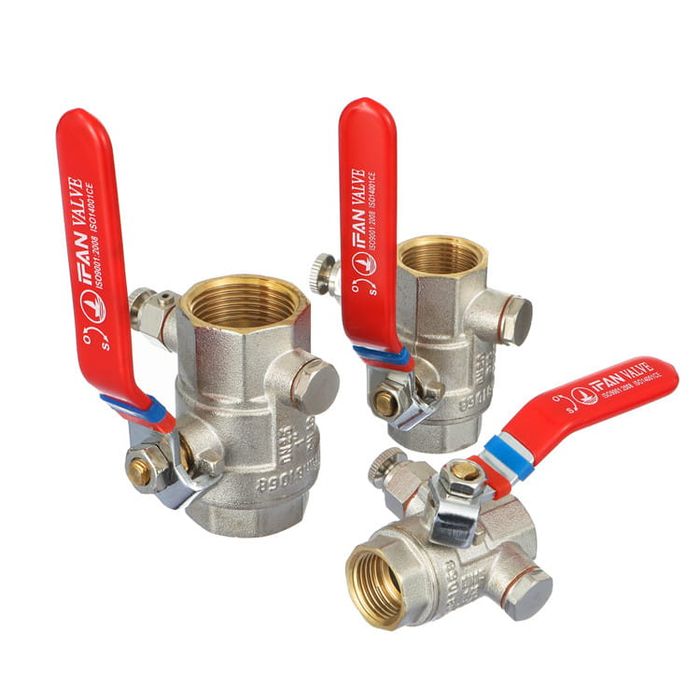
| Método de quebra de zona: PRV ou reservatório de quebra | Decide o espaço técnico e a altura da zona | Norma da válvula, p. ex. ASSE 1003 |
| Declaração de material e norma | Fixa contra o que foi ensaiada a classe PN | Certificado de lote por remessa |
| Isolamento e dreno na base de cada zona | Permite assistência à zona sem esvaziar a coluna | Mapa de válvulas com dreno integrado |
Fonte: compilado para este artigo a partir das tabelas de pressão publicadas pelos fabricantes na Tabela 1, dos códigos de canalização de Chicago e Nova Iorque no artigo 604.8, e da aritmética hidrostática acima. Setembro de 2026.
Onde Paramos, e o Que Pedir a um Fornecedor
Os valores de pressão aqui usados são tabelas publicadas por dois fabricantes, não resultados de ensaios de uma fábrica específica, e esta página não tem por trás dados internos de fábrica. A posição publicada da IFAN é a que consta da Product Bible: PP-R 100 % virgem (grau PP-R 100) com certificado de lote por remessa, declarado contra DIN 8077/8078 e ISO 15874, com CE e SGS, e SASO, SONCAP ou NOM disponíveis a pedido.
A encomenda a colocar é de um contentor, aceitando-se medidas mistas, o que permite a um projeto levar PN20 para as zonas frias e PN25 para as quentes numa única remessa. Peça a qualquer fornecedor a sua própria tabela pressão-temperatura e o formato do seu certificado de lote antes de fixar a classe no desenho.
Para empreiteiros e departamentos de compras que definem a classe de tubo de coluna antes do concurso, e para distribuidores que fazem stock para essa classe. A gama PP-R da IFAN cobre DN20–DN160 em PN12.5, PN16, PN20 e PN25, declarada segundo DIN 8077/8078 e ISO 15874, com um mínimo de um contentor e tamanhos mistos aceites.
O que este cálculo não abrange
Três lacunas, nomeadas em vez de ocultadas, porque uma coluna montante dimensionada apenas com a aritmética acima não está concluída.
Movimento térmico. O PP-R expande 1,5 × 10⁻⁴ por kelvin, ou seja, 0,15 mm por metro por kelvin. Uma coluna montante de 45 m sujeita a uma variação de 20 °C para 70 °C desloca cerca de 337 mm. Isto não é um erro de arredondamento numa prumada; é um problema de projeto com pontos fixos, guias e quer liras de dilatação, quer juntas de expansão, e é um tema distinto da pressão.
Caudal e diâmetro. Nada aqui dimensiona a tubagem para caudal, velocidade ou perda de carga. Uma coluna montante pode ter a classe de pressão correta e ainda assim ter o diâmetro errado. As dimensões e as classes de pressão por diâmetro estão indicadas no quadro de dimensões e classes de pressão de PP-R, e o cálculo de caudal corre a par deste, não depois dele.
Condições dinâmicas. A altura de fecho das bombas, o golpe de aríete provocado por válvulas de fecho rápido e o comportamento de um grupo sobrepressor numa zona escalonada acrescentam pressão que o caso estático não contempla. Esta página é um cálculo de triagem em condições estáticas, todos os dados nela inseridos são valores tabelados publicados ou pressupostos impressos ao lado do número, e um engenheiro habilitado assina o projeto final. Substitua os valores reais do projeto antes que qualquer elemento aqui chegue a um desenho.
Conclusão
Execute a verificação da prumada nesta ordem no seu próximo projeto. Retire a temperatura contínua da água quente do caderno de encargos e consulte a tabela do próprio fornecedor nessa linha. Retire a altura entre pisos do corte e multiplique os pisos por 0,2934 bar. Subtraia a pressão residual necessária ao ponto de consumo mais alto. Compare o que resta com o valor com derating do tubo e com o limite estático local, e deixe que o menor dos dois defina a altura da zona. Depois repita toda a sequência separadamente para a prumada de água fria, porque o resultado será diferente e normalmente maior.
Se a prumada de água quente ficar curta, as duas soluções que vale a pena orçamentar antes de mudar de material são um salto de PN20 para PN25 e uma quebra de zona adicional. Compare ambas com os seus próprios números e não com estes, e peça ao engenheiro responsável que confirme o caso dinâmico.
Perguntas Frequentes
Quantos pisos pode atender uma prumada de PPR?
Depende da temperatura, não apenas do tubo. Nas tabelas publicadas utilizadas aqui, com 2,5 bar reservados no ponto de consumo mais alto e pé-direito de 3,0 m, o PN20 suporta cerca de 60 pisos de coluna de água fria e cerca de 14 a 70 °C. Normalmente o limite imposto pelo código local é o que prevalece.
O PPR é adequado para edifícios de grande altura?
Sim, quando a prumada é zoneada e a classe é escolhida em função da temperatura de operação. O erro típico é aplicar uma classificação de PN de água fria a uma prumada quente, onde o mesmo tubo suporta aproximadamente um terço da pressão.
A partir de que pressão um edifício necessita de válvula redutora de pressão?
O código de instalações hidráulicas de Chicago exige uma quando a pressão estática excede 80 psi (552 kPa) em qualquer ponto de consumo; o de Nova Iorque estabelece 85 psi (586 kPa). O limite é definido pelo código adotado localmente, portanto confirme o valor para a sua jurisdição.
Quanta pressão acrescenta cada piso numa prumada?
0,2934 bar por pé-direito de 3,0 m, a partir de 0,09778 bar por metro de coluna de água a 25 °C. Dez pisos correspondem a 2,93 bar. A água quente é cerca de 2 % mais leve, pelo que uma coluna quente produz ligeiramente menos.
Qual é a diferença entre PPR PN20 e PN25 num edifício alto?
Cerca de seis pisos de altura estática a 70 °C nas tabelas publicadas aqui: o PN20 dá aproximadamente 14 e o PN25 aproximadamente 20. A mudança de classe custa pouco em fase de projeto e não pode ser feita depois de a prumada estar fechada.
As prumadas de água quente e fria devem ser zoneadas da mesma forma?
Não. A 20 °C a prumada de água fria tem muito mais capacidade de tubo do que o código permite, enquanto uma prumada quente a 70 °C pode esgotar primeiro a classificação do tubo. Zoneie cada uma em função do seu próprio ponto crítico.