
uPVC vs HDPE for Underground Drainage: How to Decide
uPVC vs HDPE for buried drainage, decided by site: uPVC for normal bedded trenches, HDPE where the ground moves or floods. Plus the standard that governs.
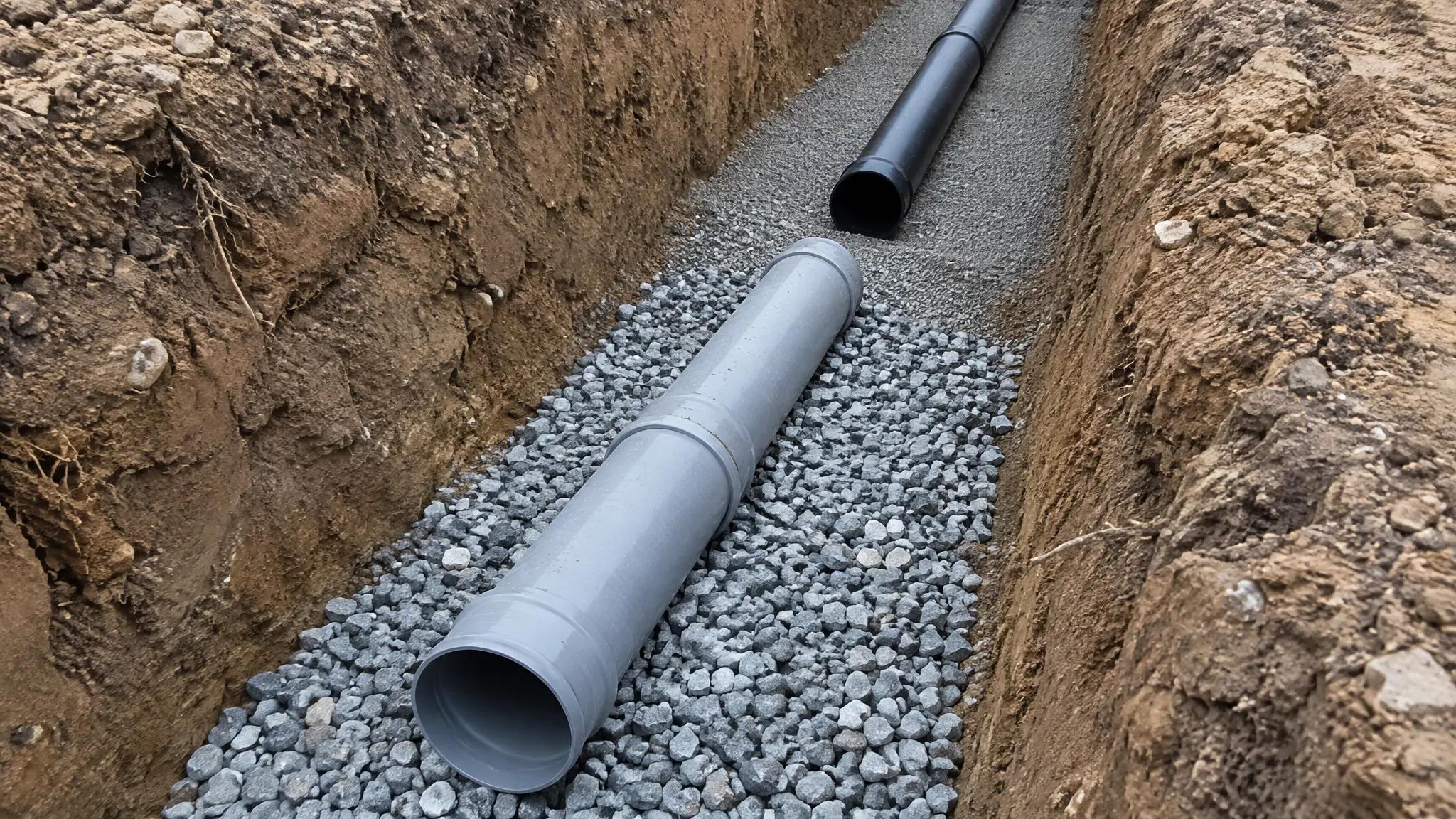
For a buried gravity drain, the material argument is decided in the trench, not on a datasheet. Both uPVC and HDPE outlast the ground around them; what separates them is cover depth, wheel loads, the backfill you can actually get, the water table, and whether a crew can make the joint where the pipe lies.
Order uPVC to EN 1401-1 when the trench is a normal, well-bedded municipal or site drain and the crew joints by socket. Order HDPE when the ground moves, the run is long, the alignment is trenchless, or a jointed line cannot be made watertight. One condition overrides both: the pipe must be certified to a non-pressure drainage standard. An SDR number from a pressure catalogue answers a different question.
Key Takeaways
- Gravity drainage and pressure pipe are governed by different standard families. ISO 4427-1:2019 is titled for supply and for sewerage under pressure and stops at PFA 25 bar; buried gravity lines belong to EN 1401-1, EN 12666-1, EN 13476-1 or ISO 21138-1.
- Ring stiffness, not the polymer, carries the trench. It is measured the same way for both materials under ISO 9969:2016 — the force at 3 % diametric deflection, in kN/m².
- Bedding can beat class. IFAN's own uPVC page states that a correctly bedded SN4 pipe can outperform an SN8 pipe dropped into an unprepared trench.
- Flotation is a calculation both materials must pass, run on an empty pipe with the water table at the surface — not a property one material has and the other lacks.
- Joint access is a specification input. Butt fusion needs power, a machine and room; a socket joint needs neither, and that decides more urban jobs than any material property.

On this page
- Gravity Duty or Pressure Duty: the Question That Comes First
- The Site-Condition Matrix: Which Material Wins Which Trench
- Cover Depth and Traffic: Ring Stiffness Decides, Not the Polymer
- Backfill You Cannot Control Is the Real Variable
- High Water Table: Infiltration and Flotation Are Different Problems
- Joint Access Can Override Everything Above
- Diameter and Length: What You Can Actually Buy
- Where We Stop, and What We Would Quote for Your Trench
- Frequently Asked Questions
Gravity Duty or Pressure Duty: the Question That Comes First
Buried drainage enquiries routinely arrive with a pressure specification attached: PE100 SDR17, or Class D uPVC. Neither phrase describes what the pipe has to survive in the ground. IFAN's own uPVC page puts it plainly: the most common specification mistake in buried drainage is choosing pipe by pressure thinking, when what the pipe must resist is external load.
The standards say the same thing by their titles. ISO 4427-1:2019, the document IFAN's own HDPE line is certified to alongside EN 12201, is called Plastics piping systems for water supply and for drainage and sewerage under pressure. It applies at a maximum allowable operating pressure up to and including 25 bar, at a 20 °C reference temperature. A gravity sewer runs at effectively zero internal pressure, so it sits outside that document. Its SDR arithmetic makes the point: PN = 2 × design stress / (SDR − 1). Every term on the right is an internal-pressure term.
Buried gravity lines have their own family. EN 1401-1:2019+A1:2023 covers solid-wall PVC-U; EN 12666-1:2005+A1:2011 is the polyethylene equivalent; EN 13476-1:2025 and ISO 21138-1:2020 cover structured-wall systems in PVC-U, PP and PE, which is how large-diameter polyethylene is actually supplied for gravity duty. All of them classify the pipe by application area and by ring stiffness class, not by pressure class.
| Duty | uPVC standard | HDPE standard | What it controls |
|---|---|---|---|
| Buried gravity drain, solid wall | EN 1401-1:2019+A1:2023 | EN 12666-1:2005+A1:2011 | Ring stiffness class, application area U or UD |
| Buried gravity drain, structured wall | EN 13476-1:2025 / ISO 21138-1:2020 | EN 13476-1:2025 / ISO 21138-1:2020 | Wall construction type, ring stiffness, size range |
| Highway and surface-water drainage (North America) | ASTM D3034-24e1 | AASHTO M 294:2025 | Dimensions, stiffness, joint and fitting requirements |
| Soil and waste inside the building | EN 1329 | Not the usual material | Discharge stacks, branches, impact and marking |
| Water supply or sewerage under pressure | ISO 1452 | ISO 4427:2019 / EN 12201-2:2024 | SDR, PN class, long-term hydrostatic strength |
| Installing and testing the buried line | EN 1610:2015 / ASTM D2321-26 | EN 1610:2015 / ASTM D2321-26 | Trench, bedding, backfill, site leak testing |
The Site-Condition Matrix: Which Material Wins Which Trench
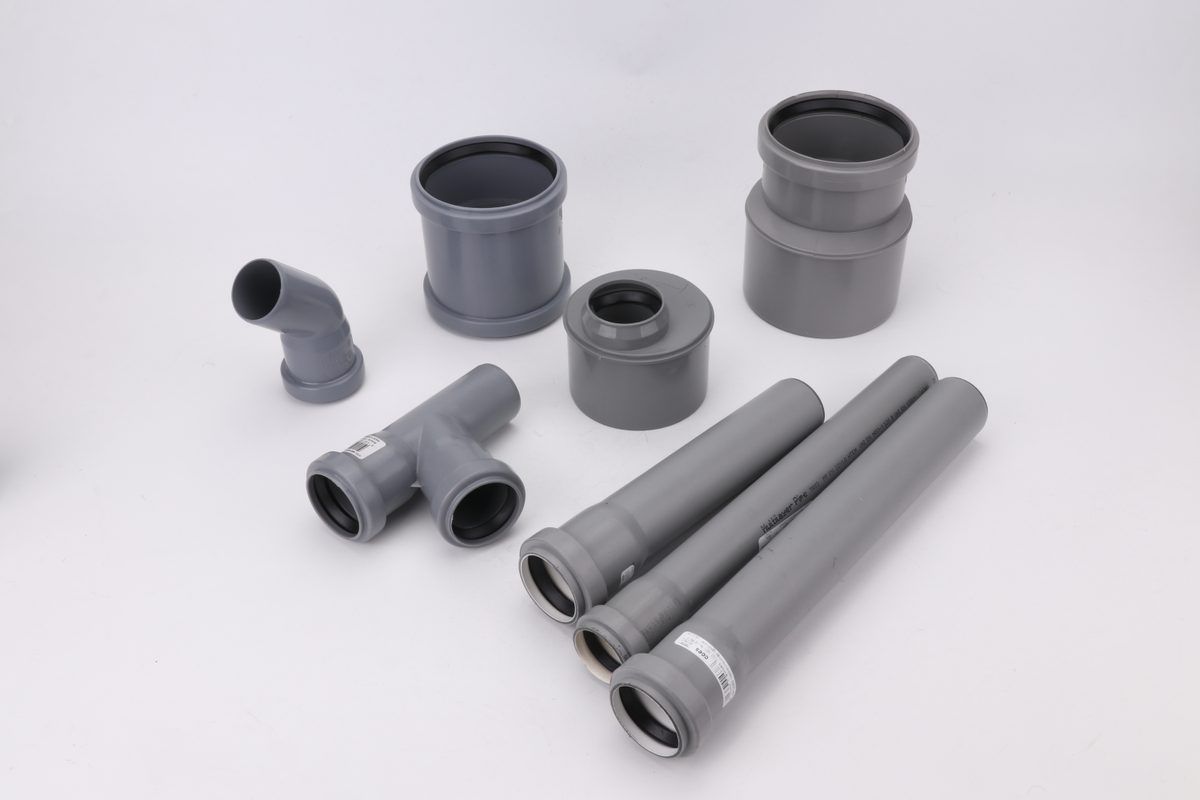
Seven conditions decide almost every buried drainage order, and each has a quantity behind it: cover in mm, an SN 4 or SN 8 class, an embedment class, a groundwater level. Find the one that dominates your site and let it choose. Where the two materials genuinely tie, the table says so rather than manufacture a winner.
| Site condition | uPVC | HDPE | Verdict |
|---|---|---|---|
| Cover depth, normal, non-trafficked | SN4 solid wall is the routine answer | Works, but pays for capability you do not use | uPVC. Flips to HDPE only if the ground moves |
| Deep cover or trafficked ground | SN8 or SN16, with controlled bedding | Structured wall at an equal SN class | Tie. The SN class decides, not the polymer |
| Backfill quality cannot be controlled | Punished hardest; needs imported granular bedding | More forgiving of point loads and rough handling | HDPE, unless you can buy and compact bedding |
| Settling, expansive or seismic ground | Rigid line; movement concentrates at the sockets | Fused line flexes as one continuous element | HDPE. This is the clearest win either way |
| Water table above the pipe | Infiltration risk sits at every gasket | Fused joint removes the infiltration path | HDPE for tightness; both need a flotation check |
| Sewer gas and municipal effluent | Inert; no crown corrosion mechanism | Inert; no crown corrosion mechanism | Tie. Neither is the risk; concrete is the comparison |
| Trench access, power and crew skill | Socket joint needs no power and no machine | Fusion needs a generator, a machine and room | uPVC on constrained urban and remote sites |
Cover Depth and Traffic: Ring Stiffness Decides, Not the Polymer
Ring stiffness is the one property defined identically for both materials, which is why it settles arguments adjectives cannot. ISO 9969:2016, third edition, confirmed 2021, specifies the test: load a ring of pipe between parallel plates and record the force needed to produce 3 % diametric deflection, reported in kN/m². A pipe stamped SN8 has been measured at no less than 8 kN/m² by that method, whether it is PVC-U or polyethylene.
EN 1401-1 offers four classes — SN2, SN4, SN8 and SN16 — and the choice belongs to the trench. IFAN's uPVC page states the rule it uses: SN4 for normal burial depths in non-trafficked ground, SN8 for deeper cover, trafficked areas, or where the bedding cannot be controlled well. How a wall thickness shortfall becomes a stiffness shortfall is worked through in our SN class and ring stiffness guide.
Two numbers turn the class into a decision. The first is cover before construction traffic: ASTM D2321 clause 7.6 asks for at least 610 mm of cover, or one pipe diameter, whichever is larger, over Class I embedment, and at least 914 mm over Class II, III or IV. The second is the deflection you are designing against. Buried PVC gravity sewer is held to a maximum long-term vertical ring deflection of 7.5 %, which carries a safety factor of 4 against the roughly 30 % deflection at which the wall reverses curvature. Hydraulically the margin is generous: a 7 % reduction in vertical diameter costs about 1 % of flow.
| Class (kN/m²) | Burial condition it is for | Min. cover before traffic (mm) | Best for |
|---|---|---|---|
| SN2 | Shallow, no traffic, designed bedding | 610 (Class I) / 914 (Class II–IV) | Only with a structural calculation behind it |
| SN4 | Normal burial depth, non-trafficked ground | 610 (Class I) / 914 (Class II–IV) | Site and estate drainage, plot connections |
| SN8 | Deeper cover, traffic, uncontrolled bedding | 610 (Class I) / 914 (Class II–IV) | Roads, yards, municipal sewer under carriageway |
| SN16 | Heavy load or very deep, engineer-specified | 610 (Class I) / 914 (Class II–IV) | Airport, port and industrial hardstanding |
Source: BS EN 1401-1:2019+A1:2023; ASTM D2321 clause 7.6 via Westlake bulletin MU-TB-004-US-EN-0225.1 (2025).
Backfill You Cannot Control Is the Real Variable
A flexible pipe does not carry the trench on its own wall. It deflects until the soil beside it pushes back, and the load is shared between pipe and embedment. That is why the embedment class in ASTM D2321 moves the required cover from 610 mm to 914 mm before a truck may cross the line, and why two identical SN8 pipes behave differently in two trenches on one street.
IFAN states the consequence on its own uPVC page, and it argues against the more expensive order: a correctly bedded SN4 pipe in compacted granular material can outperform an SN8 pipe dropped into an unprepared trench, because the surrounding soil carries part of the load. Specify the class and the bedding together, or the class is a number on a purchase order rather than a property in the ground.
There is a limit to what the installation standard does for you. ASTM D2321-26 says in its own scope that it excludes product performance criteria — minimum pipe stiffness, maximum service deflection, long-term strength — leaving those to the manufacturer and the engineer. A bedding specification therefore never settles the product choice: it tells the crew how to build the trench, not which pipe to put in it. Where granular bedding must be imported and compaction cannot be supervised, that bedding is a real line in the bill, and it is where a more forgiving polyethylene line starts to look cheaper than the cheaper pipe.
High Water Table: Infiltration and Flotation Are Different Problems
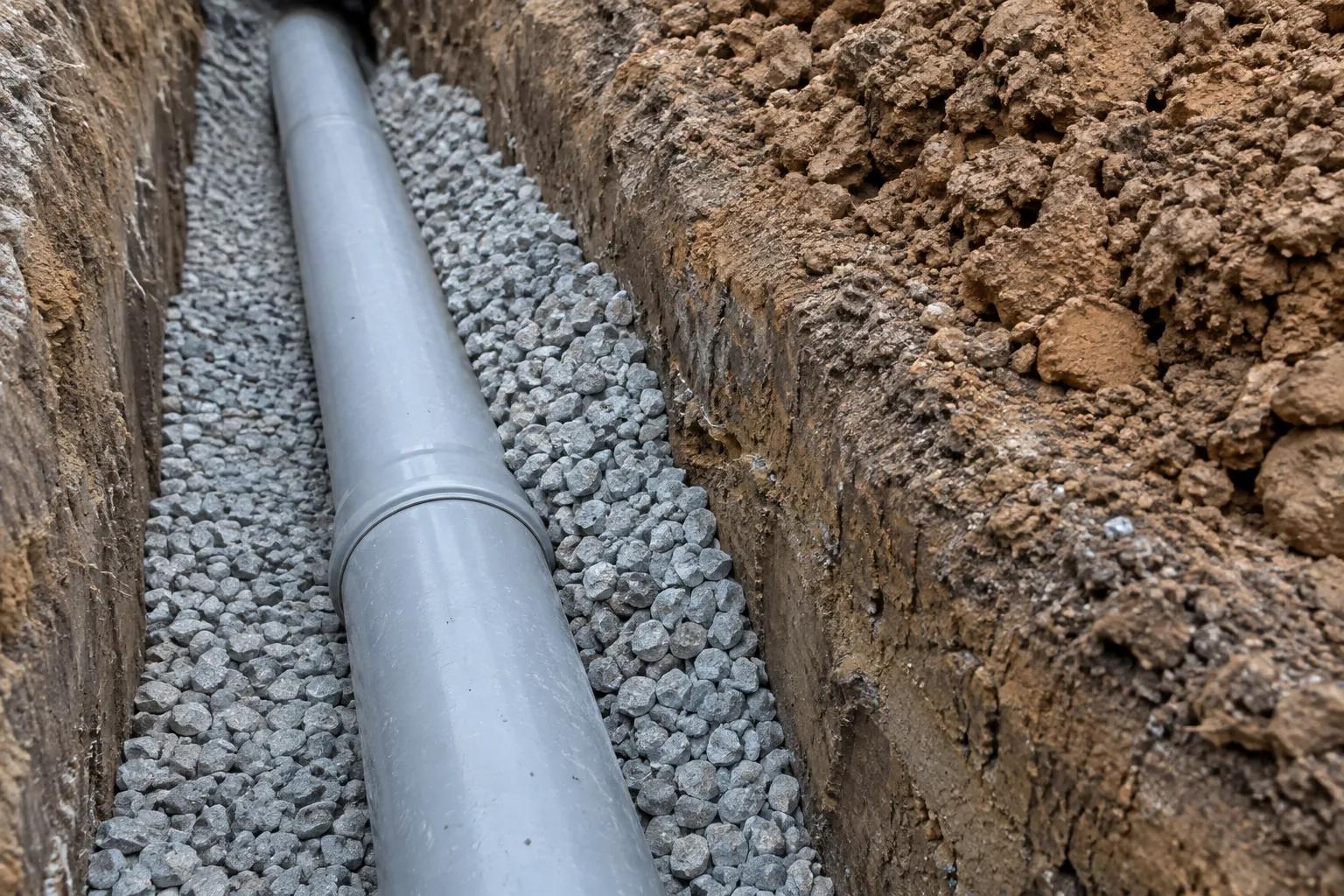
Page-one comparisons treat groundwater as one issue. It is two, and they point in different directions.
The first is infiltration. Groundwater standing above a gravity line will find any joint that is not tight, and the volume it adds shows up later as a treatment plant running on rainwater. Here polyethylene has a structural advantage that IFAN states on its own HDPE page: a butt-fused or electrofused joint is a continuous piece of material, not a gasket or a solvent seam, which removes the leak path that drives non-revenue water loss in socketed systems.
A gasketed uPVC sewer can be perfectly tight, and rubber-ring jointing is mature, but tightness there is a site process proved by the air or water test in EN 1610:2015, whose own scope covers gravity lines surcharged up to 0.5 kPa.
The second is flotation, and this is where the intuition about light polyethylene misleads people. The governing case is an empty pipe with the water table at the ground surface; the check balances uplift against the pipe plus the saturated soil column above it, at 62.4 lb/ft³ for water and 130 lb/ft³ for saturated soil.
Advanced Drainage Systems publishes the resulting minimum cover by size: 228 mm over a 300 mm pipe, 838 mm over a 1,200 mm pipe, 1,016 mm over a 1,500 mm pipe. None of those is the governing depth on its own. The same table’s note 6 sets a separate structural floor — 300 mm of cover for 100 to 1,200 mm pipe and 600 mm for 1,500 mm pipe — so at 300 mm the structural floor is the deeper of the two and governs. Take the greater. Flotation is arithmetic both materials have to pass, not a property one of them has.
| Nominal pipe diameter (mm) | Flotation (mm) | Structural floor (mm) |
|---|---|---|
| 300 | 228 | 300 |
| 1200 | 838 | 300 |
| 1500 | 1016 | 600 |
Joint Access Can Override Everything Above
The material that cannot be jointed on your site is the wrong material, whatever the matrix says. IFAN lists five ways its HDPE is joined — butt fusion, electrofusion, compression, saddle and flange — and the two that matter on a buried main need supply. Butt fusion needs a generator, a fusion machine, a clean dry face and enough trench width to handle a 6 m or 12 m stick. Electrofusion needs a generator and one fitting per joint. Butt fusion also requires matching wall thickness at the joint face, so SDR 11 cannot be fused to SDR 17 and both ends must share a PE grade; joining across classes means a coupler or a mechanical transition.
A uPVC socket asks for none of that. A gasketed spigot goes home with a lubricant and a bar; a solvent weld needs the right cement for the diameter and undisturbed set time. That is why constrained urban trenches and remote sites without power keep choosing uPVC even where the soil argument favours polyethylene. One warning covers both materials: socket depth and taper vary between manufacturers inside one nominal standard, and a marginal fit leaks two years later.
Diameter and Length: What You Can Actually Buy
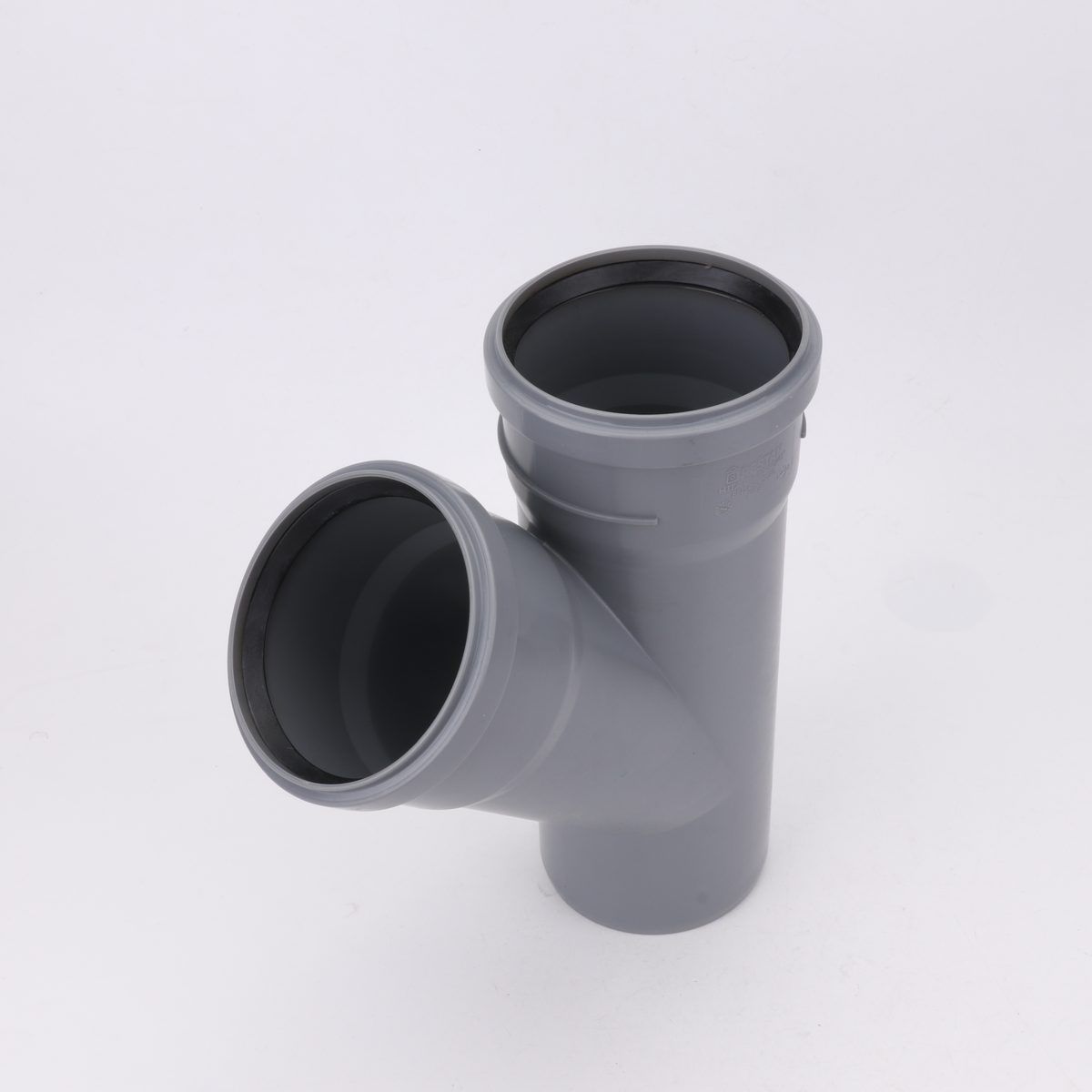
Availability settles more orders than physics does, and the boundaries moved recently. ASTM F679 was withdrawn in 2024 and ASTM D3034-24e1 now carries PVC gravity sewer from 3 in to 60 in, so a specification still citing F679 for large sizes is out of date. Corrugated polyethylene to AASHTO M 294:2025 runs 300 mm to 1,500 mm for surface and subsurface drainage. Length matters as much: coil supply removes most of the joints from a long field run, a construction argument rather than a stiffness one.
| Attribute | uPVC drainage | HDPE | Best for |
|---|---|---|---|
| IFAN published range (mm) | 110, 160, 200, 315 | DN20–DN1600 (PE100, pressure standards) | uPVC for building and site drainage sizes |
| Industry size ceiling | 60 in under ASTM D3034-24e1 | 1,500 mm under AASHTO M 294:2025 | Comparable; check the certification, not the size |
| Supply form | Straight lengths with sockets | Coils to DN90; 6 m and 12 m lengths | HDPE on long uninterrupted field runs |
| Standards on IFAN batch documents | EN 1401, EN 1329, ISO 4435 | ISO 4427, EN 12201, DIN 8074/8075 | uPVC is the certified gravity line here |
Where We Stop, and What We Would Quote for Your Trench
Five lines make a drainage enquiry answerable: standard and application area code, diameter and SN class, cover depth and traffic condition, groundwater level, and the joint type your crew can make. Send those and the quote matches the trench. Send "uPVC pipe, 200 mm, best price" and it does not.
What IFAN can confirm is on the record. Its uPVC drainage is documented to EN 1401, EN 1329 and ISO 4435, referenced on the batch certificate issued per shipment. The selection rule is SN4 for normal non-trafficked burial, SN8 for deeper cover, traffic or poor bedding. Containers can be mixed by SKU specification and stiffness class. Minimum order is one container; standard lead time is 45 days from order confirmation. What IFAN does not publish matters as much: no measured ring stiffness per diameter, no current stiffness-class list, and no price. Those are engineering-desk questions; the range sits on the product catalogue.
One caution before you order. If the matrix sends your trench to polyethylene, the pipe must be certified to EN 12666-1, EN 13476-1, ISO 21138 or AASHTO M 294 — not to ISO 4427 or EN 12201, the pressure documents IFAN's own HDPE line is built to. Say so on the enquiry. A supplier who cannot tell the two apart will ship the wrong certification, and the inspector will find it.
For importers and contractors ordering a container: cover depth, traffic and groundwater, and we will match the class.
Conclusion
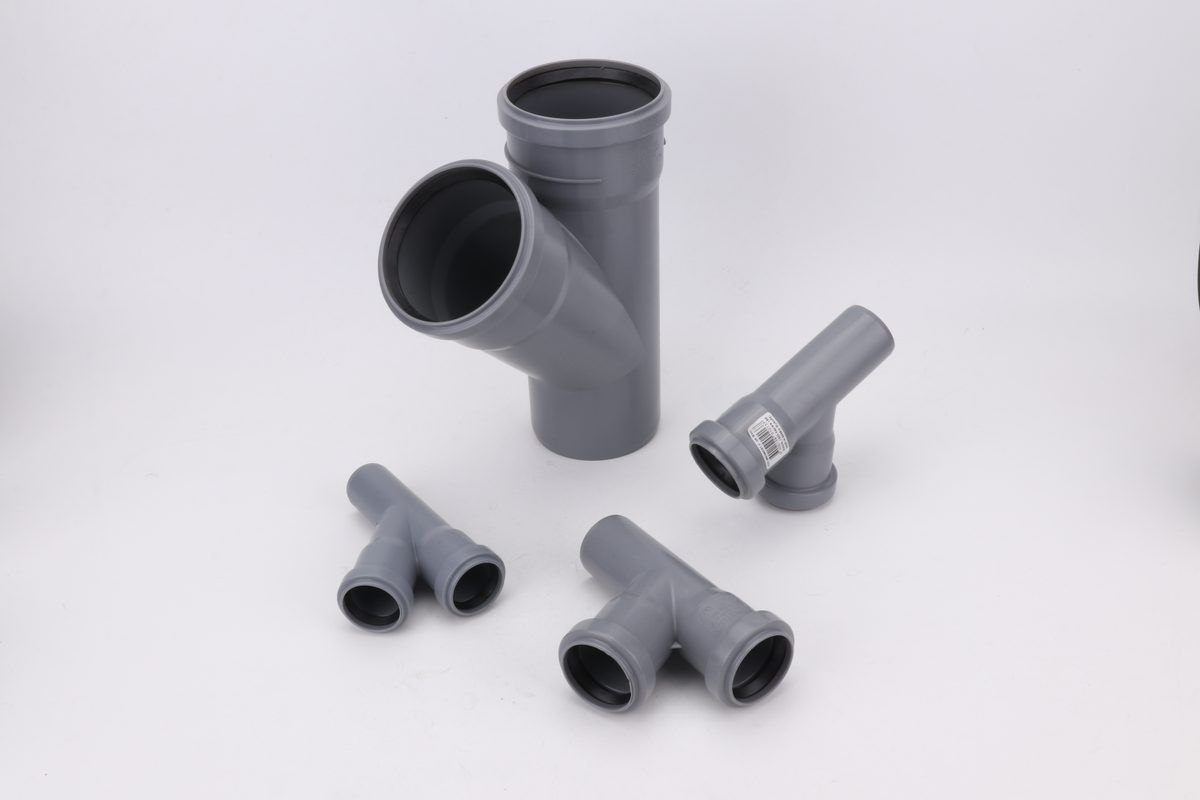
The honest trade is this. uPVC is cheaper to joint, easier to install without plant and certified for gravity duty across the sizes most projects need; it demands bedding you can control. HDPE buys you a continuous, flexible, watertight line in ground that moves or floods, and charges for it in plant, crew skill and the discipline of buying a non-pressure certification. Pick the condition that dominates your site and let it decide.
Frequently Asked Questions
Which is better for underground drainage, uPVC or HDPE?
Neither, in the abstract. uPVC wins on normal, well-bedded trenches and on sites with no power for fusion. HDPE wins where the ground settles, where the line must be watertight under groundwater, and on trenchless runs.
Can I use SDR to specify a gravity drainage pipe?
Not on its own. SDR converts to a pressure class through PN = 2 × design stress / (SDR − 1), and every term is an internal-pressure term. A buried gravity line is specified by ring stiffness class to ISO 9969:2016.
Does HDPE pipe float if the water table is high?
Any empty buried plastic pipe can float. The check balances uplift against the pipe plus the saturated soil above it, and published guidance asks for 228 mm of cover over a 300 mm pipe rising to 1,016 mm over a 1,500 mm pipe.
What is the difference between SN4 and SN8 drainage pipe?
Ring stiffness measured under ISO 9969:2016 at 3 % diametric deflection: 4 kN/m² against 8 kN/m². SN4 suits normal burial in non-trafficked ground; SN8 is for deeper cover, traffic, or bedding that cannot be controlled.
Which standard should a buried drainage pipe be certified to?
EN 1401-1 for solid-wall uPVC, EN 12666-1 for PE, and EN 13476-1 or ISO 21138-1 for structured wall in either material. ISO 4427 and EN 12201 are pressure standards and do not cover gravity duty.