
Rubber Ring Joint Sewer Pipe Leaking? Diagnose It Before You Backfill
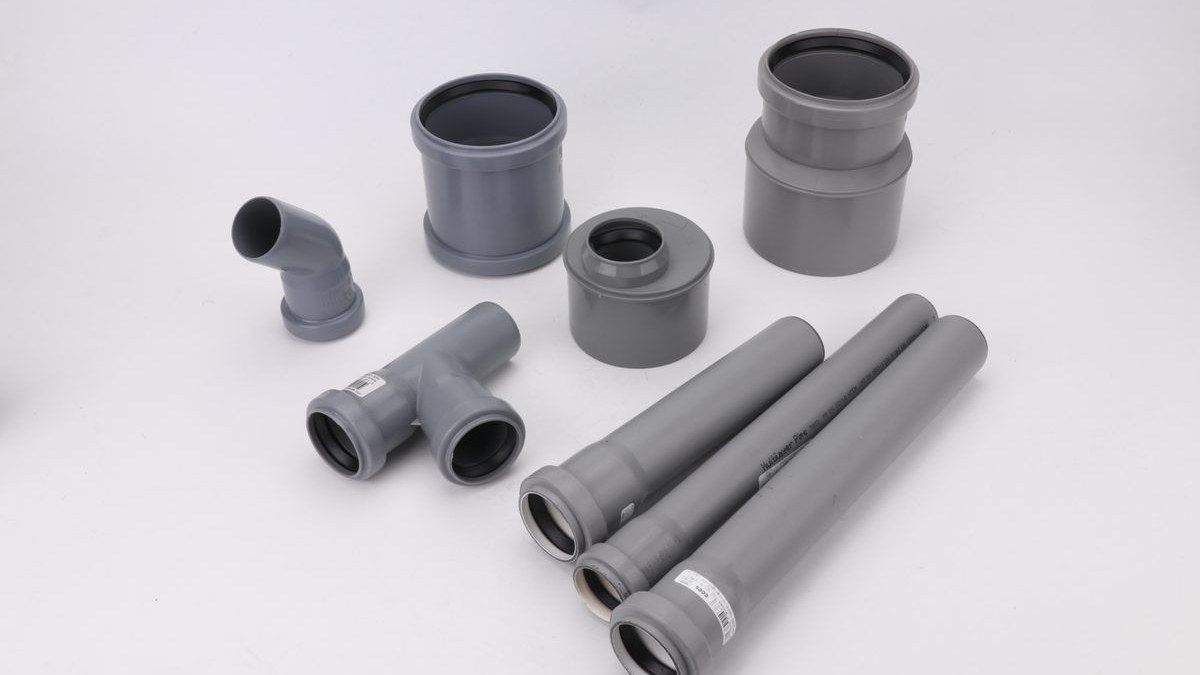
Diagnose a leaking gasketed uPVC sewer joint by when it failed: confirm a rolled ring with a flashlight and paper clip, then re-specify so it stops.
The trench is open, the run is laid, and one joint is weeping. Nobody wants to hear it, but the fastest way to find out why is not to stare at the joint — it is to ask when it started. A rubber ring joint that leaks the moment you fill it failed mechanically, and it failed while you were watching. One that passed its test and started weeping four months later failed chemically or thermally, and it was already doomed on the day it tested clean.
Those two failures look identical from above the pipe. They need completely different repairs, and only one of them is your installer's fault. This guide walks the diagnosis in the order a site engineer can actually work it — symptom, physical cause, the field check that confirms it, the repair, and the change that stops it recurring on the next 200 metres.
- Timing is the diagnostic. Immediate leak = mechanical (rolled ring, displaced ring, spigot not home). Delayed leak = chemical or thermal (wrong lubricant, wrong elastomer for the ground, discharge above the ring's temperature class).
- Do not bottom the spigot out. Uni-Bell states the joint seals without the spigot touching the bell shoulder, and that the gap is a design feature allowing thermal movement and unstressed angular offset.
- Read the insertion line, not the feel. One line: it must still be visible after assembly. Two lines: the bell edge finishes between them — minimum line hidden, maximum line visible.
- Resistance means stop. Manufacturer instruction is that resistance during assembly indicates a dislodged gasket; the joint gets disassembled and rebuilt, never forced.
- Petroleum grease is a slow kill. SBR has no resistance to petroleum oils and swells; EPDM is attacked by the same hydrocarbons, so moving up to EPDM does not rescue a lubricant mistake. Nitrile is the compound listed for hydrocarbons and refined petroleum oils.
- A delayed failure is a batch, not a joint. Bound the affected lubricant batch and chainage before excavating, recover a ring as evidence, notify in writing before remediating, and replace rings rather than pipe — the barrel is usually sound.
- Specify the ring, not just the pipe. Four lines on the datasheet — compound identity, ASTM F477 declaration, joint standard, service temperature class — prevent almost every failure in this article.
- Start With When The Joint Failed, Not What It Looks Like
- The Spigot Will Not Push Home — Or It Went In Too Far
- Rolled Or Displaced Gasket: How To Confirm It Before You Backfill
- The Joint Passed The Test And Leaked Months Later
- What To Put On The Datasheet When You Re-Specify The Ring — And What We Supply Against It
- Frequently Asked Questions
Start With When The Joint Failed, Not What It Looks Like
A rubber ring joint — the push-fit socket-and-spigot connection used on uPVC gravity sewer and drainage lines — has exactly one sealing element. An elastomeric ring sits in a groove inside the bell, the chamfered spigot slides past it, and the ring's compression does the rest. There is no cement, no heat, no torque figure. That simplicity is why the joint is fast, and it is also why every failure traces back to a very short list of causes.
The list is short enough that guessing feels reasonable. It is not, because two of the causes are invisible at the moment of failure and one of them will pass a pressure test. So before touching anything, place the failure in time.
| When it failed | What that rules in | First check |
|---|---|---|
| Would not assemble at all | Ring already dislodged, missing chamfer, debris in the bell | Stop pushing. Pull the joint and look at the ring. |
| Leaked on first fill or first test | Rolled or displaced ring, spigot not home, over-insertion | Flashlight down the barrel, then a feeler sweep of the annular gap. |
| Passed the test, weeping weeks or months later | Lubricant attacked the compound, hydrocarbon ground, or over-temperature discharge | Recover a ring, look for swelling and softening, then audit the lubricant issued — and treat it as a batch, not a joint. |
| CCTV shows a gap at the joint, no leak | Usually nothing — this is designed behaviour | Confirm against the insertion line before ordering remedial work. |
That last row saves more money than the rest of this article combined. Contractors have dug up sound pipeline because a camera survey showed daylight between spigot and bell shoulder. It is supposed to be there.
Worth knowing what your acceptance test actually proves, too. ASTM D3212 is the specification the gravity sewer industry uses to classify a joint as watertight, and it does so with a negative-pressure test — commonly cited at 10.8 psi held for 10 minutes — on joints for drain and gravity sewer pipe rated below 25-ft head. That test confirms the joint seals today. It says nothing about whether the compound in the groove will still be intact next year, which is exactly the failure mode most people never diagnose.
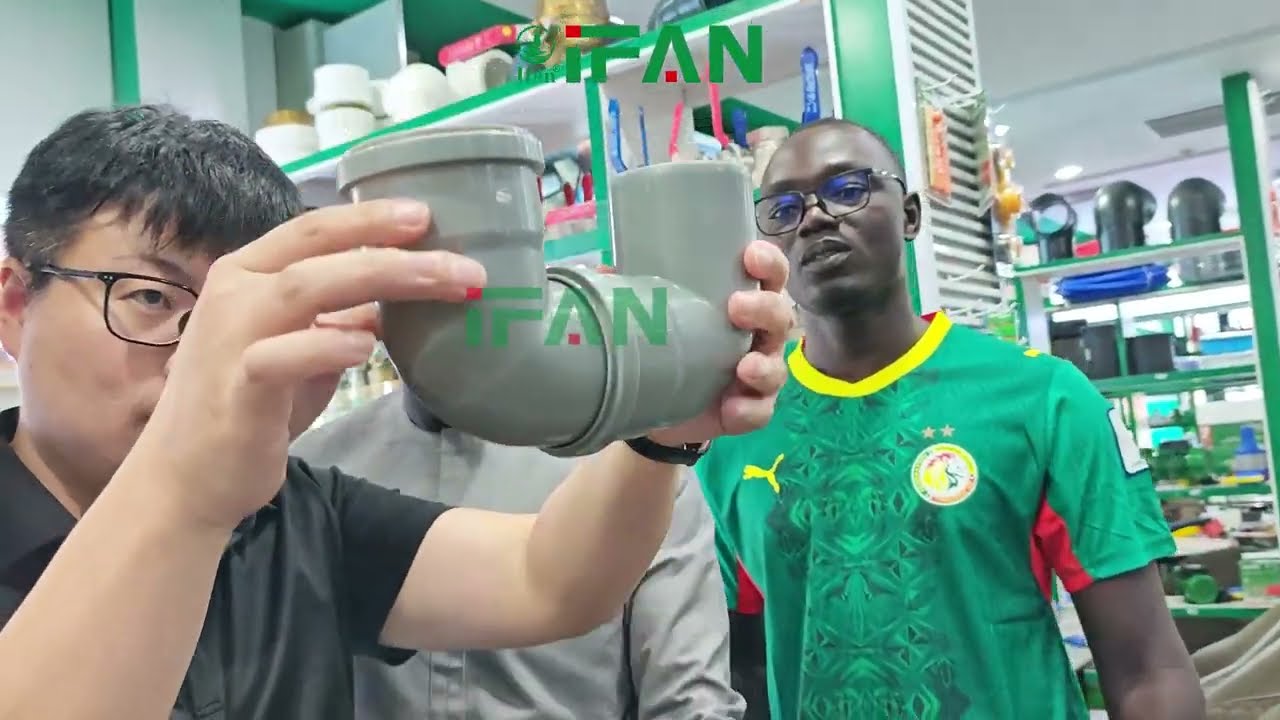 ▶ Play — Seal-ring joint water test
A glue-free water test on uPVC seal-ring fittings: what a correctly seated ring does when the joint is filled, with no cement anywhere in the assembly.
The Spigot Will Not Push Home — Or It Went In Too Far
These are opposite complaints with a shared root: nobody on site agrees what "home" means. The pipe manufacturer already decided, and printed the answer on the spigot.
Reading the insertion line
The insertion line marked around the spigot circumference is positioned by the manufacturer from the bell design, the manufacturing tolerances and the anticipated thermal expansion and contraction of that specific product. It does two jobs: it confirms the chamfered spigot end has passed the ring far enough to seal, and it prevents over-insertion.
Read it like this:
- One line. Push until the line is flush with the lip of the bell. After assembly the line should still be visible. If you cannot see it, the spigot is over-inserted.
- Two lines. These mark maximum and minimum insertion depth, and the bell edge should finish between them. Correctly assembled, the line closest to the spigot end — the minimum — should not be visible, and the line furthest from the spigot end — the maximum — should be visible.
- Into a fitting, not a pipe bell. Manufacturer instruction is explicit that factory-made assembly lines on the pipe do not indicate correct assembly to fittings. The line is calibrated to a pipe bell. Assembling pipe into a wye, a bend or a coupler needs the fitting's own depth, taken by measuring, not by trusting the print.
That third point catches experienced crews. A gang that has laid two hundred pipe-to-pipe joints correctly will use the same visual cue on the branch fittings at a manhole and quietly under-insert every one.
| What you see after assembly | Verdict | Action |
|---|---|---|
| Single line visible, flush at the bell lip | Correct | Proceed to the barrel and feeler checks |
| Single line no longer visible | Over-inserted | Withdraw to the line; the movement allowance is gone |
| Dual lines: near line hidden, far line visible | Correct | Bell edge sits between minimum and maximum |
| Dual lines: both visible | Under-inserted | May not have cleared the ring; push to between the lines |
| Joining into a fitting, any line reading | Not applicable | Measure the fitting's own socket depth |
When it will not go in
If you feel resistance during assembly, the instruction from the manufacturer is not to push harder. Resistance may mean the sealing gasket has been dislodged, and the prescribed response is to disassemble the joint, clean it and reconstruct it. Forcing a joint against a dislodged ring is how a recoverable ten-minute problem becomes a rolled ring you then bury.
Two other things stop a spigot: a missing chamfer and dirty components. Field-cut ends have no chamfer, and the instruction is to follow the example of a factory-made spigot and machine a suitable one. Laying pipe with bells forward so assembly consists of pushing the spigot into the bell keeps grit out of the sealing surfaces in the first place.
Where mechanical force is needed, it must not be applied directly to the pipe edge — a plank goes between the backhoe bucket and the pipe. The operator cannot see the joint from the cab, which is why a helper stands at the joint to signal completion. An operator working blind is how over-insertion happens on large diameters.
The gap that is not a fault
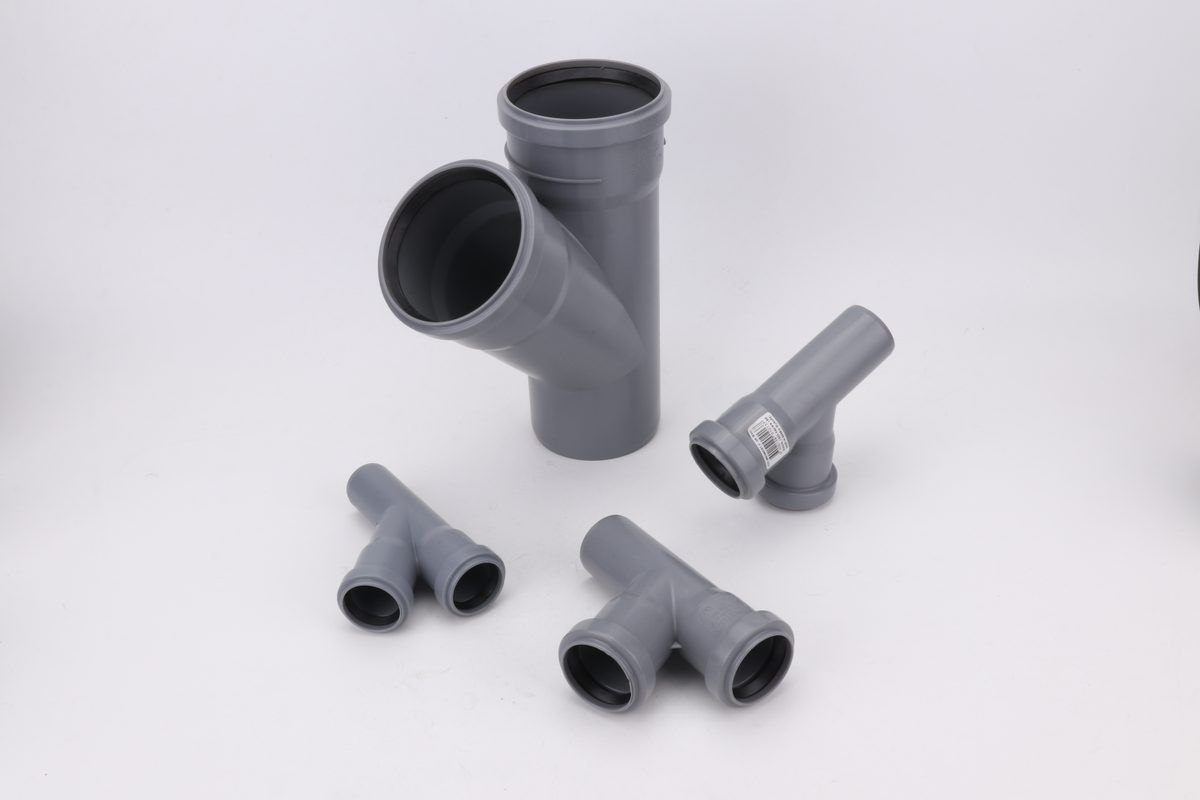
Video inspections of uPVC sewer lines routinely show a small longitudinal gap between the spigot end and the bell shoulder. The position taken by Uni-Bell, the PVC Pipe Association, is direct: these gaps are not flaws, they are an important design consideration for both pressure and non-pressure PVC pipe. The gap gives room for thermal expansion and allows unstressed angular offset at the joint, which is what lets a buried line absorb ground movement without loading the bell.
Installers who believe a joint must be bottomed out to seal are working from the wrong model. The joint is designed with sufficient length of insertion past the gasket to permit thermal contraction without compromising the seal, even with the gap present. And the gap does not cost you hydraulic performance either — testing supports a Manning's n of 0.009 as an accurate design value for gravity sewer, and a Hazen-Williams C of 150 for pressure, both for pipe with gaps at the joints.
That matters commercially as well as technically. A design already assuming 0.009 has no capacity to recover by re-laying joints to close the gaps, and the re-lay introduces fresh assembly risk on a line that was performing. Before authorising remedial work on a gapped joint, get the insertion line photographed — a joint sitting correctly at its line has already demonstrated it does not need touching.
The real hazard runs the other way. Uni-Bell names the consequence of over-insertion combined with axial deflection of the joint: contact between bell and spigot may cause joint leakage or significant stress in the bell wall. A crew that "makes sure" by driving every spigot to the shoulder has removed the movement allowance and put the bell in the load path.
Rolled Or Displaced Gasket: How To Confirm It Before You Backfill
A displaced or rolled gasket is one of the most common errors in joint assembly, and it is the one with the worst economics. Confirmed before backfill it costs a few minutes. Confirmed after backfill it costs excavation.
Two checks, no special tools
- Flashlight down the barrel. After assembly and after any deflection is complete, shine a light down the pipe and look at the joint. Most extreme rolled gaskets can clearly be noticed as a bulge of rubber.
- Feeler sweep of the annular gap. A small rod, a thin strip of metal or even a paper clip goes into the small gap between the bell face and the spigot. Work it around the full circumference. It will identify voids, or a gasket that has slipped out of the socket.
Note what these checks are not: there is no published gap dimension that separates good from bad. The method finds discontinuity — a section where the ring is not where it is everywhere else. You are comparing the joint against itself, all the way round, which is why a partial sweep is worthless.
Budget the time honestly and the checks pay for themselves. A 360-degree sweep and a light check add a minute or two to a joint on 110 mm or 160 mm drainage pipe. Against that, a rolled ring found after backfill means re-excavating and reinstating a buried run at whatever depth the invert sits. That asymmetry is why the inspection belongs inside assembly procedure rather than in a final walk-through, and why the sequence puts it after any deflection rather than before.
The four causes, and what each one looks like
| Cause | Mechanism | Prevention |
|---|---|---|
| Ring installed backwards | Wrong orientation causes the ring to slip out of the socket as the spigot enters | Check profile direction before every seating, not once per pallet |
| Lubricant in the socket | Lube between ring and socket lets the ring slide out during assembly | Never lube the socket before the ring is seated. Lubricate the spigot only |
| Deflecting before the joint is home | The spigot edge catches the ring and rolls or tears it | Assemble straight, then deflect; tight trenches are where this happens |
| Cold, stiff rubber | A cold ring resists seating evenly and bunches | In cold or freezing conditions, warm the gasket to room temperature before installation |
Seating and lubricating correctly
Unequal stretch is the quiet one. Press-Seal, a pipe-gasket manufacturer, describes what happens plainly: the rubber bunches up on one side and thins out on the other. A thinned section is a section with less compression than the groove was designed around, and it sits there invisibly until the line is in service. The fix is mechanical — equalise the stretch with a screwdriver or metal object underneath the ring, worked around about one and a half times, before the spigot goes anywhere near it.
The same instruction carries the warning behind the second row of the table above: never put lubricant under the gasket. Lubricant beneath the ring lets it roll off during assembly, which either stops the joint seating or damages the bell.
Then lubricate to instruction rather than to instinct. The manufacturer specification is a thin coating, equivalent to a brushed coating, applied with a glove, rag or brush all around the pipe nose — over the chamfer and 1 1/2 inches back. More is not safer. Excess lubricant migrates into the socket and reintroduces the displacement mechanism you were trying to avoid.
The Joint Passed The Test And Leaked Months Later
This is the failure nobody catches, because the evidence that it was coming was destroyed at the moment the joint tested clean. The joint was built correctly. The chemistry was wrong.
It also carries the worst commercial consequences, and not because of the repair cost. An immediate leak is found by the crew that made it, on a line nobody has adopted yet. A delayed leak surfaces after handover, on a system somebody has already signed for, and it surfaces at several joints at once because every joint on that stretch got the same lubricant from the same tub on the same day. What arrives is not a defect report, it is a claim about the pipe.
What the wrong lubricant does
Manufacturer instruction says to use only approved lubricant, and warns that substitute lubricants may affect water quality or damage the gaskets. On a busy site, a tub of general-purpose grease is often nearer to hand than the specified pipe lubricant, and the joint it makes assembles beautifully and tests perfectly.
Then the chemistry starts. SBR — the standard elastomer supplied with push-on and mechanical joint types across North American water and sewer practice — has no resistance to petroleum oils, fuels or mineral hydraulic fluids. Contact makes it swell excessively. A swollen ring loses the defined geometry the groove relies on, and the compression that was sealing the joint degrades over months rather than minutes. Lubricating oil present in the line or even in the surrounding air adversely affects both SBR and EPDM performance.
The trap in that last sentence deserves emphasis, because the intuitive fix is wrong. Petroleum is the one exposure EPDM shares with SBR — mineral oils, fuels, hydraulic fluids and petroleum-based greases swell it dramatically — so upgrading the specification from SBR to EPDM buys a higher thermal ceiling at extra cost, against a failure mode it does not address.
Be precise about where that boundary actually falls, though, because the resistance tables are not interchangeable. Neoprene is not in the same category: a ductile-iron manufacturer's specialty-gasket schedule lists it for oils, fats and greases, so it tolerates greasy waste that would finish an SBR ring. Tolerance is not immunity, and the same schedule lists nitrile separately for hydrocarbons and refined petroleum oils. For ground carrying fuel or solvent contamination, nitrile is the specification and neoprene is not a substitute for it.
What to actually do about the joints already buried
This is where the delayed failure differs hardest from the mechanical one, and where most diagnoses stop. A rolled ring is one joint, rebuilt in an open trench. A lubricant or compound failure is not one joint: every joint made from that tub, on that stretch, on that day carries the same defect, and the ones that have not wept yet are not sound — they are earlier in the same curve. The repair is therefore a scoping exercise followed by a decision about a population. Work it in this order, and do the first step before anyone touches a shovel:
Bound the batch before you excavate. Recover the lubricant tubs and the delivery records and establish which crew, which dates and which chainage they cover; that set is your suspect population, and joints outside it are not implicated by this failure mode. Excavating the weeping joint first and asking the question afterwards is how a two-day investigation becomes a full re-lay.
Then recover a single ring and confirm the mechanism, because a ring pulled from a chemically failed joint shows swelling and softening rather than a roll or a tear. That distinction is the whole diagnosis — swelling implicates the population, a roll means it is one joint — and the ring is the physical evidence any subsequent claim will turn on, so it belongs in a labelled sample pot rather than a bag on a desk.
Notify before you remediate, not after. A swollen-ring finding is a materials or workmanship issue with a named cause, and putting it to the contractor and the supplier in writing while the evidence is still in the ground preserves the warranty position; remediating first and invoicing afterwards routinely fails, because the other side never got to inspect what it is being asked to pay for. The remediation itself is usually narrower than people fear. uPVC is not attacked by the lubricant that finished the ring, so where the barrel is sound the pipe is reusable and the excavation is the cost, not the material.
That reframes the final decision, which should turn on the consequence of access rather than the joint count. Joints under a carriageway, a building or a deep invert cost an order of magnitude more to reach than joints in open ground, so the defensible plan is rarely "dig up everything" and never "wait and see": replace the accessible suspect joints now with the correct compound, and put the expensive ones on CCTV and flow monitoring with a defined trigger for intervention.
Then close the loop on supply, because the ground has not changed — re-issuing the same specification to the same supplier reproduces the failure, and the four datasheet lines below are what stops the second batch matching the first.
Choosing the compound for the ground, not the catalogue
| Compound | Best for | Not for |
|---|---|---|
| SBR | Ordinary municipal and domestic sewage in clean ground; the usual default supply | Any petroleum contact — oils, fuels, mineral hydraulic fluids |
| EPDM | Higher thermal duty — up to 212 °F for water and sewer, among the highest of the specialty gaskets | Hydrocarbon exposure — attacked much as SBR is |
| Neoprene (CR) | Greasy waste — listed for oils, fats and greases, up to 200 °F | Standing in for nitrile; oil tolerance is not hydrocarbon immunity |
| Nitrile (NBR) | Ground with gasoline or oil contamination; listed for hydrocarbons and refined petroleum oils | Being assumed; it is a deliberate specification, rarely default supply |
Temperature is a specification, not a detail
Drainage seals are scoped by service temperature. EN 681-1 covers vulcanized rubber pipe joint seals for drainage, sewerage and rainwater systems at continuous flow up to 45 °C and intermittent flow up to 95 °C — a deliberately different envelope from its potable classes, which run to 50 °C cold and 110 °C hot. A drainage-rated ring taking sustained hot discharge from a laundry, a commercial kitchen or a process line is operating outside what it was qualified for, and it will age accordingly.
That envelope also sets the boundary of the product itself: uPVC drainage systems are for municipal, residential and industrial wastewater, not pressure water duty. Where a line has to carry hot process water under pressure, the material changes, not just the ring. IFAN's own drainage range sits deliberately on the wastewater side of that line, which is the same reason its stiffness classes are specified for burial rather than internal pressure.
One more thing that belongs here because it destroys rings and occasionally people: never test uPVC pipe and fittings with compressed air or gas, or air-over-water boosters. It is a manufacturer prohibition, not a preference.
What To Put On The Datasheet When You Re-Specify The Ring — And What We Supply Against It
Every failure above is preventable at the specification stage, and most of them are prevented by four lines. If you are re-issuing a spec after a failure, these are the lines that change the outcome.
The four acceptance lines
- Name the compound. SBR, EPDM or NBR, chosen against the ground and the discharge — not left to supply. State the reason next to it so a substitution has to argue with something.
- Require an ASTM F477 declaration. F477 governs elastomeric seals for joining plastic pipe, and its published scope requires the seal to be tested for tensile strength, elongation, hardness, compression set, accelerated ageing, water immersion, ozone resistance and force decay. The threshold figures themselves sit inside the paid standard, so do not quote them from a blog — make the supplier state the declared Type A durometer value, the hardness tolerance, and the tensile and elongation minima their compound is certified against, on the certificate. That phrasing matters: it moves the burden onto the party who has the test report. A supplier who cannot produce the declaration is selling an unqualified ring, whatever numbers appear in the catalogue.
- Name the joint standard. ASTM D3212 for drain and gravity sewer joints below 25-ft head, with its negative-pressure verification. For EN-market projects, EN 681-1 for the seal material alongside EN 1401 or EN 1329 for the system.
- State the service temperature class. Continuous and intermittent, in writing. The EN 681-1 drainage envelope of 45 °C continuous and 95 °C intermittent is the reference point; if your discharge exceeds it, say so at tender rather than discovering it in year two.
What a submittal should already carry
A competent gasketed sewer submittal states the joint standards and the mechanical figures together. Useful reference values from a published specification: joints withstanding a minimum hydrostatic pressure of 50 psi (345 kPa) without leakage, minimum ring stiffness of 46 psi (320 kPa) for DR35 pipe determined by ASTM D3034 test methods, and PVC compound at cell classification 12454 per ASTM D1784. If a quotation arrives without figures of this kind, the gap is in the documentation, and documentation gaps and ring failures tend to travel together.
Insist on the hydrostatic figure specifically, because it is the one number bridging the ring and the joint: it sits far above the sub-25-ft head D3212 scopes gravity sewer for, so a supplier quoting it is claiming margin rather than bare compliance. Stiffness matters for a less obvious reason — it describes the pipe's resistance to ovalisation under fill, and an ovalised bell distorts the groove the ring sits in. A joint that fails after backfill on a marginally stiff line gets diagnosed as a gasket fault when the ring never had a round seat to work against.
The cell classification, meanwhile, is the one item an inspecting authority can verify independently of any supplier claim, which matters most in markets that enforce the drainage standard at import rather than at specification.
For destination markets the standard set shifts. IFAN's uPVC drainage line is specified against ISO 4435, EN 1401 for buried sewer, ASTM D2665 for DWV, ASTM D3034 for sewer and GB/T 5836, with NOM-E-215 for Mexico and NBR 5688 for Brazil where those apply — the full uPVC drainage range is specified against that set.
What IFAN supplies against that spec, and where we stop
Set against the four lines above, here is what this range does and does not cover — including the one item no catalogue can answer. IFAN manufactures the uPVC drainage pipe and the 8011 threaded fitting series at 110, 160, 200 and 315 mm for wastewater duty, and supplies batch certificates against ISO 4435, EN 1401, ASTM D2665, ASTM D3034 and GB/T 5836. Where we stop is the elastomer grade: the compound fitted to a given socket is confirmed per order in writing, not published, which is why the fourth line of your datasheet has to ask for it rather than assume it.
| Item | Where IFAN stands |
|---|---|
| Spec range | uPVC drainage pipe at 110, 160, 200 and 315 mm, with the 8011 threaded fitting series; wastewater duty, not pressure water |
| MOQ | One container, mixed sizes accepted — the size mix is yours to set within that |
| Price structure | Quoted per project against your size mix and destination; not published as a list price, so send the mix to get a figure |
| Compliance | ISO 4435, EN 1401, ASTM D2665, ASTM D3034, GB/T 5836; NOM-E-215 and NBR 5688 by destination |
| Lead time | Set per order against size mix and shipping mode; confirm in writing with the quotation |
| Verification | Batch certificates per shipment, full export documentation, FCL or LCL |
The one thing to confirm in writing
If the failure you are diagnosing turns out to be a solvent-cemented joint rather than a gasketed one, the causes and repairs are entirely different — that case is covered in the solvent-weld leak guide. For how the seal-ring joint is constructed and where it beats cement as a system choice, see gasketed uPVC fittings, and for the wider system design context the complete uPVC drainage guide.
Rings fail quietly and they fail late. The joint that tests clean on Friday is not proof of a correct installation — it is proof that nothing mechanical went wrong, which is only one of the three ways this joint dies. Audit what lubricant is actually on site, confirm the compound against the ground before the order goes out, and inspect every joint down the barrel while the trench is still open. The one you do not check is the one that gets buried.
Frequently Asked Questions
Should the spigot touch the bell shoulder?
No. The gap is intentional, giving room for thermal expansion and unstressed angular offset. Uni-Bell states the joint seals without bottoming out, and that the design provides enough insertion past the gasket to allow thermal contraction with the gap present.
Can I use petroleum grease if I have no pipe lubricant on site?
No. SBR has no resistance to petroleum oils and swells on contact, and EPDM is attacked by the same hydrocarbons. The joint will assemble and test fine, then weep months later. Manufacturer instruction is to use only approved lubricant.
How do I check for a rolled gasket without special equipment?
Shine a flashlight down the barrel and look for a bulge of rubber. Then pass a paper clip through the gap between bell face and spigot, right around the joint, to find voids or a ring slipped out of its socket.
Why does resistance during assembly matter?
Resistance may indicate the sealing gasket has been dislodged. The prescribed response is to disassemble, clean and reconstruct the joint rather than force it, because forcing past a dislodged ring rolls it and buries the fault.
Do the insertion lines on the pipe apply when joining into a fitting?
No. Manufacturer instruction states factory-made assembly lines on the pipe do not indicate correct assembly to fittings. Take the fitting's own insertion depth by measurement instead of relying on the printed line.
What temperature can a drainage seal actually take?
EN 681-1 scopes drainage, sewerage and rainwater seals at continuous flow up to 45 °C and intermittent flow up to 95 °C. Sustained hotter discharge runs the ring outside its qualified envelope and ages it early.
Which standard should I quote for the ring itself?
ASTM F477 for the elastomeric seal, and require the supplier to declare the certified hardness, tensile and elongation values rather than quoting them yourself — the thresholds are inside the paid standard. Pair it with ASTM D3212 or EN 681-1 for the joint.