
Accesorios de Compresión de Latón: Tipos, Dimensiones y Cómo Especificarlos
Cómo sella un accesorio de compresión de latón, los tipos y dimensiones que se manejan en stock, qué grado de latón especificar y las normas a incluir en la orden de compra. Tabla de dimensiones incluida.
Un racor de compresión de latón une tuberías sin soldadura, pegamento ni roscado en el propio tubo. Se desliza una tuerca y un anillo de latón blando sobre la tubería, se introduce el tubo en el cuerpo del racor y se aprieta: el anillo se comprime contra la pared del tubo y sella. Ese anillo, que la mayoría de los fontaneros llaman oliva y la mayoría de los catálogos llaman virola, es todo el truco. Si se hace bien, la unión dura décadas; si la preparación es incorrecta, gotea desde el primer día.
Para un comprador que adquiere estos racores en volumen de contenedor, el racor en sí es barato. El costo reside en las fallas que nunca se ven: un contenedor de codos de tamaño insuficiente que no aceptan el tubo, un lote mecanizado con la aleación incorrecta que se dezincifica en aguas agresivas, o virolas torneadas demasiado delgadas para ahorrar latón que se agrietan en el primer apriete. Esta guía cubre las piezas, el sellado, los grados, los tamaños y los puntos de inspección que distinguen un racor que se envía sin problemas de uno que regresa.
Conclusiones clave
- El sellado proviene de la virola (oliva), no de las roscas: apretar la tuerca comprime la virola sobre el diámetro exterior de la tubería para formar un sello metal-metal.
- El racor se dimensiona según el diámetro exterior del tubo, no según la rosca: los tamaños métricos comunes van de 6 mm a 42 mm, con equivalentes imperiales de 1/4" a 1".
- El latón forjado CW617N (aproximadamente 58% cobre, 2% plomo, resto zinc) es el material de cuerpo predeterminado; el latón DZR (CW602N) se especifica para aguas agresivas, y el latón sin plomo (≤0.25% plomo) para líneas de agua potable donde el mercado lo requiere.
- Los racores de compresión son desmontables y solo necesitan dos llaves, pero una virola sin soporte puede salirse bajo vibración: el tubo debe fijarse cerca de la unión.
- La norma EN 1254-2 rige los racores de extremo de compresión para tubos de cobre; solicite al proveedor la conformidad más un certificado de material por lote en lugar de confiar en la palabra "latón".
- Los cuerpos forjados tienen menos fugas que los fundidos porque la forja cierra la porosidad interna; esta es la razón por la que las válvulas y racores con clasificación de presión normalmente se forjan.
Qué es un racor de compresión de latón (y las piezas internas)
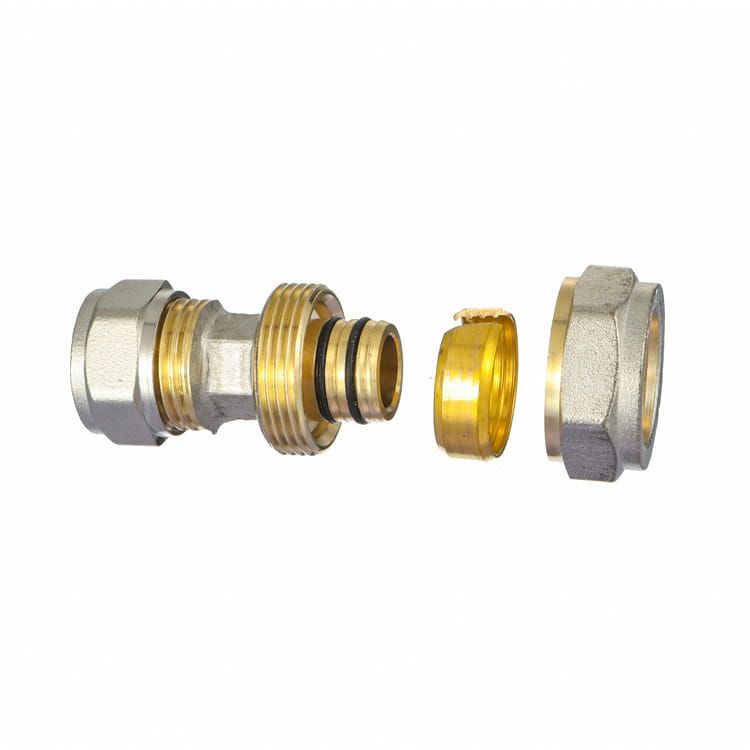
Un racor de compresión es un acoplamiento mecánico de tres partes: un cuerpo con un asiento cónico, una tuerca de compresión y una o dos virolas. La tubería — cobre, PEX o un tubo de plástico a presión — pasa a través de la tuerca y la virola y se asienta en el cuerpo. A medida que la tuerca se gira, empuja la virola hacia el cono, y la virola muerde la tubería. Sin calor, sin disolvente, sin máquina de roscar. Dos llaves y un cortatubos son toda la herramienta necesaria.
El casquillo es la pieza de trabajo y la pieza que falla. En el sector se conoce con dos nombres: los catálogos y las normas lo llaman casquillo, mientras que los instaladores en gran parte del mundo lo llaman oliva, por su forma. Son el mismo componente.
Un racor de casquillo único asigna ambas funciones —sellado y agarre— a un solo anillo. Un diseño de doble casquillo las separa: el casquillo delantero sella contra el cuerpo y el tubo, el casquillo trasero empuja al delantero hacia adelante y sujeta el tubo. El diseño dividido generalmente agarra con más fuerza y sella de forma más fiable en tubos de pared delgada, por lo que domina en instrumentación y en trabajos de fontanería de mayor especificación.
El latón es el material estándar para el cuerpo por una razón. Se mecaniza limpiamente, resiste la corrosión en el agua, y el casquillo puede fabricarse en un latón ligeramente más blando que el cuerpo para que se deforme sobre el tubo en lugar de agrietarse. Esa suavidad también es su punto débil: un casquillo demasiado delgado, o de una aleación incorrecta, se parte en lugar de abocardarse. La tarea del comprador es asegurarse de que el anillo sea del metal correcto y del grosor adecuado antes de que mil unidades estén en un barco.
Cómo se forma el sello — y por qué el casquillo hace el trabajo
El sello es metal contra metal, creado por fuerza. Cuando se aprieta la tuerca, el casquillo se comprime entre la tuerca y el asiento cónico del cuerpo del racor. Esa compresión hace dos cosas a la vez: el borde frontal del casquillo se abocarda hacia adentro sobre la superficie exterior del tubo para formar el sello, y la mordida del casquillo agarra el tubo para que no pueda salirse. La unión no depende de las roscas para soportar la presión — las roscas solo proporcionan la fuerza de sujeción. El casquillo proporciona el sello.
Este es el aspecto más incomprendido de los racores de compresión, y explica la mayoría de las fugas. Debido a que las roscas no son el sello, añadir cinta de PTFE o compuesto para roscas a las roscas de compresión no hace nada por una unión que gotea — y de hecho puede impedir que la tuerca empuje el casquillo lo suficiente. La superficie de sellado es la cara del casquillo contra el tubo y el asiento del cuerpo. Si esas superficies están rayadas, sucias o descentradas, ningún apriete lo arregla.
En un diseño de doble casquillo los roles están separados. El casquillo delantero forma el sello contra el asiento del cuerpo y el tubo; el casquillo trasero avanza el casquillo delantero axialmente y aplica el agarre radial sobre el tubo. Esta disposición proporciona una mordida más controlada y un sello más ajustado en líneas de pared delgada o propensas a vibraciones de lo que un solo anillo puede lograr.
También hace que la unión sea desmontable: afloje la tuerca, los casquillos se liberan, y el racor se puede volver a montar — aunque un casquillo que ya ha mordido está endurecido por deformación, y la mejor práctica es instalar uno nuevo al rehacer la unión.
La compensación es mecánica. Un casquillo de mordida contacta la tubería en una banda corta, por lo que ofrece poco soporte detrás de la mordida. En una línea que se flexiona, vibra o sufre golpes de ariete, una unión sin soporte puede aflojarse o sacar el tubo por completo. La solución no es apretar más la tuerca, sino colocar una abrazadera de tubería a poca distancia del accesorio para que el tubo no pueda moverse. Este detalle evita más visitas de servicio que cualquier otro.
Tipos comunes de accesorios de compresión de latón
El extremo de compresión es solo un método de conexión; se aplica a cada forma que necesita el recorrido de la tubería. Las formas siguientes cubren la gran mayoría de cualquier pedido. Al elaborar una lista de materiales, especifique la forma, el tamaño y si cada extremo es de compresión o roscado; eso define completamente la pieza.
| Tipo de accesorio | Qué conecta | Uso típico |
|---|---|---|
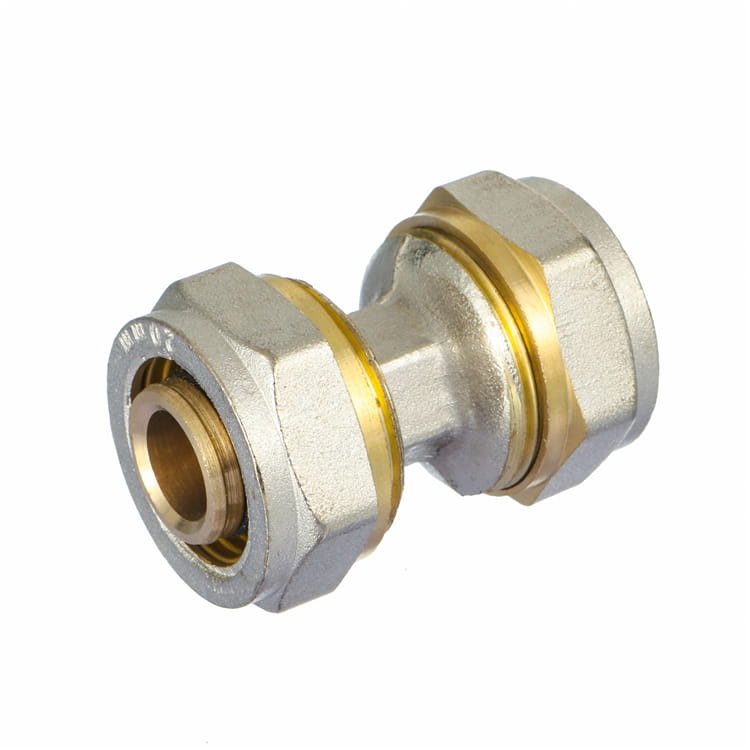
| Acoplamiento recto / unión | Dos tubos en línea (la unión es desmontable) | Extensión de un tramo; interrupción de servicio |
| Codo, 90° y 45° | Tubo a tubo en una esquina | Cambios de dirección en paredes, vigas |
| Tee (igual y reductora) | Una línea ramificada en dos | Derivaciones a accesorios sanitarios |
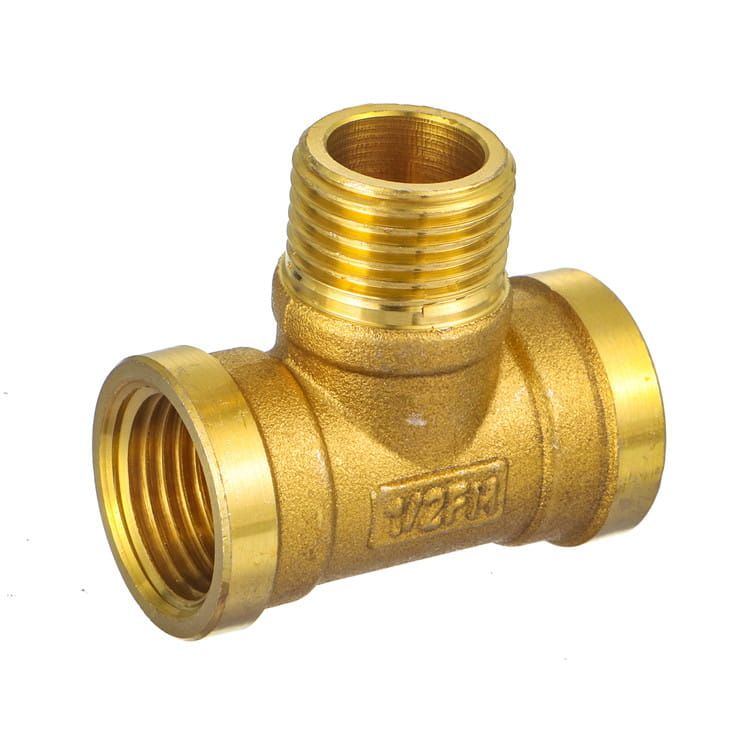
| Adaptador macho / hembra | Extremo de compresión a una rosca BSP o NPT | Conexión a válvulas, grifos, tubería roscada |
| Reducción | Dos tamaños de tubo diferentes | Reducción de una línea principal a una derivación |
| Tapón final / capuchón | Cierra un extremo de tubo abierto | Prueba de presión; conexión futura |
Dos notas de pedido ahorran dinero. Primero, una unión cuesta más que un acoplamiento simple, pero permite retirar una sección para servicio sin cortar la tubería; especifique uniones en bombas, medidores y válvulas, no en todos lados.
Segundo, los adaptadores roscados son donde se concentran las fugas, porque el instalador ahora tiene dos sistemas de sellado en un solo accesorio: el casquillo de compresión en un extremo y PTFE o compuesto en la rosca del otro. Compre adaptadores con roscas limpias y calibradas, y los problemas de casquillos serán raros. La gama más amplia de accesorios de tubería de latón de IFAN cubre las piezas roscadas y con forma que completan un recorrido de compresión.
Dimensionamiento: Lea el diámetro exterior del tubo, no la rosca
El tamaño estampado en un accesorio de compresión es el diámetro exterior del tubo que acepta, no un tamaño de rosca ni un diámetro nominal. Un accesorio de compresión de "15 mm" acepta tubo de 15 mm de diámetro exterior, sin más. Esto confunde a los compradores que mezclan sistemas, porque las series imperial y métrica no coinciden: el tubo de 1/2" tiene 12.7 mm de diámetro exterior, que no es ni 12 mm ni 15 mm. Si pide la serie equivocada, cada casquillo en el contenedor quedará ligeramente flojo o ligeramente sobredimensionado, y nada sellará.
El tubo de cobre métrico según EN 1057 se fabrica en una serie de diámetros exteriores fijos, y los accesorios siguen esa serie. La tabla siguiente es la gama de existencias habitual; la columna imperial es el equivalente tradicional más cercano, no una conversión exacta. Confirme la norma del tubo que utiliza realmente su mercado antes de hacer el pedido, porque un accesorio fabricado para tubo EN de 15 mm no sujetará un tubo de 15 mm fabricado con una tolerancia de pared diferente.
| Diámetro exterior métrico del tubo | Equivalente imperial más cercano | Dónde es habitual |
|---|---|---|
| 6 / 8 / 10 mm | 1/4" / 5/16" / 3/8" | Instrumentación, alimentación de electrodomésticos |
| 12 / 15 mm | 1/2" / 5/8" | Líneas de suministro a sanitarios (15 mm es el estándar doméstico en gran parte del mundo) |
| 18 / 22 mm | 3/4" / 7/8" | Tuberías de distribución, circuitos de calefacción |
| 28 / 35 / 42 mm | 1" y superiores | Tuberías principales de mayor tamaño; industria ligera |
Dos comprobaciones en el momento del pedido evitan toda la clase de errores de dimensionamiento. Mida el diámetro exterior del tubo con un calibre, no con una cinta métrica: una cinta desgastada lee el tubo un milímetro por encima y le cambia al tamaño siguiente. Y pregunte al proveedor con qué norma de tubo está fabricado el casquillo, porque la profundidad de mordida está ajustada para una pared específica. IFAN tiene en stock la serie métrica para circuitos de agua y calefacción y puede confirmar los tamaños exactos y las tolerancias de pared con respecto a su tubo antes de la producción — solicite la lista de tamaños actual en lugar de adivinar a partir de una tabla.
Cómo elegir la calidad de latón adecuada
El "latón" no es un solo metal, y la calidad es donde un accesorio barato se convierte silenciosamente en uno caro. La aleación del cuerpo decide si el accesorio se mecaniza bien, si se agrieta bajo la tensión del casquillo y si sobrevive al agua que transporta. Tres calidades cubren casi todos los pedidos de fontanería y calefacción.
CW617N es el latón de forja de trabajo pesado: aproximadamente 58% de cobre, 2% de plomo, el resto zinc. El plomo es intencional: actúa como lubricante interno para que la pieza se mecanice con un acabado limpio a alta velocidad, por lo que la mayoría de las válvulas y accesorios forjados se fabrican con él. Para uso general en agua y calefacción es la opción correcta por defecto y la de menor coste. Su único límite es el contenido de plomo, que lo descarta para líneas de agua potable en mercados que limitan el plomo en el grifo.
Latón DZR (CW602N, también llamado CZ132) es la mejora anticorrosión. El latón estándar puede perder su zinc ante el agua agresiva —desincificación—, dejando un esqueleto de cobre esponjoso y poroso que finalmente tiene fugas. El latón DZR añade una pequeña cantidad de arsénico que detiene la lixiviación del zinc, por lo que resiste en aguas blandas, ácidas o con alto contenido de cloruro, donde el CW617N se degradaría en pocos años. Si el agua de su mercado es agresiva, o la conexión está en un circuito de agua caliente que acelera el ataque, DZR es el grado a especificar — y cuesta solo un poco más.
Latón sin plomo (con un promedio ponderado de plomo del 0.25% o menos) es el grado para agua potable. Se especifica para cumplir con certificaciones de agua potable como NSF/ANSI 61 y NSF/ANSI/CAN 372, que muchos mercados ahora exigen para cualquier cosa que toque el agua que se bebe. Se mecaniza un poco menos fácilmente que el CW617N, por lo que la conexión cuesta más — pero en un proyecto de agua potable no es opcional. La regla general: CW617N para calefacción y trabajos no potables, DZR para agua agresiva, y sin plomo donde el código de destino lo exija.
| Grado | Composición típica | Especifíquelo cuando | ¿Apto para agua potable? |
|---|---|---|---|
| CW617N (forjado) | ~58% Cu, 2% Pb, balance Zn | Agua general y calefacción; pedidos sensibles al costo | No donde el plomo esté limitado |
| CW602N / CZ132 (DZR) | Cu-Zn-Pb-As, inhibido con arsénico | Agua agresiva, blanda o caliente propensa a la desincificación | A menudo, pero confirme el certificado |
| Latón sin plomo | ≤0.25% Pb promedio ponderado | Líneas de agua potable; mercados con códigos obligatorios | Sí — NSF 61 / 372 |
El grado solo es real si puede demostrarlo, por eso un certificado de material por lote importa más que la descripción en la factura. Una conexión estampada con "latón" no le dice nada; un certificado que nombre CW617N o CW602N con el análisis sí lo hace. La nota de IFAN sobre CW617N y latón sin plomo profundiza en la elección de la aleación para trabajos de agua potable.
Compresión vs. Roscado vs. Push-Fit
La compresión no es la única forma de unir tubería de pequeño diámetro, y un comprador que especifica el método incorrecto paga por ello en mano de obra o en llamadas de servicio. Las tres opciones realistas para la misma línea son compresión, roscado y push-fit. Cada una tiene un uso óptimo claro, y la respuesta honesta es que la compresión gana un punto medio específico en lugar de ganar en todos los casos.
| Método | Cómo sella | Herramientas / velocidad | Mejor para |
|---|---|---|---|
| Compresión | Férula comprimida sobre el diámetro exterior del tubo (metal a metal) | Dos llaves; velocidad moderada; desmontable | Tubo metálico de pequeño diámetro, tramos expuestos, interrupciones de servicio |
| Roscado | Roscas acopladas + PTFE / compuesto | Roscado o tubería pre-roscada; más lento | Tamaños más grandes, válvulas, salas de máquinas rígidas |
| Push-fit | Junta tórica de elastómero + anillo de agarre | Sin herramientas; más rápido | Instalación rápida, espacios reducidos, renovaciones aptas para bricolaje |
Tome una posición en lugar de dividir la diferencia. Para un tramo expuesto de pequeño diámetro que pueda necesitar servicio —bajo un fregadero, en un medidor, alimentando un calentador— la compresión es la elección correcta: un sello metálico duradero, sin calor cerca de superficies acabadas, y una unión que puede deshacer y rehacer.
La rosca es la mejor opción en diámetros grandes y en salas de instalaciones donde la tubería es rígida y la unión nunca se moverá; requiere más mano de obra, pero las uniones son resistentes y las piezas son económicas.
El sistema de empuje es el más rápido con diferencia y tiene su lugar en instalaciones de gran volumen y en reformas difíciles, pero el sellado depende de una junta tórica de elastómero que envejece y puede verse comprometida por un tubo rayado, y el coste unitario es más alto que el de un racor de compresión de latón.
La pregunta decisiva rara vez es "cuál es el mejor" y casi siempre "cuál se puede desmontar y cuál debe durar". Donde la unión es permanente y está enterrada, las conexiones soldadas o de presión suelen superar a las tres. Donde es accesible y puede abrirse, el sello metálico desmontable de la compresión es difícil de discutir. Para las válvulas y piezas roscadas que un recorrido de compresión aún necesita en sus extremos, la guía de válvulas de bola de latón de IFAN cubre los componentes de acoplamiento.
Dónde se utilizan los racores de compresión de latón (y dónde evitarlos)
Los racores de compresión tienen su lugar siempre que se necesite hacer una unión metálica de pequeño diámetro de forma rápida, fiable y —fundamentalmente— que pueda abrirse más tarde. Ese único requisito, la capacidad de servicio, explica la mayoría de sus aplicaciones. El mismo requisito explica dónde no deben usarse.
Agua potable. Este es el uso de mayor volumen. Las válvulas de aislamiento bajo el fregadero, las conexiones de contadores, las alimentaciones de calentadores de agua y los tramos de suministro expuestos que alimentan los aparatos sanitarios son trabajos clásicos de compresión, porque un fontanero puede necesitar desmontarlos en cinco años. Lo innegociable aquí es el material: una línea de agua potable requiere una aleación de latón sin plomo (u otro material aprobado) además de la aprobación para agua potable que reconoce el mercado, no simplemente un racor que resulta ser de latón.
Conexiones de calefacción y radiadores. Las colas de radiador hidrónico, las bajadas de colectores y las conexiones adyacentes a la caldera favorecen la compresión porque el sello metálico tolera mejor el agua caliente que un elastómero y la unión puede romperse para cambiar un radiador o una válvula sin vaciar todo el sistema. El casquillo agarra el tubo y la tuerca lo mantiene, por lo que la conexión soporta ciclos térmicos repetidos que fatigarían un sello más blando.
Gas: solo con racores homologados. Los racores de compresión se utilizan en líneas de gas en algunos mercados, pero esta es la única aplicación donde la precaución importa. Una unión de gas debe utilizar un racor explícitamente homologado y aprobado para servicio de gas, instalado según el código de gas local, y en muchas jurisdicciones las normas restringen qué tipos de unión están permitidos. Nunca asuma que un racor de compresión para agua es aceptable para gas; confirme la homologación y el código local antes de especificarlo.
Aire comprimido, neumática e instrumentación.Las líneas de aire de baja y media presión, las conexiones de manómetros y los tubos de instrumentación utilizan racores de compresión porque el sello metal-metal resiste el aire y las uniones son fáciles de reconfigurar cuando cambia el diseño del panel o del banco. La misma cualidad desmontable que sirve para una alimentación de calentador de agua sirve para un banco de pruebas que se reconstruye semanalmente.
Refrigeración y HVAC.La soldadura fuerte es el método dominante en los circuitos de refrigerante porque es permanente y hermético bajo vibración, pero los racores de compresión y de abocardado todavía aparecen en válvulas de servicio, puertos de acceso y conexiones de campo que deben abrirse para mantenimiento. La regla general: circuito permanente, soldadura fuerte; punto de servicio, racor mecánico.
Saber dónde evitar la compresión es igualmente valioso. Las uniones enterradas u ocultas — en una losa, detrás de una pared terminada, bajo tierra — deben soldarse, prensarse o ser de otro modo permanentes, porque una unión por compresión que no puede inspeccionarse ni reapretarse es una fuga en potencia.
Las líneas de alta vibración sin soporte de tubo pueden aflojar una unión mecánica con el tiempo; sujete el tubo cerca del racor o elija otro método. Y los diámetros grandes superan lo que un solo casquillo y tuerca sellan bien: más allá de aproximadamente 50 mm, las conexiones roscadas, bridadas o prensadas son la opción más fiable. El resumen honesto: la compresión es excelente para uniones accesibles, de pequeño diámetro y con posibilidad de servicio, y la herramienta equivocada para uniones permanentes, enterradas, vibrantes o de gran tamaño.
Normas y cumplimiento que solicitar
Un racor que cumple una norma nombrada es un producto diferente de uno que simplemente parece correcto, y las normas son la abreviatura del comprador para "esto encajará y aguantará". Para racores de compresión en tubo de cobre, la norma europea rectora es EN 1254-2, que cubre racores con extremos de compresión. El tubo en sí normalmente es según EN 1057.
Cuando el racor pasa a una rosca, esta será BSP (la rosca paralela ISO 228, o la cónica BSPT, utilizada en la mayor parte del mundo) o NPT (la rosca cónica americana) — y las dos no son intercambiables, por lo que la norma de rosca debe coincidir con el mercado.
Para agua potable, la norma de material es solo la mitad. El racor también necesita la aprobación para agua potable que reconoce el mercado de destino — en Norteamérica es NSF/ANSI 61 para efectos sobre la salud y NSF/ANSI/CAN 372 para contenido de plomo, y otros mercados tienen sus propios esquemas. Los requisitos varían según el país, el papel del importador y si la línea transporta agua que la gente bebe, así que confirme la aprobación actual con el proveedor y, para un proyecto regulado, con la autoridad local, en lugar de asumir que un certificado viaja.
La medida práctica es poner las normas en la orden de compra, no en un correo electrónico. Nombre EN 1254-2 (o la norma que use su mercado), el grado de latón, la norma de rosca y la aprobación para agua potable si la línea la necesita — luego solicite el informe de prueba y el certificado de material contra esa orden.
Un proveedor que puede suministrar ambos está vendiendo un producto especificado; uno que no puede está vendiendo una forma. IFAN trabaja con estándares de tubería DIN/ISO y cuenta con certificación CE y SGS, con aprobaciones regionales como SASO, SONCAP y NOM gestionadas bajo petición para el mercado de destino.
Errores de instalación que causan fugas
La mayoría de las fugas en conexiones de compresión no son culpa del accesorio. Son preparación y técnica, y se repiten en la misma media docena de formas. Conocerlas vale más para un comprador que cualquier ficha técnica, porque son exactamente los fallos que regresan como reclamaciones de garantía contra su contenedor.
- El corte no es cuadrado. Un cortatubos deja un extremo limpio y cuadrado; una sierra para metales deja un ángulo y una rebaba. Si el extremo del tubo no está cuadrado, el casquillo se encuentra con la tubería primero por un lado y sella por el otro al final — un goteo garantizado. Corte cuadrado y luego desbarba el interior y el exterior.
- El tubo está rayado o deformado. El casquillo sella contra la superficie exterior del tubo. Una ranura profunda, una abolladura o un tubo ovalado por un codo cerrado deja un canal que el casquillo no puede cerrar. Use tubo limpio y redondo y deslice el accesorio más allá de cualquier sección dañada.
- PTFE en la superficie equivocada. La cinta o el compuesto pertenecen solo a las roscas de un adaptador roscado. En la tuerca de compresión o el casquillo, lubrica la junta equivocada y puede impedir que el casquillo asiente completamente. El sello de compresión necesita metal limpio y seco.
- Apriete excesivo. Más vueltas no significan un mejor sello — sobre-expanden el casquillo, lo endurecen por deformación y pueden partir un anillo delgado o distorsionar el asiento. Haga la unión firmemente; si gotea, un pequeño giro adicional es el límite antes de que deba rehacerla con un casquillo nuevo en lugar de seguir apretando.
- Sin soporte cerca de la unión. Debido a que el casquillo agarra sobre una banda corta, un tubo que se flexiona bajo su propio peso o bajo golpe de ariete puede aflojar la unión o sacarla. Sujete el tubo cerca del accesorio en cualquier tramo que se mueva.
- Reutilizar un casquillo mordido. Un casquillo que ya ha sido comprimido está endurecido por deformación a la forma de la última unión. No sellará de manera confiable en una nueva. Las reutilizaciones requieren un casquillo nuevo — una pieza barata que evita una costosa visita de servicio.
Lo que IFAN verifica antes de que un accesorio salga de la fábrica
IFAN fabrica accesorios de tubería y válvulas desde 1993, desde una fábrica de 120,000 m² en Zhejiang con más de 30 líneas automatizadas, con forja, mecanizado y un laboratorio de pruebas ISO propios. Los accesorios de latón salen de la misma instalación, y la inspección que decide si un lote se envía es la parte que un comprador rara vez ve pero siempre paga. Esto es lo que se interpone entre un accesorio terminado y el contenedor.
- Cuerpos forjados, no fundidos. Los accesorios con clasificación de presión son forjados porque la forja consolida el grano del latón y cierra la porosidad interna que las piezas fundidas pueden tener — los vacíos que se convierten en caminos de filtración bajo presión. La diferencia es la razón por la que una válvula forjada aguanta y una fundición barata eventualmente suda. La nota sobre válvulas de latón forjado vs. fundido de IFAN explica la metalurgia.
- Certificado de material por lote. Cada lote de producción está vinculado a un certificado que especifica la aleación — CW617N (aproximadamente 58% cobre), DZR o sin plomo — con el análisis correspondiente, de modo que la calidad indicada en el pedido es la que se encuentra en la caja. Este es el documento que debe exigir a cualquier proveedor, ya que es la única prueba de que "latón" significa un metal específico.
- Verificación dimensional y de roscas. Los cuerpos y las tuercas se verifican según el tamaño y el estándar de rosca del pedido: el diámetro exterior del tubo para el que está mecanizado el casquillo, y los calibres BSP o NPT en cualquier extremo roscado. Un accesorio dimensionalmente correcto sella; uno que se desvía unas centésimas, o tiene fugas o no se puede ensamblar en obra.
- Pruebas de presión y fugas. Los accesorios terminados se someten a pruebas de fugas bajo presión — típicamente aire bajo agua o una prueba hidrostática — de modo que un cuerpo poroso o un asiento defectuoso se detecta en el laboratorio en lugar de dentro de la pared del cliente. La presión de prueba exacta se establece según la clasificación del accesorio y se registra contra el lote.
IFAN vende estrictamente de empresa a empresa a volumen de contenedor — sin venta al por menor, sin ventas unitarias — con un mínimo de un contenedor y se aceptan tamaños mixtos en un solo pedido, muestras disponibles antes de comprometerse y documentación de exportación completa. Si está especificando accesorios de compresión de latón para un proyecto o almacenándolos para un mercado, el siguiente paso es una cotización según sus tamaños, calidades y estándares de rosca reales, en lugar de un precio de lista.
Conclusión
Un accesorio de compresión de latón es tan bueno como su casquillo, su aleación y la preparación detrás de él. Ajuste el tamaño al diámetro exterior del tubo, elija la calidad según el agua y el código, e insista en cuerpos forjados con certificado de lote y prueba de fugas. Haga esas cuatro cosas y la unión durará más que la tubería que la rodea.
Si está abasteciendo estos productos para un proyecto o un mercado, compare el rango de tamaños, la calidad del latón y la documentación de pruebas entre proveedores antes de pedir — y solicite a IFAN una cotización según su especificación exacta.
Preguntas frecuentes
¿Los accesorios de compresión de latón necesitan cinta de PTFE?
No. El sello se logra mediante la compresión del casquillo sobre el tubo, no por las roscas, por lo que la cinta en la tuerca de compresión no hace nada y puede impedir que el casquillo asiente. Use PTFE o compuesto solo en el extremo roscado de un adaptador.
¿Se puede reutilizar un accesorio de compresión después de una fuga?
El cuerpo y la tuerca se pueden reutilizar, pero el casquillo debe reemplazarse. Una vez comprimido, el casquillo se endurece por trabajo en la unión anterior y no volverá a sellar de manera confiable, así que instale un casquillo nuevo en cualquier reajuste.
¿Qué tamaño de accesorio de compresión se ajusta a una tubería de 15 mm?
Un accesorio de 15 mm — los tamaños de compresión se basan en el diámetro exterior del tubo, por lo que un tubo de cobre de 15 mm de diámetro exterior requiere un accesorio de 15 mm. No sustituya el tamaño imperial más cercano, ya que un tubo de 1/2" tiene 12.7 mm de diámetro exterior y no sellará en un casquillo de 15 mm.
¿Son seguros los accesorios de compresión de latón para agua potable?
Lo son, siempre que el grado de latón sea apto para agua potable. Especifique latón sin plomo (≤0.25% de plomo) certificado según NSF/ANSI 61 y 372, o la aprobación que exija su mercado; el CW617N estándar es adecuado para calefacción y líneas no potables, pero no donde el plomo esté restringido.
¿Por qué mi accesorio de compresión sigue goteando después de apretarlo?
Generalmente es la preparación, no el apriete. Un corte no cuadrado, una rebaba, un tubo rayado o una virola desgastada provocarán fugas sin importar cuánto apriete. Rehaga la unión con un tubo cuadrado y desbarbado y una virola nueva, en lugar de dar más vueltas.