
Flanged Gate Valve vs Threaded Connection: How to Choose
A flanged gate valve and a threaded gate valve can do the same job on paper — shut off flow, hold pressure, open again in five years. The difference shows up in the two places that actually cost money: the size you need, and whether the valve bolts onto what is already in the ground. Above roughly DN65 the choice makes itself. Below it, buyers routinely pay flange prices for a joint that a threaded valve would have sealed just as well.

Key Takeaways
- The size cutoff is written into the standard, not into opinion. ASME B16.34-2025 states that threaded and socket welding-end valves larger than NPS 2½ (DN65) are beyond the scope of the standard. Above that size, flanged is not a preference — it is what the rating system covers.
- Flanged ends cannot use the reduced rating routes. The same standard says flanged-end valves shall be rated only as Standard Class, and that neither Special Class nor Limited Class ratings may be used for flanged ends. Limited Class exists only for threaded and welding ends at NPS 2½ and smaller.
- The expensive mistake is DN100. EN 1092-1 PN16 and ASME B16.5 Class 150 both use eight bolts at DN100, so they look identical on a packing list — but the bolt circles are 180 mm and 190.5 mm. A 10.5 mm difference means the valve will not bolt up.
- PN10 and PN16 are dimensionally identical up to DN150. They first diverge at DN200, where PN10 uses 8 bolts and PN16 uses 12. Buyers who mixed them successfully on small sizes get caught on their first large valve.
- North American waterworks uses a third pattern. AWWA C110 flanges are drilled to ASME/ANSI B16.1 Class 125. That label is a drilling template, not a pressure limit — ductile iron flanged-joint fittings are rated for 250 psi working pressure, and 350 psi in 24-inch and smaller with special gaskets.
- A threaded joint is assembled; a flanged joint is engineered. ASME PCC-1 exists because the same torque value can produce very different gasket loads depending on thread condition, lubrication, bolt length and flange alignment.
- Where IFAN sits, stated plainly: gate valves DN15–DN50, threaded ends only, BSP or NPT. We do not make a flanged gate valve. If your line calls for one, this article tells you what to specify and who to ask.
Flanged vs Threaded: The Head-to-Head
Start with the mechanical difference, because everything else follows from it. A threaded valve seals on the thread itself — tapered male into tapered female, with sealant or tape filling the helical gap. The joint is made by one person with one wrench, and its strength is the strength of the pipe wall at the thread root. A flanged valve seals on a gasket squeezed between two machined faces, held by a ring of bolts. Nothing about the joint depends on the pipe wall. It depends on whether the bolts were tightened evenly enough to compress the gasket uniformly.
That single distinction explains the cost gap, the size limit, the maintenance behaviour and the failure modes. A threaded joint is cheap because it is one operation. A flanged joint is expensive because it is eight or twelve operations that must be done in the right order, and because the valve now carries two machined faces and a bolt pattern that has to match the pipework exactly. Here is how that plays out across the criteria that actually decide a purchase.
| Criterion | Threaded end | Flanged end |
|---|---|---|
| Size range covered by ASME B16.34 | NPS 2½ (DN65) and smaller; larger threaded ends fall outside the standard | Up to NPS 60; larger flanged ends fall outside the standard |
| Rating classes permitted | Standard, Special and Limited Class all available | Standard Class only; Special and Limited Class prohibited |
| What must match the mating part | Thread form and gender: BSP or NPT, male or female | Bolt circle, bolt count, bolt size, face type and gasket |
| Who can assemble it correctly | One fitter, one wrench, no torque record needed | Trained crew following a cross-pattern torque sequence |
| Replacing the valve later | Requires a union or cutting the line; threads unwind in one direction only | Unbolt in place; adjacent pipework stays untouched |
| Typical failure mode | Weep at the thread root from over-tightening or poor sealant | Gasket blow-out from uneven bolt load or a mismatched face |
| Ordering risk | BSP shipped where NPT was needed — wrong thread, whole batch | Right pressure class, wrong drilling standard — will not bolt up |
Read the last row twice. Both connection types have exactly one ordering mistake that ruins an entire shipment, and in both cases the valve arrives looking perfect. A BSP valve and an NPT valve are visually near-identical. A PN16 flange and a Class 150 flange at DN100 both have eight bolt holes. Neither error is caught by counting cartons.
Where the Standard Draws the Line on Size
Most articles on this question say flanged valves are "for larger sizes" and leave it there. The actual boundary is written down. ASME B16.34-2025, the standard that sets pressure–temperature ratings for industrial valves, states in paragraph 2.1.1(d) that threaded and socket welding-end valves larger than NPS 2½ are beyond the scope of the standard. NPS 2½ is DN65. Above that size, a threaded valve is not merely unusual — it sits outside the rating framework that the rest of the specification depends on.
The boundary runs the other way too. The same paragraph, at 2.1.1(a), says flanged-end valves shall be rated only as Standard Class, and that flanged-end valves larger than NPS 60 are beyond the scope. So the standard covers threaded ends across a narrow band and flanged ends across a very wide one, and the two overlap only in the small sizes where a buyer genuinely has a choice.
Why threaded ends get rating routes that flanged ends do not
Here is the part almost nobody explains to buyers. ASME B16.34 offers three rating designations, and they are not equally available. Paragraph 2.1.3 states that Special Class ratings shall not be used for flanged-end valves. Paragraph 2.1.4 states that Limited Class ratings shall not be used for flanged-end valves. Mandatory Appendix V, which defines Limited Class, puts it beyond argument: the appendix covers valves having either threaded or welding ends, is specifically restricted to NPS 2½ and smaller, and states that there is no provision for this designation for flanged end valves.
The practical consequence is a pricing signal. A small threaded valve can be rated through a route that a flanged valve cannot use, which is part of why a DN50 threaded valve and a DN50 flanged valve are not simply the same product with different ends attached. They were rated by different methods. If a supplier quotes you a flanged valve carrying a Special Class or Limited Class marking, the marking is wrong, and that is a fast way to find out the quotation was assembled from a catalogue rather than from a real product.
Reading a quotation that mixes NPS and DN
Suppliers on either side of the Atlantic quote in different units, and the standard supplies the conversion so you do not have to guess. Paragraph 1.5.2 of B16.34 sets the relationship: NPS ½ is DN15, NPS ¾ is DN20, NPS 1 is DN25, NPS 1¼ is DN32, NPS 1½ is DN40, NPS 2 is DN50, NPS 2½ is DN65, NPS 3 is DN80 and NPS 4 is DN100.
Note that these are designations, not measurements — DN50 pipe is not 50 mm in any dimension you can measure with a tape. Treat both as labels, match them label-to-label, and never convert by arithmetic.
Which Flange Standard Applies: PN or ANSI?
If you buy a flanged gate valve, this is the section that decides whether it installs or sits in a yard. "Flanged" is not a specification. It is a family of mutually incompatible drilling patterns, and the pressure rating on the label tells you almost nothing about whether two flanges will bolt together.
Take DN100, the size where the trap is sharpest. Under EN 1092-1, both PN10 and PN16 give a 220 mm outside diameter, a 180 mm bolt circle and eight M16 bolts. Under ASME B16.5, Class 150 at NPS 4 gives a 229 mm outside diameter, a bolt circle of 7½ inches — 190.5 mm — and eight bolts of ⅝ inch.
Both have eight holes. Both are the same nominal size. The bolt circles differ by 10.5 mm, so the holes do not line up, and no amount of persuasion on site will make them. The valve is correct; the drilling standard was never specified.
The PN10/PN16 trap that catches experienced buyers
Within EN 1092-1 there is a second trap, and it is worse because it rewards the mistake first. PN10 and PN16 are dimensionally identical from DN15 all the way through DN150 — same outside diameter, same bolt circle, same bolt count, same bolt size. At DN150 both are 285 mm outside diameter on a 240 mm bolt circle with eight M20 bolts. A buyer who once ordered PN16 valves for a PN10 line and had them fit perfectly learns the wrong lesson.
They diverge at DN200. There, PN10 uses eight M20 bolts on a 295 mm bolt circle, while PN16 uses twelve M20 bolts on the same 295 mm circle. By DN250 the outside diameters differ as well — 395 mm for PN10 against 405 mm for PN16, on 350 mm and 355 mm bolt circles respectively.
So the first large valve on the project is the one that will not fit, on a job where the small ones all did. If you take one number from this article into your next enquiry, make it this: state the drilling standard and the PN or Class explicitly on every line item, including the ones you think are obvious.
| Size | EN 1092-1 PN10 | EN 1092-1 PN16 | ASME B16.5 Class 150 |
|---|---|---|---|
| DN50 / NPS 2 | 125 mm circle, 4 × M16 | 125 mm circle, 4 × M16 | 120.65 mm (4¾ in) circle, 4 bolts |
| DN100 / NPS 4 | 180 mm circle, 8 × M16 | 180 mm circle, 8 × M16 | 190.5 mm (7½ in) circle, 8 bolts |
| DN150 / NPS 6 | 240 mm circle, 8 × M20 | 240 mm circle, 8 × M20 | 241.3 mm (9½ in) circle, 8 bolts |
| DN200 / NPS 8 | 295 mm circle, 8 × M20 | 295 mm circle, 12 × M20 | 298.45 mm (11¾ in) circle, 8 bolts |
The DN150 row is the one that should worry you most. A 240 mm bolt circle against a 241.3 mm bolt circle is a difference of 1.3 mm — small enough that oversized holes can sometimes absorb it, which means the joint may go together and still be wrong. Sitting a gasket across two faces designed for different pressure systems is not a fit; it is a joint waiting for a pressure cycle. If you are unsure which standard a drawing describes, send the flange drawing across on WhatsApp and our engineering desk will identify the drilling standard before anything is quoted.
Two more families you will meet: ISO 7005 and AWWA
"PN" on a quotation is ambiguous, and that ambiguity is deliberate history. Designations in the PN 20 and PN 50 family were drawn up under ISO 7005 to align dimensionally with ASME Class 150 and Class 300, precisely so international projects could specify in metric labels.
The low PN numbers used in EN 1092-1 — PN 10, PN 16, PN 25 — belong to a different family and are not dimensionally interchangeable with Class 150, which is exactly what the DN100 figures above demonstrate. When a supplier writes "PN16" they mean the European family; when they write "PN20" they mean something drilled like an American Class 150. Ask which one, in writing.
North American waterworks adds a third pattern that catches importers supplying municipal projects. Per the Ductile Iron Pipe Research Association's technical guidance on flanged ductile iron pipe and fittings, ANSI/AWWA C110/A21.10 flanges are flat-faced and drilled to ASME/ANSI B16.1 Class 125 — and DIPRA lists Class 125 only as compatible, noting explicitly that the B16.1 Class 250 flange has a larger bolt circle, greater thickness and larger bolts, and is not compatible. So on an AWWA job, specifying "B16.1" without the class is the same error as specifying "PN" without the number.
Two details from that document are worth carrying into an enquiry, because both are routinely misread. The first is that ASME B16.5 Class 150 is listed as compatible with C110 flanges — but only in flat-face or 0.06-inch raised-face form. DIPRA states that Class 150 flanges with other facings, such as ring joint or grooved face, and every other rating class — 300, 400, 600, 900, 1500 and 2500 — are not compatible. The compatibility you may have been relying on is narrower than "Class 150 fits".
The second is the one that causes arguments with specifiers: the Class 125 label does not mean the fitting is limited to 125 psi. DIPRA states that ductile iron flanged-joint fittings are rated for 250 psi working pressure, and that 24-inch and smaller flanged joints with ductile iron flanges may be rated for 350 psi with special gaskets whose rating is supported by performance testing. Class 125 is a drilling template, not a pressure ceiling.
What a Threaded Joint Genuinely Does Better
Vendor comparisons tend to treat flanged as the premium option and threaded as the budget one. That framing is wrong, and it costs buyers money in the small sizes. Below DN65 a threaded joint is not a compromise — it is the better engineering answer, for a reason that has nothing to do with price.
A flanged joint's integrity depends on gasket compression being even all the way round. ASME PCC-1, the guideline for pressure-boundary bolted flange joint assembly, exists because that is harder than it looks: thread condition, lubrication, bolt length, flange alignment and operator technique can all cause the same torque value to produce very different gasket loads. Tightening to a number on a spanner does not reliably produce a sealed joint. It produces a joint whose sealing depends on conditions nobody recorded.
Now put that on a site in Accra or Lagos where a plumbing contractor is fitting forty isolation valves into a riser. Every flanged valve is eight bolts tightened in a cross pattern by someone whose torque wrench may or may not be calibrated. Every threaded valve is one wrench, one joint, and a failure mode — a weep at the thread root — that is visible immediately and fixed in minutes.
Multiply by forty. The threaded installation is not just cheaper to buy; it removes thirty-nine opportunities for a skilled-labour error on a job that may not have skilled labour available.
The honest disadvantage: replacement
Threaded connections have one real weakness and it deserves stating plainly, because it is the reason flanged valves exist at all in mid sizes. A threaded valve cannot be unscrewed in place. Threads unwind in one direction, so removing a valve mid-run means either cutting the pipe or having had the foresight to install a union. A flanged valve comes out by undoing bolts, with the pipework on both sides undisturbed.
This is why the decision should follow the maintenance plan, not the purchase price. If a valve will be removed for servicing on a schedule — a pump isolation valve, a strainer bypass, anything in a plant room with a planned outage cycle — the flanged version earns its cost the first time it is removed.
If the valve is a riser isolation that will be opened once at commissioning and touched again only if something fails, the flanged joint is money spent on a capability nobody will use. Specify a union-bonnet or double-union threaded valve for the middle ground: it gives you in-place removal at a fraction of the flanged cost.
What to Check Before You Release the Order
This is the sequence we work through on a valve enquiry before anything is priced. It takes about ten minutes and it catches the two mistakes that ruin whole shipments.
- Confirm the size in both label systems. Write DN and NPS side by side on the line item using the B16.34 relationship — DN50 / NPS 2, DN100 / NPS 4. A quotation carrying only one system is a quotation that can be misread by the factory.
- If threaded, state the thread standard and the gender. BSP or NPT, male or female, on every line. These are not interchangeable and a visual check on arrival will not reliably distinguish them.
- If flanged, state the drilling standard before the pressure class. "EN 1092-1 PN16" or "ASME B16.5 Class 150" or "AWWA C110 / ANSI B16.1 Class 125". Writing only "PN16" or only "150" is the gap the DN100 mismatch lives in.
- Ask which tests the production batch actually passed. Under EN 12266-1, shell strength test P10 and shell tightness test P11 are mandatory for every valve, and seat tightness test P12 is mandatory for every isolating valve — which a gate valve is — except where statistical sampling is accepted. Ask whether sampling was used and at what rate.
- Do not accept "tested to EN 12266-1" as a leakage figure. The standard's own scope says that where a product or performance standard's requirements differ, the product standard applies, and that measured leakage shall not exceed the rate in the product standard. So the certificate must name the product standard too, or it has told you nothing about the acceptable leakage rate.
- For potable or municipal water, ask for the fitness-for-purpose certificate, not just the pressure test. In Europe that is EN 1074-2:2000 for isolating valves, amended by A1:2004. A pressure test says the valve held; a fitness-for-purpose certificate says it is appropriate for drinking water service.
- Sanity-check the marking against the end type. A flanged valve marked Special Class or Limited Class is marked incorrectly — B16.34 permits neither on flanged ends. It is a thirty-second check that tells you whether the supplier understands their own product.
One more, for large buried valves specifically: ask for the operating torque — the measured figure, not the standard's limit. For a gate valve supplied without an operating device and turned with a T-key, EN 1074-2 caps maximum operating torque at 1 × DN newton-metres, so 100 Nm at DN100 and 200 Nm at DN200, with minimum strength torque at double that. Those are the MOT and MST columns of AVK's torque tables for EN 1074-2 Annex A valves.
The gap between that ceiling and reality is the point. In the same table, AVK's DN200 valve closes against full unbalanced pressure at 120 Nm, and its current-generation design at 80 Nm — far under the 200 Nm permitted. So "EN 1074-2 compliant" promises only that the valve stays below the ceiling, which is a weak promise on a deep chamber. Ask what closing torque the supplier measures, and check it against the bar your crew carries. Nobody requests this number until a commissioning engineer is standing over an open chamber unable to shut the line.
Which Connection Should You Actually Buy?
Here is the position, stated without hedging. Below DN65 buy threaded, unless the valve is on a documented maintenance schedule that requires in-place removal — in which case buy a union-bonnet threaded valve rather than jumping to flanged. Above DN65 buy flanged, because ASME B16.34 stops covering threaded ends there and you have effectively left the standard behind. Between DN50 and DN65 the honest answer is that it depends on what the rest of the line already is: match the existing system rather than optimising the valve in isolation.
The mistake we see most often is not choosing wrongly between the two. It is choosing flanged in small sizes because flanged sounds more industrial, and then discovering that a DN25 flanged valve costs several times its threaded equivalent, needs a gasket and eight bolts per joint, and adds face-to-face length that the plant room layout did not allow for. Flanging a DN25 line buys you nothing you can use.
| Your situation | Buy this | Because |
|---|---|---|
| Riser and branch isolation, DN15–DN50, building services | Threaded, BSP or NPT to match the line | One-wrench assembly; no drilling standard to mis-specify |
| Plant room valve on a planned service cycle | Union-bonnet or double-union threaded | In-place removal without flanged cost or length |
| Anything above DN65 | Flanged, drilling standard stated explicitly | Threaded ends leave ASME B16.34 scope above NPS 2½ |
| Buried municipal water main, North America | Flanged to AWWA C110 / ANSI B16.1 Class 125 | Only Class 125 drilling, plus flat-face or 0.06 in raised-face B16.5 Class 150, is listed compatible |
| Distributor stocking mixed sizes for resale | Threaded up to DN50; source flanged separately | Threaded stock serves any drilling standard downstream |
That last row is the one distributors should sit with. Threaded stock is standard-agnostic: a DN25 BSP valve serves a customer whether their project is European, American or municipal. Flanged stock is committed the moment it is drilled — a pallet of PN16 valves cannot serve a Class 150 enquiry, and it cannot serve an AWWA C110 enquiry either. That is a working-capital argument, not an engineering one, and it is why stocking policy usually points to threaded in the sizes where you have a genuine choice.
What IFAN Supplies — and Where We Stop
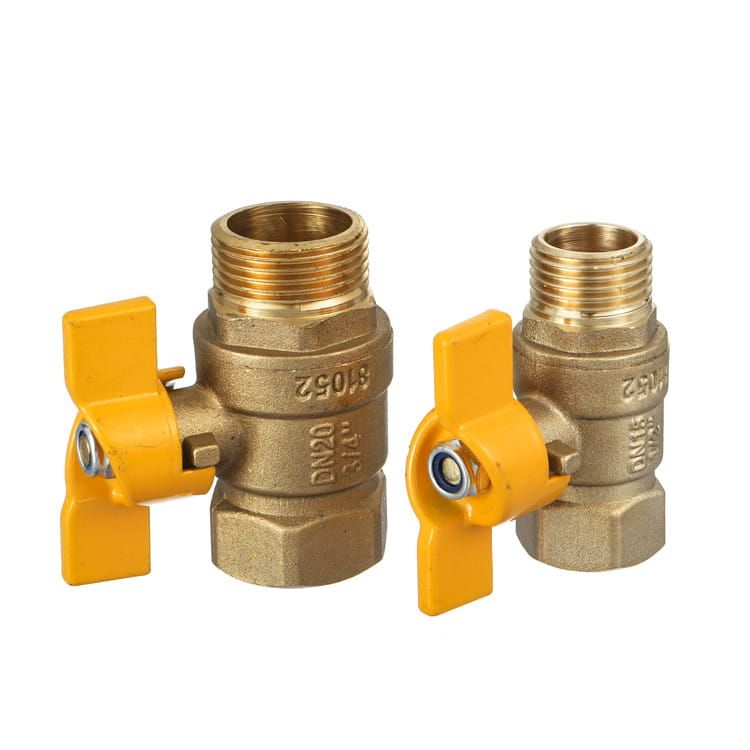
An article comparing two connection types should say which one its author actually makes. We make one of them. IFAN's gate valve range runs DN15 to DN50 with threaded ends, in BSP or NPT thread standards. We do not manufacture a flanged gate valve in any size. If your line needs one, nothing above was written to steer you toward us — it was written so you specify the drilling standard correctly when you buy it, and so you know which kind of supplier to take that specification to. The next section covers the second half.
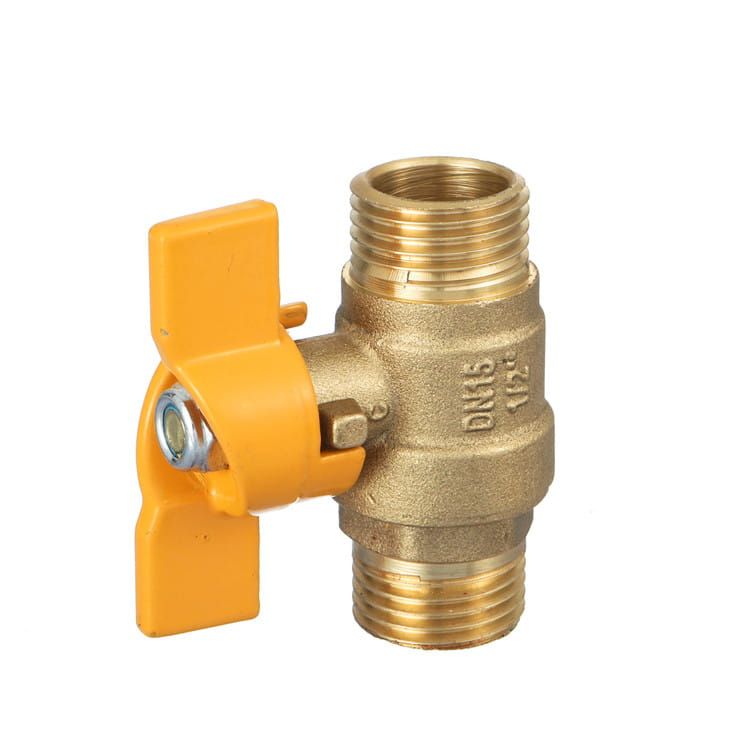
Where the ranges differ is worth knowing if you are sizing an enquiry. Our brass ball valve range runs wider than the gate valve range — DN8 to DN100 in PN16, PN25 and PN40, with female-female, female-male, male-male and double-union connections. So above DN50, a buyer asking us for a threaded isolation valve is steered to a ball valve rather than a gate valve, because that is where our size coverage actually extends.
Detail on how the two differ in duty is in our brass gate valve guide, and the structural variations — rising versus non-rising stem, resilient versus metal seating — are covered in the gate valve types guide.
Who to ask for the flanged valve we do not make
Knowing what to specify is half a job if you do not know where to take the specification. Flanged gate valves are not sold by the same suppliers as threaded small-bore brass, and the split follows the certification each end use demands. Find which of these three your line sits in first — a supplier in the wrong category will either decline the enquiry or quote something that fails inspection.
Buried municipal and potable distribution. You want a ductile iron waterworks manufacturer building to AWWA C509 or C515 and holding the potable-water approval your jurisdiction enforces — NSF/ANSI/CAN 61 in North America, WRAS or a Regulation 4 approval in the UK, ACS in France, DVGW in Germany. Each certifying body publishes a searchable register of mark holders, and that register is your shortlist. Start there and check commercial fit afterwards, rather than starting from a trade directory and checking certification last. The list is shorter and every name on it was audited by someone other than the seller.
Fire protection. Buyers get this one wrong most often, because a valve that is ideal for water distribution is not acceptable on a sprinkler riser. It must be listed by UL or FM as an indicating valve, and you confirm that in the certifier's own directory, not on the manufacturer's brochure. FM Approvals and UL Solutions both publish free searchable databases of approved manufacturers by product category. An uncertified valve on a fire line is not a commercial point to negotiate — it is a system that will not be signed off.
Industrial, HVAC and general process. Here you want an industrial valve manufacturer working to ASME B16.34 with EN 1092-1 or ASME B16.5 drilling, and the certification question becomes a documentation question: ask for the material test certificate and the EN 12266-1 records described earlier. Regional stockholding distributors suit this category, because these valves are often ex-stock rather than made to order, so you are buying availability as much as specification.
Whichever category applies, send the enquiry line you built from the checklist above: end type, DN and NPS together, drilling standard named before the pressure class, certification scheme. A supplier who cannot answer that line item cleanly has told you how they will handle the rest of the order.
The documented specifics
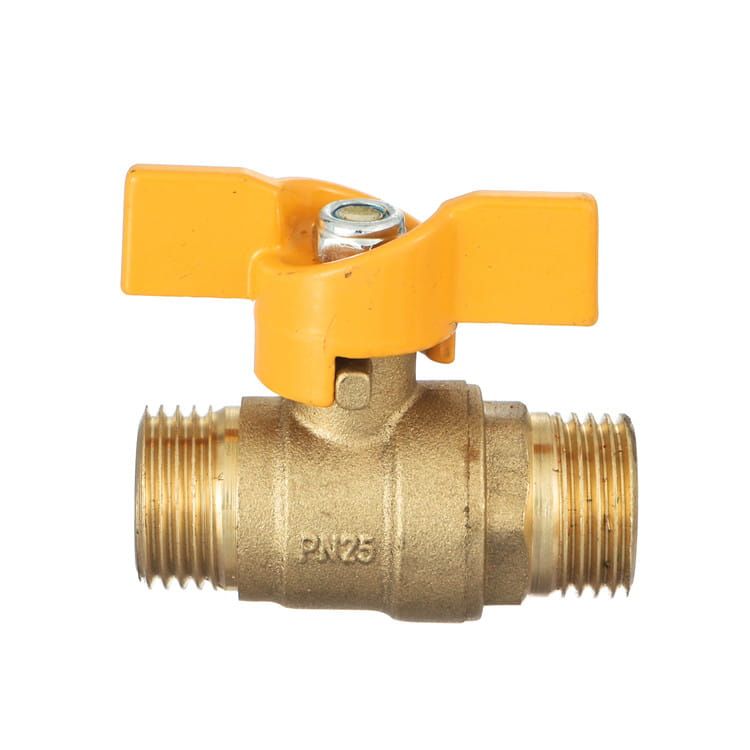
All brass valve bodies are CW617N. We produce both forged and cast bodies, with cold forging done in-house rather than bought in. The brass valve range carries no minimum order and a lead time of roughly 10 days because it is stocked year-round — which is the practical reason a threaded small-bore order behaves differently from a made-to-order flanged one, where you are waiting on machining and drilling to your stated standard.
Published certifications on the range are CE, ACS, WRAS, SASO and potable-water approvals, with the quality system running to ISO 9001:2015, ISO 14001:2015 and ISO 45001:2018, and testing done in a CNAS-accredited in-house laboratory. Manufacturing is at a 120,000 m² facility in Zhuji, Zhejiang, in operation since 1993. The channel is wholesale only — we do not sell to end consumers. You can compare these against the wider range on the product catalogue.
| Best fit for us | Go elsewhere for |
|---|---|
| Threaded brass gate valves, DN15–DN50, BSP or NPT | Any flanged gate valve, in any size or standard |
| Mixed-size container orders with no minimum quantity | Buried municipal valves to AWWA C509 or C515 |
| Distributors needing standard-agnostic threaded stock | Cast or ductile iron bodies above DN100 |
| Building services and plumbing isolation duty | Fire-service listed indicating valves |
A worked example you can reuse
A distributor in Ghana is quoting a six-storey residential block. The riser is DN50, branch isolation is DN25 and DN15, and there is a DN100 incoming main with a metering set.
Working the sequence above: the DN50 riser and everything below it sits inside the threaded band, so those go out as threaded valves with BSP stated explicitly on every line — one supplier, one container, no drilling standard involved. The DN100 main is above the threaded band, so it is flanged, and the enquiry must state EN 1092-1 PN16 rather than "PN16", because the metering set was supplied from a North American catalogue and the contractor assumed Class 150.
That single line item is where the job would otherwise have failed. Eight bolt holes on both flanges, 180 mm against 190.5 mm, discovered on site with the container already cleared. Splitting the order — threaded small-bore from one source, the flanged main specified separately with its drilling standard written out — is not a compromise. It is what the standards structure actually implies once you read where each one stops.
Conclusion
The flanged versus threaded question resolves cleanly once you stop treating it as a quality comparison. ASME B16.34 stops covering threaded ends above NPS 2½, so above DN65 the decision is made for you. Below it, threaded wins on assembly risk and stocking flexibility unless the valve is on a maintenance schedule that needs in-place removal. The genuine danger is not choosing the wrong type — it is buying flanged without naming the drilling standard, which is how a correct valve becomes an unusable one.
If you are specifying now, write the drilling standard and the thread standard onto every line item before you ask anyone for a price, and check that any flanged valve you are offered is not marked Special or Limited Class. If your sizes sit in the DN15–DN50 threaded band, you can check our published specifications against the criteria above and see whether the range fits before starting a conversation.
Frequently Asked Questions
Can I bolt a PN16 flange to an ASME Class 150 flange?
Not at DN100 and above. The bolt circles differ — 180 mm for PN16 against 190.5 mm for Class 150 — so the holes do not align. The standard fix is a flange adaptor spool with one drilling pattern on each end.
Is a flanged gate valve stronger than a threaded one?
Not inherently. Within the sizes where both exist, each is rated by ASME B16.34. Flanged ends are actually restricted to Standard Class ratings, while threaded ends may also use Special or Limited Class routes.
What is the largest threaded gate valve I can buy?
Threaded valves larger than NPS 2½ (DN65) fall outside ASME B16.34's scope, so that is the practical ceiling for a standards-rated product. Larger threaded valves exist but sit outside the rating framework.
Are BSP and NPT threads interchangeable?
No. The thread forms and angles differ, and a joint made between them may hold briefly then weep under pressure cycling. Specify one or the other on every line item of the order.
Does IFAN supply flanged gate valves?
No. Our gate valve range is DN15 to DN50 with threaded ends in BSP or NPT only. For flanged gate valves in any size you will need a different supplier, and this article covers what to specify.
Which pressure tests should appear on a gate valve certificate?
Under EN 12266-1, shell strength (P10) and shell tightness (P11) are mandatory for every valve, plus seat tightness (P12) for isolating valves. Ask whether statistical sampling was applied and at what rate.