
Importing PPR into Kenya: KEBS, PVoC and the Standard Your Consignment Is Judged Against

Kenya reset its PVoC panel on 19 February 2026. Who can certify a China shipment, the KS ISO 15874 to name, and the 5% the 2020 Order charges.
Kenya spent most of February 2026 without a working pre-shipment certificate scheme. KEBS's Pre-Export Verification of Conformity contracts for general goods expired on 8 February 2026, and from 9 February a container arriving without a valid certificate went to destination inspection. On 19 February the Bureau cleared nine inspection companies on three-year contracts, and certificates became compulsory again for shipments loaded from 1 March 2026.
For a container of PP-R pipe the requirement reads like this. A Certificate of Conformity is issued before loading, by one of the eight firms KEBS lists for Zone 1, covering China, Hong Kong, Taiwan and Mongolia. The test report should name a Kenya Standard, and for polypropylene hot and cold water pipe one exists: KEBS publishes KS ISO 15874 parts 1, 2, 3 and 5 at 2013, a 2018 Part 7 on conformity assessment, and six amendments.
Key Takeaways
- Kenya has a national PP-R standard. KEBS sells KS ISO 15874-1, -2, -3 and -5 at 2013, KS ISO/TS 15874-7:2018 on conformity assessment, and six amendment listings. Name the KS designation on the test report, not a bare ISO number.
- The panel was reset on 19 February 2026. Nine firms on three-year contracts, eight of them for Zone 1. SGS is listed for Zones 2 to 8.
- The fee table most guides quote is from 1 February 2015 and was already stale by 2023. Current rates are 0.60%, 0.55% and 0.50% of FOB, floor USD 300 and ceiling USD 3,500.
- The penalty is 5%, not the 15% you will find online. Legal Notice No. 78 of 28 April 2020 charges 5% of approved customs value at paragraph 9(1) plus a 5% bond at 9(2). The 15% comes from a 2005 Order superseded in 2018.
- The certificate is not the last document. Import Standardisation Mark stickers must be applied for before KEBS releases the goods at the port of entry.
- Best for importers and distributors shipping PP-R containers into Kenya. Not for installers buying material locally.
On this page
- Kenya Reset Its Inspection Panel on 19 February 2026
- Kenya Publishes a PP-R Standard, and Your Report Should Cite It
- The Fee Table Most Guides Still Quote Is Three Schedules Old
- What a Missing Certificate Costs Under the 2020 Order
- The Sticker That Sits Between the Certificate and the Gate
- Conclusion
- Frequently Asked Questions

Kenya Reset Its Inspection Panel on 19 February 2026
The obligation is much older than the panel that delivers it. Legal Notice No. 78 of 28 April 2020, made under section 20 of the Standards Act (Cap. 496), applies to all products imported into Kenya. It puts the duty on one party: paragraph 5(1) requires the importer to see that imported products meet Kenya standards, and 5(2) requires notice to the Bureau before importing.
What moved in February was who issues it, after 20 days of arrival inspection. KEBS cleared nine inspection companies on three-year contracts effective 19 February 2026, and PVoC Manual Version 15 carries that same date. For Zone 1 the manual lists eight: CCIC, CHIC, QISJ, ASTC, Intertek, Cotecna, TUV Rheinland and Bureau Veritas. SGS appears in Zones 2 to 8, not Zone 1, worth checking before a buying office defaults to habit.
Two clauses change how a container is loaded. Under Route A, containerised cargo from China and the UAE must be sealed by the contractor, with the seal and container numbers on the certificate, so the factory cannot close the doors before the inspector arrives. And a Non-Conformity Report ends the consignment: goods issued with an NCR are refused entry and may not be taken to another contractor, the obvious second attempt with eight firms in one zone.

Kenya Publishes a PP-R Standard, and Your Report Should Cite It
Manual Version 15 states the test in one clause: goods are certified against "the applicable Kenya standards, approved specifications, and other applicable regulations". Kenya standards first, no international-equivalent fallback.
So does Kenya publish one for PP-R? It does. A search of the KEBS webstore for 15874, run on 10 September 2026, returns eleven entries: five base parts and six amendment listings. Append &limit=100 or the store stops at ten and parks the eleventh on page two, and the one it hides is KS ISO/TS 15874-7:2018, guidance for the assessment of conformity. Read the titles, not the count: product 17687 is titled AMD 1 to part 3 and described as part 2, and 17688 is titled AMD 2 to part 2 and described as part 3, so order by product number.
| Kenya Standard | What it covers | Catalogue price (KSh) |
|---|---|---|
| KS ISO 15874-1:2013 | General requirements for the system | 2,950 |
| KS ISO 15874-2:2013 | Pipes | 3,212 |
| KS ISO 15874-3:2013 | Fittings | 3,075 |
| KS ISO 15874-5:2013 | Fitness for purpose of the system | 2,950 |
| KS ISO/TS 15874-7:2018 (listed as KSISOTS 15874-7:2018) | Guidance for the assessment of conformity | 3,212 |
| Six amendment listings, titled to parts 1, 2, 3 and 5 | Impact test and related revisions; two listings self-contradict | 1,800 to 2,800 each |
Source: KEBS webstore search for "15874" at &limit=100 (product 5947 is the page-two entry) and product pages 17687 and 17688, retrieved 10 September 2026.
A report citing "ISO 15874" with no year is checkable against nothing; one citing KS ISO 15874-2:2013 with its amendment state names a document a Nairobi assessor can open. Our plastic pipe standards map relates the ISO, DIN and ASTM lines. KEBS webstore entries carry no HS-code field, so confirm the assignment on the Request for Certification.

What a mill supplies, and where we stop
A mill's part here is narrow. IFAN manufactures PP-R in DN20 to DN160 at PN12.5 to PN25, from 100% virgin PP-R 100 grade, to DIN 8077/8078 and ISO 15874, with a batch certificate per shipment. Its PP-R supply page lists SASO, SONCAP and NOM; Kenya PVoC is not on that list. The application belongs to the importer named on it.
For importers preparing a Kenya certificate file. IFAN's supply page lists the declared standards, the DN20 to DN160 range and the one-container minimum order.
The Fee Table Most Guides Still Quote Is Three Schedules Old
Search for the cost of a Kenya certificate and the numbers are eleven years old. Route A at 0.50% of FOB, USD 250 floor and USD 2,675 ceiling, is the schedule in the KEBS guidelines of 1 February 2015: sound on procedure, long dead on rates. PVoC Manual Version 13 of 13 March 2023 already priced A, B and C at 0.60%, 0.55% and 0.35%, floor USD 265 and ceiling USD 2,700.
What moved on 19 February 2026 is narrower than the guides imply. Manual Version 15 left Routes A and B where Version 13 had them, lifted the floor and ceiling to USD 300 and USD 3,500, and took Route C from 0.35% to 0.50%.
| Route | Fee now (% of FOB) | Floor and ceiling (USD) | Previous rate, Version 13 of 13 March 2023 (% of FOB) | Choose it when |
|---|---|---|---|---|
| A, consignment inspection and testing | 0.60 | 300 and 3,500 | 0.60 (floor 265, ceiling 2,700) | First shipment of an SKU, or a one-off order |
| B, product registration | 0.55 | 300 and 3,500 | 0.55 (floor 265, ceiling 2,700) | Same SKU list ships repeatedly through the year |
| C, product licensing | 0.50 | 300 and 3,500 | 0.35 (floor 265, ceiling 2,700) | The mill holds a quality management system |
Source: KEBS PVoC Manual Version 15, 19 February 2026 (current) and Version 13, 13 March 2023 (previous). The 2015 guidelines priced A, B and C at 0.50, 0.45 and 0.25. Retrieved 10 September 2026.
The 2015 guidelines set inspection "not later than 5 days" from a complete Request for Certification and a decision within 2 working days. Manual Version 15 publishes a lead time at clause 3.3: four working days to inspect sea cargo, two to issue.
That is also why the route matters. A Route B registration runs one year with at least two surveillance inspections; a Route C licence runs three years and is open to mills operating a quality management system. An importer shipping the same catalogue four times a year books four inspections on Route A, one registration on Route B. The manual publishes no validity period for the certificate.
| PVoC certification route | Guidelines, 1 Feb 2015 (% of FOB) | Manual V13, 13 Mar 2023 (% of FOB) | Manual V15, 19 Feb 2026 (% of FOB) |
|---|---|---|---|
| Route A | 0.5 | 0.6 | 0.6 |
| Route B | 0.45 | 0.55 | 0.55 |
| Route C | 0.25 | 0.35 | 0.5 |
What a Missing Certificate Costs Under the 2020 Order
Start with the statute in force. Paragraph 9(1) of Legal Notice No. 78 of 28 April 2020 sends a container that arrives without a certificate to destination inspection "at a fee equal to five per cent of the approved customs value of the product". Paragraph 9(2) makes the importer execute a security bond of a further five per cent. On an approved customs value of USD 65,000 that is USD 3,250 paid and USD 3,250 tied up.
The 15% of CIF that fills the search results is quoted accurately and is no longer law. It comes from paragraph 7(1) of the 2005 Order of the same number. Manual Version 15 lays the chain out at clause 1.2: superseded by Legal Notice No. 127 of 19 June 2018, revoked and replaced by Legal Notice 183 on 12 November 2019, then replaced by the 2020 Order, since amended by Legal Notices 212 and 53. Nothing has charged 15% of CIF since 2018.
The 0.6% is no third opinion either. Paragraph 9(4) covers goods from a country where KEBS has appointed no inspection body, at the rate that would have applied at origin, which the manual prices at 0.6% of approved customs value. That is what the contract-expiry notice charged during the February gap. China has eight appointed contractors, so a China-origin container sits on 9(1).
| Situation | Instrument | Charge (%) | Value the percentage is taken on |
|---|---|---|---|
| Certificate missing, exporting country has appointed contractors (China does) | Legal Notice No. 78 of 28 April 2020, paragraph 9(1) | 5 | Approved customs value |
| The same consignment: security bond on top of the fee | Legal Notice No. 78 of 28 April 2020, paragraph 9(2) | 5 | Approved customs value |
| Exporting country has no appointed contractor | Paragraph 9(4), priced in PVoC Manual Version 15, 19 February 2026 | 0.6 | Approved customs value, USD 300 to 3,500 |
| Still quoted online, superseded in 2018 | Legal Notice No. 78 of 2005, paragraph 7(1) | 15 | Cost, insurance and freight value |
Source: Legal Notice No. 78 of 28 April 2020 (Kenya Gazette Supplement No. 62); Legal Notice No. 78 of 2005; KEBS PVoC Manual Version 15; the KEBS contract-expiry notice. Retrieved 10 September 2026.
The fee is not the worst outcome. Paragraph 8(3) says goods that do not conform shall not be permitted into Kenya and shall be re-exported or destroyed at the importer's expense, as KEBS puts it on imports that fail the standard.
Nor is there much room to argue an exception. The Schedule to the 2020 Order lists fourteen exempt categories — industrial raw materials for registered manufacturers, Diamond Mark products, EAC-manufactured goods and eleven more; the three-item list on the KEBS PVoC page summarises it. A pipe trader is on none of them.
The Sticker That Sits Between the Certificate and the Gate
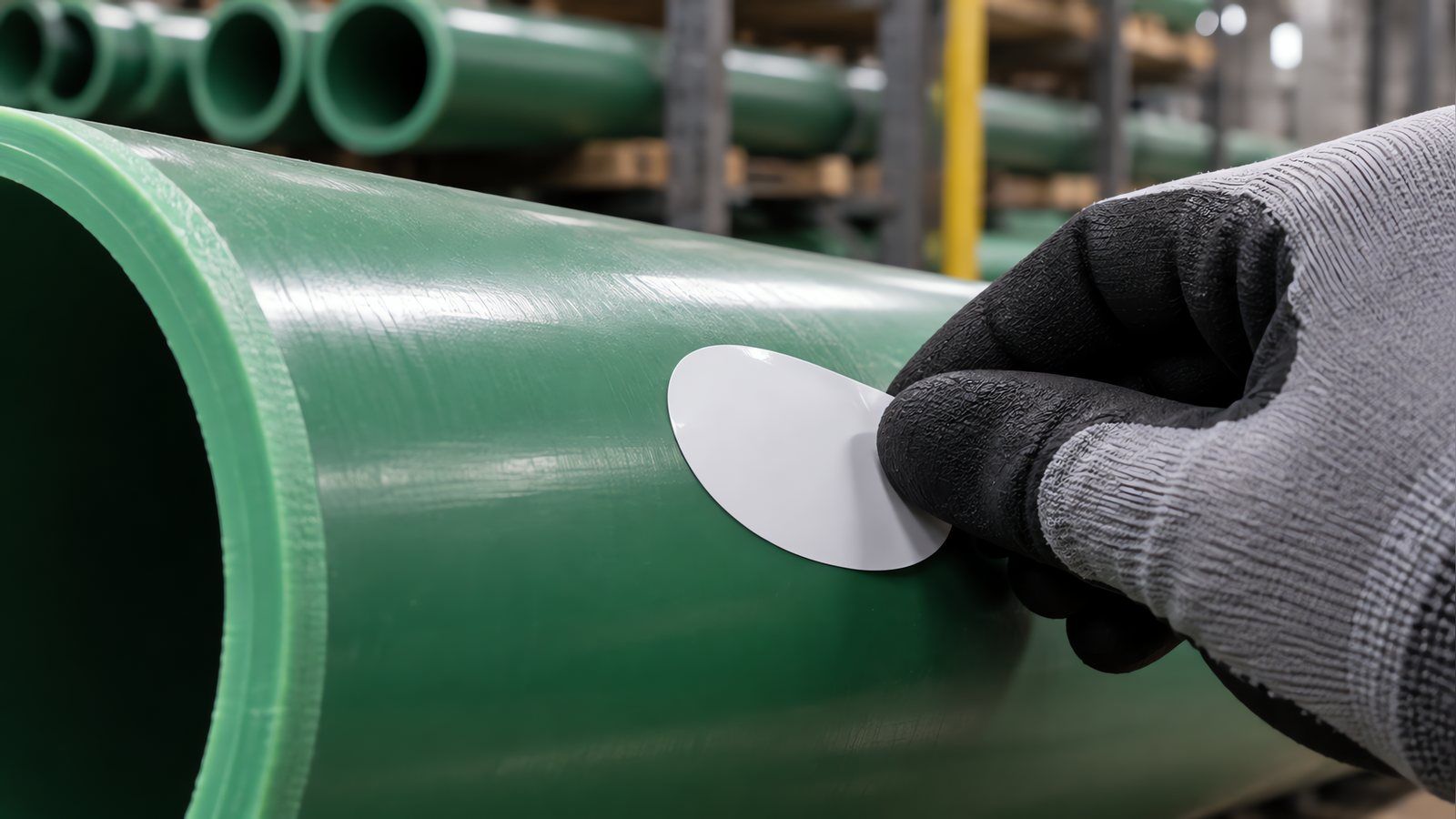
The certificate is not the last document. Under section 10 of the Standards Act, imported goods for sale in Kenya carry the Import Standardisation Mark. The ISM guidelines are blunt about timing: the application "MUST be submitted before KEBS final clearance of the goods from the Port of Entry". The importer applies with the certificate, the Import Declaration Form and the customs entry.
Unit cost is trivial; sequencing is not. The guideline publishing the price is dated 28 July 2015 and puts a sticker at KSh 0.49 including taxes, with no later figure published. What scales sits beside it: Import Declaration Fee 2.5% of declared customs value, Railway Development Levy 2%, VAT 16%.
Kenyan enforcement also continues past the gate, which is where the extrusion print line starts to matter. KEBS banned unmarked plastic piping from August 2016 — polypropylene, PPR, polyethylene, HDPE and unplasticised PVC — and backed it with hardware-shop seizures and a minimum KSh 100,000 fine per count. A consignment can clear the port and still be pulled off a Nairobi shelf, which is why what the pipe says about itself deserves the attention the certificate gets.
Conclusion
Kenya is the easier file to get right, because the standard question has a published answer. What makes it expensive is treating what a search returns as current. Six checks before the proforma:
- Check the contractor against the Zone 1 list in Manual Version 15, not one from before 8 February 2026.
- Ask the mill for a report naming KS ISO 15874-2:2013 and its amendment state, not "ISO 15874".
- Confirm the standard assigned to your tariff line on the Request for Certification.
- Leave the container unsealed until the contractor seals it, and check the seal number on the certificate.
- Budget 5% of approved customs value for destination inspection and another 5% for the bond, under paragraphs 9(1) and 9(2).
- Budget the ISM application before KEBS releases the goods, not after.
Then the route. A first shipment goes on A. A repeating catalogue pays for itself on B. C is closed unless the mill runs a quality management system.
Shipping into West Africa too? Our SONCAP guide for PP-R covers the Nigerian equivalent, and the pipe import document checklist shows what carries across regimes.
Frequently Asked Questions
Does PP-R pipe need a Certificate of Conformity for Kenya?
Certification is the default for goods shipped from the zones KEBS lists, and none of the fourteen exempt categories in the Schedule to Legal Notice No. 78 of 2020 reaches a trading importer. Confirm the classification for your own tariff line with the appointed contractor.
Which standard is PP-R pipe assessed against in Kenya?
KEBS publishes KS ISO 15874 parts 1, 2, 3 and 5 at 2013, KS ISO/TS 15874-7:2018 on conformity assessment, and six amendment listings: eleven catalogue entries in all. PVoC Manual Version 15 certifies goods against applicable Kenya standards, so the report should name the KS designation.
Who can issue a Kenya certificate for a shipment from China?
PVoC Manual Version 15, dated 19 February 2026, lists eight contractors for Zone 1, which covers China, Hong Kong, Taiwan and Mongolia: CCIC, CHIC, QISJ, ASTC, Intertek, Cotecna, TUV Rheinland and Bureau Veritas.
What does a Kenya Certificate of Conformity cost?
Manual Version 15 sets 0.60% of FOB value on Route A, 0.55% on Route B and 0.50% on Route C, each with a USD 300 minimum and a USD 3,500 maximum. The 2015 figures still circulating were superseded by Version 13 back in 2023.
What happens if a container reaches Mombasa without a certificate?
Paragraph 9(1) of Legal Notice No. 78 of 28 April 2020 sets destination inspection at 5% of the approved customs value, and paragraph 9(2) adds a security bond of a further 5%. The 15%-of-CIF figure comes from the 2005 Order, superseded in 2018.