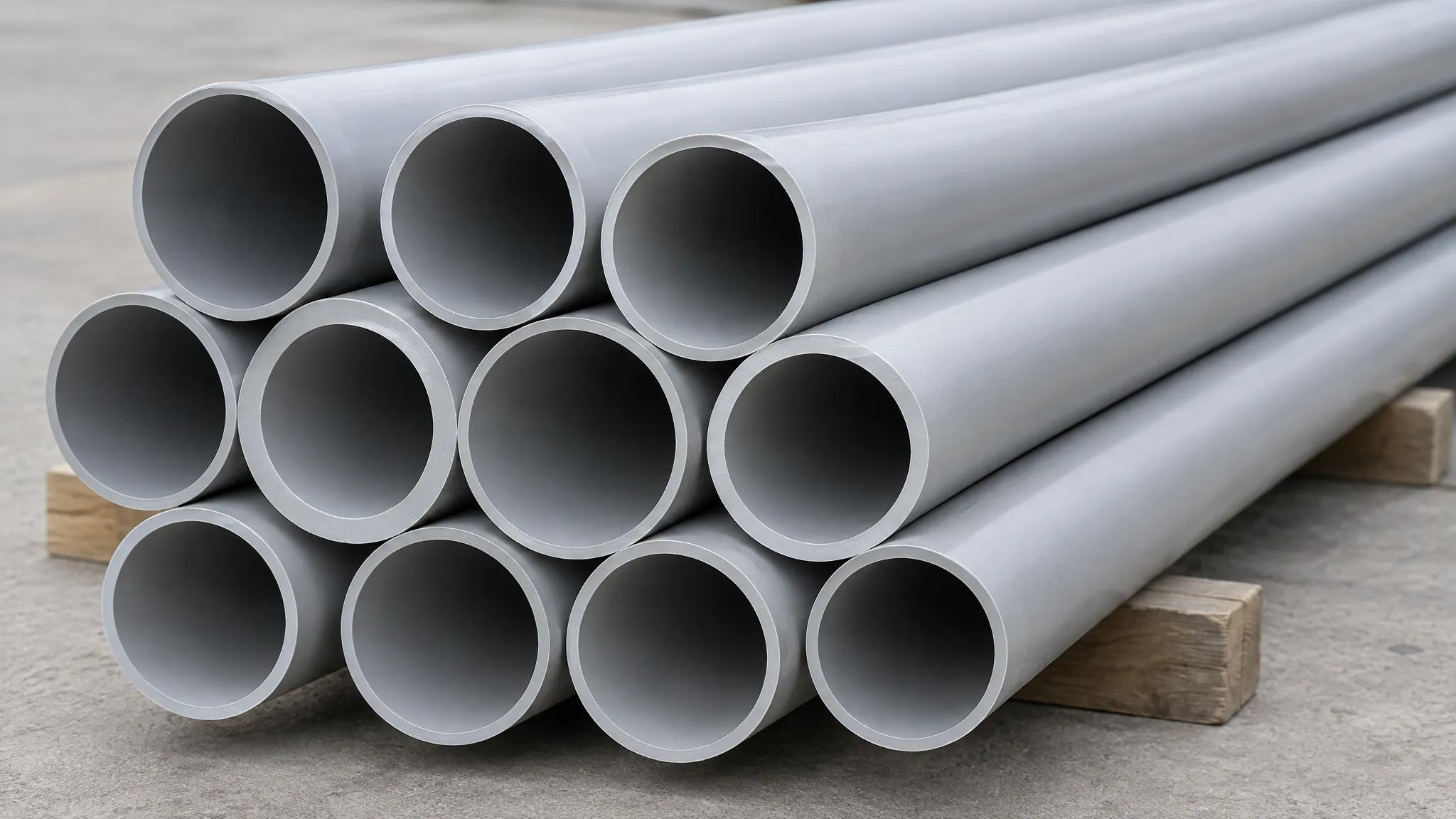

Pipe Import Documents Checklist: What Customs Wants, Market by Market

Every importer of plastic pipe eventually learns the same lesson, and most learn it while their container is accruing storage charges: the paperwork that clears a shipment is not one universal set. It is a base set that almost every customs authority wants, plus a destination-specific conformity certificate that in most regulated markets has to exist before the goods leave the country of supply — and that second part is where containers get stranded.
The commercial invoice, packing list and bill of lading are the easy half. Any forwarder will get those right. What separates a five-day clearance from a five-week one is whether you understood, at the time you placed the order, which conformity regime your destination runs, which of your supplier's certificates it will accept, and which document had to be issued while the pipe was still on the factory floor. Under most pre-shipment verification regimes a Certificate of Conformity cannot be obtained retroactively at the port, because it certifies an inspection that was supposed to happen before loading. That single constraint is the reason this article exists.
This is the multi-country view. If you are shipping specifically to Nigeria, we have a dedicated deep-dive on SONCAP, HS codes, duties and clearance for Nigerian PPR imports — that article goes deeper on one country than this one does on any. Read this one to work out which regime you are dealing with and what it demands; read that one if Nigeria is your market.
Key Takeaways
- Four documents travel with almost every shipment — commercial invoice, packing list, bill of lading, certificate of origin. The destination-specific conformity certificate is the one that strands containers.
- A Certificate of Conformity records a pre-shipment inspection, so it cannot be obtained retroactively once the vessel has sailed.
- Penalties for arriving without one vary by more than twentyfold: Kenya 0.6% of customs value, Tanzania 15% of CIF, Nigeria 20% of CIF or ₦2 million, whichever is higher.
- Three different architectures exist — per-shipment verification (Nigeria, Kenya, Tanzania, Ghana), product-then-shipment registration (Saudi SABER), and factory registration (Egypt GOEIC).
- PP-R pipe is HS 3917.22; plastic fittings are HS 3917.40. A mixed container spans both subheadings and must be declared as separate lines.
- Repeat importers should move off single-shipment certification: Nigeria's PC2/PC3 last 12 months and cover multiple shipments, versus PC1's six months and single use.
- Inspection-agency rosters change on contract cycles — Kenya's PVoC contracts turned over in February 2026 — so confirm the agency is currently appointed for your destination before booking.
What this guide covers
- The Two Halves of an Import Document Pack
- The Base Document Set: What Almost Every Customs Authority Wants
- Where the Numbers on Your Documents Come From
- Which Regime Are You Actually Shipping Into?
- The Routes: Why Your Second Shipment Should Be Cheaper Than Your First
- The Sequencing Trap That Actually Kills Containers
- Pick the Inspection Agency Before You Pick the Sailing
- A Worked Sequence: One Container of PP-R to Mombasa
- What Your Supplier Should Be Handing You
- Frequently Asked Questions

Conformity certification is an inspection of a real production line. This walkthrough shows the factory access an inspection body is given before it issues a certificate.
Who this guide is for
This is written for importers, distributors and procurement teams buying plastic pipe and fittings by the container into Africa, the Middle East and Southeast Asia. If you are a homeowner buying a few lengths of pipe, none of this applies to you. If you are placing your first container order and your supplier has just asked which conformity route you want, this is the article you needed a week ago.
The Two Halves of an Import Document Pack
Split the document set in your head. It makes everything downstream easier to manage.
The commercial half proves what was sold, for how much, and to whom. It is generated by the transaction itself: the commercial invoice, the packing list, the bill of lading or air waybill, and the certificate of origin. These documents describe a sale that has already happened. If one is wrong, you amend it. Painful and slow, but recoverable.
The regulatory half proves the goods are legally allowed into the destination country. It is generated by an inspection or a test — an event that had to physically happen, usually before shipment, often at the factory. This is the half that cannot be recreated after the fact. A pre-shipment inspection that did not occur cannot be made to have occurred, and no amount of goodwill from your supplier changes that.
Every expensive customs problem an importer of pipe has ever had traces back to treating a regulatory document as if it belonged to the commercial half.
The Base Document Set: What Almost Every Customs Authority Wants
These travel with essentially every ocean shipment of pipe regardless of destination. The detail that matters is not whether you have them but whether they agree with each other — customs officers reconcile documents against each other before they look at the goods.
The commercial invoice is the valuation document. It establishes the price customs will assess duty against, so the Incoterm stated on it directly changes your duty bill. If you are still deciding between quoting terms, our breakdown of FOB versus CIF for pipe imports covers which one leaves you paying duty on freight you did not need to declare.
The packing list ties the invoice to physical reality: carton count, net and gross weights, dimensions. For pipe this document does more work than importers expect, because pipe ships as bundles of varying lengths and a customs examination that finds a carton count mismatch will open the whole container.
The bill of lading is the title document. Whoever holds the original controls the cargo. The certificate of origin establishes where the goods were manufactured, which determines your duty rate under any preferential trade agreement your country has.
Where the Numbers on Your Documents Come From
One code drives most of the document pack, and getting it wrong contaminates everything downstream: the HS code.
The Harmonized System is maintained by the World Customs Organization and is used by more than 200 countries and economies as the basis of their customs tariffs. It comprises more than 5,000 commodity groups, each identified by a six-digit code, and the WCO amends it every five to six years. The practical consequence for an importer: the first six digits are the same wherever you ship, so a code your supplier declares in China maps predictably onto your destination tariff — but digits seven and beyond are national, and that is where duty rates and regulatory flags live.
For plastic pipe, heading 3917 covers tubes, pipes and hoses, and fittings therefor, of plastics. The two subheadings that carry most PP-R shipments:
| HS code | Covers | What importers get wrong |
|---|---|---|
| 3917.22 | Rigid tubes, pipes and hoses of polymers of propylene — this is where PP-R pressure pipe sits | Declaring PP-R under a PVC or PE subheading because the forwarder defaulted to a code they use more often |
| 3917.40 | Fittings — joints, elbows, flanges — of plastics, regardless of the polymer | Declaring a mixed container under the pipe code only, when the fittings belong to a separate subheading with its own duty rate |
That second row is the common and expensive one. A mixed container of PP-R pipe and fittings spans two subheadings. Declaring the whole container under one is a misdeclaration even when the duty difference happens to be zero, and it is exactly the kind of discrepancy that turns a documentary check into a physical examination.
Which Regime Are You Actually Shipping Into?
Here is the part no generic customs-clearance checklist will tell you. Destination countries do not all regulate imports the same way, and the differences are structural — not just different form names. There are three genuinely different architectures, and which one you face determines when you have to act.
Shipment-by-shipment verification (PVoC / SONCAP / G-CAP model). An accredited inspection body verifies each consignment before it sails and issues a Certificate of Conformity. Nigeria, Kenya, Tanzania and Ghana all run versions of this. The certificate is treated as a customs clearance document, so arriving without one typically puts you in penalty territory rather than merely delay territory — though the specific charge and remedy vary by country.
Product-then-shipment registration (Saudi SABER model). You register the product once, then obtain a per-shipment certificate against that registration. The first shipment is slow; subsequent ones are fast.
Factory registration (Egypt GOEIC model). The regulator approves your supplier's factory, not your shipment. If the factory is not on the register, no amount of correct shipment paperwork helps you — and you as the importer cannot fix it, because the registration belongs to the manufacturer.
| Market | Regime & clearance document | Validity | Cost of getting it wrong |
|---|---|---|---|
| Nigeria | SONCAP. Product Certificate (PC) first, then a SONCAP Certificate (SC) per shipment. The SC is a mandatory customs clearance document | PC1 six months, single use; PC2/PC3 12 months, multiple use | 20% of CIF or ₦2 million, whichever is higher |
| Kenya | PVoC under Legal Notice No. 78 of 2005. CoC from a KEBS-appointed agent must accompany the consignment | Per consignment | Destination inspection at 0.6% of approved customs value under the 2026 arrangements |
| Tanzania | PVoC via TBS. CoC mandatory; consignments arriving without it are denied entry | Per consignment; Route B/C registrations persist | 15% of CIF value plus destination inspection |
| Ghana | G-CAP. CoC compulsory for clearance; construction materials are a regulated category | Per consignment | Severe clearance delays, penalties, or the shipment returned; goods held until tested to the applicable standard |
| Saudi Arabia | SALEEM, via the SABER platform. PCoC per product, then SCoC per shipment | PCoC one year; SCoC that shipment only | No SCoC, no clearance — and no SCoC is issuable without a valid PCoC first |
| Egypt | GOEIC factory registration under decrees 991/992 (2015) and 43 (2016). Registration is per factory, not per shipment | Attaches to the manufacturer, not your order | An unregistered factory cannot be fixed by the importer at any price |
Conformity rules, appointed-agency rosters and penalty rates all change on regulatory and contract cycles, so treat the table above as the shape of each regime rather than a substitute for current confirmation — check the position with your customs broker or the issuing authority before you commit to a shipment.
Read that Egypt row again if you are quoting an Egyptian project. It is the one case where supplier selection is the compliance decision. You can have flawless documents and still be unable to clear, because the qualifying event happened — or did not happen — at a factory in Zhejiang months before you were involved.
For importers and distributors ordering by the container: the regime decides what you need from the factory, not just from the freight forwarder. IFAN has manufactured PP-R in Zhejiang since 1993, runs 30+ extrusion lines and an in-house testing lab across a 120,000 m² plant, and ships to 120+ countries. Under a factory-registration regime that history is the qualifying asset — it is the factory that gets registered, and no importer can supply it from the destination end. Quotes come back within 24 hours.
The Routes: Why Your Second Shipment Should Be Cheaper Than Your First
Most PVoC regimes offer tiered certification routes, and importers routinely default to the most expensive one forever because nobody explained the alternatives. Tanzania's TBS programme states the three clearly, and the same logic appears across the PVoC family:
- Route A — occasional exports. No product registration. Every shipment gets testing plus a shipment inspection before the CoC is issued. Highest per-shipment cost, no setup.
- Route B — frequent exporters. The product is registered up front. Each shipment then needs inspection plus random testing rather than full testing. Lower per-shipment cost.
- Route C — licensing. The product is licensed, the licence is reviewed, and testing becomes random. Lowest per-shipment friction, highest setup burden, aimed at high-volume manufacturers.
If you are ordering one container a year, Route A is correct and route-shopping is a waste of your time. If you are ordering quarterly from the same factory to the same specification, staying on Route A means paying for full testing of an identical product four times a year. The registration lives with the product and the manufacturer, so this is a question to put to your supplier before the first order, not after the fourth.
Nigeria's SONCAP structures the same idea through certificate tiers rather than route letters: a PC1 covers a single shipment and lasts six months, while PC2 and PC3 — registered and licensed status — last 12 months and cover multiple shipments. An importer placing repeat orders against a PC1 each time is buying the same certificate over and over.
The Sequencing Trap That Actually Kills Containers
Document problems are almost never about a missing document. They are about documents produced in the wrong order.
Nigeria illustrates it precisely: a Product Certificate is required to open Form M. Form M is the import declaration that has to be in place before the goods ship. So the sequence runs product certification → Form M → inspection → SONCAP Certificate → shipment. An importer who books the vessel first and starts the certification afterwards has already lost, because the certificate that clears the goods depends on a declaration that depends on a certificate that takes weeks to obtain.
Saudi Arabia has the same shape with different names: no SCoC can be issued without a valid PCoC, so a first-time shipment carries a product-registration lead time that a repeat shipment does not.
Work backwards from your vessel's ETD, not forwards from today. The question is never "do I have the documents" — it is "which of these documents is a prerequisite for another one, and how far ahead of loading does the earliest one need to start?"

Pick the Inspection Agency Before You Pick the Sailing
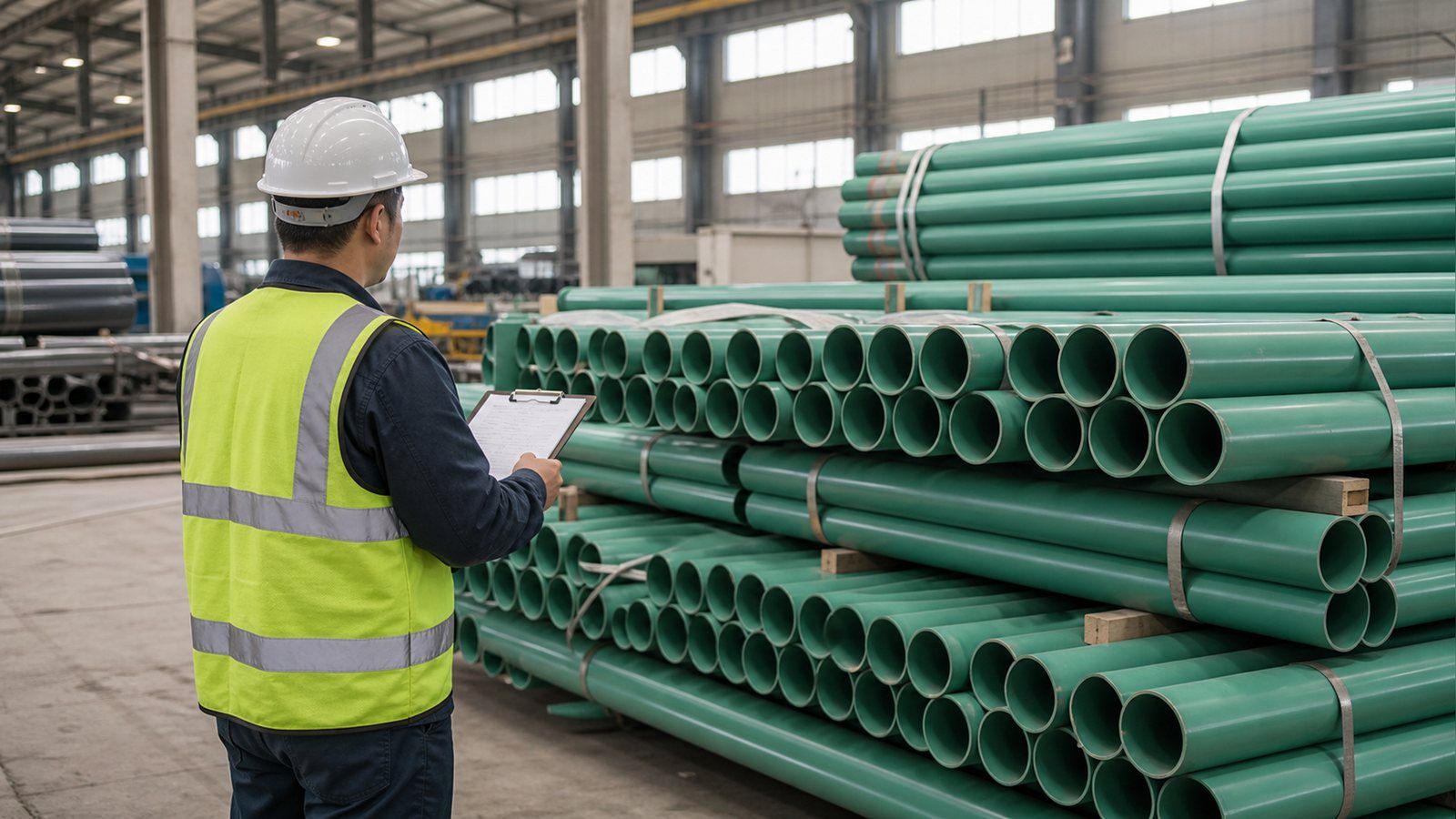
Conformity certificates are issued by accredited third parties, not by the regulator, and the accredited roster is neither identical across countries nor stable over time.
Kenya's KEBS lists Bureau Veritas, Cotecna, China Certification & Inspection (Group), Intertek International, SGS and QISJ among appointed PVoC agents. Nigeria's SON accredits its own set of Independent Accredited Firms — including Bureau Veritas, COTECNA, China Certification & Inspection Group and Intertek — which SON states operate globally with no territorial restriction.
Two operational cautions follow, and both have cost importers real money.
First, the rosters change on contract cycles. Kenya's previous PVoC contracts expired on 8 February 2026, with new three-year inspection contracts effective 19 February 2026. An importer who booked an inspection with an agency whose contract lapsed mid-order gets a certificate the destination will not honour. Before you book an inspection, confirm the agency is currently appointed for that destination — not that it was appointed last year, and not that it is appointed somewhere else.
Second, the agency inspects against a standard, so the standard must be on the paperwork. For PP-R pressure pipe that generally means ISO 15874 or DIN 8077/8078. An inspection booked without the applicable standard specified is an inspection that can pass and still produce a certificate your customs authority rejects.
What to check before you release the deposit
- Is the destination's conformity regime shipment-based, product-based or factory-based? That determines who has to act and when.
- Is your chosen inspection agency currently appointed for that destination?
- Does the certificate name the standard the pipe was tested against (ISO 15874 / DIN 8077/8078 for PP-R)?
- Do the HS codes on the invoice separate pipe (3917.22) from fittings (3917.40)?
- Does the carton count on the packing list match what will physically be in the container?
- If the market is Egypt: is the factory itself already GOEIC-registered?
A Worked Sequence: One Container of PP-R to Mombasa
Concrete beats abstract. Here is how the timeline assembles for a first-time Kenyan importer bringing in a mixed container of PP-R pipe and fittings.
Before the order is confirmed, the importer establishes that Kenya runs PVoC under Legal Notice No. 78 and that a CoC from a KEBS-appointed agent must accompany the consignment. He checks the current appointed roster rather than assuming last year's list still stands — this matters more than usual in 2026, given the February contract transition. He confirms with the supplier which standard the pipe is manufactured and marked to.
At order placement, HS codes are agreed in writing: 3917.22 for the pipe, 3917.40 for the fittings, listed as separate lines with separate values. Because the container is mixed, this is settled now, not when the invoice is drafted.
Two to three weeks before loading, the inspection is booked with the appointed agency, referencing the applicable standard and the specific consignment. The supplier supplies test reports and batch documentation to the inspection body.
At the factory, the pre-shipment inspection takes place against the declared goods. This is the irreversible step — the event that cannot be recreated later.
Before departure, the CoC is issued. Only now does the commercial half get finalised: invoice, packing list and bill of lading are drawn so that carton counts, weights, values and HS codes agree with each other and with the CoC.
If that importer had instead booked the vessel first and asked about certification afterwards, the realistic outcome is a container arriving in Mombasa without a CoC and a destination inspection billed at 0.6% of approved customs value under the arrangements KEBS published for 2026 — plus the storage days it takes to arrange one. In Dar es Salaam the same mistake would cost 15% of CIF. In Lagos, 20% of CIF or ₦2 million, whichever is higher. The penalty for the identical error varies by a factor of more than twenty depending on which port you chose.
What Your Supplier Should Be Handing You
A factory that exports regularly to your market should not need this explained. What you can reasonably expect, and should ask for by name before you pay a deposit:
- Batch or lot certificates tied to your shipment — not a generic certificate for the product line issued three years ago.
- Third-party test reports against the standard your market recognises, from a laboratory the destination accepts.
- Willingness to host the pre-shipment inspection, including access for the inspector and the batch records they will ask for.
- The regional certificates your destination requires where the factory already holds them.
- Clean, consistent HS code declarations that split pipe from fittings.
Two of those five are not really about paperwork, and they are the two an importer cannot fix later. Hosting the inspection depends on the factory being a place an inspector can usefully visit — IFAN has produced in Zhejiang since 1993 across a 120,000 m² plant with 30+ extrusion lines and an in-house testing lab, which is what makes a pre-shipment audit a scheduling question rather than a negotiation. Factory registration is the harder one: under Egypt's GOEIC model the registered entity is the manufacturer, so a factory that has never registered cannot be made acceptable by anything the importer does at Alexandria. Ask which destinations the factory is already registered in before you shortlist it, not after.
The mixed-container problem also has a supply-side shape worth naming. A catalogue of 3,000+ PP-R SKUs across DN20–DN160 and PN12.5 to PN25 is what lets one container carry a full size mix — and it is exactly that container whose invoice has to split 3917.22 from 3917.40 line by line. The breadth that makes the order efficient is the same breadth that makes the declaration easy to get wrong, so settle the HS split at order placement. Prices and lead times are quoted per order against the size mix rather than published, and quotes come back within 24 hours; send the size list and the discharge port together, because the destination changes the document work, not just the freight.
For procurement teams and importers still deciding which market to ship into first: the destination changes the certification work, not just the freight. Send your size mix and the discharge port together and the export desk can confirm which certificates the factory already holds for that market.
Frequently Asked Questions
Which documents are required for every pipe import shipment?
Four travel with essentially every shipment: commercial invoice, packing list, bill of lading and certificate of origin. Most destinations in Africa and the Middle East then add a conformity certificate that must be issued before the goods sail.
Can I get a Certificate of Conformity after the container has shipped?
Generally no. PVoC-style regimes verify the consignment before it leaves the country of supply, so the inspection had to physically happen at the factory. Arriving without it usually means a destination-inspection fee or penalty instead.
What is the penalty for importing without a Certificate of Conformity?
It varies sharply by market. Nigeria charges a SONCAP default of 20% of CIF or 2 million Naira, whichever is higher. Tanzania applies 15% of CIF plus destination inspection. Kenya's 2026 arrangements charge destination inspection at 0.6% of approved customs value.
What HS code do PP-R pipe and fittings use?
Rigid pipe of polymers of propylene sits under 3917.22, while plastic fittings such as joints, elbows and flanges sit under 3917.40. A mixed container spans both, so declare them as separate lines rather than under the pipe code alone.
Does the same document pack work for Nigeria, Kenya and Egypt?
No, and the differences are structural. Nigeria, Kenya, Tanzania and Ghana verify each shipment. Saudi Arabia registers the product first, then certifies each shipment. Egypt registers the manufacturer's factory, so an unregistered factory cannot be remedied by the importer at all.
How far ahead of shipment should conformity certification start?
Work backwards from the vessel's ETD, because regimes chain documents together. In Nigeria a Product Certificate is required to open Form M, and Form M must be in place before the goods ship — so the first step starts weeks before loading.
Who issues the Certificate of Conformity?
Accredited third-party inspection bodies, not the regulator itself. Kenya's appointed agents include Bureau Veritas, Cotecna, CCIC, Intertek, SGS and QISJ. Rosters differ by country and change on contract cycles, so confirm your agency is currently appointed.
Conclusion
The document pack is not the hard part. Sequencing it is. Almost every container that sits at a destination port accruing storage got there because a regulatory document — one that records an inspection or a registration that had to happen before loading — was treated as something that could be sorted out later. It cannot.
So before the next order: identify which of the three architectures your destination runs, confirm your inspection agency is currently appointed there, and work the timeline backwards from the sailing date. If you are importing into several markets, build the document map once per market rather than once per shipment.
If you are sourcing PP-R by the container and want the certification checked against your destination before you commit, talk to the export desk.
Related Briefings

HDPE Pipe Color Code: What It Means, Region by Region
HDPE Pipe Flow Rate Chart: Bore and Capacity by OD and SDR