
Plastic Pipe Standards Explained: Which One Your Market Enforces

ISO, ASTM, DIN and EN pipe standards decoded for importers: read any designation, see what Nigeria's SONCAP and Kenya's PVoC enforce at the port.
Most guides to plastic pipe standards tell you that ISO is international, ASTM is American and DIN is German, and then stop. That answer has never once helped anyone clear a container. The question a buyer is actually asking when he types plastic pipe standards explained is narrower and more expensive: my supplier's spec sheet says EN ISO 15874-2:2013 — is that the standard my customs authority will test against, and what do I write on the purchase order so I get it?
Those are two different questions, and the second one is where money is lost. A pipe can be perfectly manufactured to a real, current, correctly-cited international standard and still be refused entry, because the standard on the sheet and the standard your import regime enforces are decided by different institutions for different reasons. This page maps the four standard families you will meet, teaches you to read a designation well enough to write one, and then shows what Nigeria and Kenya actually do with that designation at the border — using the text those two authorities publish themselves.
Key Takeaways
- A designation has four readable parts — issuing body, number, part, edition year. The edition year is the part buyers omit and the part that causes disputes.
- ISO 15874 has no Part 4 and no Part 6. A gap in part numbering is normal, not a missing document a supplier is hiding.
- EN ISO and plain ISO texts are identical because CEN drafted the standard jointly with ISO under the Vienna Agreement — you are not being offered a weaker European variant.
- DN in an ISO plastics standard is an outside-diameter designation, not the bore. Reading it as bore is the most expensive beginner error in this category.
- Nigeria and Kenya both certify against their own national standards, not against ISO directly — and both publish the mechanism, the fees and the penalties. Nigeria's default charge is 20% CIF or 2 million Naira, whichever is higher.
- Neither authority publishes a public product-to-standard lookup. Getting the applicable number is formally the importer's job, and KEBS says so in writing.
Who this is for: importers, distributors and procurement staff buying plastic pressure pipe across borders who need to specify and clear it. If you already read designations fluently and want the pressure-class arithmetic instead, that is a different question — PN, SDR and Schedule are three separate rating systems and they deserve their own treatment.
On this page
How to Read a Plastic Pipe Standard Designation
Take the string EN ISO 15874-2:2013. It looks like one label. It is four separate pieces of information, and each one is negotiable on a purchase order in a way most buyers never realise.
| Piece | In this example | What it tells you |
|---|---|---|
| Issuing body | EN ISO | Who published it, and therefore who a certificate must trace back to. EN ISO means the European regional body has adopted the ISO text. |
| Number | 15874 | The subject. In the ISO hot-and-cold-water series the number identifies the polymer, not the product. |
| Part | -2 | Which component. Part 2 is pipes; fittings are a different part with different requirements. |
| Edition year | :2013 | Which revision. Omit this and you have not specified anything a test lab can act on unambiguously. |
The missing parts are not missing documents
ISO 15874's own Foreword lists the series as Part 1: General, Part 2: Pipes, Part 3: Fittings, Part 5: Fitness for purpose of the system, and Part 7: Guidance for the assessment of conformity. There is no Part 4 and no Part 6. Buyers regularly ask suppliers to produce "the missing Part 4" and treat the inability to do so as evasion. Nothing is being withheld — ISO reserves part slots during drafting and publishes only the parts that survive, and the gaps stay in the numbering permanently.
Part 7 deserves a specific note because of how it is classified. It is a Technical Specification rather than a full International Standard, which is a lower category of ISO document. That matters when a bank or a tender clerk is checking whether "ISO 15874-7" is the same class of thing as "ISO 15874-2". It is not, and saying so up front prevents an argument later.
Why EN ISO and ISO say exactly the same thing
A recurring worry among first-time importers is that EN ISO must be a diluted regional adaptation of the ISO original. The opposite is closer to true. The Foreword of ISO 15874-1 records that the standard "was prepared by Technical Committee CEN/TC 155, Plastics piping systems and ducting systems, in collaboration with Technical Committee ISO/TC 138 ... in accordance with the Agreement on technical cooperation between ISO and CEN (Vienna Agreement)."
Read that carefully: the European committee drafted it. ISO and CEN published the same text under both badges by prior agreement. So when a supplier quotes EN ISO 15874 and a tender demands ISO 15874, they are not two documents that happen to agree — they are one document with two covers. You can say this to a specifier and be right.
The edition history is worth knowing too, because it is the kind of detail that settles a dispute quickly. The 2013 edition of Part 1 is the second edition; it "cancels and replaces the first edition (ISO 15874-1:2003 and ISO 15874-1:2003/Amd 1:2007), which has been technically revised," and the specific change the Foreword calls out is that PP-RCT was added as a material. If a supplier's documentation cites the 2003 edition, PP-RCT is outside what that document covers.
DN is not the bore, and this one costs real money
ISO 15874-1 defines nominal size DN as a "numerical designation of the size of a component, which is a convenient round number, approximately equal to the manufacturing dimensions in millimetres," and defines DN/OD as "nominal size, related to outside diameter." In this family of standards, the size in the designation refers to the outside of the pipe.
The practical consequence catches people every year. A buyer used to steel pipe, where the nominal size approximates the bore, orders DN25 PP-R expecting roughly 25 mm of waterway. What arrives is 25 mm on the outside, with the wall thickness — which rises with pressure class — eating into the inside. Order a higher pressure class and the outside diameter stays identical while the bore shrinks further.
The reason this survives to site is that nothing visibly breaks. The fittings still match, the installation still goes ahead, and the flow rate quietly disappoints on a system that was designed on the wrong assumption. Note also that ISO 15874-1 normatively references ISO 4065, the universal wall thickness table, which is where those wall thicknesses are actually fixed.
The Four Standard Families and Who Issues Them
Four families cover almost everything you will be quoted. They are not competitors offering the same thing at different quality levels; they are organised on genuinely different principles, and knowing which principle applies tells you what a given number can and cannot promise you.
| Family | Organising principle | Worked example | Where you meet it |
|---|---|---|---|
| ISO | One number per material, split into parts by component | ISO 15874 (PP), ISO 15875 (PE-X), ISO 15876 (PB), ISO 15877 (PVC-C), ISO 22391 (PE-RT) | Global tenders; the reference most national standards are built on |
| ASTM | Letter prefix by committee, then a sequential number | ASTM D3350 (PE material classification), ASTM F412 (piping terminology) | North American projects and anywhere US codes were inherited |
| DIN | Standalone German numbering, often dimension-specific | DIN 8077:2008-09, PP pipe dimensions for PP-H, PP-B, PP-R, PP-RCT | Still named directly in PP-R purchase specs worldwide |
| EN | Regional adoption layer, frequently the ISO text verbatim | EN ISO 15874-2:2013 | European contracts and markets that follow European practice |
ISO: the number tells you the polymer
In the hot-and-cold-water series ISO changes the whole standard number when the material changes. The Introduction to ISO 15874-1 lists the siblings explicitly: ISO 15875 for crosslinked polyethylene, ISO 15876 for polybutylene, ISO 15877 for chlorinated PVC, and ISO 22391 for polyethylene of raised temperature resistance. This is genuinely useful at a glance — if a quotation cites ISO 15877 for what you ordered as PP-R, the polymer is wrong and you can see it from the number alone, before reading a single technical clause.
The committee behind these is ISO/TC 138, whose scope covers "pipes, fittings, valves and auxiliary equipment intended for the transport of fluids and made from all types of plastic materials, including all types of reinforced plastics." The Plastics Pipe Institute's handbook records the committee as having seven subcommittees and, at the time of that 2008 edition, 35 participating countries. The membership number will have moved since; the structure has not.
ASTM: two committees, which is why you see both D and F
ASTM numbers carry a letter prefix indicating the committee that owns them. For plastic pipe, two are in play: D-prefix standards come from the plastics committee and deal with the material, while F-prefix standards come from the plastic piping systems committee and deal with the pipe as a system. This is why a single PE pipe submittal can legitimately cite both ASTM D3350 for the resin cell classification and ASTM F412 for the terminology that defines the material code.
That material code is worth recognising on sight. The Plastics Pipe Institute's handbook records that the thermoplastic pipe materials designation code "is defined in ASTM F412 ... It consists of the ASTM approved abbreviation for the pipe material followed by four digits (e.g. PE4710)." So PE4710 is not a product name or a grade a marketing department invented — it is a structured code, and the digits carry defined meaning.
The ASTM trap worth knowing before you order. The PPI handbook notes that ASTM-world pipe runs on four separate outside-diameter sizing conventions: iron pipe size (IPS), ductile iron pipe size (DIPS), copper tubing size (CTS), and the ISO convention. Two pipes can share a nominal size label and not share an outside diameter, which means the fittings will not go on. The handbook's own guidance is that "the scope of a consensus standard usually identifies the sizing convention system that is covered by that standard" — so when you are crossing between ASTM and ISO practice, the sizing convention is a thing to confirm in writing, not assume.
DIN: old numbering, still current, still requested
There is a persistent belief that DIN standards for plastic pipe were retired when EN ISO arrived. DIN 8077 was not. DIN's own publisher lists DIN 8077:2008-09, "Polypropylene (PP) pipes - PP-H, PP-B, PP-R, PP-RCT - Dimensions", with a status line reading "Standard [CURRENT]", and it is a corrected edition of the 2007-05 version rather than a replacement of the series.
This is why PP-R quotations across Africa, the Middle East and Asia still name DIN 8077/8078 alongside ISO 15874 decades after the European harmonisation everyone assumes swept it away. It is not a supplier being old-fashioned or padding a spec sheet. Buyers ask for it by name because their own customers and consultants ask for it by name, and the standard is genuinely still in force. Note the division of labour within the pair: 8077 covers dimensions, 8078 covers the quality requirements and testing.
Which Standard Your Market Enforces at the Port
Here is the gap every general standards guide leaves open. Your supplier manufactures to ISO 15874. Your customs authority does not enforce ISO 15874. It enforces its own national standard, and it does so through a conformity assessment scheme that runs before your container sails — which means the moment to get this right has already passed by the time anyone at the port looks at your paperwork.
Two of the largest markets for imported plastic pipe illustrate the pattern, and both publish their own rules in enough detail to plan around.
Nigeria: SONCAP, and why it cannot be fixed later
The Standards Organisation of Nigeria runs the SONCAP scheme, and its FAQ states the basis of assessment plainly: verification is against "specification standards such as NIS, International Organisation for Standardisation (ISO), and International Electrotechnical Committee (IEC) among others." So ISO is accepted — but as an input to a Nigerian certification decision, not as a substitute for one.
The timing rule is the part that hurts people. SON states that "The SONCAP is an offshore and pre-shipment certification scheme, thus, cannot be processed after the consignment has left the country of origin." There is no retrospective fix. What applies instead, in SON's own words, is "the SONCAP Default, which shall be charged at 20% CIF of the consignment or 2 million Naira, whichever is higher." Separately, regulated products arriving without the certificate "shall be subject to detention, testing, and possible destruction at the expense of the importer."
Against that, the certification costs are modest and the structure rewards planning. SON publishes Product Certificate 1 (Unregistered Status) at $500, Product Certificate 2 (Registered Status) at $1000, Product Certificate 3 (Licensed Status) at $2,000, and the SONCAP Certificate itself at $350.00 per certificate. The validity differs sharply: PC1 is "valid for six months and for single use", while PC2 and PC3 are each valid for 12 months on a multiple-use basis. An importer shipping quarterly who stays on PC1 is buying a new certificate every time for no reason.
Kenya: PVoC, three routes, and a fee that falls as you get organised
The Kenya Bureau of Standards operates Pre-Export Verification of Conformity under the Standards Act, CAP. 496. Its operations manual — Version 15, dated 19 February 2026 — states that "The basis of certification is Kenya standards, approved specifications, and other applicable regulations." Same pattern as Nigeria: the national standard governs, with international standards accepted as approved equivalents.
KEBS offers three routes, and the choice is a real commercial decision rather than an administrative formality:
| Route | What it is | Validity | Fee |
|---|---|---|---|
| A | Consignment inspection and testing, every shipment | Per consignment | 0.60% of FOB, min USD 300, max USD 3500 |
| B | Product registration; fast-track for repeat homogeneous shipments | One year, with at least 2 surveillance inspections in the period | 0.55% of FOB, min USD 300, max USD 3500 |
| C | Product licensing; requires an audited quality management system, per ISO/IEC 17067 | Three years, or the PVoC contract validity period | 0.50% of FOB, min USD 300, max USD 3500 |
Route C is only open to manufacturers who can demonstrate a quality management system in their production process, which is precisely why the factory you choose determines the route available to you. You cannot upgrade yourself onto Route C from the importer's side.
The failure mode is severe and worth memorising. The manual states that "Consignments issued with NCR shall not be allowed entry into Kenya" and — closing the obvious workaround — that "Goods issued with NCR by a PVoC Contractor shall not be presented to another PVoC contractor for certification." A non-conformity report is not a setback you shop around; it ends that consignment's route to that market. One further detail specific to Chinese-origin cargo: under Route A, "all containerized cargo under this route from China and United Arab Emirates must be sealed by the PVOC contractor and seal and container numbers indicated in the CoC."
Nobody will hand you the standard number, and that is official
Both authorities publish the mechanism in detail and neither publishes a plain product-to-standard lookup table you can consult for PP-R pressure pipe. That is not an oversight in their documentation; it reflects where they place the duty. The KEBS manual lists among importer responsibilities: "Obtain the applicable Kenya Standards from KEBS and share the requirements with their suppliers."
Read that as the operating instruction it is. Your factory cannot look up your national standard for you, and a factory that claims to have done so has probably guessed. The correct sequence runs in one direction only: ask the authority or an appointed inspection contractor for the applicable standard number for your specific product, in writing; send that number to the factory; then have the factory confirm in writing which of its test reports covers it.
It is worth knowing how tightly this is administered. The manual records a 2019 Cabinet directive, reference OP/CAB 9/83A, that reduced the number of government agencies operating at the port from 28 to 4, with KEBS mandated as the lead agency for coordinating inspection at the country of origin. Fewer agencies means fewer people to persuade — and a single one whose decision is final.
For the certificate marks themselves — what CE, NSF and the regional marks each cover, and how to check a certificate is genuine — our guide to pipe certification standards for importers covers the verification side that this page deliberately leaves alone.
Worked Example: Costing One PP-R Container into Kenya
Abstract percentages do not help anyone decide anything. Run the published KEBS numbers against a real order size and the routes separate immediately. Take a single mixed container of PP-R pipe and fittings — a standard first order, since minimum order quantity at this factory is one container with mixed sizes accepted — and test it at three FOB values.
| FOB value | Route A at 0.60% | Route B at 0.55% | Route C at 0.50% |
|---|---|---|---|
| USD 20,000 | USD 300 (floor applies) | USD 300 (floor applies) | USD 300 (floor applies) |
| USD 60,000 | USD 360 | USD 330 | USD 300 (floor applies) |
| USD 200,000 | USD 1,200 | USD 1,100 | USD 1,000 |
The lesson is not the size of the saving. On a typical first container the three routes cost the same, because the USD 300 floor swallows the percentage difference entirely — chasing Route C to save money on a single shipment is wasted effort. The percentage only starts to matter somewhere above USD 60,000 of FOB value, and even at USD 200,000 the gap between Route A and Route C is USD 200. Note also that at the top end the maximum of USD 3500 caps the fee, so very large consignments pay a declining effective rate.
What actually makes the routes different is time and risk, not fees. Route A means an inspection against every consignment; Route B carries a registration valid for one year with at least two surveillance inspections inside the period; Route C carries a licence valid for three years. For an importer shipping four times a year, that is the difference between four inspection events and a standing arrangement — and the KEBS fee schedule explicitly does not include laboratory testing or the manufacturer audit, which are the costs that actually scale.
Best for / not for. Route A suits a first order, a trial shipment, or an importer testing a new supplier — you accept per-shipment friction in exchange for no commitment. Route B suits steady repeat buying of the same size mix. Route C is only worth pursuing if your factory already holds an auditable quality management system, and it is not a route an importer can secure alone. If your supplier cannot support a Route C audit, the choice was made for you before you asked.
One more scenario deserves a mention because it is easy to walk into. If you source from a country where no PVoC contractor operates, the goods are subject to destination inspection instead, at a fee of 0.6% of the approved customs value with the same USD 300 minimum and USD 3500 maximum — but now assessed at the port, after the freight has been paid, with your container standing still while it happens.
Plan the lead time around this rather than around production alone. Neither authority publishes a turnaround figure, so treat any number you are quoted as an estimate and confirm it with the inspection contractor for your route — but the sequence is fixed, and the sequence is what sets your dates.
Certification is pre-shipment in both schemes, so the inspection is booked against finished goods: production has to complete before the clock even starts. On Route A that inspection recurs every consignment. A Route B registration valid for one year, or a Route C licence valid for three years, front-loads the work once instead — and those validity periods are the real numbers to plan against, because they tell you how often the certification step reappears in your calendar.
Writing the Standard onto Your Purchase Order
Everything above converges on one line of text. A purchase order that says "PPR pipe, ISO standard" has specified nothing enforceable. A test lab cannot act on it, an inspector cannot check it, and in a dispute you have no position. Five elements make the line binding.
- The full designation with the edition year. "ISO 15874-2:2013", not "ISO 15874". Never write "latest edition" — it hands the supplier the right to choose, and it means your PO and your test report can legitimately cite different documents.
- The part, matched to the component. Pipes and fittings are separate parts of the series. A certificate covering Part 2 says nothing about the fittings in the same container.
- Both standards where both were quoted. If the offer named ISO 15874 and DIN 8077/8078, put both on the PO. They are not redundant: 8077 fixes dimensions, 8078 fixes quality requirements and testing.
- The size convention and the pressure class, spelled out. DN in this family is an outside-diameter designation, so state it as such and leave nothing to a shared assumption about bore.
- The destination-market requirement, named separately. "Goods to be certified under KEBS PVoC" or "SONCAP certification required prior to shipment" belongs on the PO as its own line, because it governs timing, not just specification.
Then ask for the documents that make the line checkable: the test report naming the same designation and edition you wrote, and the batch documentation for the goods actually shipped. Marking on the pipe itself is the other half of this — how PP-R pipe marking and batch traceability work covers what should be printed on the pipe wall and how to tie it back to a certificate.
For reference, IFAN manufactures PP-R to DIN 8077/8078 and ISO 15874, in DN20–DN160 at PN12.5–PN25, from 100% virgin PP-R (PP-R 100 grade) with batch certificates issued per shipment. Regional certifications including SASO, SONCAP and NOM are handled on request. Minimum order is one container with mixed sizes accepted, samples are available before an order, and full export documentation with customs clearance support is standard, and the factory has been running since 1993. On the KEBS route question this article raises: ask us in writing whether our quality management system can support a Route C licence application for your product, and we will answer yes or no for the specific line you are buying rather than for the factory in general.
What we will not do is quote you a certificate validity date from memory. Ask for current certificates with their issue and expiry dates in writing, from any supplier including this one, and check those dates against your shipment window rather than against the date you place the order.
One boundary worth naming before you write the PO: the pressure class itself. PN, SDR and Schedule are three different systems for expressing the same underlying idea, they do not convert to one another by any simple ratio, and choosing between them is a separate decision from choosing a standard family. Settle the standard designation first, using this page; treat the pressure class as its own exercise.
Watch this before you specify a factory
A standard is only as real as the production line behind it, and under a scheme like KEBS Route C the auditable quality system is the thing being certified rather than the paperwork. This recorded footage from the IFAN plant shows the extrusion and moulding operations that a manufacturing standard actually describes.
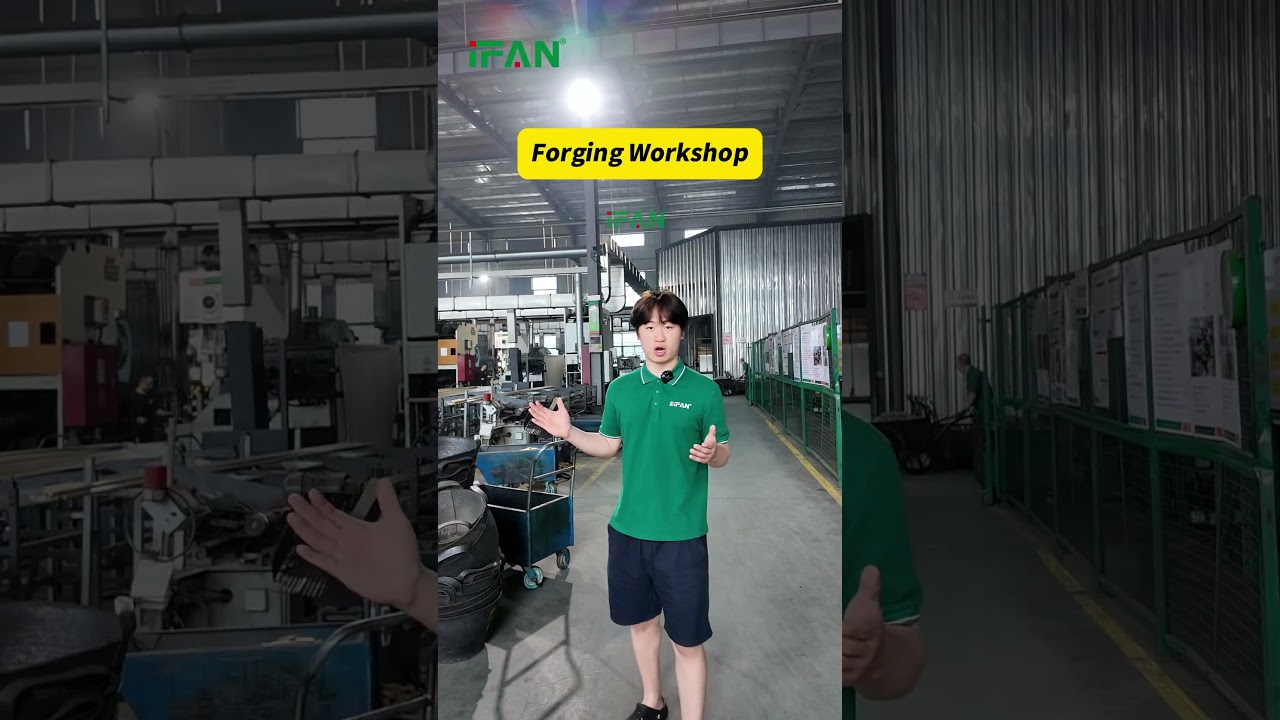 ▶ Play: inside the factory
Factory walkthrough from the IFAN Group channel. Opens on YouTube.
Frequently Asked Questions
Is ISO 15874 better than DIN 8077?
Neither outranks the other — they cover different ground. DIN 8077 fixes PP pipe dimensions and remains current at its 2008-09 edition; ISO 15874 is a multi-part system standard. Most PP-R specifications name both.
Why is there no ISO 15874 Part 4 or Part 6?
The published series is Parts 1, 2, 3, 5 and 7. ISO reserves part numbers during drafting and the gaps stay permanently once unpublished parts are dropped. No document is missing and no supplier is withholding one.
Does an ISO certificate clear customs in Nigeria or Kenya?
Not by itself. Both certify against their own national standards, with ISO accepted as an input. Nigeria requires SONCAP before shipment; Kenya requires a PVoC Certificate of Conformity. The ISO reference supports those applications rather than replacing them.
What happens if my container reaches Nigeria without SONCAP?
SON states the scheme cannot be processed once goods have left the country of origin. The SONCAP Default is charged at 20% CIF of the consignment or 2 million Naira, whichever is higher, and goods may be detained, tested and possibly destroyed at the importer's expense.
Does DN mean the inside or the outside diameter?
In ISO plastics piping standards, DN/OD relates to the outside diameter. Wall thickness rises with pressure class, so a higher-pressure pipe of the same DN has a smaller bore. Do not size a system from DN as if it were the waterway.
Who is responsible for finding the applicable national standard?
The importer. KEBS lists it among importer duties: obtain the applicable Kenya Standards from KEBS and share the requirements with suppliers. Ask the authority or an appointed inspection contractor in writing, then pass the number to the factory.
Which KEBS PVoC route should a first-time importer use?
Route A, normally. On a first container the USD 300 minimum fee applies to all three routes anyway, and Routes B and C require a shipment history or an audited quality system at the factory. Revisit the choice once volume is steady.
Standards literacy is not an academic exercise in this trade — it is the difference between a designation that survives a test report and one that collapses at an inspection. Read the designation properly, confirm which national standard your market enforces before the goods are built rather than after, and put the full string with its edition year on the purchase order. If you are still assembling a supplier list, our framework for shortlisting pipe suppliers sets out how to test a factory's claims before you commit a container to them.