
Kenya Import Duty on Plastic Pipe: 25% or US$500/MT
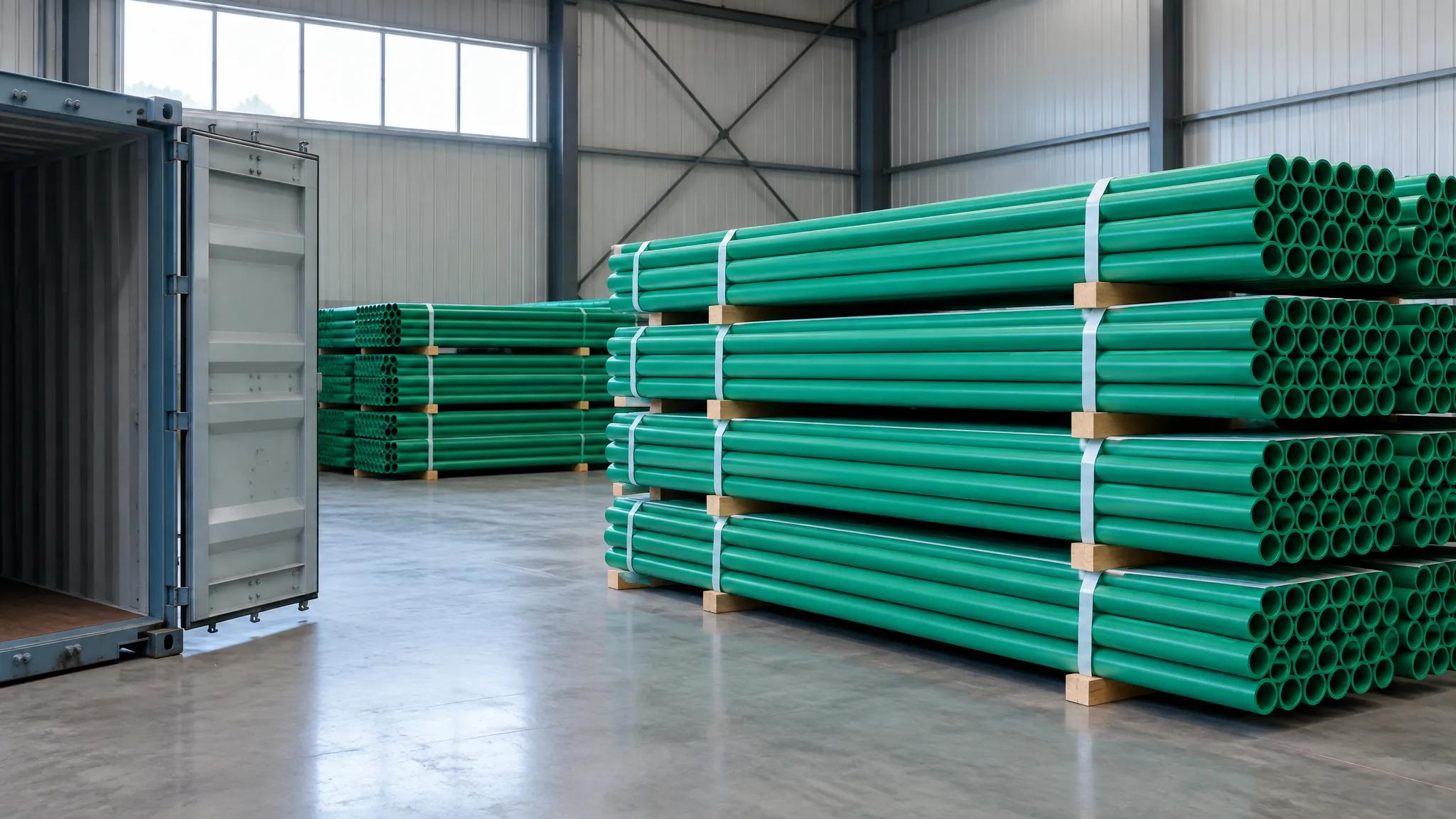
HS 3917.22.00 sits in the EAC CET 25% band. Since 1 July 2026 Kenya applies 25% or US$500/MT, whichever is higher, plus IDF 2.5%, RDL 2% and 16% VAT.
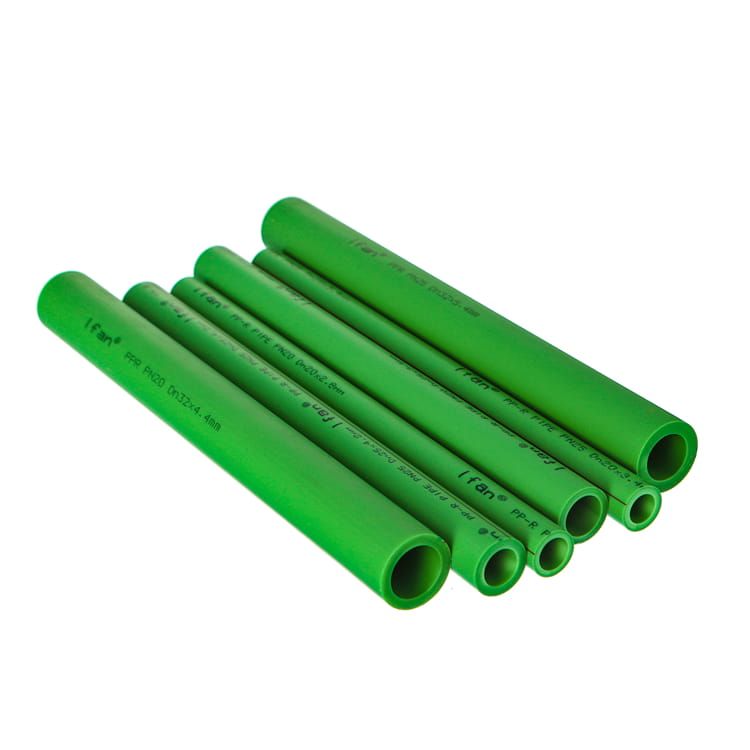
A container of PP-R pressure pipe landing at Mombasa is declared under HS 3917.22.00, and the EAC Common External Tariff puts that line in the 25% band. Since 1 July 2026 that is no longer the whole answer in Kenya. Legal Notice No. EAC/160/2026 lets Kenya charge 25% or US$ 500 per metric tonne, whichever is higher, on rigid plastic pipe — a floor that takes over from the percentage whenever the declared value falls below US$ 2,000 per tonne.
Fittings at 3917.40.00 sit outside that measure and stay on plain 25%. Above the duty ride an Import Declaration Fee of 2.5% and a Railway Development Levy of 2%, both on the pre-duty customs value, then VAT at 16% on a base that already contains all three.
Key Takeaways
- Rigid PP-R pipe is HS 3917.22.00 and fittings are HS 3917.40.00; both sit in the EAC CET 25% band.
- For Kenya only, from 1 July 2026 to 30 June 2027, HS 3917.21/22/23/29 carry 25% or US$ 500 per metric tonne, whichever is higher (Legal Notice EAC/160/2026, item 306).
- The tonnage floor and the 25% rate are equal at a customs value of US$ 2,000 per tonne; below that the floor governs, so shipment weight becomes a duty input.
- IDF at 2.5% and RDL at 2% are charged on the customs value before duty; VAT at 16% is charged on a value that includes duty and both levies.
- A hose classification at 3917.39.00 carries a Kenyan 35% stay — ten points above rigid pipe.
One thing below is not arithmetic. The rate that lands on an entry is assessed by KRA through the declarant, so it is worth seeing how the authority describes that job itself.

The Line Is 3917.22.00, and Since 1 July 2026 It Is Not Simply 25%
Heading 39.17 covers tubes, pipes and hoses of plastics and their fittings. The rigid subgroup splits by polymer, and polypropylene takes 3917.22.00. The EAC Common External Tariff, 2022 Version runs on four bands (0%, 10%, 25% and a 35% maximum, in force since 1 July 2022) and files rigid plastic pipe at 25%. Polyethylene at 3917.21.00, PVC at 3917.23.00 and fittings at 3917.40.00 read the same: the band does not turn on the polymer.
The change that matters is newer than most published guidance. On 30 June 2026 the EAC Council of Ministers gazetted its annual measures as Legal Notice No. EAC/160/2026 (Gazette Vol. AT 1 – No. 16). Item 306 of Table I reads: Kenya to stay the application of the EAC CET rate of 25% and apply 25% or US$ 500 per metric tonne, whichever is higher, for one year.
It names 3917.21.00, 3917.22.00, 3917.23.00 and 3917.29.00, and it is Kenyan, not Community-wide: Uganda, Tanzania and Rwanda are not in it. The window closes on 30 June 2027, so the rate is re-read each July rather than carried forward.
Where the US$500 Floor Starts to Bite
A specific duty and an ad valorem duty meet at one value. Set 25% of the customs value per tonne equal to US$ 500 and the crossover falls at US$ 2,000 per metric tonne. Above it the 25% charge governs; below it the floor does, and the effective rate climbs the further the value sits beneath. That is the arithmetic of the measure, applied to whatever value per tonne a consignment declares.
So weight is now a duty input on a product bought by the metre. Rigid pipe is bulky and light, so its customs value per tonne runs lower than a dense cargo of the same invoice value — precisely the condition under which a specific floor bites.
Two numbers decide it, and neither is usually in a PP-R enquiry: the net weight the packing list will declare, and the customs value the entry will carry. Wall thickness links them, so the same metre count in PN20 weighs more than in PN12.5. Take the weight from the supplier's kilogram-per-metre table, and have the agent confirm how the comparison is run.
| Assumed CIF customs value (US$ per metric tonne) | 25% ad valorem limb (% of value) | US$500/MT floor (% of value) |
|---|---|---|
| 1000 | 25 | 50 |
| 1250 | 25 | 40 |
| 1500 | 25 | 33.3 |
| 1750 | 25 | 28.6 |
| 2000 | 25 | 25 |
| 2500 | 25 | 20 |
| 3000 | 25 | 16.7 |
| 3500 | 25 | 14.3 |
The Four Charges, in the Order KRA Applies Them
The order matters more than the percentages: two charges sit on a pre-duty base, one on a base that has absorbed the others. Section 7(2) of the Miscellaneous Fees and Levies Act (Cap. 469C) sets the Import Declaration Fee at 2.5% of the customs value; section 8(2) sets the Railway Development Levy at 2%.
Section 2 defines that customs value, for both, as the import value Customs appraises as the basis for assessing import duty — the figure before duty, not after. The split preferential rates older guides quote were deleted by the Finance Act, 2023, and the Finance Act, 2026 left both rates where they stand.
VAT is the last line and the widest base. Section 5(2)(b) of the Value Added Tax Act (Cap. 476) sets the standard rate at 16%, and section 14(1) builds the taxable value of imported goods from the customs value, plus insurance and freight not already inside it, plus the duty of customs paid.
Whether the levies fall inside that base is settled one definition on: section 2 defines duty of customs to include a levy charged under a law relating to customs or excise. IDF and RDL are such levies, so they sit inside the 16% base, the step most summaries skip.
| Charge | Computed on | Rate (%, or US$/MT) | Instrument |
|---|---|---|---|
| Import duty | Customs value, or net weight where the floor governs | 25, or US$ 500/MT, whichever is higher | EAC CET 2022; LN EAC/160/2026 item 306 |
| Import Declaration Fee | Customs value, before duty | 2.5 | Cap. 469C s.7(2) |
| Railway Development Levy | Customs value, before duty | 2 | Cap. 469C s.8(2) |
| VAT | Customs value + duty + IDF + RDL | 16 | Cap. 476 s.5(2)(b), s.14(1), s.2 |
What You Do Not Pay, and Whose Rate You Are Reading
Three charges importers routinely provision for do not reach heading 3917. The Export and Investment Promotion Levy applies only to the Third Schedule goods (cement clinker at 17.5%, semi-finished steel and bars and rods at 17.5%, kraft paper and sacks at 10%), and no 3917 line appears in it.
Excise reaches imported articles of plastic only at 3923.30.00 and 3923.90.90 and the sheet and film headings 3919 and 3920. Heading 3917 is absent from the Excise Duty Act, and the plastics lines the Finance Act, 2026 added are sheeting and film at 3920 and 3921, not 3917. Nor is pipe exempt or zero-rated, so 16% stands. Budgeting a levy that never arrives distorts a landed cost as surely as missing one that does.
There is a subtler trap for anyone searching the gazette directly. Item 77 shows 3917.21.00 through 3917.39.00 at 0% — but it describes penstock pipes for hydro-electric projects, names Uganda alone, and is conditioned on that end use.
Other 3917 lines appear at 10%, as items 56, 57 and 58 of Legal Notice No. EAC/172/2026, at page 101 of the same gazette. That notice grants a remission under section 140 of the EAC Customs Management Act to manufacturers in Burundi importing inputs. That list runs 3917.23.00, 3917.29.00 and 3917.40.00, and does not include 3917.22.00 at all. Both entries are quoted accurately; neither reaches a distributor importing finished pipe into Kenya. A rate is yours only if the Partner State, the end use and the scheme all match.
Where a Classification Slip Costs Ten Points
The costliest error here is the subheading, not the band. Kenya also holds a stay on 3917.39.00, hose pipe in the gazette's words, at 35%, ten points above the rigid lines. Rigid pipe and flexible hose sit adjacent in the nomenclature and are not always distinguished carefully on an invoice, so a loose description invites the dearer line.
The direction of travel shifts too: in 2025 Kenya joined Uganda at 35% on 3917.29.00, while the 2026 notice names Uganda alone and puts that line under the tonnage floor. Guidance written a year ago points at the wrong rate.
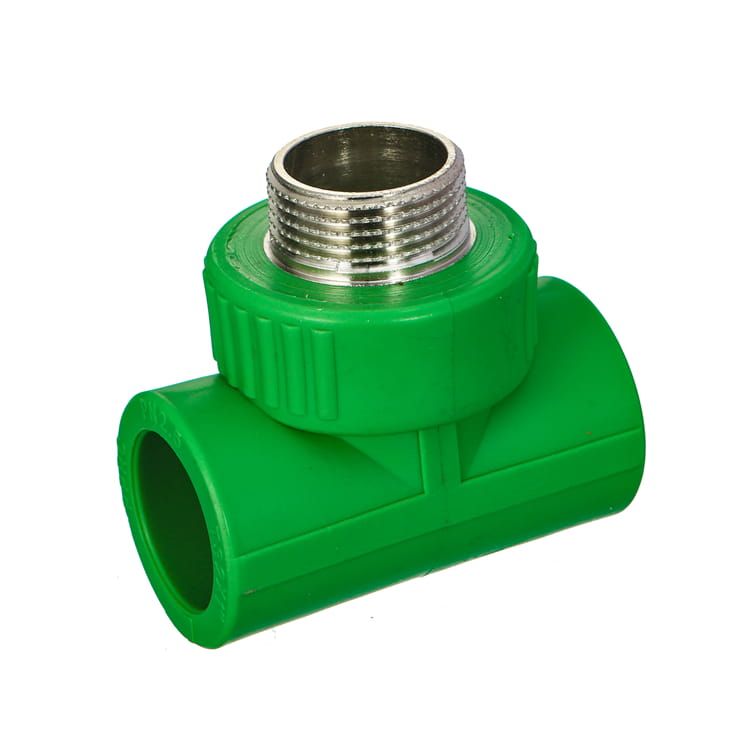
One container can carry two rate structures. The pipe is exposed to the weight floor; the fittings at 3917.40.00, left out of item 306, stay on plain 25%. Fittings are dense and pipe is light, so one invoice can produce different effective rates across its own lines — which makes the split of weight and value on the packing list worth checking before the container sails.
Our guide to PP-R HS codes sets out how the six-digit line is argued; in the other customs union the ECOWAS duty page shows the same two subheadings at 20%, and Tanzania takes the same CET without Kenya's stay.
What We Supply, and What to Put in the Enquiry
A duty question is answerable only once the enquiry carries the inputs the rule turns on. Ask for kilograms per metre by diameter and pressure class, and the net and gross weight the packing list will show — that is what the US$ 500 per tonne floor is measured against. Ask how the quotation is built: the unit basis, what sits inside the price, and which Incoterm fixes the customs value, since duty, both levies and VAT all compute from it.
Our range covers DN20 to DN160 in PN12.5 to PN25 across more than 3,000 PP-R items, and the class you settle on fixes the wall thickness, so it fixes the tonnage too. Wholesale quantities only.
Four lines belong in the same email. Minimum order: one container, mixed sizes accepted — ask how a mixed load splits across invoice lines, since that split decides which goods meet the floor. Lead time: ask what drives it on your sizes — extrusion queue, fitting tooling, batch-test turnaround — and ask for a cargo-ready date, not a shipping date.
Documents: PP-R to DIN 8077/8078 and ISO 15874, CE and SGS, batch certificates per shipment, regional certification on request; the KEBS and PVoC side runs through our Kenya certification guide. Samples: available before an order, since wall thickness is verifiable with calipers. On the value side, FOB against CIF changes the base the whole stack is built from.
Conclusion
The risk here is not paying 25% when you expected 10%. It is budgeting 25% on a light, low-value-per-tonne cargo in the one year Kenya has attached a US$ 500 per tonne floor to it, and finding the difference after arrival.
Re-read item 306 each June, keep pipe and fitting weights on the packing list, and have the agent confirm the assessed rate before the container sails. This measure expires on 30 June 2027; the figures above are as published, and the assessment on any consignment is KRA's to make.
Frequently Asked Questions
What is the import duty on plastic pipe in Kenya?
Rigid plastic pipe under HS 3917.22.00 sits in the EAC CET 25% band. From 1 July 2026 to 30 June 2027 Kenya applies 25% or US$ 500 per metric tonne, whichever is higher, under Legal Notice EAC/160/2026. Fittings at 3917.40.00 remain on 25%.
How are IDF and RDL calculated in Kenya?
The Import Declaration Fee is 2.5% and the Railway Development Levy is 2%, both of the customs value. Section 2 of Cap. 469C defines that value as the figure Customs appraises as the basis for import duty, so both are charged before duty, not on a duty-inclusive amount.
Is Kenyan import VAT charged on the duty and levies?
Yes. Section 14(1) of Cap. 476 builds the taxable value from the customs value, freight and insurance, and the duty of customs paid. Section 2 defines duty of customs to include a levy charged under a customs law, which brings IDF and RDL inside the 16% base.
At what value does the US$ 500 per tonne floor apply?
The two charges are equal at a customs value of US$ 2,000 per metric tonne. Below that the specific floor is the higher figure and governs; above it the 25% rate governs. Apply it to the declared value and net weight of your own consignment.
Why do some sources show plastic pipe at 0% or 10% in the EAC?
Those are conditional measures. The 0% entry covers penstock pipes for hydro-electric projects in Uganda; the 10% entries sit under Burundi's duty remission for approved manufacturers importing inputs. Neither reaches a distributor importing finished pipe into Kenya.
Does the EAC rate change every year?
The CET bands are stable, but the Council of Ministers gazettes stays of application each June and they run for one year. Kenya's plastic-pipe measure took effect on 1 July 2026 and expires on 30 June 2027, so the June gazette should be re-read before each new financial year.