

Duty on Imported Plastic Pipe in West Africa: What the ECOWAS CET Charges
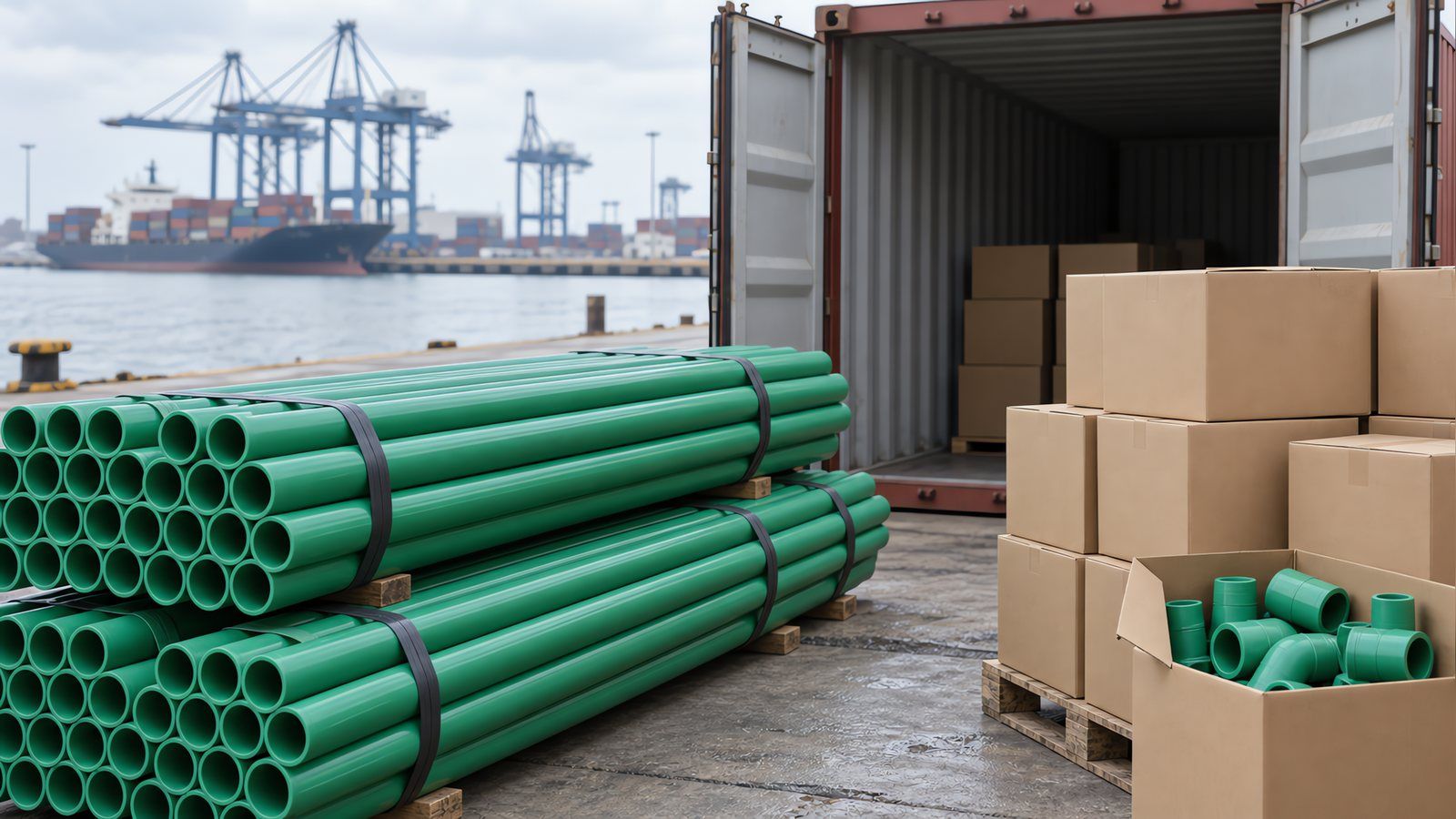
HS 3917.22 and 3917.40 sit in the ECOWAS CET 20% band in 14 of 15 member states. The bands, Ghana's 10-digit lines, and the levies that stack on top.
A clearing agent in Tema asks two things before he files a declaration: which tariff line, and at what rate. For a container of PP-R pressure pipe the answer is HS 3917.22 for the rigid pipe and HS 3917.40 for the fittings. Both sit in the ECOWAS Common External Tariff's 20% band in 14 of the 15 member states. Ghana's own customs system splits each of those subheadings into a line for water supply and a line for everything else, and dutied all four at 20%.
That 20% catches out buyers who expect pipe to be priced as an input, because the CET's 10% category is the one labelled intermediate goods and inputs. Two charges then ride on top before any national tax: a statistical fee of 1% and the ECOWAS community levy of 0.5%, both written into the CET itself. Below: the instrument in force, the band, the levy stack by country, and the one lawful route by which 20% becomes more.
Key Takeaways
- HS 3917.22 (rigid pipe of polymers of propylene) and HS 3917.40 (fittings) both carry 20% duty in 14 of the 15 ECOWAS states.
- Not the 10% band: the CET files plastic pipe as a final consumption good, not as an intermediate input.
- Ghana's ICUMS tariff shows 3917.22.10.00 and 3917.40.10.00 at 20% duty, 15% VAT and a 2.5% NHIL rate.
- A 1% statistical fee and the 0.5% ECOWAS community levy are written into the CET; UEMOA's 0.8% and the African Union's 0.2% are separate instruments.
- Nigeria adds 7% on the duty payable, a 1% and a 0.5% supervision levy, then 7.5% VAT on a duty-inclusive base.
- An Import Adjustment Tax can lawfully lift a 20% line: Nigeria carried 192 such lines in 2023, at 5% to 65%.
Before the tables below, it is worth watching the arithmetic run once. In this Eye on Port segment a Ghana Customs officer works through how a duty figure is arrived at on a declaration, which is the step that turns a band into a number on the entry.

Which ECOWAS Tariff Is In Force, and What It Is Built From
The tariff most secondary write-ups describe is the one ECOWAS adopted in October 2013 on the HS 2012 nomenclature. That is not the document a declaration is filed against today. ECOWAS Regulation C/REG.16/12/21 of 10 December 2021 rebuilt the category lists on the World Customs Organization's 2022 Harmonized System, and member administrations brought it into application during 2023. The Ivorian customs circular 2258 of 31 July 2023 fixes the date at 8 August 2023.
The rebuilt nomenclature runs to 6,381 tariff lines across the same five duty categories, which range from 0% to 35%. Migration was fiscally neutral by design: the circular states that splitting and creating tariff lines produced no change of category, so products kept their original duty. A line renumbered in 2023 did not move your pipe into a different band.
One sentence in that circular decides the arithmetic: taxation under the ECOWAS CET is ad valorem. Every percentage below multiplies a declared value, never a tonnage. Pipe is a volumetric cargo. The invoice value for one container, and with it the duty, moves with how tightly the box is packed and with the Incoterm the invoice uses.
| Band rate (%) | What the category covers | Verdict for plastic pipe |
|---|---|---|
| 0 | Essential social goods | Not here |
| 5 | Primary necessities, raw materials, capital goods | Not here |
| 10 | Intermediate goods and inputs | Only the casings lines, 3917.10 and 3917.39.10 |
| 20 | Final consumption, or finished, goods | Both pipe (3917.22) and fittings (3917.40) |
| 35 | Specific goods for economic development | Not here |
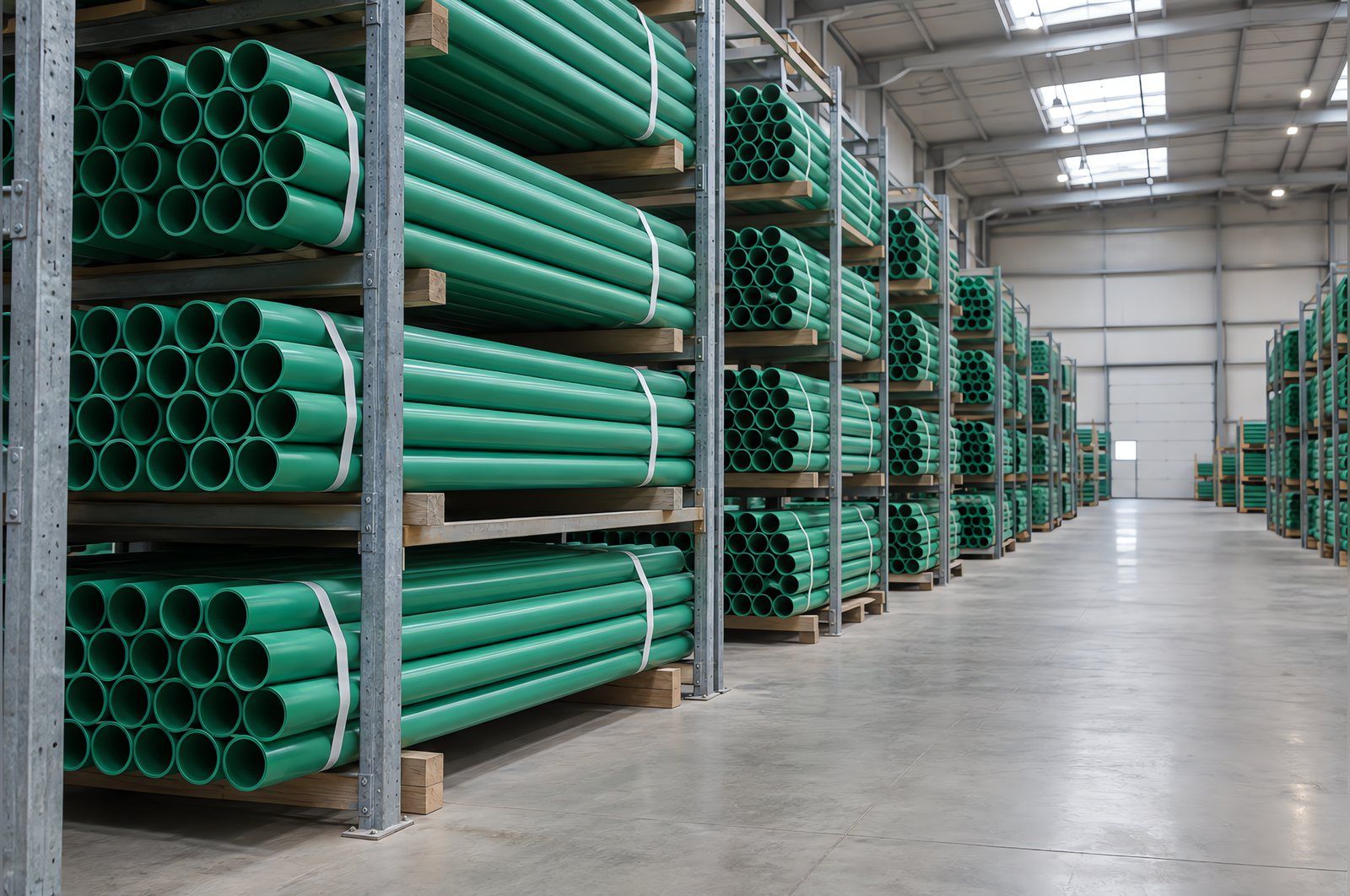
The Band Is 20%, Not 10%, and Fittings Pay the Same
Ghana's Integrated Customs Management System publishes a rate against every national line, which makes it the cleanest primary answer an importer can pull for free. Search heading 3917 and four lines matter: 3917.22.10.00 for water supply and 3917.22.90.00 other, then 3917.40.10.00 for water supply and 3917.40.90.00 other. All four return an import duty of 20%, VAT of 15% and an NHIL rate of 2.5%. The ten-digit split exists for statistics, and it changes no rate.
The reported schedules of the other members agree. On the 2023 data held in the World Bank's WITS database, 3917.22 and 3917.40 each carry a 20% applied duty in fourteen of the fifteen ECOWAS states. Two national lines sit under each subheading, with no spread between minimum and maximum. Cabo Verde is the single exception, reporting three lines at 0% to 5% on the older HS 2017 nomenclature.
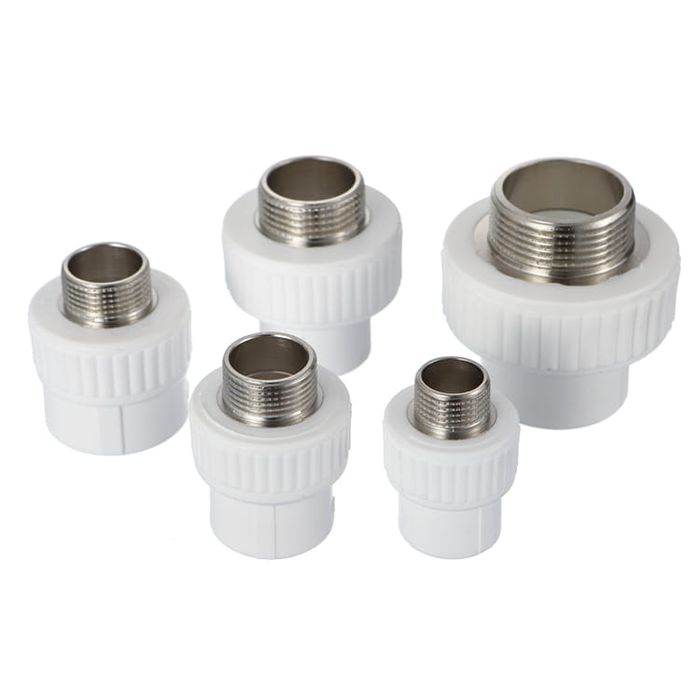
Two things follow. The claim that fittings attract more duty than pipe does not survive here. Of the three schedules in our HS code briefing only the United States showed a spread, 2.2 points. In West Africa the spread is zero. Declaring a fitting as pipe is still a false declaration; it is no longer a duty event. IFAN's PP-R range ships DN20 to DN160 pipe and its fittings on one invoice, so both subheadings appear on the same entry whatever the rate does.
Second, heading 3917 is not one band. The two lines covering artificial guts and casings, 3917.10.00.00 and 3917.39.10.00, sit at 10%. Every pipe, hose and fitting line beside them sits at 20%, the category the CET labels final consumption goods. Reading the band off the four-digit heading is how a landed-cost model ends up half right.
| ECOWAS member state | HS 3917.22 duty (%) | HS 3917.40 duty (%) | Nomenclature reported |
|---|---|---|---|
| Benin | 20 | 20 | HS 2022 |
| Burkina Faso | 20 | 20 | HS 2022 |
| Cabo Verde | 0–5 | 0–5 | HS 2017 |
| Côte d'Ivoire | 20 | 20 | HS 2017 |
| Gambia | 20 | 20 | HS 2022 |
| Ghana | 20 | 20 | HS 2022 |
| Guinea | 20 | 20 | HS 2022 |
| Guinea-Bissau | 20 | 20 | HS 2022 |
| Liberia | 20 | 20 | HS 2022 |
| Mali | 20 | 20 | HS 2022 |
| Niger | 20 | 20 | HS 2022 |
| Nigeria | 20 | 20 | HS 2022 |
| Senegal | 20 | 20 | HS 2022 |
| Sierra Leone | 20 | 20 | HS 2022 |
| Togo | 20 | 20 | HS 2022 |
What Rides On Top: Community Levies Against National Taxes
Two of the charges on a West African entry belong to the tariff instrument rather than to the country. The Ivorian circular records the distinction in one line: the statistical fee at 1% and the ECOWAS community levy at 0.5% are inscribed in the CET. Neither is a local invention, and a cost sheet that omits them is short by 1.5 points before a single national tax has been counted.
Two further charges in the same circular belong to other unions altogether. The UEMOA solidarity levy stands at 0.8% and the African Union levy at 0.2%, and both remain in force beside the CET. Ghana and Nigeria do not belong to UEMOA, so an Abidjan cost sheet cannot be reused at Tema or Apapa by changing the duty figure.
Everything past that point is national, and Nigeria shows how far it reaches. The WTO Secretariat's trade policy review of Nigeria records a 7% Port Development Levy charged on the duties payable rather than on the goods. Beside it sit a 1% CISS levy, a 0.5% community levy on imports from outside ECOWAS, and a 0.5% National Import Supervision Scheme levy. That review also notes that the 1% statistical levy the CET inscribes is no longer applied in Nigeria, so the regional instrument and one member's practice openly disagree.
VAT then compounds whatever came before it. Nigeria charges 7.5% on amounts inclusive of customs and excise duties and all other charges, which is the line most first-time landed-cost models understate. Ghana reset its own structure on 1 January 2026 under the Value Added Tax Act, 2025. The Revenue Authority states that VAT stays at 15% with NHIL and GETFund at 2.5% each, a total effective rate of 20%, and that the 1% COVID-19 Health Recovery Levy is abolished. The 1% is the rate fixed by that levy's own enacting Act, the COVID-19 Health Recovery Levy Act, 2021 (Act 1068), at section 1(4).
| Charge | Instrument that sets it | Rate (%) | Where it applies | Charged on |
|---|---|---|---|---|
| Import duty, 3917.22 and 3917.40 | ECOWAS CET | 20 | 14 of the 15 member states | Ad valorem |
| Statistical fee (RS) | Written into the CET | 1 | Côte d'Ivoire; Nigeria has dropped it | Ad valorem |
| ECOWAS community levy (PCC) | Written into the CET | 0.5 | Imports from outside ECOWAS | Ad valorem |
| UEMOA solidarity levy (PCS) | UEMOA, not ECOWAS | 0.8 | UEMOA members, including Côte d'Ivoire | Ad valorem |
| African Union levy (PUA) | African Union | 0.2 | Côte d'Ivoire | Ad valorem |
| Port Development Levy | Nigeria, national | 7 | Nigerian seaport imports | The duty payable |
| CISS and NISS supervision levies | Nigeria, national | 1 and 0.5 | Nigeria | Ad valorem |
| VAT | Nigeria, national | 7.5 | Nigeria | Duty-inclusive value |
| VAT with NHIL and GETFund | Ghana, national | 15 plus 2.5 plus 2.5 | Ghana, from 1 January 2026 | Taxable value |
| Charge | Côte d'Ivoire (% points) | Nigeria (% points) | Ghana (% points) |
|---|---|---|---|
| Duty | 20 | 20 | 20 |
| RS | 1 | 0 | — |
| PCC | 0.5 | 0.5 | — |
| PCS | 0.8 | 0 | 0 |
| PUA | 0.2 | — | — |
| PDL | — | 7 | — |
| CISS | — | 1 | — |
| NISS | — | 0.5 | — |
| VAT | — | 7.5 | 20 |
Where the 20% Can Still Move Under You
A member state may exceed its own CET band lawfully. The mechanism is the Import Adjustment Tax, permitted by ECOWAS Regulation C/REG.1/09/13 on supplementary protection measures, temporary in principle and limited to 3% of tariff lines. Nigeria carried such taxes on 192 lines in 2023, up from 97 in 2017, at rates between 5% and 65%. Regular duty runs from 0% to 35%; with an adjustment tax on top, effective duty reaches 70%.
Plastics fall inside the reach of that list. The WTO review records chemicals including plastics at 16% of all Nigerian adjustment taxes, spanning 5% to 65%. The list itself lives in an annual Fiscal Policy Measures circular rather than in the tariff book. A WITS line reading 20% therefore proves the CET band, not the absence of an adjustment tax on your own ten-digit code. Read the current circular line by line each time you price a shipment, and keep the declaration pack consistent with it.
Full application of the CET by every member has been pushed to 2028, which is the second reason one state's schedule can still read differently from its neighbour's. Cabo Verde's 0% to 5% lines are what that looks like in practice.
The only route to a zero rate is origin, and it does not reach imported pipe. Goods travel duty-free inside the bloc under the ECOWAS Trade Liberalization Scheme only with community origin. Origin is conferred by a change of tariff heading, or by a value-added test under which non-originating materials may not exceed 68% of the ex-works price. Pipe extruded in Asia satisfies neither test, and goods produced in free zones are excluded from origin altogether. For imported pipe the 20% therefore stands, and the lever left is the value declared per container. Price the band into a PP-R supply programme from the start rather than meeting it at the gate.
Our PP-R Range and What the Declaration Can Say
A declaration is only as good as the product description behind it. IFAN extrudes PP-R pipe from DN20 to DN160 in PN12.5 to PN25, in 100% virgin PP-R (PP-R 100 grade), to DIN 8077 and DIN 8078 and to ISO 15874, with batch certificates per shipment. Fittings, valves and composite pipe travel in the same container.
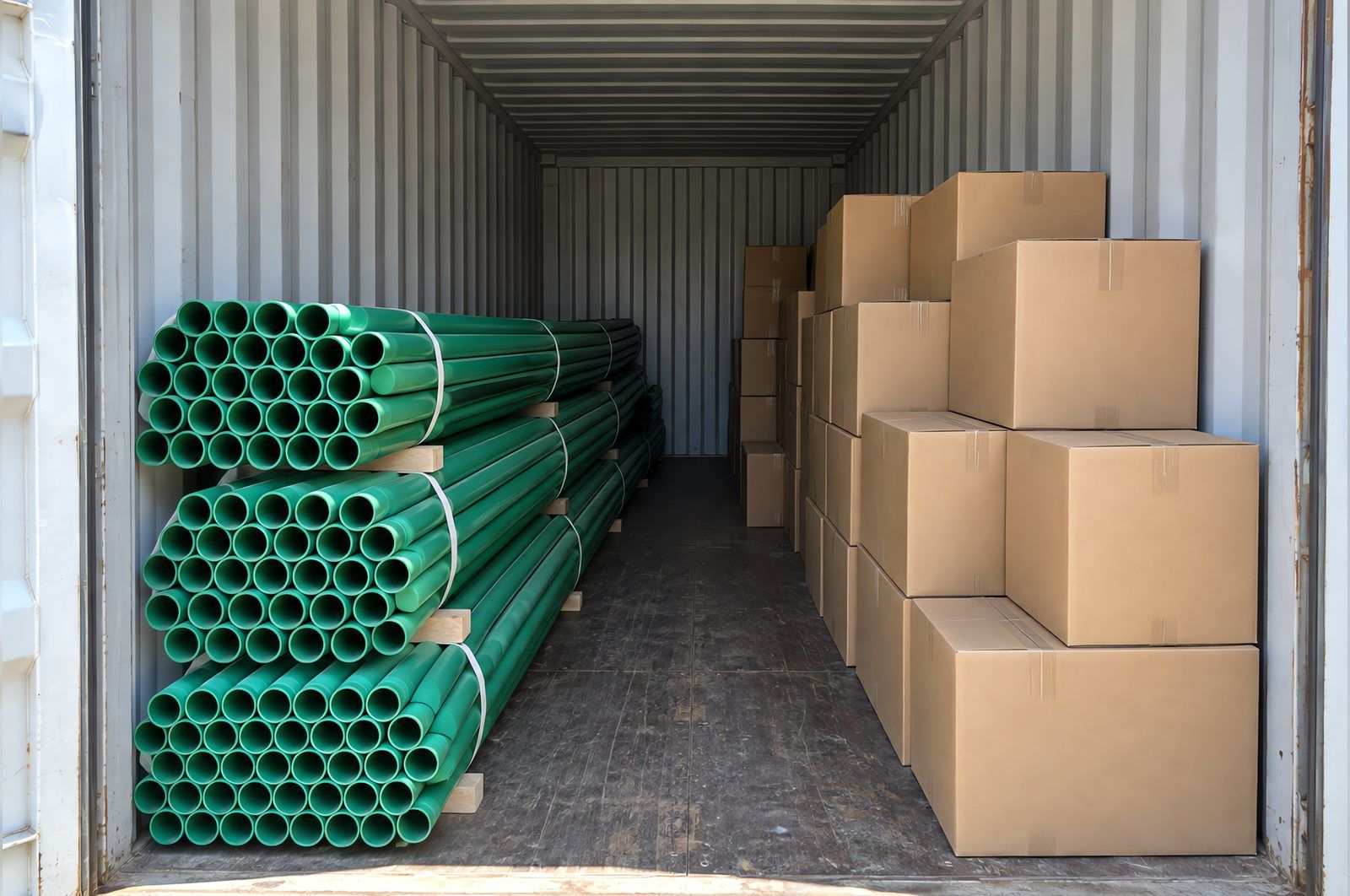
That description supplies the four things an agent needs to hold 3917.22 apart from 3917.40: the polymer, the rigid rather than flexible form, the pressure class, and the pipe-or-fitting call. Minimum order is one container with mixed sizes, so a single entry routinely carries both subheadings and therefore both 20% lines.
Conclusion
Three things settle the duty line before an order is confirmed. The full national code the agent will file, the destination state's own published charge list, and the current adjustment-tax circular for that code. Two of the three move more often than the CET does. Distributors and project buyers costing a first container of PP-R can ask a supplier for the invoice description and the product documents behind the classification. Build the stack from the tables above, not from a rate someone quoted once.
Frequently Asked Questions
What is the import duty on plastic pipe in West Africa?
Rigid plastic pipe under HS 3917.22 and fittings under HS 3917.40 both carry a 20% applied duty in 14 of the 15 ECOWAS states on the 2023 reported schedules. That is the final consumption goods band, not the 10% one.
Do plastic fittings pay more duty than pipe under the ECOWAS CET?
No. Ghana's ICUMS tariff returns 20% on 3917.22.10.00, 3917.22.90.00, 3917.40.10.00 and 3917.40.90.00 alike, and the other reported schedules show the same. The spread that exists in the United States schedule does not travel here.
Is the ECOWAS community levy the same as the African Union levy?
No. The ECOWAS community levy of 0.5% is written into the CET and applies to imports from outside the bloc. The African Union levy of 0.2% and the UEMOA solidarity levy of 0.8% are separate instruments with their own memberships.
Which version of the ECOWAS CET is current?
The version built on the 2022 Harmonized System under ECOWAS Regulation C/REG.16/12/21 of 10 December 2021, applied in Côte d'Ivoire from 8 August 2023 across 6,381 tariff lines. Full application by every member runs to 2028.
Can a 20% CET line end up costing more than 20%?
Yes. An Import Adjustment Tax may be added to a line under ECOWAS Regulation C/REG.1/09/13; Nigeria carried 192 such lines in 2023 at rates of 5% to 65%, and chemicals including plastics made up 16% of them.
Sources
- ECOWAS Trade Information System — ECOWAS Common External Tariff (CET), band structure
- Direction Générale des Douanes de Côte d'Ivoire — Circulaire n°2258 du 31 juillet 2023, application of the CET on HS 2022, statistical fee, community levy, UEMOA and African Union levies
- Ghana Customs — ICUMS HS code and tariff database, lines under heading 3917
- Ghana Revenue Authority — Customs Tariffs and Levies and the notice on the Value Added Tax Act, 2025
- Parliament of Ghana — COVID-19 Health Recovery Levy Act, 2021 (Act 1068), section 1(4), the 1% rate of the levy now abolished
- WTO Secretariat — Trade Policy Review: Nigeria, WT/TPR/S/462, paragraphs 3.29 to 3.46
- World Bank — World Integrated Trade Solution, reported applied tariffs for 3917.22 and 3917.40
Rates were read from the sources above on 12 September 2026 and are reproduced for guidance. Tariff schedules, levies and VAT rules are amended periodically and national codes differ by country. Confirm the current rate and the full national code against the destination country's own tariff before filing a declaration.
Related Briefings
Sea Freight for Pipe from China to West and East Africa: What Drives the Number

PEX vs Multilayer Pipe for Hot Water: Which Holds Dimension at 80°C
