
PPR Pipe HS Code (3917.22): What Importers Must Get Right

PPR pipe is HS 3917.22, fittings 3917.40 — same invoice, different duty. Verified US, UK and EAC rates, plus the CBP ruling that moved an 8-inch part.
A container of PP-R arrives at the port and the entry is lodged with one commodity code across the whole invoice. Nothing beeps. Nothing is held. Eighteen months later a post-clearance audit opens the file, and the question the officer asks is not whether the goods were plastic pipe — it is why four pallets of elbows, tees and sockets were declared under the code that describes pipe.
That is the shape of most classification problems in this heading. They do not stop a container. They surface later, on someone else's timetable, with interest attached.
The good news is that the part of the code that matters most is short, fixed, and identical in every country that applies the Harmonized System. The part that trips importers is what happens after digit six — and a myth about fittings that turns out to be true in exactly one of the three tariffs checked for this article.
Key Takeaways
- PP-R pipe is 3917.22. Rigid tubes and pipes of polymers of propylene. Those six digits are the same in every HS country.
- PP-R fittings are 3917.40. A different subheading from the pipe they join. One invoice with pipe and fittings on it needs two codes.
- Harmonisation ends at digit six. Digits seven onward are national. The US writes a 10-digit line, the UK writes a 10-digit line with different content, the East African Community writes eight.
- "Fittings attract more duty" is a US observation, not a rule. United States 3.1% vs 5.3%. United Kingdom 6.00% vs 6.00%. East African Community 25% vs 25%.
- Length can decide the subheading. US Customs has treated cut-to-length sections under 12 inches as fittings since 1992, and used that practice in 2016 to move a polypropylene part off the pipe code.
- Diary 1 January 2028. HS 2028 enters into force that day.
On this page
- The short answer: 3917.22 for the pipe, 3917.40 for the fittings
- What the law actually says a pipe is
- Where the global code stops: the six-digit boundary
- Do fittings really cost more duty? Three tariffs, three different answers
- The reclassification that cost an importer 2.2 points
- Checking your own declaration line by line
- Editions, expiry dates and the 2028 change
- Frequently asked questions
The Short Answer: 3917.22 for the Pipe, 3917.40 for the Fittings
PP-R pipe classifies under subheading 3917.22. PP-R fittings — sockets, elbows, tees, reducers, valve bodies — classify under subheading 3917.40. Both live inside heading 39.17, and both are correct at the same time on the same invoice.
The heading text in the World Customs Organization's HS 2022 Nomenclature reads: "Tubes, pipes and hoses, and fittings therefor (for example, joints, elbows, flanges), of plastics." Read that phrasing closely, because it is doing something specific. It gathers pipe and its fittings under one heading — and then the subheading structure immediately separates them again.
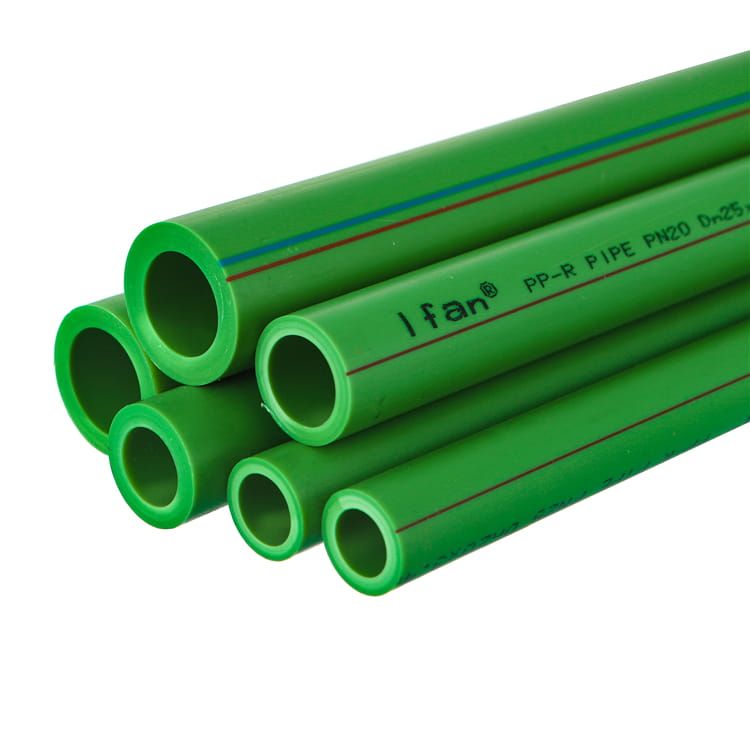
PP-R is a random copolymer of propylene, which is why it lands in the propylene line rather than the ethylene or vinyl chloride lines beside it. The material determines the subheading, and the subheading follows the polymer, not the brand name or the application.
Those six digits are worth more than they look. Heading 39.17 resolves into ten subheadings at 6-digit level, and getting the right one is the entire international part of the job — everything after that is your destination country's paperwork. Get the polymer wrong and you are not filing a slightly imprecise code; you are filing a different product.
Here is the full 6-digit structure under heading 39.17, quoted from the HS 2022 Nomenclature. The indentation is legally meaningful: the four "rigid" subheadings sit under one group heading, the flexible ones under another, and fittings stand alone at the end.
| Subheading | HS 2022 text | What it is in the yard |
|---|---|---|
| 3917.10 | Artificial guts (sausage casings) of hardened protein or of cellulosic materials | Not plumbing at all |
| 3917.21 | Rigid — of polymers of ethylene | HDPE and PE pressure pipe |
| 3917.22 | Rigid — of polymers of propylene | PP-R, PP-H, PP-B pipe |
| 3917.23 | Rigid — of polymers of vinyl chloride | uPVC and PVC-U pipe |
| 3917.29 | Rigid — of other plastics | CPVC, PEX, PE-RT and the rest |
| 3917.31 | Flexible, minimum burst pressure of 27.6 MPa | High-pressure hose |
| 3917.32 / .33 / .39 | Other tubes, pipes and hoses — without fittings / with fittings / other | Flexible hose, assemblies |
| 3917.40 | Fittings | Every socket, elbow, tee, reducer, flange |
Notice what 3917.40 does not say. It does not say "fittings of polypropylene" or "fittings of PVC". At six digits, fittings are not split by material at all — a PP-R elbow and a uPVC elbow share a subheading, while a PP-R pipe and a uPVC pipe do not. That asymmetry surprises people who assume the nomenclature is symmetrical, and it is the reason a mixed container needs its lines grouped by form first and material second.
What the Law Actually Says a Pipe Is
Most pages that publish these codes stop at the code. The legal text underneath is what a customs officer will actually reason from, and for heading 39.17 it is unusually specific.
Note 8 to Chapter 39 of the HS 2022 Nomenclature reads, in full:
"For the purposes of heading 39.17, the expression 'tubes, pipes and hoses' means hollow products, whether semi-manufactures or finished products, of a kind generally used for conveying, conducting or distributing gases or liquids (for example, ribbed garden hose, perforated tubes). This expression also includes sausage casings and other lay-flat tubing. However, except for the last-mentioned, those having an internal cross-section other than round, oval, rectangular (in which the length does not exceed 1.5 times the width) or in the shape of a regular polygon are not to be regarded as tubes, pipes and hoses but as profile shapes."
Two things in that paragraph decide real cases.
The first is purpose: hollow products of a kind generally used for conveying, conducting or distributing gases or liquids. A hollow plastic extrusion that is not of that kind is not a pipe here, however much it looks like one.
The second is the cross-section test, and it is the only rule in this subject that removes a product from heading 39.17 altogether. The internal cross-section must be round, oval, rectangular, or a regular polygon. Anything else — and the note is explicit — is a profile shape, which belongs to heading 39.16 instead of 39.17.
Inside the rectangular allowance there is a further constraint that is easy to skim past: the length must not exceed 1.5 times the width. Work it through on a real bore. A rectangular internal section of 30 mm by 20 mm gives a ratio of 1.5 and sits exactly on the limit. Widen the same part to 40 mm by 20 mm and the ratio is 2.0 — it has failed the test, and it is no longer a badly classified pipe. It is not a pipe at all, and it moves to heading 39.16 as a profile shape.
For a straightforward PP-R plumbing programme none of this bites — round bore, water service, squarely inside the note. It matters when a range widens into ducting, cable conduit with a shaped bore, or profiled drainage channel, because those are the products that quietly leave the heading while the purchase order still calls them pipe.
Where the Global Code Stops: The Six-Digit Boundary
This is the single most useful thing to understand about an HS code, and almost nothing on the first page of search results says it.
The first six digits are common to every country applying the Harmonized System. Digits seven onward are written nationally. When a Chinese supplier's export declaration shows one code and an import broker enters a different one, both can be right — they are quoting different halves of the same classification.
The same product family, in three real tariff schedules:
| Jurisdiction | Instrument | Line for rigid PP pipe | Digits |
|---|---|---|---|
| United States | HTSUS | 3917.22.00.00 | 10 |
| United Kingdom | UK Integrated Online Tariff | 3917229090 | 10 |
| East African Community | EAC CET 2022 | 3917.22.00 | 8 |
The UK schedule shows how much can hide in those national digits. Under 3917.22 it does not simply run to a single "other" line — it splits first on a criterion that does not exist at six digits at all: 3917221000 covers pipe that is "seamless and of a length exceeding the maximum cross-sectional dimension, whether or not surface-worked, but not otherwise worked", while 3917229000 covers everything else. Each of those then subdivides again, including lines reserved for use in certain types of aircraft. The same seamless split repeats under the ethylene and vinyl-chloride subheadings.
Nothing about a seamless-versus-other distinction is visible from "3917.22". An importer who copies six digits from a supplier's proforma and assumes the job is done has not finished the classification — they have finished the international part of it.
When your supplier's code and your broker's code disagree. Compare only the first six digits. If those match, there is no dispute — the exporter has completed their national suffix and you must complete yours against the destination schedule. If the first six digits differ, one of you has the product wrong, and that is worth resolving before the goods sail rather than at the border.
Do Fittings Really Cost More Duty? Three Tariffs, Three Different Answers
Search this subject and you will be told, repeatedly and confidently, that fittings carry a higher duty rate than pipe and that misclassifying them is therefore expensive. It is worth checking that claim against actual tariff schedules rather than repeating it, because it holds in one of the three checked here and fails in the other two.
| Tariff | Pipe (3917.22) | Fittings (3917.40) | Spread |
|---|---|---|---|
| United States (HTSUS, general rate) | 3.1% | 5.3% | 2.2 points — fittings higher |
| United Kingdom (third country duty) | 6.00% | 6.00% | None |
| East African Community (CET 2022) | 25% | 25% | None |
The US spread is real: the HTSUS general rate is 3.1% on 3917.22.00.00 and 5.3% on 3917.40. That single comparison, endlessly requoted, is where the global rule came from.
It does not travel. In the UK Integrated Online Tariff, commodity 3917229090 (rigid PP pipe) and commodity 3917400099 (fittings) both carry a third country duty of 6.00%, with VAT of 20.00% recorded separately against each. The classification still has to be right — but getting it wrong does not, by itself, change the duty owed.
The East African Community is the same story at four times the rate. Under the EAC Common External Tariff 2022 version, tariff number 3917.22.00 attracts 25% and tariff number 3917.40.00 attracts 25%. In fact every rigid pipe line in that heading — ethylene, propylene, vinyl chloride and other — sits at 25%, alongside fittings. The EAC applies a four-band structure of 0%, 10%, 25% and a maximum of 35%, in force since 1 July 2022, and plastic pipe and its fittings both sit in the 25% band.
So the honest version of the advice is narrower and more useful than the myth: classify correctly because the classification is a legal declaration, not because it always changes the bill. Whether it changes the bill depends entirely on where the container is landing. For a distributor comparing landed cost across two markets, this is exactly the kind of asymmetry that makes a spreadsheet built on one country's rates misleading in another — which is also why the choice of Incoterm, and therefore the customs value the rate is applied to, deserves its own look.
One further caution on reading any headline rate. Against that same UK fittings line, the tariff records several measures at 0.00% alongside the 6.00% — a tariff preference, an airworthiness suspension, and a suspension for goods destined for certain categories of ships, vessels and drilling or production platforms. The headline third country duty is the default, not automatically the rate paid. Origin and end-use can both move it.
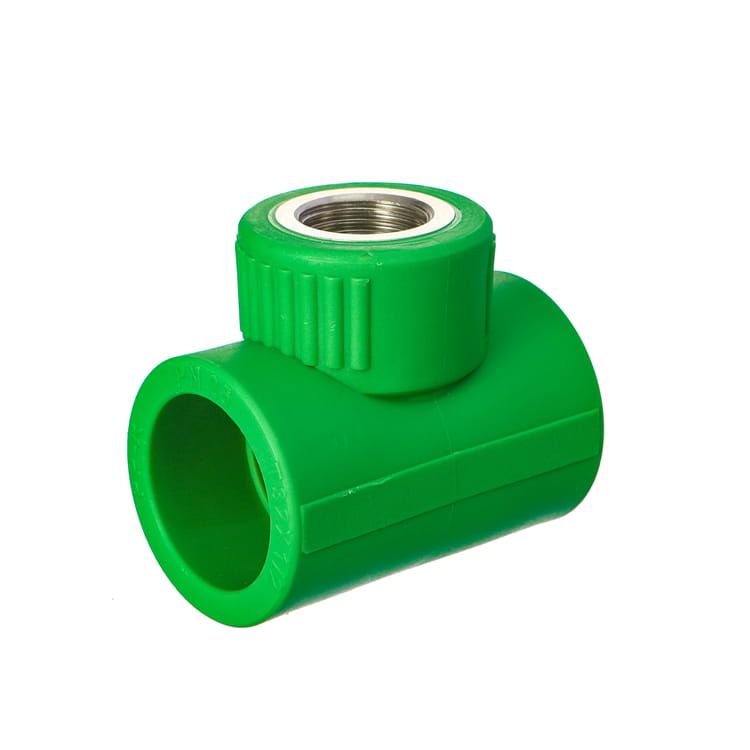
If you are sourcing PP-R and want the pipe and fittings lines separated cleanly on the export paperwork from the outset, IFAN's PP-R supplier page sets out the range it produces on both sides of that split — DN20 to DN160 pipe in PN12.5 through PN25, plus the elbows, tees, couplings and valves that travel with it.
The Reclassification That Cost an Importer 2.2 Points
Classification arguments in this heading are rarely about material. They are about whether a given object is a length of pipe or a fitting — and there is a documented US case that shows exactly how that call gets made, and reversed.
In December 2012, US Customs and Border Protection issued ruling NY N235599 covering four plastic plumbing parts. One of them, product PP9816W, was a polypropylene branch tailpiece 8 inches long with a fitting at one end and a branch off the bottom, designed to connect a dishwasher drain into a drain assembly. CBP classified it under 3917.22.0000 — as pipe.
CBP later reviewed that ruling and concluded it was wrong. On 20 July 2016, ruling HQ H260228 modified it — the full text is public in CBP's rulings database (CROSS) under that number, so any importer can read the reasoning first-hand. The holding is short: the branch tailpiece is "properly classified as a fitting rather than a pipe", under subheading 3917.40.00, duty rate 5.3 percent ad valorem.
The reasoning is what makes this case worth an importer's attention.
- The dispute was never about the heading. CBP recorded that there was no dispute the product belonged in heading 3917. The argument was entirely at six-digit level, which meant General Rule of Interpretation 6 governed — the rule that subheadings are compared only at the same level.
- "Fitting" is not defined in the tariff. Neither the HTSUS nor the Explanatory Notes define it. CBP therefore fell back on common and commercial meaning, citing Nippon Kogasku (USA) Inc. v. United States and C.J. Tower & Sons v. United States, and consulted a dictionary definition of "fitting" as an accessory or standardised part entering into the construction of a water or gas supply installation.
- Then it applied a length rule. CBP stated that for over 25 years it has relied on the plumbing trade practice that "cut-to-length steel pipes sections, less than 12 inches in length, are regarded as fittings and not tubes or pipes", citing HQ 951940 of 31 July 1992. The tailpiece measured 8 inches. Note what CBP did there: the precedent it quoted is worded about steel, and it applied the same 12-inch practice to a polypropylene part without pausing over the material. That is the reasoning an importer of plastic pipe has to plan around — the length test travels across materials.
An 8-inch part moved from a 3.1% line to a 5.3% line on a trade practice that appears nowhere in the nomenclature text. That is the practical lesson: the subheading boundary between pipe and fitting is decided by function and, in US practice, by length — not by which extruder the part came off.
The same boundary shows up in UK binding rulings, which are published and searchable. Advance Tariff Ruling 600006355, issued 2 May 2023, classified a four-piece set of polypropylene hose pipe fittings on a blister card to commodity code 3917400099 by General Interpretative Rule 1. Advance Tariff Ruling 600007472, issued 15 June 2023, did the same for a dual male tap connector of frost-resistant plastic, threaded for a tap at one end and narrowed for a hosepipe at the other.
Short, threaded, made to join things: fitting. That is the pattern across all three rulings, in two jurisdictions.
Checking Your Own Declaration Line by Line
Here is a sequence you can run against a packing list this afternoon. It takes about twenty minutes on a typical mixed PP-R container.
- Split the packing list into two groups before anything else. Pipe lines in one column, fitting lines in the other. Do this by product form, not by material — every socket, elbow, tee, reducer, coupling, union and valve body goes in the fittings column regardless of what it is moulded from.
- Check anything short. Any pipe-shaped item under about 12 inches deserves a second look, especially if it is threaded, socketed or purpose-made to join two other things. That is where the pipe/fitting boundary actually sits in practice.
- Confirm the material against the subheading. Propylene to 3917.22, ethylene to 3917.21, vinyl chloride to 3917.23, everything else rigid to 3917.29. Fittings all go to 3917.40 regardless of material.
- Complete the national digits against the destination schedule. Not the origin schedule, and not a code copied from a supplier's proforma. Write down the date you checked and the schedule you checked it in.
- Read your own invoice description back against the code wording. The description should make the code obvious to someone who has never seen the goods. "PPR pipe fittings, PP-R elbows and tees, DN25" reads consistently with 3917.40. "Plumbing materials" reads consistently with nothing, and invites the officer to form their own view.
- If a line is genuinely borderline, ask for a ruling instead of guessing. Both jurisdictions cited above publish binding rulings precisely so importers do not have to gamble. A ruling is slow, and it is still faster than a post-clearance reassessment.
To see what the difference is worth, take a worked illustration. Assume a consignment of PP-R fittings with a declared customs value of USD 30,000 entering the United States — the value is an assumption for the arithmetic, not a market price.
| Declared as | Rate | Duty on USD 30,000 |
|---|---|---|
| Fittings — 3917.40 (correct) | 5.3% | USD 1,590 |
| Pipe — 3917.22 (incorrect) | 3.1% | USD 930 |
| Shortfall recoverable on reassessment | — | USD 660 on that line |
Six hundred and sixty dollars is not, on its own, a crisis. The problem is that the same error usually repeats across every shipment on the same product template, so an audit does not find one line — it finds a pattern, across however many entries sit inside the authority's review window. Run this check on the paperwork you are about to reuse, not the paperwork you already filed.
Once the codes are settled, the remaining friction is documentary rather than analytical: the documents your clearing agent will ask for have to agree with each other line by line, and the code is what they have to agree about.

IFAN's PP-R range under test. Worth watching with the classification question in mind: the pipe and the fittings are manufactured and tested as separate product families, which is precisely why the tariff treats them as separate subheadings.
Editions, Expiry Dates and the 2028 Change
An HS code is not a permanent fact about a product. It is a reading of a specific edition of a specific schedule, and both move.
The edition in force is HS 2022. The World Customs Organization amends the nomenclature on a five-year cycle; the editions before this one were 2017, 2012, 2007 and 2002. Any code you quote should be tied to an edition, because "3917.22 under HS 2022" is a checkable statement and "3917.22" on its own is not.
HS 2028 enters into force on 1 January 2028. It is the eighth edition and the outcome of the WCO's 7th HS Review Cycle, formally adopted at the end of 2025 with the recommendation published in January 2026 — which is what leaves the two-year implementation window importers are currently inside.
A caution worth stating plainly: the WCO's own page for the 2028 edition does not publish heading-level detail, so this article does not claim that heading 39.17 either changes or survives untouched. What it does say is that correlation tables between HS 2022 and HS 2028 are the thing to check, and that the sensible time to check them is before the change, not after a rejected entry.
Binding rulings expire too, and the two UK rulings above make good examples of the timescale. Ruling 600006355 was issued 2 May 2023 and ran to 1 May 2026. Ruling 600007472 was issued 15 June 2023 and ran to 14 June 2026. Both are now past their validity dates — still useful as reasoning, no longer usable as authority. A ruling someone forwards you is evidence of how an authority thought about a product; it is only protection if it is yours, current, and about your goods.
What to re-verify, and when
- Every shipment: that the pipe lines and fitting lines are split, and that the invoice description matches the code wording.
- Annually, or when a rate changes: the national duty rate in each destination market, from that country's own schedule.
- Before 1 January 2028: your product codes against the HS 2022 to HS 2028 correlation tables.
- Whenever a product changes shape: Chapter 39 Note 8, if a new line has a non-round bore or is not clearly for conveying liquids.
Where this leaves you
Classification for PP-R is not hard, but it is precise, and the precision sits in three places rather than one. Get the material right and 3917.22 follows. Get the form right and the fittings go to 3917.40 instead of travelling under the pipe code. Get the destination's national digits from the destination's own schedule, and record when you looked.
The duty consequence of getting the second one wrong varies more than the internet suggests — 2.2 points in the United States, nothing at all in the UK or the East African Community — but the declaration is a legal statement in all three, and the country-specific rates are the reason a landed-cost model built for one market should never be reused for another. For the national application of all this in West Africa, the Nigeria import guide walks the ECOWAS side of it, including the certification steps that happen before the goods ship.
Frequently Asked Questions
What is the HS code for PPR pipe?
PP-R pipe classifies under HS subheading 3917.22 — rigid tubes and pipes of polymers of propylene. Those six digits apply in every country using the Harmonized System. Your destination country adds its own digits after that.
Do PPR fittings use the same HS code as PPR pipe?
No. Fittings classify under 3917.40, pipe under 3917.22. They share heading 39.17 but not the subheading, so a container holding both needs two codes on the declaration.
Is the duty rate higher for fittings than for pipe?
It depends on the country. In the US HTSUS the general rates are 3.1% for 3917.22 and 5.3% for 3917.40. In the UK both are 6.00%. Under the EAC CET 2022 both are 25%. Check the destination schedule rather than assuming.
Why does my supplier's HS code have a different number of digits than mine?
Because only the first six digits are internationally harmonised. National schedules run to eight or ten digits and are written independently. If your first six digits match your supplier's, there is no conflict to resolve.
When is a short piece of pipe treated as a fitting?
In US practice, cut-to-length sections under 12 inches have been regarded as fittings since 1992. CBP applied this in ruling HQ H260228 to reclassify an 8-inch polypropylene branch tailpiece from 3917.22 to 3917.40.
Which HS edition is current, and when does it change?
HS 2022 is in force. HS 2028, the eighth edition, enters into force on 1 January 2028. Check your codes against the HS 2022 to HS 2028 correlation tables before that date.
Can a plastic tube fall outside heading 3917 altogether?
Yes. Chapter 39 Note 8 requires an internal cross-section that is round, oval, rectangular (length no more than 1.5 times the width), or a regular polygon. Anything else is a profile shape under heading 39.16 instead.
Sources
- World Customs Organization — HS Nomenclature 2022 Edition, Chapter 39 (heading 39.17 schedule and Note 8)
- World Customs Organization — HS Nomenclature 2028 Edition
- US International Trade Commission — Harmonized Tariff Schedule of the United States (subheadings 3917.22 and 3917.40)
- US Customs and Border Protection — Ruling HQ H260228, 20 July 2016
- HM Revenue & Customs — UK Integrated Online Tariff, commodity 3917400099 and Advance Tariff Ruling 600006355
- East African Community — Common External Tariff, 2022 Version (published by the Kenya Revenue Authority)
Duty rates and commodity codes were retrieved from the sources above on 28 August 2026 and are reproduced for guidance. Tariff schedules are amended periodically and national digits differ by country. Confirm the current rate and the full national code against the destination country's own tariff before filing a declaration, and seek a binding ruling where a line is genuinely borderline.