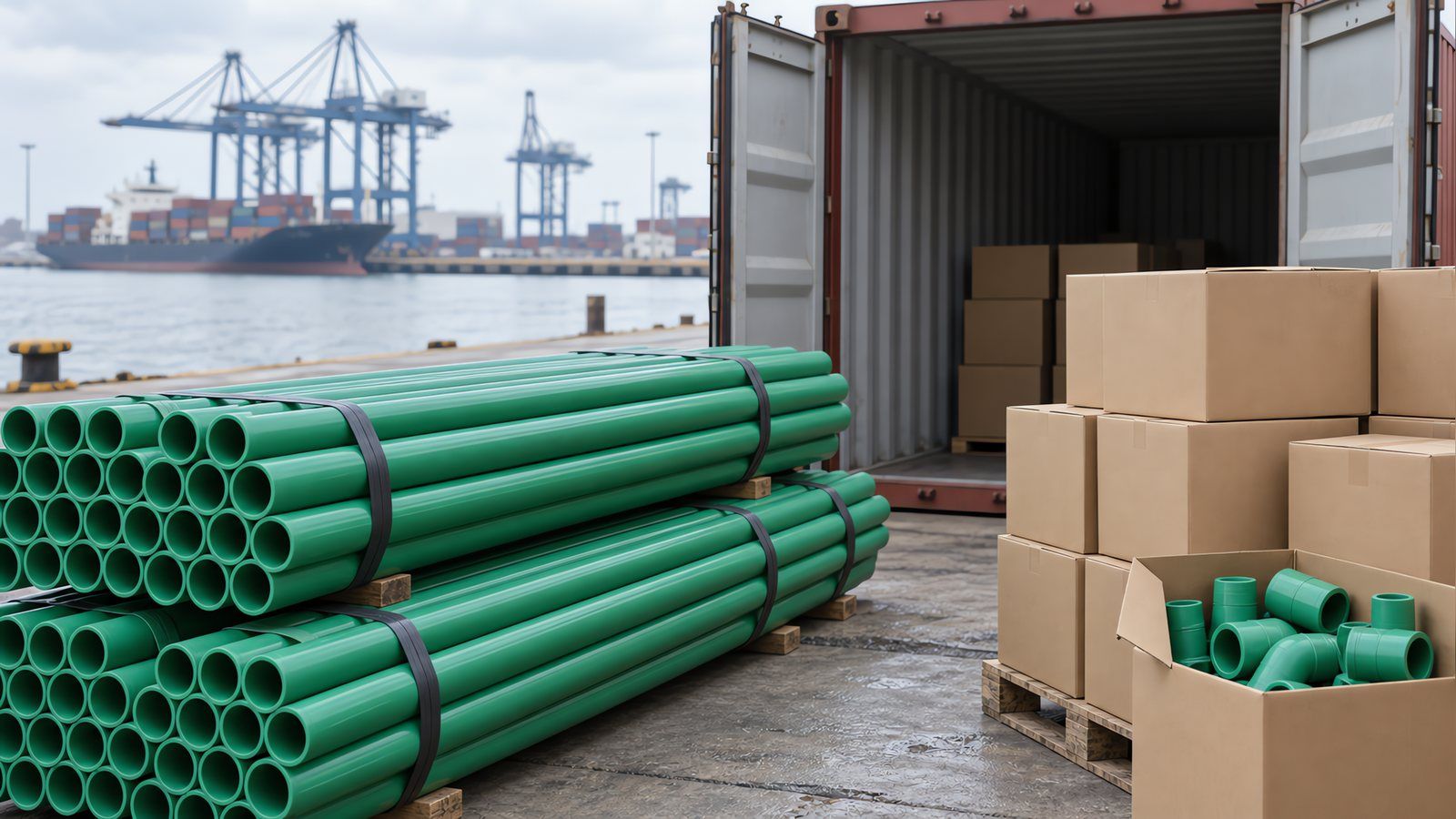

Importing PP-R Pipe to Tanzania: TBS PVoC, TZS 2344 and the TRA Levy Stack
PP-R enters Tanzania on HS 3917.22.00 under TBS PVoC and is judged against TZS 2344-2:2019. Routes, fees, the 3-month CoC clock and TRA's levies.
A container of PP-R reaches Dar es Salaam, the paperwork looks complete, and it is stopped because the Certificate of Conformity was issued four months earlier. That is a scheduling failure, not a compliance one.
The short answer: PP-R pipe enters Mainland Tanzania on HS 3917.22.00, a regulated line under the Tanzania Bureau of Standards PVoC scheme, and is judged against TZS 2344-2:2019 / ISO 15874-2:2013, a compulsory standard. A Certificate of Conformity must be issued before shipment by a provider contracted for your export zone, authenticated by TBS, and it expires three months after issue. Arriving without one costs 15% of the invoice value TRA assesses, plus destination-inspection charges.
Key Takeaways
- PP-R is judged against TZS 2344 Parts 1, 2, 3 and 5 (2019), adopting ISO 15874 Parts 1, 2, 3 and 5 (2013). All four sit on the TBS compulsory list as of October 2025.
- HS 3917.22.00 is item 1005 on the PVoC regulated list dated 29 March 2025. Heading 3917 appears nowhere on the destination-inspection list of that date.
- Five providers are contracted for the China zone. Bureau Veritas is not among them under the 2025–2028 general-goods contract.
- The inspection fee is 0.50%, 0.45% or 0.25% of declared FOB by route, collared at USD 250 minimum and USD 5,000 maximum.
- Railway Development Levy is 2% of CIF in TRA's 2025/2026 schedule. The 1.5% figure still published elsewhere is out of date.
The Standard Your PP-R Is Judged Against Is TZS 2344, and It Is Compulsory
Every inspection-agency page says goods must meet “relevant Tanzanian standards”. None names one. For polypropylene hot- and cold-water piping the answer is published: items 1080 to 1083 of the TBS List of New and Revised Compulsory Standards as of October 2025 are TZS 2344-1:2019 (general), TZS 2344-2:2019 (pipes), TZS 2344-3:2019 (fittings) and TZS 2344-5:2019 (fitness for purpose). Each adopts the matching part of ISO 15874:2013.
Compulsory means enforceable at the border, and the scheme rests on section 4(1)(s) of the Standards Act No. 2 of 2009. Writing “complies with ISO 15874” on a Request for Certification is weaker than writing the TZS number the inspector works from. Our own PP-R, DN20 to DN160 in PN12.5 to PN25, is extruded and tested to DIN 8077/8078 and ISO 15874 with a batch certificate per shipment, and the inspector reads the batch certificate, not the brochure. Our HS classification guide covers how pipe and fittings split across lines.
Check Your HS Line First: 3917.22.00 Is a Pre-Shipment Case, Not a Destination Case
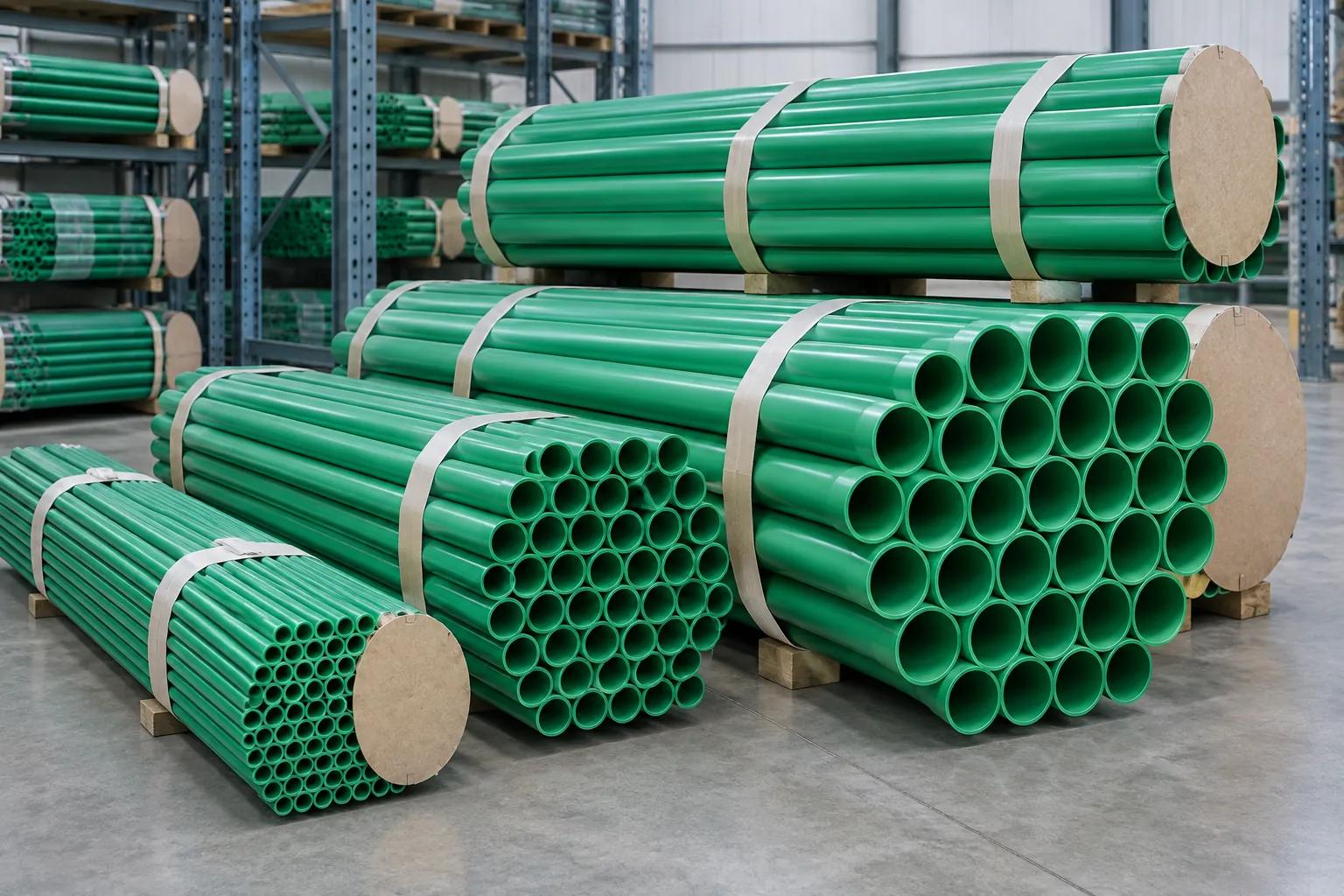
TBS runs two regimes, and your tariff line decides which one you are in. On the PVoC Regulated HS Codes list dated 29 March 2025, HS 3917.22.00 — rigid tubes, pipes and hoses of polymers of propylene — is item 1005. Its neighbours are 3917.21.00 for polyethylene at 1004 and 3917.23.00 for PVC at 1006, so a container mixing PP-R from 20 mm to 160 mm outside diameter with HDPE and uPVC is regulated on three lines at once.
Search the destination-inspection list published the same day and heading 3917 returns nothing. That absence is the operative fact: PP-R cannot be handled by routine inspection on arrival. Pre-shipment certification is the only ordinary route, and a consignment arriving without a certificate becomes a penalty case. Which answers the question buyers keep asking: PVoC is the scheme, the Certificate of Conformity is the document it issues.
Which Inspector Your Chinese Factory Can Use, and Which Route to Ask For
TBS divides the world into zones and contracts providers per zone. Zone 17 covers China Mainland, Macau, Hong Kong, Mongolia and Taiwan, and on the contracted-provider list read 16 September 2026 it names five: CCIC, Intertek International, SGS, TUV Rheinland Middle East FZE, and World Standardization Certification and Testing Group. Two dates bound that list: the general-goods contract covering Intertek, SGS and TUV-Rheinland runs 2025–2028, and the separate CCIC agreement, renewed from April 2022, ends April 2027. Summaries naming SGS and Bureau Veritas describe the 2012 programme, three contracts out of date.
| Route | Fee (% of declared FOB) | What it requires | Best for |
|---|---|---|---|
| A — shipment inspection | 0.50 | Inspection plus testing every shipment; containers sealed with tamper-proof seals | A first order, or buying via a trader |
| B — product registration | 0.45 | Annual registration, renewable; monitoring at least twice a year | Repeat orders of one DN and PN range |
| C — product licensing | 0.25 | Factory audit and licensing per ISO Guide 28; manufacturers only | High volume bought direct from the factory |
Source: TBS, Guideline for the PVoC Programme 2025 and the provider zone list, read 16 September 2026. Fee collar: USD 250 minimum, USD 5,000 maximum per certificate.
Route C halves the fee against Route A, but it is open only to manufacturers who can show an audited quality system. The route you get is decided by who you buy from, not by what you ask for.
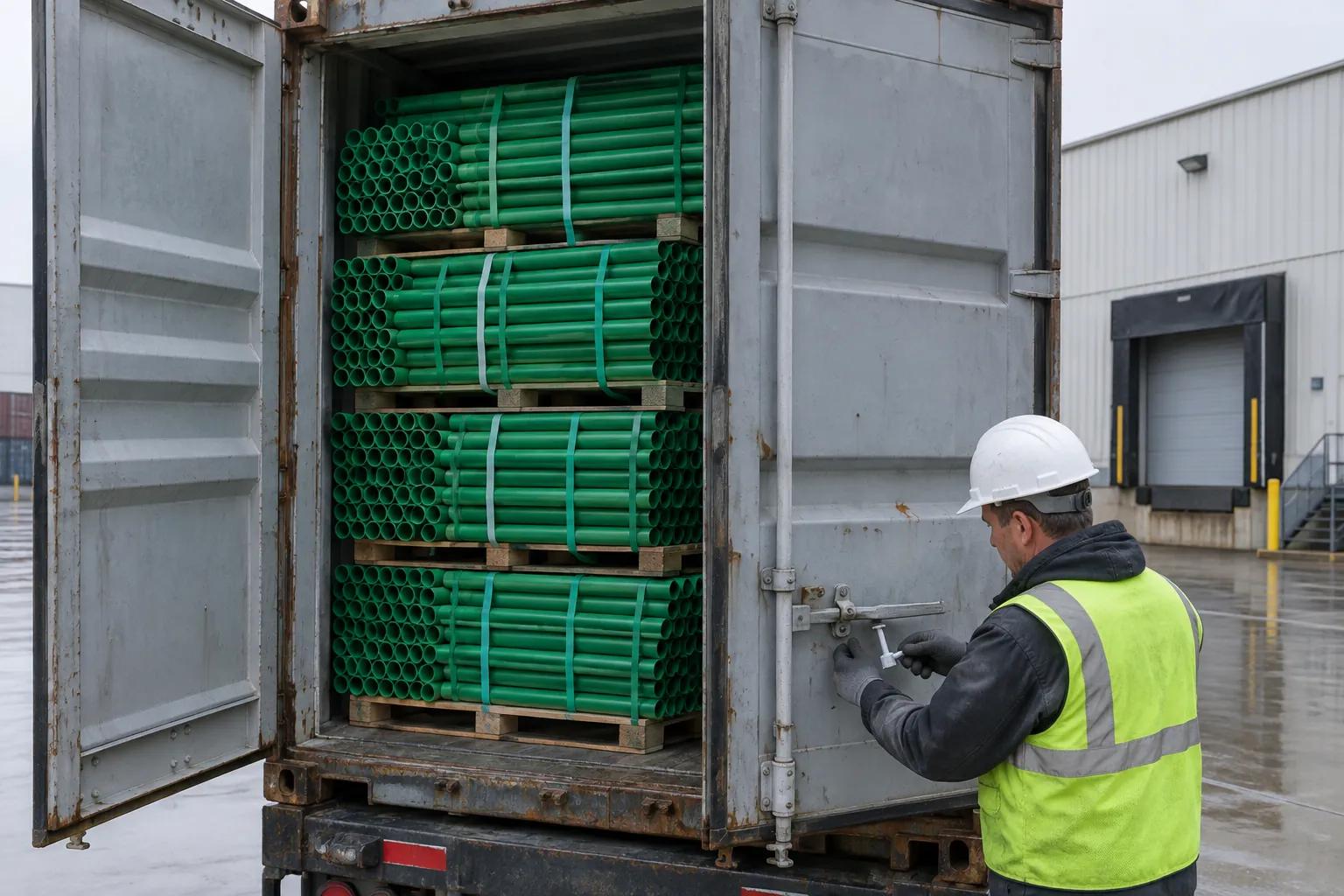
For Tanzanian importers and distributors buying PP-R by the container, DN20–DN160.
Check route and documentsThe Three-Month Clock on the Certificate, and the Step After It Is Issued
A Certificate of Conformity is valid for three months from issuance. Certify against a sailing you have not booked and the clock runs against you; certify after the booking and three months is comfortable for a China–Dar routing. TBS also reserves the right to reject a CoC-covered consignment if verification at the port of entry finds it non-conforming, so the certificate buys process, not immunity. The same procedure sets a second clock: for commodities other than food, at least 50% of the shelf life from the date of manufacture must remain at the port of entry.
The step most guides stop short of is authentication. Under the summarised PVoC procedure dated August 2026, the importer submits the original CoC to the TBS Imports Office through oas.tbs.go.tz with the bill of lading, the commercial invoice and the TRA assessment document. Only the authenticated certificate clears the goods. The Request for Certification pack is equally specific: technical specification, production data including batch number and date of manufacture, quality certificates, third-party test reports, and a proforma or commercial invoice, the one mandatory item. A trader rarely produces batch and lot data; a factory does, which is what our PP-R supply documentation is built around. The wider import document checklist covers the customs side.
What TRA Adds at Dar es Salaam on Top of Duty
Duty is the smaller half of the arithmetic. The Tanzania Revenue Authority publishes its rates annually, and the 2025/2026 edition sets out what a consignment entered for home consumption on the Mainland actually pays.
| Charge | Rate (%) | Charged on | Applies to PP-R? |
|---|---|---|---|
| Import duty band | 0 / 10 / 25 / 35 | Customs value, by EAC tariff line | Band published; confirm the line in TANCIS |
| VAT, Mainland | 18 | Taxable value on importation | Yes; Zanzibar levies 15 |
| Railway Development Levy | 2 | CIF customs value | Yes |
| Customs Processing Fee | 0.6 | FOB value | Yes |
| Industrial Development Levy | 5 to 15 | Customs value, listed headings only | No; 39.17 is not listed |
Source: TRA, Taxes and Duties at a Glance 2025/2026, read 16 September 2026.
Two cautions. The Railway Development Levy is widely quoted at 1.5% of CIF, including on a government trade portal still citing the 2017 tariff. TRA's own 2025/2026 schedule says 2%, and that is the figure to budget. And 0/10/25/35% is a band description, not a line rate: the rate for 3917.22.00 comes from the EAC Common External Tariff line as applied in TANCIS, so ask your clearing agent for it rather than taking a percentage from a forwarder's blog. EAC-origin goods clear at zero under the Rules of Origin, which does not help a China-origin container. For the West African version of this arithmetic, see our ECOWAS duty breakdown.
What It Costs to Arrive Without a CoC, and Why Kenya's or Nigeria's Rules Will Not Save You
TBS publishes the penalty rather than leaving it to discretion. A regulated consignment arriving without a Certificate of Conformity goes to destination inspection with a penalty of 15% of the total invoice value of the regulated goods as assessed by TRA. On top sit a destination-inspection fee of TZS 100,000, batch certification at 6 TZS per kilogram for general commodities, and testing charges that vary. Fail the standard at that point and the goods are re-exported or destroyed at the importer's expense.
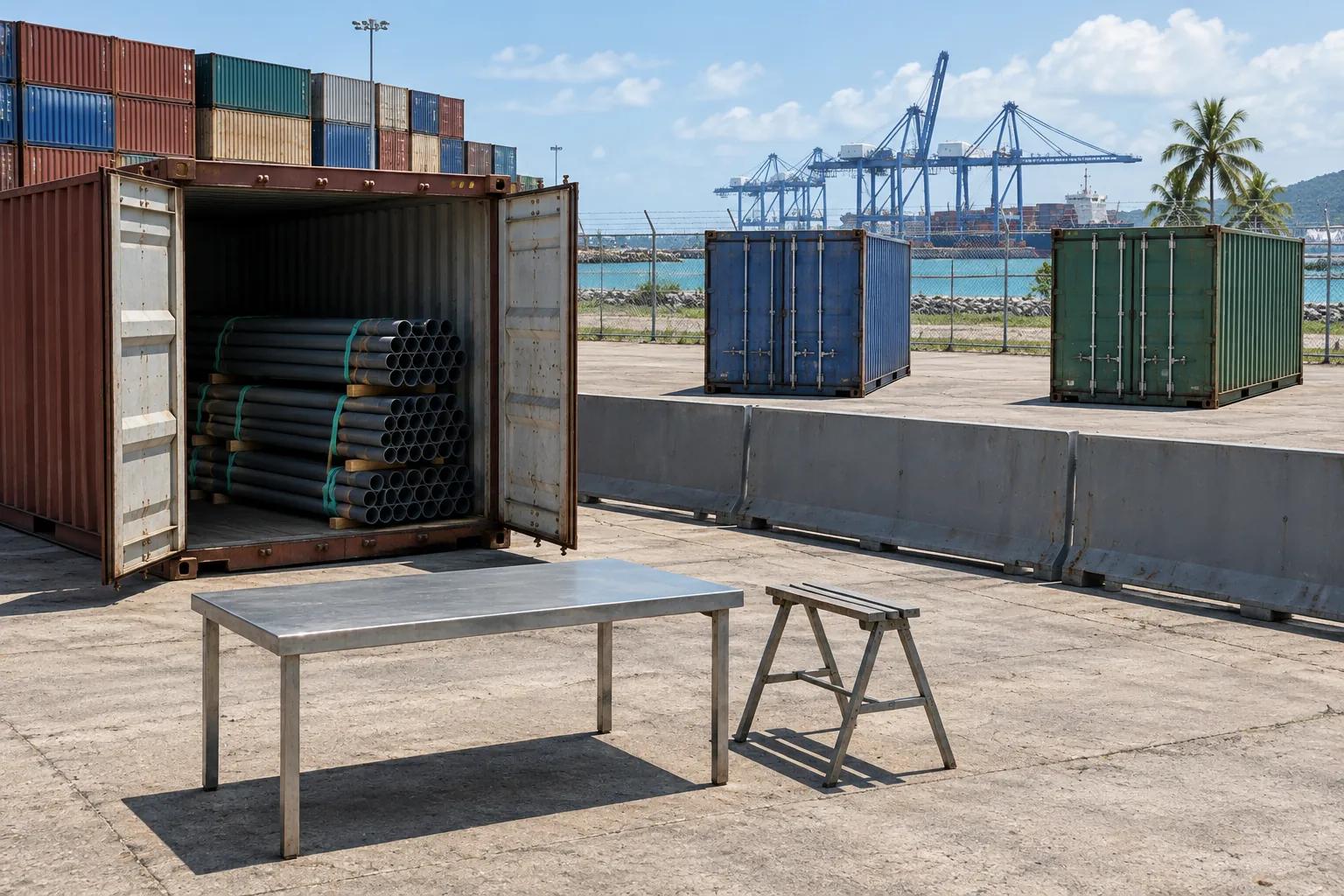
Exemptions exist — personal effects, inputs for manufacturers holding a TBS licence, goods introduced through the Confederation of Tanzania Industries, capital goods routed via TISEZA — but exemption from PVoC is not exemption from inspection: exempted goods are inspected at destination instead. None of this transfers between markets: Kenya runs its own PVoC under KEBS with different contracted agents, covered in our Kenya KEBS guide, and Nigeria's SONCAP is a third scheme again, set out in the SONCAP guide. Reusing a Kenyan process for a Tanzanian consignment produces a document TBS will not authenticate.
For an importer placing a first container into Dar es Salaam; MOQ is one container, mixed sizes accepted.
Start a Tanzania enquiryConclusion
Before the next booking, work down this list:
- Confirm your tariff lines against the PVoC list: 3917.22.00, plus 3917.21.00 and 3917.23.00 if mixed.
- Get the supplier to name their Zone 17 provider and their route: B registration or a C licence.
- Require batch data and third-party test reports against TZS 2344-2:2019 before the RFC.
- Time the certificate to the booking, not the production run: three months is the window.
- Budget 18% VAT, 2% RDL on CIF, 0.6% CPF on FOB, and take the duty line from TANCIS.
- Put oas.tbs.go.tz authentication inside the clearance timeline, not after it.
What is the difference between PVoC and a CoC?
PVoC is the scheme — Pre-Export Verification of Conformity to Standards, run by TBS under section 4(1)(s) of the Standards Act No. 2 of 2009. The Certificate of Conformity is the document a contracted provider issues at the end of it, and the thing customs asks to see.
How do I get a PVoC certificate for PP-R pipe from China?
File a Request for Certification with one of the five providers contracted for Zone 17, enclosing the proforma or commercial invoice, the technical specification, production and batch data, and third-party test reports against TZS 2344-2:2019. The provider inspects, tests or reviews according to the route you hold, then issues the CoC.
How long is a Tanzanian Certificate of Conformity valid?
Three months from the date of issuance. TBS may still reject the consignment if verification at the port of entry finds it non-conforming.
Does the same process work for Kenya?
No. Kenya's PVoC is administered by KEBS with its own contracted agents and documents, and Nigeria uses SONCAP. The regulator, the agent list and the penalty basis all differ.
Related Briefings
uPVC Pressure Pipe Class B, C, D and E: What the BS 3505 Classes Mean in East and West African Tenders, and How They Map to PN
Sea Freight for Pipe from China to West and East Africa: What Drives the Number