
Comparativa de precios de válvulas: peso, aleación y tres trucos detrás de una cotización barata
Las cotizaciones de válvulas de compuerta ocultan sus gramos. Publicamos los pesos por tamaño: 217 g, 322 g, 509 g, y el cálculo del costo base del metal que expone una cotización sospechosamente barata.
Una hoja de cotización enumera un tamaño y un número. Válvula de compuerta de latón de media pulgada: un precio. Tres cuartos de pulgada: un precio. Lo que la hoja nunca dice es qué válvula de media pulgada compra ese precio. Bajo un mismo nombre comercial se esconden paredes de diferente grosor, aleaciones con diferente contenido de cobre, vástagos de diferente metal — y acabados que lo ocultan todo. Dos proveedores pueden cotizar la misma línea y enviar objetos físicamente diferentes.
Una parte del precio de una válvula de compuerta es verificable en cinco minutos, y es la parte que nadie publica. Los gramos. El latón se compra por kilogramo, por lo que cada válvula de compuerta tiene un suelo de material que se puede calcular a partir de su peso y el precio fechado del cobre y el zinc. El 14 de agosto de 2026, el cobre se liquidó a 14.545 USD por tonelada en la LME. El zinc se liquidó a 3.875 USD. Esa diferencia convierte a la propia aleación en la mayor palanca individual en cualquier cotización.
Esta página publica las cifras de peso contra las que IFAN cotiza, muestra la aritmética que convierte los gramos en un suelo de dinero, y nombra los tres trucos que fabrican un número sospechosamente barato. No imprime precios de válvulas terminadas, porque uno honesto depende de su mezcla de tamaños y del mercado de metales de la semana en que haga el pedido. Lo que le da en cambio es el método para juzgar cualquier cotización, incluida la nuestra.

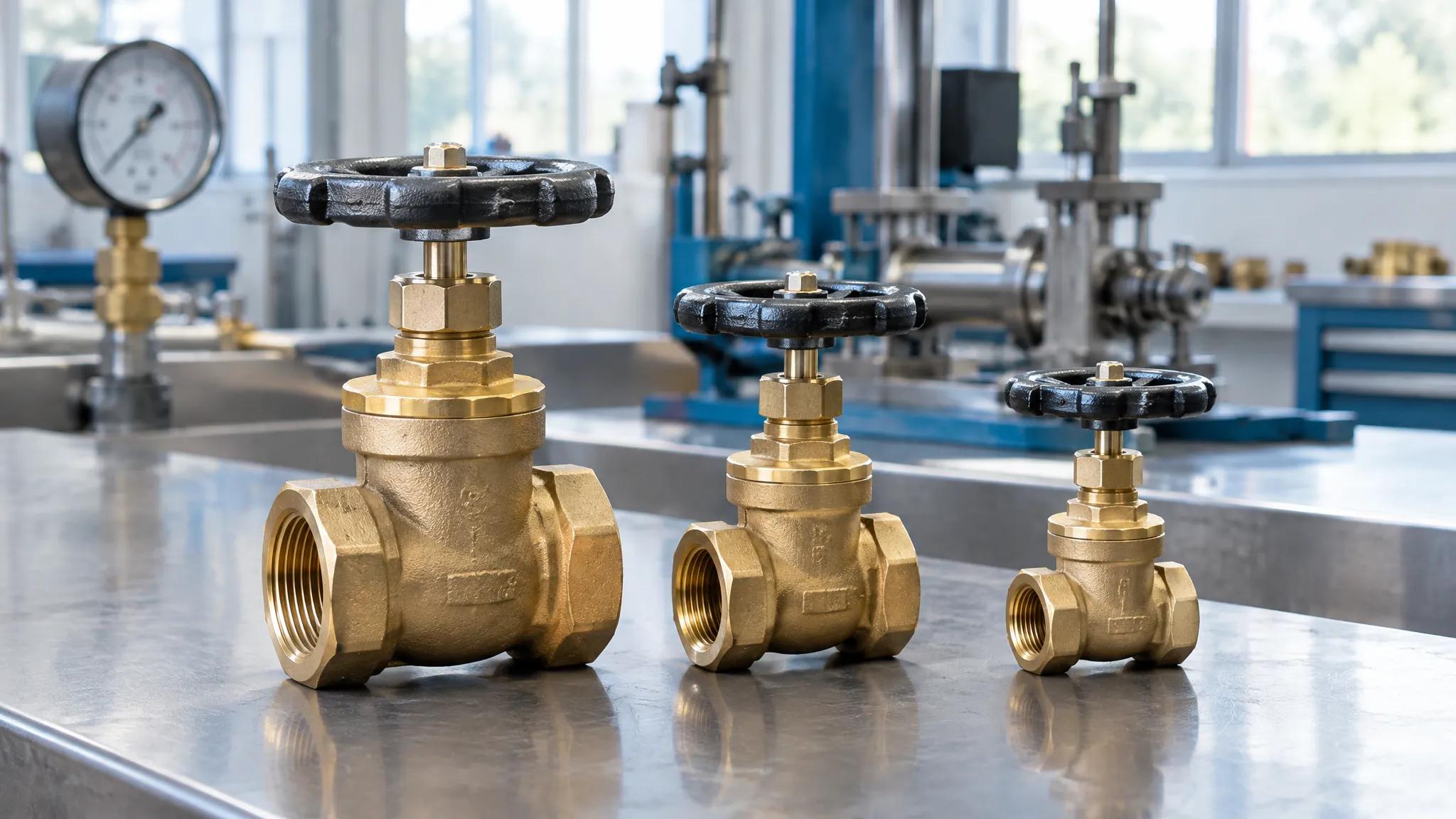
- El latón se cotiza por kilogramo, por lo que el peso de la válvula es un suelo de dinero. El catálogo de IFAN lleva 217 g para la válvula de compuerta de 1/2", 322 g para la de 3/4" y 509 g para la de 1".
- A los precios de la LME del 14 de agosto de 2026, un kilogramo de latón CW617N contiene aproximadamente 9,99 USD de metal. Eso sitúa los suelos de metal en aproximadamente 2,17 USD, 3,22 USD y 5,08 USD bajo esos tres tamaños.
- Cada punto porcentual de cobre reemplazado por zinc elimina aproximadamente 0,107 USD por kg de aleación — lo que equivale a 0,34 USD en una sola válvula de 3/4", y a 344 USD por 1.000 piezas.
- Tres trucos construyen una cotización barata: el recorte de peso, el chapado sobre un núcleo más barato y los herrajes degradados. Cada uno es detectable con una báscula, un corte o un imán.
- Una cotización por debajo de su propio suelo de metal no es eficiente. Es un problema de descripción que espera una inspección de contenedor.
Tres cotizaciones, tres válvulas diferentes
Busque cualquier consulta de precio de válvula de compuerta y obtendrá listados de mercado: un tamaño, una foto, un número. Los listados compiten en el número porque el número es lo único que comparten. Lo que un listado nunca lleva es la especificación de construcción detrás. ¿Qué grosor tiene la pared en el cuerpo? ¿Cuánto cobre hay en la aleación? ¿El vástago es de latón o acero chapado? ¿El acabado es metal sólido o un micrón de chapado?
Esas variables ocultas no son marginales. Una válvula de latón roscada es mayormente metal, y el metal se compra por kilogramo, por lo que el bloque de costo dominante de la cotización se mueve con los gramos. Cambie los gramos y cambiará el costo. Cambie la aleación y cambiará el valor de los gramos. Cambie el acabado y cambiará de qué están hechos esos gramos. Tres proveedores que cotizan la misma partida pueden estar cotizando tres objetos diferentes, y el comprador que compara solo el número está comparando tres productos diferentes.
La aritmética a continuación muestra cuán separados están esos objetos. Spoiler: dos válvulas de tres cuartos de pulgada físicamente diferentes pueden tener valores de metal aproximadamente un 30% diferentes mientras sus fichas técnicas dicen las mismas palabras. Eso no es un misterio de precios. Es una brecha de especificación, y se puede cerrar con un solo paso de pesaje.
Una advertencia antes de los números. Nada en esta página es un precio de válvula terminada. Forja, mecanizado, galvanizado, ensamblaje, margen y flete se sitúan por encima del piso de metal, y difieren según la planta. Esa es la misma estructura que el desglose de costos de tubería PP-R en este sitio, donde el piso de resina desempeñó ese papel. El piso le dice por debajo de qué no puede caer una cotización. Todo lo que esté por encima, usted lo negocia.
El peso es el piso de precios
La masa es el número más difícil de falsificar en una cotización de válvula, y por eso no se publica. Las roscas, las marcas de presión y los acabados son baratos de imprimir; los kilogramos se compran. Cada gramo que un proveedor elimina es dinero que el proveedor conserva, y cada gramo presente es dinero que el proveedor gastó. Una báscula zanja una discusión que ninguna ficha técnica resolverá.
Las cifras en la tabla son propias de IFAN: los pesos por pieza que figuran en nuestro catálogo de productos, los mismos números que utiliza el despacho de cotizaciones. Los publicamos porque un punto de referencia que puede verificar vale más que un precio que no puede.
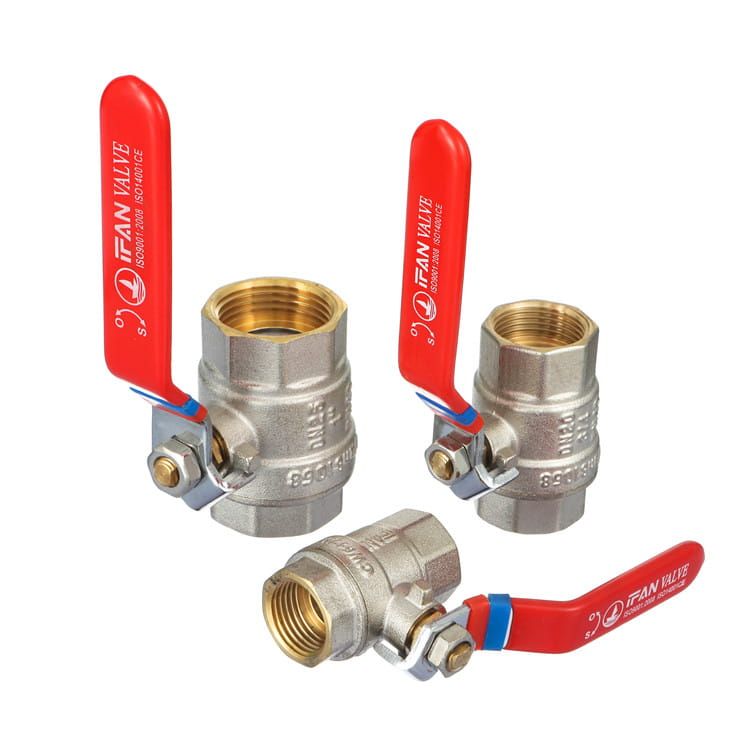
| Tamaño (BSP) | Peso por pieza | Empaque | Piso de metal* |
|---|---|---|---|
| 1/2" | 217 g | 100 pcs/caja | ≈ US$2.17 |
| 3/4" | 322 g | 80 pcs/caja | ≈ US$3.22 |
| 1" | 509 g | 50 pcs/caja | ≈ US$5.08 |
Válvula de compuerta de latón IFAN, modelo 81300 WX, cuerpo de latón forjado con extremos roscados BSP: pesos del catálogo de productos IFAN, 16 de agosto de 2026. *El piso de metal se calcula a continuación con los precios LME a la fecha; es el valor de la materia prima, no una cotización.
El patrón importa más que las filas. El peso aumenta bruscamente con el diámetro. De 1/2" a 3/4", los gramos suben un 48%, y luego otro 58% hasta 1". Un cuerpo más grande necesita paredes más gruesas para soportar las mismas cargas de rosca. Cualquier estructura de cotización donde el precio apenas se mueve entre tamaños le está vendiendo silenciosamente diferentes cantidades de metal bajo una misma etiqueta.
La curva no es una peculiaridad de la válvula de compuerta. Nuestra gama de válvulas de bola de latón sube de la misma manera; la tabla a continuación incluye los seis tamaños de la serie 102-210.
| Tamaño (DN) | Peso por pieza | Incremento respecto al anterior | Piso de metal* |
|---|---|---|---|
| DN20 | 120 g | — | ≈ US$1.20 |
| DN25 | 170 g | +42% | ≈ US$1.70 |
| DN32 | 320 g | +88% | ≈ US$3.20 |
| DN40 | 592 g | +85% | ≈ US$5.91 |
| DN50 | 1.040 g | +76% | ≈ US$10.39 |
| DN63 | 1.100 g | +6% | ≈ US$10.99 |
Válvula de bola de latón IFAN, serie 102-210 — pesos del catálogo de productos IFAN, 16 de agosto de 2026. *Suelo metálico calculado con los mismos precios LME del 14 de agosto de 2026 que la tabla de válvulas de compuerta; valor de materia prima, no cotización.
Convertir gramos en dinero requiere dos datos, ambos públicos. El cobre cerró a US$14.545 por tonelada el 14 de agosto de 2026 y el zinc a US$3.875 por tonelada, según los precios de liquidación LME reportados por Westmetall. Las válvulas IFAN están forjadas en CW617N, el latón de forja en caliente más utilizado — aproximadamente 58% de cobre y 40% de zinc en masa, aparte del pequeño añadido de plomo.
Así, un kilogramo de la aleación contiene 0,58 kg de cobre valorados en US$8,44 y 0,40 kg de zinc valorados en US$1,55. Llamémoslo US$9,99 por kilogramo de metal. Multiplique por los gramos de la tabla: 0,217 kg dan US$2,17, 0,322 kg dan US$3,22, 0,509 kg dan US$5,08. Recalcule la semana en que haga el pedido, porque el cobre se ha movido en dobles dígitos en cuestión de meses este año. El mismo hábito de recálculo se aplica a la resina de tubería, como muestra el artículo de desglose de costos para PP-R.
Sea preciso sobre qué es ese número. Es el valor del metal que está en la caja — nada más. Forja, mecanizado, galvanizado, ensamblaje, rendimiento de chatarra, gastos generales de fábrica, margen y flete están por encima. Una cotización justa se sitúa cómodamente por encima del suelo. El trabajo del suelo es exponer la cotización que está por debajo. Una cotización por debajo de su propio valor metálico es o un error de precios, o una descripción de una válvula diferente a la que especificó.
La aleación bajo el acabado
El peso es una palanca; el valor de cada gramo es la otra. La metalurgia completa del CW617N — composición, comportamiento de mecanizado, la cuestión del plomo, cuándo toman el relevo los grados resistentes a la dezincificación — tiene su propia página en este sitio: CW617N y latón sin plomo explicados. Para el precio, solo importan tres hechos.
Primero, el cobre es lo que cuesta el latón. A los precios fechados arriba, un kilogramo de cobre vale US$10,67 más que un kilogramo de zinc. Segundo, CW617N lleva 57–59% de cobre según especificación. Tercero, nada impide que una colada fuera de especificación lleve menos — el nombre del grado solo es tan bueno como el certificado de colada que lo respalda. Cada punto porcentual de cobre que silenciosamente se convierte en zinc elimina unos US$0,107 de cada kilogramo de aleación.
Haga la aritmética para la válvula de 3/4". Diez puntos de cobre faltante — digamos un cuerpo al 48% en lugar del 58% — valen US$1,07 por kilogramo, y la válvula contiene 0,322 kg. Eso es US$0,34 por válvula, US$344 por 1.000 piezas, US$3.440 por diez mil. Nadie ahorra tanto por accidente. Una escasez de cobre de ese tamaño es una decisión de compra que alguien tomó.
El comprador paga dos veces por esa decisión. El primer pago es la diferencia de precio. El segundo llega en el servicio. El latón con poco cobre y rico en zinc es la receta para la descincificación. La lixiviación selectiva deja una carcasa porosa, débil y de color cobre donde solía haber una pieza a presión. En aguas agresivas, la contramedida es un grado DZR como CW602N, probado según ISO 6509. Esa es una aleación diferente comprada para la química del agua, no una versión con descuento de la estándar.
Existen pruebas de campo, y cada una tiene límites que vale la pena conocer. Una sección transversal fresca muestra el color: latón amarillo cálido frente a la cara de corte más pálida y grisácea de un sustituto rico en zinc. El peso contra la tabla de referencia anterior detecta una aleación más ligera o paredes más delgadas en una sola medición. La prueba de niebla salina según ISO 9227 es una prueba de aceptación de laboratorio para la durabilidad del acabado, no algo que se ejecute en un almacén: solicite el informe. Un imán encuentra impostores ferrosos como vástagos de acero chapado o volantes de hierro, porque el latón no es magnético. No puede encontrar un sustituto no ferroso como la fundición de zinc. Por eso la báscula y el corte permanecen en el kit.
Truco uno: el recorte de peso
El truco más antiguo no necesita ningún material nuevo, solo menos del correcto. Las paredes bajan un milímetro, los salientes se adelgazan, el volante pierde masa, y la válvula todavía rosca, todavía gira, todavía se ve bien en las fotos. Los catálogos llaman a esto patrón ligero. La hoja de cotización solo lo llama competitivo.
La aritmética es la misma que el cálculo del piso, pero en reversa. Tome la válvula de 3/4" a 322 g y quite 62 g: un déficit del 19% que nunca notaría a simple vista. A US$9.99 por kilogramo de aleación, esos 62 gramos valen US$0.62 cada uno. Eso es US$620 por 1,000 piezas, y es solo el metal. Agregue el tiempo de mecanizado que la fábrica también omitió y el ahorro crece.
Lo que el comprador obtiene por esos US$0.62 es un límite de presión más delgado. La falla no es dramática ni inmediata. Las paredes delgadas se agrietan en el acoplamiento de la rosca donde se concentra la tensión, años después de la instalación, después de que el contenedor se paga y el número de teléfono del proveedor ha cambiado. Una válvula de patrón ligero no siempre es incorrecta; el servicio ligero es un servicio real. Simplemente debe venderse como una válvula de patrón ligero, con el peso indicado, y no venderse a precio de patrón completo.
La detección toma una muestra y dos instrumentos. Pésela y compárela con la referencia para ese tamaño y tipo; la tabla anterior es el tipo de cifra que debe exigir a cualquier proveedor. Luego use un calibrador para medir la pared en la cintura del cuerpo y el saliente detrás de cada rosca. Si el proveedor no indica el peso por tamaño por escrito antes del pedido, la respuesta ya está ahí.
Truco dos: el camuflaje del chapado
El chapado en sí es legítimo y a menudo bueno. Los electrodepósitos de níquel y níquel-cromo sobre latón son acabados de ingeniería estándar, regidos por ISO 1456, elegidos según la exposición al servicio. Dan brillo a la pieza, añaden resistencia a la abrasión y ralentizan el deslustre. Una válvula brillante en la caja no es una válvula sospechosa.
El truco está en lo que el cromado oculta. Unos pocos micrones de níquel transmiten el mismo color sobre latón de calidad y sobre un núcleo barato, porque el color proviene del recubrimiento, no de la pieza. Aleaciones ricas en zinc, material reciclado de origen desconocido, incluso cuerpos sin latón: todos se ven idénticos bajo un acabado brillante. Un comprador que elige a partir de fotos no tiene forma de distinguirlos. El acabado no es el fraude; el acabado es la cortina.
La lógica de costos merece una explicación clara, porque es al revés de lo que parece. El cromado cuesta muy poco; es un electrodepósito fino medido en micrones. El ahorro en una válvula barata cromada proviene del sustrato debajo: los gramos y los puntos de cobre de las dos secciones anteriores. Cuando una cotización de una válvula con acabado brillante llega muy por debajo de una con acabado mate, la pregunta no es por qué el acabado es barato, sino qué está cubriendo el acabado.
La detección es mecánica, no química. Raspe el cromado en la raíz de la rosca, donde ningún comprador suele mirar, y vea qué color aparece. Corte una válvula de sacrificio de un lote recibido y lea la sección transversal como se describe en la sección anterior. Pese la pieza: el cromado casi no añade nada, así que una válvula cromada por debajo del peso de referencia es una historia de sustrato, no de acabado.
El tercer truco es el trim degradado
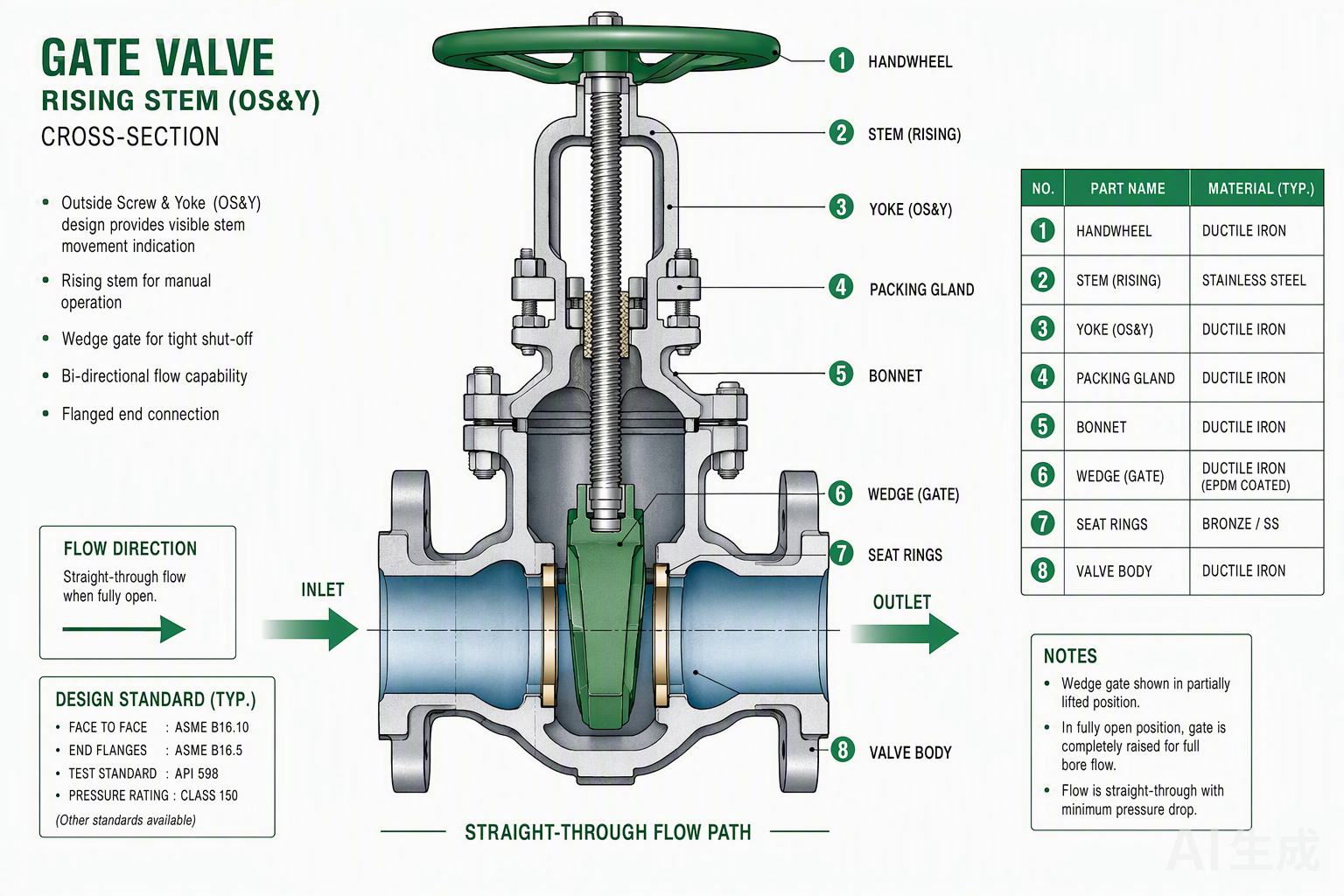
El tercer truco funciona porque nadie desarma una válvula antes de pagarla. El cuerpo puede ser latón honesto con peso honesto mientras todo lo interno es silenciosamente más barato: el vástago, el empaque, las caras del asiento, el volante, los sujetadores. El trim es el lugar más barato de la válvula para ahorrar dinero, porque el trim es el último lugar donde un comprador mira.
El vástago es el principal. Un vástago de latón se mecaniza limpiamente, es compatible en corrosión con el cuerpo y cuesta metal. Un vástago de acero —cromado, pintado o desnudo— cuesta una fracción y crea un par galvánico dentro de una válvula húmeda. El empaque es el segundo: un empaque de prensaestopas adecuado mantiene el sello durante miles de ciclos; una arandela de fibra aguanta uno hasta el primer verano. Las caras del asiento y de la cuña mecanizadas planas sellan; las caras mecanizadas rápido gotean lentamente y luego de forma constante.
Los volantes y sujetadores completan la lista. Las ruedas y tornillos de acero o hierro son magnéticos, así que un imán sobre la parte superior de la válvula responde la pregunta en un segundo — el latón no lo es. Nada de esto aparece en la ficha técnica, porque las fichas describen cuerpos. Las fallas aparecen instaladas: un vástago que gotea, una rueda agarrotada, una válvula que pasa la prueba de banco y falla al segundo año.
La contraofensiva es una lista de verificación de desmontaje de una muestra recibida, realizada antes de que se pague el saldo. Tallo: verifique el color y la respuesta al imán en el extremo cortado. Empaquetadura: nombre qué es. Cuña y asiento: busque marcas de mecanizado frente a caras lapeadas. Sujeción del volante: imán. Cinco minutos, una válvula, y toda la historia del trim está sobre el banco frente a usted.
| Truco | Lo que se mueve silenciosamente | Efecto económico, ejemplo de 3/4" | Detéctelo con |
|---|---|---|---|
| El recorte de peso | Paredes, refuerzos y masa del volante: los gramos caen mientras las roscas se mantienen | 62 g afeitados ≈ US$0.62 cada uno, US$620 por cada 1,000 piezas | Báscula, contrastada con un punto de referencia publicado por tamaño |
| Camuflaje de galvanizado | El sustrato bajo unos pocos micrones de níquel: aleación pobre o material reciclado | 10 puntos de cobre faltantes ≈ US$0.34 cada uno, US$344 por cada 1,000 piezas | Rayar la raíz de la rosca, cortar una válvula, pesarla |
| Trim degradado | Tallo, empaquetadura, caras del asiento, volante y sujetadores: férricos o fibra en lugar de latón | El bloque más barato de la válvula para encoger, y el menos visible | Imán, más un desmontaje de cinco minutos de una muestra recibida |
Los tres trucos lado a lado. Las cifras de efecto económico utilizan la válvula de compuerta de 3/4" a 322 g y los precios de metales del 14 de agosto de 2026 mencionados; son ejemplos de referencia, no cotizaciones.
Una verificación de cordura de cotización en cinco minutos
El método se ensambla en una secuencia que puede aplicar a cualquier cotización, de cualquier proveedor, para cualquier línea de válvulas de latón. Necesita una báscula, una calculadora y los dos precios LME del día.
- Pese una muestra de cada tamaño, o exija el peso por tamaño por escrito antes de ordenar. Compare con el punto de referencia del propio proveedor: la cifra que IFAN publica para sus válvulas de compuerta 81300 WX es 217 g, 322 g y 509 g en 1/2" a 1".
- Calcule el piso de metal: gramos ÷ 1,000 × aproximadamente US$9.99/kg a los precios de agosto de 2026, recalculado con los precios del cobre y zinc del día. Los pisos se mueven con el mercado; la aritmética no.
- Compare los residuales. Cotización menos piso es lo que paga por forja, mecanizado, acabado, ensamblaje, margen y flete. Compare ese número entre proveedores: es la única cifra comparable en el ejercicio.
- Exija la hoja de especificaciones. Grado de aleación (CW617N o una alternativa nombrada), peso por pieza por tamaño, especificación de galvanizado, material del tallo y empaquetadura, norma y marcado de presión. Un proveedor que no pueda devolver esas cinco líneas aún no está cotizando un producto.
Las banderas rojas siguen directamente. Una cotización por debajo de su piso de metal es, en el mejor de los casos, un error de descripción. Un proveedor que se niega a declarar pesos está cotizando un objeto que no puede sobrevivir a una báscula. Precios idénticos en diferentes grados de aleación significan que al menos uno de los grados es ficticio. Y un acabado fotografiado mejor de lo que la pieza está descrita es galvanizado haciendo trabajo de marketing.
Mantenga una corrección en su lugar mientras ejecuta esto: no toda cotización barata es un truco. Una fábrica con líneas de forja más rápidas, tamaños en stock, un acabado más simple o un contenedor que quiere llenar puede cotizar genuinamente por debajo del campo. El objetivo de la verificación de cordura no es la sospecha, es la separación. La verificación separa a los eficientes de los subespecificados, y solo uno de esos dos merece su dinero de contenedor. La guía de válvulas de compuerta de latón en este sitio cubre el lado del producto de esa decisión; esta página cubre el lado del precio.
Conclusión
El precio de una válvula de compuerta es solo un precio una vez que conoce la válvula. Hasta entonces es un número adjunto a un peso desconocido de una aleación desconocida con partes internas desconocidas, y comparar tales números es cómo los compradores importan sus peores sorpresas. El peso fija el objeto; los precios de metales con fecha fijan el piso; el residual es donde vive la negociación real.
- Puntos de referencia para tener en cuenta: 217 g, 322 g y 509 g para las válvulas de compuerta de latón forjado de 1/2", 3/4" y 1" que IFAN cotiza. A los precios del LME del 14 de agosto de 2026, eso es US$9.99 de metal en cada kilogramo de CW617N.
- Tres trucos para nombrar: el recorte de peso, el camuflaje de niquelado, el recorte degradado — cada uno detectable con una báscula, un corte o un imán.
- Una pregunta que clasifica a los proveedores: indique el grado de aleación y el peso por tamaño, por escrito, en la propia cotización.
- Un riesgo a tener en cuenta: el cobre cerca de precios récord amplía la recompensa por cada atajo anterior. Cuanto más barata se vea una cotización contra el piso, más vale la pena la verificación. La verificación aún cuesta menos que el contenedor.
Ejecute la verificación de cinco minutos en las cotizaciones que ya tiene en su bandeja de entrada, luego ponga el bloque de especificaciones en la próxima RFQ. IFANLas válvulas de latón se envían con el grado y los gramos indicados, y el escritorio de cotizaciones responde a una lista de tamaños dentro de un día hábil.
Preguntas frecuentes
¿Cuánto pesa una válvula de compuerta de latón de 1/2"?
La válvula de compuerta de latón forjado que IFAN cotiza pesa 217 g en 1/2", 322 g en 3/4" y 509 g en 1". Use pesos publicados por tamaño como estos como su punto de referencia. Luego pese cualquier muestra que reciba. Una escasez de decenas de gramos en estos tamaños es dinero real y paredes más delgadas.
¿Una válvula de latón más pesada siempre es mejor?
No — el peso verifica la cantidad, no la geometría. Una válvula pesada con roscas deficientes o un asiento delgado sigue siendo una válvula deficiente. Pero una válvula significativamente más liviana que su punto de referencia no puede ser el producto que afirma, por lo que el peso funciona mejor como una prueba de piso, no como una clasificación de calidad.
¿Puede el niquelado ocultar una válvula que no es de latón macizo?
Puede. Unos pocos micrones de níquel dan el mismo color a un buen latón y a un núcleo más barato, por lo que los acabados ISO 1456 se juzgan por lo que hay debajo. Raspe en la raíz de la rosca, corte una válvula de sacrificio o pésela — el niquelado agrega casi nada de gramos, por lo que la báscula lee el sustrato.
¿Qué aleación de latón debo especificar para válvulas de agua potable?
Especifique según la norma principal de su mercado, no por costumbre. La ley de agua potable de EE. UU. exige un promedio ponderado de 0,25 % de plomo en las superficies en contacto con el agua, y el CW617N estándar es un latón de mecanizado con plomo. Las líneas de agua potable requieren una aleación de bajo plomo o sin plomo con la certificación adecuada; la página de aleaciones de este sitio explica el proceso de decisión.
Recibí tres cotizaciones con una diferencia del 30 %: ¿qué debo revisar primero?
Peso, luego aleación, luego acabado, en ese orden, porque ahí es donde está el dinero. Pese una muestra de cada una, calcule el costo mínimo del metal con los precios del cobre y el zinc del día, y compare lo que cada cotización deja por encima de ese costo. La diferencia suele dejar de ser un misterio en la báscula.