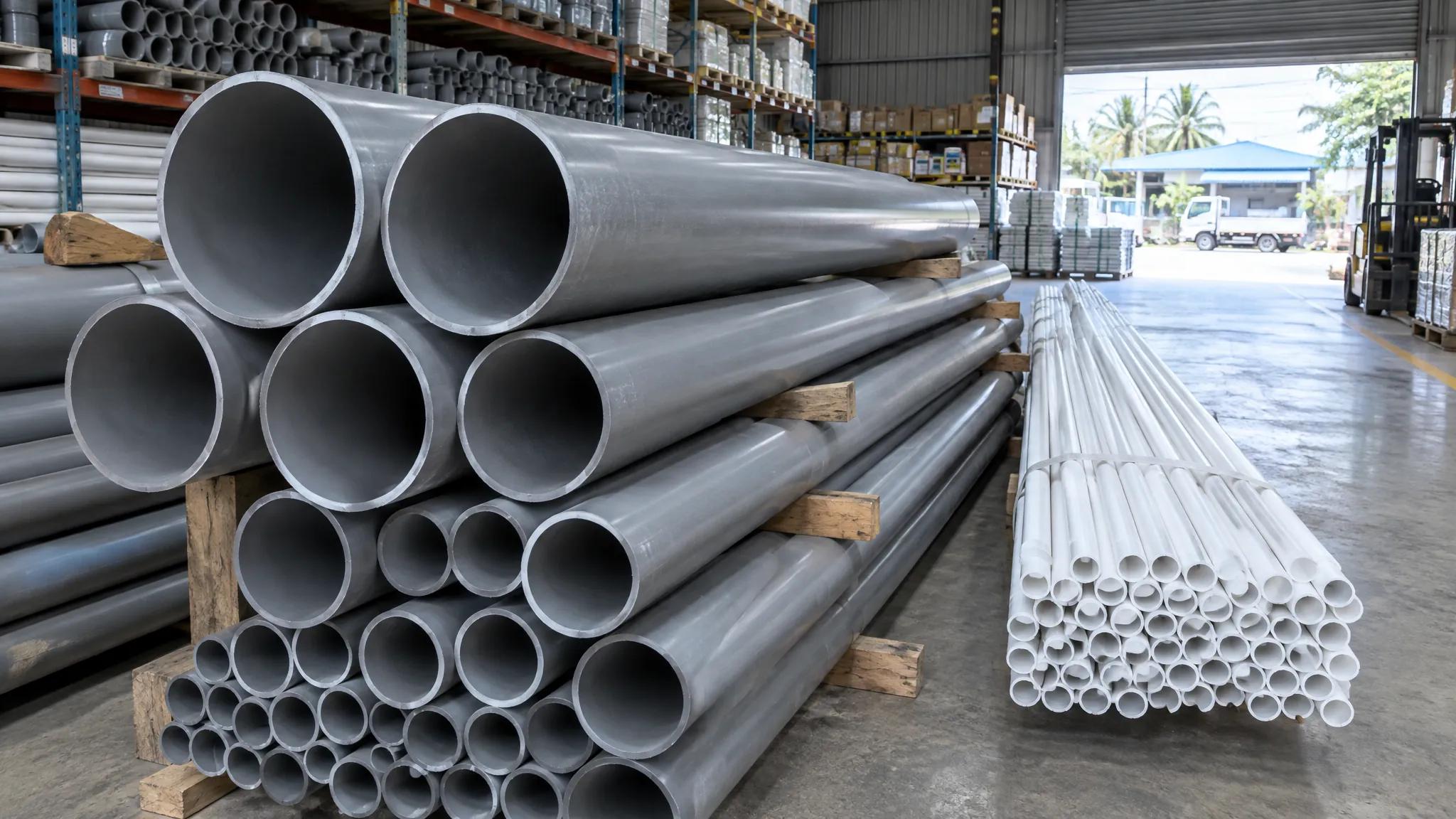

HDPE Pipe Sizes, SDR & PN Chart (DN20–DN1600): How to Choose
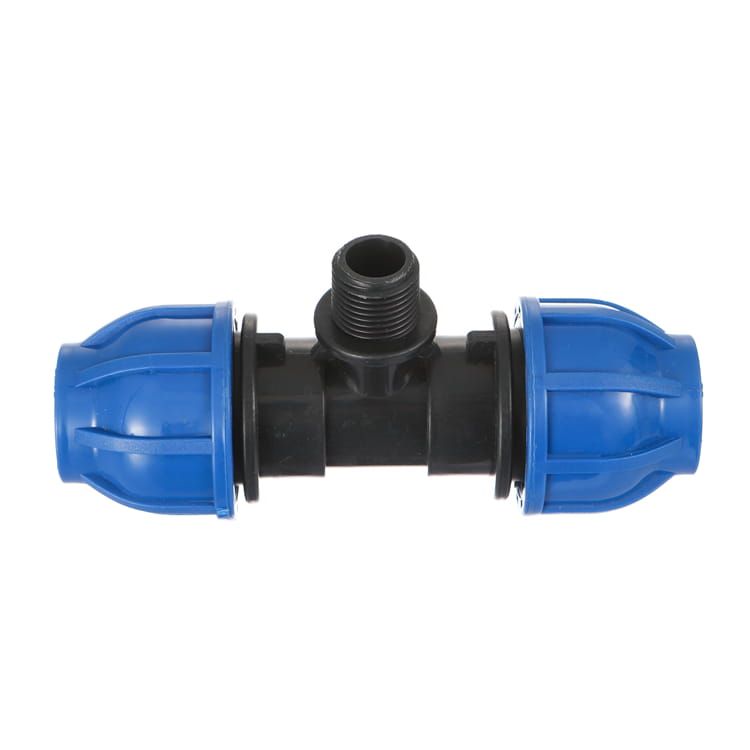
Reading an HDPE pipe size is not like reading a metal one, and the mistake costs money. HDPE pipe sizes are set by two numbers working together: DN, the outer diameter in millimeters, and SDR, the ratio of that diameter to the wall thickness. SDR — not a simple "PN wall" — is what sets the pressure rating. Pick the wrong SDR and you either pay for wall you don't need or bury a main that bursts under surge. This guide gives you the full DN20–DN1600 range, the SDR-to-pressure chart, and how to choose without guessing.
The one relationship to hold onto: a lower SDR means a thicker wall and a higher pressure rating; a higher SDR means a thinner wall and a lower rating. Everything else — coils versus lengths, PE100 versus PE80, how surge changes the choice — follows from that.

Key Takeaways
- DN = outer diameter (mm); SDR = OD ÷ wall. Together they define the pipe.
- Lower SDR = thicker wall = higher pressure. PE100 SDR11 ≈ PN16, SDR17 ≈ PN10, SDR26 ≈ PN6.
- Pressure formula (ISO 4427/12162): P = (20 × MRS) ÷ [C × (SDR − 1)], MRS 10 for PE100.
- Sizes run DN20–DN1600; up to DN90 in coils (50–200 m), DN110+ in 6 m or 12 m lengths.
- On pumped mains, step down one SDR for surge margin — don't size to steady pressure alone.
- Grade and SDR must be printed on the pipe and matched by the fittings.
- On ASTM orders, cite the edition that covers the size: ASTM D3035-22 for IPS 1/2 to 3, ASTM F714-25 for IPS 4 and up. PE4710 DR 11 is 200 psi (13.8 bar), not PN16.
On this page
- DN, SDR and Wall: How an HDPE Size Is Defined
- SDR to Pressure Chart (PE100)
- PN vs SDR: Two Ways to Say the Same Thing
- The Pressure Formula, In Plain Terms
- Diameter Range and How It Ships
- Metric (DN) vs Imperial (IPS) Sizing
- How to Choose the Right Size and SDR
- A Worked Example
- Common HDPE Sizing Mistakes
- Reading the Pipe Marking
- Writing the HDPE Purchase Clause, and Reading a PE4710 Data Sheet Against It
- Where Sizing Fits in the Bigger Picture
- Full HDPE Wall Thickness Chart (PE100, by OD and SDR)
- HDPE Pipe Size Chart in mm and Inches
- SDR9 vs SDR11 HDPE: Which to Order
- Pressure Pipe vs Corrugated HDPE: Two Different Size Systems
DN, SDR and Wall: How an HDPE Size Is Defined
Two numbers describe every HDPE pipe. DN (diameter nominal) is the outer diameter in millimeters — a DN110 pipe is 110 mm across the outside, regardless of wall. SDR (Standard Dimension Ratio) is that outer diameter divided by the wall thickness. So a DN110 pipe with an 10 mm wall has an SDR of 11 (110 ÷ 10). Because SDR is a ratio, the same SDR gives the same relative wall — and the same pressure rating — across every diameter, which is why HDPE is classed by SDR rather than by a fixed wall number.
Once you have the size and SDR, the next question is cost — what drives HDPE pipe price breaks down resin, diameter and volume.
This is the part that trips up buyers coming from metal or even PVC, where a size usually implies one wall. With HDPE it doesn't: two DN110 pipes can have completely different walls and pressure ratings depending on their SDR, and they'll sit side by side on a shelf looking almost identical until you measure the wall or read the print. A DN110 SDR17 is a thinner-walled 10-bar pipe; a DN110 SDR11 is a thicker-walled 16-bar pipe. Same outside diameter, same fittings OD, very different duty. Always specify both the DN and the SDR — a diameter alone tells you nothing about the pressure it will hold.
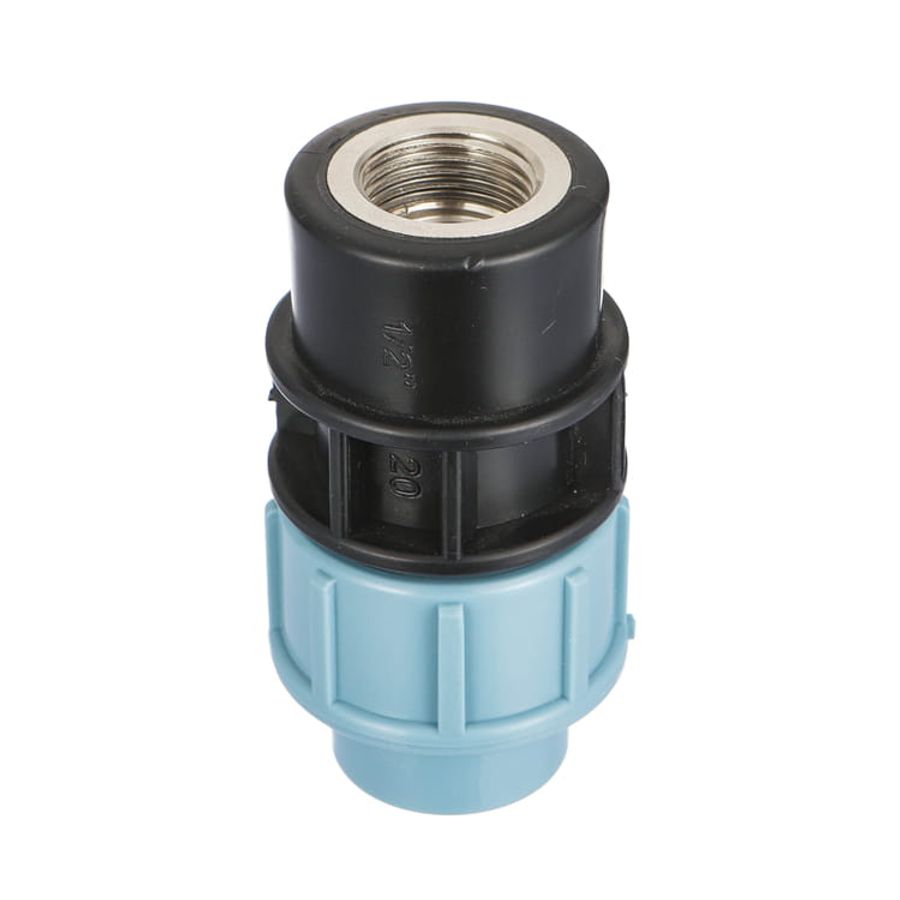
SDR to Pressure Chart (PE100)
For PE100 (MRS 10 MPa) carrying water, the common SDR classes map to pressure as below. The exact bar figure comes from the ISO formula, but these are the working numbers you'll quote.
| SDR | Pressure (PE100, water) | Wall | Typical use |
|---|---|---|---|
| SDR33 | PN5 (5 bar) | Thinnest | Gravity, drainage, cable duct |
| SDR26 | PN6 (6 bar) | Thin | Low-pressure, irrigation |
| SDR17 | PN10 (10 bar) | Medium | Transmission mains ≤10 bar |
| SDR13.6 | PN12.5 (12.5 bar) | Medium-thick | Distribution, moderate pressure |
| SDR11 | PN16 (16 bar) | Thick | Distribution networks, gas |
| SDR9 | PN20 (20 bar) | Thicker | High-pressure, pumped mains |
| SDR7.4 | PN25 (25 bar) | Thickest common | Very high pressure, industrial |
Note the grade interaction: those bar figures are for PE100. The same SDR on older PE80 (MRS 8) rates roughly 20% lower — an SDR11 PE80 is about PN12.5, not PN16. If a quote lists an SDR and a pressure that don't match this table, check the grade before you check anything else; the mismatch usually means PE80 sold as PE100, covered in the PE100 vs PE80 comparison.
PN vs SDR: Two Ways to Say the Same Thing
Buyers often see both "PN" and "SDR" on HDPE and assume they're separate specs to pick. They're not — they're two ways of describing the same wall. SDR describes the geometry (diameter-to-wall ratio); PN describes the resulting pressure class in bar at 20°C. For a given grade they move together: on PE100, SDR11 is PN16, SDR17 is PN10. You specify one and the other follows.
The catch is that the PN only holds for a stated grade and temperature. The same SDR at a lower grade (PE80) gives a lower PN, and pressure capacity drops as the water gets warmer — which is why HDPE is a cold-and-ambient material and PN figures are quoted at 20°C. When you order, name the grade, the SDR, and the PN together; if a supplier gives you an SDR and a PN that don't line up on the chart above, that's the flag to stop and check the grade.
The Pressure Formula, In Plain Terms
You don't need to calculate on site, but understanding the formula stops you being fooled. Per ISO 4427 and ISO 12162, the allowable pressure is P = (20 × MRS) ÷ [C × (SDR − 1)], in bar. MRS is the minimum required strength of the resin (10 for PE100, 8 for PE80). C is the design coefficient — a safety factor, at least 1.25 for water. Two things fall out of it: higher-grade resin (bigger MRS) means more pressure at the same SDR, and a lower SDR (thicker wall) means more pressure. The design coefficient is why a pipe rated "16 bar" isn't run at 16 bar continuously — the safety margin is already built in.
One more factor the chart doesn't show: temperature. The PN figures are quoted at 20°C, and HDPE loses pressure capacity as the fluid warms — at higher service temperatures a pipe must be de-rated below its nominal PN. For buried water in the ground this rarely bites, since soil stays cool, but for above-ground runs in hot climates or warm process fluids it matters. If your line runs warm, factor a de-rating allowance into the SDR choice rather than reading the 20°C figure straight off the table.
Diameter Range and How It Ships
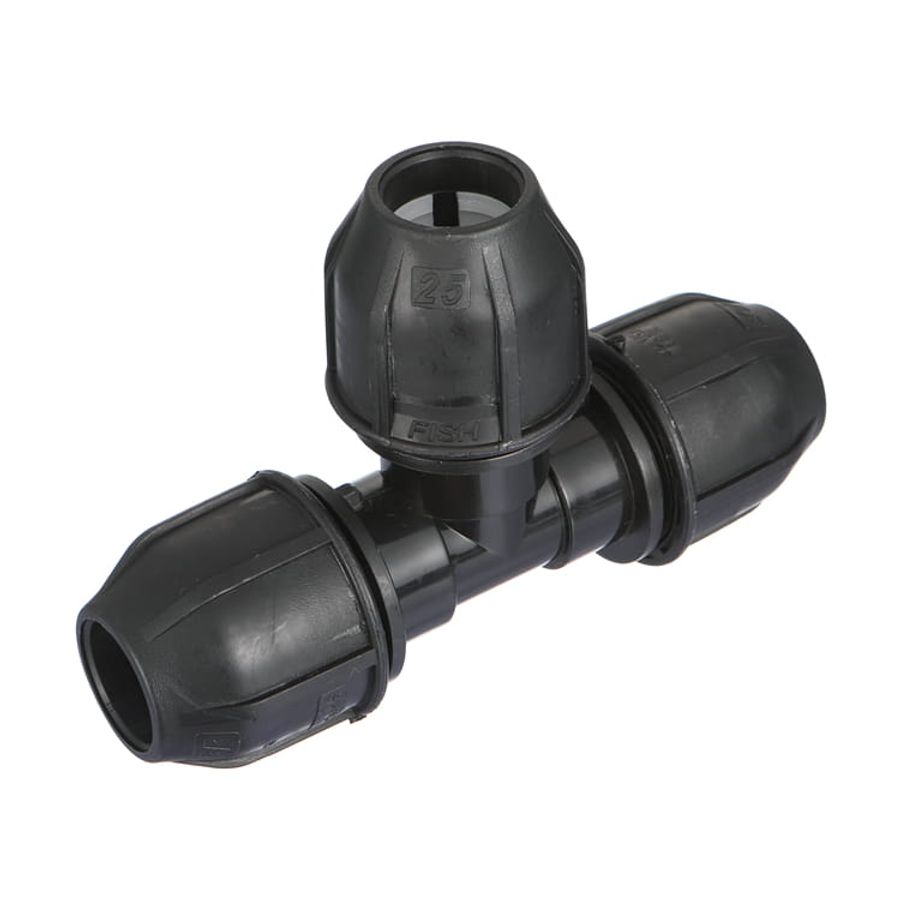
HDPE spans a huge range — DN20 to DN1600 — and how a size is supplied changes your install and shipping as much as the diameter itself.
| Diameter band | Supplied as | Typical role |
|---|---|---|
| DN20–DN63 | Coils (50–200 m) | Service lines, irrigation, branches |
| DN75–DN90 | Coils or lengths | Small distribution |
| DN110–DN400 | Straight 6 m / 12 m | Distribution and transmission mains |
| DN450–DN1600 | Straight lengths | Large mains, outfalls, industry |
Coils up to DN90 are the big labor saver: a 100 m coil is one continuous pipe with no joints across a trench. But they're also heavier to handle as diameter grows, and they hold a curve memory that needs straightening on lay. Straight lengths above DN110 are easy to fuse but volume-heavy to ship — a 40ft container of large-diameter pipe fills on cubic space long before weight, so confirm loading quantities before you order. The container and coil detail for import is in the importing HDPE guide.
Metric (DN) vs Imperial (IPS) Sizing
One trap on cross-border orders: HDPE is sold in two dimension systems that don't interchange. The metric ISO system uses DN in millimeters (DN20, DN110, DN160) and is standard across Africa, the Middle East, Europe and Asia. The North American IPS (Iron Pipe Size) system uses inch-based ODs that are different numbers — a "4-inch" IPS pipe is not the same OD as DN110. Because fusion and fittings depend on an exact OD match, you cannot mix a metric pipe with an imperial fitting, or vice versa. The same metric-DN logic applies to PPR sizes in mm and inches — DN is the outside diameter there too.
For most export markets you want the metric DN/ISO 4427 system end to end — pipe and fittings both metric. State the system explicitly on the order ("metric DN, ISO 4427") so there's no chance of an IPS batch arriving that won't fuse to your metric fittings. If a project inherited imperial infrastructure, transition is done with a flange or a dedicated transition coupler, not by forcing a size that's "close."
How to Choose the Right Size and SDR
Sizing HDPE is a two-step decision: diameter for flow, SDR for pressure. Get them in that order.
Diameter for flow
Pick the diameter from the flow and the acceptable velocity, sizing the mains first and branching down — the same logic as any network. Remember the bore, not the DN, carries the water: a lower SDR (thicker wall) at a given DN has a smaller bore, so on a high-pressure line you sometimes step up a diameter to recover flow lost to the thicker wall.
SDR for pressure — with surge margin
Match the SDR to the working pressure from the chart, then add margin for surge. The pressure spike when a pump starts or a valve slams shut can briefly far exceed the steady pressure, and repeated surge fatigues a wall sized only for static duty. On pumped mains it's standard to choose one SDR step thicker than the steady pressure alone suggests — SDR11 where the math says SDR17 would just cover it. That headroom is cheap next to excavating a fatigued main.
Don't chase the thinnest SDR
A thinner-wall (higher SDR) pipe quotes cheaper because it uses less resin, and that's exactly why an unscrupulous supplier will offer an SDR17 where the spec called for SDR11. Fix the SDR in writing and confirm the wall thickness against it — a pipe that's light for its diameter has a shaved wall, whatever the label says.
A Worked Example
Say you're specifying a village water distribution main pumped at a steady 9 bar. Reading the chart, PE100 SDR17 (PN10) "covers" 9 bar on paper. But it's a pumped line, so surge matters: you step one class thicker to SDR11 (PN16), giving comfortable margin for pump-start and valve-close transients. For diameter, the flow demand points to roughly DN110; because SDR11 has a thicker wall and slightly smaller bore than SDR17, you confirm DN110 still meets velocity, and it does. So the spec is PE100, DN110, SDR11, ordered in 12 m lengths and butt-fused on site.
Now the service connections off that main run at house pressure and short lengths — those take PE100 DN25 SDR11 in coils, electrofused or compression-fitted to the main. One project, two size-and-SDR decisions, each driven by flow first and pressure-with-margin second. That's the whole method.
Common HDPE Sizing Mistakes
- Ordering a DN without an SDR — the diameter alone doesn't set pressure, so the supplier picks the cheapest (thinnest) wall.
- Reading a PE80 pressure off a PE100 chart — same SDR, lower grade, ~20% less pressure. Always tie SDR to grade.
- Sizing to steady pressure on a pumped line — no surge margin, fatigue failure later. Step down one SDR.
- Forgetting bore shrinks with a thicker wall — a low-SDR pipe at the same DN carries less; check velocity, step up a diameter if needed.
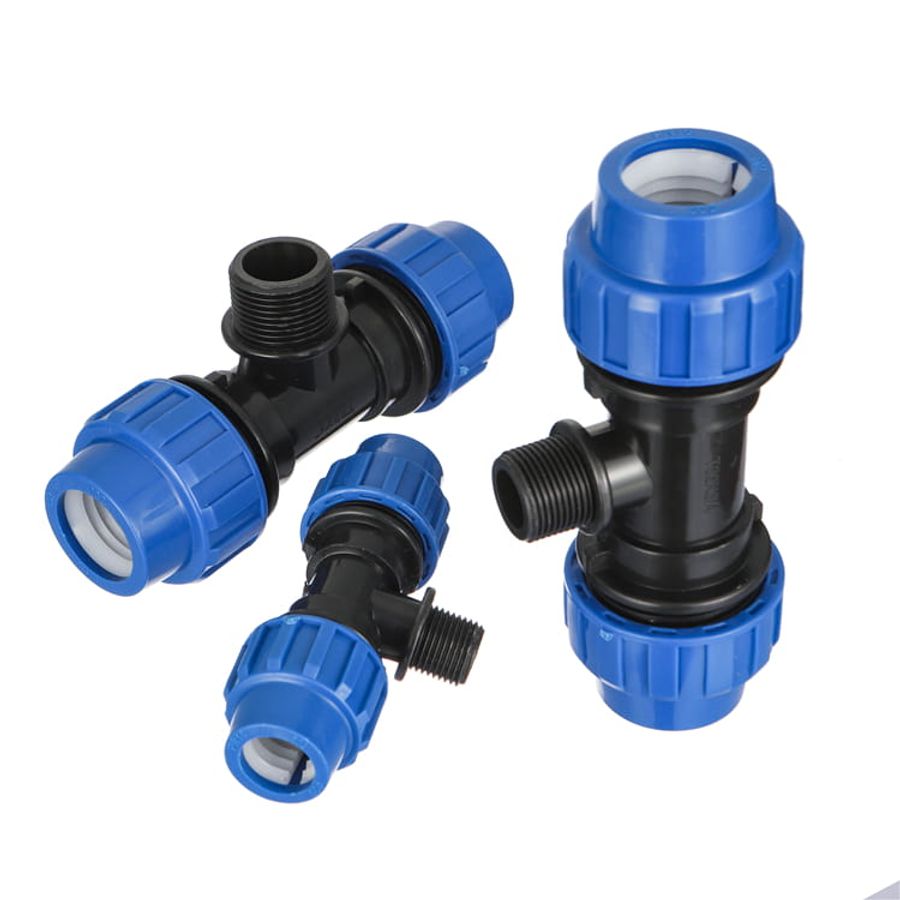
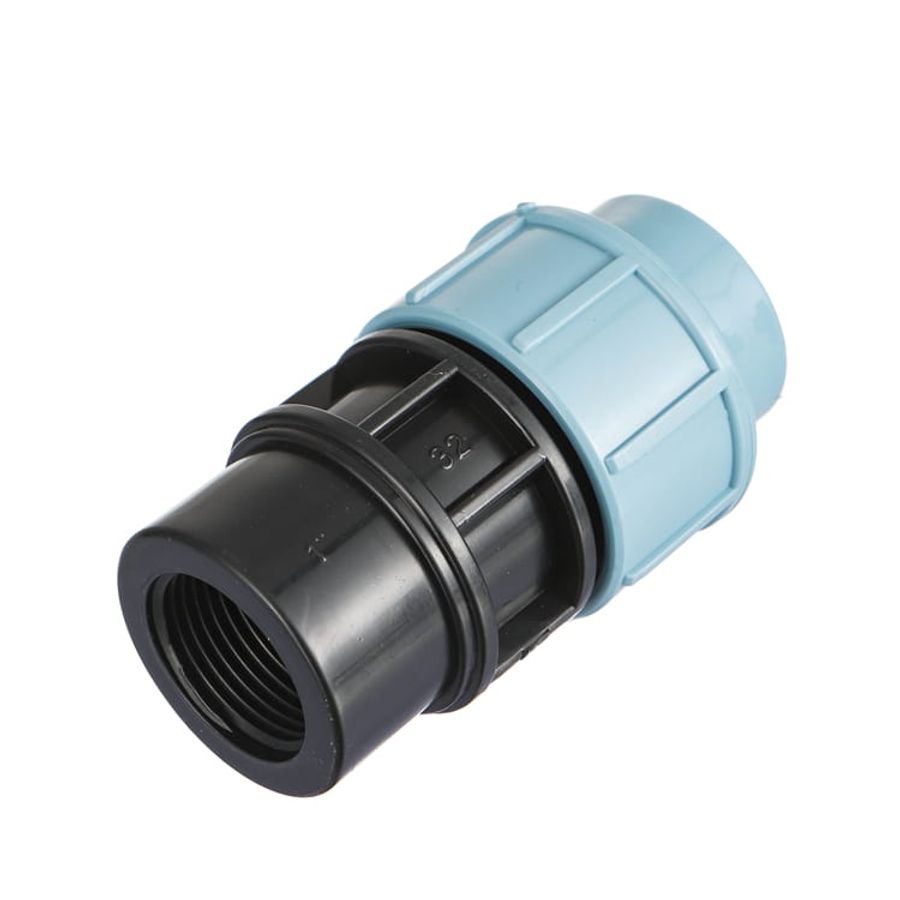
- Not matching fitting OD/SDR to the pipe — electrofusion couplers must match the pipe OD exactly to fuse.
Reading the Pipe Marking
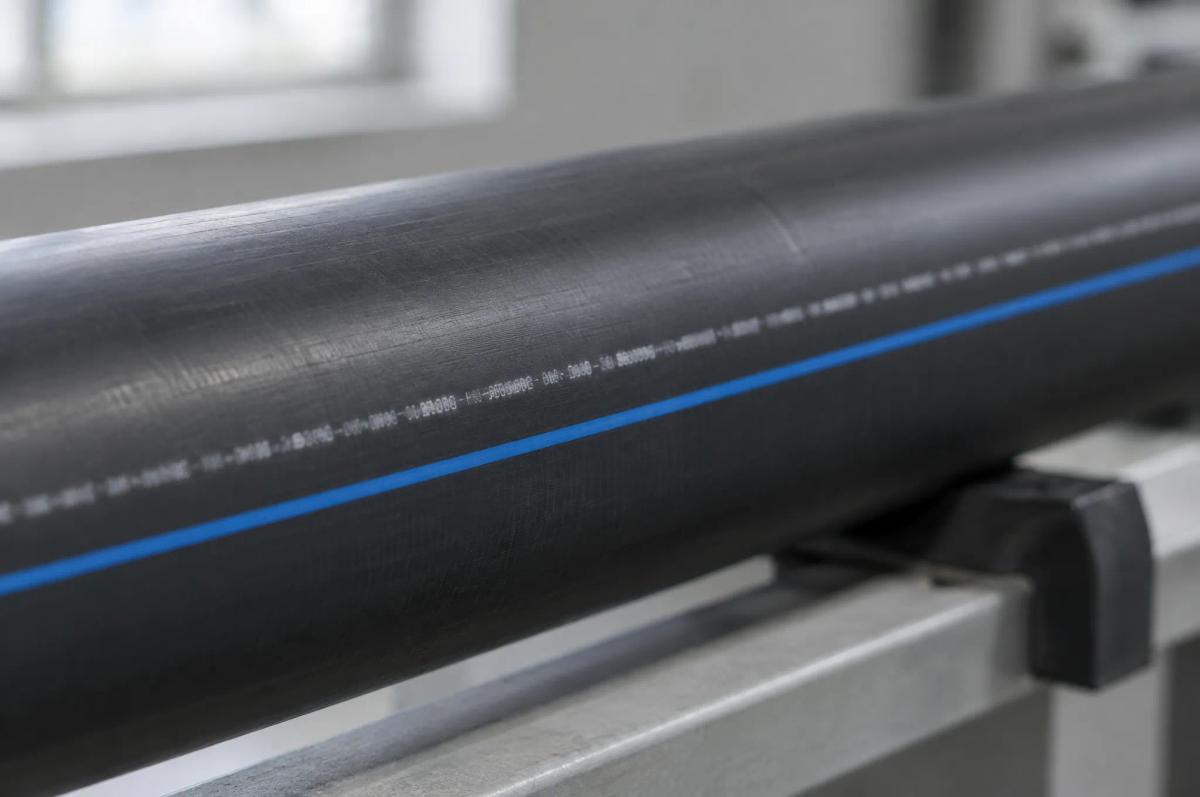
Every compliant HDPE pipe prints its own specification down the side: manufacturer, material grade (PE100), diameter, SDR or pressure class, the standard (ISO 4427, EN 12201), a batch or date code, and usually meter marks. That printed line is your first size check — confirm the DN and SDR match your order before anything goes in the trench. Faint or missing marking is a red flag, because reputable factories print clearly for traceability. Match the marking to the fittings too: the fitting must be the same grade and suit the pipe OD and SDR, a point covered in the HDPE pipe fittings guide.
Writing the HDPE Purchase Clause, and Reading a PE4710 Data Sheet Against It
Every section above ends in one instruction: put the size and the SDR in writing. On an order written to ASTM that is not enough, because the ASTM set splits by size, and a clause citing the wrong document protects nothing. ASTM D3035-22 covers IPS 1/2 to 3. ASTM F714-25 covers DIPS 3, IPS 4 and metric 90 mm and larger. AWWA C906-21 covers 4 in. through 65 in. (100 mm through 1,650 mm) for waterworks (surge allowances in our HDPE water supply network guide). A purchase order that cites F714 for a 2-inch IPS service line cites a standard that does not cover the pipe.
Paste the table into a PO or tender schedule. For an ISO 4427 order, swap in PE100, SDR and PN; the ISO marking items are in our HDPE pipe standards guide.
| Clause line | Write this | Verdict: reject the offer if | Source (current edition) |
|---|---|---|---|
| Standard and edition | ASTM D3035-22 for IPS 1/2 to 3; ASTM F714-25 for IPS 4 and up | No edition is cited, or the standard does not cover the size | ASTM catalogue, D3035-22 and F714-25 |
| Waterworks tender | AWWA C906-21, 4 in. through 65 in. | Pipe is offered to F714 alone where C906 is specified | ANSI/AWWA C906-21 |
| ISO order | ISO 4427-2:2019 + Amd 1:2023, PE100, SDR and PN | The quote names ISO 4427 without part or year | ISO catalogue, 4427-2 |
| Material code | PE4710, with no "or equivalent" | Sheet or print still leans on PE3408 | ASTM F714-25, Note 2 |
| Size, DR and rating | IPS 6, DR 11, 200 psi water at 73°F | A DR is quoted with an ISO PN class | PPI rating method, p = 2 × HDS ÷ (DR − 1) |
| Compound | Named compound, its PPI TR-4 listing, a dated ASTM F1473 PENT report | PENT is under 500 hours, or the report is undated | PPI criteria for the 1,000 psi HDS |
| Print line | Marking items of the cited edition, plus your PO number | Print is missing, illegible, or disagrees with the certificate | PPI Handbook of PE Pipe, ch. 5 |
Source: ASTM catalogue pages for D3035-22, F714-25 and D3350-25; ANSI/AWWA C906-21; ISO 4427-2:2019/Amd 1:2023; Plastics Pipe Institute, Handbook of PE Pipe, 2nd ed., ch. 5; Performance Pipe technical note PP 816-TN. Editions checked 24 September 2026.
Reading a PE4710 data sheet against the clause
A data sheet is the supplier's claim and the clause is yours. Four checks show whether they agree.
- Use the HDS, not the HDB. One public PE4710 sheet prints both: an HDB of 1,600 psi at 73°F (ASTM D2837) and an HDS of 1,000 psi (PPI TR-4). Only the HDS goes into the rating formula p = 2 × HDS ÷ (DR − 1), which holds for water at 80°F or below. It returns 200 psi at DR 11 and 125 psi at DR 17. If the sheet's pressure column does not come back to those figures, it was worked from something else, and the sheet should say what.
- Convert before you compare with an ISO quote. 200 psi is 13.8 bar, while PE100 SDR11 is PN16 under ISO 4427. Same wall ratio, two rulebooks, two ratings. A DR 11 PE4710 offer described as "PN16" has borrowed the ISO class; ask for the rating under the standard your tender cites.
- Hold the PENT row to the code. PPI's criteria for the 1,000 psi HDS that PE4710 carries include a minimum PENT of 500 hours. The same public sheet reports PENT as ">100" hours, which does not show that. Ask for the dated ASTM F1473 report behind the row.
- Treat PE3408 as an edition question. ASTM F714-25 Note 2 removed PE3408 from the specification and adds that pipelines already in service are unaffected. A current offer that still describes the material as PE3408, alone or beside PE4710, should state which edition of F714 the lot was tested to.
Lead time and MOQ lines for an ASTM order
We publish no lead-time or MOQ figure for PE4710 pipe; IFAN's catalogue lists HDPE in PE100 and PE80. Add two lines to the clause instead. MOQ: metres per size and DR, with a yes or no on whether an IPS or DIPS outside diameter needs a tooling change from the metric DN series (IPS 4 is 4.500 in. OD; DN110 is 110 mm). Lead time: calendar dates from deposit, stated separately for the pipe and for the documents, because a lot-specific test report takes lab time that a published listing does not. A supplier who answers both lines in writing has read the clause; a single round number of days means they have not. Send the clause with your size list from the IFAN product catalogue and ask for the answer line by line.
Where Sizing Fits in the Bigger Picture
Size and SDR are one piece of the HDPE decision. The grade sets what each SDR is worth, the joint method depends on diameter (butt fusion for DN90+, electrofusion for smaller), and the fittings have to match both. For the full path from material to sourcing, start with the complete HDPE pipe guide, and for how the diameter drives the jointing choice, see butt fusion vs electrofusion. If you're weighing HDPE against other materials for the job, the HDPE vs PVC vs PPR comparison covers where each wins. Nail the DN and SDR first, though, and the rest of the specification falls into place around them.
Full HDPE Wall Thickness Chart (PE100, by OD and SDR)
The SDR-to-pressure chart above tells you the class. This one tells you the millimeters. For any metric HDPE pipe, wall thickness is just OD divided by the SDR number, rounded up to the standard series in ISO 4427 / EN 12201 / DIN 8074. So a DN110 pipe at SDR11 has a nominal wall of 110 / 11 = 10.0 mm. The table below lists the nominal wall for the SDR grades a wholesale buyer sees most, across the small-to-mid diameters that move by the container.
| OD (DN, mm) | SDR17 wall (PN10) | SDR13.6 wall (PN12.5) | SDR11 wall (PN16) | SDR9 wall (PN20) |
|---|---|---|---|---|
| 20 | 2.0 | 2.0 | 2.0 | 2.3 |
| 25 | 2.0 | 2.0 | 2.3 | 2.8 |
| 32 | 2.0 | 2.4 | 2.9 | 3.6 |
| 40 | 2.4 | 3.0 | 3.7 | 4.5 |
| 50 | 3.0 | 3.7 | 4.6 | 5.6 |
| 63 | 3.8 | 4.7 | 5.8 | 7.1 |
| 75 | 4.5 | 5.6 | 6.8 | 8.4 |
| 90 | 5.4 | 6.7 | 8.2 | 10.1 |
| 110 | 6.6 | 8.1 | 10.0 | 12.3 |
| 125 | 7.4 | 9.2 | 11.4 | 14.0 |
| 160 | 9.5 | 11.8 | 14.6 | 17.9 |
A few reading notes. The 2.0 mm floor on the smallest sizes is a manufacturing minimum, not a math result, so DN20 comes out at 2.0 mm whether you spec SDR17 or SDR11 and the extra pressure headroom is free. The pressure classes shown assume clean water at 20 C over a 50-year design life with the standard safety factor; hot or aggressive media derate. Inside diameter is simply OD minus twice the wall, so a DN110 SDR11 pipe has a bore near 90 mm, which is why HDPE always carries less flow than same-OD PVC of a thinner class.
HDPE Pipe Size Chart in mm and Inches
Buyers who work in inches need to translate the metric DN series before they order, and the trap is that a metric OD does not land on a round imperial number. DN110 is not "4 inch" the way a plumber means it; it is 110 mm, or 4.33 inches of actual outside diameter, and it does not interchange with a US IPS 4" HDPE pipe (4.500 in OD). Use this chart to convert the metric series and to see the nearest imperial trade size, but confirm the exact OD before mixing fitting systems.
| Metric DN (mm) | Actual OD (inches) | Nearest imperial trade size (in) |
|---|---|---|
| 20 | 0.79 | 1/2" |
| 25 | 0.98 | 3/4" |
| 32 | 1.26 | 1" |
| 40 | 1.57 | 1-1/4" |
| 50 | 1.97 | 1-1/2" |
| 63 | 2.48 | 2" |
| 75 | 2.95 | 2-1/2" |
| 90 | 3.54 | 3" |
| 110 | 4.33 | 4" |
| 160 | 6.30 | 6" |
| 225 | 8.86 | 8" |
| 315 | 12.40 | 12" |
| 400 | 15.75 | 16" |
The takeaway: a metric-to-imperial "trade size" is a label, not a coupling guarantee. Metric DN pipe and US IPS pipe of the same nominal call-out have different real ODs, so their butt-fusion faces and electrofusion couplers are not interchangeable. Pick one dimensional system for a whole run.
SDR9 vs SDR11 HDPE: Which to Order
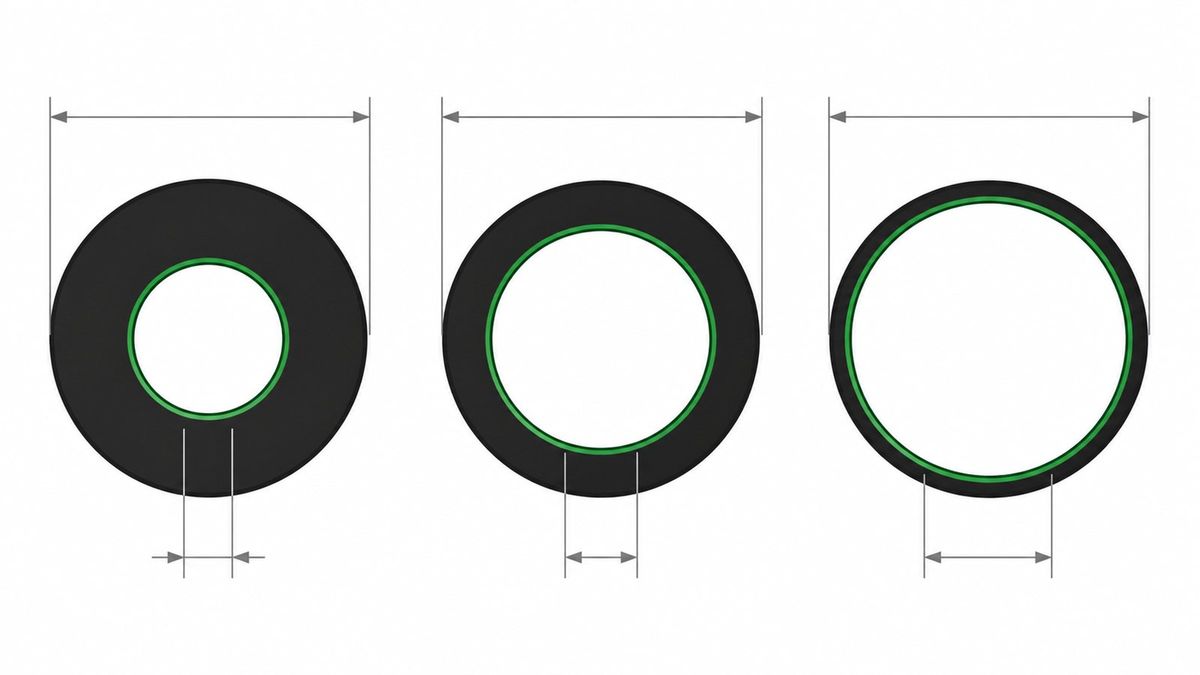
These two grades sit next to each other on the shelf and get confused constantly. Both are common for pressurized water and both look identical from the outside at a given DN. The difference is one class of pressure and one step of wall thickness, which changes bore, weight, and price.
| Spec | SDR11 | SDR9 |
|---|---|---|
| Pressure class (PE100, water) | PN16 (16 bar) | PN20 (20 bar) |
| Wall as share of OD | 1/11 of OD | 1/9 of OD (thicker) |
| Wall at DN110 | 10.0 mm | 12.3 mm |
| Bore at DN110 (approx.) | 90 mm | 85.4 mm (less flow) |
| Relative weight and cost | Lighter, cheaper per meter | Heavier, more resin per meter |
Order SDR11 (PN16) for standard municipal and irrigation mains where 16 bar covers the working pressure plus surge. Step up to SDR9 (PN20) when you need the extra pressure headroom, when the line takes frequent pump starts and water hammer, or when you want a thicker wall for directional-drill and no-dig pulls where the pipe drags against rock. You pay for resin either way, so buying SDR9 "to be safe" on a low-pressure gravity line just adds freight weight with no benefit.
Pressure Pipe vs Corrugated HDPE: Two Different Size Systems
Everything above describes solid-wall pressure pipe, which is sized by outside diameter and SDR. Buyers searching for HDPE sizes sometimes mean the black corrugated drainage pipe used for storm and culvert work, and that product is sized on a completely different basis. Mixing the two up leads to wrong fittings and wrong flow math, so it is worth drawing the line clearly.
| Attribute | Solid-wall pressure pipe | Corrugated drainage pipe |
|---|---|---|
| Size called out by | Outside diameter (OD) | Inside diameter (nominal ID) |
| Pressure rating | PN5 to PN25 (SDR-based) | Non-pressure (gravity flow) |
| Wall | Smooth solid wall | Ribbed; single or dual (smooth-bore) |
| Typical use | Water mains, gas, irrigation | Storm drains, culverts, subdrains |
| Joining | Butt fusion, electrofusion | Bell-and-spigot, split couplers |
The practical rule: if the line holds pressure, you spec it by OD and SDR from the charts above. If it only carries gravity flow, you spec it by ID and by a stiffness class such as ASTM F2648 or AASHTO M294, and the OD is larger than the nominal size because of the corrugation. IFAN supplies solid-wall PE100 and PE80 pressure pipe; the OD-and-SDR system is the one that applies to our range.
Frequently Asked Questions
What does SDR mean on HDPE pipe?
SDR is the Standard Dimension Ratio — the outer diameter divided by the wall thickness. A lower SDR means a thicker wall and higher pressure rating; a higher SDR means a thinner wall and lower rating.
What pressure is PE100 SDR11?
PE100 SDR11 is rated about PN16 (16 bar) for water. The same SDR11 in older PE80 rates lower, around PN12.5, because PE80 has a lower material strength.
What sizes does HDPE pipe come in?
HDPE runs from DN20 to DN1600. Up to DN90 it ships in coils of 50–200 m; DN110 and above come in straight 6 m or 12 m lengths.
Is DN the inner or outer diameter?
For HDPE, DN is the outer diameter in millimeters. The inner bore depends on the wall thickness, which is set by the SDR — a lower SDR has a thicker wall and a smaller bore.
Should I pick a lower SDR for a pumped main?
Usually yes. Pumped lines see pressure surge, so it's standard to choose one SDR step thicker than the steady pressure alone requires, giving fatigue margin against transients.
What are the exact dimensions of a DN20 HDPE pipe?
DN20 means a 20 mm outside diameter. At the common pressure classes the wall sits at the 2.0 mm manufacturing minimum, so SDR17, SDR13.6 and SDR11 all come out around 2.0 mm wall with a bore near 16 mm; SDR9 (PN20) steps up to roughly 2.3 mm wall. The OD stays 20 mm regardless of class.
What is the wall thickness of PN16 HDPE pipe?
PN16 corresponds to SDR11, meaning the wall is one eleventh of the outside diameter. So DN110 PN16 has a 10.0 mm wall, DN90 has 8.2 mm, DN63 has 5.8 mm, and DN160 has 14.6 mm. Divide any OD by 11 and round up to the ISO 4427 / DIN 8074 series to get the nominal PN16 wall.
Is HDPE pipe measured by OD or ID?
Solid-wall pressure HDPE is measured by outside diameter. DN20 is 20 mm OD, DN110 is 110 mm OD, and the inside bore changes with the SDR class. The exception is corrugated drainage pipe, which is called out by nominal inside diameter, so its actual OD is larger than the size name suggests.
What is the largest diameter of HDPE pipe available?
Manufacturers produce solid-wall HDPE up to about 3,500 mm (roughly 138 inches) in the lowest pressure classes, though the commercial mainstream tops out near 1,600 to 2,000 mm. IFAN's PE100 and PE80 pressure range covers the small-to-mid metric diameters that ship economically by the container for water and irrigation networks.
Is HDPE pipe stronger than PVC?
They win in different ways. HDPE is far tougher against impact, freezing, and ground movement because it flexes instead of cracking, and its fused joints are monolithic. Rigid PVC has higher stiffness and, at the same OD, a thinner wall and larger bore for more flow. For buried high-movement or high-surge lines HDPE is the safer choice; for straight low-cost pressure runs PVC often wins on price and flow.
What should an HDPE pipe purchase order specify?
The standard and edition that cover the size (ASTM D3035-22 for IPS 1/2 to 3, ASTM F714-25 for IPS 4 and up, or ISO 4427-2:2019 + Amd 1:2023), then the material code, size, DR or SDR, pressure rating, compound and print line.