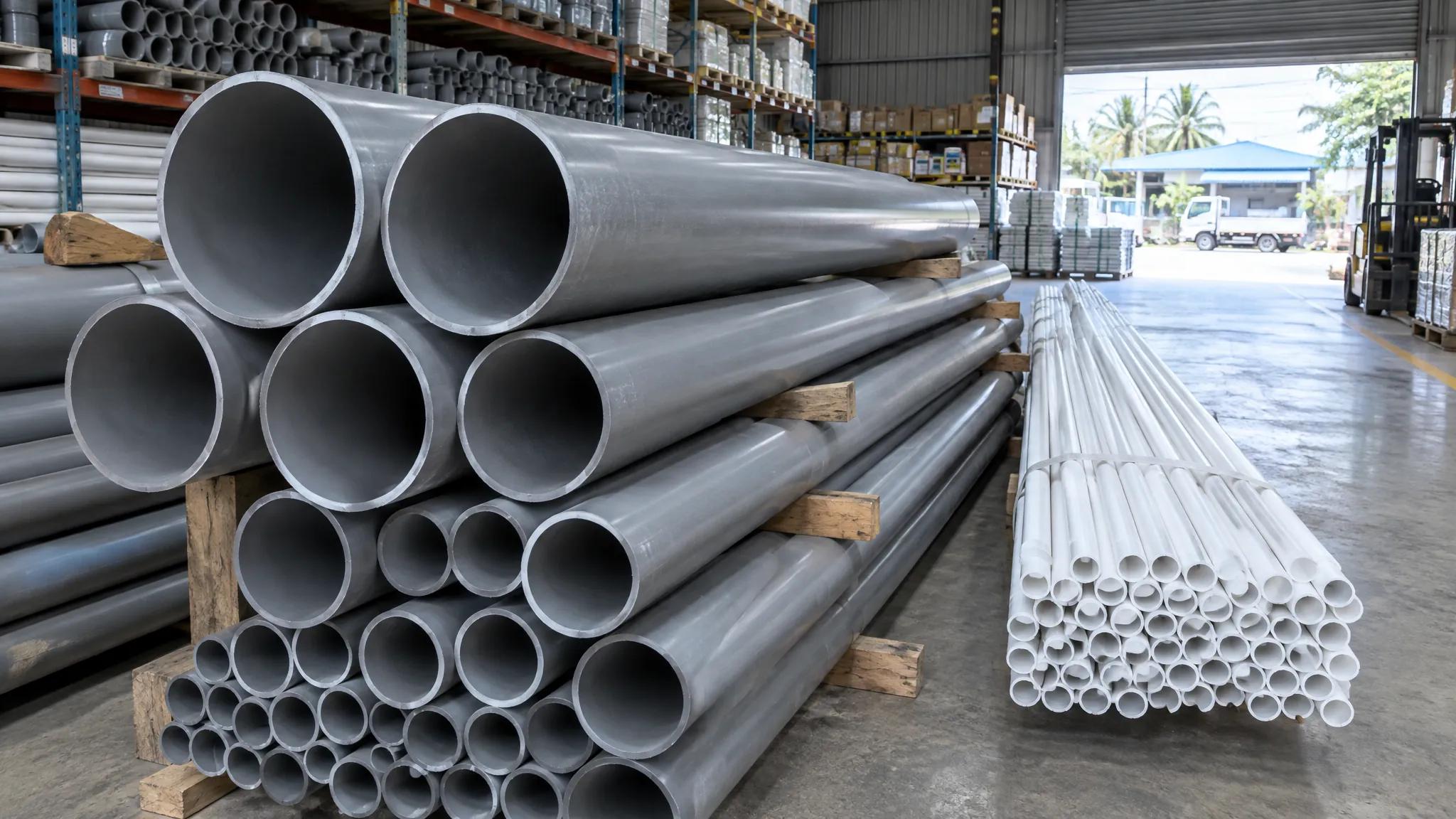

HDPE Pipe Standards & Certification: ISO 4427, 9080 Explained
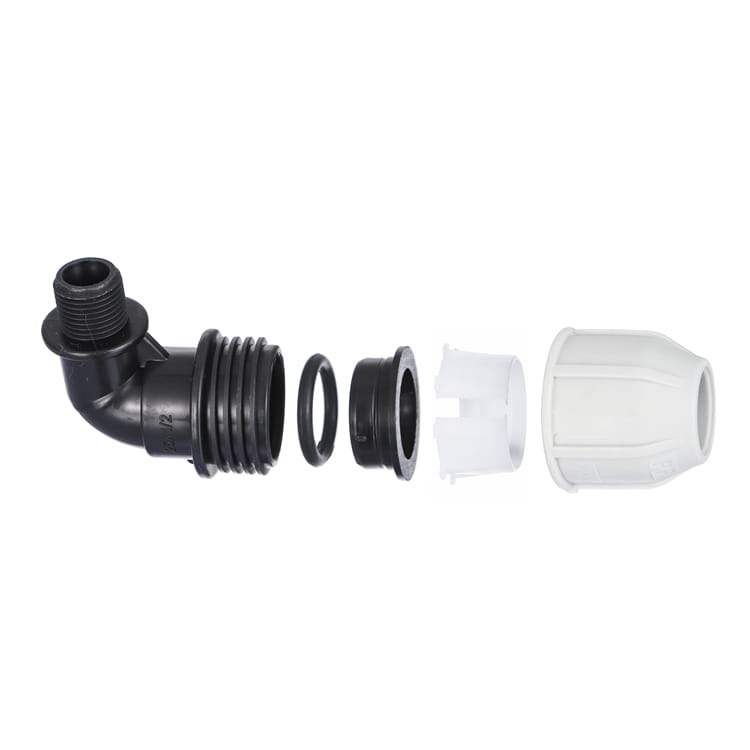
The standards that govern HDPE pipe: ISO 4427 (water) and ISO 4437 / EN 1555 (gas) internationally, EN 12201 in Europe, and ASTM D3035 / F714 with AWWA C906 in North America — all resting on ISO 9080, which derives the resin’s 50-year strength. They fix the grade (PE80/PE100), the SDR/pressure class, and the test regime. Match the standard to your destination market and medium (water vs gas) before you buy.
A "PE100" stamp on the side of a pipe means nothing without the standards and certification behind it. The value of HDPE pipe — its 50-year life, its pressure rating, its safety for drinking water — rests entirely on the material being made and tested to recognised standards, and on that compliance being verifiable with documents rather than merely claimed on a spec sheet. This guide explains the standards that govern HDPE pipe (ISO 4427 for water, ISO 4437 and EN 1555 for gas, ISO 9080 for the resin), what the testing actually proves, and how a buyer confirms a supplier's certification is real before committing an order rather than discovering the gap after a container has already shipped.
For the material and grades these standards classify, read this with the complete HDPE pipe guide and the PE100 vs PE80 grade comparison.

Key Takeaways
- ISO 4427 governs HDPE pipe for water; ISO 4437 / EN 1555 govern gas.
- ISO 9080 is the long-term test that classifies the resin as PE100 or PE80.
- Standards fix dimensions, pressure classes, and the testing regime — not just a grade name.
- Drinking water needs a potable-water approval on top of the pressure standard.
- Insist on verifiable certificates and test reports, not a printed grade alone.
- The printed marking on the pipe should state grade, SDR, standard, and diameter.
The Core Standards
HDPE pipe is governed by a family of international standards, each covering a different application. Knowing which one applies to your project is the first step in specifying correctly.
| Standard | Covers | Application |
|---|---|---|
| ISO 4427 | PE pipe & fittings, dimensions, pressure | Water supply |
| ISO 4437 | PE pipe for gaseous fuels | Gas distribution |
| EN 1555 | European PE gas pipe system | Gas (Europe) |
| EN 12201 | European PE water pipe system | Water (Europe) |
| ISO 9080 | Long-term hydrostatic strength (MRS) | Resin classification |
| ISO 12162 | MRS classification & design coefficient | Grade definition |
ISO 4427: The Water Standard
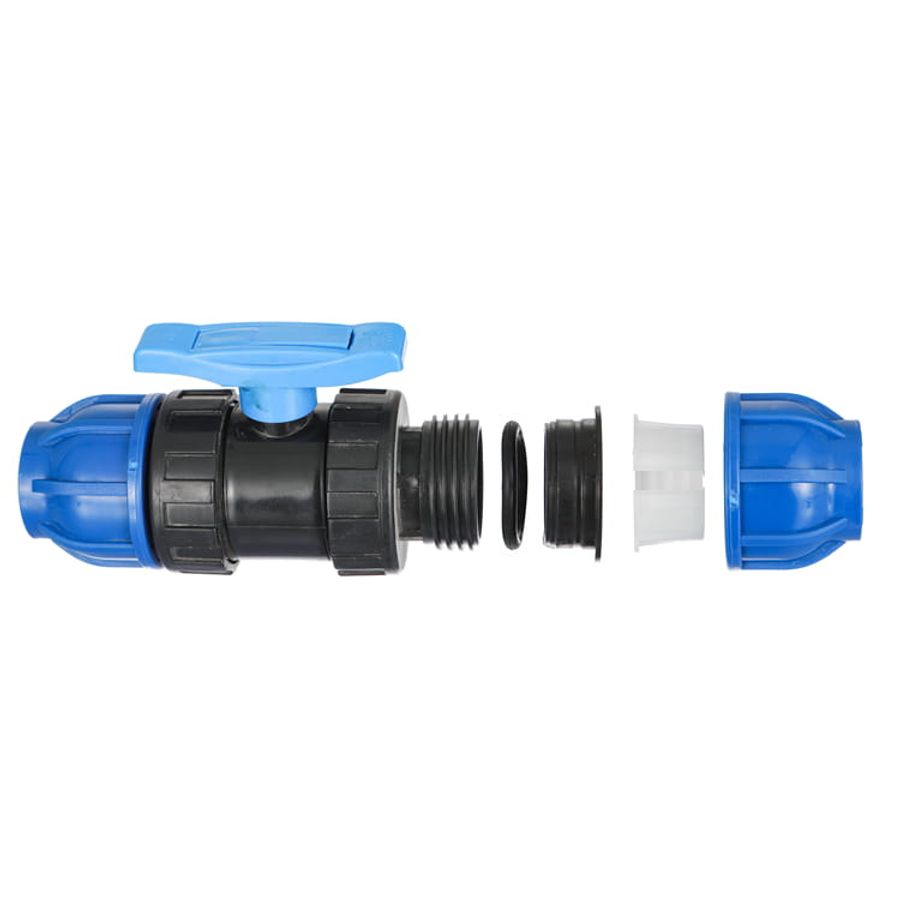
ISO 4427 is the standard most water-project buyers deal with. It defines the pipe's dimensions and tolerances for each diameter, the SDR series and the pressure classes they produce, the material requirements, and the testing the pipe and fittings must pass. When a supplier says a pipe "complies with ISO 4427," that's a specific, checkable claim: the pipe should meet the dimensional table, hold its rated pressure in hydrostatic testing, and carry the correct marking. Specifying "PE100, SDR11, ISO 4427" on an order ties the supplier to all of that, closing the door on a cheaper, out-of-tolerance substitute.
ISO 9080 and the Grade Classification
The grade — PE100 or PE80 — comes from ISO 9080, the long-term hydrostatic testing standard. Samples are held under pressure at several temperatures for thousands of hours, and the results are extrapolated statistically to a 50-year design life to establish the material's Minimum Required Strength (MRS): 10 MPa for PE100, 8 MPa for PE80, classified under ISO 12162. This is why a credible manufacturer can point to the resin's ISO 9080 classification, not just print "PE100" on the wall. The grade classification belongs to the resin itself; the pipe standard (ISO 4427) then governs how that resin is turned by the manufacturer into a finished, compliant pipe.
What the Testing Proves
Compliance isn't a paperwork exercise — each test proves a property you're relying on. Hydrostatic pressure testing confirms the pipe holds its rated pressure over time without failing. Dimensional checks confirm the OD, wall, and ovality are within tolerance, so the pipe fuses correctly and carries its rated pressure. Melt flow rate and density confirm the resin is what it claims to be. Oxidation induction time confirms the pipe has enough antioxidant to reach its design life. Elongation at break confirms ductility. A full test report covers these; a genuine manufacturer runs them as routine quality control and can share recent results.
Drinking-Water Approvals
For potable water, structural compliance to ISO 4427 isn't enough on its own — the pipe also needs an approval confirming it's safe for drinking water and won't leach or taint the supply. These approvals are national or regional (for example WRAS in the UK, NSF/ANSI 61 in North America, ACS in France, and various others), so the right one depends on your market. When you specify HDPE for drinking water, state the required potable approval alongside ISO 4427, and confirm the specific pipe carries it. A pipe rated for pressure isn't automatically approved for potable use.
How to Verify Certification
A claim is only as good as your ability to check it. Ask for the actual documents: the resin's ISO 9080 classification, the pipe's compliance certificate to ISO 4427 (or the relevant standard), recent hydrostatic and dimensional test reports, and any required potable-water approval. Confirm the certificates name the specific product and are current, not expired. Cross-check the pipe's printed marking against the paperwork. For a first or large order, a pre-shipment inspection or independent test of a sample is cheap insurance. A real manufacturer expects these requests and answers them readily — evasion or "trust us" is the clearest warning sign. For the full supplier-vetting process, see how to verify a manufacturer.
Reading the Pipe Marking
Every compliant HDPE pipe carries a printed line repeated along its length, and it's your on-site record of what the pipe is. A typical marking includes the manufacturer's name or mark, the material and grade (e.g. "PE100"), the SDR and/or pressure class (e.g. "SDR11 PN16"), the nominal diameter and wall (e.g. "110 x 10.0"), the governing standard (e.g. "ISO 4427"), and a production date, shift, or batch code for traceability. For gas pipe, add the colour coding. When a delivery arrives, check the marking on the actual pipe against your purchase order and the certificates: grade, SDR, and standard should all agree. A pipe whose print is missing, illegible, or contradicts the paperwork is unverified — don't install it in a pressure line until the discrepancy is resolved.
Traceability and Batch Records
The batch code in the marking links a length of pipe back to its production run and, through the manufacturer's records, to the resin lot and the test results for that run. This traceability is what lets a problem be investigated properly instead of guessed at: if a joint or a length ever raises a question, the batch code tells you exactly which production and which test data to check. On critical mains, keep a record of which batches went into which sections, alongside the fusion machine's per-joint logs. A manufacturer that can't tie a batch code back to test records isn't running the quality system a genuine standards-compliant producer needs, and that gap is worth noticing before you order, not after.
Third-Party Certification and Factory Systems
There's a difference between a manufacturer's own declaration of compliance and a certificate issued by an independent third party. Both have their place, but third-party certification carries more weight because an outside body has audited the product and, often, the factory's quality system. Look for recognised marks appropriate to your market — regional product certification schemes, and a quality-management framework such as ISO 9001 covering the factory's processes. ISO 9001 doesn't certify the pipe itself, but it tells you the producer runs a documented, audited system for consistency and traceability, which is exactly what keeps every batch matching the certified specification rather than only the sample that was tested. When you evaluate a supplier, ask which certifications are self-declared and which are third-party audited; the mix tells you how much independent scrutiny stands behind the claim.
Certification Red Flags
Certificates that don't name the product. A generic or unrelated certificate proves nothing about the pipe you're buying. It should name the specific product or resin.
Expired or undated documents. Certification and approvals have validity periods. An out-of-date certificate is not current compliance.
Marking that contradicts the paperwork. If the pipe says one grade or SDR and the certificate says another, stop and resolve it before installing.
Reluctance to share test reports. A compliant manufacturer runs these tests as routine and can produce recent results. "Trust us" is not certification.
A price far below the market. Genuine standards-compliant pipe has a floor cost in resin and testing. A price well under it usually means a downgrade somewhere — thin walls, recycled resin, or a grade that won't pass ISO 9080.
Need HDPE pipe with verifiable certification?
IFAN supplies HDPE pipe and fittings to ISO 4427 with the test reports and approvals to back it — send your spec for a quote.
Request a Quote
ASTM Standards for HDPE Pipe (North American Systems)
ISO and EN standards govern most projects in Europe, Africa, the Middle East, and Asia. Buyers specifying for the United States, Canada, or projects written to US engineering standards work from ASTM instead. The two systems test the same properties but use different specification codes, so a spec sheet quoting only ISO 4427 will not satisfy a US municipal water tender written to ASTM F714. Ask your supplier which system the pipe is certified to before you order.
The table below lists the ASTM standards that come up most in HDPE water and pressure work, with what each one controls.
| Standard | Title / Scope | What It Governs |
|---|---|---|
| ASTM F714 | PE pipe (SDR-PR) based on outside diameter | Large-diameter pressure water and sewer pipe, 3" and up, sized by OD and DR |
| ASTM D3035 | PE pipe (DR-PR) based on controlled outside diameter | Smaller-diameter OD-controlled pressure pipe for water and distribution |
| ASTM D3350 | PE plastics pipe and fittings materials | The cell classification that defines grades like PE4710 and PE3608 |
| ASTM D2513 | PE gas pressure pipe, tubing, and fittings | Natural gas distribution — the gas equivalent of the water standards |
| ASTM F2620 | Heat fusion joining of PE pipe and fittings | Butt-fusion and socket-fusion procedure, the joint the whole system relies on |
| ASTM D2837 / F1473 | Hydrostatic design basis / PENT slow crack growth | The long-term strength and crack-resistance tests behind the pressure rating |
ASTM F714 is the one that appears most in tender documents. It covers OD-controlled polyethylene pressure pipe 3 inches and larger, rated by dimension ratio, and is the standard most US water and sewer authorities cite. If a buyer asks "what is ASTM F714," the short answer is: it is the US specification for large-diameter HDPE pressure pipe, and it is the ASTM counterpart to ISO 4427.
DR and SDR to Pressure Class — The Wall-Thickness Rule
HDPE pressure is set by geometry, not by a separate schedule. Dimension Ratio (DR), also written as Standard Dimension Ratio (SDR), is the outside diameter divided by the minimum wall thickness. A lower DR means a thicker wall and a higher pressure rating; a higher DR means a thinner wall and a lower rating. Because it is a ratio, the same DR gives the same pressure class across every pipe size — a DR 11 100mm pipe and a DR 11 400mm pipe carry the same rated pressure. That is why buyers spec HDPE by DR, not by wall thickness in millimetres.
The table pairs each common DR with its ISO PE100 pressure class (PN, in bar, water at 20°C) and its ASTM PE4710 pressure rating (psi, water at 73°F / 23°C). The two columns differ because ISO and ASTM use slightly different design coefficients — the pipe is the same, the rating conventions are not.
| DR / SDR | PE100 pressure class (ISO, PN bar @20°C) | PE4710 rating (ASTM, psi @73°F) | Typical use |
|---|---|---|---|
| DR 9 | PN20 | 250 psi | High-pressure mains, pumped lines |
| DR 11 | PN16 | 200 psi | Standard water distribution, the most common DR |
| DR 13.5 | PN12.5 | 160 psi | Medium-pressure distribution |
| DR 17 | PN10 | 125 psi | Low-pressure water, common gravity/transmission |
| DR 21 | PN8 | 100 psi | Low-pressure irrigation, force mains |
| DR 26 | PN6.3 | 80 psi | Gravity sewer, drainage, very low pressure |
One caution buyers miss: these ratings assume water near 20–23°C. HDPE loses pressure capacity as temperature rises — at roughly 40°C you derate to about 0.8 of the rating, and at 60°C to about 0.5. For hot or buried-in-hot-climate lines, spec a lower DR to keep margin. Sizes and DRs available from IFAN are set out in our HDPE pipe size chart.
HDPE Size Charts — IPS (Inch) vs Metric (mm)
HDPE pipe is sold in two dimensioning systems, and mixing them is a common ordering mistake. IPS (Iron Pipe Size) is the North American / ASTM system: the pipe carries the same outside diameter as old steel pipe of that nominal size, so a "4-inch IPS" pipe is actually 4.5" OD, not 4.0". Metric pipe follows ISO 4427 / EN 12201 and is called out by its real OD in millimetres — DN110, DN160, and so on. A DN110 metric pipe (110mm OD) and a 4-inch IPS pipe (114.3mm OD) look similar but do not share fittings. Always confirm which system a fitting or coupling is cut for.
IPS outside diameters (ASTM)
| Nominal IPS size | Actual OD (inch) | Actual OD (mm) |
|---|---|---|
| 1" | 1.315" | 33.4 mm |
| 2" | 2.375" | 60.3 mm |
| 3" | 3.500" | 88.9 mm |
| 4" | 4.500" | 114.3 mm |
| 6" | 6.625" | 168.3 mm |
| 8" | 8.625" | 219.1 mm |
| 12" | 12.750" | 323.8 mm |
Metric outside diameters (ISO 4427 / EN 12201)
| DN (nominal, mm) | OD (mm) | OD (inch, approx) |
|---|---|---|
| DN20 | 20 mm | 0.79" |
| DN63 | 63 mm | 2.48" |
| DN110 | 110 mm | 4.33" |
| DN160 | 160 mm | 6.30" |
| DN225 | 225 mm | 8.86" |
| DN315 | 315 mm | 12.40" |
Note the mismatch: a 6-inch IPS pipe is 168.3mm, while the nearest metric size, DN160, is 160mm — an 8mm gap that no coupling bridges. Order to one system and stay in it. Full-length wall-thickness figures for each DR sit alongside these ODs; the wall for a given size is simply the OD divided by the DR.
PE4710 vs PE100 vs PE3608 — Reading the Material Grade
Grade codes look interchangeable on a spec sheet but come from two different systems. PE100 and PE80 are the ISO 9080 designations, set by the long-term hydrostatic strength (MRS) in MPa: PE100 has a Minimum Required Strength of 10.0 MPa, PE80 of 8.0 MPa. PE4710 and PE3608 are the ASTM D3350 cell-classification codes used in North America. PE4710 is the current high-performance grade — the "47" points to the density and slow-crack-growth cell values and the "10" is the hydrostatic design stress in hundreds of psi (1000 psi). For water at 23°C, PE4710 and PE100 are broadly equivalent in strength; PE4710 is essentially the ASTM label for a top-tier PE100-class resin.
| Grade | System | Strength basis | Rough equivalent |
|---|---|---|---|
| PE100 | ISO 9080 / ISO 4427 | MRS 10.0 MPa | PE4710 |
| PE80 | ISO 9080 / ISO 4427 | MRS 8.0 MPa | PE3408 / PE3608 |
| PE4710 | ASTM D3350 cell class | HDS 1000 psi @73°F | PE100 |
| PE3608 | ASTM D3350 cell class | HDS 800 psi @73°F | PE80 |
Why it matters at ordering: a US tender may demand PE4710, an African or EU tender the ISO PE100. IFAN supplies HDPE in both PE100 and PE80 resins, so a buyer can be quoted against whichever grade code the destination project specifies. For the material-level differences behind the numbers, see PE100 vs PE80.
Frequently Asked Questions
What standard should HDPE water pipe meet?
ISO 4427 (or the regional equivalent such as EN 12201) for the pipe, with the resin classified as PE100 or PE80 under ISO 9080 / ISO 12162. For drinking water, add the potable-water approval required in your market. Specify the standard on the order so it's contractually binding.
Is a printed "PE100" on the pipe enough proof?
No. Printing is easy to apply and easy to fake. Real proof is the resin's ISO 9080 classification, the pipe's ISO 4427 compliance certificate, and current hydrostatic and dimensional test reports naming the product. Always ask for documents you can verify, and cross-check them against the marking.
What's the difference between the water and gas standards?
Water pipe is made to ISO 4427 (or EN 12201); gas pipe to ISO 4437 or EN 1555, with stricter, safety-driven requirements and colour coding (yellow/orange). Don't use water pipe for gas or vice versa — specify pipe made to the correct standard for the service.
What does ISO 9080 test?
The long-term hydrostatic strength of the resin. Samples are held under pressure at several temperatures for thousands of hours, and the data is extrapolated to a 50-year design life to set the Minimum Required Strength — 10 MPa for PE100, 8 MPa for PE80. It's what turns a resin into a classified grade.
What is ASTM F714?
ASTM F714 is the US specification for polyethylene pressure pipe 3 inches and larger, sized by outside diameter and dimension ratio (SDR-PR). Most US water and sewer authorities cite it. It is the ASTM counterpart to ISO 4427; a pipe can be certified to one system, the other, or both, so confirm which your tender requires.
What is the ASTM standard for HDPE water pipe?
For pressure water pipe, the two core ASTM specs are F714 (OD-controlled pipe 3 inches and up) and D3035 (smaller OD-controlled pipe). The material grade is defined by ASTM D3350 cell classification, which produces codes like PE4710. Gas distribution pipe uses a different spec, ASTM D2513, so match the standard to the application.
What is the ISO standard for HDPE pipe?
ISO 4427 is the main ISO standard for HDPE water supply and pressure sewerage pipe, with EN 12201 as its European equivalent. Gas systems use ISO 4437 (EN 1555). The material grade classification, PE100 or PE80, comes from ISO 9080, which sets the long-term hydrostatic strength that defines each grade.
What does DR 17 mean on HDPE pipe, and what pressure is it?
DR 17 means the outside diameter is 17 times the minimum wall thickness. Because it is a ratio, the pressure class is the same at every size: roughly PN10 (10 bar) for PE100 by ISO, or about 125 psi for PE4710 by ASTM, both for water near 20 to 23°C. Wall thickness for any size equals the OD divided by 17.
Is PE4710 the same as PE100?
They are close but from different systems. PE4710 is the ASTM D3350 cell-classification code used in North America; PE100 is the ISO 9080 grade based on 10.0 MPa minimum required strength. For water at ambient temperature they are broadly equivalent, so PE4710 is effectively the ASTM label for a top-tier PE100-class resin. Spec whichever code your destination project names.