
HDPE Pipe Supplier for Africa: How to Source & Import Reliably
Africa is one of the fastest-growing markets for HDPE pipe — water supply schemes, irrigation, mining, and urban expansion all run on it — but sourcing it from overseas carries risks a local buyer doesn't face: unverifiable grade claims, pipe that doesn't match your fittings, and suppliers who disappear when a container arrives short. This guide is for contractors, distributors, and project buyers across Africa who need to import HDPE pipe reliably: how to vet a manufacturer, what to specify so nothing gets lost in translation, and how to avoid the mistakes that turn a cheap quote into an expensive problem on site.
If you're still finalising the technical spec, pair this with the complete HDPE pipe guide; here the focus is sourcing and import, not the pipe itself — the commercial side that decides whether a good spec actually reaches your site intact.

Key Takeaways
- Specify grade (PE100/PE80), SDR/PN, diameter, standard (ISO 4427), and OD system (metric) on every order.
- Verify certification — ask for the ISO 9080 resin classification and pipe test reports, not just a claim.
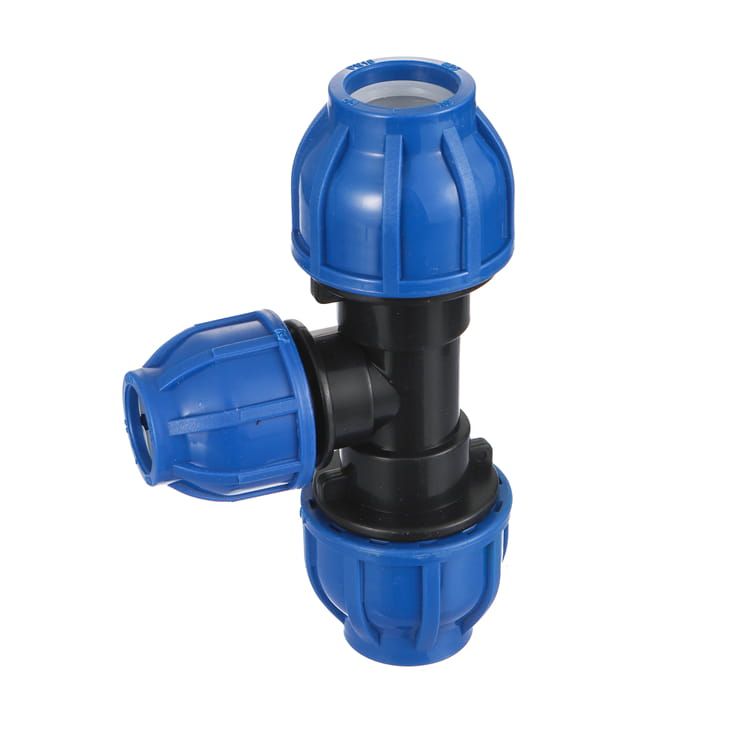
- Buy pipe and fittings from one source so OD, SDR, and grade are guaranteed to match.
- Confirm the supplier is a manufacturer, not a trader — it changes accountability and price.
- Clarify Incoterms, lead time, and port up front — landed cost, not FOB price, is what matters.
- Order coils for small diameters to cut joints and freight on long rural runs.
Why HDPE Suits African Infrastructure
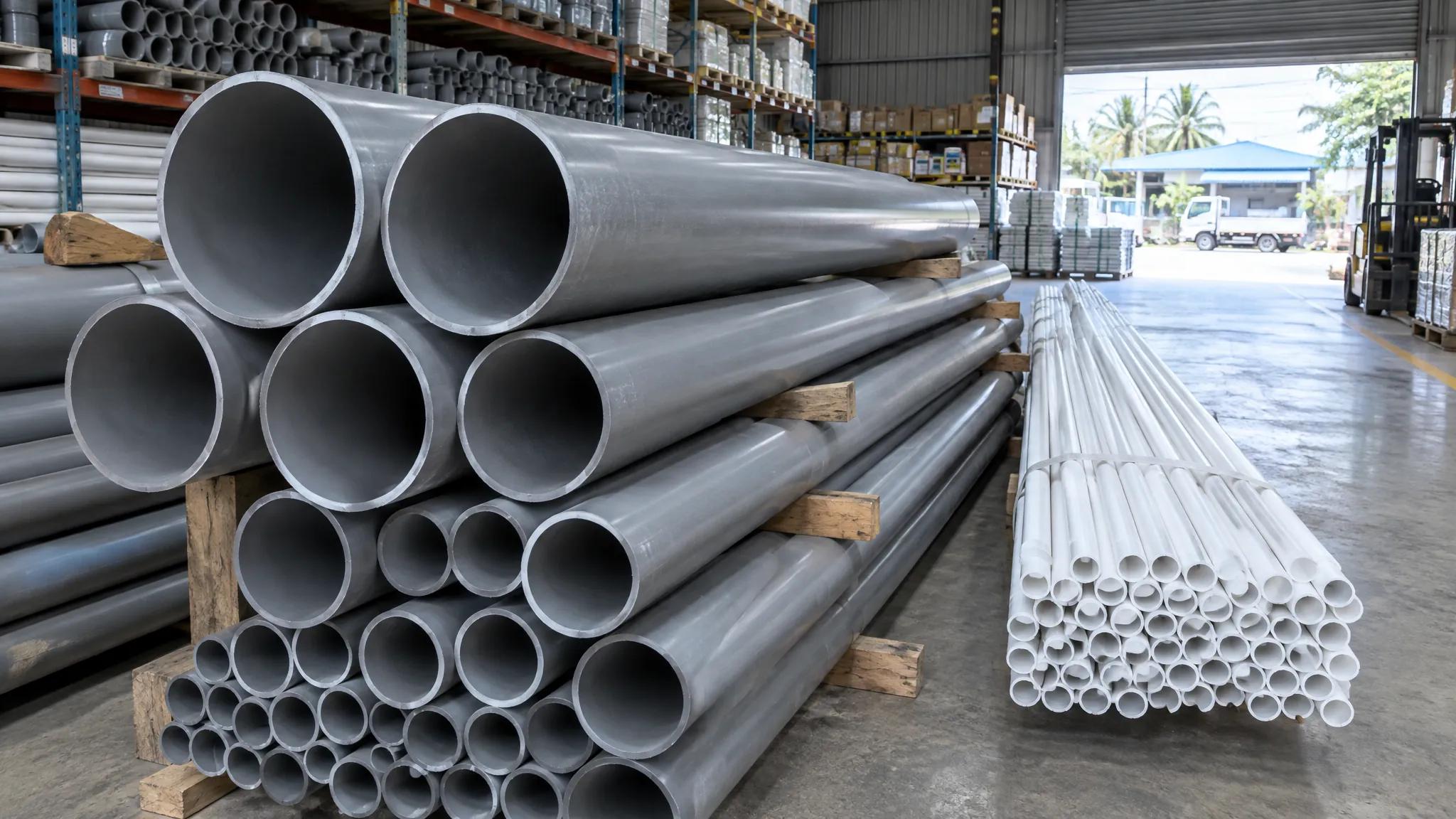
HDPE has become the material of choice for much of Africa's water and infrastructure work for reasons that map directly onto local conditions. It's corrosion-proof, so it handles aggressive soils and mineralised water without the rust and scaling that destroy metal pipe. Its fused joints are leak-free, which matters enormously where non-revenue water loss is high and every leaking joint is water and money down the drain. It comes in long coils for small diameters, so rural service lines can be pulled in with few joints over long distances. And it flexes with ground movement and survives rough handling on remote sites. For irrigation, borehole connections, municipal water, and mine dewatering, it's often the only material that makes long-term sense.
Manufacturer or Trader: Know Who You're Buying From
The first thing to establish is whether your supplier actually makes the pipe. A great deal of HDPE offered to African buyers comes through trading companies that never touch a production line — they buy from whichever factory is cheapest that week and resell. That's not automatically bad, but it changes two things: accountability and consistency. If a batch is under-spec, a trader points at "the factory"; a manufacturer owns the problem. And a trader's product can vary batch to batch as they switch sources. Buying direct from a manufacturer gives you one company responsible for the grade, the certification, and the after-sales support — and usually a better price, because you've removed a margin layer.
Ask direct questions: Do you own the factory? Can I see production and testing? What's your resin source? A real manufacturer answers readily. For a full checklist, see how to verify a manufacturer before you commit.
What to Specify on the Order
Most import disputes come down to a vague specification. Pin down every variable in writing so there's no room for a cheaper substitute to arrive:
| Specify | Example | Why it matters |
|---|---|---|
| Grade | PE100 | Sets strength; PE80 is under-rated for it |
| SDR / PN | SDR11 / PN16 | Sets wall and pressure rating |
| Diameter (DN) | DN110 | Outer diameter in mm |
| OD system | Metric (ISO) | Metric and imperial don't interchange |
| Standard | ISO 4427 | Defines dimensions and testing |
| Form | Coils to DN90, 6/12 m lengths above | Affects joints and freight |
The sizes and SDR guide covers how these dimensions fit together if you need to confirm the numbers before ordering.
Verifying Quality Before You Pay
A printed "PE100" on the pipe is not proof. Ask for documentation you can check: the resin's ISO 9080 classification, the pipe's compliance certificate to ISO 4427, and — for potable water — the relevant drinking-water approval. Request recent third-party or factory test reports for hydrostatic pressure and dimensions. Ask for the mill/production markings that will appear on the pipe so you can confirm the delivered product matches. For a first order, or a large one, arrange a pre-shipment inspection or a sample before the balance payment. A genuine manufacturer expects these questions and provides the paperwork; evasion is the clearest warning sign there is.
Landed Cost, Not Just the Quote
A low FOB price means little if the total delivered cost balloons. Clarify the Incoterms (FOB, CIF, or door delivery), the lead time, and the destination port up front, and build a landed-cost figure: pipe, freight, insurance, duties, and inland transport to site. HDPE's light weight helps here — a PE100 pipe carries the same pressure as a heavier PE80 one, so choosing the higher grade can trim freight. Ordering small diameters in coils rather than straight lengths reduces both the number of field joints and, often, the shipping volume. Compare suppliers on landed cost per meter at the required pressure class, and you'll make a decision that holds up when the container clears customs.
Where HDPE Is Used Across the Continent
Understanding the typical applications helps you brief a supplier accurately. Municipal water supply — trunk mains and distribution networks in growing cities, usually PE100 in medium to large diameters. Rural and borehole water — long small-diameter runs from boreholes to villages, where coiled pipe with few joints is a huge advantage. Irrigation — from commercial farms to smallholder schemes, often lower-pressure classes in coils. Mining — dewatering, slurry, and process water lines that need HDPE's abrasion and chemical resistance. Gas distribution — where a network exists, to the relevant gas standard. Each application points to a different grade, pressure class, and form, so tell the supplier what the pipe is for, not just the diameter you think you need.
Import Mistakes That Cost Money
Vague specification. Ordering "PE100 pipe" without SDR, standard, and OD system invites a cheaper substitute. Spell out every variable, as in the table above.
Mixing metric and imperial. Buying pipe in one OD system and fittings in another leaves you with parts that won't fuse or seal. State "metric, ISO 4427" end to end.
Chasing the lowest FOB price. A rock-bottom quote often means thin walls, recycled resin, or a grade downgrade. Compare landed cost at the required pressure class, and be suspicious of a price far below the market.
Skipping pre-shipment checks. For a first or large order, a sample or pre-shipment inspection before final payment is cheap insurance against a container of under-spec pipe arriving at a port thousands of kilometers from the factory.
Forgetting the fittings and fusion gear. Order the matched fittings, and confirm what fusion equipment the project needs, at the same time as the pipe — not as an afterthought once the pipe has shipped.
Lead Time and Planning
Imported pipe is not an off-the-shelf, next-day purchase. Between production, container booking, sea freight, port clearance, and inland transport, plan on a lead time of several weeks to a couple of months depending on the destination and order size. Build that into the project programme, and confirm the manufacturer's production capacity for your volume up front — a factory that can't fill a large order on time is as much a risk as one whose quality is doubtful. Agree the delivery schedule, payment terms, and who handles clearance in writing before the first payment, so there are no surprises once the pipe is in transit.
After-Sales and Technical Support
Sourcing doesn't end when the container ships. A good manufacturer stays reachable: helping your team confirm fusion parameters for the grade and SDR supplied, advising on the right fittings for a tricky connection, and standing behind the product if a genuine quality question arises. This matters more, not less, when the supplier is thousands of kilometers away — a factory that answers technical questions promptly by phone or email is worth choosing over one that goes quiet after payment. Before ordering, test the responsiveness: send a detailed technical query and see how quickly and competently it's answered. The quality of that reply is a fair preview of the support you'll get once you're a customer, and it's one of the few things you can measure before any money changes hands.
Sourcing HDPE pipe for a project in Africa?
IFAN manufactures certified HDPE pipe and fittings and ships worldwide — send your spec and destination for a landed-cost quote.
Request a Quote
Frequently Asked Questions
How do I know a HDPE supplier is a real manufacturer?
Ask whether they own the factory, request a video or in-person tour of production and testing, and ask about their resin source. Manufacturers answer readily and provide certification and test reports; traders deflect to "the factory." Buying direct usually gives better accountability and price.
What certification should HDPE pipe have?
Compliance to ISO 4427 (water) with the resin classified under ISO 9080, plus hydrostatic and dimensional test reports. For drinking water, add the relevant potable-water approval. Insist on documents you can verify — a printed grade on the pipe alone is not proof.
Should I buy pipe and fittings from the same supplier?
Yes, wherever possible. It's the most reliable way to guarantee the OD, SDR, and grade all match, and it puts one company behind the whole system if anything goes wrong. Mismatched pipe and fittings — especially metric versus imperial — won't fuse or seal.
Coils or straight lengths for a rural water scheme?
For small diameters (up to about DN90), coils cut the number of field joints dramatically and often reduce shipping volume — ideal for long rural runs. Larger diameters ship in 6 m or 12 m straight lengths. Match the form to the diameter and the distance between joints on site.