
HDPE Sliplining: Does the Annulus Need Grout?
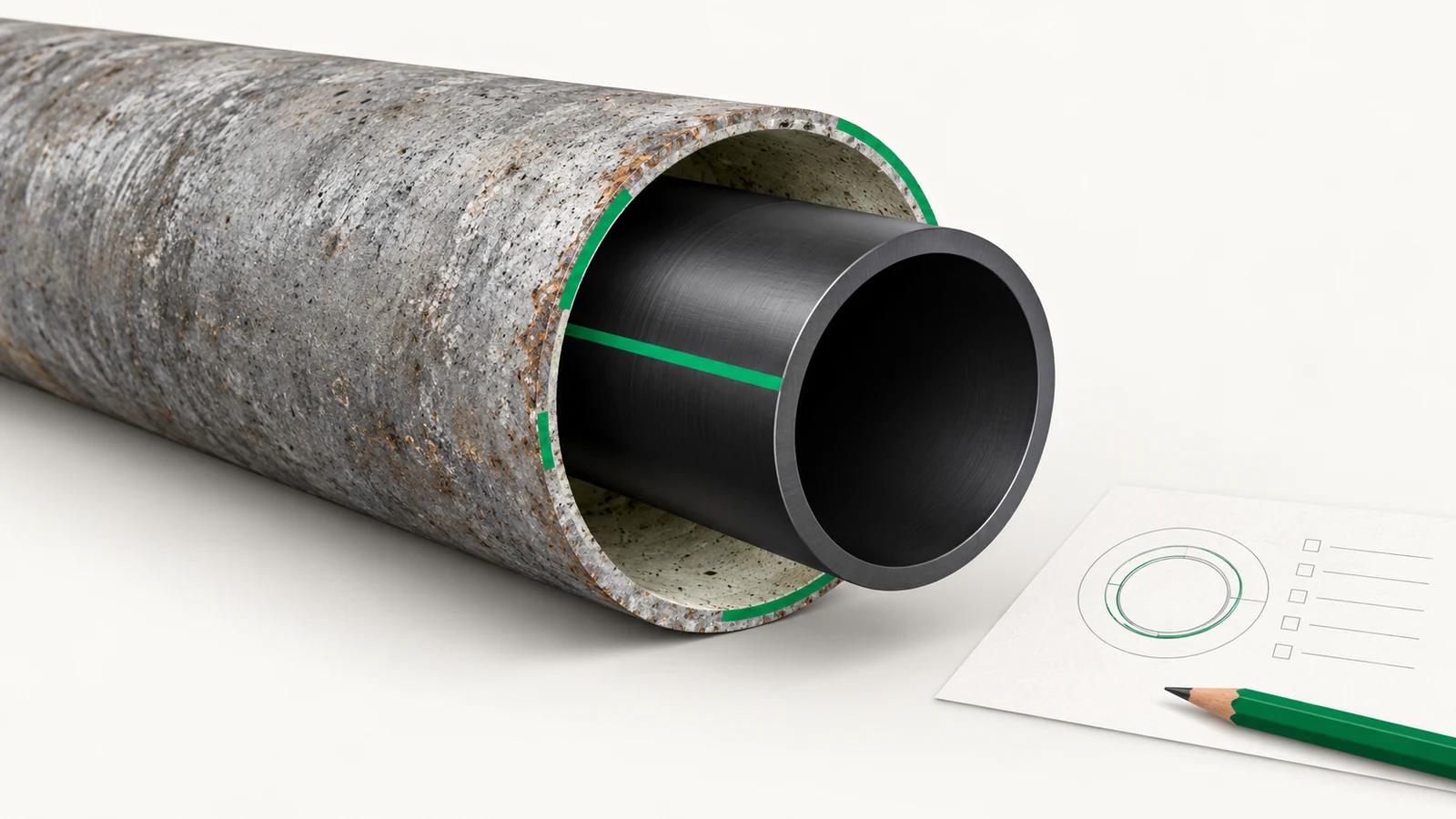
Separate end seals from full annular grout, identify temporary load risks, and prepare an engineer-review sheet for HDPE sliplining.
No single rule makes every HDPE sliplining annulus a full-grout job. For a pressure-water liner, decide end sealing and full annular fill separately from the actual internal and external loads. If grout is required, approve its purpose and the temporary pressure and flotation controls before placement. A pipe that fits the host has not yet passed those checks.
This guide helps a utility engineer or rehabilitation contractor prepare that decision for review. It covers water and sewer sliplining planning; it does not specify a grout mix, a pumping pressure or a complete structural design.
Key Takeaways
- Sealing the ends and filling the entire annulus are separate decisions.
- For pressure-water applications, PPI makes full annular grouting conditional on the project’s loads and engineering analysis.
- Identify whether grout is intended to seal, restrain the liner or participate in structural load transfer.
- Evaluate the fresh-grout stage as well as the finished pipeline: excessive grouting pressure can collapse a liner.
- Groundwater and flotation belong in the review even when insertion went smoothly.
- Release grouting only when the placement plan has approved limits, monitoring locations and a clear hold response.
 Watch the sliplining overview on YouTube
Choose the grout purpose before choosing a mix
The annulus is the space between the liner’s outside surface and the host pipe’s inside surface. Its existence tells you there is a void. It does not, by itself, establish what the rehabilitation design requires that void to do.
Start with the application. In its November 2009 technical note TN-27, question 65, the Plastics Pipe Institute distinguishes normal termination grouting from full annular grouting in pressure-water sliplining. It calls for engineering analysis of internal operating pressure and external earth, water and superimposed loads. That is guidance for a particular application, rather than permission to omit fill from any sewer or culvert.
Next, write the intended role in ordinary language. “Grout annulus” is too ambiguous for a purchasing or construction instruction. A seal at a termination addresses a different problem from a material intended to restrain the liner along its length. A design that depends on load transfer between liner and host makes a further structural assumption.
| Proposed role | Question to resolve | Verdict / planning consequence |
|---|---|---|
| Termination seal | How will water migration at the liner’s ends or structure connection be controlled? | Detail the seal and interface. Its presence does not prove the full length needs filling. |
| Filler or restraint | What movement or void-related condition must the fill address? | Specify the required function and placement controls; do not assume structural bonding. |
| Structural load transfer | Does the design rely on liner, grout and host acting together? | Require the structural design and corresponding material/interface criteria before selecting a mix. |
Source basis: PPI TN-27 question 65 and PE100+ Association sliplining guidance. This matrix organizes their distinctions; it is not a grout specification.
PE100+ distinguishes relatively low-strength, low-viscosity restraint fillers from structural grouts used to bond liner and host. Treat that distinction as a question about the design’s intended load path. Specifying a higher compressive strength alone does not explain which role has been approved or whether the installation method protects the liner.
Read the four roles as text
- Filler
- Which void-related condition must be addressed? Do not assume structural bonding.
- Restraint
- Which movement condition must be controlled? Define the intended restraint role.
- Structural
- Does the design rely on liner–grout–host load transfer? Require the structural design.
- End seal
- How will migration at the termination be controlled? A seal does not imply full filling.
Separate service loads from the grouting stage
Two different questions need answers: what must the completed liner withstand, and what will happen while the annulus is being filled? Passing the first check does not answer the second.
For a gravity sewer liner, PPI’s sliplining design guidance identifies external hydrostatic pressure from groundwater above the pipe as a wall-selection consideration. For pressure applications, it calls for considering internal and external forces together. Record the groundwater condition and the liner’s support assumption rather than selecting wall thickness from its internal service pressure alone.
The placement stage adds fresh grout around a flexible liner. PE100+ warns that grouting forces can exceed normal service forces, with collapse possible if pressure becomes excessive. It also identifies flotation as a condition requiring control. These are different failure modes: a plan can protect against wall deformation yet still allow the liner to move out of its intended alignment.
That is why “low-pressure grouting” is an incomplete instruction. The approved plan needs a pressure limit and the location where it applies, together with a monitoring arrangement and a response if conditions depart from the plan. Without the reference location, two people can read a pressure statement differently and believe they are following the same requirement.
PE100+ mentions filling the liner with water and placing grout in stages among ways of addressing flotation. They are options for a designed method, not automatic instructions for every site. The reviewer must decide whether the proposed filling, staging and restraint arrangements are compatible with the actual liner and intended load path. Do not borrow a lift height or pump setting from a different diameter, pipe wall or grout system.
Work through two different water-main decisions
Illustrative planning assumptions, not project records: consider a pressure-water liner whose designer has explicitly assessed internal and external loading without relying on a grout bond to the host. The current proposal includes detailed termination seals. In that situation, the useful question is whether the approved analysis also requires full-length fill for another stated purpose. If it does not, the mere existence of a gap is not a sufficient reason to add structural grouting to the order.
The result is a documented scope: retain the specified end seals and record the design basis for the full-annulus decision. This is different from a contractor deciding on site that grout can be omitted. It is the analysis, including the relevant service conditions, that supports the scope.
Now change one assumption: the proposed rehabilitation design relies on grout to transfer load, or the external-water condition has not been assessed. The earlier conclusion no longer follows. First obtain the relevant load and support assessment; then the designer can confirm whether an independent liner is adequate or whether the grouted system forms part of the required solution. A pressure class printed on the liner cannot settle that question.
There is a second branch even after full fill is selected. Suppose the grout purpose and completed system are defined, but the method statement has no approved placement pressure or flotation control. The decision is hold placement, not “proceed because the grout is structurally required.” Complete the temporary-stage review, then release the method against its actual limits.
These branches give the team a practical distinction: missing design intent sends the scope back for engineering clarification; missing installation controls holds the placement method. Separating those issues prevents a well-defined end product from being used to justify an undefined construction step.
Build the grouting hold-point sheet
Use a short project sheet to turn the reasoning into a reviewable method statement. Each field should contain an actual value, drawing reference or named approval. A blank field is information still needed, rather than an invitation to insert a generic recommendation.
| Field to complete | Why it changes the decision | Release rule |
|---|---|---|
| Application, liner OD and wall/SDR, host survey and proposed annulus | Identifies the actual geometry and liner being assessed. | Hold if the method describes a different product or unverified host condition. |
| Groundwater/load basis and liner support assumption | Distinguishes independent liner capacity from reliance on the surrounding system. | Designer confirms the relevant conditions and resulting grout scope. |
| End-seal detail and full-fill purpose, if required | Prevents one seal detail from silently becoming a full-length structural assumption. | The drawing and method agree on extent and function. |
| Approved grout and placement sequence; pressure limit and reference location | Defines the temporary load the liner will actually face. | Hold until the approved limit, monitoring and stop response are specified. |
| Flotation/restraint control and alignment checks | Addresses liner movement as a separate placement concern. | The plan identifies how position is maintained and checked. |
| Fill-confirmation method, acceptance records and responsible reviewer | Makes completion assessable against the intended filled extent. | Agree the evidence before placement; retain the resulting record. |
Planning synthesis from the cited PPI and PE100+ guidance. The project’s designer supplies the actual acceptance criteria.
For example, if the pressure limit is absent, the missing input is not simply “more information.” It is the permitted temporary load at a defined location. That input matters because excessive pressure can damage the liner. Once it is approved, compare the proposed placement and monitoring method with that limit before release. If the two cannot be reconciled, revise the method rather than raising the limit on site.
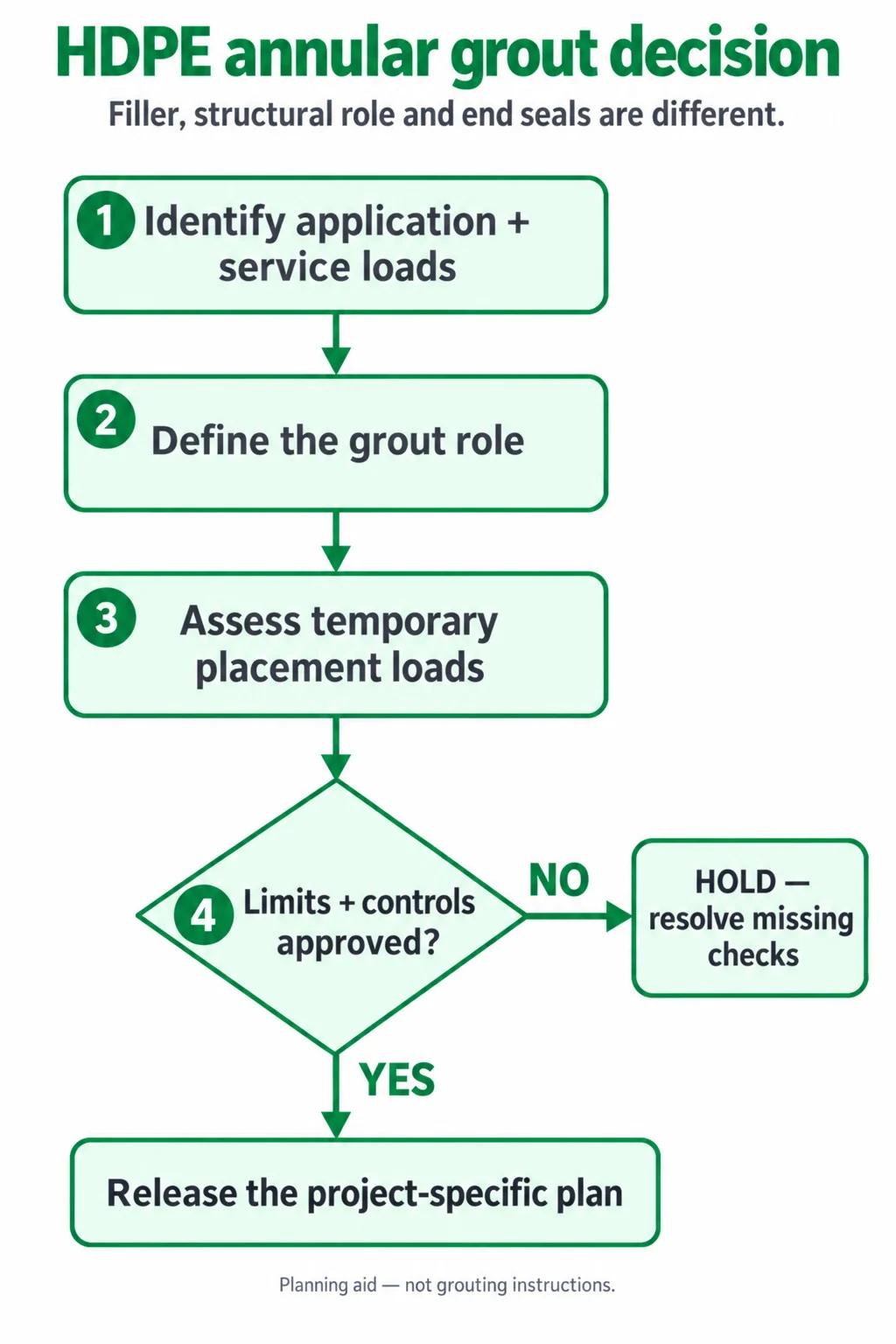
Read the planning flow
- Identify application + service loads
- Define the grout role
- Assess temporary placement loads
- Limits + controls approved?
- NO: HOLD — resolve missing checks
- YES: Release the project-specific plan
NO: hold while missing checks are resolved. YES: release only the project-specific plan after the required limits and controls are approved.
Carry the decision into the liner specification
The product enquiry should describe the liner the design actually uses: material, outside diameter, wall or SDR, required product specification, service and connection details. Keep host-bore clearance and interface requirements attached to that description. A substitution is a change to review, not merely another catalog entry with the same nominal size.
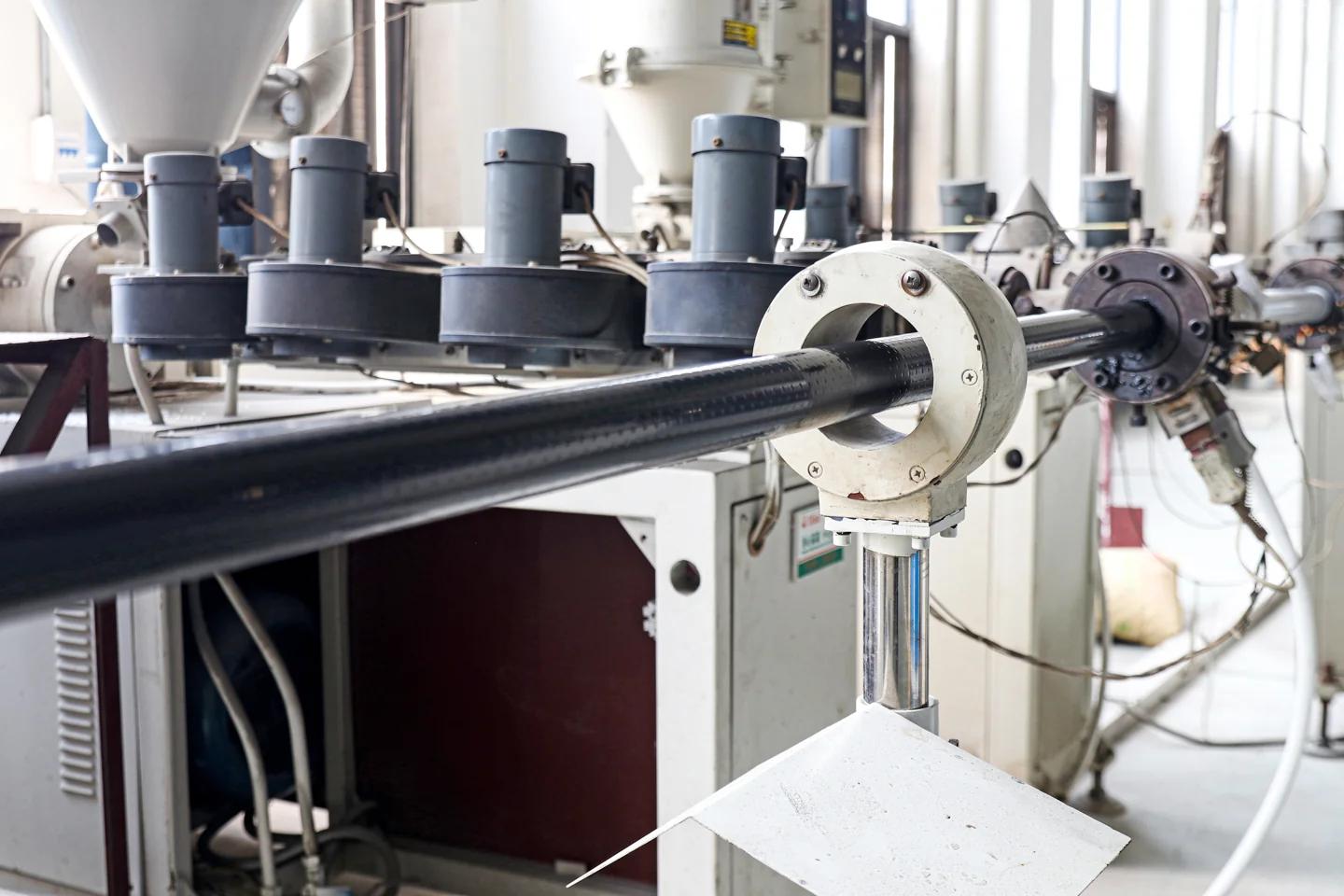
Source and scope
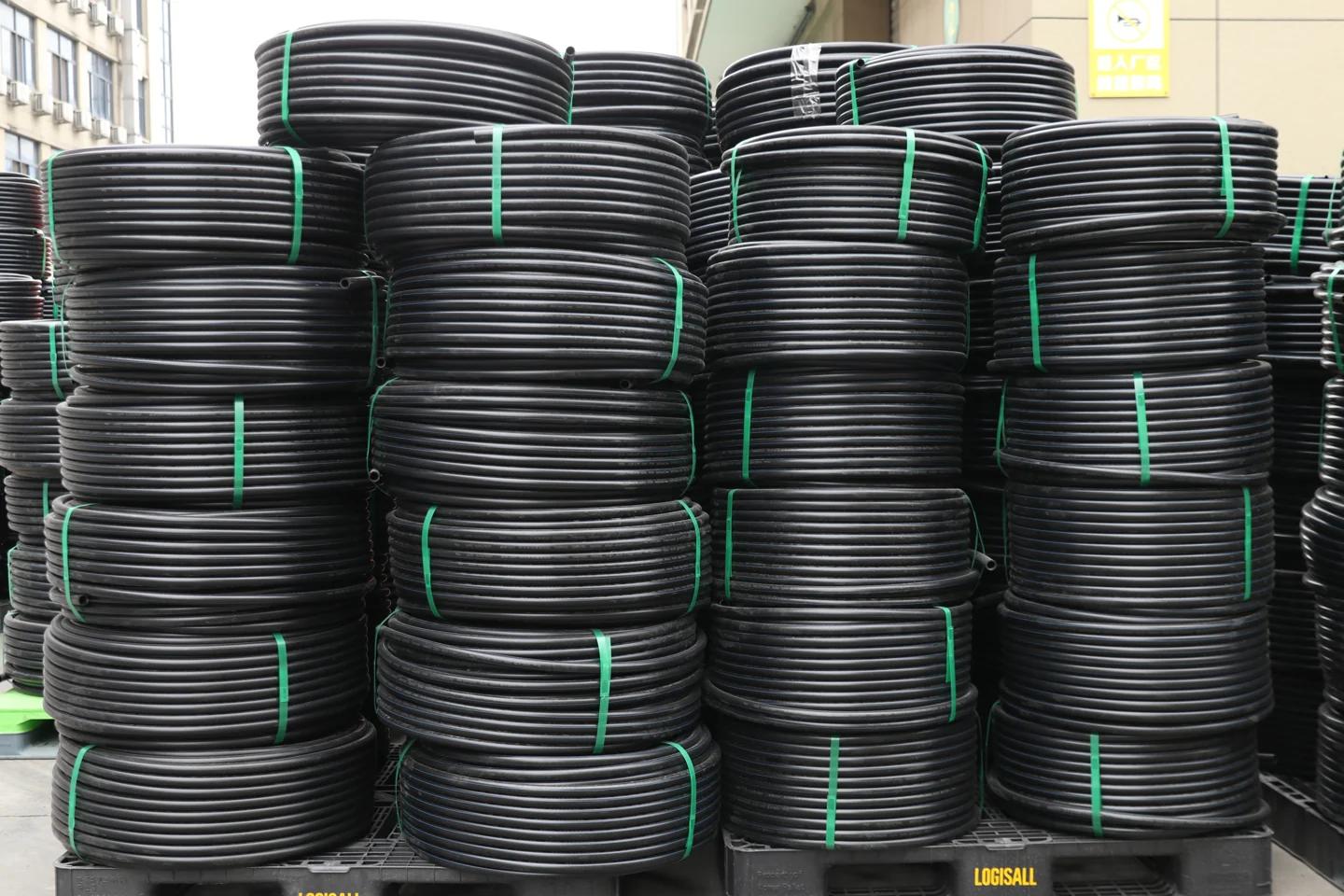
Existing library production scene. It does not show the proposed liner, grout, qualification tests or an approved grouting method.
Source and scope
Existing library stock coils. Supply context only; no diameter, SDR, batch identity, sliplining suitability or grouting resistance established.
Use the IFAN product catalog to begin a product discussion, then submit the required specification to verify whether the particular liner and interfaces are available. The catalog link does not confirm a sliplining SKU, a project approval or a grout-design service. Grout selection and placement acceptance remain with the project team.
For rehabilitation contractors and project procurement teams: keep the material enquiry tied to the approved liner specification.
Browse the catalog; verify liner availabilityConclusion
Write down the application, the grout’s purpose and the liner’s load basis before choosing a mix. Decide termination sealing separately from full annular fill. If placement is required, complete the temporary-load and movement controls, then use the hold-point sheet to release a defined method. An annulus is a geometry; its treatment must follow the design.
Frequently Asked Questions
Does every HDPE sliplining annulus need grout?
No blanket rule applies. PPI’s pressure-water guidance separates termination sealing from full annular grouting and calls for project engineering analysis. Do not extend that conditional guidance into an exemption for every sewer or culvert.
Can end sealing replace structural grout?
Only when the approved design does not depend on full-length grout for its required function. A termination seal addresses an interface; it does not establish the liner’s capacity under external loads.
Is there one safe grouting pressure for HDPE liners?
No universal pressure is supplied here. The actual liner, application and placement method need an approved limit with its reference location, monitoring arrangement and hold response.
Why check flotation if the liner fits the host?
Insertion clearance does not control liner movement during grouting. PE100+ identifies flotation as a separate placement concern, so the method must define how the intended position will be maintained.