
Pump Suction Gauge at Zero? Choose Pressure, Vacuum or Compound Range
A zero suction reading may hide negative pressure. Choose pressure, vacuum or compound coverage, check the measurement and separate it from pump diagnosis.
For a pump inlet that can operate both above and below local atmospheric pressure, specify a compound gauge with a suitable negative-to-positive range. A pressure-only gauge cannot report a negative value outside its scale; a zero indication alone therefore cannot prove that suction pressure is atmospheric. Use a vacuum-only range when the required measurement stays below atmosphere, and an absolute-pressure instrument when the task needs an absolute reference.
The buying decision is about what the instrument must measure. It does not establish whether the pump can operate safely, whether the inlet arrangement is correct or whether a particular IFAN instrument is available. Those are separate checks. Start with the required pressure reference and operating states before comparing a supplier’s dial diameter, case filling or accuracy statement.
Key takeaways
- Zero gauge pressure refers to local atmosphere; it is not zero absolute pressure.
- A positive-only scale can conceal a required negative reading. More accuracy on that same positive-only scale does not add negative coverage.
- Choose coverage for all required inlet states, including relevant stopped and running conditions.
- Include relevant changed-source conditions in the required range.
- A negative reading identifies sub-atmospheric pressure at the measuring point. It does not, by itself, prove cavitation or approve pump performance.
Two zero points: atmospheric and absolute
Ask what the number is referenced to. Ashcroft’s explanation of pressure references distinguishes gauge pressure relative to surrounding atmospheric pressure from absolute pressure relative to an absolute vacuum. A vacuum reading describes pressure below atmosphere. Compound coverage allows positive and negative gauge values on one instrument.
Keep the reference attached to the unit. “Bar” alone does not tell the reader whether an inlet value is gauge or absolute. Write “bar gauge” or “bar absolute” explicitly in the specification and observation record. If an instrument uses a separate vacuum scale, read its units and sign convention rather than copying the magnitude as though it were a positive-pressure value.
The relationship follows from those reference points: absolute pressure = gauge pressure + local atmospheric pressure, using consistent units. This is a reference conversion, not a pump acceptance test.
| Quantity | Explicit assumption or calculation | Interpretation |
|---|---|---|
| Local atmospheric pressure | 1.00 bar absolute, assumed for this example | The local reference, not a universal site value |
| Inlet reading | −0.25 bar gauge, assumed | Below the assumed local atmosphere |
| Absolute inlet pressure | −0.25 + 1.00 = 0.75 bar absolute | Positive absolute pressure despite a negative gauge reading |
If the same hypothetical gauge instead reads zero, the corresponding pressure is 1.00 bar absolute under the stated assumption. Neither calculation is evidence that an actual inlet is safe. At a real site, use the applicable atmospheric reference and a verified measurement; do not substitute the example’s atmosphere for the site’s conditions.
Choose coverage from the inlet conditions
Write down the pressure states the instrument is required to display. Does the inlet remain above atmosphere, stay below it, or cross it when the source or operating condition changes? Do not infer that answer from the word “suction.” An inlet is a location in the system, not a guarantee that its gauge pressure is always negative.
A pressure-only range can serve a task confined to positive gauge pressure. A vacuum-only range can serve a task confined to below-atmospheric pressure. If both signs must be displayed at the same point, compound coverage preserves that information through zero. An absolute instrument answers a different reference requirement; choose it when the measurement task calls for absolute pressure, rather than assuming that a compound dial becomes absolute because it has a vacuum scale.
Next specify the expected minimum and maximum, the abnormal exposure the instrument must tolerate and the measurement detail needed near the relevant values. The correct family of scale does not determine its numerical endpoints. Without the actual duty, there is no defensible universal range to order from this article.
Accuracy remains important after coverage is settled. Our guide to pressure-gauge range, span and accuracy explains why a percentage-of-span allowance changes with the selected span. Use that comparison to assess a proposed range; do not use a more impressive percentage to excuse a missing negative region.
- Define the required pressure reference. If an absolute reference is needed, use an appropriate absolute-pressure instrument.
- For an atmospheric-reference task, record every required inlet state.
- Choose positive gauge-pressure coverage for above-atmosphere-only duty, vacuum-only coverage for below-atmosphere-only duty, or compound coverage when both signs must be displayed.
- Specify endpoints, exposure, medium, temperature, connection and accuracy.
Three completed inlet-gauge choices
These examples assume that the stated duty has already been established by the responsible project team. They choose measurement coverage, not an exact instrument or a pump operating limit.
| Assumed task | Coverage decision | What still needs specification |
|---|---|---|
| The inlet remains above local atmospheric pressure in every required measurement state. No below-atmosphere indication is needed. | A positive gauge-pressure range addresses the stated coverage task. Compound coverage is not required merely because the tapping is at the inlet. | Positive range limits, permitted exposure, accuracy, temperature, medium and connection |
| A dedicated measurement remains below atmosphere; the task requires no positive-pressure indication. | A vacuum-only range addresses that task. Confirm separately that the instrument can tolerate every exposure it may encounter. | Required vacuum interval, units, resolution and any positive-pressure exposure rating |
| The same inlet must be monitored with both a positive-pressure supply and a below-atmosphere operating condition. | Choose compound gauge-pressure coverage with both required regions. A positive-only gauge omits part of the task. | Negative and positive endpoints, performance on the relevant scale regions and all exposure limits |
Now change one condition. Suppose the first installation is later required to monitor a below-atmosphere condition during a different supply arrangement. The original positive-only coverage no longer meets the expanded task, even if it remains correctly calibrated. Review the measuring requirement and instrument specification; do not conclude that the inlet pressure cannot be negative simply because the old dial cannot show it.
Alternatively, if the third task is actually to obtain absolute pressure for an engineering assessment, a signed atmospheric-reference indication is not the complete requested output. Provide an appropriate absolute measurement or a properly established conversion with the necessary reference information. Changing the dial’s sign coverage and changing the pressure reference are two different decisions.
A zero pointer is an unresolved observation
A zero reading on a positive-only inlet gauge deserves a measurement check before it becomes a process conclusion. In a published commercial-pump diagnostic account, engineer Richard Medairos describes replacing a conventional gauge with a compound gauge to reveal negative pressure. The account illustrates missing display coverage; it does not establish that every zero reading has that cause.
Separate at least three possibilities: the local gauge pressure is genuinely near atmospheric zero; pressure lies below the instrument’s indicated region; or the measurement is not representing the tapping correctly. Instrument condition, isolation and the pressure connection require competent verification. A stationary pointer alone cannot distinguish those possibilities.
Check the instrument identification, reference, scale and applicable manual first. Ask the responsible technician to verify the measurement path and compare the reading with a suitable verified instrument under documented conditions. Record the tapping location and whether the pump is stopped or running so that a change in condition is not mistaken for a disagreement between gauges.
This is not an instruction to loosen a live pressure connection or install a replacement while the system operates. Follow the equipment and site isolation procedures. If the verified measurement is negative, report the signed value and operating condition rather than relabelling it “no pressure.”
Stop the conclusion at what was measured. One inlet reading cannot establish flow, identify every restriction or approve the pump’s suction margin. A pump assessment needs the responsible engineer’s method and relevant operating information, including fluid conditions and manufacturer performance requirements. A negative indication alone is neither proof of cavitation nor assurance that cavitation is absent.
Specify the measuring task before ordering
Send the supplier a requirement that distinguishes reference, coverage and exposure. Identify the water service and any additives, the actual measurement point, required pressure reference, expected minimum and maximum, relevant stopped and running states, maximum exposure, temperature, process connection and required indication performance. Request the proposed model’s documentation rather than accepting a generic catalogue photograph as evidence.
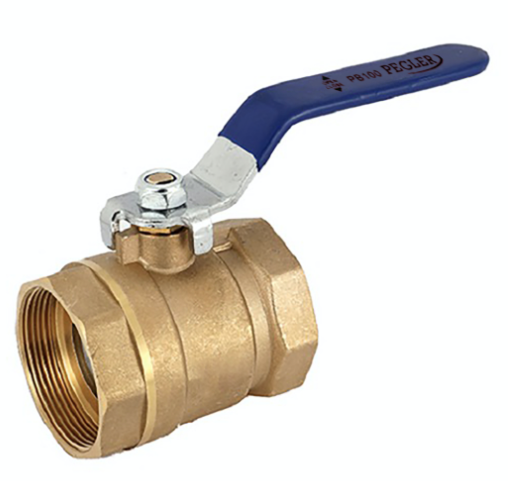
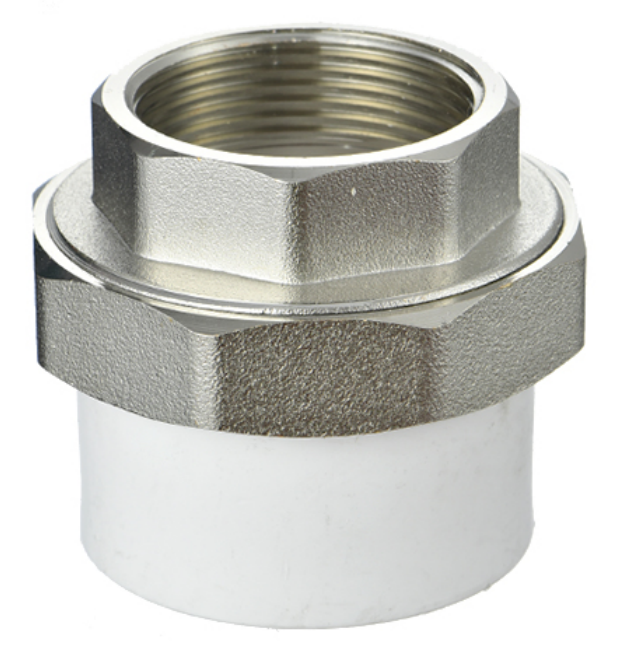
If the instrument is part of a wider pipe-system purchase, the IFAN product catalogue can help organise related piping components. It does not establish that a matching compound gauge, calibration service or instrument certification is available. Nor does compatibility with a pipe thread establish complete compatibility with the medium or operating conditions.
Submit the measuring requirement for an availability check, including the project country and the information above. Ask for confirmation of the specific model, range, reference, connection and supporting documentation before treating it as an orderable solution. This is an availability enquiry, not a promise of a stocked instrument or a pump-selection service.
Conclusion
Choose the reference first and the signed coverage second. A pump inlet that must show both sides of atmosphere needs that capability in its measurement specification. When a positive-only dial sits at zero, verify what it can display and whether it is receiving a valid pressure signal before diagnosing the system. The result is a usable instrument requirement and an honest reading, with pump suitability left to its separate engineering assessment.
FAQ
Does zero gauge pressure mean an empty pipe?
No. Gauge pressure is referenced to local atmosphere. The reading does not, by itself, establish the pipe’s contents or whether the measurement is valid.
Is every suction gauge supposed to read below zero?
No. Specify the required inlet conditions. The examples distinguish an always-positive duty from vacuum-only and cross-zero duties.
Does “vacuum rated” mean a positive-pressure dial can display vacuum?
Not necessarily. Exposure tolerance and indicated measuring range are different specifications. Ask for both in the proposed instrument’s documentation.
Can a compound gauge confirm that a pump will not cavitate?
No. It provides a pressure indication. Pump suitability requires the applicable engineering assessment and operating information beyond that single reading.