

Storm Sewer vs Sanitary Sewer: Identify the Service Before Specifying Pipe
Distinguish storm, sanitary and combined sewers by what enters and where it goes. Classify three project cases before choosing a pipe specification.
A pipe enquiry can say “storm sewer” while the drawing leaves the permitted receiver unresolved. A storm sewer normally collects rainfall or snowmelt runoff; a sanitary sewer collects wastewater; a combined sewer collects both. Those names describe intended service, not proof of the contents or permitted connection of every existing segment. Before choosing the pipe specification, establish the actual source, receiving network and project-authorized arrangement.
That is the purchasing problem when a drawing, site description and supplier quotation use “sewer” differently. One may identify a future storm main, another an existing combined connection, and a third a pipe product. Each statement can be meaningful. Together, though, they still leave you asking which connection is authorized during the work. Resolve that relationship in the service brief before treating the product schedule as complete.
Key Takeaways
- In a separated system, stormwater and wastewater have distinct collection routes.
- A combined system collects both, so an existing connection needs more context than the origin of one flow.
- Intended service and actual flows can differ during an authorized sewer-separation project.
- A manhole label, pipe material or nominal diameter cannot verify the buried arrangement.
- Service identification does not select gravity or pressure duty, hydraulic capacity or a product standard.
- Record the source, receiver, authorized project stage and remaining specification decisions in one brief.
Start with what enters and where it goes
A service name is most helpful when it connects an incoming flow to a receiving network. The EPA explanation of separate and combined sewer systems distinguishes wastewater conveyed toward treatment from runoff collected by a separate stormwater system. The City of Toronto’s street-sewer guide shows both arrangements within one city.
| Service | Flow collected | Receiving route | Verdict for the brief |
|---|---|---|---|
| Storm sewer | Rainfall or snowmelt runoff | A stormwater network with its own discharge arrangements | Identify the catchment and approved stormwater receiver |
| Sanitary sewer | Wastewater from homes, fixtures and businesses | Wastewater collection toward treatment | Identify the wastewater source and approved sanitary receiver |
| Combined sewer | Stormwater and wastewater together | A shared collection network, normally toward treatment, with overflow arrangements | Identify the combined network and applicable connection arrangement |
Conceptual comparison based on EPA and Toronto municipal explanations. It does not identify the actual sewer serving a particular site.
For a buyer, this produces a better question than “Which sewer pipe do you sell?” Start with a source such as paved-catchment runoff or fixture wastewater. Then name the verified receiver. If one of those is unknown, keep the unknown visible rather than replacing it with a material or product category.
The downstream destination matters too. Toronto describes separated storm runoff flowing to nearby waterways, while sanitary wastewater goes to treatment plants. That does not make every city’s discharge route identical, nor does it establish that runoff is uncontaminated. It shows why the destination belongs in the project description rather than being inferred from a drain opening.
A service description should survive a change of pipe material. If “storm” becomes “sanitary” merely because the proposed product changes from concrete to plastic, the description was relying on the wrong evidence. The function belongs to the network; product suitability is a later decision.
Why a combined district changes the answer
In an established combined network, both runoff and wastewater enter shared collection infrastructure. During separation work, the intended final service and the interim receiving network may differ. A storm line can have a temporary connection to a combined system under applicable project conditions; its intended service alone does not establish the final outlet.
Toronto’s municipal sewage collection system approval, issued 2 June 2025, provides a bounded example. Schedule D, condition 5.2.2(b)(iv), addresses a temporary storm-sewer connection to a combined system in a separation project. Under that interim-plan branch, the construction plan must include a timeline for disconnecting the storm sewer to a separated storm outlet. Condition 5.2.4(c) also requires temporary separation structures to be disconnected and decommissioned upon completion.
These Toronto conditions do not authorize a connection elsewhere or prove any particular site’s arrangement. The example concerns a storm line discharging to a combined system; it does not establish permission to send combined sewage into a new storm main. The useful lesson is to identify the interim receiver and the transition to the final outlet separately.
That distinction prevents two opposite mistakes. Assuming a new storm line already has its final separated outlet may overlook an interim connection. Assuming the existence of an interim connection permits any mixed tie-in takes a conditional arrangement outside its scope. Both errors replace the actual approved arrangement with a general rule that cannot settle the site.
For a new enquiry, separate three statements: the service the asset is intended to provide, the flows it receives at the stage being discussed, and the evidence authorizing those connections. A drawing for final separation may not describe the interim work. A connection instruction may apply to one tie-in rather than the whole district.
Combined overflows provide another reason to keep the network context. EPA explains that wet-weather flow can exceed combined-system capacity and result in an overflow. Ordering a larger property lateral cannot, on its own, approve the downstream network or resolve an uncertain connection.
Service and pipe duty are different decisions
Once the service relationship is clear, the pipe specification still has several independent jobs. It must describe the segment’s conveyance duty, required dimensions, joints and installation conditions. “Sanitary” identifies wastewater collection; it does not tell a supplier whether the segment being purchased is a gravity lateral or part of a pumping arrangement.
The same separation applies to runoff. Knowing that a line is storm drainage does not establish the design flow or the required bore. The storm-drainage sizing guide addresses the rainfall and capacity calculation as a separate task. Its result depends on its inputs; it is not a reusable size for every line carrying rainwater.
| Question | What service identity contributes | What it leaves unresolved |
|---|---|---|
| How much flow must it carry? | The kind of incoming flow and receiving system | The project’s hydraulic inputs and capacity assessment |
| Is this segment gravity or pressure duty? | The collection purpose | The conveyance arrangement and applicable operating conditions |
| Which pipe and joint are suitable? | The application to state in the enquiry | Product standard, dimensions, compatibility and performance requirements |
| How is the buried asset supported? | Which network segment is being built | Loads, ground conditions and accepted installation design |
| May this connection be made? | The intended source and receiver | Site-specific authority and project-stage evidence |
The uPVC drainage overview covers the wider product families and applications. Use that context without treating a category label as a complete specification. A pipe offered for drainage still needs to match the actual project requirement.
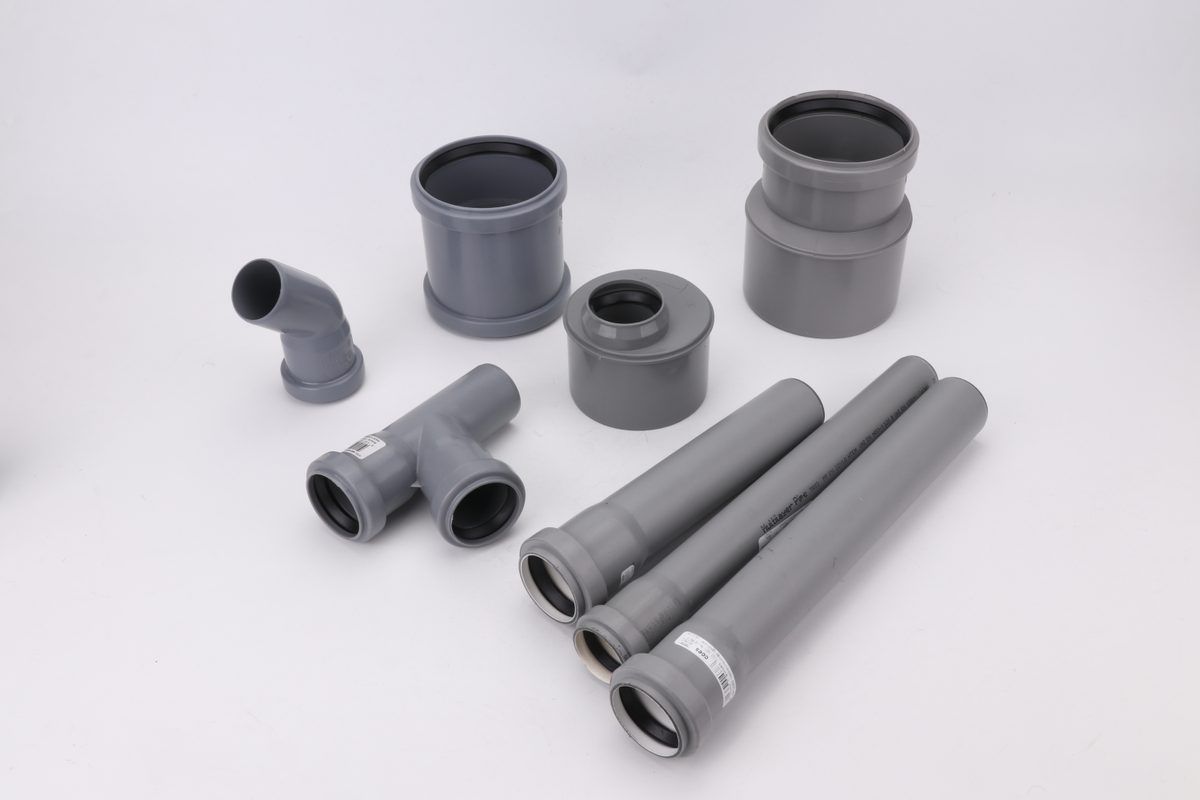
This is also why a quotation should not force the supplier to infer service from appearance. A photograph can show a pipe or joint. It cannot establish the authorized downstream network, and it cannot replace the project standard. Preserving separate service and product fields makes the eventual comparison between offers clearer.
Three project cases with different specification consequences
The following are illustrative review cases, not IFAN installations or surveyed underground connections.
A car park with a confirmed separated storm receiver
The source is paved-area runoff, and the approved project information names a separate stormwater connection. Record storm drainage as the service. The next design question concerns runoff capacity and the applicable pipe and installation requirements. A quotation headed “sewer pipe” does not change that result.
If the receiver later proves unconfirmed, the result changes. The origin remains runoff, but the authorized destination is now an open item. That is a connection-evidence gap, not evidence that the water has become sanitary wastewater.
A toilet lateral with a documented sanitary connection
Fixture wastewater and an approved sanitary receiver support a sanitary-service classification. A nearby catch basin does not supply an alternative authorized outlet. The product schedule must then identify the actual segment duty: a gravity lateral and a pumped segment cannot be assumed to use the same requirements merely because both carry wastewater.
The usable result is a sanitary source-and-receiver description plus the outstanding conveyance and product fields. It is more precise than either “all wastewater pipe is the same” or a request for a stronger pipe without an operating basis.
A roof connection during sewer-separation work
Suppose a drawing shows a new storm main while an existing property connection remains combined. Without the stage-specific connection instruction, record the mismatch as unresolved. Do not infer the tie-in from the new main’s name.
If an applicable authority-issued clarification then identifies an interim arrangement, the service brief can record that arrangement and its scope. The Toronto example demonstrates why project stage and connection direction matter; it does not authorize the tie-in at this hypothetical site. Keep the intended final service and the authorized interim flows as separate fields.
| Known conditions | Verdict | Next required decision |
|---|---|---|
| Runoff and confirmed separate storm receiver | Storm-drainage service identified | Hydraulic and product/installation requirements |
| Fixture wastewater and approved sanitary receiver | Sanitary service identified | Segment duty and corresponding pipe schedule |
| Existing combined service and proposed storm main, interim instruction missing | Connection arrangement unresolved | Applicable authority clarification and project stage |
Carry the service decision into a pipe enquiry
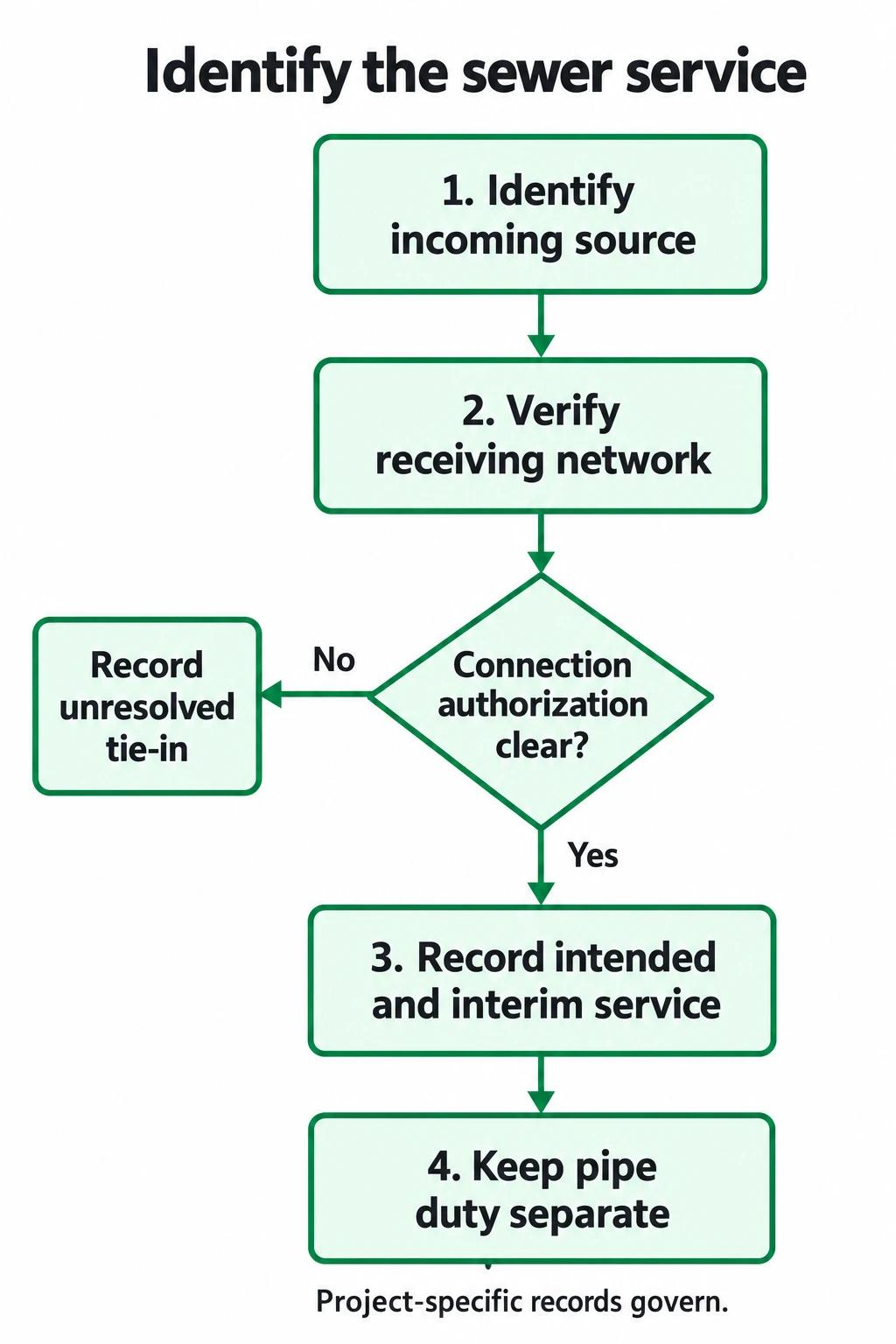
- Identify incoming source
- Verify receiving network
- Record intended and interim service
- Keep pipe duty separate
If connection authorization is unclear, record the unresolved tie-in before treating the connection as established.
The service portion of the enquiry needs six fields: incoming source; receiving asset; intended final service; actual or planned interim flows; authorized connection reference; and unresolved items. Add the approved pipe standard, dimensions, joint requirements, installation conditions and quantities as the product portion.
For the separation example, a useful preliminary entry is: “Existing combined property service; new storm main proposed; interim tie-in instruction outstanding; final separated service and current work stage to be confirmed against the project clarification.” Once an applicable instruction is supplied, replace the open item with its reference and exact scope.
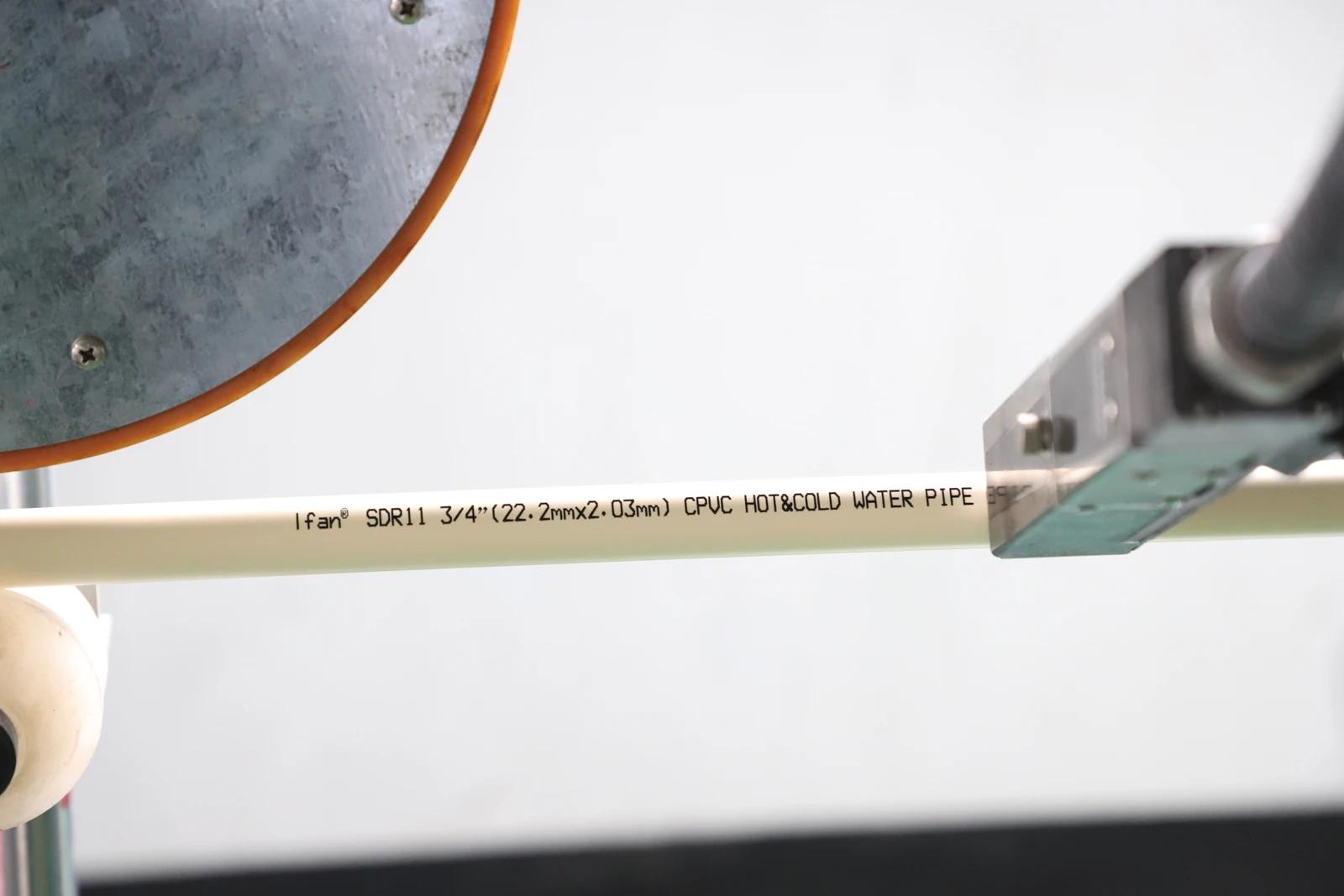
The IFAN pipe catalogue can help identify relevant pipe categories after that brief is established. This public-source article does not confirm a municipal-approved model, certification, stock or supply terms. Submit the approved specification to check whether a matching product can be offered.
Review the IFAN pipe catalogue
Conclusion
General definitions give the enquiry a useful starting point; project records establish the actual receiving network and the arrangement authorized for that stage. Keep both in the comparison. Carry the resolved service into the pipe schedule, and leave any unresolved tie-in visible rather than asking a material name to substitute for a connection record.
Frequently Asked Questions
Does a storm label prove that a segment contains only rainwater?
No. It describes intended service. Existing connections or authorized transitional works can require additional context; verify the actual arrangement.
Does a combined district authorize any mixed connection?
No. The applicable project and authority requirements still determine the property connection. A district description alone does not supply that permission.
Can the same pipe material appear in both services?
A material can serve different applications. That does not make their flow assumptions, product requirements, joints or connection approvals interchangeable.
Does this comparison determine a pipe diameter?
No. It establishes the service information needed before the hydraulic and product-selection decisions. Diameter requires its own design basis.
IFAN Group editorial team, 18 October 2026. Public-source service comparison. The Toronto approval illustrates conditional interim routing; the three review cases are explicitly illustrative. No project design or connection approval is provided.
Related Briefings
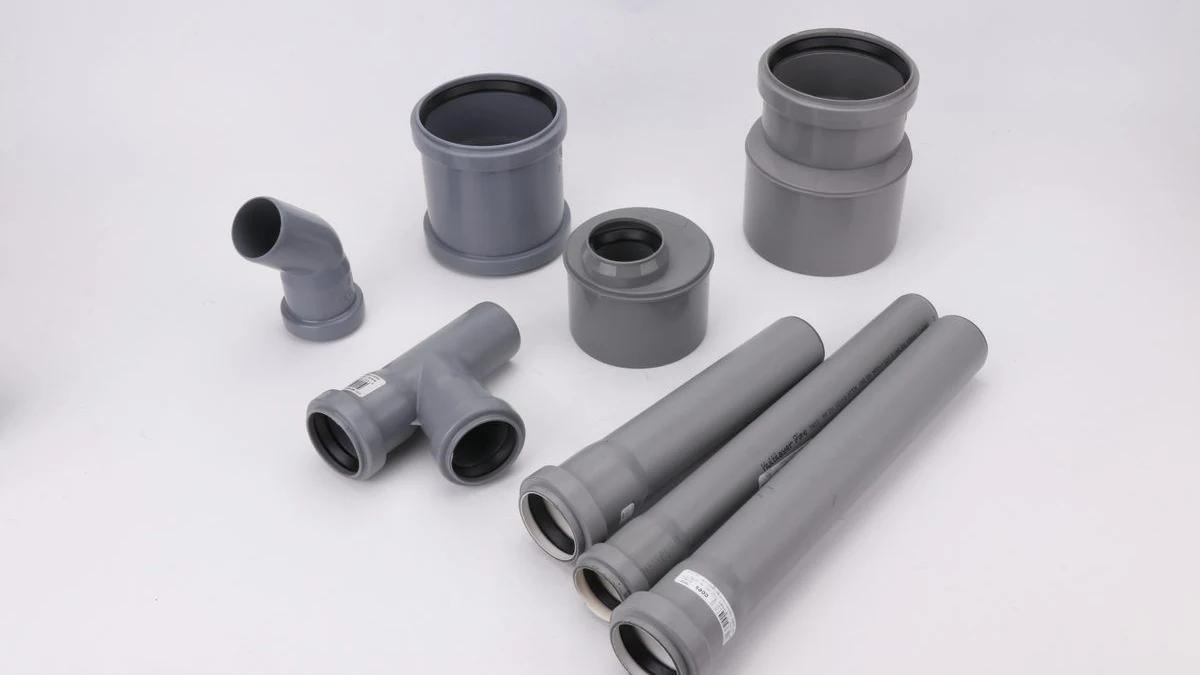
Storm Drainage Pipe Sizing: Rainfall to Required Bore
C900 DR 14, DR 18 and DR 25: Read a US Water Tender
Y-Strainer Selection for Water: Mesh, Pressure Drop, Blowdown
Check water Y-strainer screen openings, model pressure loss and cleanout access. Decide what fits, what is missing and when basket or duplex designs suit.