
PPR Pipe Welding & Installation Guide: Temperature, Time & Mistakes
PPR is installed by socket heat-fusion at about 260 °C — and most joint failures are not material failures but installer mistakes on temperature, time or geometry. This guide covers the fusion window, the diameter-by-diameter heating times, the four mistakes that cause most leaks, and the pressure test to run before you close a wall.
Good PPR pipe installation comes down to two numbers: the fusion temperature and the heating time for each diameter. Get the heat around 260°C and hold each joint for the right few seconds, and the pipe and fitting melt into one solid piece that outlives the building. Rush it or cook it, and you build in a leak that shows up months later, buried in a wall.
The mistake that surprises most new installers: overheating is worse than underheating. Holding the pipe on the iron "a little longer to be safe" carbonizes the plastic, weakens the joint, and creates a weld that looks fine but fails under pressure. More heat is not more safety — precise heat is.

Key Takeaways
- Fusion temperature is ~260°C (±5–10°C), per ISO 15874 and ASTM F2389.
- Heating time scales with diameter: DN20 ≈ 5s, DN25 ≈ 7s, and longer for bigger pipe — follow your welding tool's chart.
- Overheating carbonizes the joint and is more damaging than underheating. Don't add "safety" seconds.
- Push straight, never twist when inserting the pipe into the fitting — twisting shears the molten layer.
- Hold still while it cools. Don't stress or move the joint until it has set.
- Pressure-test the finished system at 1.5× working pressure for ≥30 minutes before closing walls.
- Before plaster, sign off three hold points (material receipt, the pressure test, the cover-up) and log the welding tool at 260 ± 10 °C as a witness point.
On this page
The Two Numbers: Temperature and Time
Socket fusion works by melting the outside of the pipe and the inside of the fitting at the same time, then pushing them together so the molten plastic becomes one mass. The temperature is fixed; the time changes with the pipe size.
Even correct-looking welds can fail — the six real causes of PPR joint leaks and how to spot each are worth knowing before you close a wall.
Temperature: hold ~260°C
Set the welding iron to about 260°C, within roughly 5–10°C. This is the range specified by ISO 15874 for polypropylene systems and mirrored in ASTM F2389. Let the iron reach temperature fully before the first joint — a cold iron under-melts and a hot spot over-melts.
Heating time by diameter
Bigger pipe needs more seconds on the iron. The values below are typical socket-fusion times — always check them against the chart printed on your welding machine or in the fitting standard, and adjust for cold ambient conditions, which need a touch longer.
| Diameter | Heating time (approx.) | Note |
|---|---|---|
| DN20 | ~5 seconds | Standard reference value |
| DN25 | ~7 seconds | Standard reference value |
| DN32 and up | Longer, rising with size | Follow the tool / standard chart |
Step by Step: A Clean Fused Joint
The sequence matters as much as the numbers. Each step prevents a specific failure.
- Cut square and deburr: a clean, perpendicular cut lets the pipe seat fully. A ragged or angled cut leaves a gap that never fuses.
- Mark the insertion depth: mark how far the pipe should enter the fitting so you push it all the way — not too shallow (weak) or too deep (blocked bore).
- Heat both at once: slide pipe and fitting onto the iron's socket and spigot at the same time, and hold for the time for that diameter — no more.
- Push straight, don't twist: pull both off the iron and press the pipe into the fitting in one straight motion to the mark. Twisting shears the melted layer and ruins the bond.
- Hold, then leave it: hold steady for a few seconds, then let it cool undisturbed. Moving or stressing a warm joint deforms the weld.
The Mistakes That Cause Leaks
A carbonized, overheated joint often looks the same as a good one from the outside. That's why overheating is dangerous — the failure is invisible until the system is under pressure.
- Overheating: too many seconds on the iron carbonizes the plastic and forms a brittle, weak joint. This is the single most common durability mistake.
- Underheating: too few seconds leaves the surfaces incompletely melted, so they never truly fuse and the joint pulls apart under load.
- Twisting on insertion: rotating the pipe as you push it in tears the molten layer, creating a weak, uneven bond.
- Moving it while it cools: stressing the joint before it sets deforms the weld and can open a hairline path.
- Mismatched material or wall: welding pipe and fitting of different grades or S-series never fuses cleanly, covered in the PPR fittings guide.
Pressure-Test Before You Close the Wall
A weld that looks perfect can still hide a fault, so never trust the eye alone. Pressure-test the finished system before it disappears behind tile or plaster.
The standard hydrostatic test runs at 1.5 times the working pressure and holds for at least 30 minutes; a pressure drop points to a weak joint you can still reach. This is also where the pipe's pressure class matters — matching PN to the system is set out in the PPR pipe sizes and pressure chart. Find the fault now, not after the wall is finished.
Before the Wall Closes: A Hold-Point ITP for PP-R
China's general code for building water systems, GB 55020-2021, in force since 1 April 2022, says concealed work must be accepted by all parties and recorded before it is covered (clause 8.1.6). GB 50300-2013 names the mechanism in clause 3.0.6: the contractor notifies the supervising engineer, the acceptance is documented, and only then does work continue. On most projects the same rule is written into an inspection and test plan (ITP).
The form is the easy part. What protects you is a release condition for each check that a third person could verify a year later from the file. Two point types carry the plan. A hold point stops the job: nobody plasters, tiles or backfills until the named person signs. A witness point needs notice so the inspector can attend, but it does not stop the crew. Public specifications use the same pair; Queensland's road specification MRTS05 (July 2022) numbers its Hold Points and Witness Points and points to MRTS01 clause 5.2 for the general rules.
Six points between delivery and plaster
| Stage | What is checked | Point | Release when (verdict) |
|---|---|---|---|
| 1. Material receipt | Print line, quality certificate and test report against the approved submittal | H | Standard, pressure class and size match; papers name this batch |
| 2. Welding tool | Heating-tool face temperature, surface or infrared thermometer, each shift | W | Reads 260 ± 10 °C; reading logged, not the dial setting |
| 3. First joints per installer | Insertion depth mark and bead on the first joints of each size | W | Pipe seated to the mark; even bead all round |
| 4. Supports and fixed points | Clip spacing and anchor positions against the layout drawing | W | Matches the drawing; no clip missing at a fixed point |
| 5. Hydrostatic test | Each section to be concealed, gauge readings on a signed sheet | H | Meets the named standard's criterion; no weeping at any joint |
| 6. Cover-up | Photos tagged with zone and riser ID, all earlier signatures | H | Every H above signed; photos filed before plaster |
Source: GB 55020-2021 clauses 8.1.2, 8.1.6 and 8.3.2; GB 50300-2013 clause 3.0.6; GB 50242-2002 clause 4.2.1; DVS 2207-11 (2020-05) heated-tool temperature as restated in the SIMONA welding manual (10/2023). Point types are this guide's recommendation, not a code requirement. Read 25 September 2026.
Material receipt is a hold point for a scheduling reason as much as a quality one. GB 55020-2021 clause 8.1.2 requires main materials to arrive with Chinese-language quality certificates and performance test reports, and to be inspected on entry. If a batch fails that check once the plumbers are on site, the replacement lead time becomes the programme. So ask at order stage which sizes are stock and which need a production run. IFAN states on its PP-R supplier page that lead time depends on order size, customisation and whether the sizes are in stock, and confirms the schedule with the quotation.
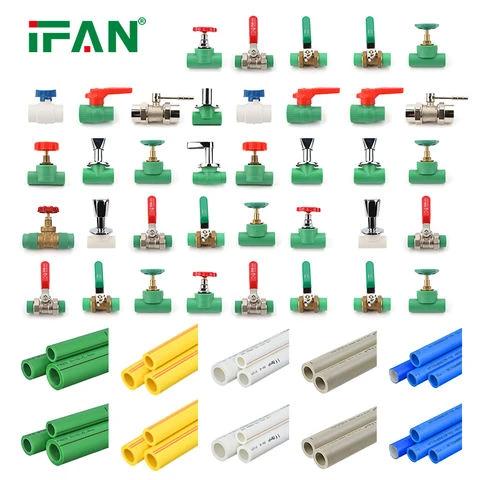
Keep the submittal specific: IFAN's PP-R pipe runs from DN20 to DN160 in PN12.5 to PN25, and the print line has to match the class you approved. Reading that print line field by field is covered in PP-R pipe marking and batch traceability.
Release conditions nobody can argue with
"No pressure drop" is not a release condition, because every gauge moves. For plastic water pipe on a Chinese building project, GB 50242-2002 clause 4.2.1 gives the numbers. Test at 1.5 times working pressure and not less than 0.6 MPa. Hold for 1 hour with no more than 0.05 MPa drop, then hold at 1.15 times working pressure for 2 hours with no more than 0.03 MPa drop, and check every joint for leaks. Metal and composite pipe gets a different criterion in the same clause: 10 minutes with no more than 0.02 MPa drop. So a test sheet copied from a steel job will release plastic pipe on the wrong numbers.
The 30-minute check in the previous section is a quick site test. Where the contract cites GB 50242, the two-stage hold is what releases the wall. Outside China, EN 806-4:2010 sets its own filling and hydrostatic test procedures for water installations inside buildings. Write the standard and clause into the ITP row, not "per code".
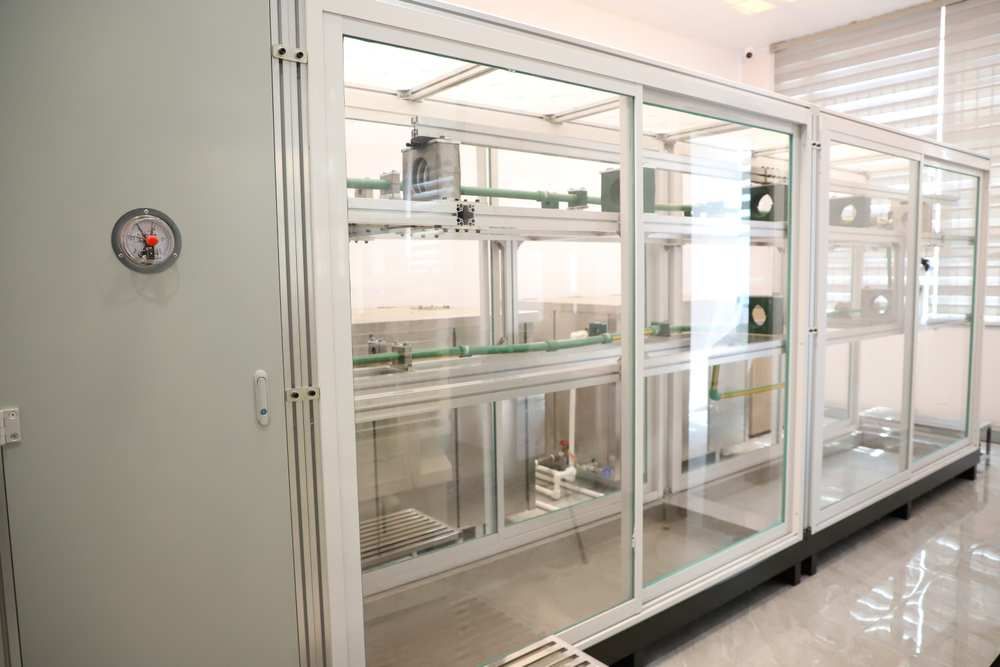
The welding-tool row is a witness point because the check takes a minute and the risk runs all shift. DVS 2207-11 (2020-05 edition) puts the heating tool for PP socket fusion at 260 ± 10 °C, and SIMONA's welding manual says to check it with a fast-reading surface or infrared thermometer. Log the thermometer reading. The number on the dial is a setting, not a measurement.
Hold or witness: what each one costs
Every hold point costs a stop: a crew waiting for a signature. Every witness point costs a risk: the job moves on whether or not anyone looked. Put holds only where the evidence disappears afterwards, which means the material before it is cut, the pressure test before the section is buried, and the cover-up itself. Anything that can be re-checked later, or that repeats every few minutes, works better as a witness point with a record. The visual signs of a bad joint are set out in why PPR joints leak, and clip spacing and fixed points in the PP-R thermal expansion guide.
Conclusion
PPR installation is forgiving when you respect the two numbers and unforgiving when you don't. Hold ~260°C, use the right heating time for each diameter, push straight without twisting, let it cool undisturbed, and pressure-test before closing the wall. Those habits turn socket fusion into the most reliable joint in plumbing.
Consistent welds also depend on consistent material — pipe and fittings that melt the same way every time. Start from a matched, single-grade supply and the technique above does the rest.
Frequently Asked Questions
What temperature should I weld PPR pipe at?
Around 260°C, within roughly 5–10°C, as specified by ISO 15874 and ASTM F2389. Let the welding iron reach full temperature before the first joint.
How long do you heat PPR pipe for fusion?
Heating time rises with diameter — about 5 seconds for DN20 and 7 seconds for DN25, longer for bigger pipe. Always follow the chart on your welding machine and add a little in cold conditions.
Can you overheat a PPR joint?
Yes, and it's the most common mistake. Too much heat carbonizes the plastic and forms a brittle joint that looks fine but fails under pressure. Use the exact time for the diameter, not extra "safety" seconds.
Why should you not twist a PPR joint when inserting?
Twisting shears the molten layer between pipe and fitting, leaving a weak, uneven bond. Push the pipe straight in to the marked depth in one motion, then hold it still.
How do I pressure-test a PPR system?
Run a hydrostatic test at 1.5 times the working pressure for at least 30 minutes before closing walls. A pressure drop indicates a weak joint you can still reach and repair.
What pressure-test criterion applies to PP-R water pipe in China?
Under GB 50242-2002 clause 4.2.1, test at 1.5 times working pressure and not less than 0.6 MPa. Hold for 1 hour with no more than 0.05 MPa drop, then hold at 1.15 times working pressure for 2 hours with no more than 0.03 MPa drop, and check every joint for leaks.