
PPR Pipe Manufacturers in China: Verified Profiles, Not Another Top 10
Search for PPR pipe manufacturers in China and page one hands you a stack of "Top 10" lists — nearly every one written by a factory that placed itself first. This guide takes a different route: every company profile below is built only from what can be verified — official corporate pages, stock-exchange listings, and published standards — every unverifiable claim is flagged as exactly that, and the ranking question is replaced with the one that actually matters to a wholesale importer: which type of factory fits your order. IFAN's own entry sits in the same table, held to the same rules.
This page profiles the manufacturers; the step-by-step sourcing process — quoting, contracts, inspection, shipping — lives in the China pipe manufacturer buyer's playbook.
Key Takeaways
- Most "Top 10 PPR manufacturers" pages are written by the factories themselves — treat the ranking as an ad, and the company data as unaudited until you check it.
- The verifiable giants: China Lesso (HKEX-listed, 3.40 Mt capacity) and ERA (SZSE-listed, 146 export countries) anchor the top of the scale; Weixing/VASEN is the listed player most focused on PPR plumbing itself.
- The widely repeated "Lesso holds 20% of China's PPR market" figure traces only to competitor blogs — no filing or research-firm source we could find states it.
- Global PPR pipe demand was USD 4.44 billion in 2024, heading toward USD 7.24 billion by 2032 (Verified Market Research).
- Two standards govern the product everywhere: DIN 8077/8078 for dimensions and quality, ISO 15874 for hot-and-cold-water PP systems.
- For an importer, the real choice is listed giant vs export-focused factory — scale and brand recognition on one side; mixed containers, OEM flexibility, and factory-direct pricing on the other.

How to Read a "Top Manufacturers" List
Run the same search an importer runs and look at who publishes the results: the ranking pages for this category are hosted on the blogs of rival Chinese pipe factories, and each one places its own brand at or near the top. No independent trade publication ranks Chinese PPR producers at all. That does not make the pages useless — the company names are real — but it means three habits protect your budget. First, treat any ranking as advertising. Second, treat any number without a source the same way: the claim that one giant "holds 20% of China's PPR market" circulates through these lists, yet it appears in no annual report, exchange filing, or research-firm study we could locate — it traces back to a competitor's blog. Third, check claims against the company's own pages, where the contradictions surface fast: during research for this guide, one mid-size PPR exporter's homepage listed CE and DVGW among its approvals while its own detail page conceded both were still "on the way." A factory's marketing and its fine print disagreeing is not a scandal — it is a routine finding, and exactly why the audit checklist at the end of this page exists.
The Market and the Standards That Govern It
The global PPR pipe market was worth USD 4,438.4 million in 2024 and is projected to reach USD 7,241.3 million by 2032, a 7.2% compound growth rate, according to Verified Market Research — one firm's estimate, quoted with attribution because market-size figures vary widely between research houses. What does not vary is the standards frame. Dimensions, tolerances, and quality requirements for PP-R pipe follow the German pair DIN 8077 and DIN 8078; complete hot-and-cold-water piping systems in polypropylene are specified by ISO 15874 (parts 1–3, current 2013 editions). Every serious producer in this guide manufactures to both families, which is precisely why paperwork — not the standard's name on a brochure — separates factories: anyone can print "DIN 8077"; the question is whether a batch certificate and a test report arrive with your container. The certificate landscape itself is mapped in the PPR certification guide.
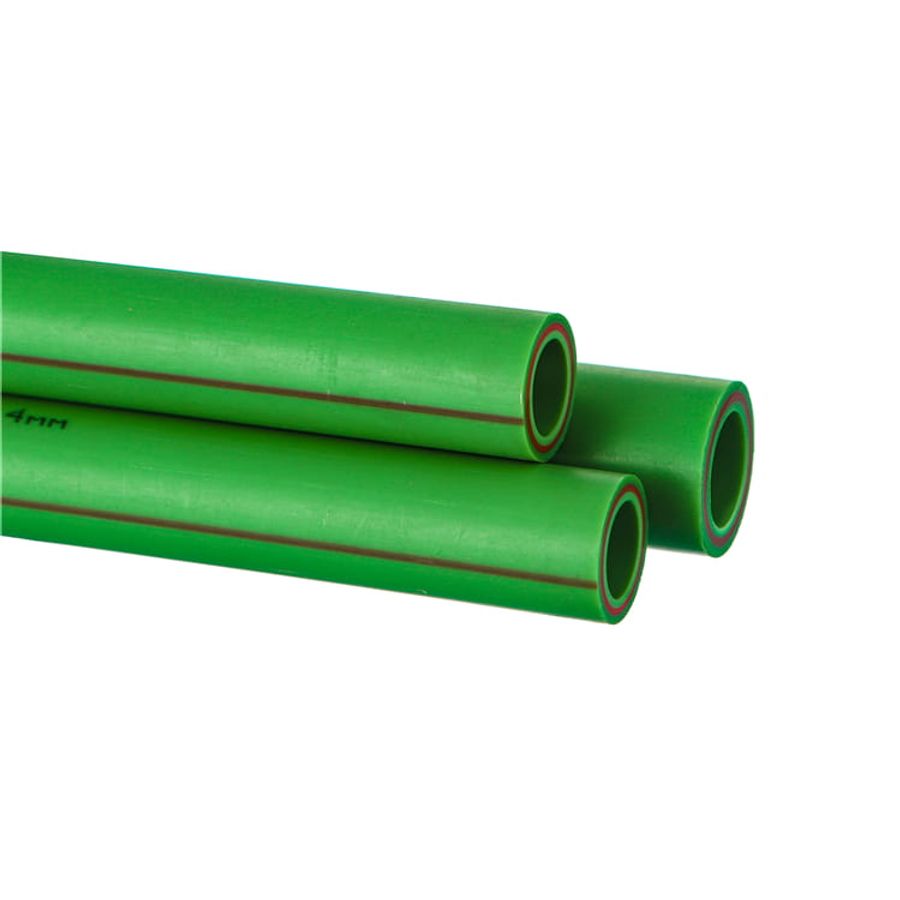
The Major Players — Verified Profiles
Every figure below comes from the company's own official pages or exchange listings, checked during research for this article; self-reported numbers are marked as claims. Companies whose official channels could not be reached for verification are noted at the end — for an importer, an unverifiable official site is itself a data point.
| Company | HQ / Founded | Ownership | Scale (as filed / claimed) | Export reach |
|---|---|---|---|---|
| China Lesso | Foshan, Guangdong · ~40-year roots | Listed, HKEX 2128 | 50+ factories, 3.40 Mt designed capacity, 2023 revenue RMB 30.9 bn | Sales network, 150+ countries |
| Weixing / VASEN | Linhai, Zhejiang · 1999 | Listed, SZSE 002372 | 5 production bases; PPR-centric plumbing range | 30+ countries (VASEN brand) |
| ERA | Taizhou, Zhejiang · 1983 | Listed, SZSE 002641 | 13 factories; PPR line: 32 extrusion lines, stated capacity ~28,000 t pipe + ~7,500 t fittings/yr | 146 countries |
| Rifeng | Foshan, Guangdong · 1996 | Private | Claimed PP-R capacity 614 M meters/yr; 155 certifications | Projects incl. South Africa, Ethiopia, Peru, Thailand |
| IFAN | Zhuji, Zhejiang · 1993 | Private (Zhuji Fengfan Piping) | 120,000 m² factory, 30+ extrusion lines, 3,000+ PPR SKUs | 120+ countries, Africa-focused |
China Lesso is the scale anchor of the category: Hong Kong-listed, roughly four decades old, running 50-plus factories with a designed capacity of 3.40 million tonnes across its plastics range and 2023 revenue of RMB 30.87 billion. Its PP-R line spans 16–160 mm at pressure ratings to 2.5 MPa, produced to DIN 8077/8078 and ISO 15874-2 among other listings. Weixing New Building Materials — selling abroad as VASEN — is the listed company whose business is most concentrated on plumbing itself: founded 1999, Shenzhen-listed since 2009, five production bases, and a certification wall that includes DVGW, AENOR, WRAS, and TUV. One point of frequent confusion worth settling: VASEN is Weixing's export brand, not a separate manufacturer. ERA is the veteran, tracing to 1983 and Shenzhen-listed since 2011, with thirteen factories and a PPR operation it states at 32 extrusion lines with an annual capacity of about 28,000 tonnes of pipe and 7,500 tonnes of fittings, exporting to 146 countries. Rifeng, private and Foshan-based since 1996, states a PP-R capacity of 614 million meters a year and 155 certifications across 17 countries, with documented projects in South Africa, Ethiopia, and Peru. Names like Ginde and Zhongcai appear on most third-party lists too; during our checks their official sites were unreachable or redirected unreliably, so their figures are omitted here — if you are quoted by either, ask for documentation directly rather than trusting list data.
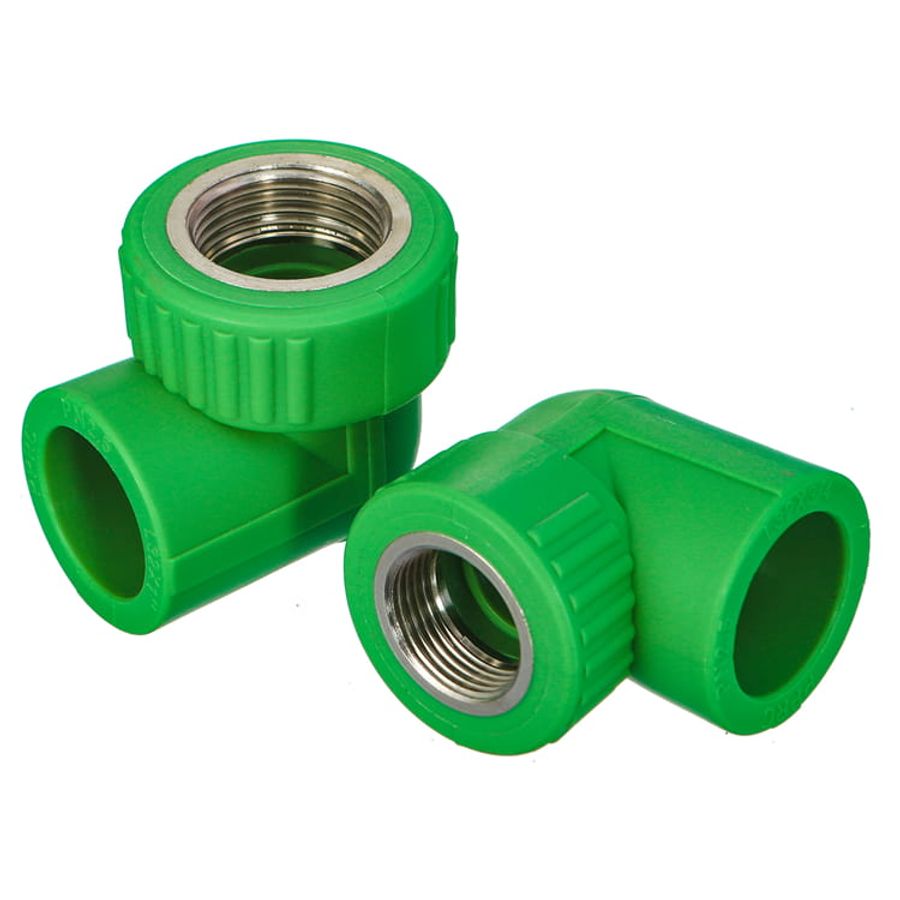
Where IFAN Fits — Stated Plainly
IFAN Group (Zhuji Fengfan Piping Co., Ltd.) has run its Zhejiang factory since 1993: 120,000 m² of workshop, 30-plus automated extrusion lines, in-house injection molding with its own mold workshop, and an ISO testing lab. The PPR range covers 3,000-plus SKUs — pipe DN20–DN160 in PN12.5–PN25, fittings, valves, composite pipe, and floor-heating components — produced from 100% virgin PP-R with batch certificates issued per shipment, to DIN 8077/8078 and ISO 15874 with CE and SGS documentation; SASO, SONCAP, and NOM regional certificates are arranged on request. The commercial model is the differentiator, not a ranking claim: strictly B2B wholesale with no retail channel, a minimum order of one container that can be mixed across sizes and product families, samples before any order is confirmed, and export documentation with customs support to 120-plus countries, weighted toward Africa, Latin America, the Middle East, and Southeast Asia. For buyers in regulated markets, the regional certificate does the heavy lifting at the border: SONCAP clears Nigerian customs, SASO covers Saudi Arabia, NOM covers Mexico — and a factory that has shipped those markets before arrives with the paperwork already templated. Buyers comparing supply channels can see the trade-offs worked through in the factory vs trading company comparison; OEM and private-label terms are on the manufacturing & OEM page.
Listed Giant or Export Factory: Match the Supplier to the Order
The honest way to use the table above is to match supplier type to order profile. A listed giant brings enormous capacity, domestic brand recognition, and the audit comfort of exchange-filed accounts — and with it, distributor structures, brand pricing, and less appetite for a first-time buyer's single mixed container or a private-label run. An export-focused factory inverts the equation: factory-direct pricing without a brand premium, mixed containers at low minimums, OEM and custom-color flexibility, and direct access to the people running the line — with the burden of verification shifting to you, because there is no exchange filing doing it on your behalf. Neither answer is universally right. A project developer specifying a nationally advertised brand for resale credibility shops the first column; a distributor building margin in Accra, Lagos, or Lima — where the retail brand on the truck is your own — is better served by the second, provided the factory passes a real audit. That audit is the next section.
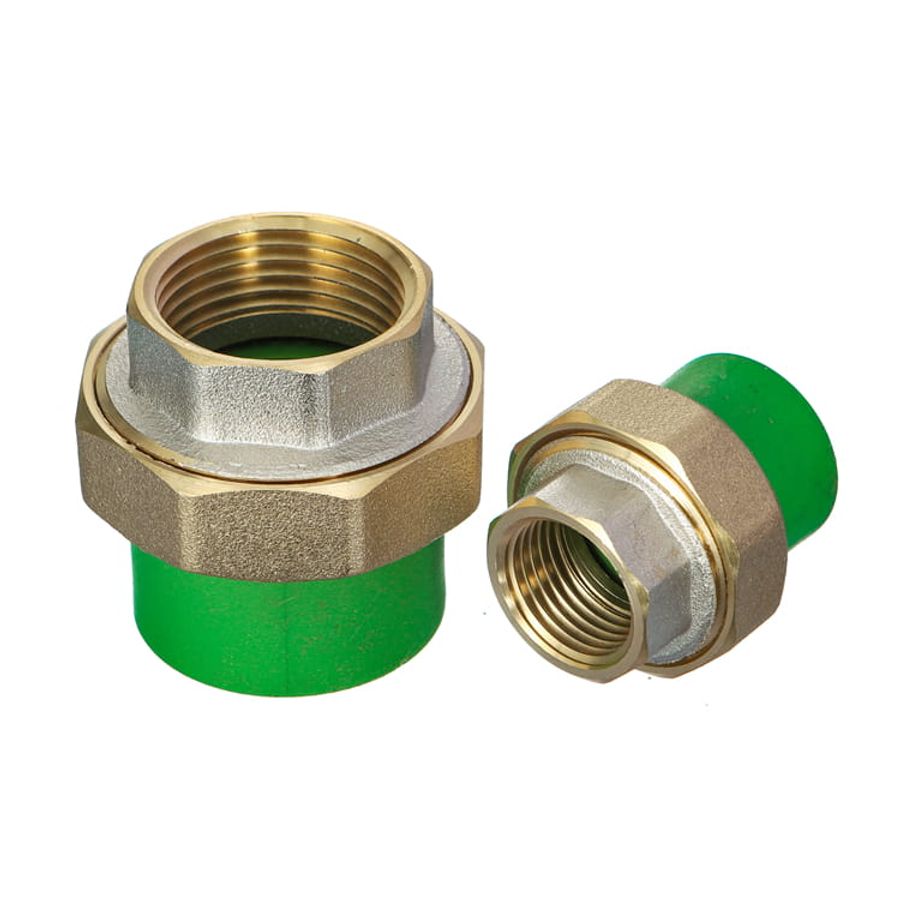
Shortlisting factories for a container order?
IFAN manufactures PPR, PVC, HDPE, PEX systems and brass valves — one factory since 1993, mixed containers from one-container MOQ, batch certificates per shipment. B2B wholesale only.
Request a QuoteThe Import Audit Checklist
Whichever column you shop, run the same eight checks before money moves. 1 — Certificate numbers, not certificate logos: ask for the certificate ID and verify it with the issuing body; the homepage-vs-fine-print contradiction described earlier is exactly what this catches. 2 — Batch documentation: a factory confident in its resin issues batch certificates per shipment; ask to see a recent one, not a template. 3 — Virgin material proof: recycled-content pipe fails under heat and pressure years later — the field and lab checks are in the virgin PP-R verification guide. 4 — Corporate registry: match the quoted company name to its Chinese business registration; a "manufacturer" whose registered scope is trading is a middleman. 5 — Live factory video: a real producer will walk the line on a video call — extruders, molding hall, lab — on request. 6 — Third-party inspection: SGS or equivalent pre-shipment inspection, at your nomination, accepted without friction. 7 — Samples first: physical samples before deposit, checked against your local code and fitting stock. 8 — Export history in your market: ask for references or shipment evidence into your region — a factory that already clears customs in Lagos or Nairobi has solved problems you won't have to. The full seven-check factory-vs-trader procedure, with the tells for each, is in the manufacturer verification guide.
Frequently Asked Questions
Who is the largest PPR pipe manufacturer in China?
By overall filed revenue and capacity, China Lesso (HKEX 2128) is the biggest plastics-piping group. By focus on PPR plumbing specifically, Weixing/VASEN (SZSE 002372) is the listed leader. "Largest in PPR alone" has no audited answer — treat any page that states one as guessing.
Are Chinese PPR pipes good quality?
The good ones match European product standards — DIN 8077/8078 and ISO 15874 are the benchmarks either way — and several Chinese producers hold DVGW, WRAS, or AENOR approvals. Quality tracks the factory, not the country: virgin resin, batch testing, and verifiable certificates are what separate suppliers.
Which PPR brand is best?
Wrong frame for an importer. For domestic resale credibility, a listed national brand; for wholesale margin and private-label programs, an export factory that passes the eight-point audit. "Best" is the supplier whose model matches your order and whose claims survive verification.
Is VASEN a separate company from Weixing?
No. VASEN is the international brand of Zhejiang Weixing New Building Materials (SZSE 002372); its domestic products sell under the Weixing name. Third-party lists that count them as two manufacturers are double-counting one company.
Why do "Top 10" lists disagree with each other?
Because most are published by factories ranking themselves, and the rest recycle those lists. Company names overlap; orders and numbers don't. Use them as a name-gathering step, then verify every figure against official pages, filings, and certificates before it influences a purchase.