
Types of Non-Return Valve: How Each One Closes, and Which Ones Slam
A non-return valve has no handle, no actuator and no operator. The flow itself decides when it opens and when it shuts — which is exactly why it is the valve most often specified wrongly. Nobody notices a badly chosen isolation valve until someone turns it. A badly chosen non-return valve announces itself the first time a pump trips, as a bang that travels the length of the building.
There are nine mechanisms in common use, and they behave very differently at the one moment that matters — the instant flow stops. This guide covers each type, how it closes, which orientations it tolerates, and the quantified evidence on which ones slam. It also corrects three standards that most specification sheets still cite incorrectly.

Key Takeaways
- "Non-return valve", "check valve", "NRV" and "reflux valve" are the same device. The term changes by region and trade, not by function.
- Slam is measured, not guessed. Independent testing at 30 ft/sec² deceleration puts nozzle checks at 0.20 ft/sec reverse velocity and plain swing checks above 2.0 ft/sec — the difference between silent and severe.
- Oversizing is the dominant failure mode, blamed for roughly 80% of check valve problems. The counter-intuitive rule from the field: when in doubt, undersize.
- Three commonly cited standards are dead. EN 12334 and BS 5153 are withdrawn; the current European standard is EN 16767:2020. API 594 is on its 9th Edition (February 2022).
- Only some types tolerate vertical pipe. Classic lift checks are horizontal-only; elastomeric and spring-loaded types are orientation-independent.
What a Non-Return Valve Is — and Why It Has Four Names
A non-return valve permits flow in one direction and closes automatically against flow in the other. No external signal reaches it. The pressure differential across the valve is both the sensor and the actuator: forward differential pushes the closure member off its seat, and falling or reversing differential returns it.
The naming is purely regional. British and Commonwealth specifications, and most of the export market served from Asia and the Middle East, say non-return valve or NRV. North American specifications say check valve. Water utilities occasionally still say reflux valve. Purchasing documents sometimes say one-way valve. These are not four products — a supplier quoting "NRV" against a drawing marked "check valve" is quoting the correct item, and there is no engineering distinction to argue about.
What does vary, enormously, is the closing mechanism. That single design choice determines head loss, minimum flow velocity, permitted orientation, tolerance of solids, and — the property that causes the most expensive failures — how violently the valve stops reverse flow.
The Nine Types at a Glance
Flow coefficients below are published figures for 12-inch valves. Cv is gallons per minute at 1 psi drop, so a higher Cv means a more efficient valve. Reverse velocity figures come from independent testing at the Utah Water Research Laboratory on 8-inch valves at a system deceleration of 30 ft/sec².
| Type | How it closes | Orientation | Slam | Cv (12") |
|---|---|---|---|---|
| Swing | Hinged disc swings shut under gravity and reverse flow | Horizontal, or vertical with flow up | Severe (>2.0 ft/sec) | 3,395 |
| Tilting disc | Offset pivot; disc counterbalances itself shut | Horizontal or vertical | Mild (0.80 ft/sec) | 5,400 |
| Dual plate (wafer) | Two spring-loaded half-discs fold shut | Any, with shaft orientation rules | Mild (0.60 ft/sec) | 4,100 |
| Lift / piston | Disc or piston drops vertically onto seat | Horizontal only | Low | — |
| Ball | Coated ball rolls back into a tapered seat | Horizontal or vertical | Severe (>2.0 ft/sec) | 3,500 |
| Diaphragm / duckbill | Elastomer returns to its own closed shape | Any | None | — |
| Nozzle / axial | Spring closes a venturi-guided disc | Any | None (0.20 ft/sec) | 4,700 |
| Silent (centre-guided) | Spring drives a short D/4 linear stroke | Any | None (0.33 ft/sec) | 2,480 |
| Stop-check (SDNR) | Free disc acts as a lift check; stem can force it shut | Per pattern | Low | — |
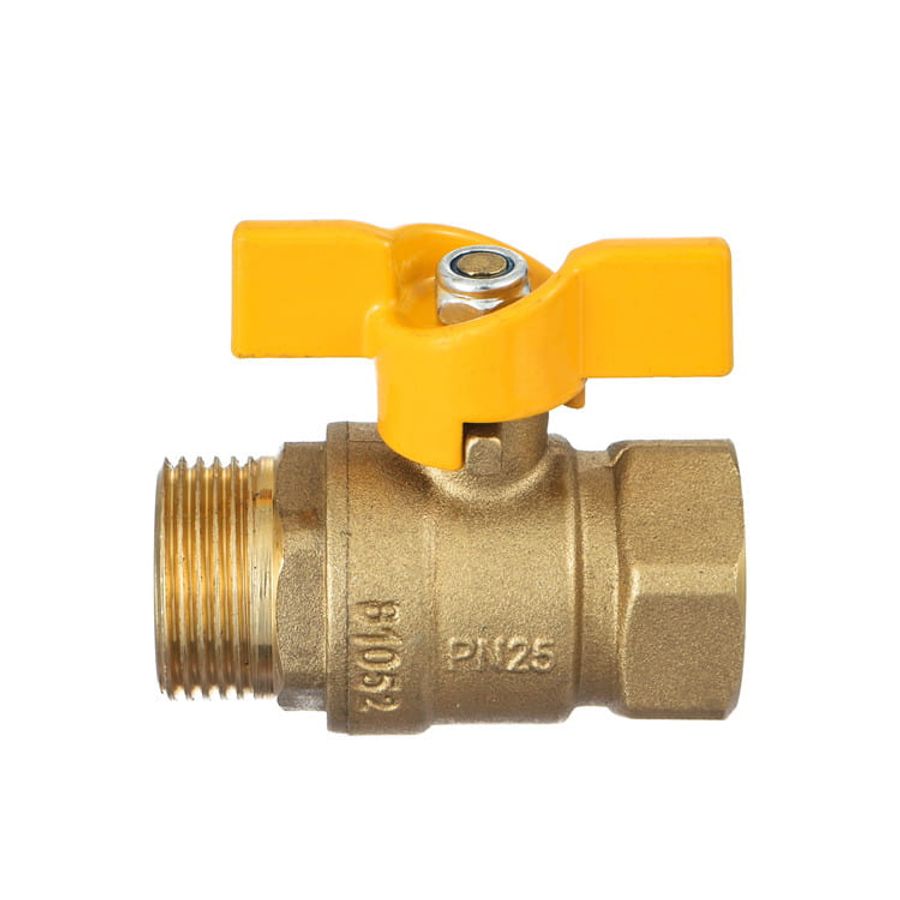
Swing Check: the Default, and the Worst Slammer
A disc hangs from a hinge pin at the top of the body. Forward flow pushes it open; when flow stops, gravity and reverse flow swing it back onto the seat. It is the cheapest mechanism, the most widely stocked, and it has the largest unobstructed bore of any hinged type, which is why it survives in dirty water and wastewater lines where a guided disc would jam.
Its weakness is geometric. The disc travels through a 60 to 90 degree arc to reach the seat. That is a long journey, and it only begins once reverse flow is already established. By the time the disc lands, the returning column has momentum — and stopping a moving column of water instantly is the definition of water hammer. In testing, plain swing checks recorded reverse velocities above 2.0 ft/sec, in the severe band.
The lever-and-weight myth. External lever-and-weight assemblies are widely believed to make a swing check close faster. They do not. As Val-Matic's design and selection guidance puts it, the weight reduces slamming by limiting the stroke of the disc — a shorter arc means less reverse flow develops before seating — and it can cause a significant increase in head loss in exchange. If a supplier justifies a lever by claiming faster closure, they have the mechanism backwards.
Swing checks also need real flow to stay stable. The recommended minimum velocity to hold the disc fully open is 7.5 ft/sec, and there must be at least ½ psi differential across the valve in normal operation. Below that, the disc floats near its seat and chatters — the wear mechanism discussed under sizing below. Our detailed guide to swing check valves covers orientation and slam mitigation for this type, and the brass check valve guide covers the small-bore plumbing sizes.
Tilting Disc: Swing Geometry, Fixed
The tilting disc keeps the hinged principle but moves the pivot into the flow stream and slants the seat to 55 degrees. Two things follow. Full opening now requires the disc to travel no more than 40 degrees rather than a full quarter-turn, so the return stroke is short. And because the pivot sits in the upper portion of the disc rather than at its edge, the greater part of the disc mass hangs below it, producing a counterbalance that starts the disc closing early instead of waiting for reverse flow to push it.
The result is the best flow efficiency of any type in the comparison — a flow area at least 40% greater than the nominal valve size, and the highest published Cv at 5,400 — combined with slam reduced to the mild band at 0.80 ft/sec. The trade-off is a more complex body casting and a higher price, and the in-flow pivot is a wear point that a plain swing check does not have.
Dual Plate (Wafer): the Space-Constrained Choice
Two semicircular plates hinge on a central shaft and are folded shut by a torsion spring. Because the closure members are light and spring-assisted, they begin closing as flow decays rather than after reversal, keeping reverse velocity at 0.60 ft/sec — mild.
The real argument for dual plate is dimensional. A wafer body clamped between flanges occupies a fraction of the face-to-face length of a swing check, which matters in pump houses and plant rooms where the pipe run was designed before the valve schedule. The cost is flow area: dual plate valves run around 80% port, which is why their Cv of 4,100 sits below the nozzle and tilting disc types despite the spring assist. The central shaft and plate edges also make them a poor choice for water carrying solids or fibre.
Lift and Piston Check: Simple, and Horizontal Only
A disc or piston sits in a guide directly above the seat and is lifted vertically by forward flow. There is no hinge and no arc — the closure member simply drops back down. The guided travel makes the action predictable and the seating positive, which is why lift checks are common in steam and high-pressure service.
The classic unsprung lift check has one hard limitation, as Spirax Sarco states plainly: it is designed for installation in horizontal pipelines only, because it depends on gravity to return the disc. Note the distinction that catches people out — a spring-loaded in-line check is technically also a lift mechanism, but the spring replaces gravity and removes the orientation restriction entirely. "Lift check" on a datasheet does not by itself tell you whether the valve can go in a riser; the presence of a spring does.
Ball Check: Self-Cleaning, High Inertia
A rubber-coated ball is guided in and out of a tapered seat. The ball rotates as it operates, so it wipes its own sealing surface and tends to be self-cleaning — the reason ball checks are a standard fitting on sewage and sludge pumps, usually with a top access port so the ball can be replaced without cutting the valve out of the line.
Against that, the ball is heavy and has a long distance to travel. Both properties are bad at the moment of closure: measured reverse velocities exceed 2.0 ft/sec, putting ball checks alongside plain swing checks in the severe band. In single-pump, low-head systems this rarely matters and the low head loss is a genuine benefit. In high-head service, or anywhere pumps run in parallel, it is the wrong mechanism.
Diaphragm and Duckbill: No Hinge, No Seat, No Jam
Elastomeric checks dispense with mechanical parts altogether. A duckbill is a single moulded elastomer element whose slit tip is held flat by the material's own elasticity; forward pressure opens the slit, and the material closes it again. A diaphragm check works similarly, with a flexible rubber disc that lies down across the inlet seat under backflow.
With no hinge, guide or metal seat, there is nothing to corrode or seize, they work in any orientation, and they are inherently non-slamming — the closure is progressive rather than an impact. Cracking pressures are very low and flow is almost immediate. The limits are material limits: elastomer temperature and chemical compatibility govern the application, and they cannot be repaired, only replaced. For outfalls, tidal flaps, chemical dosing and low-pressure vent duty they are frequently the correct answer where a metal valve would be over-engineered.
Nozzle and Silent Checks: Closing Before Reversal
These two types share the property that eliminates slam, and it is worth stating precisely. In a spring-loaded check, as differential pressure across the valve falls, the spring forces the disc back onto its seat just before reverse flow occurs. Slam is the act of arresting a column that has already begun to move backwards. If the valve is shut before that happens, there is nothing to arrest.
A silent (centre-guided) check achieves this with a short linear stroke equal to one quarter of its diameter, closing in roughly one tenth of a second. The geometry is neat: at a D/4 stroke, the cylindrical opening area (π·D·D/4) exactly equals the full port area (π·D²/4), so the short travel costs nothing in flow area at full lift. It does carry the highest head loss in the comparison — Cv 2,480, the lowest figure in the table — because the spring and centre guide sit in the flow path.
A nozzle (axial) check profiles the body into a venturi, accelerating flow around a streamlined, spring-loaded disc. It records the lowest reverse velocity of any type tested at 0.20 ft/sec while still returning a Cv of 4,700 — silent operation without the silent check's head-loss penalty. It is the most expensive mechanism here, and that is the whole trade-off.
Both share one hard restriction that is easy to miss on a datasheet: they are clean-fluid valves. The centre guide and spring that make them silent are also the parts that foul, which is why spring-loaded centre-guided checks are specified for potable water and industrial duty and kept out of wastewater and any line carrying solids or fibre. If the fluid has anything in it, the quiet types are off the list regardless of how attractive their slam figures look.
Both hold their discs stable at lower flow than hinged types. The recommended minimum velocity for a centre-guided silent check is 4 ft/sec against 7.5 ft/sec for a swing check — close to half — which makes spring types the sound choice in systems with variable or turndown-heavy duty.
Stop-Check (SDNRV): Two Valves in One Body
A screw-down non-return valve looks like a globe valve and carries a handwheel, but the defining feature is internal and easy to miss: the disc is not attached to the stem. Left alone, the disc floats freely and behaves exactly as a lift check. Wind the stem down and it forces the disc onto its seat, giving positive manual shut-off; wind it up and the stem limits how far the disc can rise, throttling the line.
That combination — automatic non-return plus manual isolation and regulation in one body — is why stop-checks are standard on boiler circulation, steam generation and boiler feedwater duty, where each boiler in a multi-boiler installation must be isolatable from a common header without a separate isolation valve. If you see a handwheel on a check valve, this is what it is, and it is not an override to be operated casually: closing it against forward flow shuts the line.
Foot Valves: a Check Valve with a Different Job
The foot valve is deliberately absent from the comparison table above, because it is not a tenth closing mechanism — it is a spring-assisted lift check packaged for one specific job. It earns its own section because that job changes how you specify it.
A foot valve sits submerged at the bottom of a suction line in a lift application, with a strainer fitted over its open end. Mechanically it is a spring-assisted check. Functionally its purpose is not backflow protection but prime retention — when the pump stops, the valve holds the water column in the suction pipe instead of letting it drain back to the source, so the pump does not have to re-prime on every start.
The integral strainer is the other half of the design, and the usual cause of trouble: a blinded strainer starves the pump just as effectively as a closed valve, and it is at the bottom of a well or sump where nobody looks.
Slam, Quantified
Most guides say some check valves slam and others do not. Independent testing lets us be more useful than that. The theoretical maximum pressure rise from stopping a flow is given by the Joukowsky equation:
ΔP = ρ · a · ΔV
where ΔP is the pressure rise in pascals, ρ the fluid density in kg/m³, a the pressure wave speed in m/s and ΔV the change in flow velocity in m/s. Water utilities more often use the head form, ΔH = a·ΔV/g — the same equation divided by ρg, not a different one.
The practical consequence is a rule of thumb worth memorising: roughly 100 ft of water hammer head (43 psi) for every 1 ft/sec of reverse velocity. That rule assumes a wave speed of about 3,200 ft/sec, which is a steel pipe figure. In PVC or HDPE the wave speed is far lower and the same reverse velocity produces a much smaller surge — one of the genuine advantages of plastic pressure pipe, covered in our guide to water hammer causes and prevention.
Field acceptance criteria follow directly. Water hammer in the 50 to 100 ft range, corresponding to reverse velocities of 0.5 to 1.0 ft/sec, is a mild slam that can be tolerated. Above 100 ft, or above 1.0 ft/sec reverse velocity, the event is extremely loud and should be designed out. Reading those thresholds against the reverse velocities in the table above tells you immediately which mechanisms are acceptable for a given duty — and note that the figures are specific to 30 ft/sec² system deceleration. A high-head installation with parallel pumps decelerates faster and will push every type further up the scale.
Which Standard Actually Applies
This is where a surprising number of datasheets and specifications are simply out of date. The corrections that matter for most spec sheets:
| Standard | Status | What to cite instead |
|---|---|---|
| BS 5153 (cast iron check valves, 1974) | Withdrawn 15 March 2001 | EN 16767 |
| EN 12334 (cast iron check valves) | Withdrawn | EN 16767 |
| EN 16767:2020, Industrial valves — Metallic check valves | Current | DN 8–1200, PN 2,5–400, Class 125–2500 |
| API 594 | Current — 9th Edition, Feb 2022 | DN 50–1200 (NPS 2–48) |
| BS EN 1074-3:2000 | Current | Potable water fitness-for-purpose |
The chain runs BS 5153 → EN 12334 → EN 16767, and vendors still advertise "BS 5153 swing check valves" a quarter of a century after that standard was withdrawn. The title also changed between EN 16767 editions — the 2016 version covered steel and cast iron, while the 2020 version is "Metallic check valves" with copper alloys added, which is the edition to cite for brass bodies.
On the American side, API 594 reached its 9th Edition in February 2022; specifications citing the 7th (2010) or 8th (2017) editions are stale. It is a dimensional and design standard — face-to-face dimensions, pressure-temperature ratings, testing — not a selection guide, and it starts at DN 50, so small-bore check valves fall outside it entirely.
The "API 594 compliant" claim to challenge. API 594 explicitly excludes axial disc, body/stem guided disc (centre spring type), nozzle-type and lift-type check valves from its scope — the standard says so in its own text. So a nozzle or silent check advertised as "API 594 compliant" is being described against a standard that does not cover it. Ask which standard the valve is actually built and tested to; for those types it will not be this one.
For potable water duty, EN 1074-3 is the live performance standard and sits alongside, not instead of, the dimensional standards.
Sizing: Why Oversizing Is the Number One Failure
The instinct when specifying a check valve is to size up, on the reasoning that a larger valve means lower head loss. It is the single most common and most expensive mistake. Field estimates from valve manufacturer DFT attribute roughly 80% of check valve maintenance problems to oversized valves. Treat that as a manufacturer's field observation rather than a controlled study — but the underlying point is corroborated everywhere.
The mechanism is straightforward. A check valve needs enough flow to push its closure member to the full open position and hold it there. In an oversized valve the velocity is too low to do that, so the disc hovers part-open, and every fluctuation in flow moves it. The disc and its internals end up in a constant state of motion — the industry calls it flutter, chatter or wobble — which grinds the hinge pin, the guide and the seat continuously. The valve does not fail on day one; it wears out years early and starts passing backflow with no obvious external symptom.
Hence the rule that surprises most buyers: when in doubt, undersize check valves. A slightly undersized valve costs a little head loss and runs stable. A slightly oversized one runs unstable for its whole life. Size to the flow the line actually carries, not to the pipe diameter — and if the duty varies widely, choose a spring-loaded type that stays stable at 4 ft/sec rather than a swing check needing 7.5 ft/sec.
Installation trap. Turbulence entering the valve causes the same chatter as low flow. Locate a check valve in a straight run of ten to fifteen pipe diameters total — five diameters upstream and five to ten downstream. Check valves bolted straight onto a pump discharge flange are common and sometimes unavoidable, but they are operating in the worst turbulence in the system.
Cracking Pressure and Reseal
Cracking pressure is the forward differential at which the valve first opens. On spring-loaded types the spring sets it, and it is a specifiable number rather than a property of the valve size. It matters in two situations: low-pressure systems, where a cracking pressure that is too high simply prevents flow, and vent or dosing duty, where reseal tightness is the point of the valve.
The useful threshold: spring-loaded checks with a cracking pressure above roughly 3 psig (0.21 bar) to 5 psig (0.34 bar) will generally reseal bubble-tight on spring force alone. Below that band, the valve needs some back pressure to seal completely — which is fine in a pressurised system and a real problem in a gravity or vent line. Orientation also shifts the effective figure, because on a vertical installation the weight of the closure member adds to or subtracts from the spring.
What We Check Before a Non-Return Valve Ships
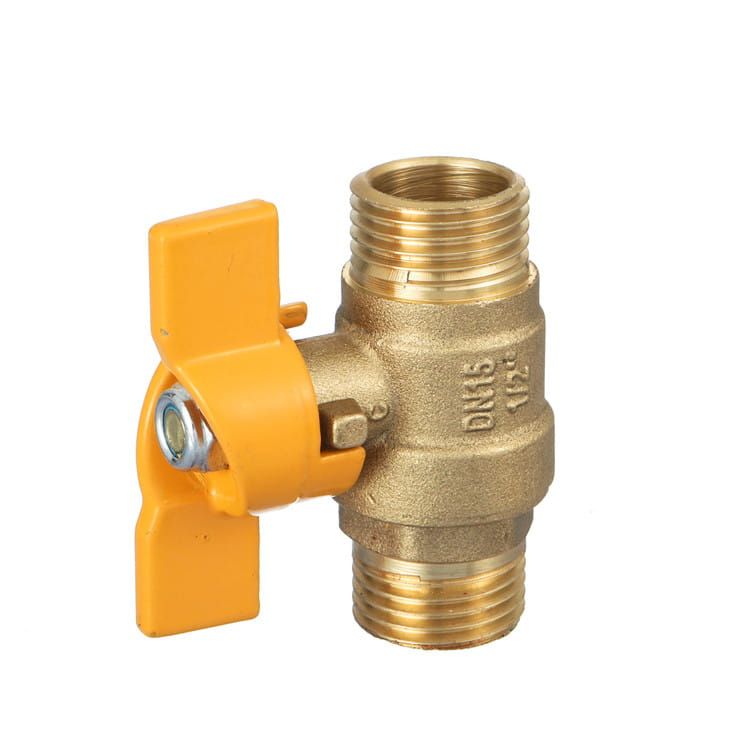
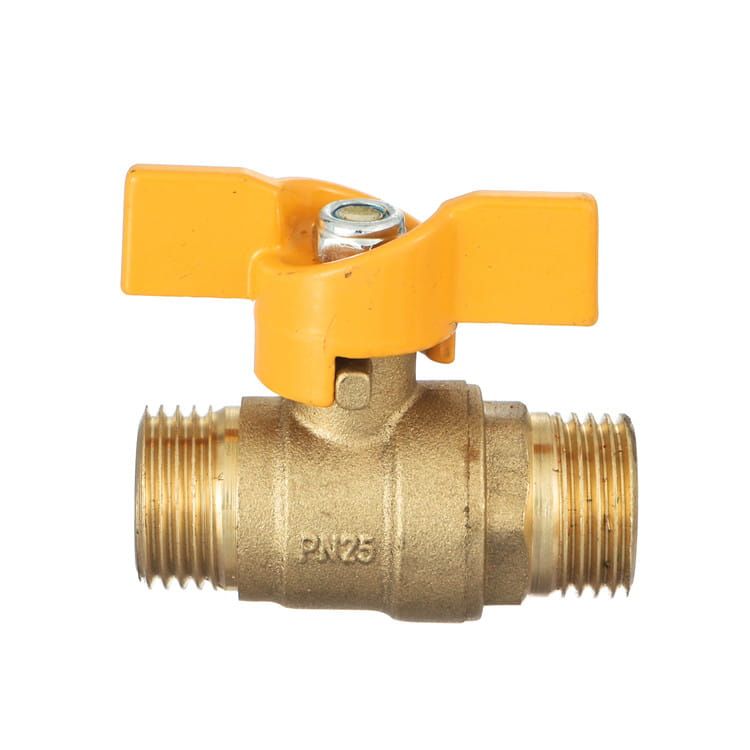
IFAN has manufactured plumbing valves and fittings since 1993, and brass non-return valves in the DN8–DN50 range are produced on the same lines as our brass ball and gate valves, with mould work done in the in-house mould workshop and testing in our own ISO lab. Three things get verified on every batch before it goes into a container.
Body alloy — and the grade question buyers get wrong. CW617N (CuZn40Pb2) is the standard hot-forging brass for valve bodies, and it is worth being precise about what it is: roughly 57–59% copper, 40% zinc and 1.6–2.5% lead. It is neither lead-free nor dezincification-resistant, and any supplier describing it as either is selling you a spec sheet rather than a material.
Two duties need something else. Aggressive water needs a dezincification-resistant grade — CW602N (CuZn36Pb2As), where arsenic inhibits the zinc loss. Ordinary brass in aggressive water leaches zinc out of the alloy, leaving a porous copper-rich structure with almost no mechanical strength, and a dezincified check valve seat stops sealing long before the body visibly fails. US potable water is a legal threshold, not a preference: the Safe Drinking Water Act requires a weighted average of no more than 0.25% lead across wetted surfaces, so a 2% leaded brass will not qualify on its own and the body must be a lead-free alloy such as silicon bronze. Tell us the water chemistry and the destination market, and the grade follows from those two facts.
Seat and reseal. Each valve is tested for tight shut-off in the closing direction, because a check valve that opens correctly and reseals imperfectly gives no warning in service — there is no handle position to tell an installer that anything is wrong.
Dimensional conformity. Thread form and face-to-face dimensions are checked against the ordered standard, since a check valve is usually the one item in an assembly that cannot be turned around to suit — it has a flow direction, and the arrow has to point the right way in a fixed pipe run. Buyers comparing suppliers may find our notes on verifying a manufacturer's quality claims useful alongside the valve specification itself.
How to Choose: Five Questions
1. Will a pump trip against this valve? If yes, and especially if pumps run in parallel or the head is high, rule out plain swing and ball checks immediately and specify a spring-assisted type — nozzle, silent or dual plate.
2. What is the minimum flow, not the design flow? Size on the low end of real duty. A valve stable at design flow and fluttering at turndown is wearing out whenever the system is quiet.
3. Is the pipe vertical? Classic lift and piston checks are horizontal-only. Swing checks accept vertical pipe with flow upward. Spring-loaded and elastomeric types accept any orientation.
4. Does the fluid carry solids? Full-bore swing and ball checks tolerate debris; dual plate, nozzle and silent checks have obstructions in the flow path that will eventually foul.
5. Do you need to isolate as well as prevent backflow? That is a stop-check, and it replaces two valves. If you do not need manual shut-off, do not pay for the handwheel.
Cross-check the answer against the isolation valves on the same line — the selection logic for valve types across a whole system often points to consolidating on one body material and one thread standard. For contractors, distributors and procurement teams consolidating a valve schedule, full specifications and size ranges for our valve lines are on the IFAN product catalogue.
Frequently Asked Questions
Is a non-return valve the same as a check valve?
Yes. "Non-return valve", "NRV", "check valve", "one-way valve" and "reflux valve" all describe the same device. The term used depends on region and trade convention, not on any difference in function.
Can a non-return valve be installed vertically?
It depends on the type. Spring-loaded and elastomeric types work in any orientation. Swing checks work in vertical pipe only with flow upward. Classic unsprung lift and piston checks are horizontal-only.
Which non-return valve is quietest?
Nozzle (axial) checks, at 0.20 ft/sec reverse velocity in independent testing, followed by silent centre-guided checks at 0.33 ft/sec. Both close before reverse flow develops, which is what eliminates slam.
Why does my check valve chatter?
Almost always low flow through an oversized valve, or turbulence from being mounted too close to an elbow or pump. The disc cannot reach a stable full-open position and oscillates.
Is EN 12334 still the standard for check valves?
No. EN 12334 is withdrawn, as is the older BS 5153. The current European standard is EN 16767:2020, Industrial valves — Metallic check valves.
How do you know if a check valve is passing backflow?
There is no external symptom — no handle position, no visible leak. The usual signs are indirect: a pump that starts more often than it should, a system that loses pressure when idle, or a header that warms up on a branch that should be isolated. Confirming it means isolating the line and testing for reverse leakage.
What size non-return valve do I need?
Size to the actual flow, not the pipe bore, and err small. Swing types need about 7.5 ft/sec to stay fully open; centre-guided silent checks need about 4 ft/sec.