
uPVC vs PVC Pipe: The Naming Trap, Real Differences & How to Specify
Here is the fact that untangles every uPVC vs PVC comparison: the rigid white or grey "PVC pipe" sold in most of the world is uPVC. The "u" stands for unplasticized — PVC resin with no softening plasticizers added — and that is exactly what standard pressure and drainage pipe is made of. So when a supplier lists "PVC pipe" and another lists "uPVC pipe" at a different price, you are usually looking at a naming difference between markets, not two materials. The material distinction that does exist is between rigid (unplasticized) PVC and flexible (plasticized) PVC — and flexible PVC is used for hoses, cable insulation, and pond liners, not for plumbing pipe. This guide explains what each name means, where a real difference shows up (jointing, standards, and grade), and how to specify the right pipe without paying twice for the same polymer.
If you are weighing chlorinated PVC for hot-water duty as well, the three-way breakdown lives in the PVC vs uPVC vs CPVC guide; this article goes deep on the two-way question.
Key Takeaways
- uPVC = unplasticized PVC (PVC-U) — rigid pipe with no plasticizers. Nearly all rigid "PVC pipe" on the market is technically uPVC.
- The real material split is rigid vs flexible: plasticized (flexible) PVC goes into hoses and cable sheathing, never pressure plumbing.
- "PVC" vs "uPVC" on a quote usually signals regional naming — US/schedule markets say PVC, UK/EU/ISO markets say uPVC or PVC-U — not a different polymer.
- Differences that DO matter when buying: pressure class, standard (Schedule vs ISO/DIN vs BS), wall series, and jointing system (solvent cement vs rubber seal-ring).
- Unplasticized PVC is the grade accepted for drinking water; certification to a potable standard matters more than the letter "u".
- For hot water above roughly 60 °C, neither is right — that duty belongs to CPVC, PPR, or PEX.
What the Names Actually Mean
Polyvinyl chloride (PVC) is the base polymer. On its own it is rigid; compounders then choose a direction. Add stabilizers, lubricants, and impact modifiers but no plasticizers, and you get unplasticized PVC — uPVC, written PVC-U in ISO standards — the stiff, strong material extruded into pressure pipe, drainage pipe, conduit, window profiles, and door frames. Add plasticizers (historically phthalates) and the polymer turns soft and bendable: flexible or plasticized PVC, the material of garden hoses, medical tubing, cable insulation, and inflatable liners. Pipe catalogs in the Americas mostly write "PVC" and mean the rigid grade; catalogs following British, European, ISO, Indian, and many African and Middle Eastern standards write "uPVC" or "PVC-U" for the same family of material. The letter "u" is a precision of naming, not a premium product tier — treat any price gap justified purely by the "u" with suspicion.
uPVC vs PVC: The Comparison That Matters
Put the rigid pipe grade next to the flexible compound and the differences are real. This is the comparison the names are actually pointing at:
| uPVC (rigid, unplasticized) | Flexible (plasticized) PVC | |
|---|---|---|
| Additives | No plasticizers; stabilizers + impact modifiers | 20–40% plasticizer content typical |
| Form | Rigid pipe, fittings, profiles, conduit | Hoses, tubing, cable sheathing, liners |
| Pressure duty | Rated classes to PN16 and above in pipe form | Not used for rated water mains |
| Drinking water | Accepted with potable certification | Plasticizer migration concerns; special grades only |
| UV / outdoor | Good with TiO₂-stabilized compounds (window-grade) | Plasticizers leach and the material hardens with age |
| Service temperature | Cold-water duty; derate above ~45 °C, max ~60 °C | Similar ceiling; softens further when warm |
For pipework the verdict is one line: everything structural is uPVC. Flexible PVC never competes for supply mains or drainage stacks; where you meet it in a plumbing context is short connector hoses and pump tubing. The widely repeated claim that "PVC pipe contains BPA and phthalates while uPVC doesn't" needs the same correction — rigid pipe compounds are unplasticized by definition, and reputable potable-water pipe is certified against migration limits regardless of which name is on the invoice. What you should verify is the certificate, not the vowel.
Same Polymer, Different Standards: Where Buyers Get Caught
Because "PVC" and "uPVC" pipe are the same material family, the real specification work happens one level down, and this is where imported orders go wrong. Dimension standards differ by market: Schedule 40/80 pipe (ASTM D1785, inch-based) and metric ISO/DIN series pipe (ISO 1452, DIN 8061/8062) do not interchange — a 2-inch Schedule 40 socket will not joint to 63 mm metric pipe, even though both are "uPVC pressure pipe." British-standard markets add BS 3505 imperial legacy sizes. Pressure classes differ: metric pipe is classed PN6/PN10/PN16 at 20 °C, Schedule pipe by wall schedule, and the two rating systems only roughly map. Application grades differ: pressure pipe, drainage/DWV pipe (thinner wall, not pressure rated), and electrical conduit are separate products; the grey conduit that looks like pressure pipe is covered in the Schedule 40 conduit guide. When you request a quote, state the standard, the pressure class or wall series, and the duty — "uPVC pipe, 63 mm, PN16, ISO 1452, potable" is a specification; "2-inch PVC" is a guess. IFAN extrudes uPVC to the metric ISO/DIN series alongside PPR, HDPE, and PEX systems, with batch certificates per shipment — the product catalog lists the sizes and classes available for export.
Jointing: Solvent Cement vs Seal-Ring
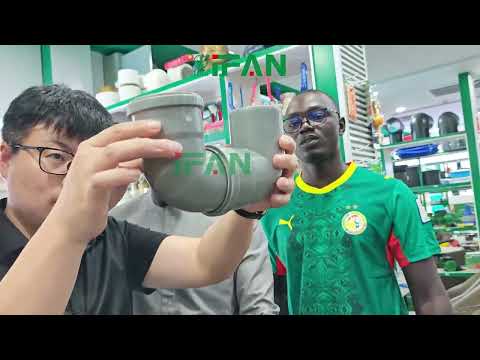
Rigid uPVC offers two jointing systems, and the choice shapes installation speed, skill requirements, and serviceability. Solvent cement welds pipe to socket chemically: primer softens both surfaces, cement fuses them, and a correctly made joint is as strong as the pipe. It is the default for pressure lines and small-bore work, but it is unforgiving — a dry spot or an unprimed joint becomes a leak that cannot be repaired, only cut out (technique details in the PVC glue guide). Rubber seal-ring (push-fit) joints seat the pipe spigot into a gasketed socket: no chemicals, no cure time, immediate water test, and the joint accommodates thermal movement — which is why drainage and larger-diameter supply lines favor it, and why crews with mixed skill levels make fewer bad joints with it. IFAN's uPVC range runs both systems, including the 806 seal-ring series shown in the video above, tested glue-free under working water pressure. On solvent systems, respect cure time before pressurizing; on seal-ring systems, chamfer the spigot and check ring seating — each system fails at exactly the step installers skip.
Where Each One Belongs
Cold-water pressure supply: uPVC pressure pipe in the correct PN class or schedule, with potable certification. It is the lowest-cost rated option for cold mains, yard lines, and irrigation. Drainage, waste, and vent: uPVC drainage grades dominate worldwide — sizing and layout are covered in the PVC drainage guide. Electrical: uPVC conduit, a separate UL/IEC product family. Windows and doors: window-grade uPVC profile — same polymer logic, different compound, built for decades of UV exposure. Flexible PVC's turf: appliance connectors, pond and pool hose, cable sheathing, low-pressure pump tubing. Neither material: hot-water distribution — above roughly 60 °C sustained, move to CPVC, PPR, or PEX (the three-way comparison covers the hot-water crossover). Buried gas is its own certified pipe family; PVC of any kind is not it.
Importing uPVC pipe or fittings?
IFAN extrudes uPVC pressure and drainage systems — solvent and 806 seal-ring series — plus PPR, HDPE, PEX, and brass valves. One factory, mixed containers, batch certificates per shipment. B2B wholesale only.
Request a QuoteHow to Tell What You're Being Quoted
Four checks separate a real specification from a label. Read the print line: legitimate pipe is continuously marked with material (PVC-U), standard (e.g., ISO 1452 or ASTM D1785), size, pressure class, and manufacturer — unmarked pipe answers the question by itself. Match standard to fittings: confirm the fittings quoted follow the same dimensional standard as the pipe; mixed Schedule-and-metric orders are the most common container-load mistake. Check the certificate, not the adjective: for drinking water, ask for the potable-water test report for the actual production batch; for pressure duty, the class marking and a hydrostatic test report. Weigh the sample: underweight pipe means thin wall or filler-heavy compound — a 6 m length has a published nominal weight, and a sample that misses it by more than a few percent fails before it ever sees water. These checks cost minutes and filter out the recycled-filler pipe that trades on the PVC/uPVC name confusion.
Common Mistakes
Paying a premium for "uPVC" over "PVC" on identical spec. If standard, class, and certification match, it is the same product with a different regional name.
Mixing Schedule and metric systems in one order. The sockets will not fit. Specify one dimensional standard across pipe and fittings.
Using drainage-grade pipe on a pressure line. Thin-wall drainage pipe carries no pressure class; it holds until the first surge.
Putting any PVC on hot water. Sustained hot duty belongs to CPVC, PPR, or PEX; uPVC softens and its pressure rating collapses with temperature.
Trusting the name instead of the batch certificate. Potable approval, pressure class, and virgin-material content live in test reports, not in the letters on the quote.
Frequently Asked Questions
Is uPVC the same as PVC?
For rigid pipe, effectively yes: uPVC means unplasticized PVC, and standard rigid PVC pipe is made without plasticizers, so it is uPVC by composition. The names differ by market — the Americas say PVC, ISO/British-influenced markets say uPVC or PVC-U. The genuinely different material is flexible (plasticized) PVC, used for hoses and cable insulation, not plumbing pipe.
Which is stronger, uPVC or PVC pipe?
Strength follows the pressure class and wall series, not the name. A PN16 uPVC pipe and a Schedule 80 PVC pipe are both high-rated rigid pipes; a thin-wall drainage pipe of either name carries no pressure rating at all. Compare class-to-class within one dimensional standard, and verify with the print line and a hydrostatic test report.
Is uPVC safe for drinking water?
Yes — unplasticized PVC is a standard potable-water pipe material worldwide, provided the specific product is certified to a drinking-water standard for your market and the compound uses approved stabilizers. Ask for the batch test report rather than relying on the uPVC name; certification is per product and production run, not per polymer.
Can uPVC pipe be used for hot water?
No. uPVC is a cold-water material: its pressure rating derates steeply above about 45 °C and the practical ceiling is around 60 °C. For hot-water distribution use CPVC, PPR, or PEX — CPVC's chlorination raises the temperature ceiling, and PPR and PEX are the common hot-supply systems in metric markets.
Can you glue uPVC to PVC?
Yes — they are the same base polymer, so standard PVC solvent cement bonds rigid uPVC and PVC parts to each other. What actually blocks the joint is dimensions, not chemistry: the socket and spigot must follow the same size standard, and pressure work needs primer plus a pressure-rated cement. Two exceptions: CPVC needs its own cement, and flexible (plasticized) PVC hose doesn't solvent-weld reliably — use a mechanical fitting there.