
The Complete Guide to PVC Drainage Pipe (uPVC): Sizes, DWV Design, Sewer Sourcing & Installation
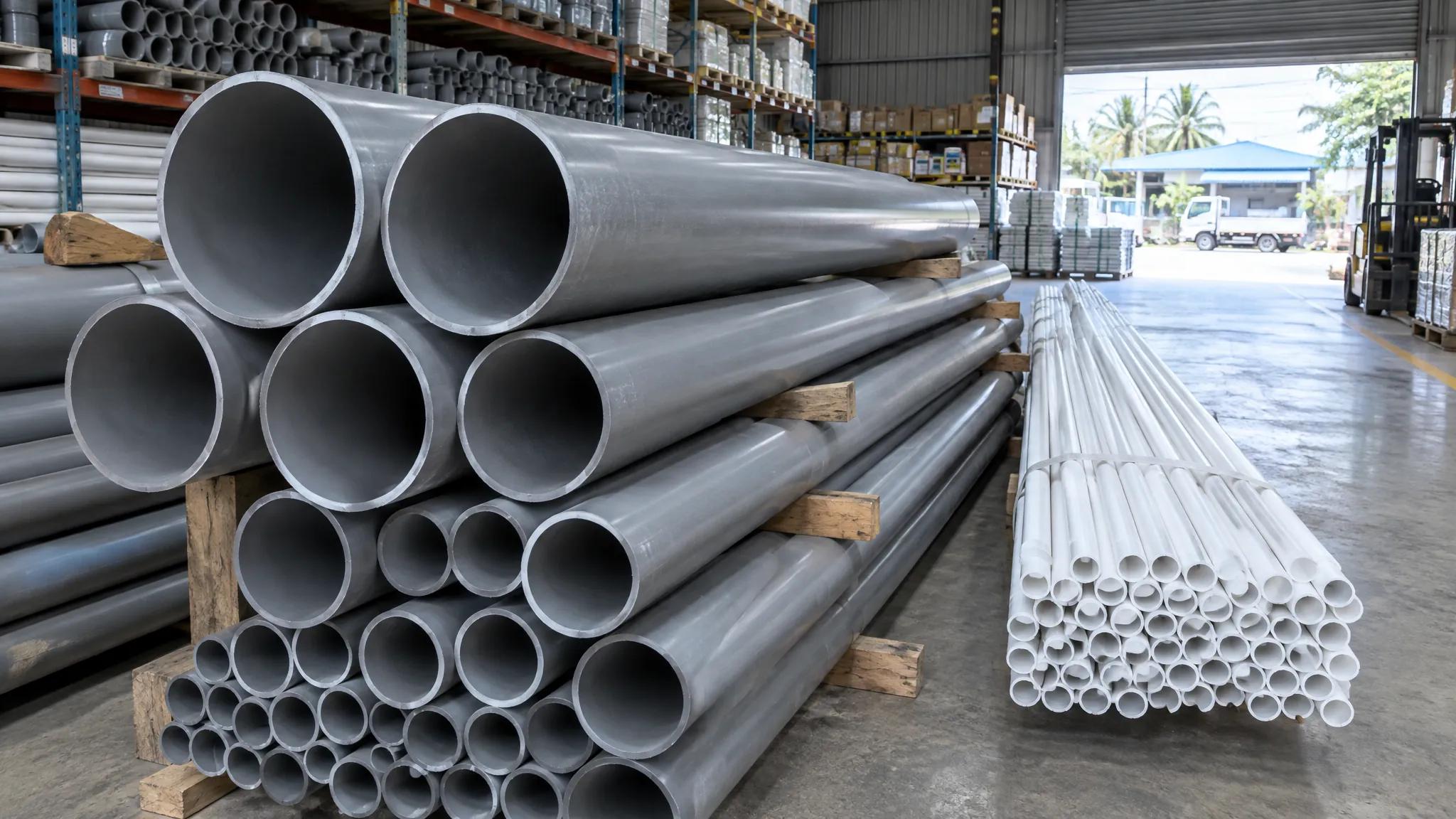
uPVC — un-plasticised polyvinyl chloride — is the workhorse of low-pressure drainage across every construction market. This complete guide covers the uPVC drainage pipe system end to end: what the material actually is, the three systems it serves (DWV, sewer, storm), size and stiffness decision chain, fittings and joint types, design rules, standards regime, and the sourcing routine that keeps a container from arriving with thin walls or wrong stiffness class.
uPVC — un-plasticised polyvinyl chloride — is the workhorse of low-pressure drainage across every construction market. It carries a residential building's waste from the basin trap to the sewer main, the runoff from a supermarket car park to the storm drain, and the effluent from a light-industrial process to the treatment plant. The material's advantage stack is undramatic: it does not corrode, it weighs a fraction of the concrete alternative, it welds or seals cleanly with off-the-shelf accessories, and it costs a fraction of the metal or specialty options. Which is why after fifty years of pipe-industry consolidation, uPVC drainage is still the default for the DN75 to DN400 tier — and why the spec decisions around it remain surprisingly easy to get wrong.
This complete guide covers the uPVC drainage pipe system end to end: what the material actually is, the three separate systems it serves, the size and stiffness decision chain, the fittings and joint types that decide install reliability, the design rules for interior DWV and buried sewer, the standards regime a specification has to satisfy, and the sourcing routine that keeps a container from arriving with thin walls or a wrong stiffness class. Along the way it links out to the four detailed spokes in this pillar for the specific topics — sizing, DWV design, sewer-material comparison, and solvent-weld installation.

Key Takeaways
- uPVC drainage pipe is un-plasticised polyvinyl chloride — the chemistry that gives long service life for gravity drainage, distinct from CPVC (hot-water pressure) and PVC-O (cold-water pressure).
- The three systems uPVC serves — DWV, sewer and storm — share pipe but use different sizes, stiffness classes and joint types.
- In metric standards DN = outside diameter in millimetres; a DN110 pipe is 110 mm across the outer wall. US-code jobs on ASTM D2665 use nominal inches, and DN110 ≠ 4-inch OD.
- Buried pipe carries a stiffness class (SN2, SN4, SN8, SN16) that decides its structural rating; above-ground DWV pipe carries an SDR (34–41) that reflects wall thickness only.
- Solvent weld is the interior-DWV joint; rubber-ring bell-and-spigot is the buried-sewer joint. Mixing them means specifying both fitting types on the same order.
- uPVC is immune to hydrogen sulphide attack — the failure that shortens concrete sewer life in warm climates does not touch it.
- A modern municipal spec typically runs uPVC DN110-DN400 in the collector tier and HDPE DN500+ on the trunk — pick materials by diameter tier, not one for the whole network.
What uPVC Drainage Pipe Actually Is
uPVC is polyvinyl chloride resin polymerised into a solid pipe wall without added plasticiser. The absence of plasticiser is what turns PVC from a flexible film material — the same base polymer used in wire insulation and vinyl flooring — into a rigid engineering plastic suitable for pipe. The resin comes as a fine white powder from an ethylene-and-chlorine chemistry route, and each extruder run compounds it with stabilisers (heat and UV protection), lubricants (to reduce processing temperature) and pigments (grey or brown for drainage, blue or green for pressure water). The compounded resin extrudes at 190-220 °C into a continuous pipe that is cut, socketed and cured on the same line.
For buried stormwater crossings the product changes — see the culvert pipe guide for HDPE vs steel vs concrete and the cover rules.
Virgin uPVC drainage pipe has a density between 1.42 and 1.46 g/cm³. Any material with a density outside that band — high fillers, recycled regrind, or an off-spec resin — reveals itself on a simple lab density test, which is why buyers sourcing new suppliers should ask for material certificates on every shipment. IFAN has manufactured uPVC drainage and pressure fittings at a 120,000 m² facility in Zhejiang since 1993, exporting to distributors across 120+ countries, and the ten-year container-mix data from the export desk shows drainage shipments cluster tightly around DN110-DN200 (roughly 70 % of drainage volume), with DN75 for appliance branches and DN250-DN315 for sewer laterals filling the rest.
The Three Systems uPVC Serves: DWV, Sewer, Storm
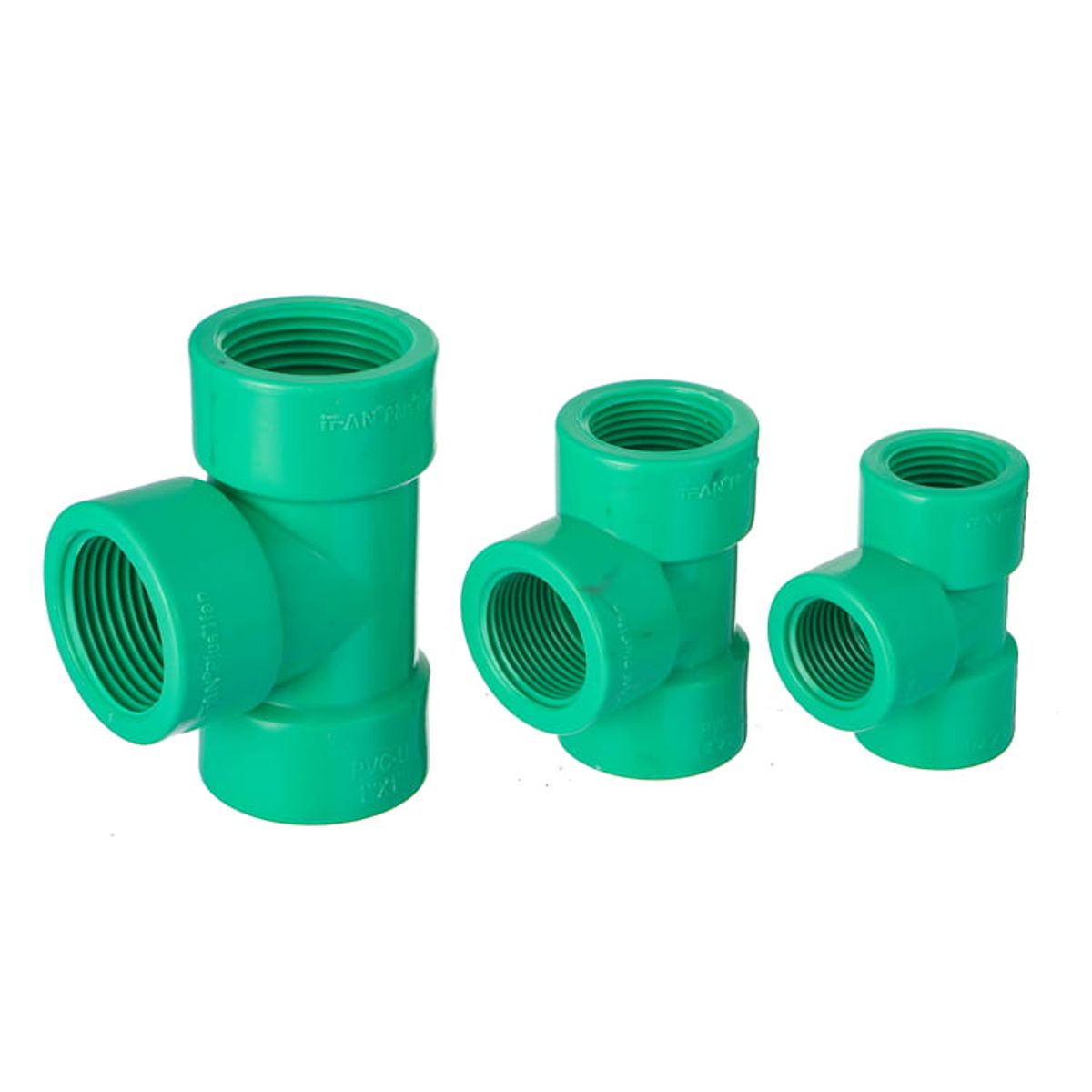
The same DN110 uPVC pipe can appear on a DWV branch, a buried sewer lateral or a storm-drain header, but the specification behind each application is different. DWV — drain, waste and vent — is the interior plumbing system that carries fixture discharge from the point of use to the building drain. It runs at gravity flow, exposed inside walls and chases, in ambient temperature, and jointed with solvent cement. Wall thickness follows SDR (standard dimension ratio) rather than SN, because the pipe carries no soil load. Interior DWV pipe is thin: a DN110 SDR 41 wall is about 2.7 mm — enough to hold pressure at the water test but no more.
Sewer pipe leaves the building drain and enters the ground. It carries the same waste but under different loads: soil above, groundwater around, occasional traffic on the surface. Wall thickness follows a stiffness class (SN2, SN4, SN8, SN16), and the joint type shifts to rubber-ring bell-and-spigot because solvent-welded rigid joints crack under soil settlement. A buried DN160 sewer under a driveway needs SN8 minimum; under a residential street SN4 usually suffices; under a highway SN16 or a structured-wall alternative.
Storm drainage carries rainwater — no sewage biofilm, no hydrogen sulphide, less chemical aggression. The stiffness class rules are the same as sewer pipe, but the material choice broadens: uPVC works below DN500 the same as sewer, and above DN500 the network usually moves to structured-wall PP or HDPE without the H₂S argument tilting the decision. Storm systems also carry heavier peak flows than sewer systems, so DFU-style fixture load calculations do not apply; sizing is by contributing catchment area against a design rainfall intensity.
uPVC vs CPVC vs PVC-O: Which Chemistry to Order
Three PVC-family chemistries appear on trade counters and confuse first-time buyers. uPVC is the drainage and cold-water pressure standard — un-plasticised, thermally stable to about 60 °C. CPVC is chlorinated PVC — additional chlorine atoms substituted into the polymer chain lift the thermal service limit to about 95 °C, which is why CPVC handles hot-water pressure and uPVC does not. PVC-O is molecularly oriented uPVC — the same material stretched during extrusion so the polymer chains align in the pipe wall, doubling the pressure rating for the same wall thickness. PVC-O is a cold-water pressure product; it is not used for drainage because the manufacturing complexity costs money the gravity system does not need.
For drainage, order uPVC. Full stop. CPVC in a drainage line is over-specification — you pay for hot-water thermal capacity a gravity system will never use, and the resin chemistry is more brittle at low temperature. PVC-O in a drainage line is worse — the molecular orientation makes the pipe stiffer at cost, and the manufacturing route is set up for pressure applications, not drainage geometry. If the buyer is stocking a mixed-product catalog covering pressure and drainage, keep the two chemistries in separate SKU families and print the material designation on every pipe strip so the installer does not cross them.
uPVC vs CPVC vs PVC-O — application guide
| Chemistry | Thermal limit | Best application | Not for |
|---|---|---|---|
| uPVC (PVC-U) | 60 °C | Drainage, DWV, sewer, storm, cold-water pressure | Hot-water pressure lines |
| CPVC | 95 °C | Hot-water and cold-water pressure, industrial fluids | Drainage (over-spec, brittle at low temp) |
| PVC-O | 60 °C | High-pressure cold-water main, irrigation trunk | Drainage (manufacturing cost, no benefit) |
Sizes at a Glance
uPVC drainage pipe sells in nominal diameters DN50, DN75, DN110, DN125, DN160, DN200, DN250, DN315, DN400, DN500 and DN630, with DN110 and DN160 dominating residential and small-commercial demand. The naming convention matters: in metric standards DN is the outside diameter in millimetres, and a DN110 pipe measures 110 mm across the outer wall. Under ASTM D2665 for DWV, "4-inch" nominal is 114 mm OD, which means the fittings from the two systems do not interchange. Pick a size system per project — metric DN or US NPS — and stay on it.
Sizing to fixture load runs on drainage fixture units (DFU): a basin is 1, a shower 2, a kitchen sink 2, a bathtub 2, a washing machine 3, and a water closet 4. At the fixture end of the WC branch sits the closet flange — sizing, height rule, and repair are covered in the PVC toilet flange guide. DN110 carries a single WC branch (up to 160 DFU on a horizontal branch), and steps up to DN160 once the building drain leaves the property. Above DN200 the pipe moves into sewer-lateral territory. The full sizing table, DFU capacities, and stiffness-class rules live in the detailed PVC drainage sizes guide.
uPVC drainage diameter range at a glance
| DN (mm) | Approx. US nominal | Typical application |
|---|---|---|
| DN50 / DN75 | 2" / 3" | Appliance branches, basin and shower drains |
| DN110 | 4" | WC branches, residential stacks, short building drains |
| DN160 | 6" | Sewer lateral to municipal main, mid-rise building drain |
| DN200 / DN250 | 8" / 10" | Longer laterals, small collector, storm main |
| DN315 / DN400 | 12" / 16" | Municipal sewer, storm trunk, industrial effluent |
Stiffness Class for Buried Pipe
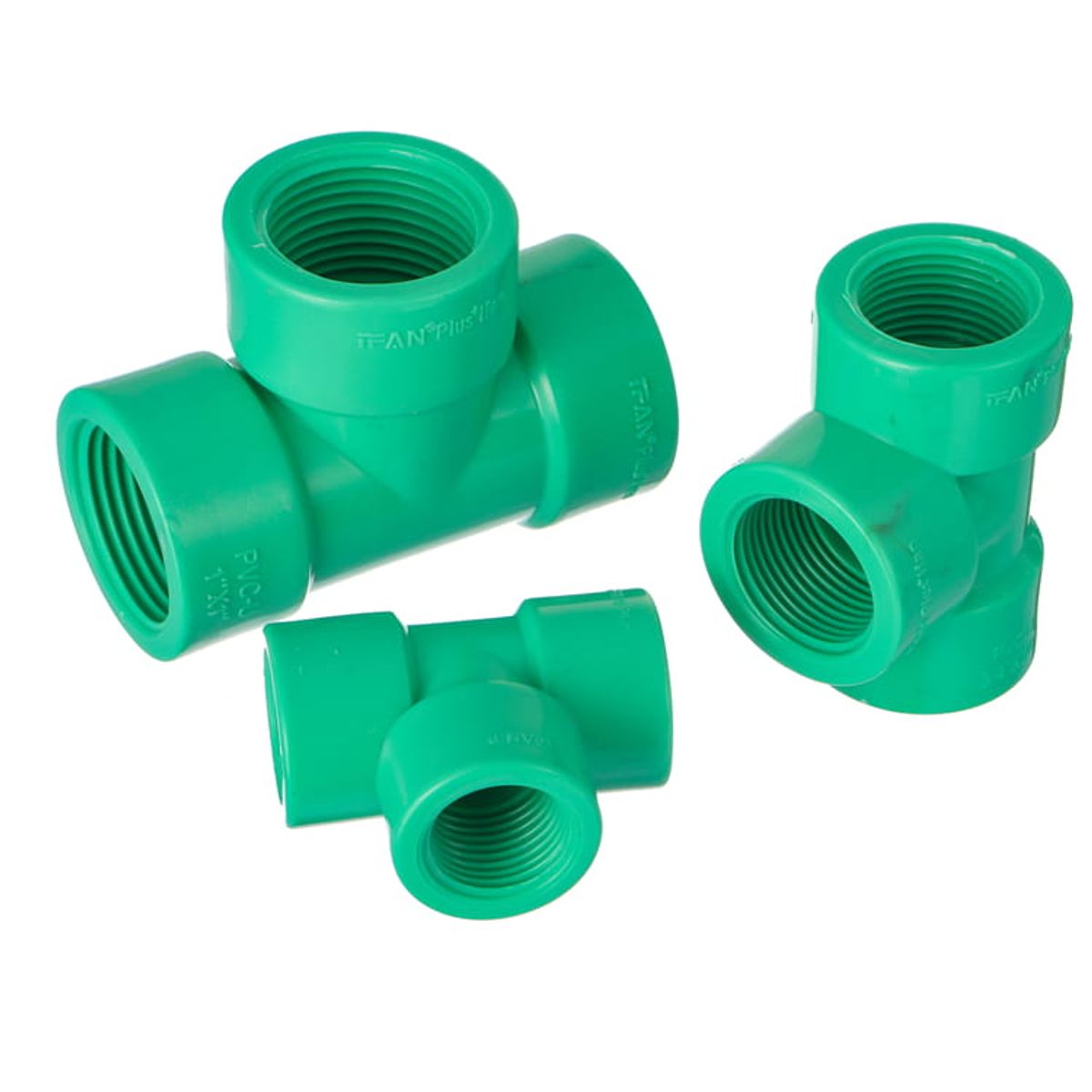
Above ground, wall thickness on uPVC pipe is a matter of pressure and impact resistance. Below ground, it becomes structural: the pipe is a ring holding up whatever sits above it, and it is graded in kN/m² of ring stiffness under EN 1401 and ISO 4435. SN2 is legal for shallow-trench, hand-dug, no-traffic runs but rare in modern specifications. SN4 is the default for gardens, footpaths and light-traffic residential streets. SN8 covers driveways, medium-traffic streets and shallow cover. SN16 handles highways and industrial yards.
A working position for distributors: stock SN4 and SN8 in parallel rather than betting the container on one class. Contractors will mix specs on site — the SN4 batch ends up under a driveway, the joint cracks under load two summers later, and the callback finds its way back to the pipe supplier. Two SKUs per diameter cost the warehouse a bit of complexity and buy a big drop in warranty exposure.
SN stiffness class for buried uPVC pipe
| SN class | Ring stiffness | Typical use |
|---|---|---|
| SN2 | 2 kN/m² | Shallow trench, no traffic — rarely accepted today |
| SN4 | 4 kN/m² | Gardens, footpaths, light-traffic residential streets |
| SN8 | 8 kN/m² | Driveways, medium-traffic streets, shallow cover |
| SN16 | 16 kN/m² | Highway carriageways, industrial yards, deep burial |
PVC vs Concrete vs HDPE: The Sewer-Material Decision
The three-way sewer question for larger networks — uPVC, reinforced concrete or HDPE — decides fifty to a hundred years of maintenance behaviour. uPVC wins below DN500 on cost, corrosion, joint reliability and design life. HDPE takes over above DN500 and anywhere trenchless installation matters — long fusion-welded strings, horizontal directional drilling, pipe bursting for renewal. Concrete now makes sense only above DN800 or where the tender pre-specifies it, and even then modern H₂S attack calculations make unlined concrete a 30-year pipe rather than the 100-year asset it used to be.
The hydrogen sulphide problem is the single technical trend that has re-shaped material choice since 2010. In warm-climate sewers, bacterial oxidation converts H₂S at the pipe crown into sulphuric acid at pH below 1, and unlined concrete loses 5-10 mm of wall per year. uPVC and HDPE are immune. A modern municipal specification typically stacks uPVC in the collector tier and HDPE on the trunk; the full comparison lives in the PVC vs concrete vs HDPE sewer pipe guide.
Fittings and Joint Types
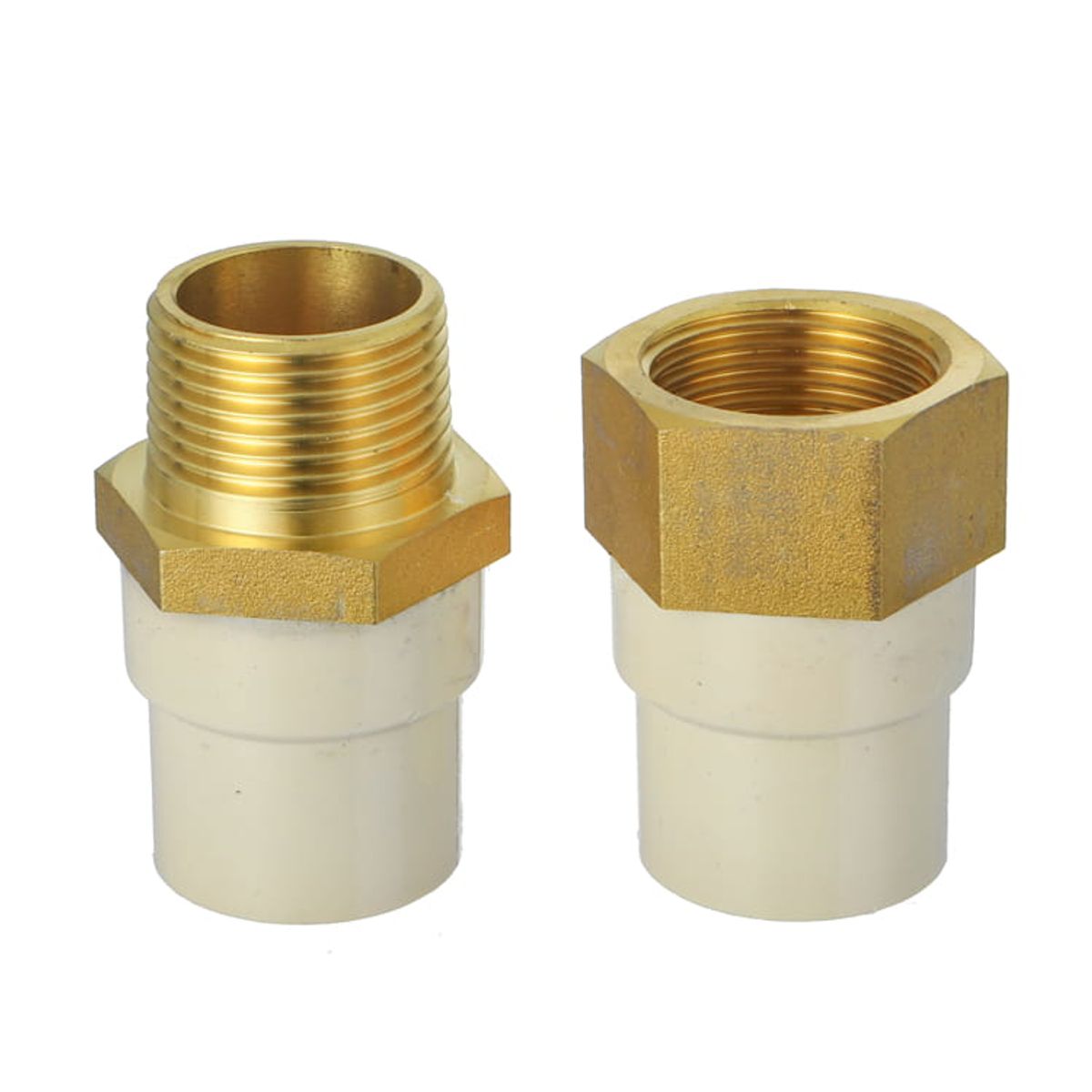
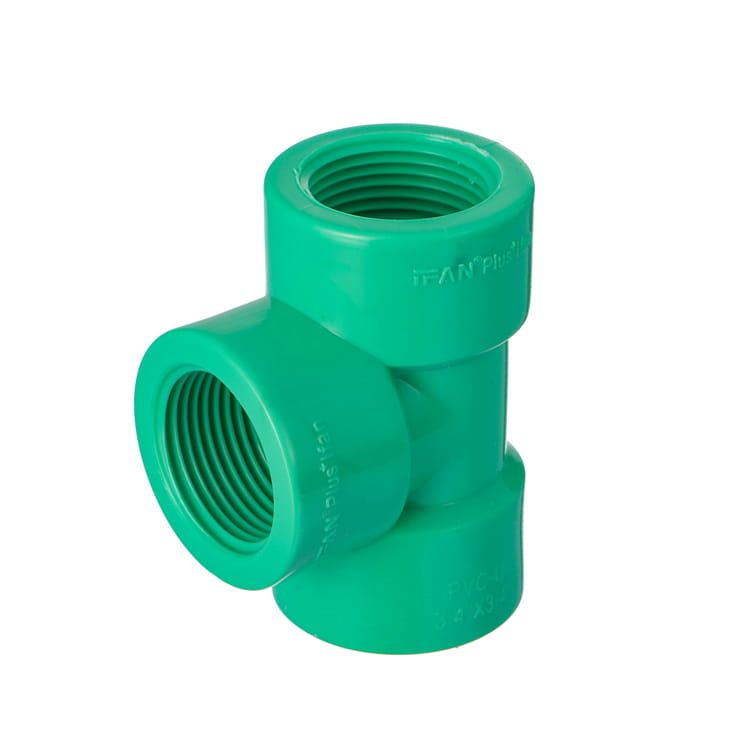
Every uPVC diameter has a matched family of fittings — elbows, tees, wyes, couplings, reducers, cleanouts, traps — and the sockets are size-locked. A DN110 socket accepts DN110 pipe (OD 110 mm, plus-only tolerance) and nothing else. There is no adapter that makes a DN110 socket accept a DN125 spigot without wasting the tolerance the socket depends on. Distributors trying to save inventory space by dropping one diameter end up with an unused stock of adapters and no time saved at the joint.
Elbow shape matters as much as size for drainage. Long-radius elbows (radius = 1.5× diameter or more) slow flow less and clog less than the tight-radius elbows used in pressure systems. Any drainage line carrying solids — WC branches, kitchen sink laterals, industrial effluent — should be specified with long-radius elbows on the plan. Wyes (45° branches) beat sanitary tees at collecting side-fixtures because the shallower angle keeps flow forward and reduces the pull on upstream trap seals.
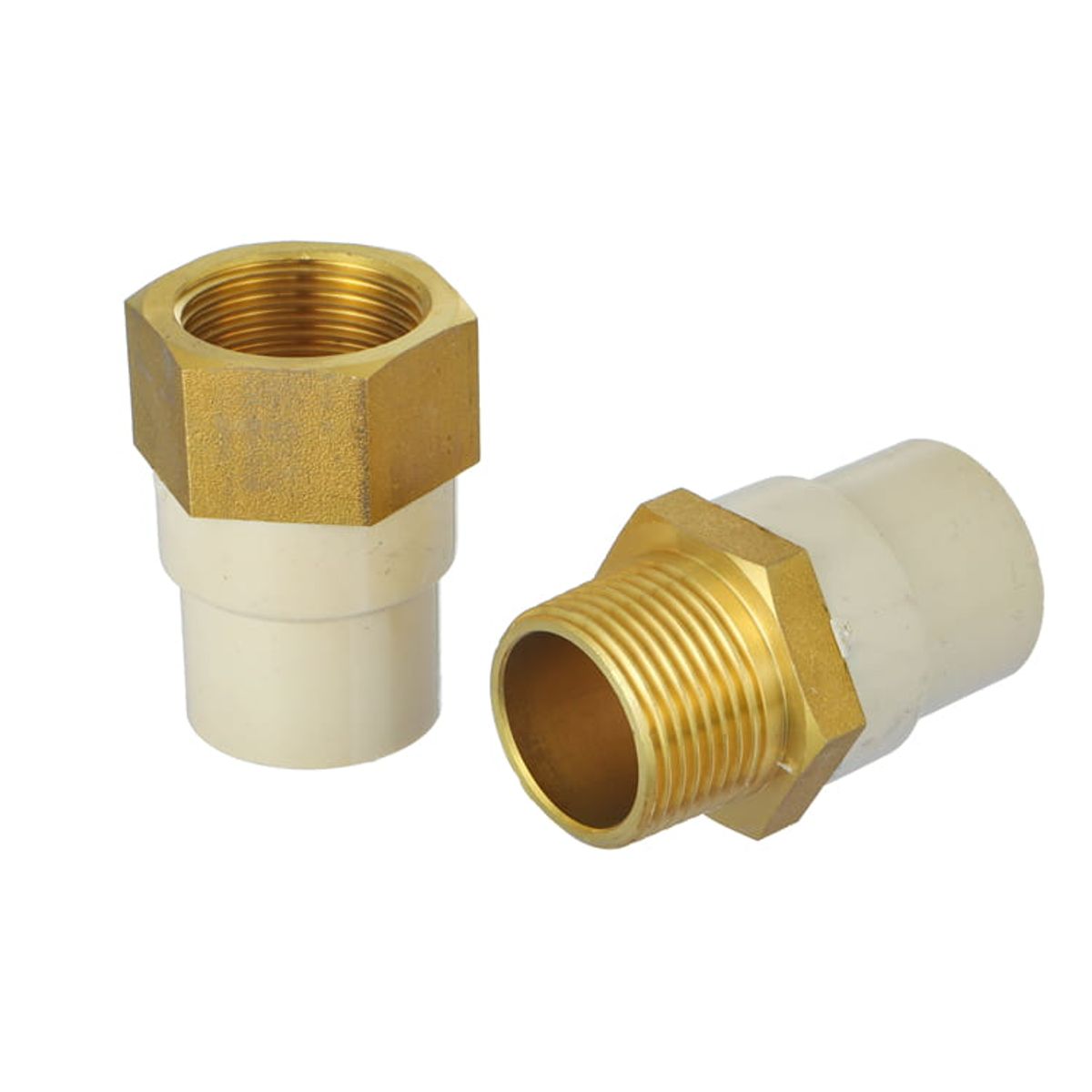
Two joint families dominate uPVC drainage. Solvent-weld sockets take PVC cement and fuse chemically into a monolithic joint — the interior-DWV standard. Rubber-ring bell-and-spigot sockets carry an EPDM elastomer ring that compresses when the spigot pushes in — the buried-sewer standard, faster to install and tolerant of 5-10 mm of soil-settlement pipe movement per joint. Interior work uses solvent weld; buried mains use rubber ring. Order both types on the same container spec if the project has both, and label pallets clearly — a rubber-ring fitting solvent-welded into a DWV run is a slow failure waiting for its cure schedule.
The DWV Design Chain
A working DWV system runs on a specific set of numbers. Horizontal drains slope at 1/8-inch per foot (1 %) for DN75 and larger, 1/4-inch per foot (2 %) for DN50 and smaller. Every fixture trap holds a 50 mm water seal that survives siphonage as long as the trap arm is within IPC 909 limits (DN40 = 1 m, DN110 = 3 m maximum) and the venting equalises drain-side pressure. Vent stacks size to whole-building fixture unit load and extend at least 150 mm above the roof surface, 300 mm above snow depth, and 3 m clear of any opening window.
Cleanouts are spaced every 15 m on horizontal runs, at every 45° or greater change of direction, at the base of every vertical stack, and where the building drain leaves the property. Fitting selection follows the flow: wyes for horizontal-to-horizontal branches, sanitary tees or combination fittings for vertical-to-horizontal transitions, long-radius elbows on solids-carrying runs. The DWV system design guide covers the full chain — slope, venting, trap arms, cleanouts, AAVs and the six design mistakes that cause most callbacks.
The Installation Chain
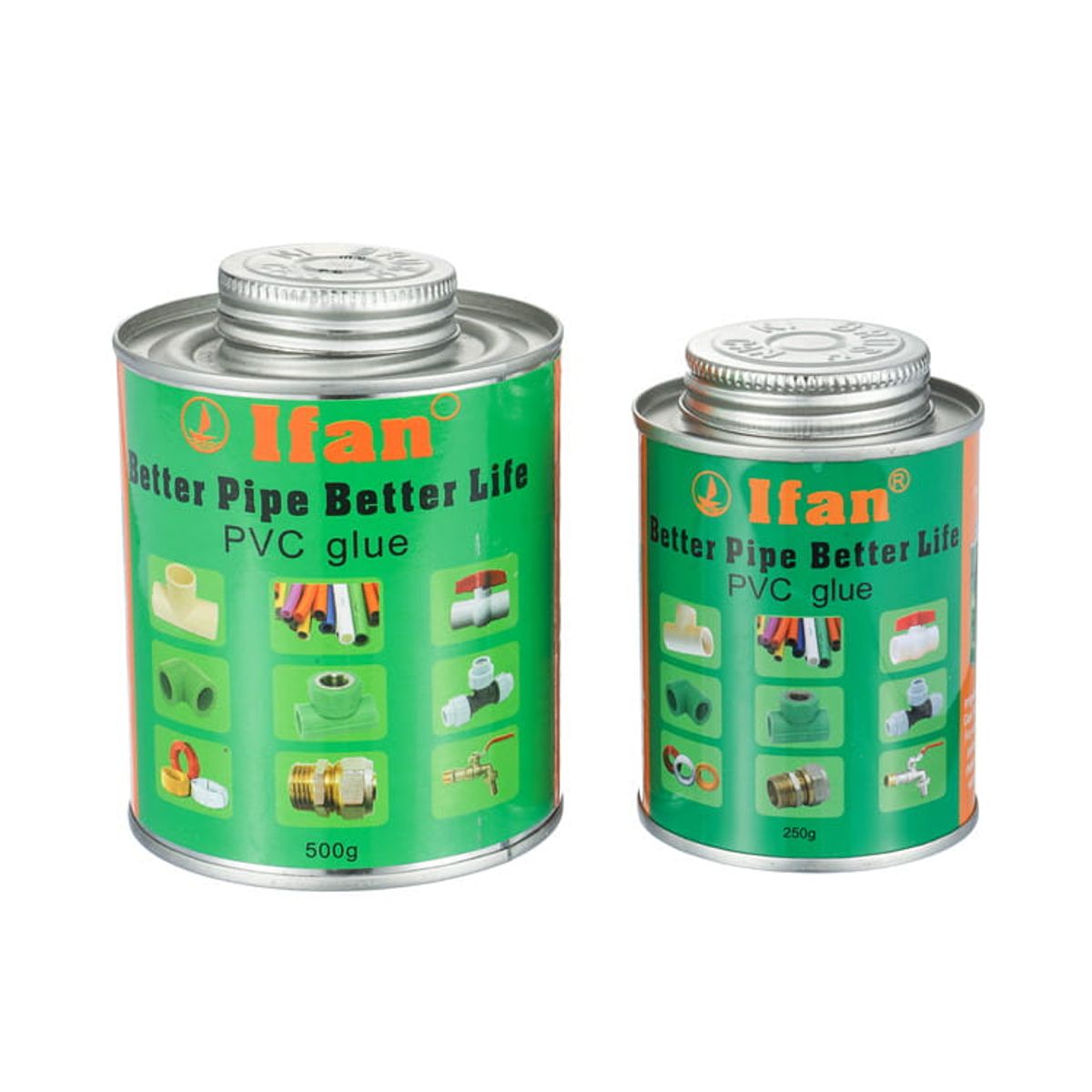
Solvent-welding uPVC is not gluing — it is chemical fusion. The cement dissolves the surface layer of both pipe and socket, and when the two surfaces contact under quarter-turn insertion, the dissolved polymer mixes and re-crystallises into one continuous piece of plastic. Get the technique right and the joint is stronger than the pipe wall itself; get it wrong (dry socket, wrong cement body, five-second cure) and the joint looks identical, passes the water test, and starts to weep months into service.
Cement body grade matches diameter: regular body for DN20-DN75, medium body for DN75-DN160, heavy body for DN160+. Pipe prep is three steps — square cut, deburr inside and out, chamfer the outside to 15°. Application is cement on both pipe end and socket, insert with a quarter turn, hold for 30 seconds. Cure time depends on temperature: 24 hours at 15-25 °C, up to 72 hours in cold weather. Rubber-ring bell-and-spigot handles the buried mains and installs in seconds without cure. The full technique, cement selection, cure table and installation-failure catalogue lives in the PVC pipe installation guide.
Standards and Certifications
uPVC drainage is governed internationally by a small set of standards. EN 1401 covers buried sewer pipe; EN 1329 covers interior DWV; ISO 4435 mirrors EN 1401 for the ISO-region markets. In the US, ASTM D2665 covers DWV and ASTM D3034 covers gravity sewer. Chinese GB/T 5836 aligns with the ISO standard and is common on Asia-region orders. Above these product standards sits ISO 2859-1 for acceptance sampling, which decides how many samples a QC report inspects per lot.
uPVC drainage standards regime
| Standard | Scope | Region |
|---|---|---|
| EN 1401 | Buried sewer and storm pipe (SN class, joints) | EU + aligned markets |
| EN 1329 | Interior DWV pipe and fittings | EU + aligned markets |
| ISO 4435 | uPVC sewer pipe (mirrors EN 1401) | ISO-region markets |
| ASTM D2665 | DWV pipe (nominal inch sizing) | US and US-code markets |
| ASTM D3034 | Gravity sewer pipe (SDR classes) | US and US-code markets |
| GB/T 5836 | uPVC drainage pipe (aligns with ISO) | China and Asian markets |
| ISO 2859-1 | Acceptance sampling for QC inspections | Global |
On top of the international product standards, most import markets add a national conformity certificate. Saudi Arabia requires SASO; Nigeria requires SONCAP; Mexico requires NOM. Buyers routing a container into any of those markets should have the regional certificate listed on the invoice and match the name on the certificate to the manufacturer's business license — a certificate held in a different company's name is a borrowed document. Requirements vary by product, importer role and destination, so confirm the current documentary requirements with the customs broker before the container ships.
Sourcing uPVC Direct From China Without Getting Burned
Most buyers who think they are dealing with a PVC pipe manufacturer are actually talking to a trading company. The gap costs twice: the trading markup lifts the unit price by 8-15 %, and when a container arrives with thin walls, the trader has no production line to fix it, only a phone number for the factory that does. Separating a real manufacturer from a reseller takes about thirty minutes of checks that any procurement team can run before a deposit is paid.
The seven-check routine covers business license name (a name ending in "Trading Co" versus "Piping / Plastics Co"), registered address in an industrial zone versus a commercial office tower, catalog depth in a single product family versus scattered SKUs, certificates in the manufacturer's own name, live video walk-through matching the license, and an audit reaction — a real factory welcomes third-party inspection; a trader stalls. The same routine applied to uPVC drainage suppliers works exactly as it does for PPR pressure suppliers — the deep-check parallel is the PPR manufacturer verification guide.
What IFAN Ships in the uPVC Drainage Range
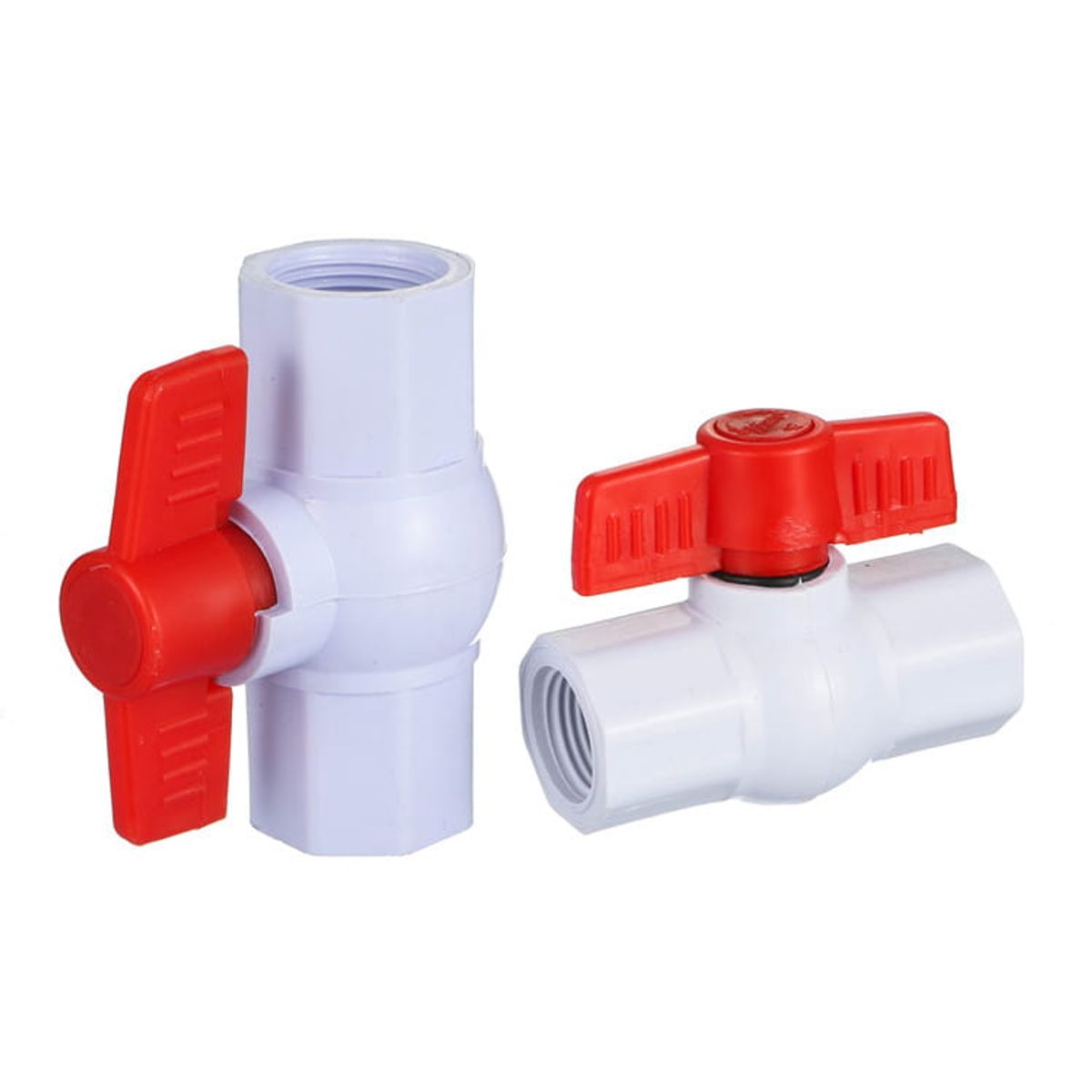
IFAN has manufactured PVC-family pipe and fittings at its 120,000 m² Zhejiang facility since 1993, exporting to distributors and municipal buyers across 120+ countries. The uPVC / PVC Series is positioned for the collector and DWV tier — DN75 to DN315 in the shape catalogue drainage designers spec:
- Pipe range: DN75 to DN315 in SN4 and SN8 stiffness classes for buried; SDR 34 to SDR 41 wall for interior DWV; 3, 4 and 6 metre lengths.
- Fitting shapes: 45° wyes, long-radius 90° and 45° elbows, sanitary tees, combination wye-and-eighth-bend, cleanouts with threaded plugs, couplings and reducers — sockets machined to a 1.5° taper across the range so third-party solvent cements fill evenly.
- Joint types: solvent-weld sockets for interior DWV, rubber-ring bell-and-spigot with EPDM elastomer for buried sewer — a mixed container can carry both.
- Standards references: EN 1401 / EN 1329 / ISO 4435 / ASTM D3034 / GB/T 5836, printed on the pipe strip and confirmed on the per-shipment inspection report.
- Regional certifications: SASO, SONCAP, NOM available on request when the destination market requires them; certificates issued under the manufacturing entity's own name.
- Quality control: per-shipment inspection report covering sampling under ISO 2859-1, dimensional per-sample data against DIN 8077 / EN 1401 tolerances, material tests, and photographic packing evidence — the same routine described in the PPR quality control checklist applied to uPVC-grade product.
Third-party inspections from SGS, Bureau Veritas, TÜV, Intertek or QIMA are welcomed on any uPVC order — bookings at container loading catch socket-geometry drift and wall-thickness variance before the pipe leaves the port.
A Buyer's Scenario: 300-Unit Residential Subdivision
Consider — illustratively — a 300-unit residential subdivision going through drainage procurement. Each unit carries a standard bathroom group (WC, shower, basin, kitchen sink) plus a washing-machine drain: 12-14 DFU on the branch, DN110 to the stack, DN110 building drain leaving each unit. The subdivision-level collector picks up 5 units per branch, then 20 units at the collector, then the trunk that leaves for the municipal sewer connection.
The container mix for the network works out to roughly: 1,500 m of DN110 for interior DWV and unit-level building drains, 500 m of DN110 for cluster collectors, 250 m of DN160 SN8 for the subdivision-level laterals, and 120 m of DN200 SN8 for the trunk main. Fittings scale at roughly one per 1.2 m for the interior work and one per 1.8 m for the buried laterals — call it 1,500 fittings across the mix. Two 40-foot high-cube containers cover the SKU spread, ordered simultaneously so the interior work and the buried mains stay in phase across the subdivision's four construction stages.
The specification breaks by joint type: solvent-weld fittings for the interior DWV, rubber-ring for the buried laterals. Cement, primer and rubber ring assortments ship with each container so the site does not stall waiting on accessory deliveries. Wall thickness holds at SN4 for the interior, SN8 for anything the driveway crosses. That mix has matched the ten-year container-order pattern from residential-subdivision buyers in African, Latin American and Southeast Asian markets, and it is the default IFAN's export desk quotes when the buyer sends the drawing rather than a SKU-level bill of materials.
Common Failures Across the Chain
Most uPVC drainage failures trace to one of a small set of decisions. On the pipe side: SN2 substituted for SN4 to save cost, then buried under a driveway; wall thickness at or below the DIN nominal minimum instead of the plus-only tolerance direction; regional certificate held in a trading company's name instead of the manufacturer's; storm and sewer stiffness confused at the ordering stage.
On the design side: DWV vent stack sized for the top floor only rather than whole-building fixture load; trap arm exceeding IPC 909 limits; sanitary tee substituted for a wye on a horizontal branch; cleanouts buried behind finished tile with no access panel. On the install side: dry socket (cement on one surface only); pipe end without the 15° chamfer; joint released before the 30-second hold expires; pressure test run before full cement cure at ambient temperature. Between these ten patterns, most of the leaks a well-designed uPVC drainage network produces are preventable at the spec, design or installation stage rather than accepted as service-life attrition.
The Complete PVC Drainage Cluster
This pillar sits on top of four detailed spokes, each covering one part of the decision chain in depth. Use them together — the pillar for the framework, the spokes for the numbers, standards and site-level detail:
- PVC drainage pipe sizes — DN75 to DN315: the full sizing table, DFU capacity by diameter, stiffness class rules for buried pipe, best-for / not-for by diameter, and how to load a container by SKU spread.
- PVC DWV system design: slope, trap seals, venting, cleanouts, fitting selection, AAV rules, and the six design mistakes behind most callbacks.
- PVC vs concrete vs HDPE for sewer mains: the material comparison for municipal networks, H₂S attack on concrete, 50-year TCO, and which material fits which project tier.
- PVC drainage pipe installation: solvent cement selection, pipe prep, primer, application, cure times by temperature, rubber-ring alternative, and the six install failures behind most late-service leaks.
Conclusion
uPVC drainage pipe is not a commodity even when the material is standard. The decision chain — chemistry, system, size, stiffness class, joint type, standards, sourcing, install technique — sets the failure rate long before the pipe leaves the factory. Pick the wrong stiffness class for the buried section and it cracks in year three. Pick the wrong joint type for the interior and it leaks in year one. Pick the wrong supplier, and the paperwork will not survive a customs check.
Before the next tender ships, walk each of the four spokes above against the specific project the network will serve. Match the container mix to the DFU load, the stiffness class to the traffic tier, the joint type to the install location, and the supplier's paperwork to the destination market's compliance rules. A well-specified uPVC drainage network is a fifty-to-hundred-year piece of infrastructure that quietly does its job for the life of the building. A badly-specified one is the reason municipal engineers still remember the manufacturer's name a decade later.
Frequently Asked Questions
What does uPVC stand for and how does it differ from PVC?
uPVC is un-plasticised polyvinyl chloride — PVC without added plasticiser. The absence of plasticiser gives it the rigidity a pipe needs; plasticised PVC is soft and used for cable insulation and vinyl film. In drainage-pipe context, "PVC" and "uPVC" usually mean the same product.
Can I use uPVC drainage pipe for hot water?
Not for continuous hot-water pressure lines. uPVC's thermal service limit is about 60 °C; hot-water pressure needs CPVC or PPR. For occasional hot discharge from a kitchen sink or a dishwasher, uPVC drainage handles it — the peaks are short and cool quickly.
What is the difference between DWV pipe and sewer pipe?
DWV pipe runs interior drainage — thin wall (SDR 34-41), solvent-weld joints, no soil load. Sewer pipe is buried — thicker wall (SN4 through SN16), rubber-ring bell-and-spigot joints, carries the soil above. Same material family, different specification for different loads.
How long does uPVC drainage pipe last?
A properly installed uPVC drainage pipe has an expected service life above 100 years. The material is chemically inert to sewage, hydrogen sulphide and dilute acid; the joints are the practical service-life limit, not the pipe wall.
Do I need SASO, SONCAP or NOM certification for a container into my market?
Yes, if you are shipping into Saudi Arabia (SASO), Nigeria (SONCAP) or Mexico (NOM) respectively. Regional conformity certificates are required at customs and shipping without them delays or blocks clearance. Confirm the current documentary set with your customs broker before the order confirms.
What is the standard container mix for uPVC drainage?
A typical residential-market mixed container runs roughly 55% DN110, 25% DN160, 15% DN200, and 5% DN75 branches — the ratio matches the ten-year order pattern from wholesale distributors in African, Latin American and Southeast Asian markets.
Solvent weld or rubber ring — which joint type do I order?
Solvent weld for interior DWV work below DN110 and for any joint that must survive pipe stress without leaking. Rubber-ring bell-and-spigot for buried sewer mains DN110 and larger — faster to install and tolerant of soil settlement. Order both types on the same container when the project has both.
How do I verify a PVC pipe supplier is a real manufacturer?
Check the Chinese business license name, the registered address (industrial zone versus commercial tower), the catalog depth in a single product family, third-party certificate holder names, and the response to a third-party audit request. A real manufacturer welcomes the visit; a trading company stalls.