
Water Pipe Route Changed? Match the Soil Evidence to the Revision
Reconcile a changed water pipe alignment with soil investigation locations, report scope and reviewer dispositions before revising the procurement enquiry.
Reconcile changed segments against investigation location, depth and scope before asking the reviewer for disposition.
A revised alignment arrives while the pipe order is being prepared. The project already has a soil report, but its drawing reference belongs to the earlier route. Before revising the purchase, reconcile the changed segments with the investigation locations and scope. Ask the responsible reviewer to identify which conclusions still apply and which questions need further work. A report date alone cannot answer a location question.
The practical output is a route-to-evidence coverage register: a short record connecting each changed segment to the relevant drawing, investigation, purpose and written disposition. The register below organizes a review; it does not decide sampling density, interpret laboratory results or approve a pipe material.
Video supplement: relevant source verification remains pending. The complete procedure is provided below.
Freeze the route being reviewed
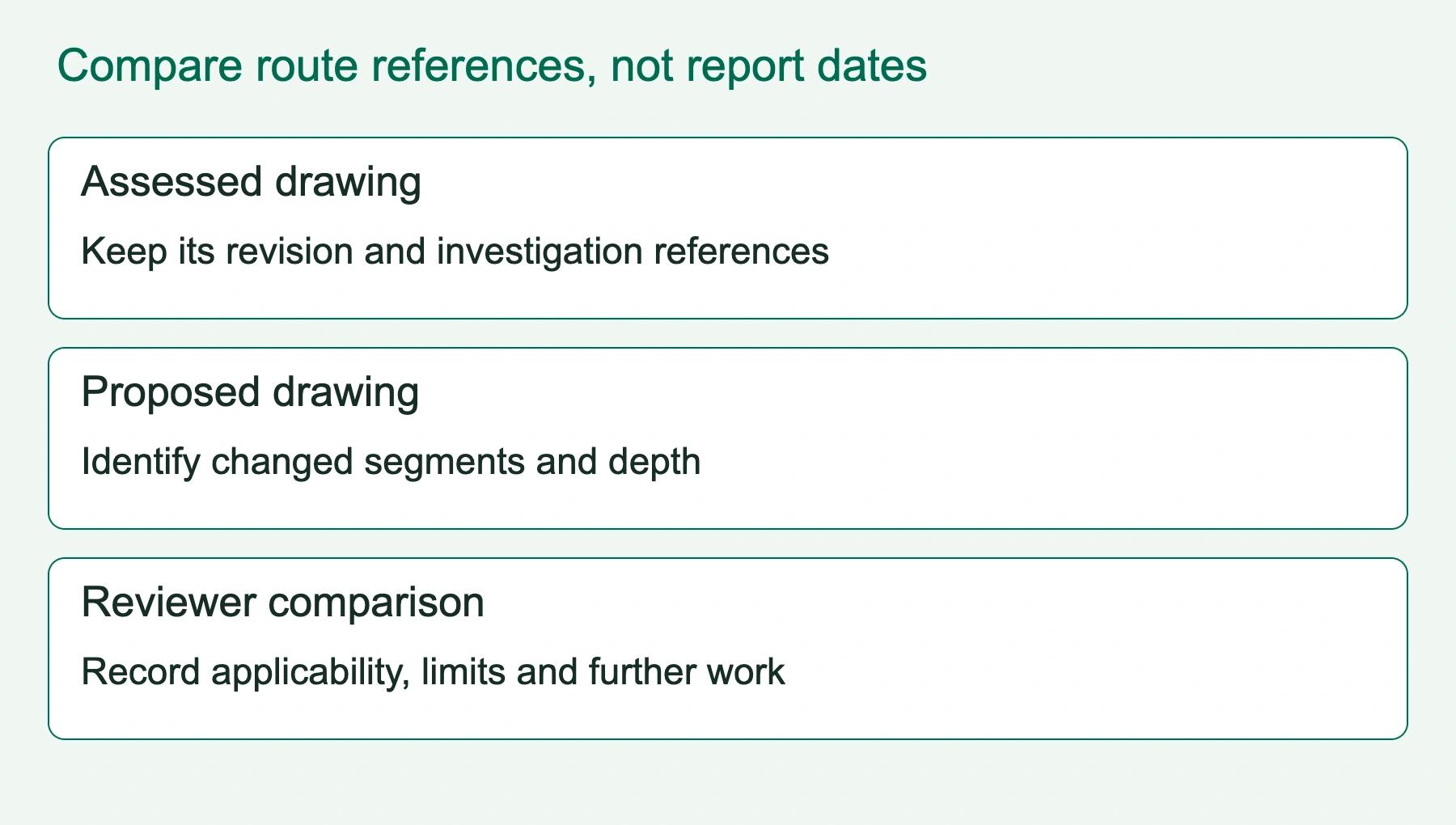
Put the earlier assessed drawing beside the proposed revision. Identify the changed horizontal alignment and any changed depth, crossing or construction arrangement. Give each affected segment a stable reference using the project’s own stationing or coordinates. Preserve the original references rather than renaming everything to match the latest drawing.
This is an actual project problem. An El Paso Water geotechnical report, printed page 4, describes an alignment change after the initial report. The later evaluation addresses the new route and calls for further review when route changes affect its recommendations. That record concerns geotechnical matters; it is not evidence that a revised route passed a chemical-contamination assessment.
Record both the drawing assessed by the report and the drawing now proposed for purchase. If the report does not identify its drawing basis clearly, make that a specific question for its author. A blank reference is an unresolved relationship, not proof that the entire new route falls outside the investigation.
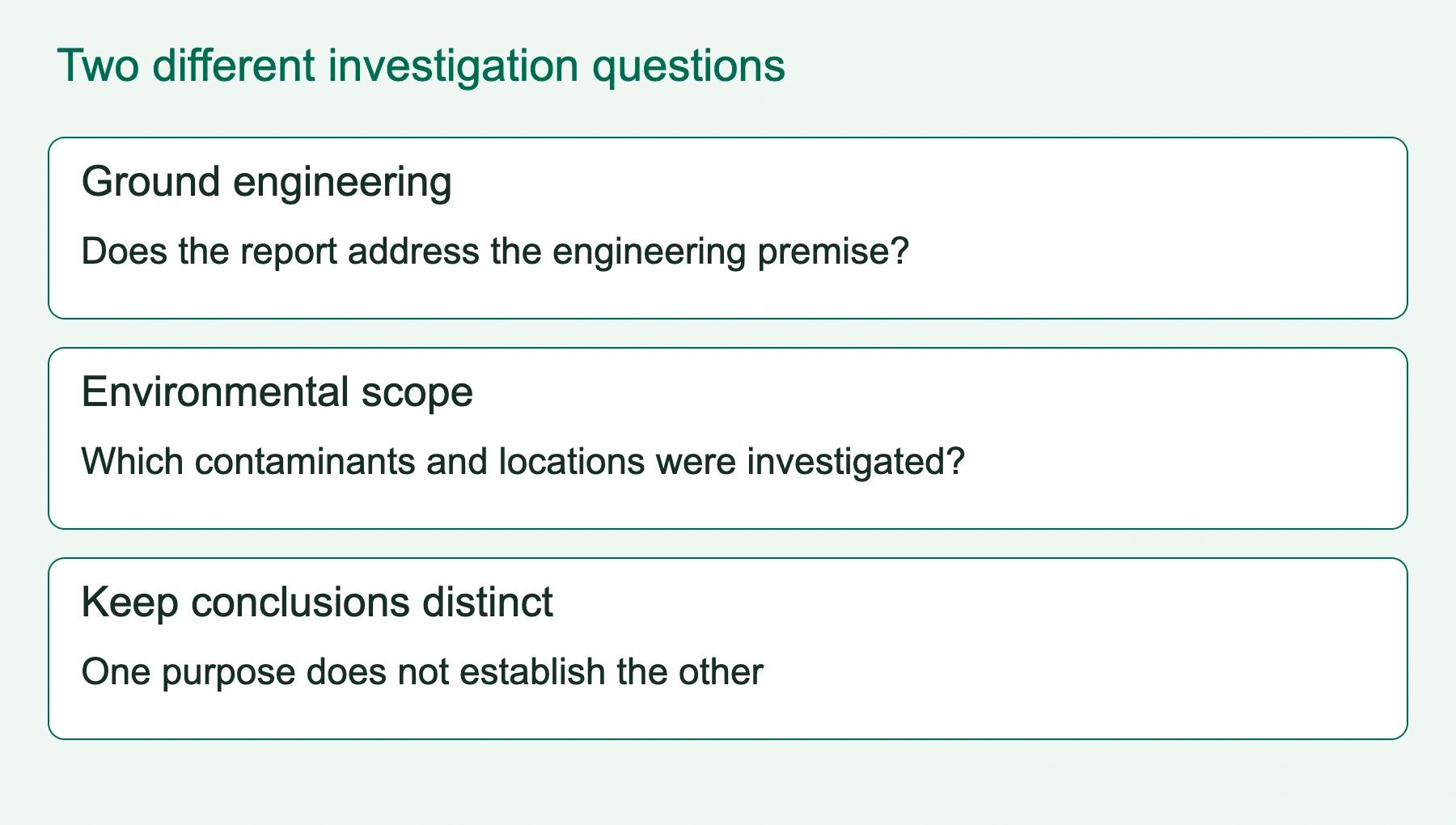
Separate ground mechanics from contamination scope
Two reports called “soil assessment” may answer different questions. The El Paso document addresses subsurface engineering conditions and construction considerations. Those findings must not be relabelled as a contaminant investigation merely because both involve soil borings.
A different task appears in the City and Borough of Yakutat’s published project packet. Shannon & Wilson’s July 19, 2024 proposal links the expanded waterline alignment to additional geotechnical and environmental work. Tasks 11 and 13 distinguish planned PFAS sampling from conditional investigation for other contaminants near identified sites. This is a proposed scope, not a completed set of results or a pipe approval.
Keep the purposes separate in your register. A reference that supports trench or embedment design may leave the environmental question open. An environmental result likewise does not automatically establish the geotechnical assumptions. Where one document serves several purposes, record the relevant sections rather than assigning the whole report a general “clear” label.
Build a route-to-evidence coverage register
Use one row for each changed segment whose evidence relationship needs a decision. Do not use the table to infer a safe distance from a sample. The qualified investigation team must determine whether the available locations, depths and scope support the revised arrangement.
| Field | Record from the project file | Question to resolve |
|---|---|---|
| Route identity | Segment reference; old and proposed drawing revisions | Which change is being reviewed? |
| Location and depth | Coordinates or stationing; proposed level; investigation location references | Does the reviewer consider these observations applicable here? |
| Investigation purpose | Report title, author, date and relevant section | Does it answer ground mechanics, contamination, or another defined question? |
| Environmental scope | Actual sampling plan, analytes and result references where applicable | What was investigated, and what remains outside the scope? |
| Disposition | Named reviewer, response reference, applicable conditions and open actions | Which conclusion remains applicable, and what further work is required? |
| Purchasing consequence | Selected pipe specification and affected enquiry revision | What can procurement ask the supplier to confirm? |
This is an editorial organizing format derived from the documented revision problem. It is not a utility form, a sampling instruction or a replacement for project acceptance. Keep unknown fields visible. In particular, “not provided” and “not investigated” describe different situations and should not be merged into “no issue.”
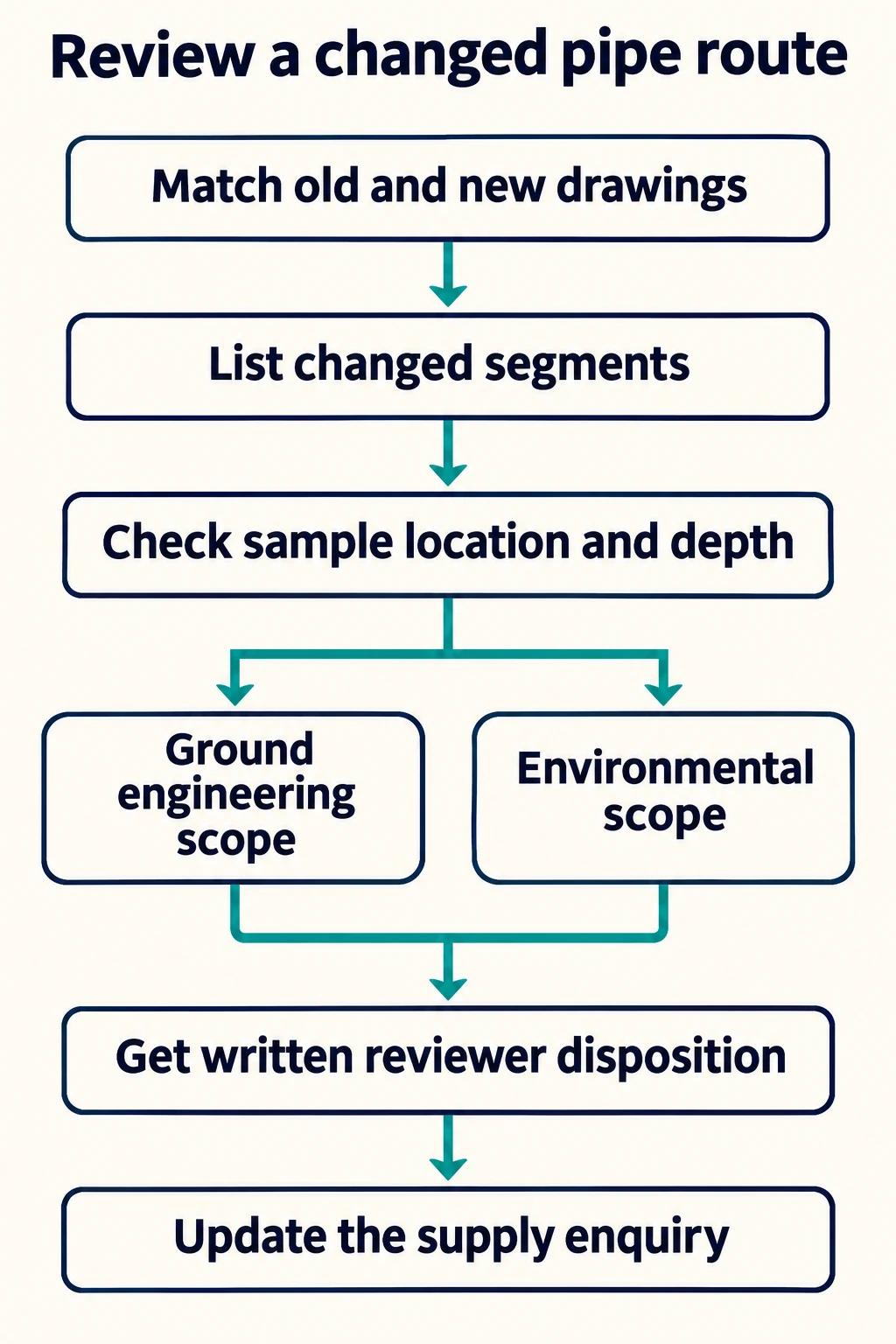
Readable workflow steps
- Match old and new drawings.
- List changed segments.
- Check sample location and depth.
- Keep ground engineering scope and environmental scope distinct.
- Get written reviewer disposition.
- Update the supply enquiry.
Ask for a segment-specific disposition
Send the register with the drawing overlay and named reports. Ask the responsible reviewer to address the actual changed segments, including the limits of any continuing conclusion. A response that refers only to the project name may still leave uncertainty about which revision was considered.
Carry the reviewer response back into a segment disposition log. The placeholders below are fields to complete from actual documents, not an illustrative project or an acceptance decision.
| Changed segment | Evidence and reviewer response | Open action | Purchasing consequence |
|---|---|---|---|
| [Segment reference and proposed drawing revision] | [Report, section, investigation location/depth and dated reviewer disposition] | [Further work, responsible party and closure reference, or reviewer-confirmed applicability conditions] | [Affected enquiry revision and selected specification, or unresolved item to retain] |
Please review proposed drawing [revision] against investigation [reference]. For changed segments [references], identify which existing findings remain applicable at the proposed location and depth, what further investigation or assessment is needed, and any resulting restrictions on the selected pipe specification. Please reference the reviewed drawing and supporting documents in your response.
Use the response to update the affected rows. If additional investigation is required, preserve that action and its owner; do not fill the gap with a catalogue statement about chemical resistance. If the existing evidence remains applicable, retain the reviewer’s stated basis and conditions. Neither outcome can be inferred from the mere existence of an older report.
For the wider network specification, use our HDPE water supply network guide. Where the unresolved issue concerns vacuum and the soil support assumed in a collapse assessment, the buried HDPE soil-support guide addresses that separate design question. This register instead tracks where the investigation applies and what it was intended to establish.
Carry the accepted revision into the supply enquiry
Once the responsible project team has resolved the route-related questions and selected the specification, send the supplier the relevant drawing revision, service, grade designation, outside diameter, wall or SDR requirement, quantities and project restrictions. Ask the supplier to identify its offered item, stated deviations and the documents actually available for it.
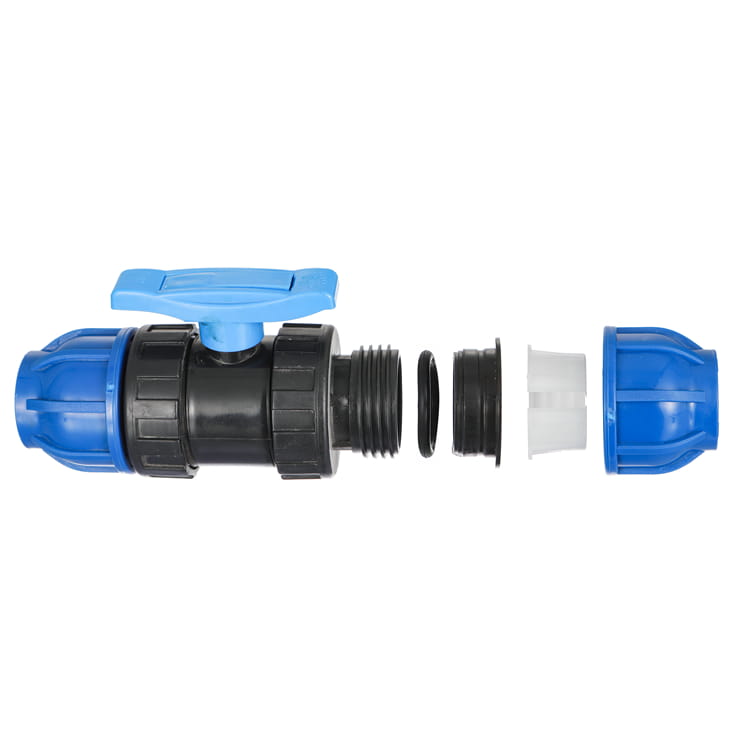
IFAN Holding’s HDPE product category provides the commercial enquiry route for water-network products. That establishes a place to ask about supply. It does not establish a contaminant-barrier construction, acceptance for the revised site, or a soil-investigation service. Confirm the offered item against the project’s selected specification before treating a price as a purchasing release.
Conclusion
Before closing the register, check that the proposed route has an identified revision, each affected segment has an evidence disposition, report purposes remain distinct, and the enquiry carries the resulting selected specification. The useful finish is a traceable answer for each changed segment, with unresolved work still visible.
Frequently asked questions
Does a recent soil report cover a moved pipe route?
Not automatically. Ask its author or responsible reviewer to identify whether the actual revised location, depth and purpose remain within the applicable findings.
Does a geotechnical report establish contamination clearance?
Only conclusions within its actual investigation scope can be used. A ground-engineering report must not be relabelled as a completed contaminant assessment.
Can a catalogue confirm the revised site is suitable?
A supplier can identify an offered product and available documents. Project acceptance and route-specific investigation conclusions remain with the responsible project team.