
Globe Valve Guide: How It Works, Z/Angle/Y Patterns, vs Gate & Ball
A globe valve is the valve you fit when you need to throttle flow, not just switch it on and off. Inside the spherical body that gives the valve its name, a disc moves straight up and down onto a horizontal seat, and the gap between disc and seat meters the flow with a precision no gate or ball valve can match. The price of that control is built into the same geometry: water must climb through an S-shaped path, so a globe valve eats more pressure than any other common valve type. That one trade — control in exchange for pressure drop — decides everywhere a globe valve belongs and everywhere it doesn't. This guide covers how the valve works, the three body patterns, where it beats gate and ball valves, how to read trim and materials, and the specification mistakes that show up after commissioning.
For the wider family tree — ball, gate, butterfly, check, and the rest — start with the valve types guide; this article goes deep on the globe pattern.
Key Takeaways
- A globe valve throttles: the disc rises off a horizontal seat, and opening degree maps directly to flow — the design built for regulation, not just isolation.
- The S-shaped flow path gives the highest pressure drop of the common valve types — the permanent cost of its control.
- Three body patterns: straight (Z), angle, and Y-pattern — the angle pattern doubles as a 90° elbow, and the household angle stop under your sink is a globe-family valve.
- Gate valves must not throttle; ball valves throttle poorly and wear their seats doing it. If a line needs partial flow held for hours, the globe valve is the correct tool.
- Globe valves are directional — the body carries a flow arrow, normally routing flow under the seat.
- Specify by size, pattern, pressure class, trim material, and connection; in small plumbing bores the standard body is dezincification-resistant brass.

How a Globe Valve Works
Turn the handwheel and a threaded stem drives the disc (also called a plug) vertically toward or away from a stationary ring seat set horizontally across the body. Because the disc travels perpendicular to the seat plane, every fraction of a turn changes the flow area by a predictable amount — that linear, repeatable relationship between stem position and flow is the whole point of the design, and it is the principle industrial control valves build on. Flow enters below the seat, turns upward through the seat ring, passes the disc, and turns again toward the outlet: the S-path. Two consequences follow. First, the changes of direction create turbulence and a pressure drop higher than any straight-through valve of the same size — a fixed tax paid even fully open, and the reason engineering references list the Z-pattern globe with the lowest flow coefficient of the common valve patterns. Second, because the disc seats against the flow, the valve shuts off positively and can be serviced under line shutdown by unscrewing the bonnet — seat and disc are accessible from above without cutting the valve out of the line. Disc shapes tune the behavior: a flat or ball-face disc gives quick, simple duty; a tapered plug disc gives finer throttling; a soft-seat insert (PTFE or rubber) gives drop-tight closure on water at the cost of temperature ceiling.
For throttling on big lines a globe valve gets bulky and costly — a butterfly valve is the usual large-bore alternative.
Straight, Angle, and Y-Pattern Bodies
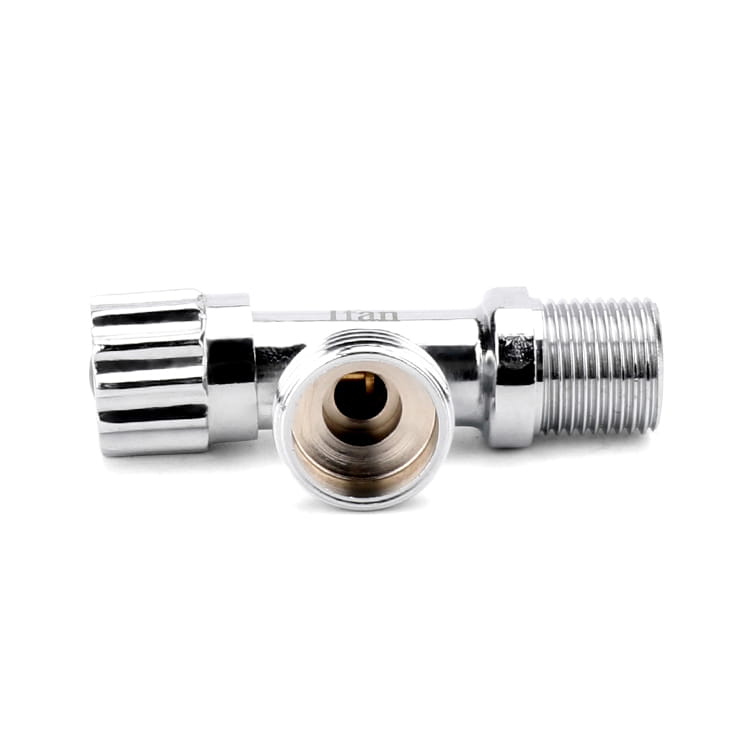
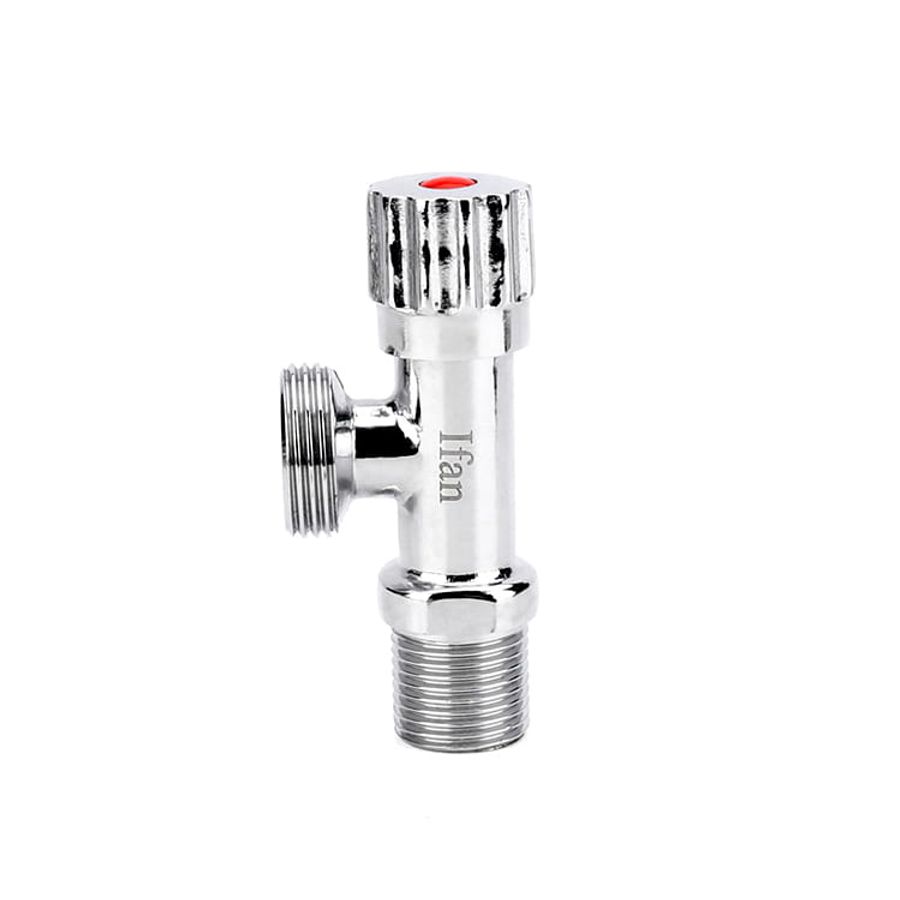
The classic straight (Z-pattern) body puts inlet and outlet on one axis with the full S-path between them — maximum control, maximum pressure drop, the default for regulation duty. The angle pattern turns the outlet 90° from the inlet: the media makes one turn instead of two, so pressure drop falls, and the valve replaces an elbow in the pipework — one fitting and one joint saved. This is the pattern hiding in plain sight in every bathroom: the chrome angle stop feeding a basin, toilet, or water heater is a compact angle-pattern globe valve, which is why it regulates so much better than the quarter-turn mini ball valves sold as substitutes. IFAN produces these angle valves in volume — chrome-plated, dezincification-resistant brass bodies machined and pressure-tested in-house. The Y-pattern tilts stem and seat roughly 45° from the pipe axis, straightening the flow path enough to cut the pressure penalty substantially while keeping the globe's throttling geometry — the choice where you need regulation on a line that cannot afford the full Z-pattern drop.
Globe vs Gate vs Ball: Picking by Duty
The three valves get cross-shopped constantly, and the duty decides cleanly.
| Globe | Gate | Ball | |
|---|---|---|---|
| Job | Throttling / regulation | Isolation, fully open or shut | Fast quarter-turn isolation |
| Pressure drop open | Highest | Minimal, straight-through | Minimal (full-bore) |
| Throttling behavior | Precise, holds any position | Not allowed — gate vibrates and erodes | Coarse; seats wear part-open |
| Operation | Multi-turn, directional body | Multi-turn, bi-directional | Quarter-turn, bi-directional |
| Service | Trim serviceable via bonnet | Wedge/seat repair harder | Usually replace, not repair |
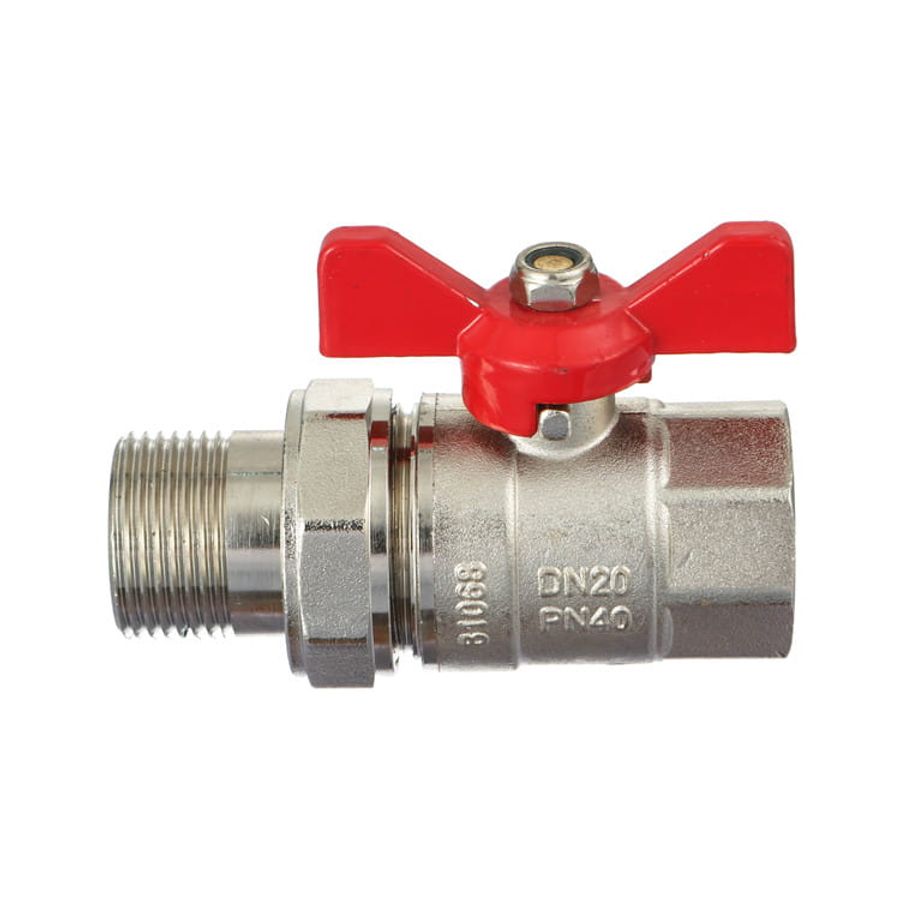
The rule that prevents most mis-specification: isolate with a ball or gate, regulate with a globe. A gate valve left half-open lets high-velocity flow hammer the hanging wedge — vibration, erosion, and a valve that eventually does neither job. A ball valve held part-open focuses the whole pressure drop on a thin crescent of seat, and the soft PTFE wears out of round. A globe valve is built for exactly that abuse: the seat faces the flow squarely, the disc is guided, and the trim is replaceable when it does wear. Where a line needs both tight shutoff and regulation, the honest answer is two valves — a ball for isolation and a globe for control — not one compromised valve doing both badly.
Flow Direction, Cv, and Why the Arrow Matters
A globe valve is one of the few manual valves with a required flow direction. The standard routing sends flow under the seat, pushing up against the disc: the packing around the stem sees line pressure only when the valve is open, and opening effort stays manageable. Some steam and high-temperature applications route flow over the seat instead, trading packing life for a disc that closes with the flow. Either way, the cast arrow on the body is an instruction, not decoration — a globe valve piped backward defeats the routing its seat and packing were designed around, and the packing sees line pressure continuously. Sizing runs through the flow coefficient (Cv or Kv) published for each valve: the flow that produces one unit of pressure drop. Because the globe geometry drops pressure aggressively, matching Cv to the actual required flow matters more than matching pipe diameter — an oversized globe valve spends its life barely cracked open, where control resolution is worst and seat erosion (wire-drawing) is fastest. Control-valve practice often lands one size below the pipe diameter — a working habit, not a rule; the Cv check against the duty flow is what actually decides. The general engineering references on globe valve design cover the Cv math; suppliers should be able to quote the figure for every size they sell.
Materials and Trim: What the Spec Sheet Is Telling You
In small plumbing bores, the standard globe valve body is brass — machinable, corrosion-resistant, and economical. Two letters on the spec sheet matter more than the alloy name: DZR (dezincification-resistant) for aggressive or soft water, and a lead-free designation for potable service where regulations cap lead content. Bronze bodies serve marine and older-standard markets; cast and ductile iron take over in larger building-services sizes; forged and cast steel handle steam and industrial pressure classes; stainless covers hygienic and chemical duty. The trim — seat, disc, stem — wears first and is specified separately on serious valves: metal-to-metal trim (often stainless on brass valves) survives temperature and throttling erosion; soft-seat trim closes drop-tight on cold water but ages fast on hot lines. Stem packing is the third wear item; graphite packing suits heat, elastomer O-rings suit cold water and low torque. For a wholesale buyer the practical checklist is short: body alloy with DZR/lead-free status, trim material, packing type, pressure-temperature rating, and the test standard the batch was verified against. IFAN machines its brass valve line — angle, ball, gate, and check patterns — from DZR lead-free brass with in-house pressure testing and batch certificates per shipment; the product catalog lists sizes and threads by series.
Sourcing brass valves at container scale?
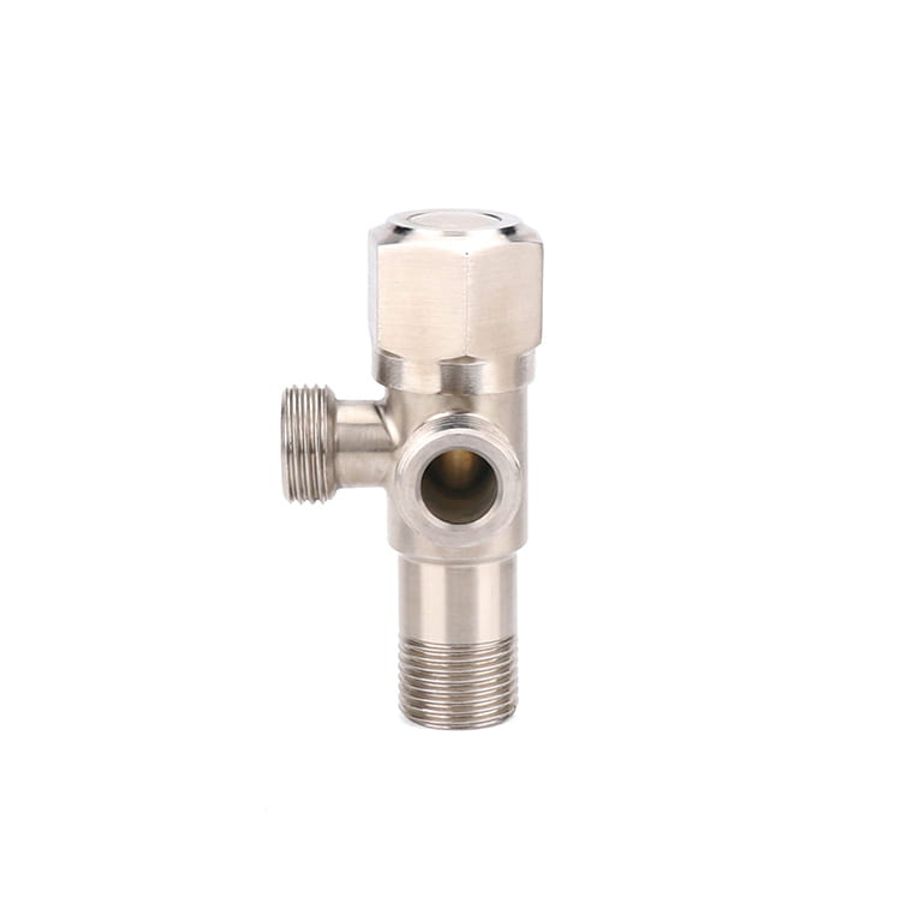
IFAN manufactures lead-free DZR brass angle, ball, gate, and check valves plus full PPR, PVC, and PEX systems — one factory, mixed containers, certificates per shipment. B2B wholesale only.
Request a QuoteWhere Globe Valves Earn Their Pressure Drop
Balancing branches in heating and cooling circuits, where each loop must be throttled to its design flow and hold that position for years. Fixture and equipment feeds via angle stops — regulation plus local isolation in one compact body. Steam and condensate lines, the globe valve's industrial heartland, where metal trim throttles reliably at temperatures soft-seated valves cannot touch. Cooling water and process lines that need flow tuned to a target rather than switched. Bypass and minimum-flow lines around pumps, holding a fixed partial flow indefinitely. The common thread: in every one of these, someone will set the valve part-open and walk away for months. That standing part-open duty is precisely what gates and balls tolerate worst and what the globe's seat-facing geometry is engineered for. Where the duty is pure open-shut, skip the globe and its pressure tax — that is ball and gate territory.
Common Globe Valve Mistakes
Installing it against the arrow. Backward flow loads the packing continuously and works against the seating geometry the valve was designed around. Check the arrow before making the joint.
Using a gate or ball valve to throttle. Both destroy themselves held part-open. If the position will be anything other than fully open or fully shut, it is globe duty.
Sizing to the pipe instead of the flow. An oversized globe valve controls on the first few percent of opening and wire-draws its seat. Check the Cv against the duty flow.
Ignoring the pressure drop in the system design. The S-path penalty exists at full open. On drop-sensitive lines, move to a Y-pattern or an angle body before abandoning the globe type.
Soft-seat trim on hot or throttled duty. Elastomer and PTFE seats close beautifully and then erode or creep under continuous throttling and heat. Specify metal trim where the valve will actually work for a living.
Frequently Asked Questions
What is a globe valve used for?
Regulating flow. Its disc rises off a horizontal seat, so opening degree maps predictably to flow — the geometry behind balancing valves, angle stops, steam regulation, and bypass lines. It also shuts off positively, but if a line only needs on-off isolation, a ball or gate valve does that with far less pressure drop.
What is the difference between a globe valve and a gate valve?
A globe valve moves a disc onto a seat set across an S-shaped flow path — built to throttle, at the cost of high pressure drop. A gate valve lifts a wedge out of a straight-through path — minimal pressure drop, but it must be used fully open or fully shut, because a part-open gate vibrates and erodes. Regulate with a globe; isolate with a gate.
Does a globe valve have a flow direction?
Yes — it is a directional valve, with an arrow cast on the body. Standard practice routes flow under the seat, which protects the stem packing and keeps operating effort low; some steam applications route over the seat instead. Installed backward, the packing sees constant line pressure and the seating design works in reverse.
Is an angle valve a globe valve?
Yes. The angle valve is the 90°-outlet pattern of the globe design: same rising disc and seat, with the body turned so it replaces an elbow. The chrome angle stops feeding basins, toilets, and water heaters are compact angle-pattern globe valves, which is why they regulate flow better than quarter-turn mini ball valves.
What is the globe valve symbol on a P&ID drawing?
A bowtie with a filled black circle at the center junction — the dot distinguishes it from a gate valve's empty bowtie. Angle-pattern globes are drawn with the two triangles at 90° and the dot at the corner; pattern, class, and trim then come from the line list.