
Underfloor Heating Pipe: PEX vs PE-RT, Oxygen Barrier, Sizing & Sourcing
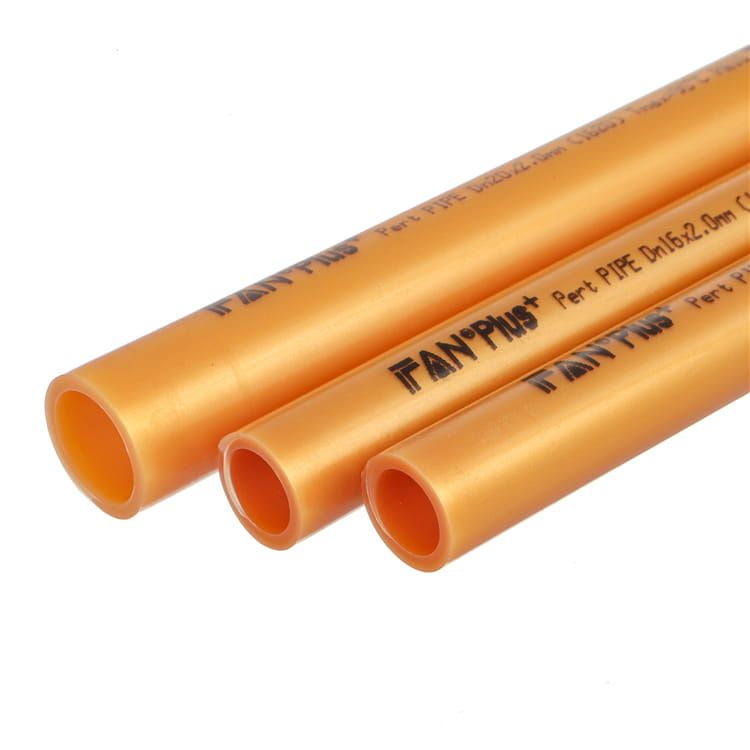
Underfloor heating pipe is the one component in a radiant system that gets buried in screed and then has to hold for the life of the building — no service access, no second chance. That single fact reshapes the whole spec. The pipe has to stay flexible enough to clip in tight curves without kinking, resist creep while it sits at a steady warm temperature for decades, and — the point most buyers miss — keep dissolved oxygen out of a closed water loop that also contains a steel boiler, a cast-iron pump, and brass manifolds. Get the material or the barrier wrong and the failure does not show up on install day; it shows up two winters later as a sludged-up pump and a warranty claim. This guide sorts the real pipe options — PEX-a/b/c, PE-RT, and multilayer PEX-AL-PEX — against the standards that govern them, shows how to size loops so the far end of the room is not cold, and lays out how to source coil pipe by the container without stocking the wrong grade.
Underfloor heating pipe is a specialized member of the cross-linked and raised-temperature polyethylene family; if you are choosing pipe for potable cold and hot water rather than radiant floors, start with the broader PEX pipe guide and come back here for the heating-specific spec.
Key Takeaways
- Underfloor heating pipe must carry an oxygen diffusion barrier — bare PEX lets oxygen pass through the wall into a closed loop and rusts the boiler, pump, and manifold from the inside. The barrier (an EVOH layer or an aluminum core) is not an upgrade; on any system with ferrous parts it is the baseline.
- Three material families do the work: PE-RT (flexible, weldable, the volume choice for floor heating), PEX-a/b/c (cross-linked, higher temperature headroom, shape memory on PEX-a), and PEX-AL-PEX multilayer (aluminum core = total oxygen barrier, holds its shape, expands about one-fifth as much).
- The governing standards are EN 1264 (the system), EN ISO 15875 (PEX), ISO 22391 (PE-RT), and ISO 10508 Class 4 (the design class for underfloor heating and low-temperature radiators).
- 16 × 2.0 mm is the standard residential size. Keep a single loop under about 100 m at 16 mm, or the far end runs cold and the pump can't push it.
- Floors run at a low flow temperature of roughly 35–45 °C against 60–75 °C for radiators — which is exactly why underfloor heating pairs so well with heat pumps and condensing boilers, and why EN 1264 caps the floor surface at 29 °C in living areas.
- Specify by material grade, barrier type, outside diameter, and coil length — and confirm the batch certificate covers the pipe you are actually shipping. IFAN produces PE-RT, PEX, and PEX-AL-PEX floor-heating coils in 16–32 mm from one factory, mixed-size containers, with certificates per shipment.
What Underfloor Heating Pipe Actually Has to Survive
A potable water pipe delivers water in bursts and spends most of its life cool and idle. A floor-heating pipe does the opposite: it sits at a steady warm temperature, under constant pressure, buried in screed, for the whole life of the slab. Those working conditions set four requirements that a general-purpose pipe does not have to meet, and they are the reason floor-heating pipe is a distinct product rather than the same PEX in a different box.
Sustained-temperature creep resistance. Plastic under constant warmth and pressure slowly deforms — creep. Floor-heating pipe is designed and classified for decades of this, which is what the radiant heating design classes exist to certify. Flexibility without kinking. Loops are clipped in tight radii at 150–200 mm centres; a stiff pipe kinks at the turn and chokes the flow. An oxygen barrier, covered in its own section below, because the loop is a sealed circuit sharing water with metal parts. And dimensional stability under heat — a bare polyethylene pipe expands and can lift or "tent" out of its clips as it warms, which is one of the reasons the aluminum-cored multilayer pipe exists. Order a pipe that misses any one of these and it may pass a cold pressure test on the day, then fail slowly once the system is running warm — the worst kind of failure, because the pipe is already under the screed.
The Three Pipe Families That Do the Work
Ignore the marketing names and there are three real material families in floor heating, plus one — plain non-barrier PEX — that has no place on a system with metal in it. Each is governed by its own product standard, and the practical differences come down to how the polymer gets its heat resistance and how it keeps oxygen out.
| Material | Standard | How it gets heat resistance | Oxygen barrier | Best for |
|---|---|---|---|---|
| PE-RT (Type I / II) | ISO 22391 | Controlled crystalline structure — no cross-linking, so it stays weldable and recyclable | Co-extruded EVOH layer | The volume choice for floor heating — flexible, forgiving, cost-effective |
| PEX-a | EN ISO 15875 | Peroxide cross-linking in the melt (≥70%) | EVOH layer | Tight radii and kink-repair by heat gun; premium retrofit |
| PEX-b | EN ISO 15875 | Silane / moisture cross-linking (≥65%) | EVOH layer | Cost-driven volume where the highest flexibility isn't needed |
| PEX-AL-PEX (multilayer) | ISO 21003 | PEX or PE-RT skins bonded to a welded aluminum core | Aluminum core = 100% barrier (no EVOH needed) | Shape-retaining runs, low expansion, exposed manifold drops |
| Plain PEX (non-barrier) | EN ISO 15875 | Cross-linked, but with no barrier layer | None | Potable water only — never a closed heating loop with metal |
The one line in that table that costs people money is the last one. Non-barrier PEX is a legitimate, common potable-water pipe — the same pipe covered in is PEX safe for drinking water — and it looks identical to barrier pipe on the shelf. Put it on a closed heating circuit and it becomes an oxygen pump feeding rust to every metal part in the system. Stocking one coil of the wrong one, or letting a site substitute it "because it was cheaper and the same size," is the single most expensive mistake in this category.
Water vs Electric — and Where Polybutene Fits
Everything above is water — hydronic — underfloor heating: warm water pumped through pipe loops. The other system on the market is electric, a resistance cable or mat set in the floor with no pipe, no manifold, and no boiler. The two are not really competitors but different tools, and a distributor stocking pipe should know which jobs will never come their way.
| Water (hydronic) UFH | Electric UFH | |
|---|---|---|
| Heats by | Warm water in pipe loops, from boiler or heat pump | Resistance cable/mat, direct electricity |
| Install cost | Higher — pipe, manifold, mixing, pump | Lower — mat plus a thermostat |
| Running cost | Low — efficient at 35–45 °C flow | High — pays full price for the electricity |
| Best for | Whole-building heating, new build, large areas | A single small room — bathroom, conservatory |
| Floor build-up | Deeper (screed) or dry panel | Very shallow — thin mat under tile |
Water systems win on running cost and on whole-house heating because an efficient heat pump or condensing boiler drives them; electric wins on install simplicity for one small room where running a wet loop is not worth the disruption. For the pipe business the point is simple — water UFH is the volume opportunity, and electric is a different supply chain entirely. One water-system material also sits outside the PEX/PE-RT split: polybutene (PB), a soft, very flexible pipe with strong creep resistance and quiet flow that is favoured in some premium and commercial hydronic work. PB costs more than PE-RT, needs its own fittings, and serves a smaller market — a grade to stock to order against a specification rather than to hold deep.
PEX vs PE-RT: The Choice That Splits the Market
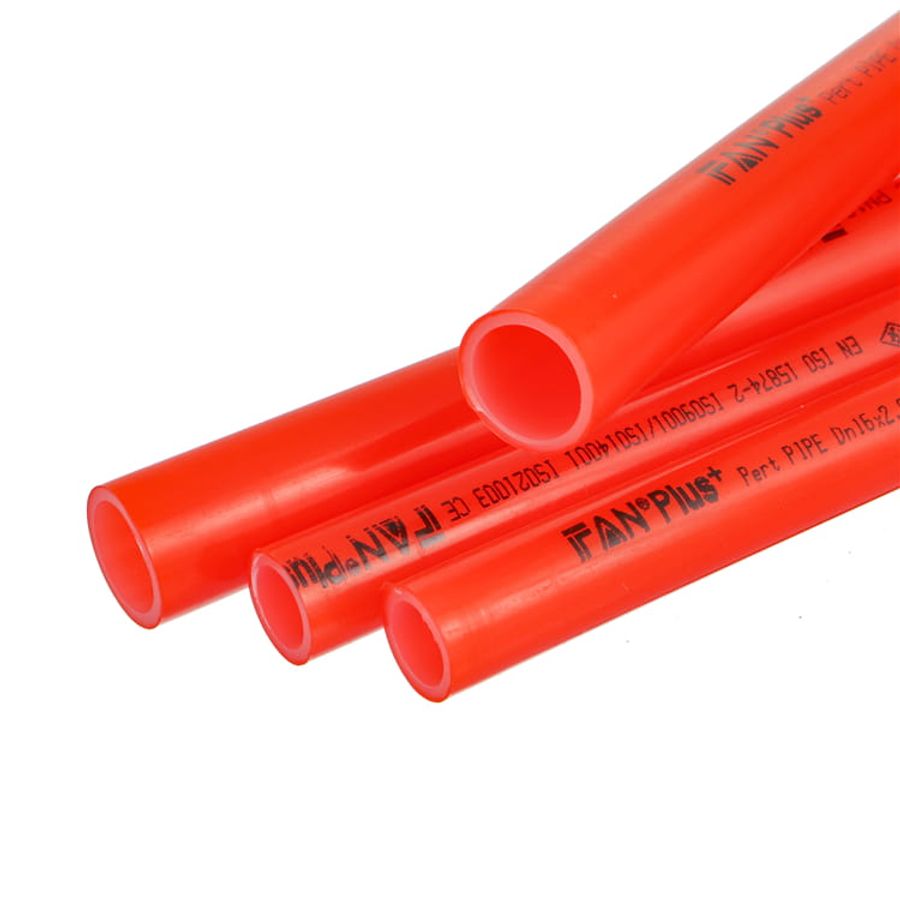
Most floor-heating pipe sold today is either PE-RT or PEX, and the two are not ranked — they are suited to different priorities. The honest short version: PE-RT wins on flexibility, cost, and the fact that it can be heat-welded and recycled; PEX-a wins on temperature headroom and the ability to heal a kink with a heat gun. PEX gets its performance from cross-linking — the polyethylene chains are chemically tied into a three-dimensional network, which raises heat and stress-crack resistance but also means the pipe can never be re-melted or welded. PE-RT skips cross-linking entirely; it earns its raised-temperature rating from a controlled crystalline structure built into the resin, so it stays thermoplastic. For a floor loop running at 35–45 °C, both have ample headroom, which is why PE-RT's easier handling and lower cost make it the volume pick.
| Property | PE-RT | PEX (a / b) |
|---|---|---|
| Heat resistance mechanism | Crystalline structure (thermoplastic) | Chemical cross-linking (thermoset-like) |
| Flexibility | Highest — easiest to lay in cold weather | High (PEX-a) to moderate (PEX-b) |
| Kink repair | Cut out and re-join | PEX-a heals with a heat gun; PEX-b does not |
| Weldable / recyclable | Yes — socket/butt fusion possible | No — mechanical fittings only |
| Temperature headroom | Ample for floor heating (Class 4) | Higher — also suits high-temp radiator work (Class 5) |
| Relative cost | Lower | Higher (PEX-a highest) |
For a distributor, the takeaway is that PE-RT is the workhorse to stock deep and PEX-a is the premium line to keep for retrofit and demanding installers. The full cross-linking-method breakdown lives in PEX-a vs PEX-b, and the case for either against copper is in PEX vs copper. IFAN produces both — PE-RT (Type I and II), PEX-a, and silane-cross-linked PEX-b — in the same floor-heating coil range, so a mixed container can carry the volume grade and the premium grade side by side.
For the full comparison between the two materials — fusion-joint economics, ISO 10508 temperature classes, and which one to stock deep — see PE-RT vs PEX pipe: weldability, cost and where each wins.
The Oxygen Barrier Is Not Optional
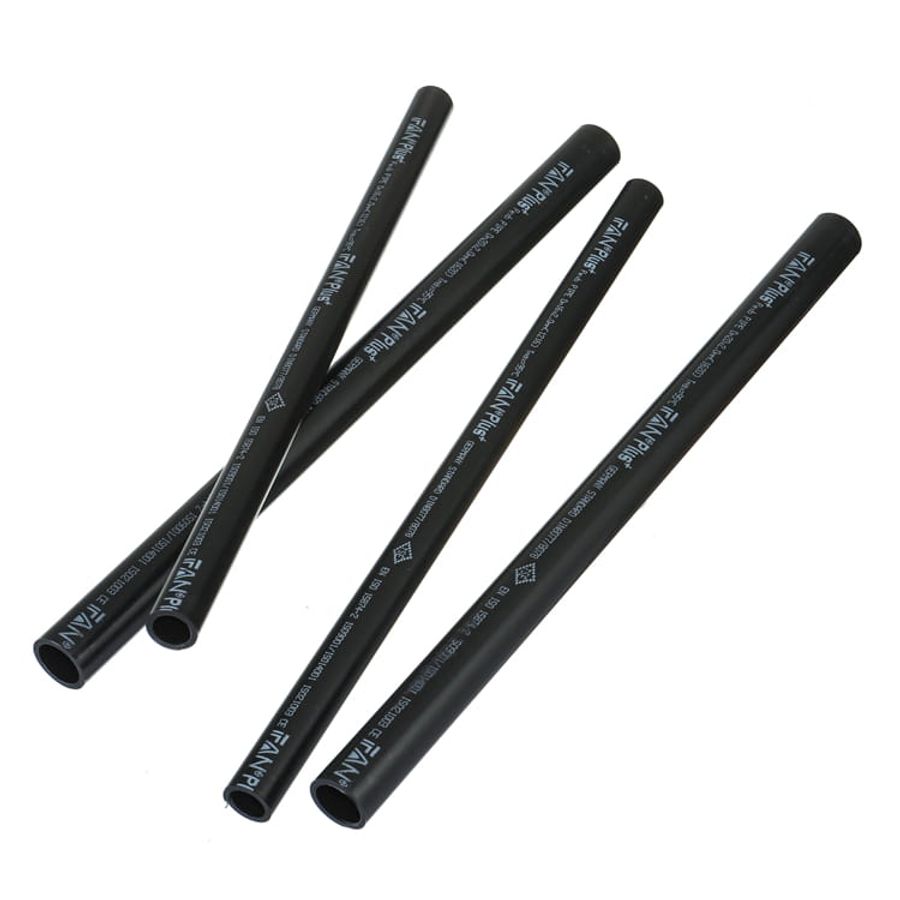
This is the section that separates people who have run heating systems from people who have only sold pipe. A radiant floor is a closed loop: the same water circulates for years, so unlike a potable line it never flushes fresh water through. Plain polyethylene is slightly permeable to oxygen — molecules diffuse straight through the pipe wall and dissolve into that trapped water. The oxygen then does what oxygen does to metal: it corrodes the ferrous parts sharing the loop — the cast-iron boiler heat exchanger, the steel or cast-iron circulator pump, steel manifolds, and fill valves — producing black magnetite sludge that blocks flow, seizes pumps, and wrecks heat exchangers. Europe learned this the expensive way in the 1980s, with fleet-wide sludging failures, which is why the barrier requirement was written into the standards.
The barrier is an EVOH layer — ethylene vinyl alcohol copolymer, the same oxygen-blocking material used in food packaging — co-extruded into the pipe wall and protected by an outer polyethylene skin. The performance target comes from DIN 4726, the German standard referenced by EN 1264: oxygen permeation held to about 0.1 mg per litre of water per day at 40 °C in the classic volumetric statement (the current edition expresses the same limit area-based, at roughly 0.32 mg/(m²·day) at 40 °C). A multilayer PEX-AL-PEX pipe reaches the target a different way — its welded aluminum core is a total, permanent oxygen barrier, so it needs no EVOH at all, and as a bonus it expands only about a fifth to an eighth as much as bare PEX and holds whatever shape you bend it into. IFAN builds its floor-heating PE-RT with a co-extruded EVOH oxygen-barrier layer and offers a PEX-AL-PEX/PERT-AL-PERT multilayer where the aluminum does the barrier job — both engineered to the DIN 4726 limit rather than to a nominal claim on the print.
The buyer rule is simple: any heating loop that touches a steel boiler, a cast-iron pump, or a steel manifold needs barrier pipe, full stop. The only cases where a system tolerates non-barrier pipe are all-non-ferrous systems (stainless and brass throughout) or systems physically separated by a heat exchanger — and unless you have confirmed that, assume ferrous and specify the barrier.
Sizing the Pipe and the Loop
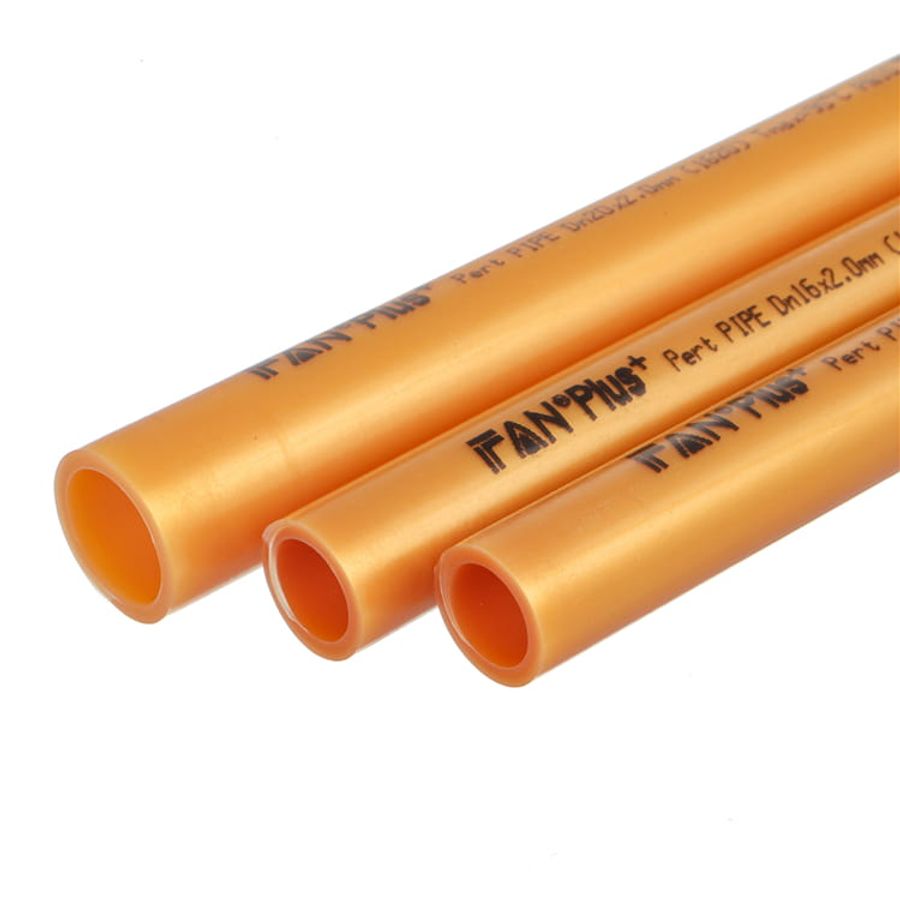
Residential floor heating standardized on 16 × 2.0 mm pipe — 16 mm outside diameter, 2.0 mm wall, about a 12 mm bore. It bends tight, clips easily, and moves enough water for a domestic loop. Step up to 20 mm for larger rooms or longer runs, and 17 mm appears in some European systems; 25 and 32 mm belong on manifold tails and commercial mains rather than the floor itself. The size decision is really a loop-length decision, because a floor loop is a single continuous pipe from the manifold and back, and its length is capped by pressure drop: push water too far and it arrives at the return cold, while the pump strains against the friction of the whole run.
| Pipe OD | Practical max loop length | Typical use |
|---|---|---|
| 12 mm | ~80 m | Low-profile / retrofit overlay boards |
| 16 mm | ~100 m (many designers cap at 80 m) | Standard residential floors — the default |
| 20 mm | ~120 m | Large rooms, commercial bays, longer runs |
The other design number is pipe spacing — the centre-to-centre gap between passes of the loop. The usable range is 100–300 mm; 150–200 mm is typical, with tighter 100–150 mm spacing along the cold edge zones (external walls, under windows) and in high heat-loss rooms and low-temperature heat-pump systems, where more pipe per square metre delivers the output at a gentler water temperature. Spacing sets how much pipe a floor swallows, which is what turns a floor plan into a coil order:
| Spacing | Pipe per m² of floor | Where it fits |
|---|---|---|
| 100 mm | 10.0 m/m² | Edge zones, bathrooms, heat-pump low-temp |
| 150 mm | 6.7 m/m² | The common general-purpose spacing |
| 200 mm | 5.0 m/m² | Well-insulated rooms on a boiler |
| 300 mm | 3.3 m/m² | Warm-up / anti-condensation only |
A quick worked example: a 30 m² room at 150 mm spacing needs about 30 × 6.7 = 201 m of pipe, which is two loops of roughly 100 m each fed from a two-port manifold — so that one room is a 200 m coil plus a two-loop manifold, not "some 16 mm pipe." Sizing the loop and the manifold together is what the PEX manifold guide covers; the size chart across the whole PEX range is in PEX pipe sizes.
Flow Temperature, Surface Temperature, and the Heat-Pump Match
A radiator is a small, hot emitter; a heated floor is a large, gentle one. Because the whole floor radiates, it delivers a room's entire heat load while running at a flow (supply) water temperature of roughly 35–45 °C — against 60–75 °C for radiators. That low flow temperature is the strategic reason underfloor heating has taken over new construction: a heat pump's efficiency (its COP) climbs as the water temperature it has to produce falls, and a condensing boiler only reaches its high efficiency when the return water is cool enough to condense the flue gases. A floor loop hands both exactly the low-temperature demand they want. The pipe's job in that chain is to move a large volume of gently warm water quietly and without corroding anything — which loops back to why the barrier and the loop-length limits matter.
The comfort ceiling comes from EN 1264, the European standard for embedded water heating. It caps the floor surface temperature at 29 °C in occupied living areas, allows up to 33 °C in bathrooms, and up to 35 °C in the peripheral edge strip along external walls, all against a 20 °C design room temperature. Those surface limits — not the pipe's material rating — are what actually govern how much output a floor can give and therefore how tight the pipe spacing has to be. It is worth being clear with customers that a pipe whose datasheet lists working temperatures up to 95 °C — the figure IFAN prints for its floor-heating line — is not run anywhere near that in a floor; 95 °C is material headroom, while the water in the slab sits at 35–45 °C. The design class that ties this together is ISO 10508 Class 4 — the application class for underfloor heating and low-temperature radiators, rated for a 50-year service life at a design pressure typically in the 6–10 bar range.
The Rest of the System: Manifold, Mixing, and Controls
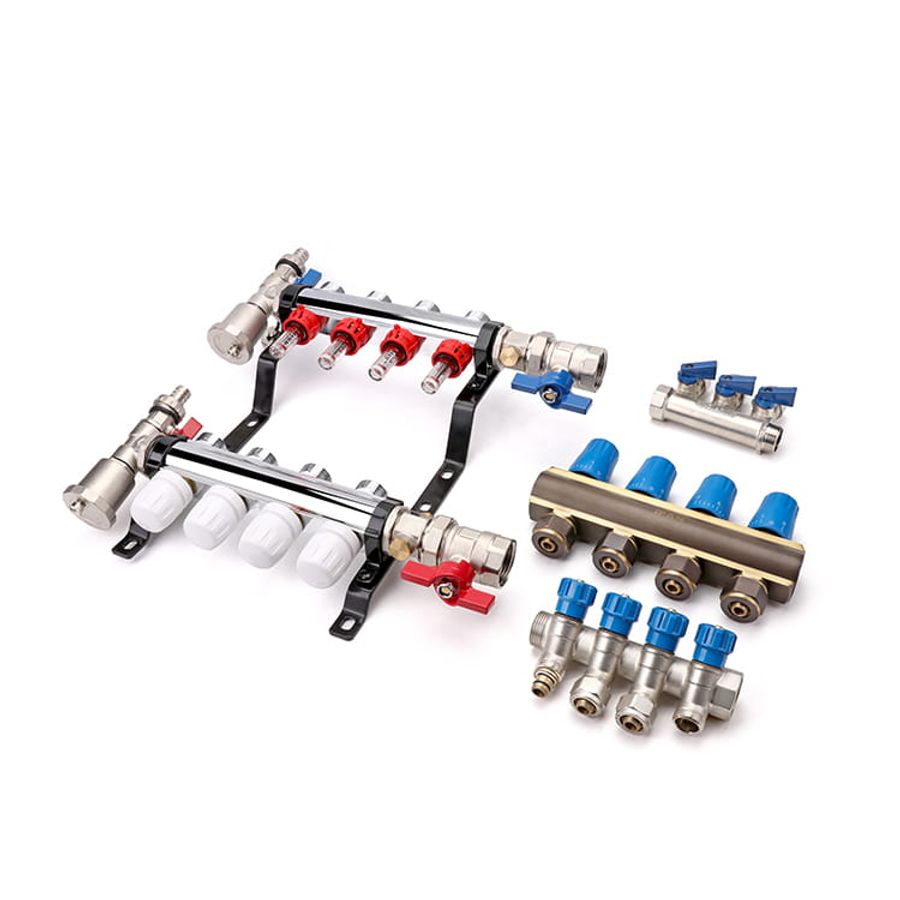
Pipe is the part that gets buried, but it does not run a floor on its own. Four components turn a coil into a controllable heating circuit, and a buyer quoting a "floor-heating package" is usually quoting all of them.
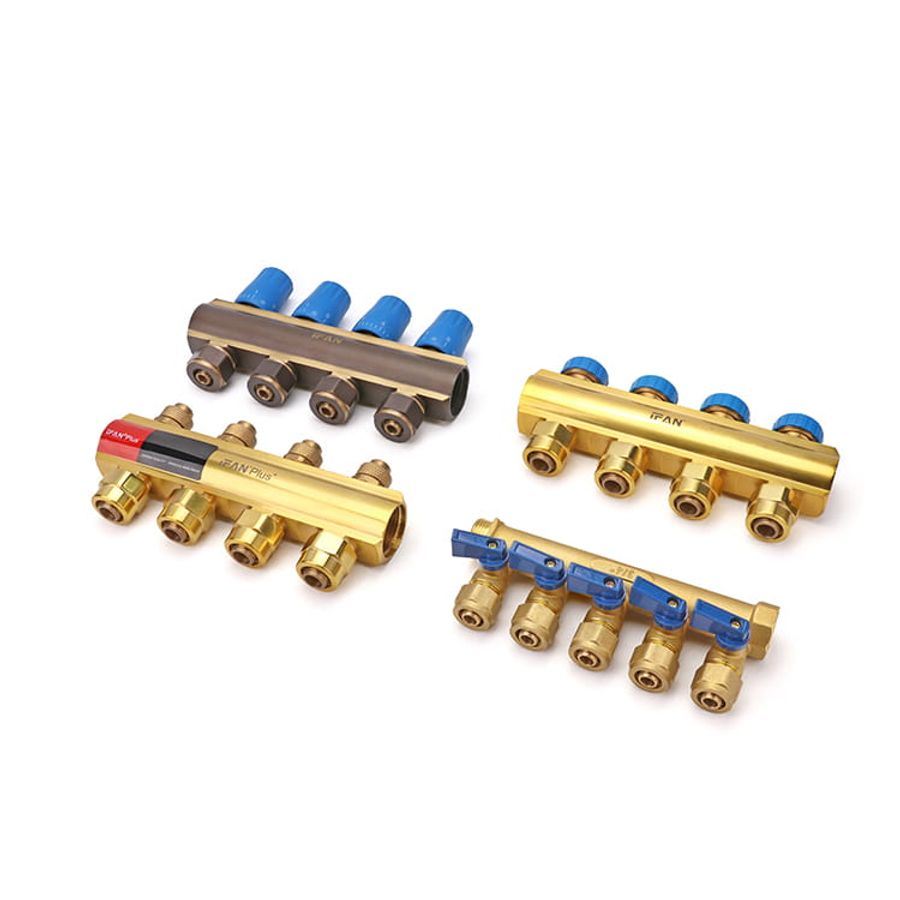
The manifold splits the flow into loops and balances them — flow meters on each port let an installer even out a room that runs cool, and isolation valves let one loop be shut without draining the floor. The mixing (blending) set is what makes the low flow temperature possible: a thermostatic mixing valve and a small pump take 60–75 °C water from a boiler and blend it down to the 35–45 °C the floor needs, which also protects the screed from thermal shock. Actuators — small thermo-electric heads on the manifold return ports — open and close each loop on a signal from room thermostats, so every zone holds its own temperature independently. IFAN supplies the brass manifolds, the PEX brass valves, and the manifold fittings alongside the pipe, so a distributor can quote the loop and its controls from one factory instead of matching pipe from one supplier to a manifold from another.
Stocking a floor-heating line?
IFAN manufactures oxygen-barrier PE-RT, PEX-a/b, and PEX-AL-PEX floor-heating coils in 16–32 mm, plus the manifolds and fittings to match — one factory, mixed-size containers, batch certificates per shipment. B2B wholesale only; tell us your sizes and target market.
Request a QuoteWet Screed vs Dry Systems: Matching Pipe to the Floor Build-Up
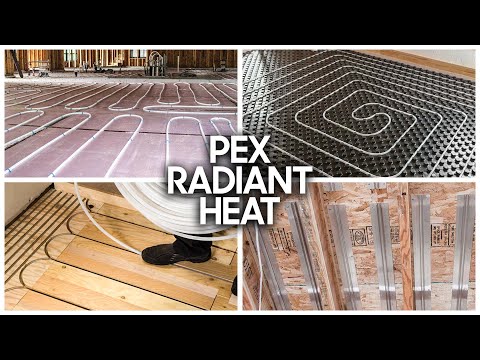
How the pipe is held and covered decides which pipe and diameter you order, and it splits into two families. The wet screed system clips the pipe to insulation and buries it under a screed poured at 30 mm minimum — typically 40–50 mm total depth for flowing screeds, thicker for sand-and-cement; it is the default for new build and gives the highest heat output and the most thermal mass, so the floor stays warm and even after the heat cuts off. The dry system lays the pipe into the grooves of pre-routed insulation panels or metal spreader plates under a floating floor, with little or no screed — lighter, faster, and much shallower, which is what makes it the choice for suspended timber floors and for retrofits where the finished floor height cannot rise far.
The build-up drives the pipe order, not the other way round. Wet screed takes 16 mm as standard; dry and low-profile systems often step down to 12 mm pipe to fit a shallow groove, which in turn shortens the maximum loop length and tightens the spacing. A retrofit over an existing floor lives or dies on total height — pipe diameter, panel, and finish stacked together — so the pipe spec and the floor build-up have to be settled at the same time, which is why the diameter question comes back to the system, not just the room size.
What We Check Before a Coil Ships
Because floor-heating pipe fails slowly and out of reach, the inspection has to happen before it leaves the factory — a field problem two winters later is not recoverable. On IFAN's floor-heating coils the checks that matter, in the order they catch problems, are:
Material and grade on the certificate, not the label. The batch certificate names the resin grade — PE-RT Type I/II, or the PEX cross-linking method and degree — so the coil can be traced to what was actually extruded, not to what the print claims.
The barrier is present and continuous. An EVOH layer is invisible from outside, so it is verified at extrusion and against the DIN 4726 permeation limit — the check that a "barrier" pipe is genuinely one.
Dimensions and wall thickness to the standard. 16 × 2.0 mm has tolerances under EN ISO 15875 / ISO 22391; an undersized wall is where a cheap coil hides its cost, and it shows up as reduced pressure rating.
Hydrostatic pressure hold. Sample lengths are pressure-tested to confirm the pipe meets its class rating rather than only its cold burst number.
Printed metre marking and true coil length. The running metre print lets an installer read remaining pipe against loop length, and the coil has to actually contain the metres on the label — a short coil strands a loop halfway across a floor. This inspection discipline is the same one described for our pressure pipe in the per-shipment quality control process, applied to heating coils; the full product range and grades are in the product catalog.
What Drives the Price of Underfloor Heating Pipe
Floor-heating pipe is priced on a handful of real cost drivers, and knowing them is how a buyer reads whether a quote is keen or padded. The pipe sells by the metre, so each driver below moves the per-metre cost and, multiplied across a container, the whole order.
| Cost driver | Why it moves the price |
|---|---|
| Resin & grade | PE-RT is the cost baseline; PEX-a and PB carry a premium for the process and performance |
| Wall thickness | More polymer per metre — the honest cost, and where an undersized wall hides a cheap price |
| Oxygen barrier | The EVOH layer adds a co-extrusion step, so barrier pipe costs more than plain pipe |
| Multilayer aluminium | Adds the aluminium material and a laser-weld line — PEX-AL-PEX sits above EVOH pipe |
| Coil length | Longer coils cost a little more to wind but save buried joints on site |
| Colour, print & OEM | Custom colour and private-label print add a small setup cost per run |
| Certification | Regional marks beyond the base DIN/ISO certs add testing and paperwork cost |
Two traps hide in a cheap quote. A thinner wall than the stated class drops the pressure rating and the price at the same time — the saving is real and so is the downgrade. And "barrier" pipe quoted at non-barrier prices is usually non-barrier pipe: the EVOH step costs money, so a barrier price that looks too good is the tell. The way to compare quotes fairly is to fix the spec — grade, wall, barrier, coil length, and cert — and only then read the number, the same discipline set out in the pipe price breakdown. IFAN quotes against a written spec and prints the grade on the pipe, so the coil in the container is the coil on the invoice.
Sourcing Underfloor Heating Pipe Wholesale
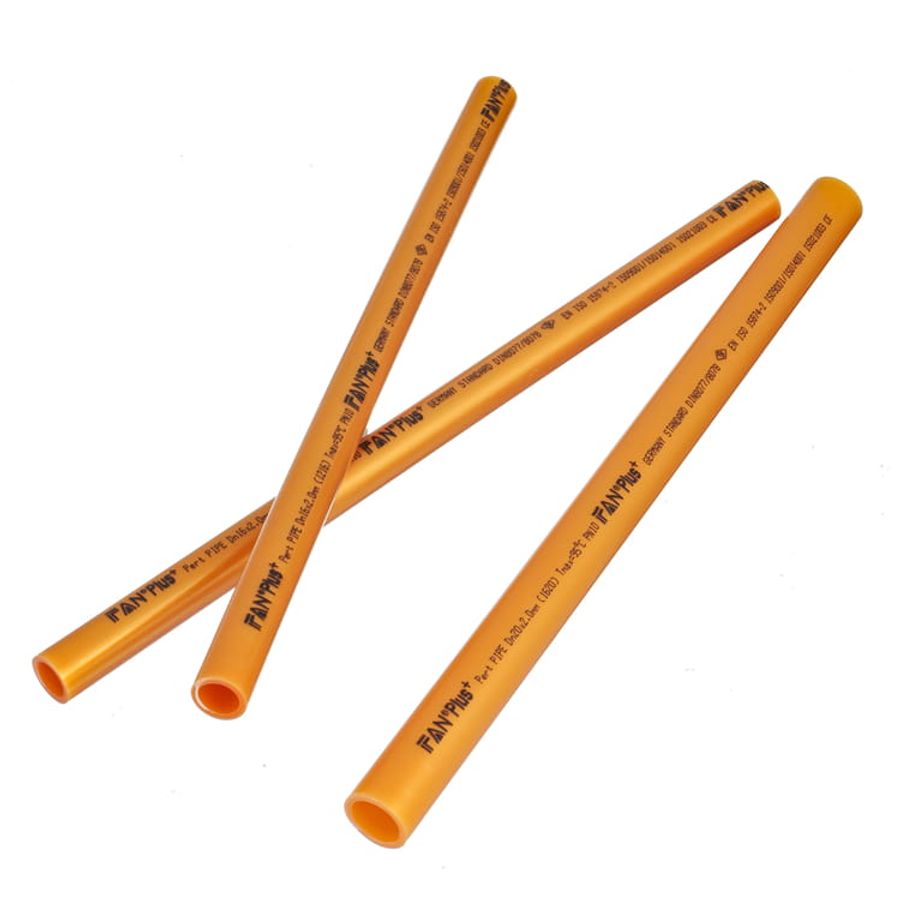
Buying floor-heating pipe by the container comes down to five decisions, and getting them onto the purchase order is what stops a shipment from arriving wrong. Material grade and barrier type — spell out "oxygen-barrier PE-RT" or "PEX-AL-PEX," never just "floor heating pipe," because the non-barrier version is the same size and cheaper and will be substituted if you leave the door open. Diameter and wall — 16 × 2.0 mm as the core SKU, 20 mm for larger work. Coil length — floor-heating pipe ships in long coils (commonly 200, 300, 500, or 600 m) so a whole loop lays from one reel with no buried joint; match the coil to your typical loop length. Colour for on-site grade separation, and certification for the destination market — the DIN/ISO base certs plus any regional mark your customs and specifiers require.
IFAN produces the floor-heating range — oxygen-barrier PE-RT (Type I/II), PEX-a and silane PEX-b, and PEX-AL-PEX/PERT-AL-PERT — in 16 through 32 mm, from a 120,000 m² factory that has extruded pipe since 1993, with an in-house testing lab and batch certificates per shipment. The MOQ is one container with mixed sizes allowed, so a first order can carry the volume 16 mm PE-RT alongside a trial of 20 mm and a manifold package rather than committing a full container to one SKU. OEM and private-label printing are available for distributors building their own brand. For buyers weighing floor heating against other systems for a market, the material trade-offs sit alongside the wider pipe-material comparison, and the container-loading mechanics are the same ones in the sourcing playbook.
One market note worth making plainly: underfloor heating is a cool-climate and premium-comfort product, so demand concentrates in temperate and higher-altitude regions, in hospitality and villa construction, and in Middle East and Latin American markets more than in hot equatorial ones. A distributor's floor-heating line is usually a margin product for a defined customer segment — hotels, high-end residential, radiant-cooling projects — rather than a volume staple like potable pipe. Stock it to that reality: a core of 16 mm oxygen-barrier PE-RT with manifolds, and the PEX-a, multilayer, and PB grades brought in against named projects instead of held on the shelf.
Commissioning: Pressure-Test Before the Screed
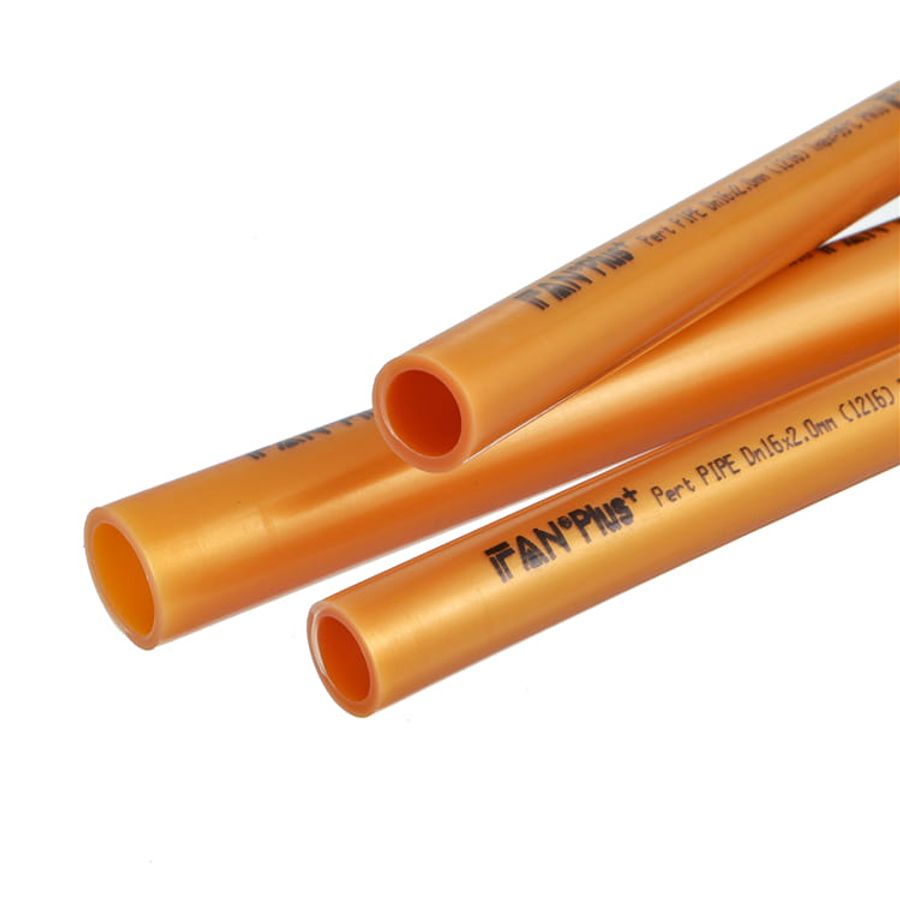
The pipe's last chance to reveal a fault is before it disappears. Standard practice under EN 1264-4 is to pressure-test every loop before the screed is poured — commonly staged as 2 bar for 10 minutes, then 6 bar for 10 minutes, with many installers extending the 6-bar hold to several hours or a full day as good practice. The system is then left pressurized at 6 bar through the screed pour and cure, so a nail or a knock during the following trades shows up as a pressure drop while the pipe is still exposed and repairable. Once the loops pass, the pipe is set in the screed — industry guidance puts the minimum screed thickness for a heated floor at 30 mm, with flowing liquid screeds typically poured at 40–50 mm total depth including the pipe, and traditional sand-and-cement screeds running thicker still — and that screed becomes the large, low-temperature emitting surface the whole design depends on. Skipping the test to save a day is how a pinhole ends up buried in the finished slab — the one place it can never be reached.
Common Underfloor Heating Pipe Mistakes
Non-barrier pipe on a system with metal. The most expensive error in the category — the pipe holds, but oxygen diffusion rusts the boiler, pump, and manifold over a few seasons. Specify barrier pipe on any ferrous system.
Loops that run too long. Push a 16 mm loop past ~100 m and the far end of the room stays cold while the pump labours. Split the area into more, shorter loops on the manifold.
Uniform spacing everywhere. Wide spacing carried across cold edge zones under windows leaves a chilly strip. Tighten to 100–150 mm at external walls and in bathrooms.
Buried joints in the floor. Every loop should run manifold-to-manifold as one unbroken length; a joint under the screed is a leak you cannot service. Match coil length to loop length so there is no temptation to join.
No pressure test before the pour. Covered above, and worth repeating because it is the one mistake that turns a five-minute fix into a demolished floor.
Frequently Asked Questions
Which pipe is best for underfloor heating, PEX or PE-RT?
Both work; they suit different priorities. PE-RT is the volume choice — it is the most flexible, the easiest to lay in cold weather, cheaper, and it can be heat-welded and recycled because it is not cross-linked. PEX-a offers more temperature headroom and can heal a kink with a heat gun, which makes it the premium pick for demanding retrofits. For a floor loop running at 35–45 °C, both have ample margin, so most projects run oxygen-barrier PE-RT and keep PEX-a for the hard corners. The one non-negotiable for either is an oxygen barrier.
What is an oxygen barrier and does underfloor heating pipe really need one?
A radiant floor is a closed loop, so oxygen that diffuses through plain plastic pipe stays in the water and corrodes the metal parts — boiler, pump, steel manifolds — producing sludge that seizes pumps and blocks flow. An oxygen barrier is a co-extruded EVOH layer (or, in multilayer pipe, an aluminium core) that blocks that diffusion to the DIN 4726 limit of about 0.1 mg per litre per day at 40 °C. On any system with ferrous components it is mandatory, not optional. The only exception is a system that is all-non-ferrous or separated by a heat exchanger.
Can underfloor heating pipe go under wooden floors?
Yes — suspended timber floors typically take a dry system: aluminium spreader plates between or over the joists carry the pipe, with no screed. The design constraint is the wood itself: most wood-flooring makers cap the surface temperature below the EN 1264 living-area limit — around 27 °C is a common spec — so the system runs a slightly lower flow temperature, and board moisture content must stay within the flooring maker's stated range before laying.
How long can an underfloor heating loop be?
Keep a 16 mm loop under about 100 m (many designers cap at 80 m); 20 mm allows roughly 120 m and 12 mm about 80 m. The limit is pressure drop: a longer loop cools too much before it returns and demands more pump head than a domestic circulator can give, leaving cold spots. Larger areas are split into several shorter loops fed from a common manifold, each ideally close to the same length so they balance.
Can I run glycol or antifreeze through PE-RT or PEX floor loops?
Yes — both materials tolerate the glycol mixes used for freeze protection in intermittently heated buildings (holiday homes, warehouses in cold climates). Two costs come with it: glycol noticeably reduces the water's heat-carrying capacity and raises viscosity, so loops need re-balancing and the pump needs margin; and the manifold and fitting seals must be confirmed glycol-compatible with their maker. Where winters allow, plain treated water stays the better-performing fill.
What is the minimum bend radius for floor heating pipe?
Typically about five times the outside diameter for a cold bend — roughly an 80 mm radius on 16 mm pipe — though makers vary, so the coil's datasheet is the final word. Tighter turns, like the 90° drop into a manifold, use a metal bend support so the pipe cannot kink at the fitting. If a kink does happen, PEX-a heals with a heat gun; PE-RT and PEX-b sections are cut out and re-joined at the manifold, never mid-loop.
What standards should underfloor heating pipe meet?
The system is designed to EN 1264; the pipe itself is made to EN ISO 15875 (PEX) or ISO 22391 (PE-RT), with the oxygen barrier meeting DIN 4726, and it is classified under ISO 10508 Class 4 — the application class for underfloor heating and low-temperature radiators, rated for a 50-year service life. Ask for the batch certificate that names the resin grade and confirms these, and any regional certification your destination market requires at customs.
Can underfloor heating pipe be repaired after the screed is poured?
In practice, no — which is why the loop runs as one unbroken length with no buried joints and is pressure-tested to 6 bar before the pour and left pressurized through screeding, per EN 1264-4. Any damage from later trades then shows immediately as a pressure drop, while the pipe is still exposed. A leak found after the screed cures usually means breaking out the floor over the fault, so the whole commissioning sequence is built around never getting there.
Does the EVOH oxygen barrier wear out over time?
No — EVOH does not age out in service; protected inside the pipe wall, it lasts as long as the pipe. The realistic risk is mechanical, not chemical: dragging a coil across concrete or over sharp edges can score an outer-positioned barrier layer before the pipe is ever installed, which is why coils ship on reels and stay on them until laying. Multilayer PEX-AL-PEX sidesteps the question entirely — its aluminium core is the barrier and cannot be scored off.
Can I mix PEX and PE-RT loops on the same manifold?
Hydraulically, yes — the manifold does not care about the polymer, only the connection: same outside diameter and the correct fitting per material, and mixed loops run fine side by side. Three disciplines keep it clean: each individual loop stays ONE material end-to-end (no mid-loop material change), every loop gets balanced at its flow meter since the materials' roughness differs slightly, and the fitting stock is kept per material — grip rings and insert stiffeners are profiled for the specific pipe, not interchangeable.