
Importing PPR Pipes to Nigeria: SONCAP, HS Codes, Duties & Clearance
Importing PPR pipe into Nigeria isn't hard — but it is unforgiving of missing paperwork. Miss the SONCAP certificate or open your Form M in the wrong order and your container sits at Apapa racking up demurrage while you scramble. PPR pipe is a regulated product, so the compliance steps happen before the goods even ship, not on arrival. This guide walks the whole path in order: the SONCAP process, the right HS code, what duty and charges to budget, the documents customs will demand, and the clearance sequence — so your first container lands without an expensive surprise.
Getting the certification right at origin is half the battle — see the PPR certification guide for what the pipe itself must carry before any of this applies.

Key Takeaways
- PPR is regulated — you need a SONCAP certificate, and the conformity check happens at origin before shipping.
- Open your Form M with your bank first — nothing else proceeds without it.
- PPR pipe and fittings sit under HS heading 3917; confirm the exact subheading with your agent.
- Budget for import duty + 7.5% VAT + levies on the CIF value, plus clearing and port charges.
- The PAAR (Pre-Arrival Assessment Report) from Customs is required before clearance.
- Get the paperwork right at origin — fixing it after arrival means demurrage and delay.
SONCAP: Get It Before You Ship
SONCAP (Standards Organisation of Nigeria Conformity Assessment Programme) is the mandatory conformity scheme for regulated imports, and PPR pipe falls under it. The critical thing to understand: SONCAP is a pre-shipment programme. The inspection and testing happen at origin, through an accredited agent, before the goods leave China — you cannot fix it after the container arrives.
Neighbouring markets share many of the same hurdles — the Ghana and West Africa PPR sourcing guide covers regional specs and landed cost.
Two documents matter. The Product Certificate (PC) is issued to the manufacturer for a product proven to meet the relevant Nigerian/international standard — your supplier should already hold this or obtain it. The SONCAP Certificate (SC) is issued per shipment, tied to your specific consignment, after the goods are verified against the PC. You apply for the SC through a SON-appointed agent (commonly SGS, Intertek, or COTECNA) in the country of supply. Book it early: arranging testing and inspection at origin adds time to the lead, and a supplier who already holds a valid PC for their PPR speeds this up dramatically.
Step-by-Step: The Import Sequence
Order matters. Do these in sequence, not in parallel guesswork:
1. Open a Form M. Through your authorised dealer bank, before anything ships. The Form M is the backbone of the whole import — it registers the transaction with Customs and is valid for a set period. Attach the proforma invoice and product details.
2. Supplier arranges SONCAP at origin. With the Form M number, the SON agent inspects/tests the consignment against the Product Certificate and issues the SONCAP Certificate.
3. Goods ship; obtain the PAAR. Customs issues the Pre-Arrival Assessment Report against your Form M and final documents — this is required to clear.
4. Pay duty and charges. Assessed on the CIF value; pay through the designated channel and obtain the receipts.
5. Clear at the port. Your licensed clearing agent lodges the entry with all documents; Customs examines and releases. Then terminal and shipping-line charges, and haulage to your warehouse.
HS Code for PPR Pipe and Fittings
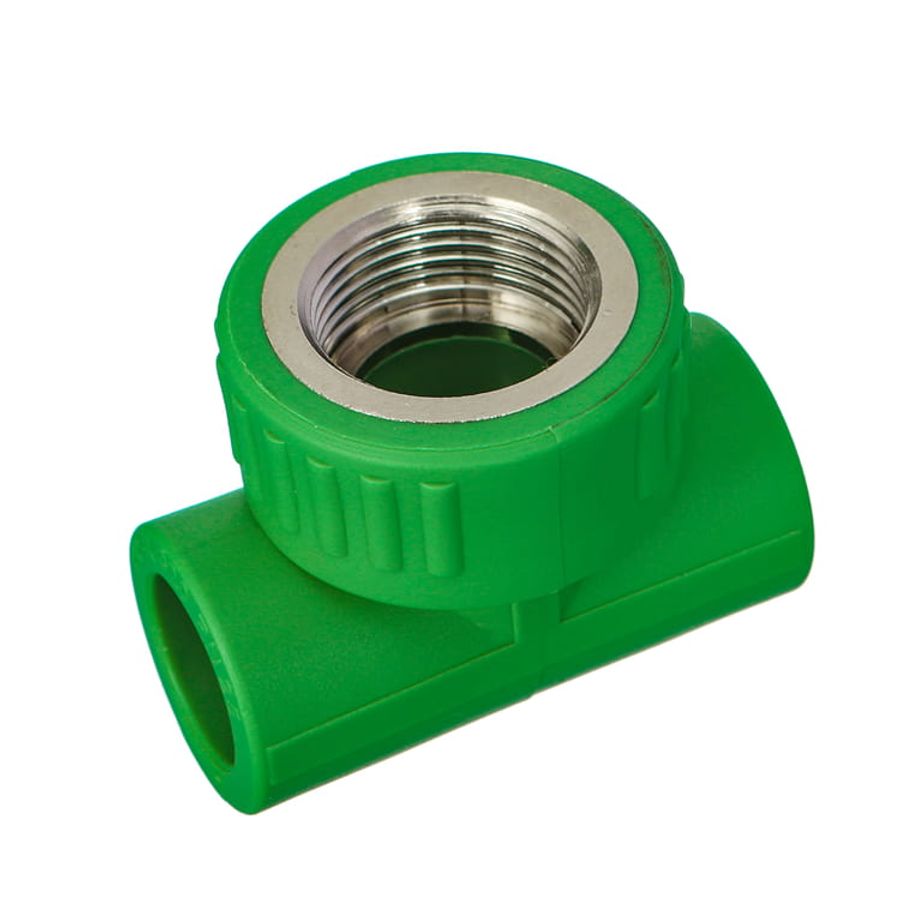
PPR pipe and fittings are plastic tubes/pipes and their fittings, which fall under HS heading 3917 ("tubes, pipes and hoses and fittings thereof, of plastics"). Pipe and fittings have different subheadings within 3917, so the exact 8–10 digit code depends on whether the line is pipe or fitting and its specifics. The HS code drives your duty rate, so getting it right matters — misclassification triggers reassessment and delay. Confirm the precise subheading with your licensed clearing agent against the current Nigerian tariff before you file, and make sure the invoice description matches the code.
What You'll Pay: Duty, VAT and Charges
Budget the landed cost, not just the FOB price. On top of the goods you pay:
| Charge | Basis |
|---|---|
| Import duty | % of CIF, per the HS code (confirm current rate) |
| VAT | 7.5% on (CIF + duty + charges) |
| Levies / surcharges | ETLS, port development, others as applicable |
| Terminal / shipping-line | Handling, storage, demurrage if delayed |
| Clearing agent + haulage | Agent fee + inland transport to warehouse |
Rates and levies change, so get a current landed-cost estimate from your clearing agent for your specific HS code before committing. Fitting more product into each container lowers the per-unit share of these fixed charges — the reason container loading matters as much as the unit price.
Documents Customs Will Demand
Have every one of these ready and consistent — a mismatch between invoice, packing list, and B/L is a classic cause of hold-ups:
Form M (with valid number) · Proforma and Final Commercial Invoice · Packing List · Bill of Lading · SONCAP Certificate · Certificate of Origin · PAAR · Insurance certificate · and the manufacturer's product/test certificates. Names, quantities, and values must match across all of them.
Avoiding Demurrage and Delay
Demurrage — the daily charge for a container overstaying at the terminal — is the single biggest avoidable cost, and it's almost always a paperwork problem. Open the Form M before shipment, not after. Confirm your supplier holds a valid SONCAP Product Certificate for the exact PPR you're buying so the shipment SC isn't the bottleneck. Use an experienced licensed clearing agent who knows your HS code. And make sure the documents agree with each other down to the description and quantity. A supplier who has shipped to Nigeria before and provides clean, matching export documents saves you more than a slightly lower unit price — which is why vetting the supplier includes their export experience.
Importing PPR to Nigeria?
IFAN supplies PPR with SONCAP-ready certification and clean export documents — tell us your order for a CIF Lagos quote.
Request a Quote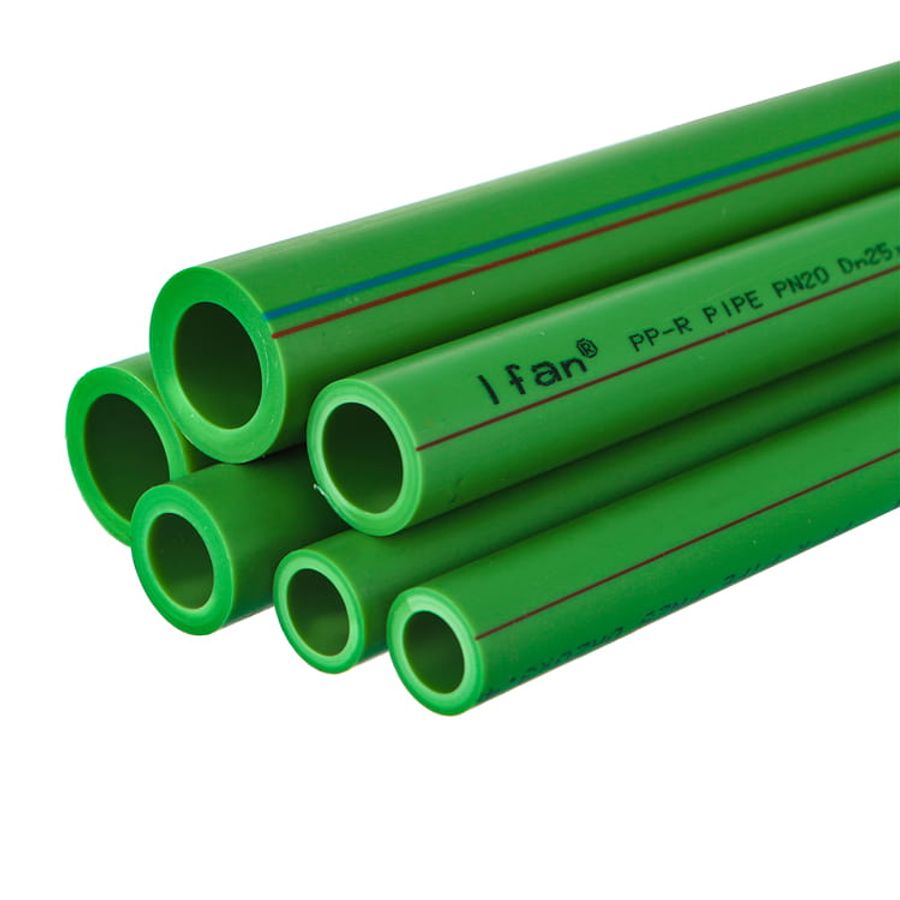
Exact HS Codes: PPR Pipe vs PPR Fittings
Heading 3917 covers all plastic tubes and their fittings, but Nigerian customs assesses duty on the full 8-digit code, not the 4-digit heading. Two products in the same container can sit under two different subheadings. PPR is a polymer of propylene, so the pipe and the fittings are not filed under the same code. Get this wrong on the Form M and the PAAR, and the entry stalls at the desk while an officer re-classifies it.
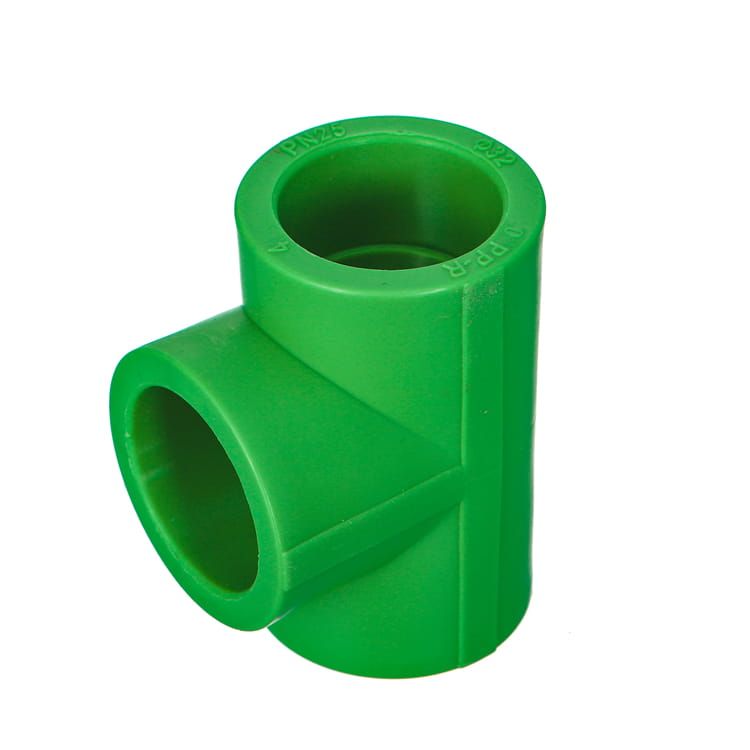
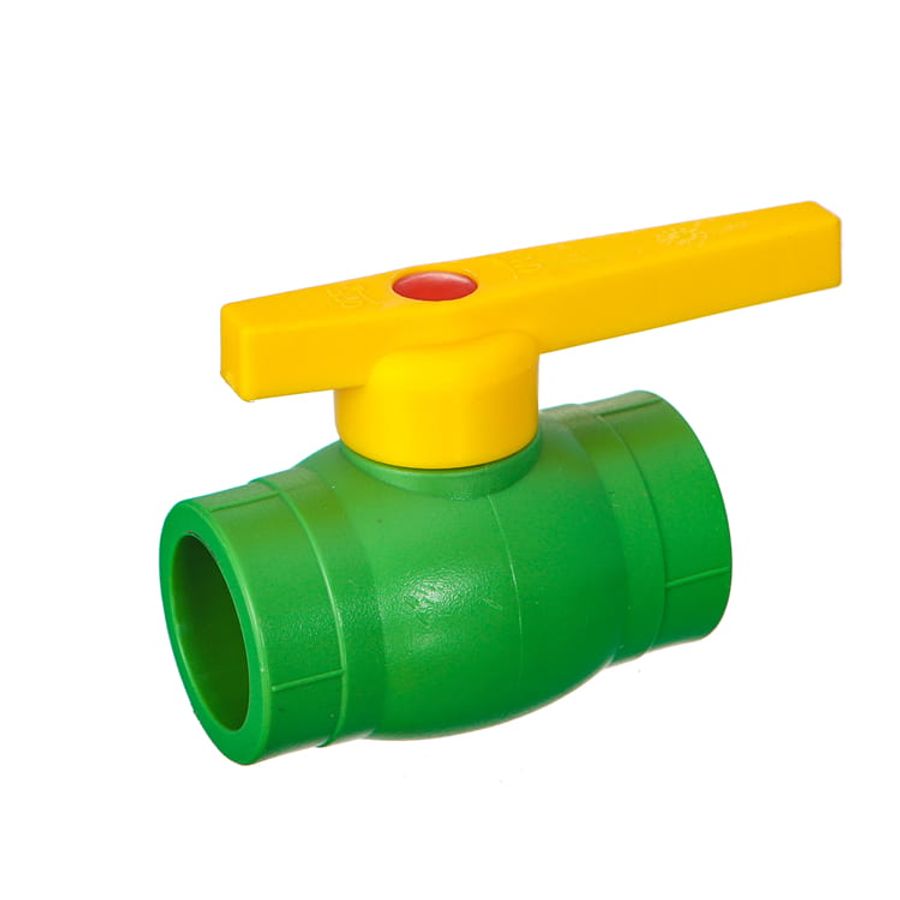
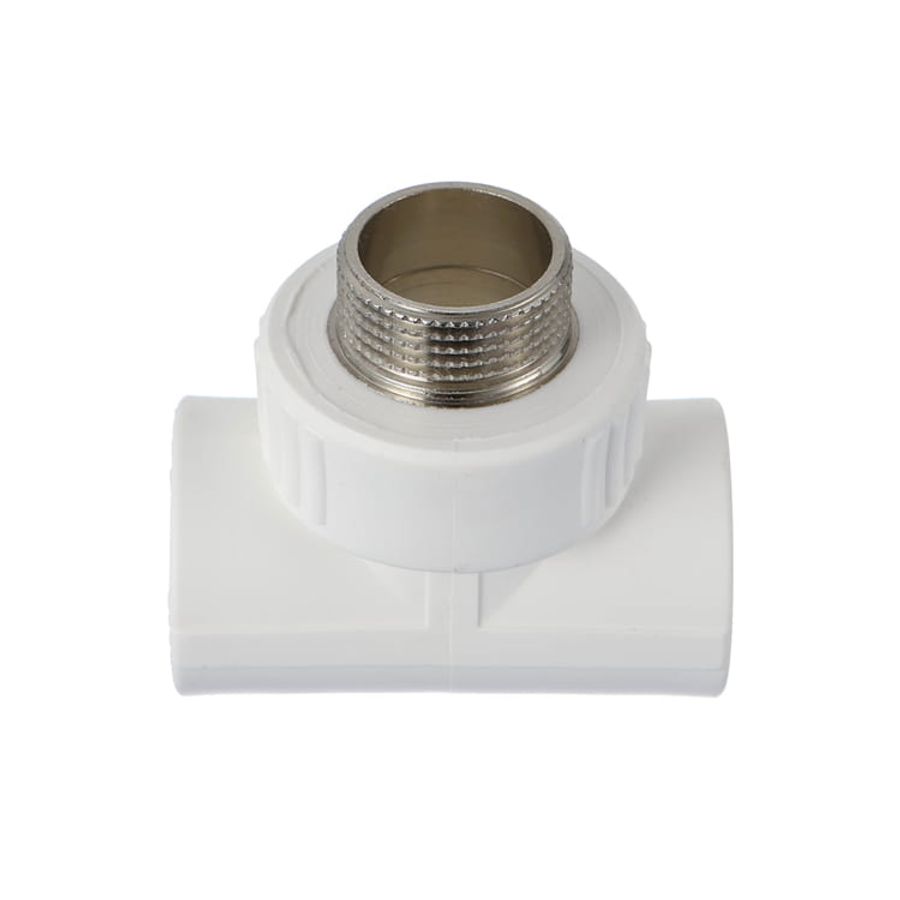
The split turns on two things: the base polymer (propylene, ethylene, or vinyl chloride) and whether the item is rigid pipe or a fitting. PPR pipe is rigid propylene; every PPR socket, elbow, tee, and valve body is a fitting.
| HS Subheading | What It Covers | Applies To Your Order? |
|---|---|---|
| 3917.22 | Rigid tubes and pipes of polymers of propylene | Yes — this is PPR / PP-R pipe |
| 3917.40 | Fittings (joints, elbows, tees, flanges) of plastics | Yes — PPR sockets, elbows, tees, valve bodies |
| 3917.21 | Rigid tubes of polymers of ethylene (PE / HDPE) | Only if HDPE is in the same load |
| 3917.23 | Rigid tubes of polymers of vinyl chloride (PVC / uPVC) | Only if PVC pipe is in the same load |
| 3917.29 | Rigid tubes of other plastics (e.g. CPVC, PPH) | Only for non-PP/PE/PVC rigid pipe |
Nigeria applies the ECOWAS Common External Tariff, so the 8-digit line under 3917.22 and 3917.40 is what your clearing agent enters. Because rates and any surcharges under the CET are reviewed periodically, confirm the current duty band against the Nigeria Customs tariff before you file the Form M rather than copying a code off an old entry. A mixed container of PPR pipe plus fittings will show at least two HS lines on the packing list — that is normal and expected, not an error. For a plain-English walk-through of how these codes map to the products themselves, see our complete PPR pipe guide.
Getting SONCAP Right: Which Standard Your PPR Is Tested Against
A SONCAP Certificate is only issued when the goods are shown to meet a recognised product standard. For PPR hot- and cold-water pipe, the reference standard is the ISO 15874 series, which covers piping systems for hot and cold water installations made from polypropylene (PP-R). SON accepts a manufacturer's test evidence against this standard — or an equivalent DIN 8077/8078 dimensional and pressure regime — as the technical basis for the Product Certificate that precedes the shipment SONCAP. If a supplier cannot show test reports tied to a named standard, the SON-appointed agent has nothing to certify against, and the file stops there.
Line up this documentation before the pipe is even produced. The three inspection bodies SON appoints — SGS, Intertek, and Cotecna — will ask for the same core evidence:
- Product test reports against ISO 15874 (or DIN 8077/8078) covering pressure and dimensions
- A quality-system certificate such as ISO 9001, plus any CE or SGS reports the maker holds
- Material declarations confirming virgin PP-R resin, not regrind or recycled filler
- Marking on the pipe itself: brand, dimension, PN pressure class, and standard reference
The marking matters at the port. If the pipe is printed as ISO 15874 PN20 DN25 and the SONCAP paperwork says the same, the desk check is quick. A mismatch between printed markings and certificate text is one of the most common reasons a compliant shipment still gets held. Vet this at order stage — our guide on PPR pipe certification lists exactly which reports a serious factory should hand over. IFAN produces PPR to ISO 15874 and DIN 8077/8078 in DN20–DN160, PN12.5–PN25, with the standard and pressure class printed on the pipe, so the SONCAP evidence and the port marking line up from the start.
Landed Cost of One Container: A Worked Example
The charge list above tells you the components; buyers planning their first shipment want to see the arithmetic. Nigerian duty and VAT compound in a fixed order, so the sequence below is the one your clearing agent follows. The figures are an illustration to show the method — plug in your own CIF value and the current duty band for HS 3917.22 to get your number.
| Step | How It's Calculated | Illustrative Amount (USD) |
|---|---|---|
| 1. CIF value | Goods + insurance + freight to Nigerian port | 20,000 |
| 2. Import duty | CET rate for the HS line × CIF (assume 10%) | 2,000 |
| 3. Levies / surcharges | ETLS, CISS and any applicable surcharge on CIF | 400 |
| 4. VAT base | CIF + duty + levies | 22,400 |
| 5. VAT | 7.5% × VAT base | 1,680 |
| 6. Terminal, shipping line, agent, haulage | Quoted locally per container | 1,500–2,500 |
| Total landed (approx.) | Sum of steps 1–6 | ~27,600–28,600 |
Two points buyers miss. First, VAT is charged on the duty-inclusive value, not on the bare CIF, so the 7.5% is effectively more than 7.5% of your goods cost. Second, the biggest lever on the whole table is how tightly you pack the box: the more product per container, the lower every per-unit charge. That is why loading is a cost decision, not just a logistics one — our note on PPR pipe container loading covers how nested fittings and mixed diameters raise the paying weight in the same 20ft box.
Frequently Asked Questions
Do I need SONCAP to import PPR pipe into Nigeria?
Yes. PPR pipe is a regulated product under SONCAP, and the conformity check is done at origin before shipment. You need a Product Certificate (held by the manufacturer) and a shipment-specific SONCAP Certificate issued through a SON-appointed agent such as SGS, Intertek, or COTECNA in the supply country.
What is the HS code for PPR pipe?
PPR pipe and fittings fall under HS heading 3917 (plastic tubes, pipes and fittings). Pipe and fittings have different subheadings, so confirm the exact 8–10 digit code with your clearing agent against the current Nigerian tariff, and make sure your invoice description matches it.
What happens if I ship without SONCAP?
You risk the goods being refused, seized, or held while you attempt a costly destination inspection — with demurrage accruing daily. Because SONCAP is a pre-shipment scheme, there's no simple fix at the port. Always arrange the SONCAP Certificate at origin before the container sails.
Do I open the Form M before or after shipping?
Before. The Form M is opened through your authorised dealer bank at the start, and its number is needed for SONCAP and the whole clearance chain. Shipping first and opening the Form M later is one of the most common — and expensive — sequencing mistakes.
What is the HS code for PPR pipe?
PPR pipe is classified under HS subheading 3917.22 — rigid tubes and pipes of polymers of propylene. Nigerian customs assesses duty on the full 8-digit line under this heading, not the 4-digit 3917, so your clearing agent must file the complete code on the Form M and PAAR.
Do PPR pipe and PPR fittings use the same HS code?
No. PPR pipe sits under 3917.22 (rigid propylene tubes), while PPR fittings — sockets, elbows, tees, and valve bodies — fall under 3917.40 (plastic fittings). A mixed container will therefore show at least two HS lines on the packing list, which is normal and not a classification error.
What standard must PPR pipe meet for SONCAP approval?
SON references the ISO 15874 series for PP-R hot and cold water pipe, and accepts equivalent DIN 8077/8078 evidence. The manufacturer's test reports against that standard form the basis of the Product Certificate that precedes the shipment SONCAP. Pipe printed with the standard and PN class helps the port desk clear it faster.
Is VAT charged on the goods value or after duty in Nigeria?
VAT of 7.5% is charged on the duty-inclusive value — CIF plus import duty plus any levies — not on the bare goods cost. Because it compounds on top of duty, the effective VAT hit is higher than 7.5% of your CIF. Calculate duty first, then apply VAT to that larger base.