
PPR Pipe Certifications Explained: DIN, ISO 15874, CE, SGS & What Your Country Needs
A folder full of certificates means nothing if you can't tell which ones matter for your market and which are just paper. PPR pipe carries a confusing stack of them — DIN 8077/8078, ISO 15874, CE, WRAS, SGS reports, SASO, SONCAP — and they are not interchangeable: a product standard is not a test report, and a test report is not a market approval. Buy against the wrong one and your container clears the factory but gets held at your own port. This guide untangles what each certification actually proves, which your country requires, and how to confirm a supplier's paperwork is real before you pay.
This pairs with the wider manufacturer verification checklist; here the focus is the certificates themselves — what they mean and how to read them.

Key Takeaways
- Three different things: a product standard (ISO 15874, DIN 8077/8078), a test report (SGS/TÜV), and a market approval (CE, WRAS, SASO, SONCAP) — you usually need one of each.
- ISO 15874 is the international product standard for PP pipe; DIN 8077/8078 is the older German dimensional/quality standard many factories still cite.
- The market approval you need depends on your country — CE/EN for the EU, WRAS for the UK, SASO for Saudi, SONCAP for Nigeria.
- A generic "SGS certificate" proves little unless it names your product, the standard tested, and a recent date.
- Verify every certificate against the issuing body — fake and recycled certificates are common.
- Factory quality (ISO 9001) is separate from product compliance — ask for both.
The Three Kinds of "Certificate" — Don't Confuse Them
Almost every certification argument between buyer and supplier comes from mixing up three different documents that all get called a "certificate." They answer different questions.
For how one manufacturer's approvals stack up, see IFAN Group's verified certifications — provincial designation, Bureau Veritas, CE and AS 4176.8.
| Document | What it proves | Examples |
|---|---|---|
| Product standard | The pipe is built and dimensioned to a defined spec | ISO 15874, DIN 8077/8078, EN ISO 15874 |
| Test report | An independent lab tested a sample and it passed | SGS, TÜV, Intertek, BV reports |
| Market approval | The product is legal to sell/import in that market | CE, WRAS, SASO, SONCAP, NSF |
| Factory system | The factory runs an audited quality process | ISO 9001 |
A supplier who sends you "our ISO 9001" when you asked whether the pipe meets ISO 15874 has answered a different question — ISO 9001 is about how the factory is run, not whether this pipe passes the product standard. You typically need one document from each row: the pipe made to a product standard, proven by a recent test report, and holding the market approval your country demands.
ISO 15874 — The International Product Standard
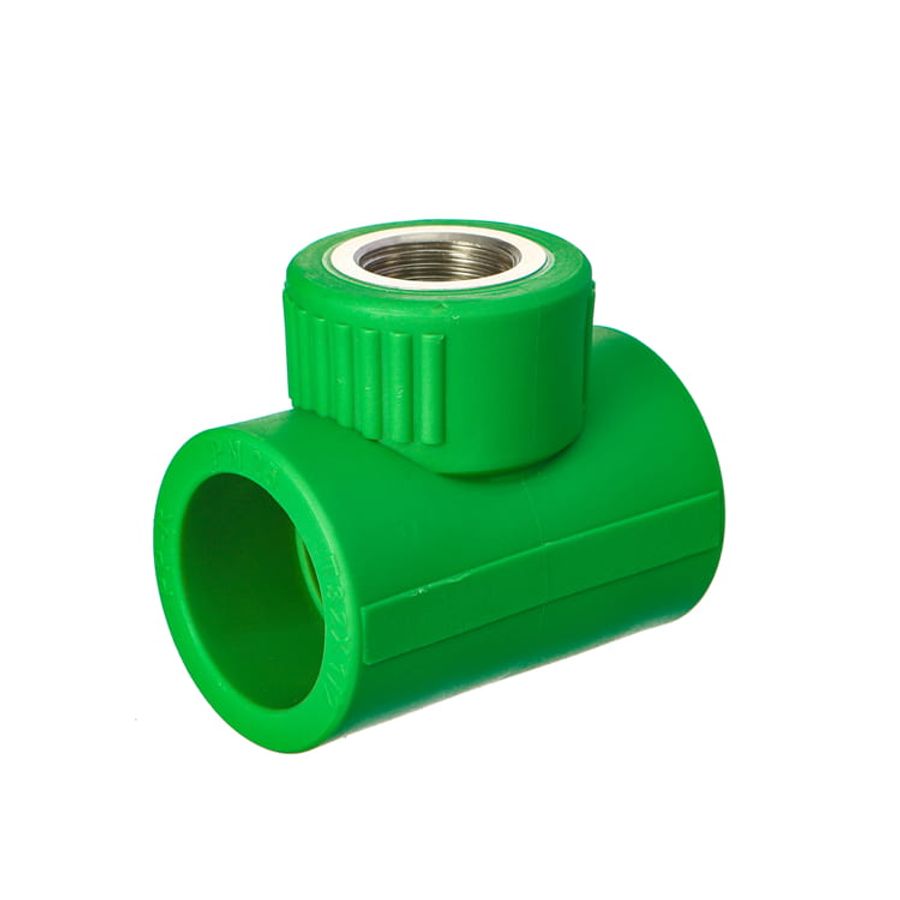
ISO 15874 is the global standard for polypropylene (PP) hot- and cold-water pipe systems. It defines the material classification, the dimensions and wall thicknesses per pressure class, and — most importantly — the long-term pressure testing the pipe must survive. It sets the design across a system of temperature/pressure "application classes" so a pipe rated for a given class is proven to carry hot water at a stated temperature and pressure for a 50-year design life. When a spec says "PPR to ISO 15874," it is tying the supplier to that whole regime, not just a green colour.
The material grade matters here: genuine ISO 15874 performance depends on virgin PP-R resin, not recycled or filled material. A pipe can be printed "ISO 15874" and still fail if the resin is downgraded — which is why the standard is only as good as the virgin material and the test report behind it.
DIN 8077/8078 vs ISO 15874 — Are They the Same?
Many Chinese and Middle-Eastern factories still quote DIN 8077 and DIN 8078 — the older German standards for PP pipe dimensions (8077) and general quality requirements (8078). They pre-date the international ISO system and remain a widely recognised benchmark, especially across the Gulf and Africa where "German standard" carries weight as a sales signal. In practice DIN 8077/8078 and ISO 15874 describe very similar dimensions and pressure classes for PPR; they are not identical documents, but a pipe genuinely built to DIN 8077/8078 is dimensionally close to its ISO equivalent.
What matters for a buyer: don't treat "DIN" as automatically superior or as a substitute for the market approval your country's customs actually checks. If your regulator asks for ISO 15874 or a national mark, a DIN citation alone won't clear it. Ask which standard the pipe is tested and printed to, and match that to what your market requires.
What Your Country Actually Requires
The market approval — not the product standard — is what stops (or clears) your shipment at the border. It's country-specific, so this is the row buyers most often get wrong.
| Market | Approval usually needed |
|---|---|
| European Union | CE + compliance to EN ISO 15874; potable approval per member state |
| United Kingdom | WRAS (or Regulation 4) approval for potable water |
| Saudi Arabia / Gulf | SASO / SABER (Saleem) conformity; GSO standards |
| Nigeria | SONCAP certificate tied to the shipment |
| USA (potable) | NSF/ANSI 61 & 14 for drinking water |
| Many African markets | Pre-shipment conformity (e.g. SONCAP, PVoC schemes) + SGS/Intertek report |
Confirm your specific requirement with your customs broker or regulator before ordering — schemes change, and several African markets run pre-shipment Verification-of-Conformity (PVoC) programmes where the inspection happens at origin, before the goods ship. Building that step into the timeline is part of costing the order properly.
What ISO 15874 Testing Actually Checks
A credible test report against ISO 15874 covers the properties that decide whether the pipe survives hot water for decades, not just its size:
Hydrostatic (long-term) pressure — samples held under pressure at elevated temperature to prove the 50-year design strength. This is the core test; it's what separates real PPR from a green pipe that cracks in a year.
Thermal stability / oxidation induction — confirms the pipe has enough antioxidant to resist the heat degradation that ages hot-water pipe.
Dimensions and wall thickness — verifies OD, wall, and ovality are within tolerance for the pressure class (a thinned wall is the most common quiet downgrade).
Melt flow rate (MFR) — a fingerprint of the resin; confirms it's the PP-R grade claimed and not a cut blend.
If a "test report" only lists dimensions and a colour, it isn't proving performance. Ask specifically for the hydrostatic pressure results — that's the test a downgraded pipe fails.
How to Verify a Certificate Is Real
Fake, expired, and "borrowed" certificates (issued for a different company's product) are common. Check every document, don't just collect it:
It names the actual product and company. A certificate that doesn't state the specific pipe series and the supplier's legal name proves nothing about what you're buying. Generic or mismatched names are the top red flag.
It's current. Reports and approvals have issue and expiry dates. A five-year-old SGS report on a sample from a different production run is not current compliance.
It has a verifiable reference number. SGS, TÜV, Intertek and BV let you verify a report by its number on the issuer's website or by contacting them. A real lab report can be checked; a fabricated one can't.
It matches the pipe marking. The standard printed on the pipe should match the standard on the certificate. If the pipe says one thing and the paperwork another, stop.
For a first or large order, back the paperwork with a pre-shipment inspection or an independent test of a sample from the actual batch — see the full quality-control process. Certificates you can't verify should be treated as absent.
Need PPR pipe certified for your market?
Tell us your destination and we'll supply PPR to ISO 15874 with the verifiable test reports and market approvals your customs needs.
Request a Quote
PPR Application Classes: Matching the Certificate to the Job (ISO 10508)
A certificate that says "complies with ISO 15874" is only half an answer. The same standard rates pipe against a set of application classes defined in ISO 10508, and each class describes a different service condition — a different design temperature, a different length of time the system is expected to run hot, and a different maximum working pressure. A pipe certified for cold water only will fail if you put it on a hot ring main. Ask a supplier which class the certificate is issued against, not just whether it "passed ISO 15874."
Each class is defined by a design temperature (Td) held for most of the service life, a raised maximum temperature (Tmax), and a malfunction temperature (Tmal). All classes assume a 50-year design lifetime. The class you buy for should match the hottest continuous condition on that circuit.
| Class | Design temp (Td) | Max temp (Tmax) | Typical use |
|---|---|---|---|
| Class 1 | 60°C | 80°C | Hot water supply (60°C) |
| Class 2 | 70°C | 80°C | Hot water supply (70°C) |
| Class 4 | 20°C then 40°C | 70°C | Underfloor heating / low-temp radiators |
| Class 5 | 20°C then 60°C | 90°C | High-temp radiator heating |
Cold-water-only service is covered separately as a 20°C design condition. In practice, most PPR distributed for building plumbing is certified to Class 1, Class 2 and the cold condition, with heating-grade pipe carrying Class 4 or 5. IFAN PPR is produced across DN20 to DN160 in PN12.5 through PN25, so the pressure rating you pick must also match the class — the higher the design temperature, the more the allowable working pressure drops for the same pipe. See our PPR pipe size and pressure chart to line up the two.
ASTM F2389 and the US Market: A Different Certification Path
Buyers shipping into North America run into a standard that never appears on European paperwork: ASTM F2389, the US standard for polypropylene (PP-R) pressure pipe and fittings. It is the American counterpart to ISO 15874 — same material, same purpose — but it uses US dimensioning and its own pressure-rating math, so an ISO 15874 certificate does not automatically satisfy a US specifier. If a job cites F2389, ask the factory for a certificate issued to that standard specifically.
| Point of difference | ISO 15874 (international / EU) | ASTM F2389 (USA) |
|---|---|---|
| Sizing basis | Metric outside diameter (DN20–DN160) | Nominal pipe size / IPS in inches |
| Pressure expression | PN rating in bar (PN12.5–PN25) | Pressure rating in psi at a stated temperature |
| Potable-water sign-off | Handled by CE / WRAS / member-state approval | NSF/ANSI 61 and NSF/ANSI 14, usually together |
| Who asks for it | EU, Gulf, African, most of Asia | US and Canadian mechanical specs |
For a US drinking-water job the F2389 product certificate is not enough on its own; the material also has to carry NSF/ANSI 61 (contaminant leaching) and usually NSF/ANSI 14 (plastic plumbing components). A supplier who only holds ISO 15874 and CE can still be the right factory, but you will need to confirm the specific US marks before the container ships. For the full standards landscape across regions, our pipe certification standards guide maps ISO, EN, ASTM and NSF side by side.
The Certification Test Suite: Codes, Durations and Pass Thresholds
When a lab issues an ISO 15874 report it is not running one test — it is running a battery of them, each governed by its own ISO test-method code, each with a defined duration and a pass/fail threshold. Knowing the codes lets you read a test report line by line instead of trusting a summary page. These are the checks that sit behind a genuine certificate.
| Test | Method code | What it proves / typical condition |
|---|---|---|
| Short-term hydrostatic | ISO 1167 | 1 h and 165 h burst resistance at 20°C / 95°C |
| Long-term hydrostatic | ISO 1167 / ISO 9080 | Up to 8,760 h (1 year) sustained pressure at high temp; extrapolated to a 50-year life |
| Melt flow rate (MFR) | ISO 1133 | Confirms the resin grade and screens for reprocessed material |
| Thermal stability (OIT) | EN 728 / ISO 11357 | Oxidation induction time ≥ 20 min at 200°C |
| Longitudinal reversion | ISO 2505 | Length change ≤ 2% after heating — checks internal stress |
| Thermocyclic (systems) | ISO 15874-5 | Repeated hot/cold cycling of pipe + fitting joints (e.g. 5,000 cycles) |
The long-term hydrostatic test is the one that separates a real PP-R certificate from a paper one, because it takes months of real elapsed time — you cannot fake a year of pressure logging. The reversion and OIT tests are the fastest way to catch recycled or over-filled resin, which is why we treat them as core acceptance checks in our PPR quality control process. If a report shows only a single 1-hour burst number and nothing else, it is not an ISO 15874 certification.
Frequently Asked Questions
Is DIN 8077 better than ISO 15874?
Neither is "better" — they're closely aligned standards for PP pipe dimensions and pressure classes, DIN being the older German system and ISO 15874 the international one. What matters is which your market's customs and regulator accept. Match the pipe's tested standard to your country's requirement rather than assuming "DIN" outranks "ISO."
Does an SGS certificate mean the pipe is good?
Only if it names your specific product, states the standard tested (e.g. ISO 15874) with the hydrostatic pressure results, is recently dated, and carries a reference number you can verify with SGS. A generic or old SGS report — or one for a different company's pipe — proves nothing about the batch you're buying.
Is ISO 9001 enough to prove the pipe meets standard?
No. ISO 9001 certifies the factory's quality-management process, not that a specific pipe passes a product standard. You need both: ISO 9001 for the factory system, plus a product test report to ISO 15874 (or DIN) for the pipe itself, plus the market approval your country requires.
Which certificate does customs actually check?
The market approval for your country — CE/EN in the EU, WRAS in the UK, SASO/SABER in Saudi Arabia, SONCAP in Nigeria, NSF in the US. Many African markets require a pre-shipment conformity certificate (PVoC) issued before the goods leave origin. Confirm the exact requirement with your customs broker before ordering.
What is ASTM F2389?
ASTM F2389 is the US standard for polypropylene (PP-R) pressure pipe and fittings, the American counterpart to ISO 15874. It uses inch-based sizing and psi pressure ratings, so an ISO 15874 certificate does not automatically meet it. For US drinking-water work the pipe usually also needs NSF/ANSI 61 and NSF/ANSI 14. Ask the factory for a certificate issued to F2389 specifically.
How are PPR pipes classified?
PPR pipe is classified two ways: by pressure class (PN rating, commonly PN12.5 to PN25) and by application class under ISO 10508 (Classes 1, 2, 4 and 5, plus a cold-water condition). Each application class sets a design temperature and a 50-year service life, so heating-grade pipe (Class 4 or 5) is rated differently from hot-water supply pipe (Class 1 or 2). Match the class to your hottest running condition.
Does ISO 9001 prove a PPR pipe meets the standard?
No. ISO 9001 certifies that the factory runs an audited quality-management system — good process discipline — but it says nothing about the pipe itself. A product certificate (ISO 15874, DIN 8077/8078 or ASTM F2389) plus an independent test report is what proves the pipe meets spec. Treat ISO 9001 as a factory credential, not product proof, and always ask for both.
Is a PPR certificate genuine or fake — how do I tell?
Check the certificate number against the issuing body's online register, confirm the scope names PP-R pipe and your exact sizes, and read the test report for the ISO 1167 long-term hydrostatic result. A real ISO 15874 report shows a full test battery with method codes; a single one-hour burst figure or a report you cannot verify on the lab's own database is a warning sign.