
PEX-a vs PEX-b: The Honest Difference & How to Choose
PEX-a or PEX-b? It's the question almost every PEX buyer hits, and the internet is full of tribal answers. Here's the honest version: the letters describe how the pipe was cross-linked, not a quality ranking — both meet the same pressure and temperature standards and both make reliable plumbing. What actually differs is flexibility, the fitting system each uses, how a kink is handled, and price. Pick based on those real differences and your tools, not on a forum's favourite. This guide lays out exactly how PEX-a and PEX-b differ, where each wins, and how to choose without overpaying for flexibility you won't use.
For the full picture on PEX types, sizes, and fittings, see the complete PEX pipe guide; this article focuses on the a-versus-b decision.
Key Takeaways
- The letters are cross-linking methods, not quality grades — both meet the same ratings.
- PEX-a is the most flexible, resists kinks, repairs with heat, and uses expansion fittings.
- PEX-b is stiffer, the most common and economical, and uses crimp or clamp fittings.
- PEX-a costs more (pipe + tool); PEX-b is the budget workhorse.
- Choose by flexibility needs and fitting system, not by which "leaks less."
- Never mix systems — an expansion fitting on PEX-b (or vice versa) is a leak.

The Real Difference: How They're Cross-Linked
Both start as cross-linked polyethylene; the letter is the cross-linking method. PEX-a is cross-linked in the melt during extrusion using peroxide (the Engel method) — the polymer links while it's still molten, giving the highest and most uniform cross-link density. PEX-b is extruded first, then cross-linked afterward by a silane (moisture-cure) reaction — cheaper and faster, at a somewhat lower cross-link density. That single processing difference is what produces every practical difference below: PEX-a's higher, in-melt cross-linking makes it more flexible and kink-forgiving, while PEX-b's post-process method makes it stiffer and cheaper. Neither is stronger in service — both are made to the same pressure and temperature standards — but they feel and fit differently on site.
Radiant floors are where the PEX-a vs PEX-b choice matters most — see the underfloor heating pipe guide for loop lengths, spacing and the oxygen barrier.
PEX-a vs PEX-b — Side by Side
| Factor | PEX-a | PEX-b |
|---|---|---|
| Cross-link method | Peroxide, in the melt | Silane, after extrusion |
| Flexibility | Highest | Stiffer |
| Kink handling | Repairable with heat | Must cut out |
| Fittings | Expansion (full-flow) | Crimp / clamp |
| Fitting flow | Larger bore, less restriction | Insert barb narrows bore slightly |
| Cost | Higher (pipe + tool) | Lower |
| Ratings | Same standard | Same standard |
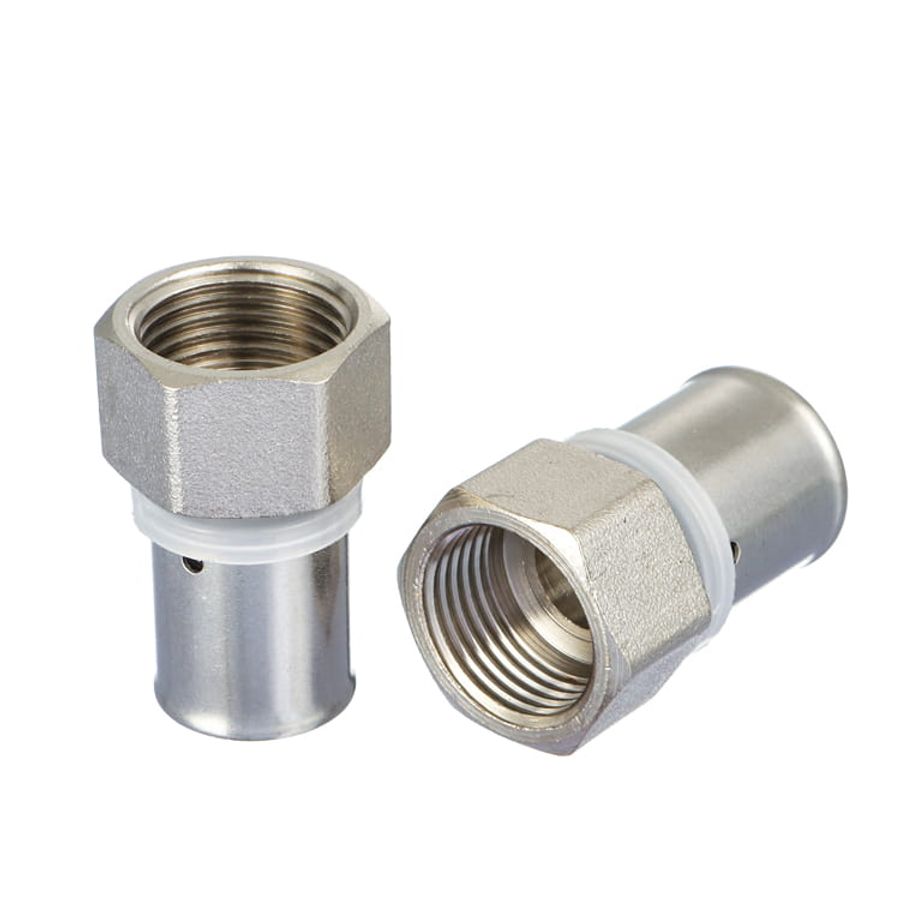
Flexibility and Kinks
PEX-a's headline advantage is flexibility. Its higher in-melt cross-linking makes it the softest, easiest to route around tight corners and through joists, and the most forgiving if you over-bend — a kink in PEX-a can usually be repaired with a heat gun, which relaxes the pipe back to shape thanks to its "shape memory." PEX-b is stiffer; it still bends fine for normal plumbing, but a kink in PEX-b generally can't be heat-repaired and the section has to be cut out and rejoined. For a plumber threading a complex retrofit or a manifold job with many tight runs, PEX-a's flexibility saves time and fittings. For straightforward runs, PEX-b's extra stiffness is a non-issue.
The Fitting System Difference
This is the difference that actually decides many jobs. PEX-a uses expansion (cold-expansion) fittings: you expand the pipe end with a tool, insert the fitting, and the pipe shrinks back tight around it. Because the fitting sits inside an expanded pipe, expansion fittings have a larger bore and restrict flow less. PEX-b uses crimp or clamp fittings: an insert barb goes inside the pipe and a copper crimp ring or stainless cinch clamp squeezes the pipe onto it — simple, cheap, and proven, though the insert barb narrows the bore a little. The tools differ too: expansion needs an expander (manual or powered), while crimp/clamp needs a crimp tool with a go/no-go gauge or a cinch tool. Your existing tooling often decides the pipe as much as the pipe decides the fitting.
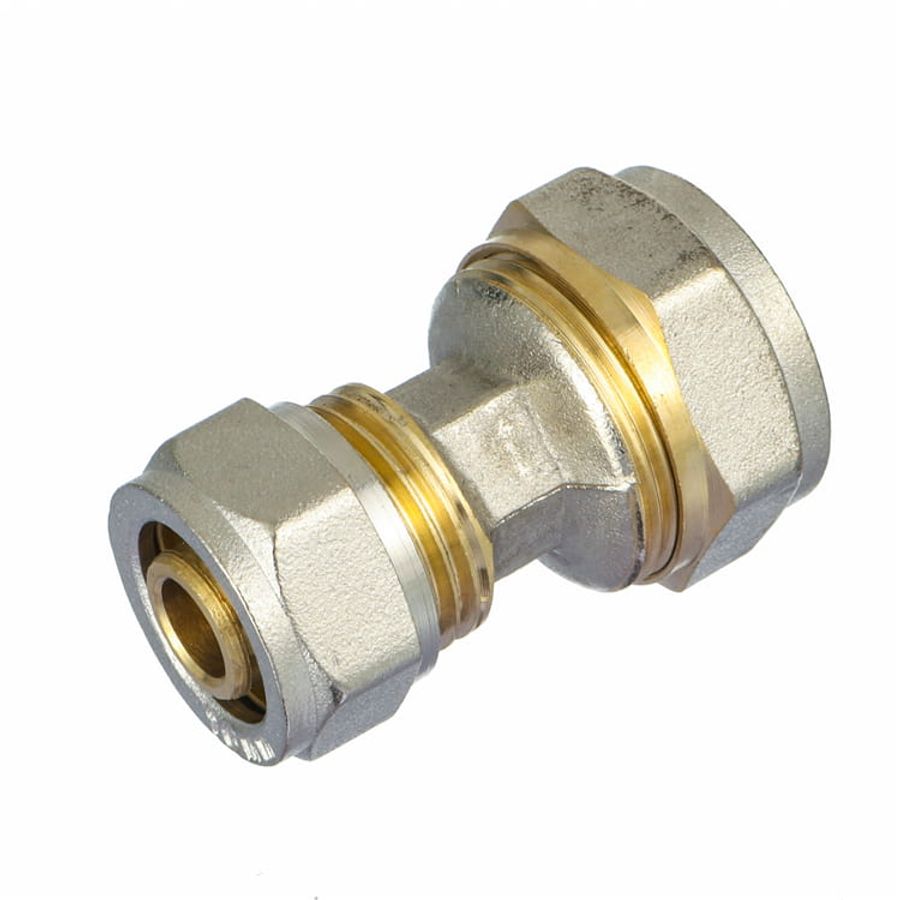
Sourcing PEX pipe and matched fittings?
Tell us the type and fitting system — we'll spec PEX, PEX-AL-PEX, or PE-RT with the right fittings and valves.
Request a QuoteCost: Where PEX-a Charges a Premium
PEX-a costs more than PEX-b in two places: the pipe itself is pricier, and the expansion tool is a bigger investment than a crimp or cinch tool. For a one-off job or a small plumber, that tooling gap can decide the choice on its own — PEX-b with a modest crimp tool is the low-entry-cost route, which is a big reason PEX-b dominates by volume. PEX-a's premium buys flexibility, kink-repairability, and larger-bore fittings; whether that's worth it depends on how much tight, complex routing the job involves and how often you'll reuse the tool. Over many jobs, a pro doing lots of retrofit or manifold work often justifies PEX-a; for occasional or simple runs, PEX-b is the economical, entirely capable choice.
Does One Leak or Fail More?
The claim you'll see most is that one type "leaks less." The honest answer: made to standard and installed with the correct fittings, both PEX-a and PEX-b give reliable, long-lived plumbing. Most PEX failures trace not to the pipe type but to installation — a mismatched or un-gauged fitting, a mixed system, UV exposure, or a kink. The insert-barb of a PEX-b crimp fitting does slightly narrow the bore, and expansion fittings restrict flow less, but that's a flow nuance, not a reliability gap. Choose either with confidence, and put your attention on getting the fittings and installation right — that's what actually determines whether a PEX system leaks.
Fitting and Brand Compatibility
A practical trap: PEX fitting systems are not all cross-compatible, and it's not just about a versus b. Crimp fittings to the same standard are broadly interchangeable across brands using copper crimp rings, and cinch-clamp fittings work similarly — but expansion fittings are proprietary to the PEX-a system and tool you're using, and push-fit fittings are their own ecosystem again. The safe practice is to stay within one validated system: the pipe, the fittings, the rings, and the tool that the manufacturer lists as compatible. Mixing a barb from one brand with a ring from another, or assuming an expansion fitting will work on any PEX-a, is how a joint that looked fine fails a pressure test. When you buy, confirm the fittings are rated for your exact pipe — and sourcing pipe and fittings from one supplier removes the guesswork entirely.
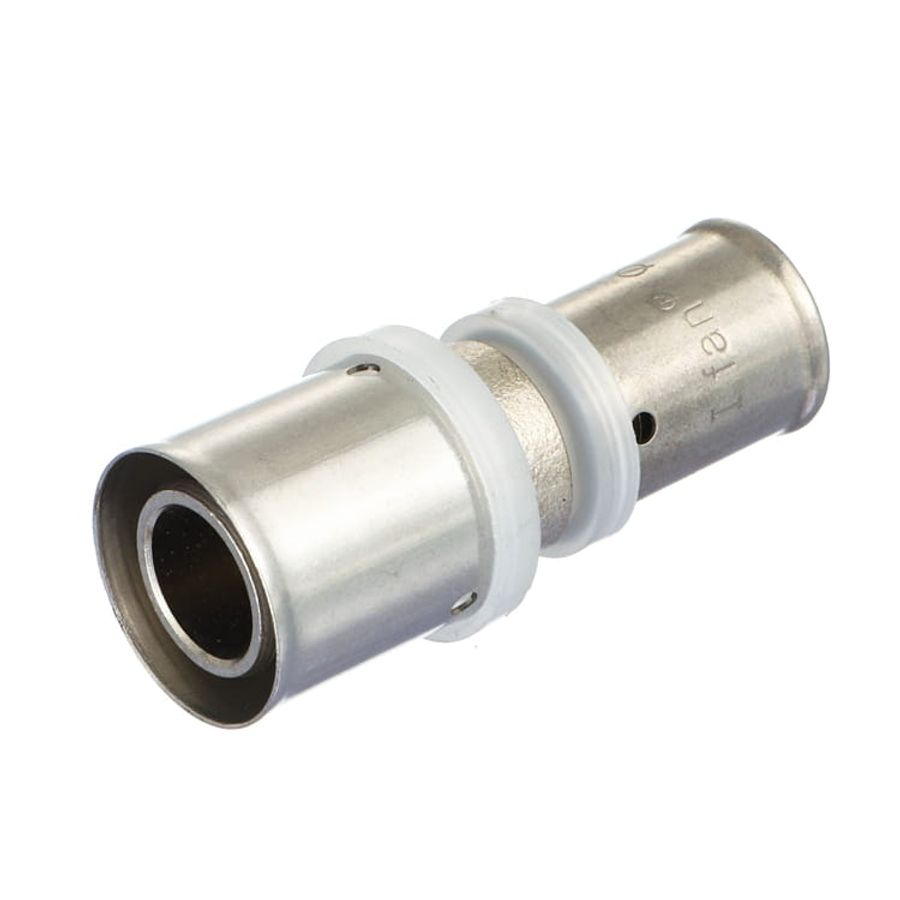
Which Is More Common Where
Availability shapes the choice as much as preference. PEX-b is the most widely produced type worldwide and is usually the easiest and cheapest to get, with crimp and clamp fittings stocked almost everywhere plumbing supplies are sold. PEX-a is well established too, especially where the expansion system has a strong installer base, and it's the go-to for pros who've standardised on the expander tool. PEX-c is less common. In practice, if you're buying occasionally or want the lowest entry cost, the local abundance of PEX-b and its cheap tooling tends to decide it; if you run a busy plumbing operation that values flexibility and has invested in the expansion tool, PEX-a's ecosystem is there. Either way, check what's genuinely stocked in your market before committing a large job to one system.
Which Should You Choose?
Choose PEX-a if you want maximum flexibility, do a lot of tight or complex routing, value kink-repairability, prefer larger-bore expansion fittings, and will use the expander tool enough to justify it.
Choose PEX-b if you want the lowest cost, are doing standard runs, already own or want an inexpensive crimp/clamp tool, and don't need the extra flexibility. For most everyday plumbing, PEX-b is the sensible default.
Whichever you pick, keep the system consistent — use the fittings designed for that pipe, and never mix an expansion fitting onto PEX-b or a crimp system onto a pipe meant for expansion.
PEX-a vs PEX-b for Underfloor Heating
For radiant floor loops, flexibility and the oxygen barrier matter more than the a/b debate. PEX-a's superior flexibility makes it pleasant to lay in tight serpentine loops without kinking, which is why some heating installers favour it. But the more important requirement for a sealed heating circuit is an oxygen barrier — without it, oxygen diffuses through the pipe wall over time and corrodes steel boiler and pump components. Both PEX-a and PEX-b are available with an EVOH oxygen-barrier layer for heating; make sure the pipe you buy is the barrier version, not plain potable PEX. Many heating jobs instead use PEX-AL-PEX or PE-RT, where the aluminium or the material itself provides the barrier and the pipe holds its shape in the loop. So for underfloor heating, the real questions are "barrier or not" and "which pipe holds the loop" — with the choice of a versus b coming a distant secondary consideration to those two decisions.
A Note on PEX-c and Multilayer
The a/b debate isn't the whole family. PEX-c (electron-beam irradiated) is a clean, chemical-free method that sits between a and b on stiffness — less common but a valid third option. And for heating especially, PEX-AL-PEX (multilayer with an aluminium core) and PE-RT solve problems plain PEX doesn't: the aluminium holds a bend, cuts expansion, and blocks oxygen. If your job is underfloor heating rather than potable plumbing, the more useful comparison may be PEX-AL-PEX or PE-RT versus plain PEX — see the complete PEX guide. IFAN makes PEX, PEX-AL-PEX, and PE-RT with matched fittings and brass valves, so the pipe and its fitting system come from one source.
PE-RT is the other polyethylene option buyers meet in this space — un-cross-linked and heat-fusable, where both PEX-a and PEX-b need mechanical fittings. We break that difference down in PE-RT vs PEX pipe.
How to Tell If You Have PEX-a or PEX-b (Read the Print Line)
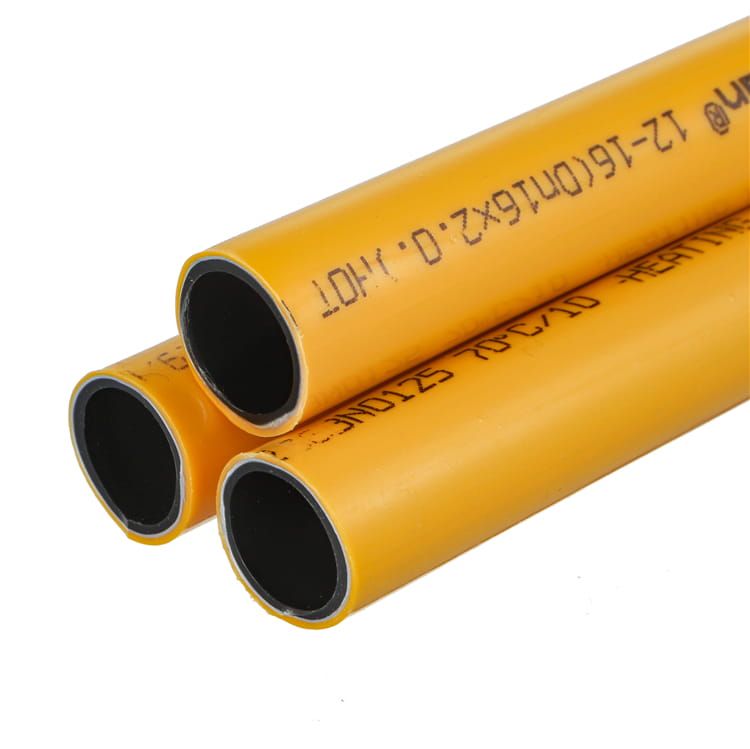
You cannot tell PEX-a from PEX-b by looking at the plastic. The two feel almost identical in your hand, and red, blue and white color coding tells you nothing about the cross-linking method. The answer is printed on the pipe itself. Every compliant tube carries a repeating print line, and the ASTM F876 cell-class code inside it names the manufacturing method.
Decoding the ASTM designation code
The four- or five-digit number you see (for example PEX 5306, PEX 1006, PEX 5206) is the material designation code from ASTM F876. The first digit is the cross-linking method, which is the digit that answers the "a or b" question directly.
| First digit in code | Cross-linking method | Common name |
|---|---|---|
| 1 (e.g. PEX 1006) | Peroxide (Engel) | PEX-a |
| 2 (e.g. PEX 2006) | Silane (moisture cure) | PEX-b |
| 3 (e.g. PEX 3006) | Electron beam / radiation | PEX-c |
| 5 (e.g. PEX 5306) | Silane, high performance class | PEX-b |
So the common question "is PEX 5306 A or B?" has a clean answer: the leading 5 marks a silane-cross-linked tube, which is PEX-b, rated at the higher chlorine/temperature class. The remaining digits describe chlorine resistance, UV resistance and hydrostatic design category rather than the manufacturing route. If you cannot read a print line at all — the tube is unmarked or the print has worn off — treat it as non-compliant and do not use it for potable water. For a size read on the same print line, our PEX pipe size guide shows how the nominal and OD figures appear.
Fitting Compatibility: What Works With What
The most common buyer question is whether the two systems interchange. The short version: the pipe grade and the fitting method are separate choices, and most fitting methods work on both PEX-a and PEX-b tube. The one method that does not cross over is cold-expansion (ASTM F1960), because it relies on PEX-a shape memory to shrink back onto the fitting. PEX-b lacks that memory, so it will not close down on an expansion fitting and hold.
| Fitting method (standard) | Works on PEX-a? | Works on PEX-b? |
|---|---|---|
| Copper crimp ring (ASTM F1807) | Yes | Yes |
| Stainless cinch clamp (ASTM F2098) | Yes | Yes |
| Cold-expansion (ASTM F1960) | Yes | No — pipe will not shrink back |
| Push-to-connect (e.g. SharkBite style) | Yes | Yes |
Three practical takeaways from this table answer the questions buyers ask most:
- Can you use crimp rings on PEX-a? Yes. Copper crimp and cinch clamp fittings are ASTM-listed for both grades, so PEX-a tube joins fine with standard crimp tooling — you simply give up the flow advantage of expansion.
- Can you use PEX-b fittings on PEX-a? If "PEX-b fittings" means crimp or clamp insert fittings, yes. The insert fittings themselves are not grade-specific; only the expansion method is.
- Is a push-to-connect fitting PEX-a or PEX-b? Neither — push-fit couplers are grade-agnostic and seat on either tube by an internal O-ring, which is why they are the common repair fix when you are unsure what you have.
The one rule to keep: never mix expansion rings and tools across brands, and never expand PEX-b. Beyond that, see our full breakdown of PEX crimp vs expansion methods before you buy tooling for a container order.
Freeze, Burst and Underground Performance
All PEX resists freeze damage far better than rigid pipe because the tube expands with the ice and then returns toward its original bore. That is a property of cross-linked polyethylene in general, not of one grade over another. Where the grades differ is margin: PEX-a's higher degree of cross-linking and greater elasticity let it stretch through more freeze/thaw cycles before the wall is compromised, which is why manufacturers of expansion systems highlight cold-weather resilience. It is not a guarantee against bursting — a fully blocked, repeatedly frozen line can still split — but PEX-a buys the widest safety margin in unheated runs.
| Property | PEX-a | PEX-b |
|---|---|---|
| Freeze/thaw margin | Widest (most elastic) | Good, slightly stiffer |
| Max operating (per ASTM F876) | 200°F at 80 psi | 200°F at 80 psi |
| Cold-water rating | 73°F at 160 psi | 73°F at 160 psi |
| Direct burial | Yes, in sleeve/conduit | Yes, in sleeve/conduit |
Using PEX underground
Both grades are approved for direct burial, and the long coil lengths of PEX-a make it attractive for a continuous underground service run with no buried joints — the fewer fittings below grade, the fewer future leak points. Two rules apply to either grade underground: PEX is not UV-stable, so any section exposed above ground must be sleeved or painted; and it should be run inside a conduit or sleeve where it passes through a slab or foundation so it can be replaced without excavation. Because the pressure and temperature ratings are identical, the underground choice comes down to coil length and joint count, not to the a-versus-b letter.
Chlorine and UV Resistance: What the Rating Digits Mean
Chlorine resistance matters more than the a/b debate for pipe that carries chlorinated municipal water hot, day after day. Aggressive chlorine slowly oxidizes any polyethylene from the inside, so ASTM F876 rates every PEX tube with two trailing digits after the material designation. These are not marketing numbers — they are the pass class from a standardized hot-chlorinated-water endurance test, and both PEX-a and PEX-b are made in every class. A high class number on a PEX-b tube can outlast a low-class PEX-a tube in chlorinated hot water, which is why you read the whole code, not just the first digit.
| Chlorine class (code digit) | Test condition it passes | Practical meaning |
|---|---|---|
| Class 1 (…06) | 25% of time at 140°F | Mostly cold, occasional hot |
| Class 3 | 50% of time at 140°F | Balanced hot/cold service |
| Class 5 | 100% of time at 140°F | Continuous hot chlorinated water |
UV resistance is coded the same way at the very end of the print line, usually as a number of months the tube may sit exposed to sunlight before installation without losing its rating — commonly 1, 3, or 6 months. This is a shipping-and-storage allowance, not permission to run PEX in daylight permanently; no PEX grade is rated for permanent UV exposure. For a wholesale buyer, the takeaway is simple: match the chlorine class to the water and duty, not the letter. A hot recirculating line on heavily chlorinated municipal supply wants a Class 3 or Class 5 tube whether it is a or b. If your project also weighs PEX against other materials on chlorine and temperature limits, our PEX vs PVC vs CPVC comparison sets the classes side by side.
Frequently Asked Questions
Is PEX-a better than PEX-b?
Neither is universally better — they're cross-linked differently. PEX-a is more flexible, repairs kinks with heat, and uses larger-bore expansion fittings; PEX-b is stiffer, cheaper, and uses crimp or clamp fittings. Both meet the same pressure and temperature standards. Choose by flexibility needs, fitting system, and budget.
Can I use PEX-b fittings on PEX-a pipe?
Crimp and clamp fittings can be used on PEX-a, but expansion fittings can only be used on PEX-a (PEX-b lacks the shape memory to shrink back). The safe rule is to use the fitting system designed for your pipe and never mix — an expansion fitting on PEX-b will not seal reliably.
Why is PEX-b cheaper?
PEX-b is cross-linked after extrusion by a faster, lower-cost silane process, and its crimp/clamp tooling is cheaper than a PEX-a expansion tool. That lower material and tooling cost is why PEX-b is the most widely used type by volume, even though it's slightly stiffer than PEX-a.
Do PEX-a and PEX-b have the same pressure rating?
Yes — when made to the same standard, PEX-a and PEX-b carry the same pressure and temperature ratings. The cross-linking method changes flexibility, kink behaviour, and the fitting system, not the pipe's rated performance. Reliability comes down to correct installation, not the letter.
How do I tell if I have PEX A or B?
You cannot tell by look or feel — check the print line stamped along the pipe. Find the ASTM F876 designation code (like PEX 1006 or PEX 5306). A leading 1 means peroxide cross-linking (PEX-a), a leading 2 or 5 means silane (PEX-b), and a 3 means radiation (PEX-c). If the tube is unmarked, do not use it for potable water.
Is PEX 5306 A or B?
PEX 5306 is PEX-b. The first digit, 5, marks a silane cross-linked tube in the higher performance class, and silane cross-linking is the PEX-b method. The trailing digits describe its chlorine resistance and UV allowance, not the manufacturing route. Any code beginning with 1 would be PEX-a; codes beginning 2 or 5 are PEX-b.
Can you use crimp rings on PEX-a?
Yes. Copper crimp rings (ASTM F1807) and stainless cinch clamps (ASTM F2098) are listed for both PEX-a and PEX-b, so PEX-a tube joins fine with standard crimp tooling. You lose the full-bore flow advantage of cold-expansion fittings, but the connection is code-compliant and reliable. Only cold-expansion (F1960) fittings are restricted to PEX-a.
Is SharkBite PEX A or B?
SharkBite push-to-connect fittings are grade-agnostic — they seat on PEX-a, PEX-b, PEX-c, copper and CPVC by an internal O-ring, so they are neither A nor B. SharkBite also sells its own PEX tubing, which is PEX-b. If you mean the fitting, it works on any PEX grade, which is why push-fit couplers are the usual repair when you are unsure what tube you have.