
PEX Pipe: The Complete Guide (Types, Fittings, Sizes & Uses)
PEX has quietly become the default pipe for water plumbing and heating in much of the world — flexible enough to snake through a wall in one run, tough enough to survive a freeze, and quick enough to install without solder or glue. But "PEX" hides a set of choices that decide how a system performs and what it costs: PEX-a versus PEX-b, the connection method (crimp, clamp, expansion, or press), the pipe sizes, and where PEX belongs versus copper or rigid plastics. Specify these without understanding them and you either overpay or fit a system that fails a code inspection. This complete guide walks a plumber, contractor, or buyer through all of it — what PEX is, the types, how it joins, sizes, how it compares, where it fits, and how to choose and source the right pipe.
Key Takeaways
- PEX is cross-linked polyethylene — flexible, freeze-tolerant water and heating pipe.
- PEX-a, PEX-b, PEX-c differ by how they're cross-linked; PEX-a is the most flexible, PEX-b the most common.
- Connections — crimp, clamp, expansion, press — must match the pipe and the tool.
- PEX beats copper on cost, speed, and freeze resistance; copper wins on UV and outdoor life.
- PEX-AL-PEX (multilayer) and PE-RT add rigidity and heat performance for heating.
- Keep PEX out of direct sunlight and follow chlorine limits for long life.

What Is PEX?
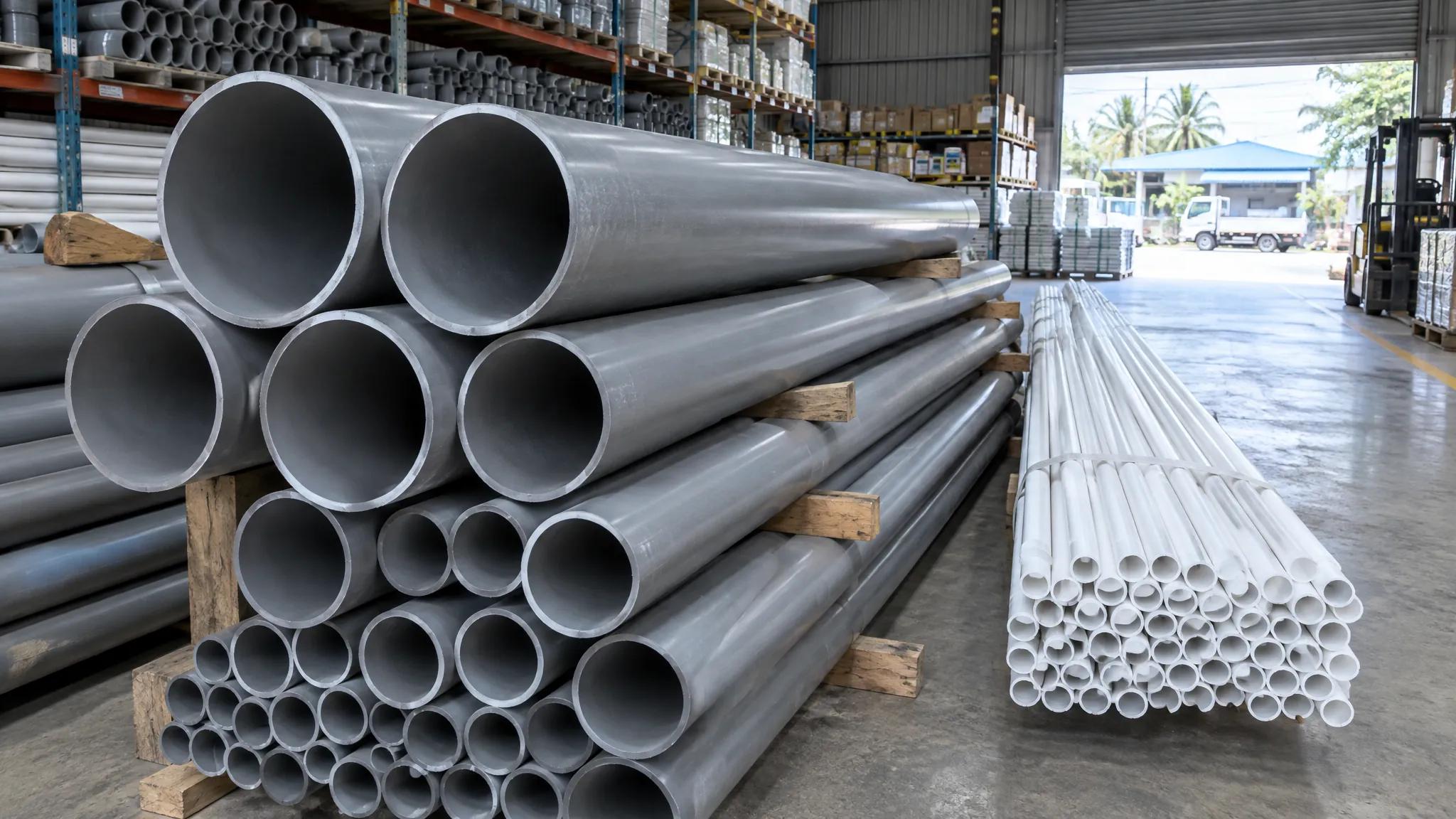
PEX stands for cross-linked polyethylene — polyethylene whose molecular chains have been linked together, which transforms an ordinary plastic into a pipe that holds pressure at temperature, flexes without cracking, and remembers its shape. That cross-linking is what lets PEX carry hot water, tolerate a freeze by expanding rather than bursting, and bend around corners so a single length can run from manifold to fixture with no joints in the wall. It installs without solder, flux, or solvent cement — you cut it and make a mechanical connection — which is why it has largely replaced copper for domestic water plumbing and is the standard pipe for underfloor heating. It comes in coils for long flexible runs and in straight lengths, typically colour-coded red for hot and blue for cold.
PEX-a, PEX-b, and PEX-c — What's the Difference?
The letters describe how the polyethylene was cross-linked, not a quality grade — all three meet the same performance standards, but they handle differently:
| Type | Method | Character |
|---|---|---|
| PEX-a | Peroxide (Engel), during extrusion | Most flexible; kink-repairable; expansion fittings |
| PEX-b | Silane (moisture cure), after extrusion | Most common; stiffer; crimp/clamp fittings; economical |
| PEX-c | Electron-beam irradiation | Cleaner process; stiffer than PEX-a |
PEX-a has the highest degree of cross-linking done in the melt, making it the most flexible with the best resistance to kinking — and a kink can often be repaired with a heat gun. It pairs with expansion (cold-expansion) fittings. PEX-b is cross-linked after extrusion and is the most widely used and economical type; it's slightly stiffer and uses crimp or clamp fittings. PEX-c uses irradiation, a clean method that lands between the two on stiffness. For most plumbing, PEX-b is the workhorse; PEX-a is chosen where maximum flexibility and expansion fittings are wanted. All three carry the same pressure and temperature ratings when made to standard — the choice is about handling and fitting system, not whether one "leaks less."
PEX-AL-PEX and PE-RT — the Multilayer Cousins
Two related pipes solve problems plain PEX doesn't. PEX-AL-PEX (also called PAP or multilayer composite) sandwiches a thin aluminium layer between two PEX layers. The aluminium adds three things: it holds a bend so the pipe stays where you shape it, it slashes thermal expansion, and it forms a complete oxygen barrier — important for heating systems where oxygen ingress corrodes steel components. That makes PEX-AL-PEX a favourite for underfloor heating and radiator circuits. PE-RT (polyethylene of raised temperature resistance) is a non-cross-linked polyethylene engineered to hold up at heating temperatures while staying flexible and weldable; it's popular for underfloor heating loops. IFAN manufactures both — laser-welded PEX-AL-PEX multilayer pipe and PE-RT — alongside PEX fittings and valves, so a heating or plumbing system can be sourced complete.
Where PE-RT differs most from PEX is joinability: it can be heat-fused, while cross-linked PEX cannot. PE-RT vs PEX pipe sets out what that means for installed cost and repairs.
How PEX Is Connected
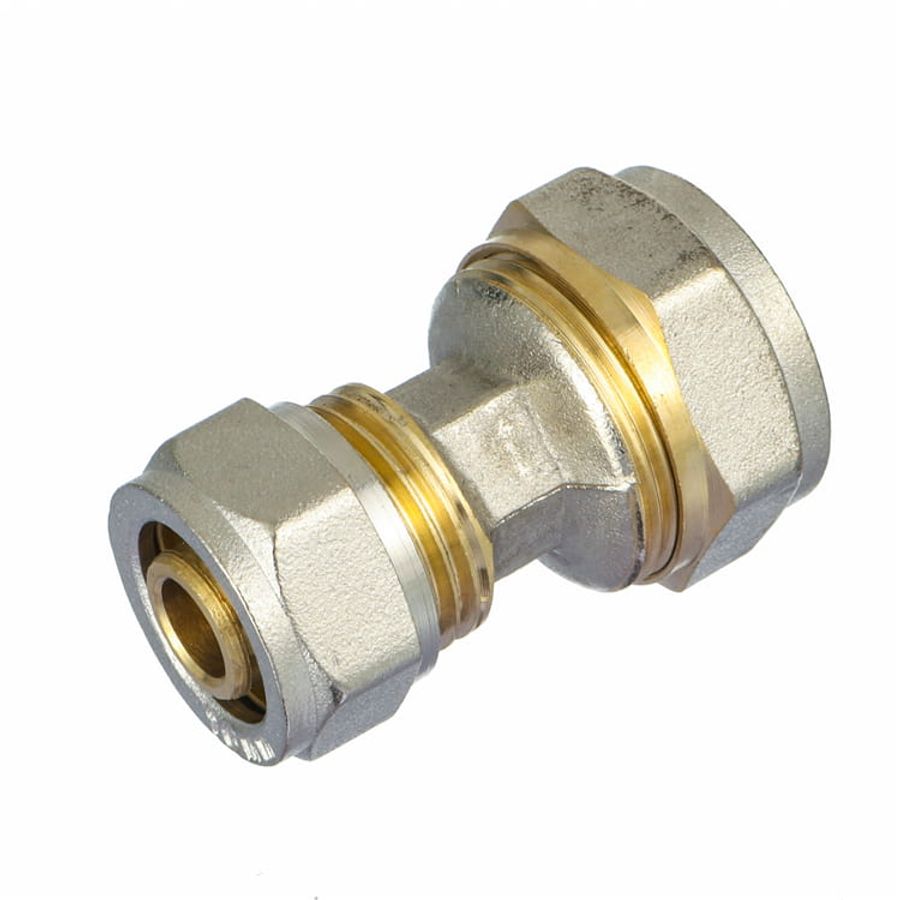
PEX has no single joint — it has several, and the fitting system must match the pipe and the tool you own. The main methods:
| Method | How it works | Notes |
|---|---|---|
| Crimp (copper ring) | Copper ring crimped over pipe + barb | Economical; needs a crimp tool + go/no-go gauge |
| Clamp (cinch) | Stainless cinch ring clamped over barb | One tool for all sizes; easy in tight spots |
| Expansion (PEX-a) | Pipe expanded, fitting inserted, pipe shrinks back | Full-flow fittings; PEX-a only; expander tool |
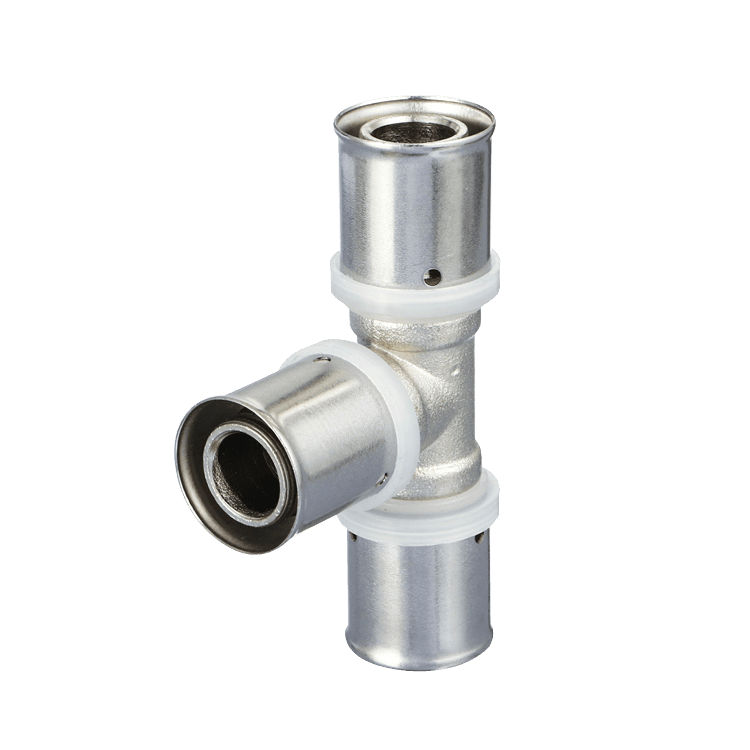
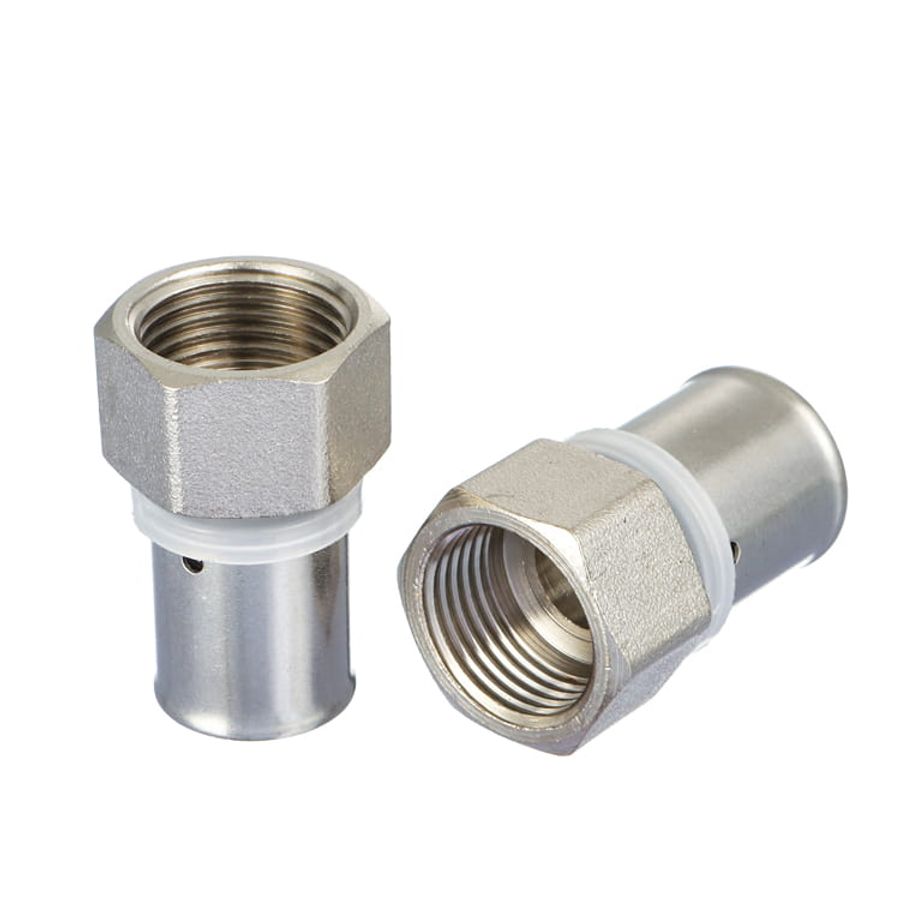
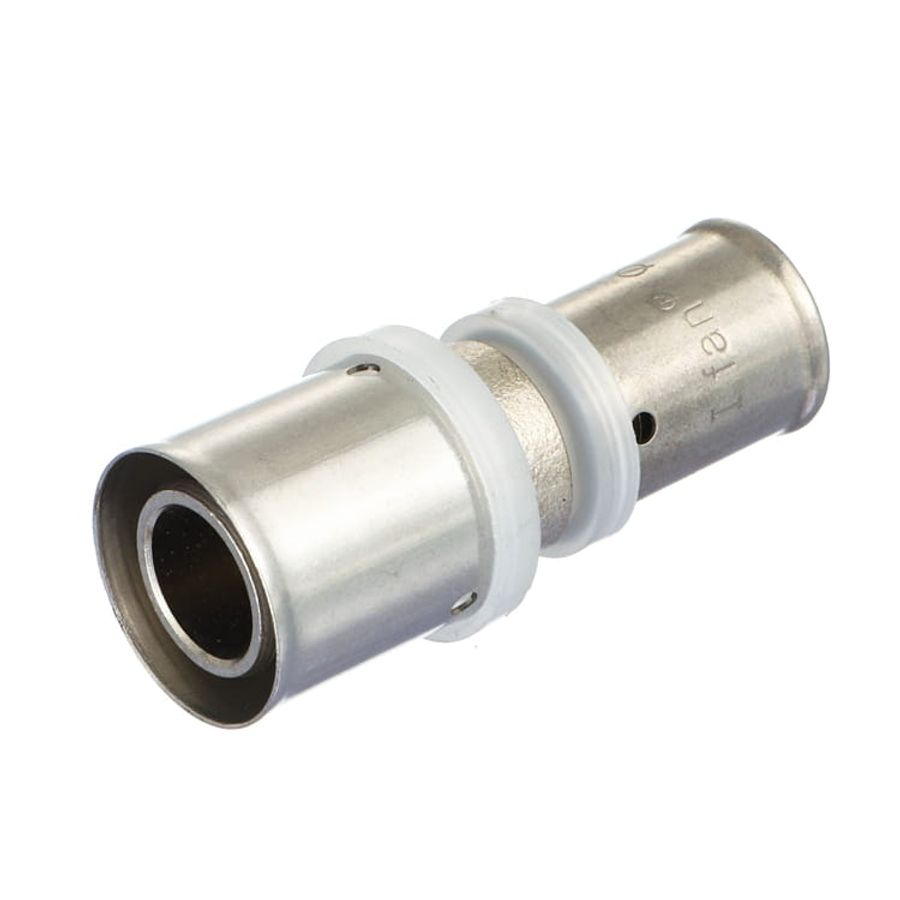
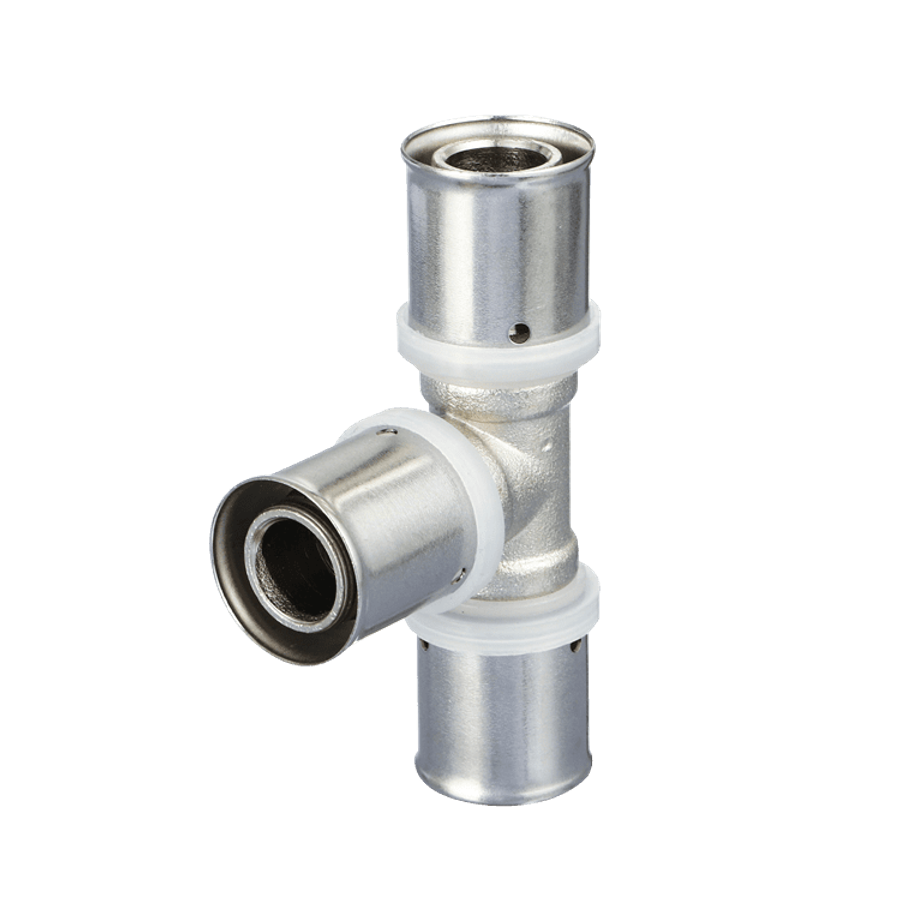
| Press / sliding-sleeve | Sleeve pressed/slid over the joint | Common on multilayer PEX-AL-PEX; strong, uniform |
| Push-fit | Push pipe into the fitting, O-ring seals | No tool; removable; higher per-fitting cost |
Match the fitting system to your pipe type and the tools on hand: crimp and clamp suit PEX-b, expansion is PEX-a only, and press/sliding-sleeve is standard for PEX-AL-PEX multilayer. Mixing systems — say a crimp ring on a pipe meant for expansion — is a code fail and a leak waiting to happen.
PEX Colours and Markings
PEX is commonly colour-coded to make a system readable at a glance: red for hot and blue for cold, with white or grey used for either where a neutral colour is preferred. The colour is cosmetic — it doesn't change the pipe's rating, so a red and a blue length of the same product perform identically; it's purely to help identify hot and cold runs during install and later service. More important than colour is the printed marking along the pipe: it states the material and type (PEX-a/b/c, PE-RT, or PEX-AL-PEX), the size, the pressure/temperature rating, the standard it's made to, and the potable approval. That marking is your on-site check that the right pipe arrived — read it against your order, and don't ever rely on the colour alone to tell you what a pipe is actually rated for.
PEX Pipe Sizes
PEX for plumbing is commonly sized by nominal bore, most often ⅜", ½", ¾", and 1" in North American systems, and by outer diameter (16, 20, 25, 32 mm) in metric markets. Half-inch and ¾" cover the bulk of domestic plumbing — ½" to fixtures, ¾" for branches and mains. The pipe is sold in coils (100–1000 ft / 50–200 m) for long flexible runs and in straight lengths where rigidity helps. Because PEX bends, a manifold-and-home-run layout uses one continuous size from manifold to each fixture, cutting joints to almost none. Confirm the sizing convention (nominal vs OD) with your fittings, since a ½" nominal PEX and a 16 mm metric PEX are not the same diameter.
PEX vs Copper
The comparison most buyers want. PEX has largely displaced copper for domestic water because it's cheaper, far faster to install (no soldering), flexible enough to cut joints and labour, and it tolerates a freeze by expanding instead of splitting. Copper still wins on a few fronts: it's rated for outdoor and UV exposure where PEX is not, it doesn't need protection from rodents, and some specifiers prefer it for its long track record and recyclability.
| Factor | PEX | Copper |
|---|---|---|
| Cost & labour | Lower; fast to fit | Higher; soldering |
| Flexibility / joints | Bends; few joints | Rigid; many joints |
| Freeze tolerance | Expands, often survives | Can split |
| UV / outdoor | No (indoor/buried only) | Yes |
| Corrosion / scale | Immune | Can corrode in some water |
Sourcing PEX pipe, fittings, or a heating system?
Tell us the type, sizes, and fitting system — we'll spec PEX-AL-PEX, PE-RT, or PEX with matched fittings and valves.
Request a QuotePEX vs PPR and CPVC
PEX isn't the only plastic option, and the right one is regional and application-driven. PPR is a rigid, heat-fused polypropylene system dominant in Europe, the Middle East, and Asia for hot-and-cold plumbing — very durable, but it needs fusion welding and rigid routing. CPVC is a rigid chlorinated-PVC pipe common in some markets for hot water, joined with solvent cement. PEX's edge over both is flexibility and speed: no welding or gluing, fewer joints, and freeze tolerance. Where you want a welded, fully-rigid system, PPR is strong; where PEX or PPR isn't the local norm, CPVC may be. For a deeper look at the rigid alternative, see the HDPE and wider piping guides. The takeaway: PEX for flexible, fast domestic water and heating; rigid systems where code or preference calls for them.
Where PEX Is Used
- Domestic water plumbing: hot and cold supply to fixtures, often in a manifold home-run layout.
- Underfloor / radiant heating: the standard pipe for floor loops — PEX-AL-PEX or PE-RT with an oxygen barrier.
- Radiator and hydronic circuits: flexible distribution with fewer joints.
- Retrofits: snaking a flexible run through a finished wall where rigid pipe can't go.
- Service / cold lines: buried or indoor cold-water service where freeze tolerance helps.
Advantages of PEX
The reasons PEX took over domestic water: it's cheaper than copper in material and labour; fast to install with no solder, flux, or cement; flexible, so one run bends around corners and cuts joints (and joints are where leaks start); freeze-tolerant, expanding rather than splitting; corrosion- and scale-immune, so it won't pit or fur like metal; and quiet, damping the water-hammer noise metal transmits. Fewer joints in the wall also means fewer hidden failure points over the life of the system.
Limitations to Design Around
PEX is not a universal answer. It cannot take UV / direct sunlight — extended sun exposure degrades it, so it's for indoor or buried use and must be protected during storage and installation. It has chlorine limits: very high chlorine or chloramine levels over years can shorten its life, so follow the manufacturer's water-quality guidance in aggressive supplies. It can be gnawed by rodents in exposed runs. And it can't be used on the immediate outlet of some water heaters where temperatures exceed its rating — a short metal nipple is used first. Design around these and PEX lasts for decades; ignore them and you shorten its life.
Brass vs Plastic PEX Fittings
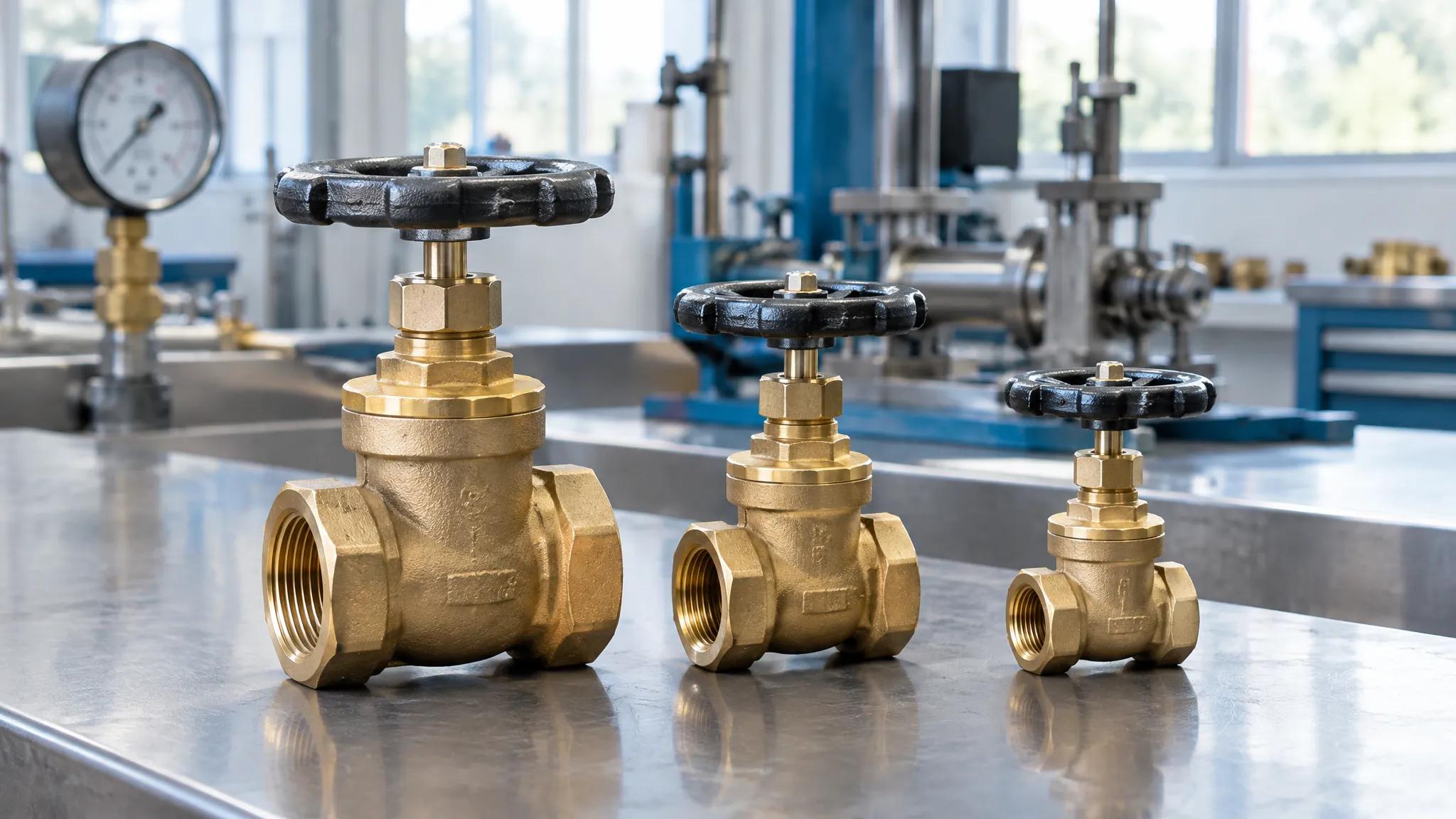
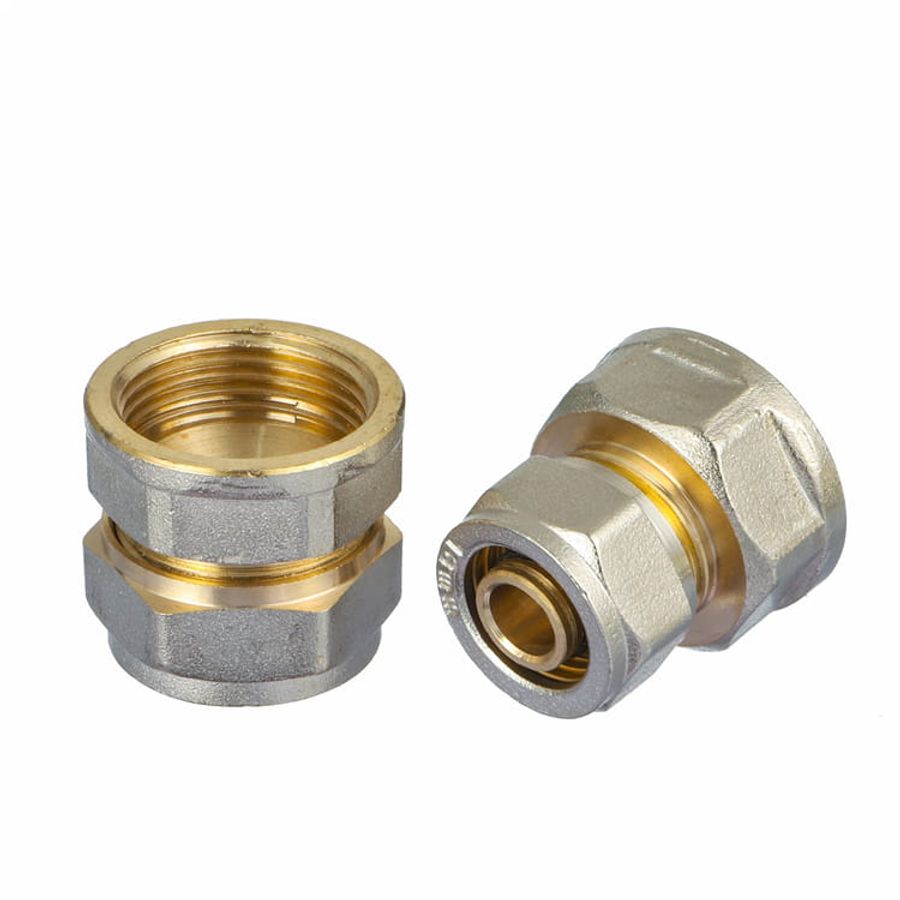
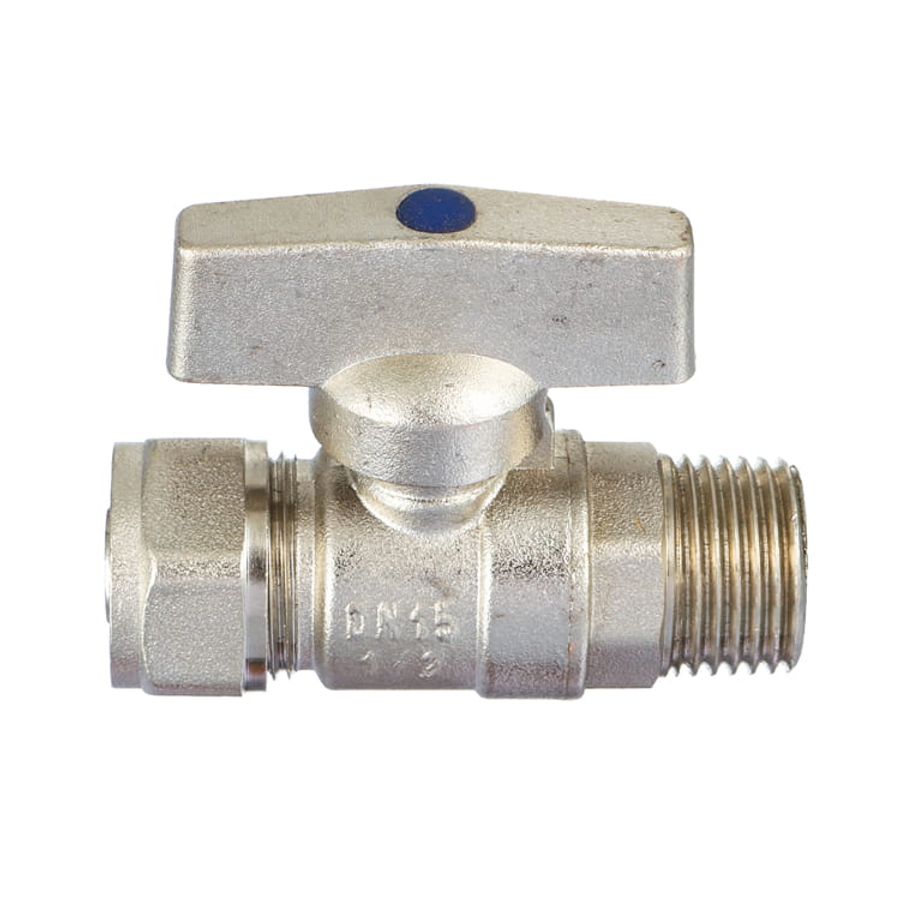
Whatever the connection method, the fitting body itself comes in two materials, and the choice matters. Brass fittings (typically CW617N, a leaded hot-forging brass) are strong, durable, and reusable, hold threads well, and are the usual choice for valves, manifolds, and transitions to metal. Poly (plastic) fittings are lighter, cheaper, immune to dezincification in aggressive water, and avoid any metal-in-water question — good for straightforward pipe-to-pipe joints. Many systems mix them: poly for plain couplings and elbows, brass where a valve, a threaded transition, or extra mechanical strength is needed. IFAN supplies both, including brass-core PEX valves, so a system can use the right fitting material at each point rather than compromising on one. Match the fitting material to the duty — brass for valves and transitions, poly where a simple, corrosion-proof joint is all that's needed.
PEX Lifespan and Durability
Correctly installed and kept within its limits, PEX has a long service life — manufacturers commonly design and warrant it for decades, and it doesn't corrode, pit, scale, or tuberculate the way metal can, so its flow capacity stays stable over time. What actually shortens PEX life is abuse of its known weaknesses: prolonged UV exposure, very high chlorine or chloramine over years, temperatures above its rating, and mechanical damage from a kink or a bad crimp. Design around those — indoor or buried routing, within-spec water chemistry, a metal nipple off the heater, correct fittings — and the pipe outlasts most of the fixtures it feeds. This durability, combined with fewer in-wall joints, is a big part of why PEX has become the default: not just cheaper to install, but low-maintenance for the life of the building. The one honest caveat is that PEX is newer than copper, so its multi-decade field record, while strong, is shorter than metal's century of use.
How PEX Is Made
Understanding the manufacturing explains the a/b/c difference. All PEX starts as high-density polyethylene, which is extruded into pipe; the cross-linking — the step that ties the polymer chains together — is what varies. PEX-a cross-links in the melt during extrusion using peroxides (the Engel method), giving the highest, most uniform degree of cross-linking and the greatest flexibility. PEX-b extrudes the pipe first, then cross-links it afterward by a moisture-cured silane reaction — cheaper and faster, hence its dominance, at a slightly lower cross-link density and more stiffness. PEX-c cross-links the finished pipe with an electron beam (irradiation), a clean, chemical-free method. For multilayer PEX-AL-PEX, an aluminium tube is formed and welded (IFAN uses laser butt-welding for a consistent seam), then bonded between inner and outer PEX layers. The method sets the pipe's flexibility, its fitting system, and its price — not whether it holds water.
Manifold vs Trunk-and-Branch Layout
PEX enables a plumbing layout copper can't easily do. In a manifold (home-run) system, each fixture gets its own continuous PEX line straight from a central manifold — like breakers in an electrical panel. Because PEX bends, those runs have almost no in-wall joints, each fixture can be isolated at the manifold, and pressure stays even when several taps run at once. The alternative, trunk-and-branch, uses a main line with tees branching off — fewer metres of pipe but more fittings and more pressure drop when multiple fixtures draw together. Manifold suits new builds and higher-end jobs where balanced pressure and per-fixture shut-off are wanted; trunk-and-branch is cheaper on pipe for simple layouts. PEX does both, but its flexibility is what makes the low-joint manifold approach practical.
Installation Best Practices
PEX is forgiving, but a few habits keep it reliable. Support it correctly: PEX sags more than metal, so use the specified hanger spacing and don't over-tighten clamps that could constrict the pipe. Respect the bend radius — force a tighter bend than the pipe allows and you kink it (PEX-a can be heat-repaired; others must be cut out). Use the right fitting system for the pipe and gauge crimp joints with a go/no-go tool so every crimp is correct. Protect it from heat and UV: keep it off the immediate hot outlet of a water heater with a metal nipple, and shield any run that sees sunlight. Allow for expansion — PEX moves with temperature, so don't pin long hot runs rigidly. Flush before commissioning and pressure-test the system. None of this is hard, but skipping it is how an easy pipe turns into a call-back.
Standards and Certification
Compliant PEX is made and tested to recognised standards — commonly ASTM F876/F877 and the NSF listings in North America, and ISO 15875 / EN ISO 15875 internationally, with PE-RT to ISO 22391 and multilayer PEX-AL-PEX to ISO 21003. On top of the pipe standard sits the potable-water approval your market requires — NSF/ANSI 61 and 372 in North America, WRAS in the UK, and others — which tests what the pipe releases into drinking water. For a potable job, specify both the pipe standard and the potable approval, and ask for the certificate that names the product. The same discipline applies to any piping purchase: a standard is only real if it's verifiable, so confirm the certifications for your market and check the marking printed along the pipe against the paperwork.
What PEX Costs
PEX is usually cheaper than copper overall, but the pipe price is only part of it. On material, PEX runs well below copper per metre and doesn't swing with the copper commodity market the way metal does. On labour, the saving is often bigger than the material one: no soldering means faster installs and fewer skilled hours, and the low-joint flexible runs cut fitting counts. The variables that move PEX cost are the type (PEX-a and PEX-AL-PEX cost more than PEX-b), the fitting system (push-fit fittings are convenient but pricier per joint than crimp), and order volume. Compare on installed cost — pipe plus fittings plus labour — not the coil price alone, and remember that fewer in-wall joints also lowers the lifetime cost of leaks. For a rough sizing of a job, price the pipe, the fittings for your chosen system, and the tool if you don't own one.
Common PEX Mistakes
Mismatched fitting system. Using a crimp ring on pipe meant for expansion, or the wrong brand's fittings, is the leading cause of PEX leaks. Match pipe, fitting, and tool.
Exposing it to sunlight. Leaving PEX in the sun on site or running it in daylight degrades it — keep it covered and indoors/buried.
Ignoring the water heater limit. Connecting PEX straight to a hot outlet above its rating cooks the pipe — use a metal nipple first.
Kinking a tight bend. Forcing a bend past the radius kinks the pipe; respect the minimum radius or use an elbow.
Skipping the crimp gauge. An un-gauged crimp can be loose or over-crushed; check every joint with the go/no-go tool.
Wrong pipe for heating. Using non-barrier PEX on a sealed heating circuit lets oxygen in and corrodes steel parts — use oxygen-barrier PEX, PEX-AL-PEX, or PE-RT.
How to Choose the Right PEX
1. Application: domestic water → PEX-a or PEX-b; underfloor heating → PEX-AL-PEX or PE-RT with an oxygen barrier.
2. Fitting system: pick crimp/clamp (PEX-b), expansion (PEX-a), or press (multilayer) to match your tools.
3. Size & convention: nominal (½", ¾") or metric OD (16/20 mm) — match the fittings.
4. Standard & potable approval: confirm the pipe meets the relevant standard and drinking-water approval for your market.
5. Supplier: one that offers the pipe, fittings, and valves as a matched, certified system.
IFAN's PEX Range
IFAN manufactures a full PEX-family system: laser-welded PEX-AL-PEX multilayer composite pipe, PE-RT pipe for underfloor heating, and PEX pipe, together with the matching press and sliding-sleeve fittings and PEX brass valves (brass-core). Because the pipe, fittings, and valves come from one factory, the fitting system, sizes, and certification are matched rather than assembled from separate sources — and because IFAN also makes PPR, HDPE, PVC, and brass valves, a whole plumbing or heating job can be sourced complete, with no minimum order and stock held year-round. Before ordering, it's worth confirming the certifications for your market.
Frequently Asked Questions
What does PEX stand for?
PEX is cross-linked polyethylene — polyethylene whose molecular chains have been linked to make a flexible, freeze-tolerant pipe that holds pressure at temperature. It's used for domestic water plumbing and underfloor heating, installed with mechanical fittings rather than solder or glue.
Is PEX-a better than PEX-b?
Neither is "better" — they're cross-linked differently. PEX-a is the most flexible, resists kinking, repairs with heat, and uses expansion fittings; PEX-b is stiffer, the most common and economical, and uses crimp or clamp fittings. Both meet the same pressure and temperature ratings. Choose by flexibility and fitting system, not quality.
Can PEX be used outdoors?
Not in direct sunlight — UV degrades PEX, so it's for indoor or buried use and must be protected during storage and installation. For a buried outdoor run it's fine; for an exposed above-ground run, it needs shielding or a UV-rated alternative.
What's the difference between PEX and PEX-AL-PEX?
PEX-AL-PEX adds a thin aluminium layer between two PEX layers. The aluminium makes the pipe hold its bend, cuts thermal expansion, and forms an oxygen barrier — which is why it's favoured for underfloor heating and radiator circuits over plain PEX.
Explore the PEX Cluster
This guide is the hub. For the detail behind each decision, see the focused articles in the cluster: PEX-a vs PEX-b, PEX vs copper pipe, crimp vs expansion connections, PEX pipe sizes, and how to source a PEX manufacturer. (Spoke articles link back here as they publish.)