

Sea Freight for Pipe from China to West and East Africa: What Drives the Number
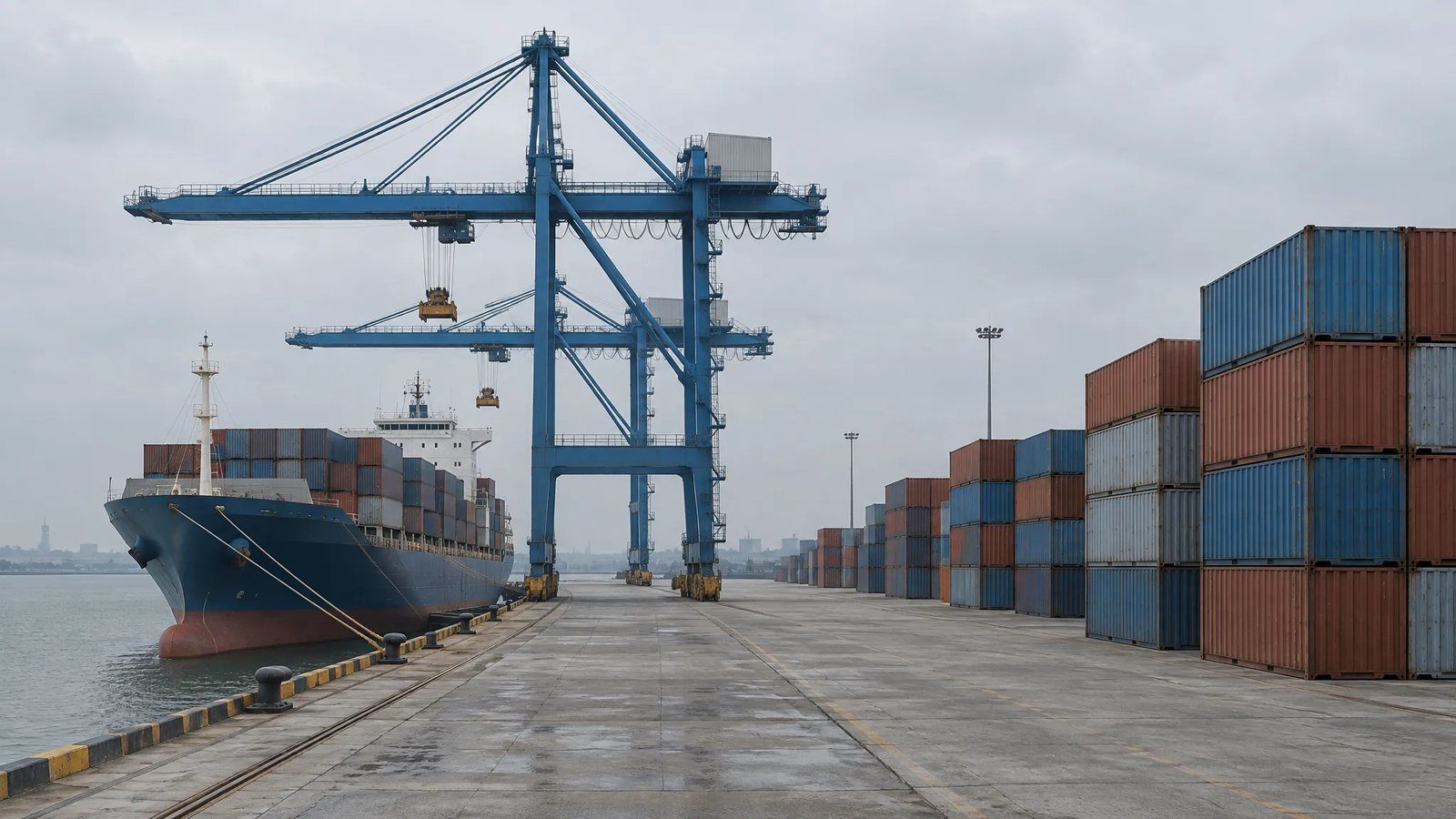
No index publishes a China-East Africa lane. Here is what an ocean freight figure for pipe is made of, and which part of it an importer can actually move.
Sea freight for pipe from China to West and East Africa is three numbers stacked into one figure: a lane base rate, the carrier’s announced surcharge stack, and destination charges the quote does not contain. Only the third layer is published line by line, and the carriers publish it themselves. The first has no published benchmark on most African lanes at all. And because a container of pipe fills on volume long before it reaches its weight limit, the figure worth comparing is freight per metre loaded, not freight per box.
The failure that follows is repeatable. A buyer checks a Lagos quote against an index that does not cover the lane, in a unit that is not the one quoted, then gives the saving back in detention, because the free-time clock starts at discharge. Below: which indices cover what, why the two coasts price differently, how to trace a surcharge line, and which part of the number is yours to move.
Key Takeaways
- Drewry’s World Container Index covers eight East–West routes and the Freightos Baltic Index twelve lanes, both in USD per 40ft container. Neither publishes an African lane.
- The SCFI publishes 13 routes out of Shanghai, including West Africa and South Africa but no East Africa lane, and it prints USD per TEU.
- An SCFI print already includes bunker, currency, peak-season, war-risk, canal and congestion surcharges. A carrier’s base rate does not.
- Maersk publishes 7 free days for a dry box delivered inside Ghana, 21 days for transit to another West African coastal country and 28 days for Burkina Faso, Mali or Niger.
- Ghana’s demurrage is charged per TEU, so USD 20 a day is USD 40 a day on a 40ft container; Mombasa’s is per container, at USD 43 a day.
One mechanism sits under every destination figure below, so it is worth watching once before the tables: this trade-finance explainer walks through what free time is, and where demurrage stops and detention begins.

What Sets the Freight Number on a Container of Pipe
Ocean freight is quoted per container. Pipe is bought per metre. The bridge between the two is the one piece of arithmetic worth carrying out of this page:
Freight per metre = (all-in ocean freight per container + destination charges attributable to that container) ÷ metres of pipe actually loaded.
Three of the four terms are set by other people. The metres are not. Loaded metres follow the container’s internal cube, the outside-diameter mix in the box, how the sizes nest, whether the goods ship as straight lengths or coils, and any dunnage the destination imposes. A container of PP-R reaches its cubic limit well before its payload limit. That is why the diameter mix moves the per-metre freight more than the lane does, and the usable-capacity figures for a 20ft and a 40ft sit in our PPR pipe MOQ and container loading guide.
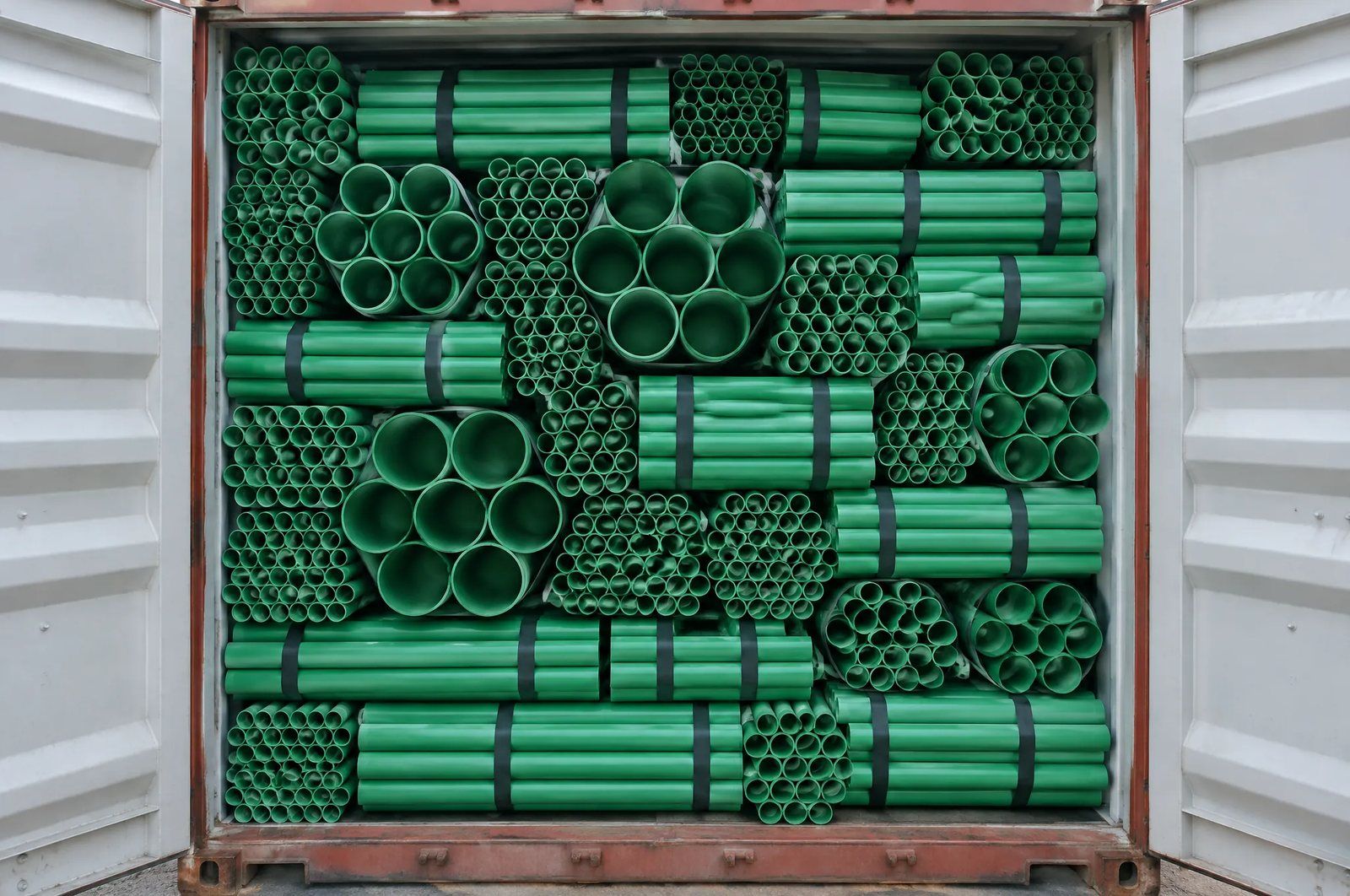
Take the metres from your own packing list rather than from a rule of thumb. Across a DN20 to DN160 range, two orders of the same tonnage can load very different lengths, so the freight per metre moves while the ocean rate stands still. In 7 days of detention the same order can lose more than the lane choice saved it.
Nobody Publishes a Benchmark for Your Lane
The standard advice is to check the quote against a published index. For a China to Africa container that advice mostly cannot be followed, and the reason sits in the index owners’ own methodology pages.
Drewry’s World Container Index methodology lists eight routes: Shanghai to Rotterdam, Genoa, Los Angeles and New York, plus the reverse legs and two transatlantic pairs. Freightos publishes twelve FBX lanes across Asia to North America, Asia to Europe, the transatlantic and Europe to South America. Between them that is twenty published lanes, and not one has an African end.
The Shanghai Shipping Exchange SCFI methodology is the exception. It covers 13 routes out of Shanghai, West Africa and South Africa among them, published each Friday against a base of 1,000 points set on 16 October 2009. There is still no East Africa lane, so a Mombasa or Dar es Salaam quote has no published benchmark anywhere.
Two traps follow for anyone who does reach for the SCFI. It prints USD per TEU on the West Africa lane, while the quote in front of you is for a 40ft box. A 40ft box counts as 2 TEU, so reading a West Africa print as a box rate understates it by about 50% before the comparison starts. The SCFI figure is also defined as ocean freight plus the associated seaborne surcharges, which makes it incomparable with a carrier base rate quoted before surcharges.
| Index | Lanes published | Quoting unit | African lane | When to use it |
|---|---|---|---|---|
| Drewry World Container Index | Eight East–West routes, weekly | USD per 40ft container | None | Reading global direction only, never your lane |
| Freightos Baltic Index (FBX) | Twelve lanes, published weekly | USD per 40ft container | None | Timing a booking against Asia–Europe momentum |
| SCFI (Shanghai Shipping Exchange) | 13 Shanghai routes, each Friday | USD per TEU, surcharges included | West Africa and South Africa | West Africa trend, after doubling for a 40ft |
| Any East Africa lane | Not published by any of the three | Not applicable | None | Collect dated quotes yourself and keep the series |
Why West and East Africa Price Differently
The two coasts are not two versions of the same route. They sit on differently shaped networks, and the shape is what the quote reflects.
UNCTAD’s Review of Maritime Transport 2023 figures for Africa show where the capacity sits. The best-performing African container port in the World Bank’s 2022 index is Tanger-Med in Morocco, fifth worldwide on 7.5 million containers, with Port Said at 11 and Djibouti at 25. Those are Mediterranean and Red Sea relay hubs, not West or East African gateways, and Africa’s average liner shipping connectivity rose in 2022 but stayed below pre-pandemic levels.
Cargo for Tema, Abidjan, Lagos or Douala is therefore often relayed rather than carried on one direct string, and every relay adds handling cost and schedule risk that the base rate absorbs. Dar es Salaam sits at the other end: it recorded the largest reduction in average vessel arrival times in 2022, on a 50% rise in connectivity since 2006.
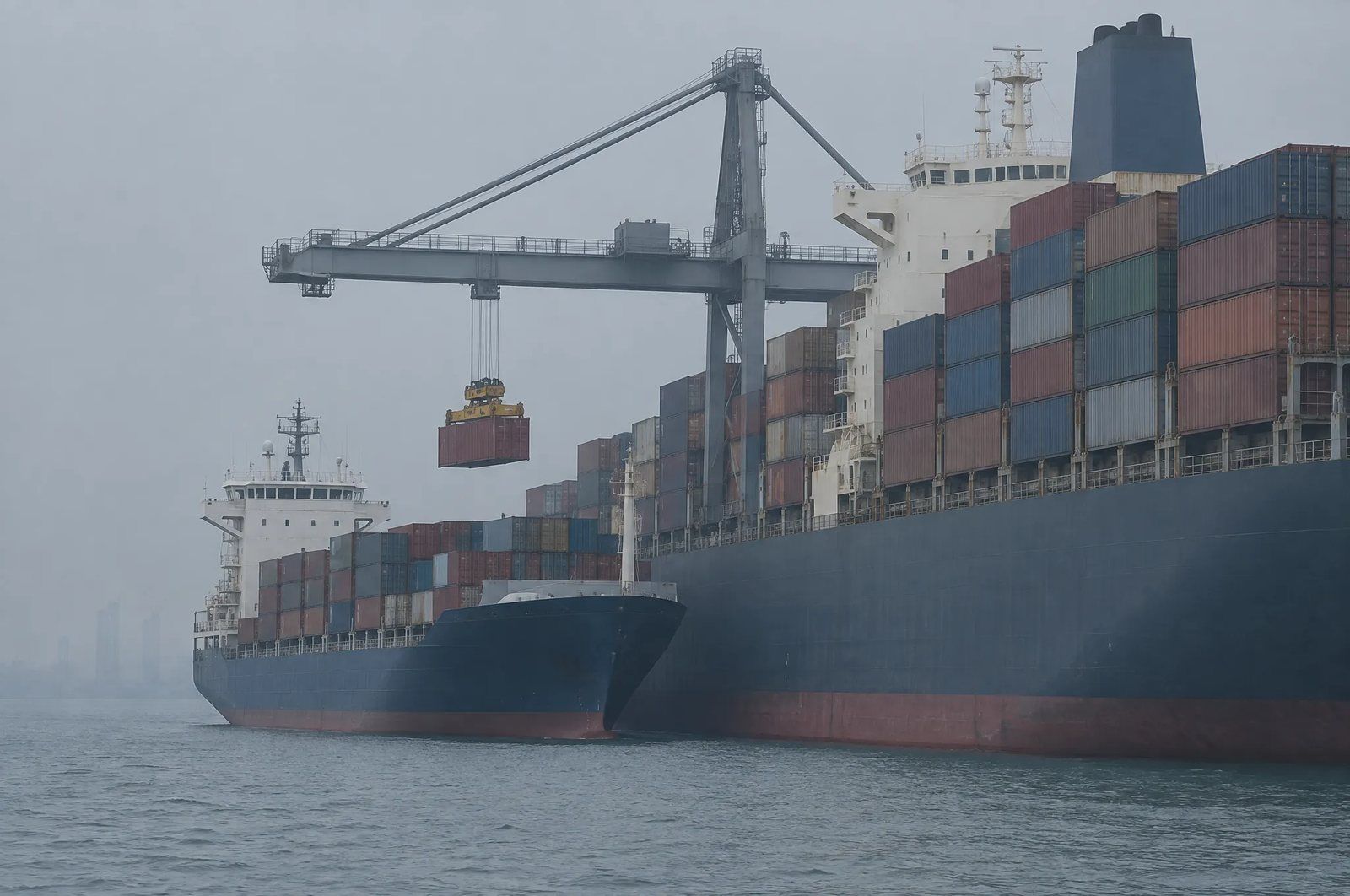
The corridor logic shows up in the free time a carrier grants. Maersk gives a dry box 7 free days in Ghana if it is delivered inside Ghana, 21 days if it is in transit to another West African coastal country, and 28 days if it is heading for Burkina Faso, Mali or Niger. That spread is a statement about how far the box still has to travel after the ship leaves. It is also why a Tema quote and a Mombasa quote are not directly comparable even at the same index level.
The Surcharge Stack, and the Lines You Can Check
Surcharges are the layer buyers argue about and the layer they verify least. The families are no mystery: the SCFI methodology names them as bunker adjustments, currency factors, peak season surcharges, war risk, canal transit fees and port congestion charges. What makes them hard to audit is the granularity rather than the list.
Carriers announce surcharges per service and per trade scope, not per year and not per continent. Maersk’s Nigeria import information page carried four of them on 12 September 2026. An update to the ECS surcharge on S5 services, dated 9 September 2026. A Sierra Leone origin depot storage announcement of the same date. Two separate implementations of an Emergency Operational Cost Recovery surcharge, dated 9 and 11 September 2026. That is four announcements inside 3 days, each with its own scope.
So the useful question to a forwarder is not whether the surcharge can be reduced. Ask which announcement each line comes from, what scope that announcement covers, and on what date the quoted amount expires. A line that cannot be traced to a published announcement is a line to query. A quote with no validity window is an opening position rather than a price.
Destination Charges an FOB Quote Never Shows
An FOB price ends at the ship’s rail in China. Everything in this section happens after discharge, and the carriers publish all of it. In Ghana, Maersk’s published import charges list an import service fee of USD 312 on a 40ft, a port security service charge of USD 58 and port additional dues of USD 411. That is USD 781 on a 40ft container before VAT, and before a refundable container deposit in cedis.
Free time is where the larger money goes, and the trap is the unit rather than the level. Ghana’s tariff, effective 1 June 2011, allows 7 free days on a dry box. It then charges USD 20 per TEU per day from day 8 to day 16, USD 25 from day 17 to 21, and USD 50 from day 22 until the box is gated in. Because the basis is per TEU, a 40ft container costs USD 40 a day in that first paid band rather than USD 20.
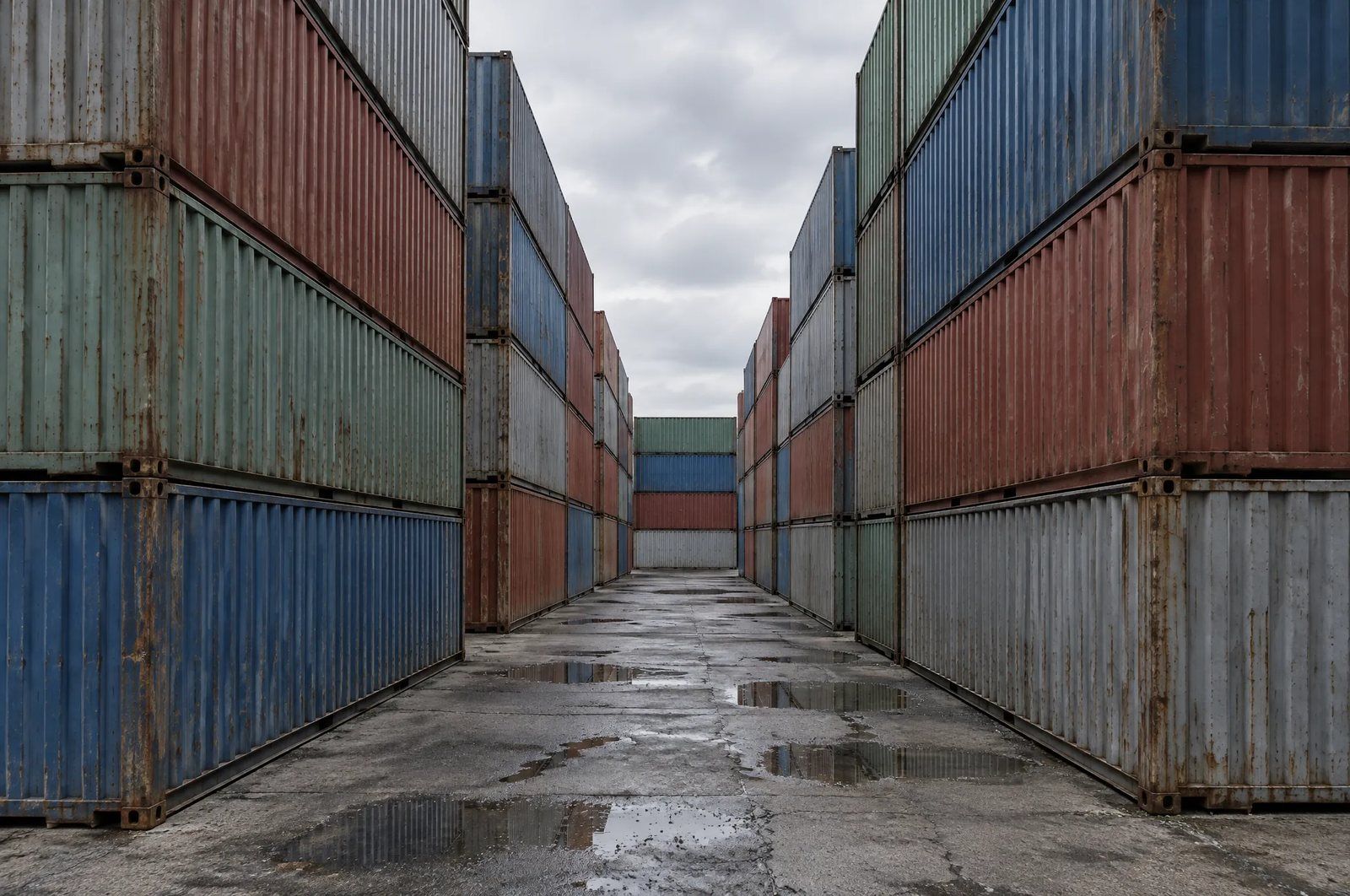
At Mombasa the same carrier’s published Kenya import terms allow 9 free days and then charge per container: USD 43 a day for a 40ft from day 10 to 16, rising to USD 106 a day from day 24. Line demurrage also excludes port storage, which the port authority bills separately, so one late box generates two invoices.
Nigeria adds two conditions worth knowing before the box is packed. Maersk states that its acceptance ends at the port terminal, that no carrier haulage is offered in Nigeria, and that inland movement is on the cargo’s own account. A Lagos quote therefore cannot be compared with a door-delivered quote elsewhere.
The same page publishes the mandatory palletisation policy for containerised imports, with an exemption list by HS code and a default sanction of a fine of 25% of the Freight on Board value. Plastic pipe is not on that published exemption list, and palletising long lengths costs cube, which costs loaded metres. Confirm the position for your own HS code with your carrier before the loading plan is fixed.
| Destination | Free days, dry (days) | First paid tier, 40ft | Charging basis | Schedule dated |
|---|---|---|---|---|
| Ghana, delivered inside Ghana | 7 | USD 40 a day, days 8 to 16 | Per TEU, at USD 20 per TEU; 40ft = 2 TEU | Effective 1 June 2011 |
| Ghana, transit to a coastal neighbour | 21 | USD 100 a day, days 22 onward | Per TEU, at USD 50 per TEU; 40ft = 2 TEU | Effective 1 June 2011 |
| Mombasa, Kenya (CY/CY) | 9 | USD 43 a day, days 10 to 16 | Per container | Valid from 21 March 2025 |
| Nigeria, Lagos terminals | 7 | NGN 15,225 a day, days 8 to 10 | Per container, in naira | Effective 9 December 2023 |
Where We Stop, and What You Can Still Move
Sort the figure into three buckets before the next negotiation, because only one of them responds to effort.
- Structural, and not yours – the lane, the relay pattern behind it, the destination terminal’s published tariff, and the container’s internal cube. Shopping three forwarders will not change these. It only reveals who has the better allocation this month.
- Negotiable at booking, not on arrival – free time above the published 7 or 9 days, the validity window on the rate, and a written reference for every surcharge line. Free time cannot be bought once the box is on the quay.
- Self-inflicted, and entirely yours – a diameter mix that wastes cube, a packing list the clearing agent cannot work from, and a palletisation rule discovered after loading.
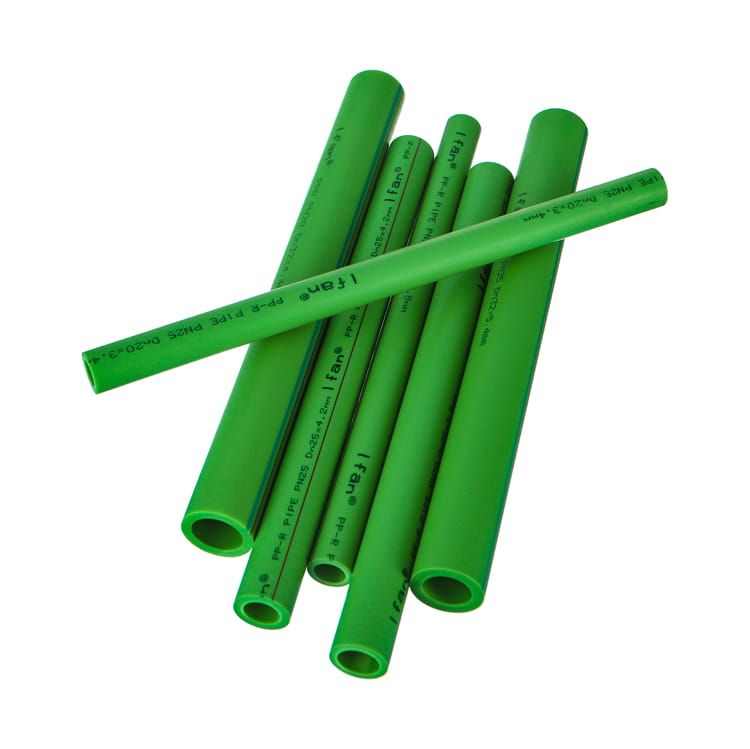
The third bucket is set at order time, with the factory rather than the forwarder. An order of one container with mixed sizes, our minimum, is where the size mix and the loading plan are still open. So is the choice between FCL and LCL, which changes the unit of account from a box to a cubic metre. Our PP-R supplier page sets out how we quote by container, and the per-metre cost breakdown shows what sits under the ex-works half.
Which party pays for each layer is an Incoterms question, covered in our comparison of FOB against CIF for pipe imports. Because the free-time clock starts at discharge rather than at clearance, the import documents checklist is a freight document as much as a customs one, as are the requirements for SONCAP in Nigeria and KEBS in Kenya.
Where we stop is the quay. Ours is the DN20 to DN160 size mix, the loading plan, the batch certificates per shipment and the export documents. The destination tariff, the 7 days of free time in Ghana and the port’s own storage clock are not.
Conclusion
Stop verifying the rate and start verifying the structure. Ask the forwarder for the base rate, the surcharge lines with their announcement references, and the destination charges separately, on one sheet with one expiry date. Then divide the total by the metres on your own packing list, and check the published free time for the destination: 7 days in Ghana, 9 at Mombasa, both counted from discharge.
If you are buying PP-R by the container for a West or East African market, settle the size mix and the loading plan with the factory first. That is the half of the freight number you own.
Frequently Asked Questions
How much does it cost to ship a 40ft container from China to Nigeria or Ghana?
No honest page can answer that durably, and this one does not try. Drewry’s World Container Index covers eight East–West routes and the Freightos Baltic Index twelve lanes, and neither publishes an African lane, so any figure you find is one forwarder’s quote on one date. Collect three dated quotes and split each into base rate, surcharges and destination charges.
Is there any published freight index covering China to Africa?
One. The SCFI publishes 13 routes out of Shanghai, including West Africa and South Africa but no East Africa lane, and it prints USD per TEU. Its figure already includes the seaborne surcharges, so Mombasa and Dar es Salaam have no published benchmark at all.
How many free days do I get before demurrage starts?
It depends on the carrier and the destination, and the clock starts at discharge. Maersk publishes 7 free days for a dry box delivered inside Ghana, 21 days for transit to another West African coastal country and 28 days for Burkina Faso, Mali or Niger, and 9 free days at Mombasa. Check your own carrier’s published page.
Why is my demurrage bill double the published daily rate?
Probably because the tariff is published per TEU. Ghana’s schedule charges USD 20 per TEU per day from day 8 to day 16, so a 40ft container costs USD 40 a day. Mombasa’s is quoted per container instead, at USD 43 a day for a 40ft. Port storage is billed separately by the port authority.
Does pipe have to be palletised for Nigeria?
Maersk’s Nigeria import page publishes the mandatory palletisation policy for containerised imports, an exemption list by HS code, and a default sanction of a fine of 25% of the Freight on Board value. Plastic pipe is not on that published exemption list, so confirm the current position for your own HS code with your carrier before loading.
Related Briefings
Duty on Imported Plastic Pipe in West Africa: What the ECOWAS CET Charges

PEX vs Multilayer Pipe for Hot Water: Which Holds Dimension at 80°C
