
Pressure Balancing Valve: How It Works, vs Thermostatic & PRV, Codes
A pressure balancing valve keeps your shower temperature steady when someone flushes a toilet, starts the washing machine, or opens a tap elsewhere in the building. It does this mechanically: a piston or diaphragm inside the valve senses the pressure of the hot and cold supplies and instantly adjusts the mix ratio, so a sudden pressure drop on the cold side doesn't turn the shower scalding. It is the standard anti-scald shower valve in most residential builds because it is simple, has no electronics, and costs a fraction of a thermostatic valve. But it controls ratio, not temperature, and that one fact decides where it works well and where a thermostatic valve earns its extra cost.
A pressure balancing valve is not the same device as a pressure reducing valve, which lowers the incoming pressure of the whole building supply — that one is covered in the pressure reducing valve guide.
Key Takeaways
- A pressure balancing valve holds the hot-to-cold ratio constant using a sliding piston or diaphragm — it reacts to pressure changes, not to water temperature.
- It prevents the classic toilet-flush scald: when cold pressure drops, the valve throttles the hot side within a fraction of a second.
- A thermostatic valve senses actual temperature and holds it to about a degree; a pressure balancing valve typically holds the outlet within roughly ±2 °C (±3.6 °F) of the set mix.
- Most plumbing codes require shower valves to be pressure-balancing, thermostatic, or combination type — a plain two-handle mixer no longer passes in new work in many markets.
- The rotational limit stop inside the trim sets the maximum hot position — it must be adjusted at commissioning, and re-checked seasonally where inlet water temperature swings.
- Temperature drift or weak flow usually traces to debris in the balancing cartridge, not the valve body — the cartridge is serviceable without opening the wall.

How a Pressure Balancing Valve Works
Inside the valve cartridge sits a free-moving element (a sliding piston or spool in most designs, a flexing diaphragm in others) with hot supply pressure acting on one side and cold supply pressure on the other. As long as both supplies push equally, the element floats centered and both ports stay open at the ratio you set with the handle. The moment one side loses pressure, the element slides toward the weaker side: a toilet flush drops the cold pressure, the piston shifts, and the hot port is throttled by exactly the amount needed to keep the mix ratio constant. The response is mechanical and immediate: no sensor, no wax element, no wait for hot water to reach a probe. If the cold supply fails completely, the element travels to the end of its bore and shuts the hot port, so the shower cannot deliver full-temperature hot water on its own. That fail-safe, not comfort, is why codes adopted the design.
The limit of the design follows from the same mechanism. The valve holds the ratio it was set to; it has no idea what temperature that ratio produces. If your incoming cold water is 10 °C in winter and 25 °C in summer, the same handle position gives a noticeably different shower. In practice a healthy pressure balancing valve holds the outlet within roughly ±2 °C (±3.6 °F) of the set point against pressure swings, which is comfortable for a shower but not precise enough for duties that need a fixed temperature regardless of season.
What does a pressure balancing valve do?
A pressure balancing valve holds a shower's hot-to-cold mixing ratio constant when either supply pressure changes, so a toilet flush or washing-machine fill elsewhere cannot spike the outlet temperature. Under ASSE 1016-2017 / ASME A112.1016-2017 / CSA B125.16-17 (reaffirmed 2021) it is the "Type P" automatic compensating valve: tested at 45 psi (3.1 bar) supply, the outlet may move no more than ±3.6 °F (±2 °C) when one supply pressure drops by 50%.
How does a balancing valve work?
A shower balancing valve works with a free-floating spool that feels hot pressure on one face and cold on the other, and slides toward the weaker side to throttle the stronger one. A heating-system balancing valve works differently: a fixed or self-adjusting orifice sets the flow in each branch, as the manifold balancing guide explains.
Pressure Balancing vs Thermostatic Shower Valve
The two valves solve the same scald problem by different means, and the choice is mostly about precision versus price.
| Factor | Pressure balancing | Thermostatic |
|---|---|---|
| What it senses | Supply pressure (hot vs cold) | Actual mixed-water temperature |
| Holding accuracy | About ±2 °C against pressure swings | About ±1 °C, including inlet-temperature changes |
| Controls | One handle: volume + mix together | Two controls: temperature and volume set separately |
| Seasonal drift | Yes — same setting runs warmer in summer | No — compensates for inlet temperature |
| Relative cost | Low — the default in residential builds | Two to four times more for valve + trim |
| Best for | Standard showers, rentals, volume housing | High-spec bathrooms, multi-outlet showers, care settings |
Choose pressure balancing when the job is a standard tub or shower and the budget matters — it satisfies the anti-scald requirement, has fewer parts to fail, and its single cartridge is cheap to replace. Choose a thermostatic valve when the shower has multiple outlets (rain head plus body sprays need volume and temperature controlled separately), when the user is elderly or medically vulnerable and needs an exact set temperature, or when the building's inlet temperature swings widely between seasons. For hotels and care facilities, thermostatic is usually specified; for volume residential projects, pressure balancing wins on cost at equal code compliance.
Pressure Balancing vs Pressure Reducing: Not the Same Valve
The names are close enough that the two get ordered interchangeably, and they should not be. A pressure balancing valve lives at one fixture, usually behind the shower trim, and equalizes the ratio between two supplies feeding that fixture. A pressure reducing valve (PRV) lives on the building's incoming main and lowers the pressure of the entire supply to a safe working level, typically holding a set downstream pressure regardless of what the street main does. One protects skin from scald; the other protects pipes, fittings, and appliances from overpressure. They also interact: if a building has no PRV and street pressure spikes at night, fixtures see pressure differentials the balancing spool must ride out, and undersized or debris-fouled cartridges show it as temperature wobble. On buildings with high or unstable mains pressure, fit the PRV first; the balancing valve is not a substitute, and a shower valve run far above its rated pressure wears cartridges fast and invites water hammer complaints when quick-closing fixtures share the line.
What Codes Require
Most plumbing codes require shower and tub-shower valves to be pressure-balancing, thermostatic, or combination type, and that has three practical consequences. A plain two-handle mixer without balancing protection generally fails inspection in new work or full renovations. The limit stop must be set at commissioning, not left at the factory position. And the rule applies to the valve type, so swapping trim styles is fine as long as the rough-in valve behind the wall carries the listing. Codes and amendment cycles differ by country and municipality; confirm the exact clause with your local authority or specifier before ordering for a regulated project.
In the United States the International Plumbing Code §424.3 (2021 edition, carried into 2024) requires individual shower and tub-shower valves to be of the pressure-balancing, thermostatic, or combination type conforming to ASSE 1016 / ASME A112.1016 / CSA B125.16, with the high-limit stop set so outlet water does not exceed 120 °F (49 °C). The Uniform Plumbing Code carries the same standard and limit. The standard's current edition is ASSE 1016-2017, reaffirmed in 2021 (CSA lists the 2017 edition as reaffirmed 2026). It defines three valve types, and the type letter on the valve body is what an inspector checks:
| Type (marking) | What it compensates for | Outlet variation allowed (°F / °C) | Max outlet setting (°F / °C) | Typical use |
|---|---|---|---|---|
| Type P — pressure balancing | Supply pressure change on hot or cold side | ±3.6 / ±2 at 45 psi test | 120 / 49 (limit stop set on site) | Standard residential tub/shower |
| Type T — thermostatic | Inlet temperature change (and pressure, indirectly) | ±3.6 / ±2 | 120 / 49 | Multi-outlet showers, care facilities |
| Type P/T — combination | Both pressure and inlet temperature | ±3.6 / ±2 | 120 / 49 | Hospitality, high-spec bathrooms |
Source: ASSE 1016-2017 / ASME A112.1016-2017 / CSA B125.16-17 (R2021); IPC 2021 §424.3.
What does the ASSE 1016 test actually prove?
It proves that a Type P valve tested at 45 psi (3.1 bar) keeps the outlet within ±3.6 °F (±2 °C) of its set temperature when the hot or cold inlet pressure changes by 50%. Four more points matter when you read a listing or a code clause:
- Cold-supply loss. If the cold supply fails, the valve must cut flow to under 0.5 gpm (1.9 L/min) within 5 seconds, so the outlet never passes 120 °F (49 °C).
- Type T is judged differently. After a 20% inlet pressure change a thermostatic valve may pass +5.4 °F or −9 °F for no more than 1.5 or 1.0 seconds, and must hold ±3.6 °F after 5 seconds.
- The stop is a site job. IPC §424.3 requires a means to limit the setting to 120 °F (49 °C), "field adjusted in accordance with the manufacturer's instructions". Engineers often commission at 110 °F (43 °C) so the tolerance band stays clear of the limit.
- Look-alikes do not count. The same clause says in-line thermostatic valves shall not be used for compliance, and §424.7 bars an ASSE 1062 temperature-actuated flow-reduction device from standing in alone for the shower valve.
Is a pressure balancing valve the same as a "balancing valve" in a heating system?
No. Three different products share the words "pressure" and "balance", and buyers order the wrong one every week. A shower pressure balancing valve equalizes hot and cold at one fixture; a hydronic balancing valve sets flow rates between branches of a heating or chilled-water circuit; a pressure reducing valve lowers the whole building's supply pressure. They sit in different places, obey different standards, and none substitutes for another:
| Valve | Where it sits | What it controls | Typical size (DN / inch) | Governing standard |
|---|---|---|---|---|
| Shower pressure balancing valve (this article) | Behind the shower wall, one per fixture | Hot:cold ratio → anti-scald | DN15 / ½" inlets | ASSE 1016-2017 (Type P) |
| Hydronic balancing valve (static or pressure-independent) | Return leg of each heating / cooling branch, manifold ports | Flow rate (L/min) per branch | DN15–DN50 / ½"–2" in buildings | Manufacturer Kv data; no ASSE listing — see the manifold balancing guide |
| Pressure reducing valve (PRV) | Building inlet, after the meter | Downstream pressure (bar / psi) for the whole system | DN15–DN50 / ½"–2" domestic | ASSE 1003 (US); EN 1567 (EU) — see the PRV guide |
Source: ASSE 1016-2017; ASSE 1003 and EN 1567 product scopes; IFAN product range.
Choosing One: Cartridge, Rough-In, and the Supply Side
Three things decide whether a pressure balancing installation performs: the cartridge, the rough-in, and the supply-side hardware around it. Piston cartridges tolerate hard water and debris somewhat better; diaphragm types respond a touch faster, but the diaphragm is the wear part. Confirm spare cartridges are sold in your market before standardizing on one valve for a whole project. The rough-in body should offer built-in service stops, connections matching your pipe system (female thread, or socket-fusion unions for PPR), and a pressure rating comfortably above the building's regulated pressure.
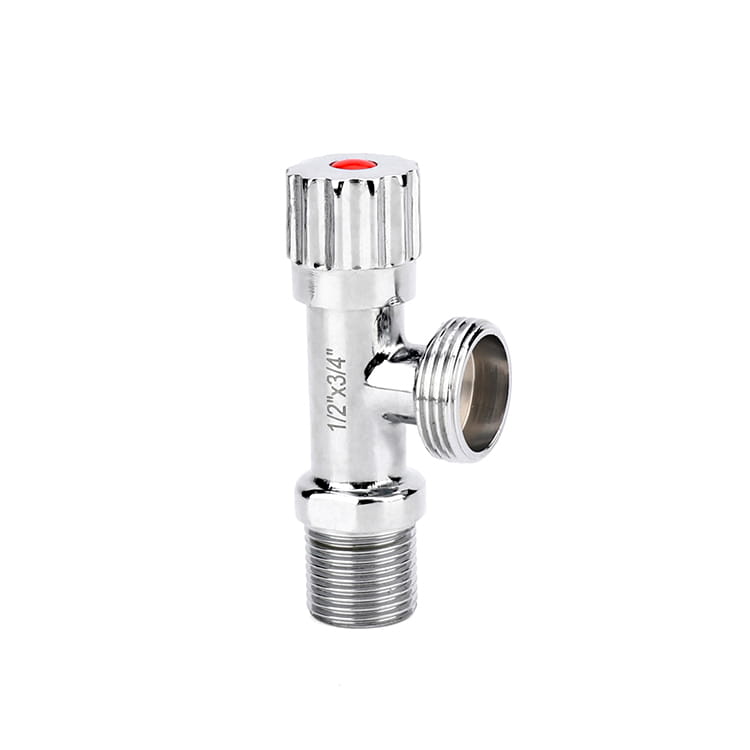
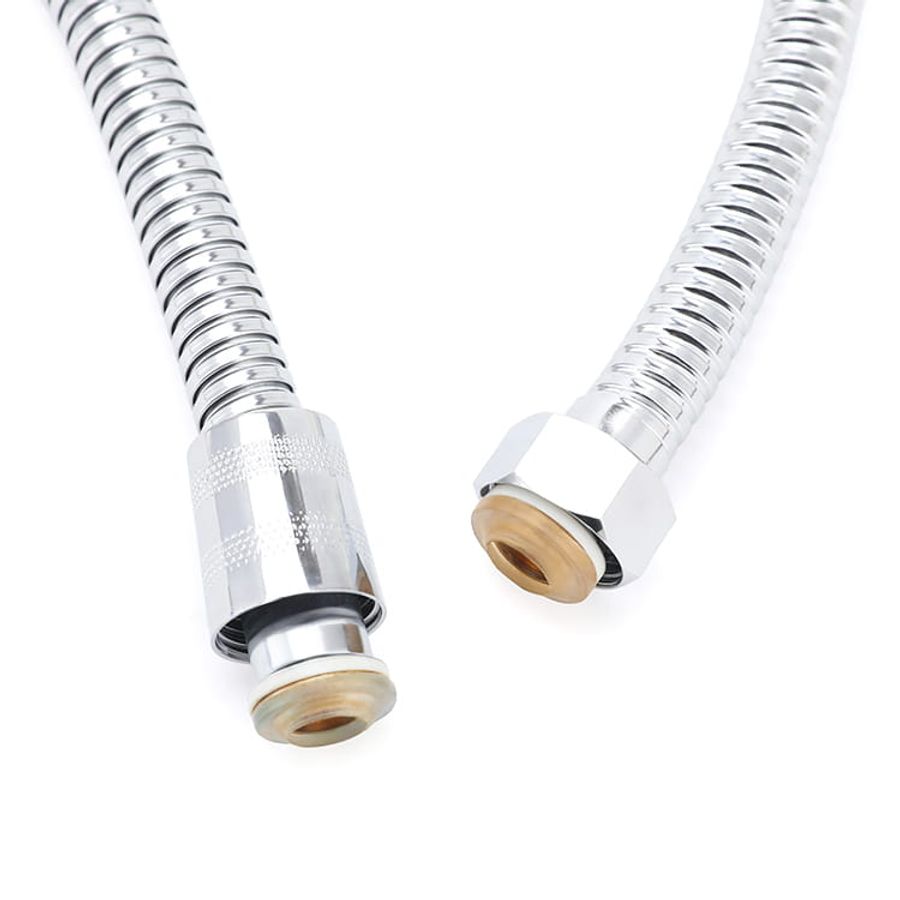
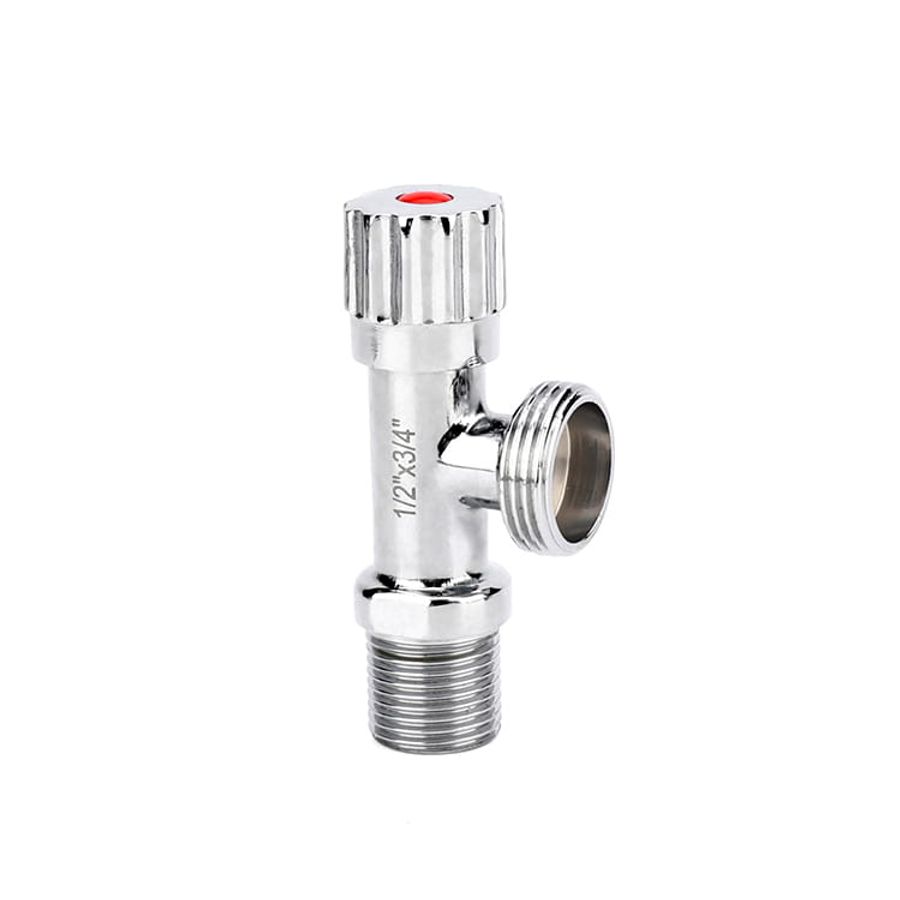
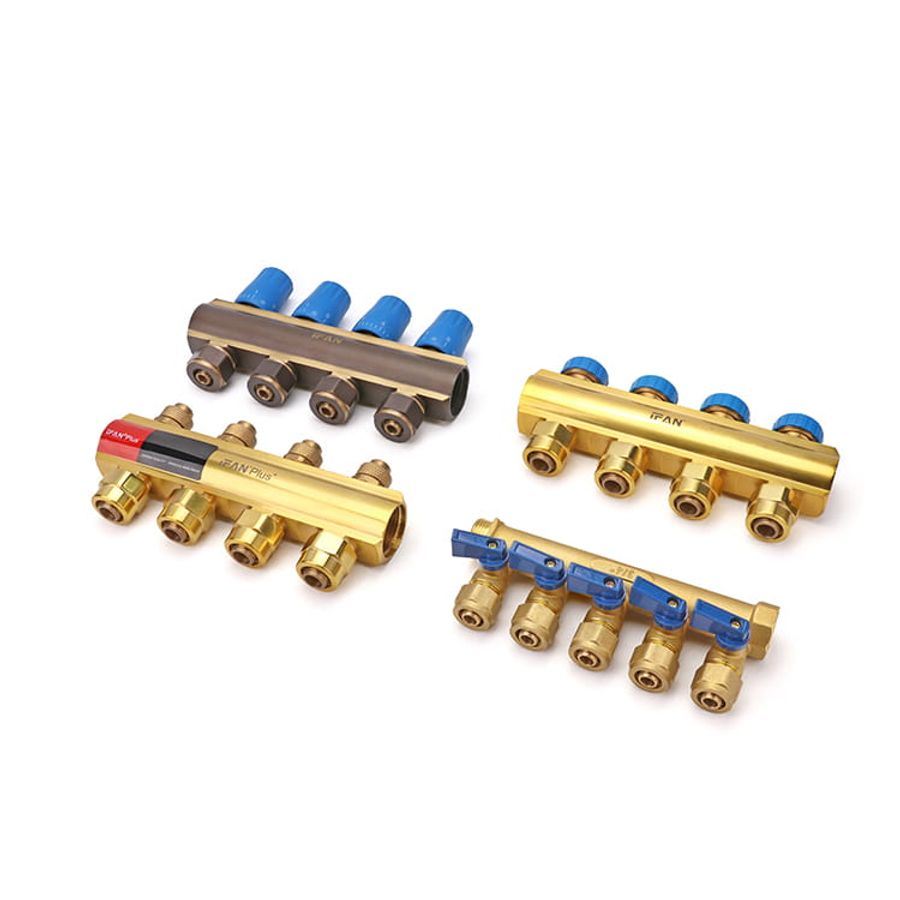
The supply side is the part specifiers forget. The angle stops, ball valves, braided connectors and manifold branches feeding the mixer set the pressure differential the cartridge has to balance, and matched full-bore hardware on hot and cold keeps the spool in the easy middle of its travel. IFAN makes that supply layer: lead-free brass angle valves, ball valves, stainless braided hoses and brass manifolds, plus PPR, PVC and PEX pipe. The product catalog lists the ranges.
Where do you install a pressure balancing valve?
Inside the wet wall directly behind the shower handle, where the hot and cold branches meet, never on the main or at the water heater. The valve balances only the two supplies feeding that one outlet. Trade practice, not code, sets the height: the valve centre is usually placed 965–1,220 mm (38–48 in) above the finished floor for a shower and about 710 mm (28 in) for a tub/shower combination, with the rough-in body set so the plaster guard's front face sits flush with the finished tile; the rough-in depth range printed on the guard is the one dimension you cannot correct after tiling. Fit isolating stops (built-in or inline angle valves) on both supplies within reach of the trim opening, feed hot and cold in the same pipe size from the manifold, and keep the valve accessible from the front, because every cartridge service happens through the trim hole. On PPR systems use a fusion-socket-to-female-thread transition on each inlet rather than threading into the valve body directly.
What should a project RFQ for pressure balancing valves ask for?
Ask for the ASSE 1016 listing by model number, the type letter (P, T or T/P) marked on the body, and the type-test report, because one sample on a desk cannot show balancing performance. The other line items:
- Listing per model. Certification covers named models; a new finish or inlet variant outside the listing needs its own coverage before it ships.
- Inlet connection. State the end type and size for each inlet (DN15 / ½" is the common shower size), matched to the pipe system behind the wall.
- Spare cartridges. Get the cartridge part number and how long the maker will stock it; a discontinued cartridge turns a trim-hole service into a wall-open job.
- Samples. Use them to check fit, finish and trim clearance, not balancing performance.
- Supply side. IFAN quotes the angle valves, ball valves, braided hoses and manifolds around the mixer. MOQ is one container with mixed sizes allowed, samples ship before the order, and lead time is quoted once sizes and quantities are fixed. Send the schedule through the quote page.
Setting the Limit Stop, and Why It Drifts With the Seasons
Every pressure balancing trim hides a rotational limit stop: a toothed ring or adjustable cam under the handle that physically blocks the handle from rotating past a chosen hottest position. Setting it is the commissioning step: run the shower at full hot, measure the outlet water with a thermometer, and move the stop until the hottest achievable water sits at or below the project's scald limit (commonly 49 °C / 120 °F). Because the valve balances ratio rather than temperature, that setting is only as stable as the incoming water: the same handle position that gives 45 °C with winter-cold mains can exceed the limit in summer when the cold supply arrives 10–15 °C warmer. On owner-occupied homes this shows up as "the shower runs hotter in July"; on rental and hospitality stock it is a liability item. The fix costs nothing: re-check the limit stop when seasons change, and after any water-heater setpoint change, since raising the heater from 60 °C to 70 °C shifts the whole mixing range hotter at the same handle angle.
Sourcing the supply side of your bathrooms?
IFAN manufactures lead-free brass angle valves, ball valves, braided hoses, and manifolds plus full PPR, PVC, and PEX systems — one factory, mixed containers, certificates per shipment. Best fit for wholesalers and project buyers; we don't sell single retail units.
Request a QuoteTroubleshooting a Pressure Balancing Valve
Shower suddenly runs only lukewarm. The classic symptom of a balancing spool stuck toward the hot-throttled position, usually by grit or scale. Close the stops, pull the cartridge, flush it, and inspect the bore; replace the cartridge if the piston doesn't glide freely. A spool that sticks after every few months points to debris arriving from upstream — fit or clean the inlet filters and check whether recent pipe work left cuttings in the line.
Temperature wanders during the shower. Small, slow drift is usually seasonal inlet change, not a fault. Fast wobble tracking other fixture use means the spool is responding late — again debris, or a cartridge worn past its service life. If the building has no PRV and mains pressure is high or spiky, the cartridge is being asked to ride larger swings than it was designed for.
Weak flow at every temperature. Balancing cartridges are a flow restriction by design; a partially blocked one restricts harder. Check the cartridge screens first, then the shower head, then confirm the service stops are fully open — a half-open stop on one side also forces the spool off-center and costs both flow and stability.
No cold or no hot at all. The fail-safe acting as designed: if one supply loses pressure entirely, the valve blocks the other. Restore the failed supply before condemning the valve.
Do pressure balancing valves go bad?
Yes. The balancing cartridge is a wear part, and it fails the way a moving seal does: scale and grit stop the spool sliding, the diaphragm or O-rings harden, and the valve first drifts warm, then delivers only lukewarm water or weak flow. The brass body behind the wall normally outlives several cartridges, so a "bad valve" is almost always a cartridge swap through the trim opening, not a wall-open replacement. Two things shorten cartridge life sharply: unfiltered supply on a well or old galvanized main, and inlet pressure above the valve's rating on buildings without a PRV. Manufacturers do not publish a standard service-life figure for ASSE 1016 cartridges; treat any "10-year" number you read as a rule of thumb.
How do you replace a pressure balancing valve in a shower?
Most replacements are cartridge swaps: shut both supplies, pull the handle and trim, fit a cartridge with the same part number, then re-set the limit stop. The steps:
- Close the service stops on the valve, or the house main if there are none, and open the shower to relieve pressure.
- Remove the handle, the limit-stop ring and the trim plate; mark the ring's position before you lift it.
- Pull the retaining clip or bonnet nut and extract the cartridge. Order the part number printed on it, since cartridges are brand- and series-specific.
- With the cartridge out, crack one stop open for a second under a rag to flush grit, grease the new O-rings with silicone grease, and seat the new cartridge the same way round.
- Restore water, run full hot and read the outlet with a thermometer. Move the limit stop until the hottest water is at or below 120 °F (49 °C).
Can I replace the shower valve myself?
Yes for a cartridge swap, if you can shut off the water and follow the maker's sheet. A valve body swap means remaking pipe joints inside the wall, a plumber's job for most owners.
| Job | Pipe joints remade (pcs) | Wall opened? | Limit stop re-set to 120 °F (49 °C) max? | Verdict |
|---|---|---|---|---|
| Cartridge swap | 0 | No, through the trim hole | Yes | DIY |
| Valve body, access panel behind | 3–4 | Panel only | Yes | Plumber, or DIY if you already solder or crimp |
| Valve body, tiled wall | 3–4 | Yes, plus tile repair | Yes | Plumber |
| Two-handle mixer to pressure balancing | 3–4 | Yes | Yes, new stop | Plumber; ask if a permit applies |
Source: IPC 2021 §424.3 (limit of 120 °F / 49 °C, field adjusted). Joint count = 2 supply inlets + 1 shower outlet, +1 for a tub spout.
How much will a plumber charge to replace a shower valve?
Angi's 2026 cost guides put a professional shower valve replacement at $150–$550 (average $350) and a cartridge-only replacement at $100–$400 (average $275). What decides the bill is whether the fault sits in the cartridge or in the body behind the wall:
| Scope | Installed cost (USD) | Parts (USD) | Wall opened? | When it applies |
|---|---|---|---|---|
| Cartridge swap | 100–400 (avg 275) | 10–65 (single-handle cartridge) | No, through the trim hole | Drift, lukewarm, weak flow; body sound |
| Valve body, access panel present | 150–550 (avg 350) | 50–300 (pressure-balancing valve) | Panel only | Body leak, stripped stops, obsolete cartridge |
| Valve body, tiled wall | 150–550 plus tile repair | 50–300 plus tile | Yes | Same as above, no rear access |
Source: Angi, Shower Valve Replacement Cost (updated Jul 10, 2026) and Shower Cartridge Replacement Costs (updated Jul 15, 2026).
Common Specification Mistakes
Ordering a "pressure valve" without saying which. Balancing (fixture, ratio) and reducing (building, pressure level) are different products; a mixed-up order surfaces at inspection, not at the warehouse.
Leaving the limit stop at the factory setting. Out of the box the stop usually allows full hot. The anti-scald protection you paid for only exists after commissioning.
Specifying thermostatic where pressure balancing suffices. On single-outlet residential showers the extra cost buys little; spend it on better supply-side hardware instead.
Mismatched supply bores. A 20 mm hot line and a 25 mm cold line feeding the same mixer guarantee a standing differential the spool must permanently offset — keep both supplies equal from manifold to valve.
No service stops. Without built-in or inline stops, every cartridge service becomes a riser shutdown. On multi-unit buildings that turns a 20-minute job into a scheduled outage.
Frequently Asked Questions
What does a pressure balancing valve do?
It keeps a shower's hot-to-cold mix ratio constant when supply pressure fluctuates. A piston or diaphragm inside the cartridge senses hot and cold pressure and shifts instantly when one side drops — so a toilet flush or appliance start elsewhere in the building doesn't turn the shower scalding or freezing. If one supply fails completely, the valve shuts the other side down as a fail-safe.
Which is better, a pressure balancing or thermostatic shower valve?
Pressure balancing is the cost-effective default for standard single-outlet showers: it meets anti-scald code, holds temperature within about ±2 °C against pressure swings, and uses one cheap serviceable cartridge. Thermostatic valves sense actual water temperature, hold it to about a degree, compensate for seasonal inlet changes, and control volume and temperature separately — worth the premium for multi-outlet showers, care settings, and high-spec bathrooms.
Why does my pressure balanced shower run hotter in summer?
Because the valve holds a mix ratio, not a temperature. In summer the incoming cold water can arrive 10–15 °C warmer than in winter, so the same handle position produces a hotter mix. Re-check and adjust the rotational limit stop under the handle when seasons change, and after any change to the water-heater setpoint.
Is a pressure balancing valve the same as a pressure reducing valve?
No. A pressure balancing valve sits at one fixture and equalizes the ratio between its hot and cold supplies to prevent scald. A pressure reducing valve sits on the building's incoming main and lowers the pressure of the whole supply to protect pipes, fittings, and appliances. Buildings with high or unstable mains pressure often need both — the PRV first, then balancing valves at the showers.
How do I know if I have a pressure balancing valve, and what does replacement cost?
A single handle that controls temperature and volume together is the pressure-balancing signature; thermostatic valves have two separate controls. To confirm, pull the handle and trim plate and read the model number on the cartridge or valve body. For budgeting, Angi's 2026 cost guides put a professional shower valve replacement at $150–$550 and a cartridge-only replacement at $100–$400; a pressure-balancing valve alone runs about $50–$300.