
Sewer Jetting Resistance: A 280-Bar Test Is Not a Cleaning Setting
Review a sewer jetting submittal: separate product resistance tests, pump ratings and nozzle conditions with two completed fictional evidence decisions.
A sewer pipe’s demonstrated 280-bar jetting resistance can address a specified product test; it does not authorize cleaning at 280 bar. A pump brochure cannot replace the pipe’s test evidence, and a qualifying pipe report cannot replace the operator’s assessment of the installed sewer. Keep the product test, pump gauge and nozzle working condition separate when reviewing a drainage submittal.
This distinction has a real procurement trigger. A public drainage drawing in a planning submission, 19012-DNG-DT-01 C01, note 16, makes acceptance up to diameter 900 mm conditional on demonstrated jetting resistance at 4000 PSI (280 bar), without damage, under section 6.10 of WIS 4-35-01 and the specification’s other provisions. That is one documented project condition. It establishes neither current market frequency nor a universal PVC certification.
Three pressure claims that must stay separate
Start by asking what the number describes. The same unit can appear on three documents that answer three different questions. Moving the number from one document to another does not move its meaning with it.
| Statement | What it describes | What it does not establish |
|---|---|---|
| Product jetting-resistance test | Performance of the identified pipe construction under the stated test conditions and acceptance criteria | Permission to use that pressure on every installed sewer |
| Pump gauge or maximum pump rating | Pressure at the gauge location, or the equipment’s stated capability | A pipe test result or the actual pressure at the nozzle |
| Nozzle working condition | Conditions where the water jet acts, together with nozzle geometry, movement and exposure | Product certification merely because the pump displays a familiar number |
The experimental paper Safe Waterjet Cleaning of Sewer Pipe, by Wright, Wolgamott and Zink for the 2005 WJTA conference, explicitly reports its test pressures at the nozzle. It explains that hose losses can make nozzle pressure lower than the pump-gauge reading. The loss depends on the arrangement; it is not a fixed deduction that a buyer can copy into every method statement.
For a submittal, the practical result is simple: a brochure describing a 280-bar pump proves neither that the supplied pipe survived a 280-bar resistance test nor that an installed line will experience that nozzle pressure. Ask which pressure is being reported before comparing the numbers. Otherwise a technically accurate brochure can support a technically wrong conclusion.
Read the actual drawing condition before choosing evidence
The cited drawing combines a diameter boundary, a performance outcome and a named test reference. Preserve all three. Its wording does not reduce to “PVC suitable for jetting,” and it does not say that any pipe bearing an SN designation automatically meets the requirement.
The project reference matters because this article is interpreting that published requirement. It is not establishing the latest edition or full scope of WIS 4-35-01 for every procurement exercise. For another project, the governing drawing, specification and applicable edition may differ. A report answering one project’s test condition cannot be transferred by headline pressure alone.
A useful product-evidence review therefore has two branches. If the submission contains only material, dimensional or stiffness information, the jetting-resistance item remains undemonstrated. If it contains a relevant test report, compare the identified product family and construction, the applicable size coverage, the method and the reported acceptance outcome against the requirement. A report for another construction is not made equivalent by sharing the same nominal diameter.
This is a limited qualification decision. Even a relevant passing report does not establish compliance with every other clause, approve a whole drainage network or resolve how an existing sewer should be cleaned. The drawing itself requires satisfaction of the specification’s other provisions. Retain that boundary when summarising the review.
- Identify the drawing’s product-test requirement.
- If no matching pipe test report is supplied, the resistance requirement is not demonstrated by a product declaration or pump brochure.
- If a report is supplied, check product construction, size coverage, method and result; a match supports only the stated resistance item within its coverage.
- Keep the cleaning-method decision separate; a product test does not authorize an operating pressure.
Two completed submittal reviews
The following records are fictional teaching examples. They are not IFAN certificates, live customer submissions or evidence that an IFAN product passed the cited test. Both use the published drawing condition so the difference between the decisions is visible.
Record A: an EN 1401/SN8 declaration and a pump brochure
A buyer proposes a buried-uPVC product. The submission identifies EN 1401 and SN8, and the contractor attaches a brochure showing that its jetting machine can develop 280 bar. No report demonstrates the proposed pipe’s jetting resistance under the drawing’s referenced method.
Decision: the separate jetting-resistance condition is not demonstrated. The product can remain a candidate for the other aspects of buried drainage selection, but neither the product designation nor the pump capability supplies the missing performance result. The buyer should not record the resistance item as accepted on that evidence.
That conclusion answers the evidence question; it does not condemn uPVC as a material. The submitted documents address different subjects. Replacing the pump brochure with a larger pump brochure changes nothing. A relevant product report, or an explicitly accepted alternative under the project’s review process, would change the evidence available for that requirement.
Record B: a relevant product test, followed by an operating claim
Now assume the fictional submission includes a report identifying the proposed product construction and relevant size coverage, reporting the specified test method, pressure and acceptance outcome. Assume it demonstrates the drawing’s resistance item. A contractor then argues that the same report permits cleaning the installed sewer at 280 bar.
Decision: the resistance item has supporting evidence on those assumptions; the operational inference does not follow. Record the first finding separately from the second. The report establishes the stated product-test result, subject to its coverage and the other project provisions. It does not assess the assembled network’s condition or convert a test exposure into an operating setting.
This is the distinction worth preserving in a meeting minute. “Resistance evidence supported” and “cleaning method approved” are different findings. Combining them into “280 bar accepted” hides which decision was actually made and invites someone else to rely on a broader permission than the reviewer gave.
| Record | Resistance requirement | Cleaning permission |
|---|---|---|
| A: product declaration plus pump brochure | Not demonstrated by the submitted evidence | Not established by the pump’s maximum rating |
| B: matching report with the stipulated passing result | Supported for the stated coverage and requirement | Does not follow from that product report |
Why a product test is different from cleaning a sewer
The BPF Pipes Group’s July 2021 guidance explains the distinction directly. It discusses resistance testing for structured-wall plastic pipes and describes a demanding evaluation with a stationary pencil jet close to the wall for 120 seconds. Its discussion of operating practice instead emphasises nozzle movement and the condition of the network.
The same publication gives different maximum working-pressure guidance for known materials in good structural condition and for unknown or mixed materials, or certain damaged conditions. Those are the publication’s named, historical UK guidance categories. They are not universal safe settings, starting pressures or authorization to operate a machine on a particular site.
That is why this buyer guide does not turn the BPF figures into an operating table. A buyer reading a certificate normally lacks the site assessment needed to choose the category, and a network can include repairs or material transitions that a pipe delivery certificate never describes. Product evidence follows the supplied product. Operational assessment follows the installed line.
The WJTA experiments reinforce the mechanism: damage response changed with jet angle, movement and exposure, not simply material name or pressure alone. Those tests involved particular samples and equipment. Their observed thresholds cannot certify another manufacturer’s pipe, and reproducing a laboratory number as a field limit would lose the conditions that made the result meaningful.
There is also a clear role boundary. BPF says high-pressure sewer jetting requires competent, trained operatives. A purchasing review can identify an invalid pressure comparison and determine what a submitted report establishes. It cannot substitute for that operational competence. Keep the test evidence available to the cleaning team without presenting it as a method statement.

Product context only; this video is not a WIS jetting-resistance demonstration. Watch on YouTube if the player is unavailable.
Choose the supply path without inventing a qualification
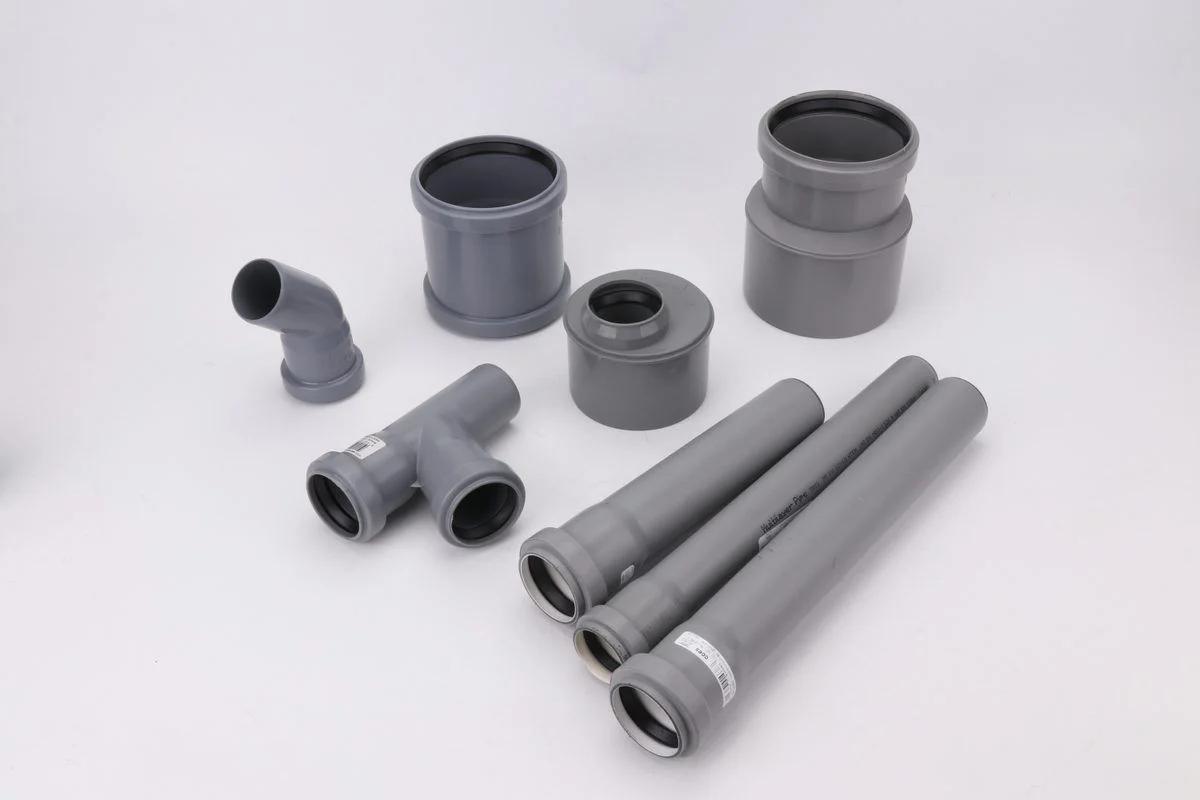
For a buyer comparing pipe offers, begin with the actual product class. The current IFAN PVC category publishes buried non-pressure uPVC supply referenced to EN 1401 and ISO 4435, alongside EN 1329 soil-and-waste products. It lists pipe, fittings and related drainage components for B2B supply. Those categories are relevant to a drainage schedule, but they do not establish a WIS jetting-resistance result.
No IFAN structured-wall SKU or passing WIS 4-35-01 report is established by the sources used here. Do not add either claim to a tender response because the manufacturer supplies drainage products. Likewise, do not substitute an indoor soil-and-waste description for a specified buried-drainage product merely because both are uPVC.
The supply decision is therefore concrete: compare the published buried-uPVC range for the applicable schedule, and treat a separate jetting requirement as a separate performance item. For a supply inquiry, identify product class, diameter, stiffness designation and joint arrangement, and include the project’s performance clause where it applies. That starts a relevant product discussion without promising that an unverified product qualifies.
Use the existing drainage size guide for the adjacent size-selection discussion and the sewer-material comparison for material alternatives. Neither replaces the project-specific resistance evidence. Review the published buried-uPVC range before preparing a schedule inquiry.
Conclusion
The costly error is carrying one pressure number across decisions it cannot support. A pump brochure is not a product resistance report. A relevant product resistance report is not an operating permit. Preserve those distinctions when reviewing a submittal, and a clear acceptance decision remains useful without becoming an unsupported instruction to the cleaning crew.
Written by Justin.
Frequently asked questions
Does SN8 prove 280-bar jetting resistance?
No. An SN stiffness designation does not itself demonstrate a separately specified jetting-resistance test. Review the evidence required by the project clause.
Is pump pressure the same as nozzle pressure?
No. Hose losses can reduce pressure between the pump gauge and the nozzle. The difference depends on the arrangement; do not assume a universal correction.
Can a passing pipe test approve the cleaning pressure?
No. A product test establishes its reported result and coverage. Cleaning conditions also depend on the installed network and the qualified operating method.
Does IFAN claim WIS qualification in this article?
No. The cited offer confirms drainage supply categories. No IFAN structured-wall SKU or passing WIS jetting-resistance report is established here.