
Y-Strainer Selection for Water: Mesh, Pressure Drop, Blowdown
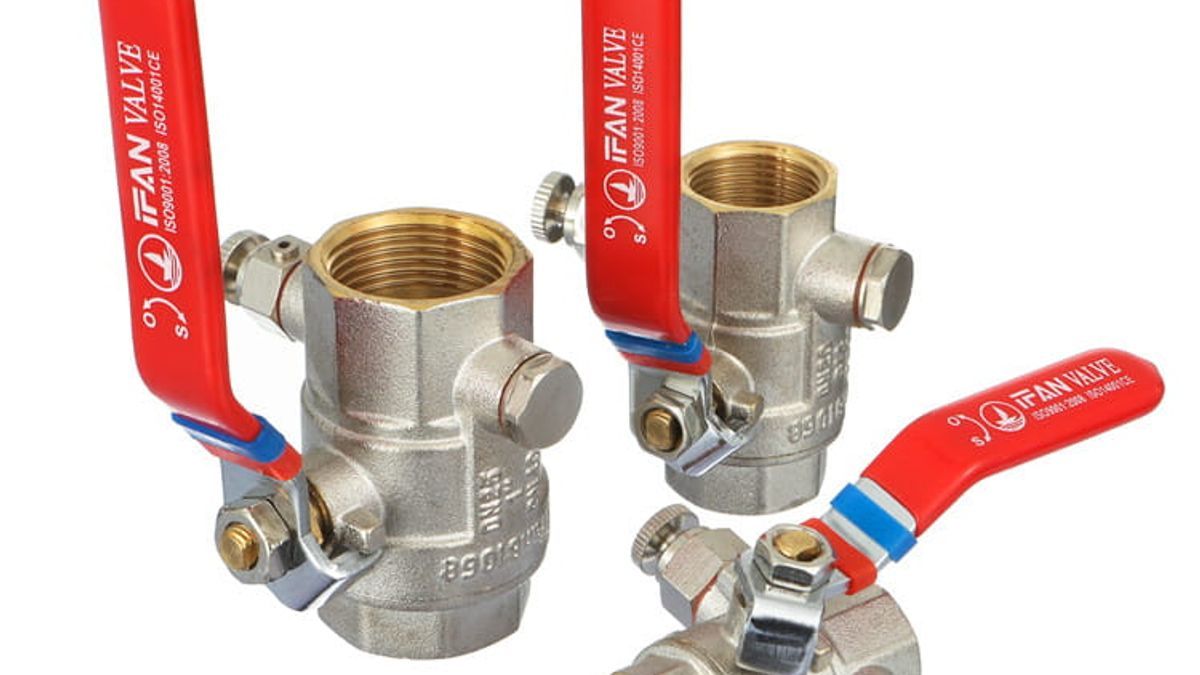
Check water Y-strainer screen openings, model pressure loss and cleanout access. Decide what fits, what is missing and when basket or duplex designs suit.
Choose a water Y-strainer by the protected component’s permitted screen opening, the exact model’s pressure loss at your flow, and a cleaning arrangement that can actually be serviced. Hold approval when any of those is undocumented; matching the pipe connection or specifying a finer mesh cannot close the gap.
A useful hydraulic example comes from Eaton: its technical guide gives a clean, perforated Model 72X basket strainer a Cv of 22.5 at an example flow of 30 gpm. Those inputs allow a calculation. A connection size alone does not. The example belongs to Eaton’s basket model, not an IFAN Y-strainer; the same discipline applies when reviewing your candidate’s own curve. Eaton technical guide, Pressure Drop Calculations.
Start with the protected component and water duty
Name what the screen must protect: a pressure reducing valve, meter, nozzle or pump. Then obtain that equipment manufacturer’s particle-tolerance or inlet-screen requirement. “Remove dirt” leaves the critical choice open. A screen that catches visible scale may still pass particles that trouble a small passage; choosing the finest available mesh instead can create a restriction the system cannot tolerate.
Keep the protection requirement separate from the debris description. Record whether the water carries loose commissioning debris, recurring sediment or material that adheres to a screen. That distinction affects the likely cleaning burden, even when two duties need the same opening. Spirax Sarco’s strainer guidance distinguishes screen area, debris holding and flow capacity; no single mesh number resolves all three.
The duty sheet also needs design and maximum flow, water temperature, pressure range, permitted strainer loss and allowable interruption. Identify drinking-water contact separately from a closed heating or cooling circuit. A mechanically suitable body does not establish suitability for drinking-water contact, and a water-contact approval does not establish the required filtration performance. NSF explains this health-effects scope; check the actual product and the project’s destination requirements.
If the protected equipment’s tolerance is unknown, stop the screen selection there. The missing input is the acceptable opening or retained-particle requirement, not a favourite catalogue mesh. Once it arrives, compare it with the offered screen’s documented aperture and construction. This keeps the first decision answerable rather than disguising an assumption as a specification.
For a PRV station, the pressure reducing valve guide explains the surrounding valve arrangement. Use that system context, but review the separate strainer on its own data. A statement that the PRV needs protection cannot approve an unspecified screen upstream.
Specify a screen opening, not a mesh number alone
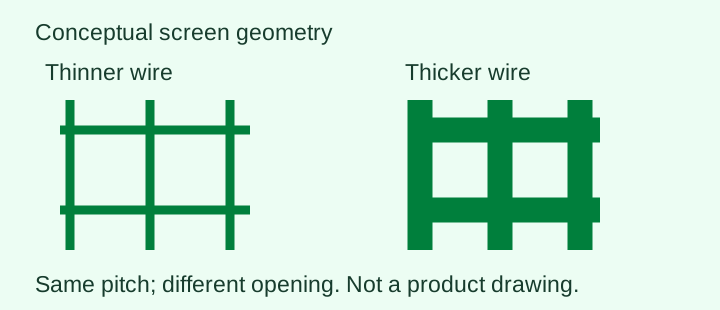
Mesh describes openings per linear inch; the wire occupies part of that space. The aperture depends on both the count and wire diameter. Perforated screens instead describe holes in a sheet. Spirax Sarco’s screen explanation makes this distinction. For the purchase record, use the maker’s stated opening and screen construction rather than treating a generic conversion chart as a drawing.
Screening area is the available screen surface. Free area is the portion open to flow. A large screen with a low open percentage and a smaller screen with a higher open percentage need not behave alike. The useful comparison ties the actual screen construction to the complete model’s loss data. It does not rank products from aperture alone.
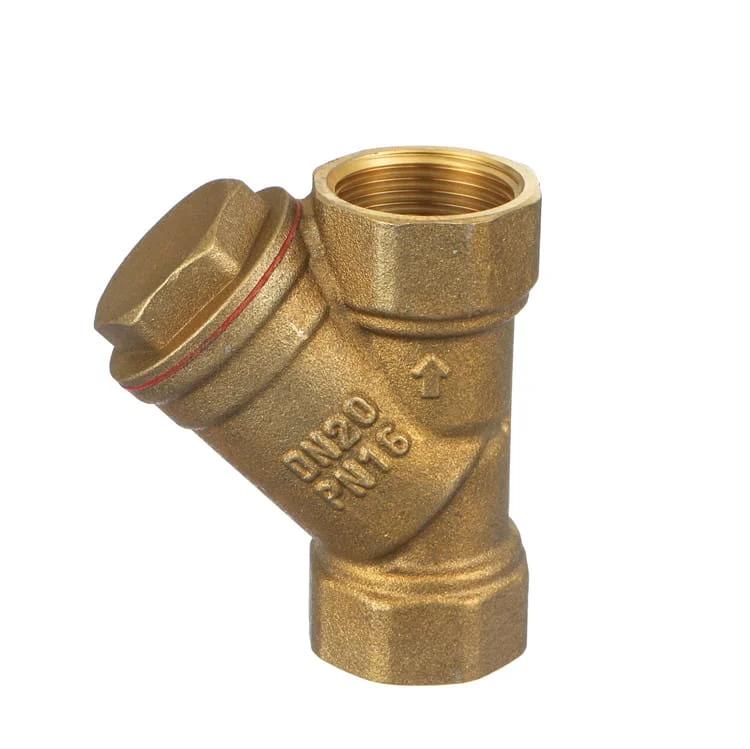
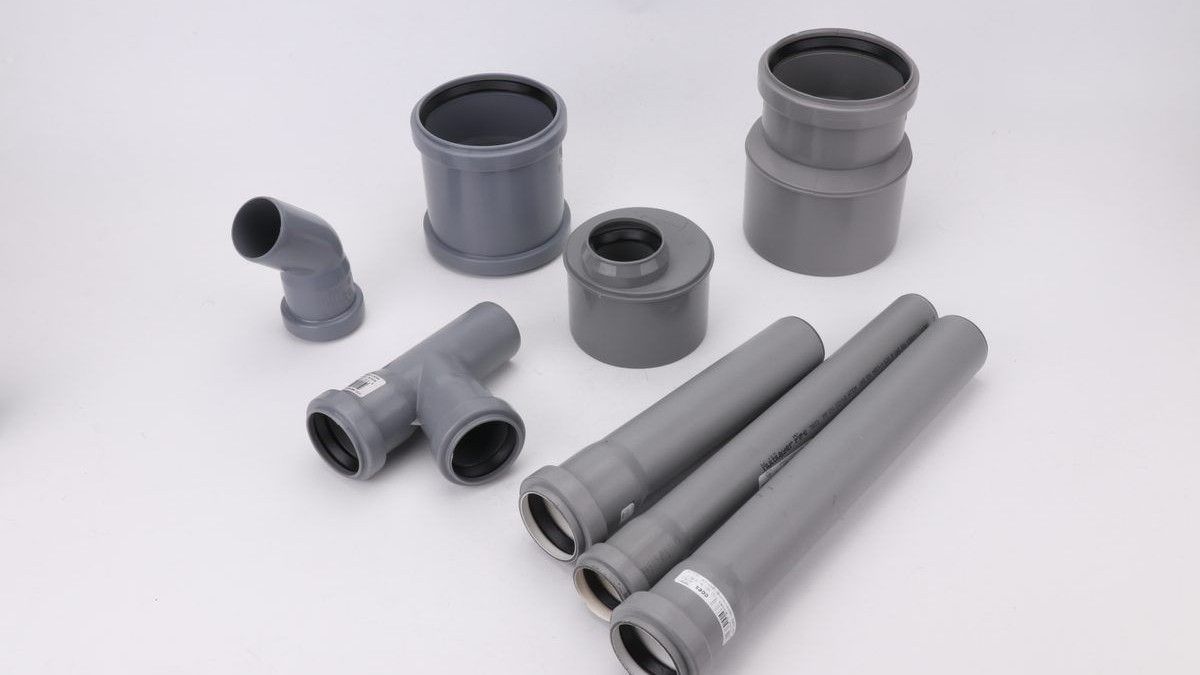
The photograph helps identify access and flow direction, but it cannot settle aperture, screen material or a coefficient. The approval record should identify the screen drawing or part reference alongside the body model. Otherwise a replacement screen can quietly change the basis of a previously accepted assembly.
Treat a switch from perforated plate to a fine mesh liner as a technical change. Keep the downstream protection requirement, then reopen the pressure-loss check with data for the new construction. A finer opening may satisfy particle retention while failing the available head. Neither result cancels the other; the candidate has to satisfy both.
Check pressure loss at actual flow and screen condition
Pressure loss is the difference between pressure upstream and downstream at a stated flow. Begin with the candidate’s clean-screen curve or its documented flow coefficient. Check the units, fluid and screen basis before reading a point. Eaton states that its published curves use water through clean, perforated baskets or screens, with corrections for other constructions and fluids. Those corrections belong to the stated manufacturer data; they are not universal multipliers for every strainer. Eaton, Pressure Drop Calculations.
Work the clean-loss calculation
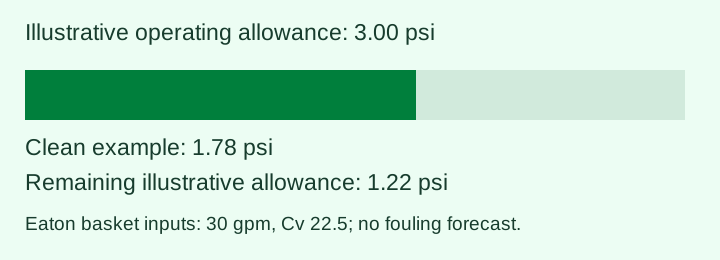
For the guide’s water example, the US-unit relation is Δp in psi = [Q in gpm ÷ Cv]². Cv is the model’s flow coefficient. Using the published 30 gpm and Cv 22.5 gives (30 ÷ 22.5)² = 1.777… psi, or approximately 1.78 psi. This is a fresh calculation from the listed inputs. Eaton prints an approximate 1.7 psi example result; retaining the inputs avoids confusing that rounded presentation with an exact result.
Now introduce a clearly separate illustrative system allowance of 3.00 psi at that flow. This is a teaching assumption, not a customer design or an IFAN performance limit. The clean example uses about 1.78 psi, leaving about 1.22 psi between clean loss and the assumed maximum acceptable operating loss. That difference is a budget to manage, not a prediction of how fast the screen will foul.
| Review item | Value or basis | What it establishes |
|---|---|---|
| Manufacturer example | Eaton Model 72X; clean perforated basket; Q = 30 gpm; Cv = 22.5 | A reproducible example, not IFAN Y-strainer data |
| Calculated clean loss | (30 ÷ 22.5)² ≈ 1.78 psi | Loss at the listed example flow and construction |
| Assumed operating allowance | 3.00 psi, illustrative only | The fictional system’s comparison limit |
| Remaining loss budget | 3.00 − 1.78 ≈ 1.22 psi | Room before the assumed allowance is reached; not a fouling curve |
The same clean example would fail an illustrative 1.50 psi allowance. No change in particle retention is needed to change that verdict. This is why a supplier’s “low pressure drop” description is not an acceptance criterion: the relevant question is whether the specific loss fits the specific system allowance.
Do not spend the whole allowance on a clean screen
A clean-loss pass is the starting condition. As debris accumulates, resistance rises; the operating plan needs a differential-pressure limit that stays within the system allowance and the screen’s permitted differential. Those are different constraints. A pressure rating for the body does not tell the reviewer how much pressure difference the screen can withstand.
Watts’ W2000 sanitary-strainer manual calls for a clean startup baseline and an application-specific cleaning limit. Its product scope matters; the principle is to establish the baseline and operating limit for the actual duty. Record both, with monitoring and a response plan. Do not turn another model’s rating or maintenance interval into yours.
Watts’ general Y-strainer manual gives a normal cleaning guideline of 5–10 psi differential for its covered products. In the illustrative 3.00 psi-budget system, waiting for that guideline would exceed the assumed operating allowance. The designer must set the duty-specific trigger; this example supplies no fouled-screen curve or universal safe threshold.
Verify blowdown, isolation and screen withdrawal
Blowdown means discharging collected material through a provided connection. It is a configuration to specify, not a capability to assume from the Y shape. Watts’ installation manual labels drain tapping as optional on some models or sizes. Distinguish a solid cap, a tapped cap closed with a plug, and a valve actually included in the supplied assembly.
That distinction changes the maintenance plan. A tapped cap does not confirm the valve, discharge piping or receiving drain. The arrangement needs suitable pressure and temperature limits, an identified discharge destination and room to operate it. Do not approve a drain route that exists only as an arrow into empty space on the layout.
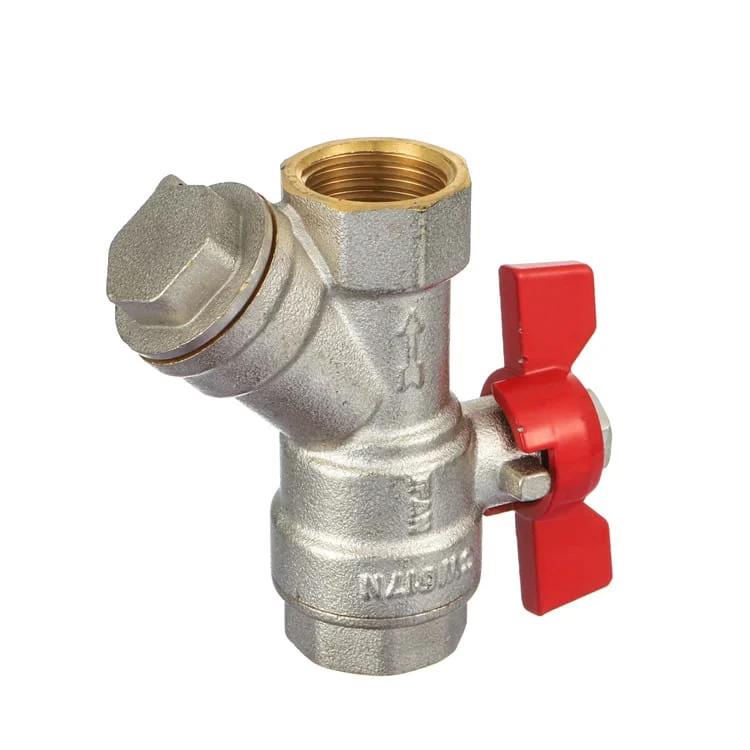
An isolation handle does not prove a drain, and one shutoff point does not prove that the entire service procedure safely isolates the pocket. Trace the actual model’s isolation, pressure-release and access instructions. The layout must accommodate that sequence after surrounding pipes, insulation and supports are installed, not merely while the component sits loose on a bench.
Reserve clearance along the direction in which the screen withdraws, including the cap and tools the manufacturer requires. A cap that can turn but a screen that cannot come out leaves inspection unresolved. Spirax Sarco’s pipeline-strainer installation instructions require screen-removal clearance and favour removal for thorough cleaning.
Keep flushing separate from confirming screen condition. Discharging loose sediment cannot prove that a fine liner is fully clean, seated correctly or undamaged. For opening and inspection, follow the specific manufacturer’s procedure: isolate, release pressure safely and verify the safe condition before removing the cap. The W2000 instructions explicitly require isolation and depressurization before opening. This guide gives no procedure for blowing down a pressurized line.
When Y, basket or duplex changes the answer
The choice is partly a decision about how the line will stay in service. Spirax Sarco describes greater dirt holding and free straining area in basket designs, and parallel duplex arrangements that allow diversion for cleaning. Its pattern comparison supplies the category basis. Compare actual models before assigning a loss or maintenance benefit to an offered product.
| Pattern to evaluate | Reason to consider it | Check before approval |
|---|---|---|
| Y-strainer | Compact arrangement where the documented screen and planned cleaning interruption fit | Actual loss, debris burden, drain configuration and withdrawal access |
| Simplex basket | More holding area may suit heavier debris or tighter loss constraints | Exact model curve, basket access, support and acceptable cleaning outage |
| Duplex arrangement | The duty requires flow during cleaning | Documented diversion and isolation sequence, access and duty of the online side |
A dirty-water duty with frequent screen loading should reopen the holding-area and cleaning decision, even if a compact Y model passes the initial calculation. A basket is not an automatic cure: it still needs a suitable opening, model loss check and practical removal space. Duplex adds a further condition. The remaining online path must serve the duty during cleaning; “two baskets” alone does not establish that.
Moving a previously accepted candidate to pump suction also changes the review. Net positive suction head, or NPSH, describes the pump’s suction-head condition relative to vapour pressure. Strainer resistance belongs in the designer’s suction-loss assessment. If the available margin, pump requirement or allowed fouling loss is missing, hold that application for pump/system review. Do not reuse the pressure-fed verdict or solve the missing calculation by an arbitrary increase in connection size. KSB’s NPSH explanation distinguishes the available system head, pump requirement and suction-path losses.
Accept or hold the proposed model
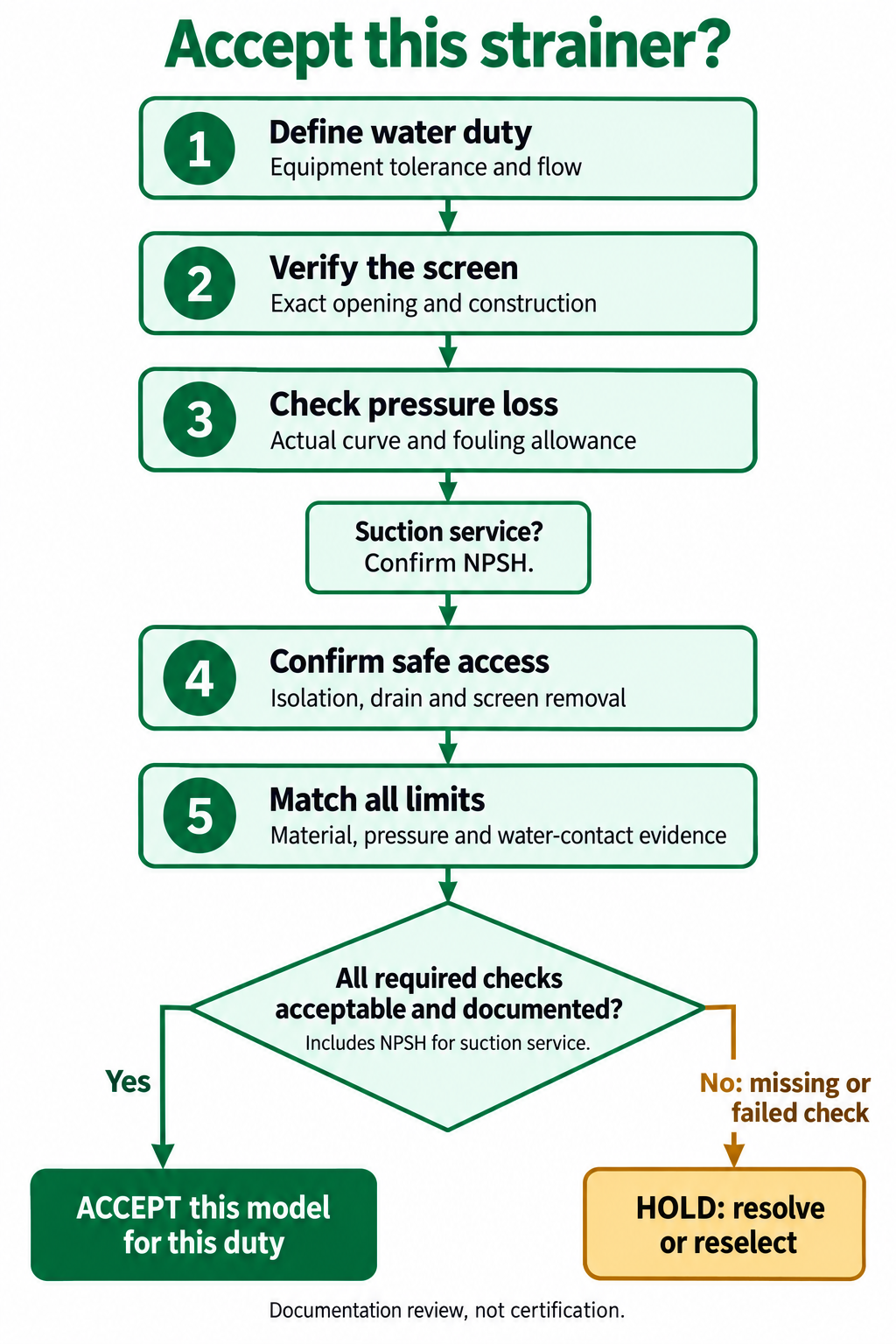
Record component findings separately before issuing an overall decision. A proven screen match and an acceptable clean curve can both pass while cleanout access remains on hold. That is useful progress, but it is not release approval. The unresolved field needs an owner and a rule for reviewing the answer, so the next revision resolves it rather than restarting the whole enquiry.
| Field | Accept when | Hold when |
|---|---|---|
| Protection and screen | Documented aperture and construction satisfy the protected equipment’s requirement | Tolerance, actual opening or screen identity is missing |
| Hydraulics | Actual-screen data at duty flow fits the design allowance, with an approved operating/cleaning limit | Only pipe size, a clean perforated curve for a changed mesh, or an unscoped loss claim is supplied |
| Serviceability | Drawing and procedure confirm isolation, safe pressure release, discharge configuration and screen withdrawal | Cap plug substitutes for a specified drain, or access cannot be demonstrated |
| Limits and contact | Actual body/screen/seal limits, connections and required destination water-contact evidence match the duty | Generic material wording or another product’s certificate replaces model evidence |
Use this review sequence
- Fix the protected-equipment requirement and water duty. If either is missing, hold selection until the designer supplies it.
- Match the candidate’s actual screen opening and construction. If the screen changes, reopen its hydraulic evidence.
- Check clean loss at duty flow, then the approved operating loss and cleaning limit. Escalate pump-suction duty to its NPSH assessment.
- Trace the supplied cleanout configuration and isolated inspection procedure on the installation drawing. Hold unresolved drainage or withdrawal access.
- Confirm limits, interfaces and required water-contact evidence for that exact model. Release only when every required branch has documented acceptance.
For example, suppose the screen and curve are documented but the drawing shows only a cap plug. Record the first checks as accepted and serviceability as held. Ask whether the supplied cap has a suitable tapping, which drain or blowdown parts are included, and how the planned isolated cleaning works. On receiving the revision, trace that route and withdrawal space. Do not substitute a catalogue photograph for those answers.
The valve types guide helps place the component within the surrounding water network. For the actual enquiry, link the duty sheet, model identification and acceptance record together. This technical method does not establish an IFAN strainer SKU, screen specification or water-contact certification.
Take the reviewed duty to the product enquiry.
Browse the IFAN product catalogue, then identify the exact offered model for this duty. Keep screen, flow-loss and cleanout documentation together; confirm supply and water-contact evidence for that model separately.
Conclusion
A water Y-strainer earns approval through a matched screen, a defensible loss budget and an accessible cleaning arrangement. The risk sits between those checks: a fine screen behind an unsuitable curve, a clean-loss pass without operating room, or a removable cap behind an immovable pipe.
Keep any unresolved branch on hold. A shared connection size, a generic certificate or an attractive product photograph cannot finish that decision.
Frequently asked questions
Does a Y-strainer make water safe to drink?
No; the screen’s debris-retention task does not establish microbiological treatment or drinking-water safety. Verify the intended treatment system and the actual component’s required water-contact evidence separately.
Can a low differential pressure prove the screen is intact?
No; pressure readings describe resistance, not a visual inspection. Check screen condition and seating through the manufacturer’s isolated maintenance procedure; do not use a low reading alone to approve continued protection.
Can a spare screen replace the original without another check?
Only after confirming its opening, construction, dimensions and compatibility with the accepted model. A change in mesh or liner can reopen the pressure-loss basis even when the replacement fits physically.
Does the IFAN product photograph verify a stocked model?
No; the library photograph shows appearance. Confirm the exact offered model, its current documentation and availability through the product enquiry; the image supplies no Cv, certification, MOQ or delivery commitment.
Published by The Brass Valves technical team at IFAN Group. Technical & export team. This guide uses public technical documents and does not report IFAN product tests.