
Redução de Pressão em PP-R: O Que Especificar por Classe de Serviço
Três páginas apresentam três pressões a quente para um mesmo tubo PN20. Reconstrua a redução de pressão em PP-R com base na Tabela A.2 da ISO 15874-2 e obtenha a espessura de parede a encomendar.
Ao pesquisar a pressão que um tubo PP-R suporta a 95°C, a primeira página apresentará três respostas diferentes para o mesmo tubo. Uma página diz que um tubo PN20 suporta 6 bar. Outra diz 5 bar. Uma terceira descreve um tubo PN20 suportando 30 bar a 20°C, o que não pode ser verdade, pois PN20 significa 20 bar a 20°C. Nenhuma das três mostra de onde veio o número.
Isso importa mais do que parece. A redução de pressão por temperatura é o cálculo que decide se uma coluna de água quente dura cinquenta anos ou se rompe no quarto inverno, e é o único número em uma ficha técnica que os compradores quase nunca auditam. Este artigo reconstrói os valores de redução a partir das duas normas que realmente os definem — ISO 15874-2:2013 para tubos de polipropileno e ISO 10508:2006 para as classes de serviço — para que cada valor abaixo tenha um número de tabela que você possa verificar.
Uma coisa a esclarecer antes que os números comecem: a IFAN fornece PP-R conforme ISO 15874 e DIN 8077/8078, e os valores nesta página são da norma, não medições de laboratório internas. Onde a norma e a ficha técnica de um fornecedor discordarem, este artigo segue a norma e assim o declara.
A versão resumida
Principais conclusões
- A redução é definida pela classe de serviço, não por uma temperatura. A ISO 10508 Tabela 1 define cada classe como um perfil temperatura-tempo agregado ao longo de 50 anos — Classe 2 é 70°C por 49 anos mais 80°C por um ano mais 95°C por 100 horas.
- Os números que governam são tensões de projeto em MPa. Para PP-R, a ISO 15874-2 Tabela A.2 fornece 3,02 MPa na Classe 1, 2,12 MPa na Classe 2, 3,29 MPa na Classe 4 e 1,89 MPa na Classe 5, contra 6,93 MPa para água fria a 20°C ao longo de 50 anos.
- A Classe 4 permite mais tensão do que a Classe 2 mesmo atingindo picos mais quentes, porque o perfil passa a maior parte da vida em temperatura fria. Qualquer pessoa que derive a redução apenas da temperatura de pico obtém isso ao contrário.
- PP-R não pode atender à Classe 5 a 10 bar em nenhuma série de tubos padrão. Isso é uma restrição de fornecimento, não uma preferência — e é onde o PP-RCT justifica seu preço.
- O fator de segurança já está embutido no número. A ISO 15874-2 Tabela A.1 aplica um coeficiente de projeto de 1,5 na temperatura de projeto; adicionar um segundo fator por cima conta em dobro.
O restante desta página explica de onde vêm esses valores, como transformá-los em uma espessura de parede que você pode colocar em um pedido de compra e como auditar a tabela de redução de um fornecedor em cerca de dois minutos.
Nesta página
- Por que os valores de redução de PP-R publicados divergem
- A classe de serviço define a pressão, não a temperatura
- A tabela de tensão de projeto por trás de cada valor de redução
- Calculando a pressão admissível para um tubo real
- Escolhendo a série de tubos para sua classe de serviço
- Como os sistemas com redução realmente falham
- O que exigir de um fornecedor de PP-R
- Especifique a classe, depois o tubo
- Perguntas frequentes

Por que os valores publicados de derating para PP-R divergem
Quase todo valor de derating em circulação é citado como uma pressão a uma temperatura: PN20 a 70°C, PN16 a 60°C. Esse formato é a fonte das contradições, porque uma temperatura isolada não é informação suficiente para calcular qualquer coisa.
O polipropileno não falha a uma pressão. Ele falha após uma duração acumulada sob uma combinação de tensão e temperatura, e a norma trata isso explicitamente. A ISO 15874-2 deriva a tensão de projeto usando a regra de Miner, de acordo com a ISO 13760 — um método de dano cumulativo — aplicado em todo o perfil de temperatura-tempo de uma classe de aplicação. Perguntar "o que o PN20 suporta a 70°C" não especifica por quanto tempo, com que frequência, ou o que o sistema faz no restante do tempo. Três autores fazem três suposições diferentes, publicam três números diferentes, e todos parecem autoritativos.
O próprio tubo revela a questão. A ISO 15874-2 exige que a conformidade com as linhas de referência seja demonstrada a 20°C, a 60°C a 70°C e a 95°C, com pelo menos três falhas em cada um dos intervalos de 10 a 100 horas, 100 a 1000 horas, 1000 a 8760 horas, e além de 8760 horas. O programa de qualificação é construído em torno de faixas de tempo porque o tempo é uma variável da mesma importância que a temperatura.
O que perguntar em vez disso. Substitua "qual pressão a qual temperatura" por "qual pressão de projeto em qual classe de aplicação". A segunda pergunta tem uma resposta correta, e ela está em uma tabela publicada.
A Classe de Serviço Define a Pressão, Não a Temperatura
A ISO 10508:2006, Tabela 1, classifica as condições de serviço em cinco classes, cada uma escrita para um período de projeto de 50 anos. Cada classe é uma sequência de temperaturas com uma duração atribuída a cada etapa, mais uma tolerância para picos curtos e uma tolerância para mau funcionamento. Leia uma delas e a lógica do derating deixa de ser misteriosa.
| Classe | Temperatura de projeto TD | Tmáx | Tmal | Aplicação típica |
|---|---|---|---|---|
| 1 | 60°C por 49 anos | 80°C por 1 ano | 95°C por 100 h | Fornecimento de água quente (60°C) |
| 2 | 70°C por 49 anos | 80°C por 1 ano | 95°C por 100 h | Fornecimento de água quente (70°C) |
| 4 | 20°C por 2,5 anos, depois 40°C por 20 anos, depois 60°C por 25 anos | 70°C por 2,5 anos | 100°C por 100 h | Piso radiante e radiadores de baixa temperatura |
| 5 | 20°C por 14 anos, depois 60°C por 25 anos, depois 80°C por 10 anos | 90°C por 1 ano | 100°C por 100 h | Radiadores de alta temperatura |
Fonte: ISO 10508:2006, Tabela 1 — Classificação das condições de serviço. A classe 3 é omitida aqui porque seu perfil de temperatura de serviço é o de piso radiante de baixa temperatura, que não é o serviço de água quente e radiadores sobre o qual este artigo trata; consulte diretamente a Tabela 1 da ISO 10508 se o seu projeto se enquadrar nessa classe.
Duas coisas nessa tabela fazem a maior parte do trabalho em um projeto real.
A temperatura de mau funcionamento é um orçamento de vida útil, não uma classificação. A ISO 10508 define Tmal como a temperatura mais alta atingida quando os limites de controle são excedidos, e observa que isso pode ocorrer por até 100 horas ao longo de um período de 50 anos. Cem horas em cinco décadas é aproximadamente duas horas por ano. Um sistema cujo controle termostático permite que o cilindro funcione sem controle por uma tarde a cada mês não está passando por uma excursão; está operando em uma classe diferente daquela pela qual foi precificado.
Há uma segunda aresta mais afiada nesse orçamento. Se um especificador define uma vida útil de projeto inferior a 50 anos, a ISO 10508 reduz proporcionalmente todos os tempos da Tabela 1 — exceto o tempo de mau funcionamento, que permanece em 100 horas. Reduzir pela metade a vida útil de projeto não compra o dobro de tolerância de excursão por ano. Não compra nenhuma.
Toda classe também deve passar por um serviço de água fria. Qualquer que seja o perfil de água quente para o qual um sistema é projetado, a ISO 10508 exige que ele seja adequado para água fria por 50 anos a 20°C e pressão de projeto de 10 bar, demonstrado por extrapolação conforme ISO 9080. É por isso que um tubo dimensionado para um serviço de água quente modesto às vezes é mais espesso do que o cálculo de água quente sozinho exige — a verificação de água fria prevalece, e a próxima seção mostra exatamente onde isso acontece.
A Tabela de Tensão de Projeto que Define Todos os Números de Redução de PP-R
Uma vez fixada a classe, a ISO 15874-2 a converte em um único número: a tensão de projeto σD, em megapascals, que a parede do tubo pode suportar para aquela classe. O Anexo A publica os resultados para cada tipo de polipropileno, e para PP-R são estes.
| Classe de aplicação | Tensão de projeto PP-R σD | Tensão de projeto PP-RCT | Participação da tensão de água fria (PP-R) |
|---|---|---|---|
| Classe 1 — água quente 60°C | 3,02 MPa | 3,64 MPa | 44% |
| Classe 2 — água quente 70°C | 2,12 MPa | 3,40 MPa | 31% |
| Classe 4 — piso radiante / radiadores de baixa temperatura | 3,29 MPa | 3,67 MPa | 47% |
| Classe 5 — radiadores de alta temperatura | 1,89 MPa | 2,92 MPa | 27% |
| 20°C / 50 anos (referência de água fria) | 6,93 MPa | 8,25 MPa | 100% |
Fonte: ISO 15874-2:2013, Tabela A.2 — Tensão de projeto. A última coluna é calculada a partir desses valores e mostra qual fração da tensão de projeto de água fria sobrevive em cada classe.
A última coluna é a versão honesta de "quanto o PP-R é reduzido". No serviço de água quente Classe 2, o PP-R está trabalhando a 31% de sua tensão de projeto de água fria — e esse único número explica por que um tubo confortável em uma rede de água fria precisa de uma parede visivelmente mais espessa em uma coluna de água quente.
Por que a Classe 4 supera a Classe 2
Observe a ordem dos números. A Classe 4 permite 3,29 MPa, que é mais do que a Classe 1 e substancialmente mais do que a Classe 2 — no entanto, a Classe 4 atinge uma temperatura de mau funcionamento de 100°C, mais quente do que os 95°C da Classe 2. Um modelo de redução baseado na temperatura de pico classificaria esses dois na ordem inversa.
Os perfis de classe explicam isso. A Classe 2 opera a 70°C por 49 anos consecutivos. A Classe 4 passa 2,5 anos a 20°C e 20 anos a 40°C antes de atingir 60°C, e nunca opera continuamente acima de 60°C. O dano cumulativo acompanha todo o perfil, então o circuito de piso radiante — mais quente no seu pior momento, muito mais frio ao longo de sua vida — acaba com mais tensão admissível do que a coluna permanentemente quente. Esta é a consequência mais útil do sistema de classes, e é invisível para quem lê a derating como uma função da temperatura.
O fator de segurança já está aplicado
A ISO 15874-2 Tabela A.1 define o coeficiente de projeto C usado para derivar essas tensões. Para PP-R, é 1,5 na temperatura de projeto, 1,3 em Tmax, 1,0 na temperatura de mau funcionamento e 1,4 para água fria. Em outras palavras, a margem é gasta dentro da tabela, deliberadamente, e é menor exatamente onde a norma espera que o tubo esteja em situação crítica.
A consequência prática é um aviso. Se um consultor aplica derating conforme a Tabela A.2 e depois aplica um fator adicional de 1,5 "por segurança", o sistema está sendo projetado com aproximadamente um terço da tensão que a norma pretende, e o dimensionamento do tubo será mais pesado e mais caro do que o projeto necessita. Use os números da tabela como estão.
Calculando a Pressão Admissível para um Tubo Real
A norma não publica um valor em bar por tubo. Ela publica uma tensão e uma regra geométrica, e os dois se combinam através da série de tubos S — a relação que liga o diâmetro à espessura da parede. Trabalhando na direção da própria norma, leva cerca de um minuto.
A cláusula A.3 da ISO 15874-2 define o valor máximo permitido da série como o menor entre o resultado da classe quente e o resultado da água fria:
Scalc,max = o menor entre σD ÷ pD e σcold ÷ 10 bar
σD é a tensão de projeto da classe da Tabela A.2; pD é a sua pressão de projeto. Ambos em MPa, onde 1 bar = 0,1 MPa. Em seguida, escolha uma série de tubos cujo S seja não maior que Scalc,max — e lembre-se de que um S maior significa uma parede mais fina.
Um exemplo prático: uma coluna a 70°C a 8 bar
Considere uma coluna de água quente sanitária operando a 70°C com pressão de projeto de 8 bar — Classe 2, pD = 0,8 MPa.
- Resultado da classe quente: 2,12 ÷ 0,8 = 2,65
- Resultado da água fria: 6,93 ÷ 1,0 = 6,93
- O menor governa, então Scalc,max = 2,65, que a ISO 15874-2 Tabela A.5 imprime como 2,6 após arredondamento.
- S2.5 é a série mais fina permitida aqui — S3.2 é mais fina do que este limite permite e está fora. Séries mais espessas, como S2, permanecem disponíveis; o limite define um teto para a finura, não uma resposta única.
Para uma linha DN32, a ISO 15874-2 Tabela 5 dá para S2.5 uma espessura mínima de parede de 5,4 mm. Verifique: S = (32 − 5,4) ÷ (2 × 5,4) = 2,46, que está abaixo do teto de 2,65. O tubo qualifica com uma pequena folga. Esse é o cálculo completo, e são as mesmas três linhas para qualquer diâmetro.
A razão para confiar neste método é que ele reproduz as respostas publicadas pela própria norma. Executá-lo em todas as quatro pressões de projeto e nas quatro classes retorna a Tabela A.5 da ISO 15874-2 essencialmente célula por célula — incluindo os casos de nota de rodapé abaixo, onde os resultados carregam o marcador da norma "baseado em σfrio". A única divergência é a Classe 5 a 6 bar, onde o cálculo dá 3,15 e a norma imprime 3,2; isso é o arredondamento da própria norma para uma casa decimal, não uma discordância.
Onde a verificação de água fria assume silenciosamente
A uma pressão de projeto de 4 bar, as Classes 1 e 4 retornam ambas Scalc,máx = 6,9 na Tabela A.5 — e a norma anota ambas as células com "baseado em σfrio". O cálculo a quente nessa pressão permitiria uma parede mais fina do que o serviço de água fria permite, então o requisito de 20°C torna-se a restrição vinculante.
Vale a pena saber disso antes de discutir com um fornecedor. Em uma linha quente de baixa pressão, a espessura de parede que você recebe pode não ter nada a ver com a temperatura da sua água quente. É o caso de água fria de 50 anos que define o mínimo, e nenhuma redução do serviço quente tornará esse tubo mais fino.
Escolhendo a Série de Tubos para Sua Classe de Serviço
Aqui está a tabela de seleção que o cálculo produz — a série de tubos mais fina que a ISO 15874-2 permite para cada combinação de classe de aplicação e pressão de projeto, com o valor Scalc,máx da norma ao lado.
| Pressão de projeto | Classe 1 (60°C) | Classe 2 (70°C) | Classe 4 (piso radiante) | Classe 5 (radiadores) |
|---|---|---|---|---|
| 4 bar | 6,9 → S5 | 5,3 → S5 | 6,9 → S5 | 4,7 → S4 |
| 6 bar | 5,0 → S5 | 3,5 → S3.2 | 5,5 → S5 | 3,2 → S2.5 |
| 8 bar | 3,8 → S3.2 | 2,6 → S2.5 | 4,1 → S4 | 2,4 → S2 |
| 10 bar | 3,0 → S2.5 | 2,1 → S2 | 3,3 → S3.2 | 1,9 → nenhuma série PP-R qualifica |
Scalc,máx valores da ISO 15874-2:2013, Tabela A.5 (PP-R). A seleção da série aplica a cláusula A.4: escolha uma série cujo S não seja maior que Scalc,máx.
A célula inferior direita é a que merece atenção. A Classe 5 a 10 bar exige Scalc,máx = 1,9, e a série mais espessa nas tabelas de dimensões é S2 — ainda mais fina que o limite exige. O PP-R puro não tem resposta conforme para serviço de radiador de alta temperatura a 10 bar. Se um fornecedor cotar uma, a cotação está fora da ISO 15874, e este é precisamente o caso para o qual o PP-RCT existe: sua tensão de projeto para Classe 5 é 2,92 MPa contra 1,89 MPa do PP-R, o que traz o requisito de volta para dentro da faixa disponível.
Uma armadilha relacionada está nas próprias tabelas de dimensões. A Tabela 5 lista as séries S8 e S6.3, e ambas carregam uma nota de rodapé dizendo "Válido apenas para PP-RCT". Essas duas colunas não estão disponíveis para PP-R em nenhuma classe. Uma ficha técnica que oferece PP-R em S6.3 ou rotulou mal o material ou leu mal a tabela.
Espessura de parede por diâmetro
Uma vez escolhida a série, a espessura de parede é uma consulta. Estas são as espessuras mínimas de parede da Tabela 5 da ISO 15874-2, classe de dimensão A, para os tamanhos que movimentam volume.
| Tamanho nominal | S5 | S4 | S3.2 | S2.5 |
|---|---|---|---|---|
| DN20 | 1,9 mm | 2,3 mm | 2,8 mm | 3,4 mm |
| DN25 | 2,3 mm | 2,8 mm | 3,5 mm | 4,2 mm |
| DN32 | 2,9 mm | 3,6 mm | 4,4 mm | 5,4 mm |
| DN50 | 4,6 mm | 5,6 mm | 6,9 mm | 8,3 mm |
| DN110 | 10,0 mm | 12,3 mm | 15,1 mm | 18,3 mm |
Espessura mínima de parede emín.conforme ISO 15874-2:2013, Tabela 5, classe dimensional A. Tabelas publicadas por fornecedores ocasionalmente mostram 8,4 mm em DN50 e 18,4 mm em DN110 nesta série; quando uma ficha técnica divergir da norma por um décimo de milímetro, especifique conforme a norma e pergunte ao fornecedor qual valor a sua ferramentaria realmente mantém.
Note como o serviço a quente gasta dinheiro rapidamente. Uma linha DN50 em S5 precisa de 4,6 mm de parede; a mesma linha em S2.5 precisa de 8,3 mm. Isso é 80% mais parede, o que equivale a cerca de 66% mais polipropileno por metro, considerando a seção anular. Em um contêiner de tubos, é a diferença entre uma cotação competitiva e uma licitação perdida — por isso a pressão para subespecificar a classe é comercial, não técnica.
Como os Sistemas Subdimensionados Realmente Falham
O subdimensionamento raramente causa ruptura no dia da comissionamento. É isso que o torna comercialmente perigoso: o tubo passa no teste de pressão, o projeto é aprovado, e a consequência chega anos depois, quando ninguém mais associa o problema à decisão de especificação.
O mecanismo está nos próprios dados de qualificação da norma. A ISO 15874-2 estabelece a linha de referência para PP-R como log t = −19,98 + 9507/T − 4,11 log σ, onde t é o tempo até a falha, T é a temperatura e σ é a tensão circunferencial. A forma importa mais do que as constantes: o tempo até a falha é logarítmico em relação à tensão e à temperatura, portanto uma sobrecarga permanente modesta não desloca a falha do ano cinquenta para o ano quarenta e nove. Ela a move por uma ordem de magnitude.
Três maneiras de dar errado
- Gastar o orçamento de mau funcionamento cedo. A tolerância de 100 horas a Tmal cobre 50 anos. Um circuito solar térmico não controlado ou uma válvula misturadora com defeito pode consumir isso em uma única estação, após a qual cada excursão adicional consome vida útil de projeto que o tubo nunca foi vendido para fornecer.
- Especificar uma classe de água quente para um circuito de aquecimento. A Classe 2 e a Classe 5 parecem próximas em uma ficha técnica, mas não são: 2,12 MPa contra 1,89 MPa, com a Classe 5 também atingindo 100°C em mau funcionamento, em vez de 95°C. Tubos comprados com números da Classe 2 e instalados em radiadores de alta temperatura estão com parede insuficiente desde o primeiro dia.
- Interpretar um valor de processamento como uma classificação de serviço. A Tabela 11 da ISO 15874-2 especifica o teste de estufa para reversão longitudinal de PP-R a 135°C. Isso é uma verificação de estabilidade dimensional da extrusão, mantida por uma hora em um corpo de prova de parede fina — não é evidência de que o tubo conduz qualquer fluido a 135°C, e nunca deve aparecer em um argumento de capacidade de temperatura.
A assinatura de campo reconhecível de uma incompatibilidade de classe é a falha longe das juntas, na seção contínua mais quente, alguns anos depois, com a parede do tubo mostrando fratura frágil em vez de dúctil. Quando o mesmo sistema também apresenta falhas nas juntas de fusão desde os primeiros meses, a causa geralmente é a instalação, e não o derating — um problema diferente, abordado em nosso guia sobre práticas de instalação de PP-R.
O que exigir de um fornecedor de PP-R
Tudo o que foi dito acima se transforma em quatro perguntas que você pode fazer a qualquer fornecedor, e as respostas podem ser verificadas com as tabelas desta página em cerca de dois minutos.
- Peça a classe, não apenas o PN. "PN20" indica uma classificação a 20°C e não diz nada sobre as condições de serviço. "PN20, adequado para Classe 2 a 8 bar" é uma especificação que você pode verificar.
- Audite a tabela de derating deles em relação à Tabela A.2. Se um fornecedor publicar pressões com derating, recalcule uma linha. Uma tabela que classifica a Classe 4 abaixo da Classe 2, ou que oferece PP-R em S6.3, não foi construída com base na ISO 15874-2.
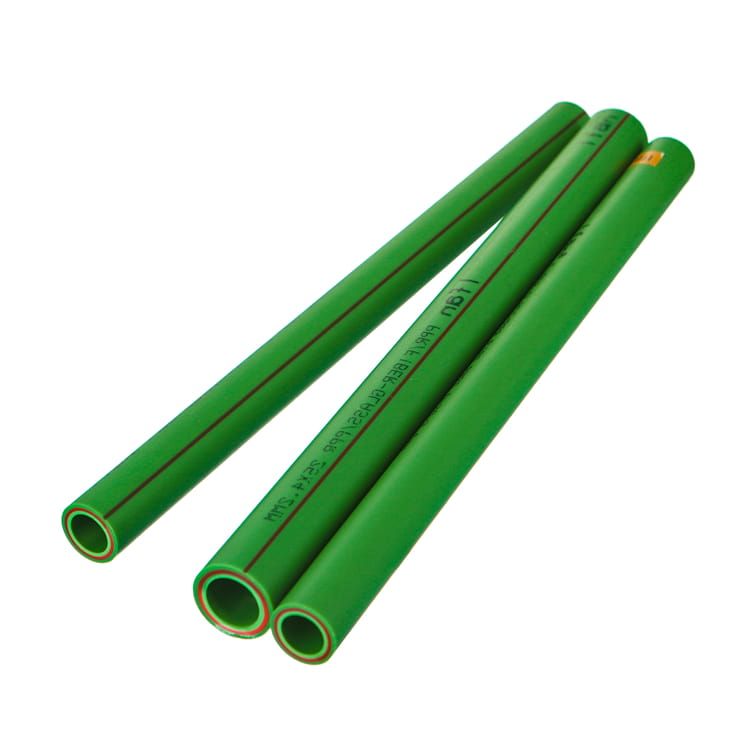
- Verifique se a marcação contém a classe. A ISO 15874-2 exige marcação pelo menos uma vez por metro, legível após manuseio e instalação. Tubos cuja impressão fornece apenas um diâmetro e um PN deixam o canteiro sem nenhuma forma de comprovar o que foi instalado.
- Separe a conformidade declarada da evidência de teste. "Fabricado conforme ISO 15874" é uma declaração. Um certificado de lote, um relatório de terceiros da SGS ou BV, ou verificação laboratorial independente do lote entregue é evidência. Pergunte qual deles está sendo oferecido.
A verificação de ficha técnica em dois minutos
Esta é a sequência a ser executada em qualquer cotação de PP-R antes de ela entrar em um arquivo de licitação. Ela usa apenas números publicados neste artigo, portanto não requer acesso à norma em si.
- Encontre a classe. Procure uma classe de aplicação (1, 2, 4 ou 5) em qualquer lugar da ficha técnica. Se o documento fornecer apenas um PN e uma temperatura, a especificação está incompleta — peça a classe antes de comparar preços.
- Verifique a classificação das classes. Se o fornecedor publicar pressões com derating, confirme que a Classe 4 está acima da Classe 2. Uma tabela que as classifica de outra forma foi construída com base na temperatura de pico, e não na Tabela A.2 da ISO 15874-2.
- Verifique as séries oferecidas. Qualquer PP-R cotado em S6.3 ou S8 está errado à primeira vista; a Tabela 5 da ISO 15874-2 restringe ambas as séries ao PP-RCT.
- Compare a parede com a tabela. Pegue um diâmetro e compare a espessura de parede cotada com os valores da Tabela 5 acima. Uma parede abaixo do mínimo para a série declarada é o lugar mais barato para um fornecedor economizar dinheiro e o mais difícil para um comprador perceber.
- Pergunte o que a marcação dirá. A classe, a norma e as dimensões devem ser impressas no próprio tubo, porque essa é a única evidência que sobrevive até o canteiro.
Quando a resposta a qualquer etapa estiver faltando em vez de errada, isso não significa necessariamente um fornecedor ruim — mas é um risco não precificado, e deve ser resolvido por escrito antes de um contêiner ser comprometido.
Sobre os fatos comerciais, uma primeira consulta é necessária: a gama de fornecimento de PP-R publicada pela IFAN abrange DN20–DN160 em PN12.5, PN16, PN20 e PN25, fornecida conforme ISO 15874 e DIN 8077/8078, com certificado de material por lote. O pedido mínimo é estruturado por contêiner, com mistura de tamanhos aceita, em vez de um valor fixo por SKU.
O preço é cotado com base em uma lista de tamanhos e quantidades, e não publicado como uma tabela de preços, porque a espessura da parede — que é exatamente o que a decisão de classe altera — é o principal fator do custo por metro. Certificações regionais, como SASO, SONCAP ou NOM, são providenciadas conforme o mercado de destino, e o prazo de entrega é cotado por pedido, considerando a mistura de tamanhos e o roteiro de certificação, pois essas aprovações podem influenciar o cronograma mais do que a produção.
Se você ainda está antes dessa decisão, nosso guia de tamanhos de tubos PP-R cobre a seleção de diâmetros e o sistema PN, e o guia completo de PP-R apresenta os graus, a união e onde o material se encaixa. Para documentos de conformidade especificamente, veja como lidamos com a certificação PP-R.
Especifique a Classe, Depois o Tubo
A sequência prática é curta, e segui-la faz a questão do derating responder a si mesma.
- Nomeie a classe de aplicação primeiro da Tabela 1 da ISO 10508 — água quente a 60°C ou 70°C, piso radiante ou radiadores de alta temperatura — e escreva-a na consulta.
- Pegue a tensão de projeto para essa classe da Tabela A.2 da ISO 15874-2: 3,02 / 2,12 / 3,29 / 1,89 MPa para PP-R.
- Divida pela sua pressão de projeto e compare com o resultado para água fria; depois escolha uma série não mais fina que a resposta.
- Leia a espessura da parede na Tabela 5 para os diâmetros que você está comprando, e coloque tanto a série quanto o valor em milímetros no pedido de compra.
- Se a resposta for Classe 5 a 10 bar, pare — nenhuma série de PP-R atende, e a conversa deve passar para PP-RCT.
Um fornecedor que consegue seguir essa sequência com você está cotando engenharia. Um que responde com um único percentual de derating e nenhum número de tabela está cotando um valor de marketing, e a primeira página dos resultados de busca mostra o quão distantes essas duas coisas podem estar.
Perguntas Frequentes
Qual pressão o tubo de PP-R suporta a 70°C?
Depende da série do tubo, não de um valor universal único. A ISO 15874-2, Tabela A.2, dá ao PP-R uma tensão de projeto de 2,12 MPa na Classe 2, que é serviço contínuo a 70°C. Divida isso pela sua pressão de projeto para obter o valor máximo permitido da série: a 8 bar, é 2,6, então S2.5 qualifica e S3.2 não.
PN20 significa que o tubo suporta 20 bar de água quente?
Não. PN20 é a classificação para água a 20°C. O mesmo tubo em serviço contínuo a 70°C trabalha contra uma tensão de projeto de 2,12 MPa em vez dos 6,93 MPa permitidos a 20°C por 50 anos — menos de um terço. Sempre associe o PN a uma classe de aplicação.
Por que o piso radiante permite mais tensão do que uma linha de água quente a 70°C?
Porque as classes ISO 10508 são perfis de temperatura-tempo. A Classe 4 passa 2,5 anos a 20°C e 20 anos a 40°C antes de atingir 60°C, enquanto a Classe 2 opera a 70°C por 49 anos. O dano cumulativo segue todo o perfil, então a Classe 4 permite 3,29 MPa contra 2,12 MPa da Classe 2.
O PP-R pode ser usado para radiadores de alta temperatura a 10 bar?
Não dentro da ISO 15874. A Classe 5 a 10 bar exige um valor máximo de série de 1,9, que é mais fino que até mesmo a série S2 disponível nas tabelas dimensionais. O PP-RCT, com uma tensão de projeto de Classe 5 de 2,92 MPa, é o caminho conforme.
Qual é a temperatura de mau funcionamento e por quanto tempo um tubo pode permanecer nela?
É a temperatura mais alta atingida quando os controles são excedidos — 95°C para as Classes 1 e 2, 100°C para as Classes 4 e 5. A ISO 10508 permite um total de 100 horas nessa temperatura ao longo de uma vida útil de projeto de 50 anos, e encurtar a vida útil de projeto não aumenta a permissão.
135°C é uma temperatura segura para tubo PP-R?
Não. 135°C é a temperatura do teste de estufa de reversão longitudinal na ISO 15874-2 Tabela 11, uma verificação de estabilidade dimensional de uma hora em corpos de prova de parede fina. Mede como a extrusão foi processada e não diz nada sobre a capacidade de serviço.
Como verifico se a tabela de redução de um fornecedor é genuína?
Calcule de volta uma linha contra a ISO 15874-2 Tabela A.2. Dois indícios rápidos: uma tabela que classifica a Classe 4 abaixo da Classe 2 não foi construída a partir da norma, e qualquer PP-R oferecido nas séries S6.3 ou S8 está errado, porque a Tabela 5 restringe ambas ao PP-RCT.