
PE-RT vs PEX pour l'eau chaude et le chauffage au sol : soudabilité, coût et où chacun gagne
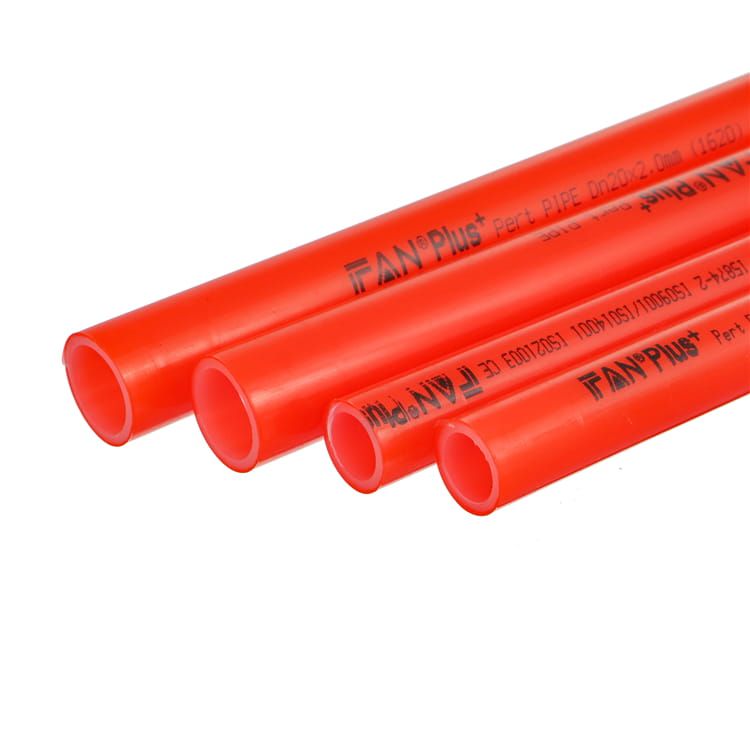
Comparaison des tubes PE-RT et PEX : raccords par fusion vs raccords mécaniques, classes de température ISO 10508, et où chacun gagne — avec les données de couronnes de l'usine IFAN.
Le débat entre PE-RT et PEX relève souvent d'une préférence de marque. L'économie d'installation penche pourtant dans l'autre sens : pour une boucle de plancher chauffant, le matériau le moins cher est aussi le plus facile à assembler, à réparer et à enterrer. Les deux tuyaux partent du polyéthylène et supportent tous deux une boucle de chauffage à 35–45 °C avec une marge confortable. Ce qui les distingue, c'est de savoir si les chaînes de polymères sont chimiquement liées après extrusion. Cette seule décision structurelle influence tout le reste : soudabilité, comportement au pliage, options de réparation et prix par couronne.
Cette comparaison couvre ce qui détermine réellement l'achat : comment chaque matériau est assemblé, à quelles classes de température il est spécifié, et où chacun gagne. Les chiffres proviennent des normes en vigueur — ISO 15875 pour le PEX, ISO 22391 pour le PE-RT, ISO 10508 pour les classes d'application. Ils proviennent également des spécifications publiées par IFAN pour ses produits de plancher chauffant, car l'usine produit les deux matériaux sur la même gamme de couronnes.

Points clés
- Le PE-RT est thermoplastique : il peut être soudé par fusion, réparé par soudure et recyclé. Le PEX réticulé ne peut être assemblé qu'avec des raccords mécaniques.
- Les boucles de plancher chauffant fonctionnent à 35–45 °C de débit. Les deux matériaux offrent une marge confortable — la température ne décide pas du choix pour le plancher chauffant.
- Le PEX conserve l'avantage en service à haute température : eau chaude sanitaire (classe 1, température de conception 60 °C) et conduites d'alimentation de radiateurs où sa marge est plus large.
- La couronne en PE-RT coûte généralement moins cher que le PEX à dimensions égales — pas d'étape de réticulation, et des raccords par fusion au lieu de raccords mécaniques.
- IFAN produit les deux — PE-RT (type I/II), PEX-a et PEX-b silane — en couronne de 16 à 32 mm pour plancher chauffant, de sorte qu'un conteneur mixte peut contenir des qualités standard et premium.
Sur cette page
- Deux façons de faire supporter l'eau chaude au polyéthylène
- PE-RT vs PEX — comparaison côte à côte
- Soudabilité : la différence qui change le coût d'installation
- Plafond de température : classes d'application, pas des allégations
- Pourquoi le PE-RT gagne le marché du plancher chauffant
- Là où le PEX gagne encore
- De quoi est réellement fait l'écart de prix
- Que stocker, que spécifier
- Questions fréquentes
Deux façons de faire supporter l'eau chaude au polyéthylène
Une note rapide sur la dénomination avant la mécanique : PE-RT signifie polyéthylène à résistance thermique élevée, et il s'écrit avec un trait d'union pour le distinguer du PERT de gestion de projet. Sous ce nom, c'est un tuyau en polyéthylène conçu pour supporter l'eau chaude sans réticulation — c'est exactement là qu'il se sépare du PEX.
PEX : polyéthylène verrouillé dans un réseau
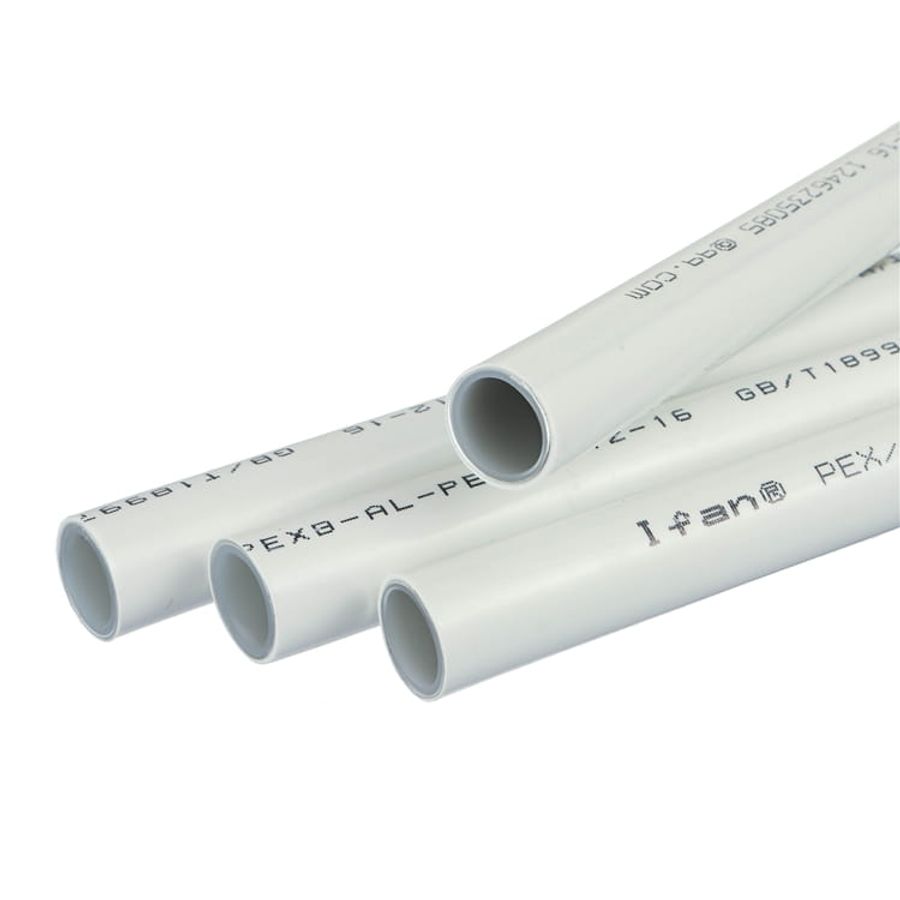
Le PEX gagne sa résistance à la chaleur par réticulation : les chaînes de polyéthylène sont chimiquement liées en un réseau tridimensionnel après ou pendant l'extrusion. La méthode donne sa lettre au tuyau. Le PEX-a est réticulé dans la masse fondue avec du peroxyde (méthode Engel), le PEX-b par une réaction de durcissement à l'humidité avec du silane après extrusion, et le PEX-c par irradiation par faisceau d'électrons. Les degrés minimaux de réticulation sont de 70 % pour le PEX-a et de 65 % pour le PEX-b et le PEX-c, et toute la famille est régie par l'ISO 15875.
Le réseau augmente la résistance à la chaleur et à la fissuration sous contrainte, mais il rend aussi le PEX semblable à un thermodurcissable. Le tuyau ne peut jamais être refondu, ressoudé ou recyclé en tuyau. Chaque connexion doit donc être mécanique — une bague à sertir, un raccord à expansion, un corps à compression.
PE-RT : température élevée sans réticulation
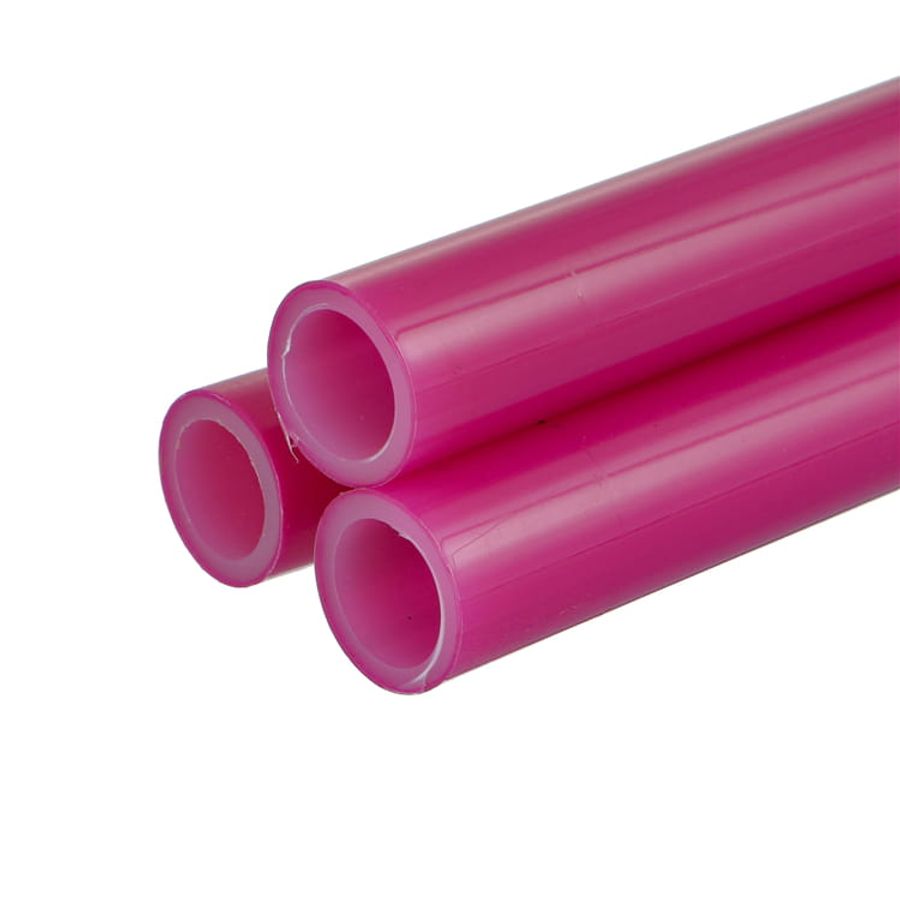
Le PE-RT prend la voie opposée. Au lieu de lier les chaînes entre elles, il utilise une résine bimodale dont la structure cristalline contrôlée porte elle-même la classification de température. Le résultat est régi par l'ISO 22391 et reste entièrement thermoplastique : il peut être soudé par emboîtement et par fusion bout à bout, réparé à la chaleur et recyclé. Le tuyau PE-RT pour plancher chauffant d'IFAN est un matériau à densité moyenne non réticulé en 16–32 mm, classé jusqu'à 95 °C, avec une résistance au gel indiquée sur la page produit.
Retenez cette seule différence. Réseau contre cristal, semblable à un thermodurcissable contre thermoplastique — chaque contraste pratique dans le reste de cet article, du coût des raccords à la réparation des plis en passant par le recyclage en fin de vie, en découle.
PE-RT vs PEX — comparaison côte à côte
Le tableau ci-dessous est l'épine dorsale de la décision. Deux lignes décident de l'achat : l'assemblage et l'adéquation à la température. Les autres sont des lignes de parité pour le service de plancher chauffant, où les deux matériaux répondent à la tâche.
| Facteur | PE-RT | PEX | Décide ? |
|---|---|---|---|
| Structure | Thermoplastique, sans réticulation | Réseau réticulé | Cause racine |
| Assemblage | Fusion thermique + mécanique | Mécanique uniquement | Oui |
| Adéquation à la température | Ample pour les planchers de classe 4 | Marge plus large, service de classe 5 | Oui |
| Gestion des plis | Découper et souder | Le PEX-a guérit à la chaleur | Situationnel |
| Flexibilité | Le plus souple de la famille | Élevée (a) à modérée (b) | Parité |
| Coût relatif | Généralement inférieur | Généralement supérieur | Oui |
| Barrière d'oxygène | Couche EVOH requise | Couche EVOH requise | Parité |
| Normes | ISO 22391 | ISO 15875 | Parité |
Lisez le tableau en fonction du poids, pas du nombre de lignes. Un distributeur qui tranche entre PE-RT et PEX sur la base de l'assemblage et de la température a déjà fait son choix ; la flexibilité, la barrière et les normes deviennent alors des cases à cocher. Le guide complet du tube PEX couvre en détail le côté PEX de la famille, et PEX-a vs PEX-b détaille les options réticulées une fois ce côté choisi.
Verdict
Aucun matériau n'est « meilleur ». Le PE-RT est le tube de référence pour le chauffage au sol ; le PEX est le spécialiste des hautes températures et de la rénovation. La question d'achat est de savoir pour quel chantier vous achetez — et un plan de stockage nécessite généralement les deux.
Soudabilité : la différence qui change le coût d'installation
Le prix du matériau au mètre est ce qui apparaît sur un devis. Le coût d'installation est ce qui apparaît sur la facture après la main-d'œuvre, les raccords et les réparations — et c'est là que la décision PE-RT vs PEX commence à faire économiser de l'argent. La division thermoplastique versus réticulé détermine comment chaque joint est réalisé.
La fusion fait du joint un tube
Parce que le PE-RT n'est jamais réticulé, il se soude comme les autres tubes thermoplastiques. La fusion par emboîtement — la méthode standard pour les petits diamètres — fonctionne à environ 250–260 °C selon les guides d'installation publiés. La fusion bout à bout pour les plus gros diamètres fonctionne à environ 200–220 °C ; le programme de soudure du fabricant fait toujours foi. Le joint refroidit en une pièce monolithique de tube. Une épissure coûte le prix d'un manchon, et le joint a la même intégrité de paroi que le tube adjacent.
Chaque joint PEX est un raccord
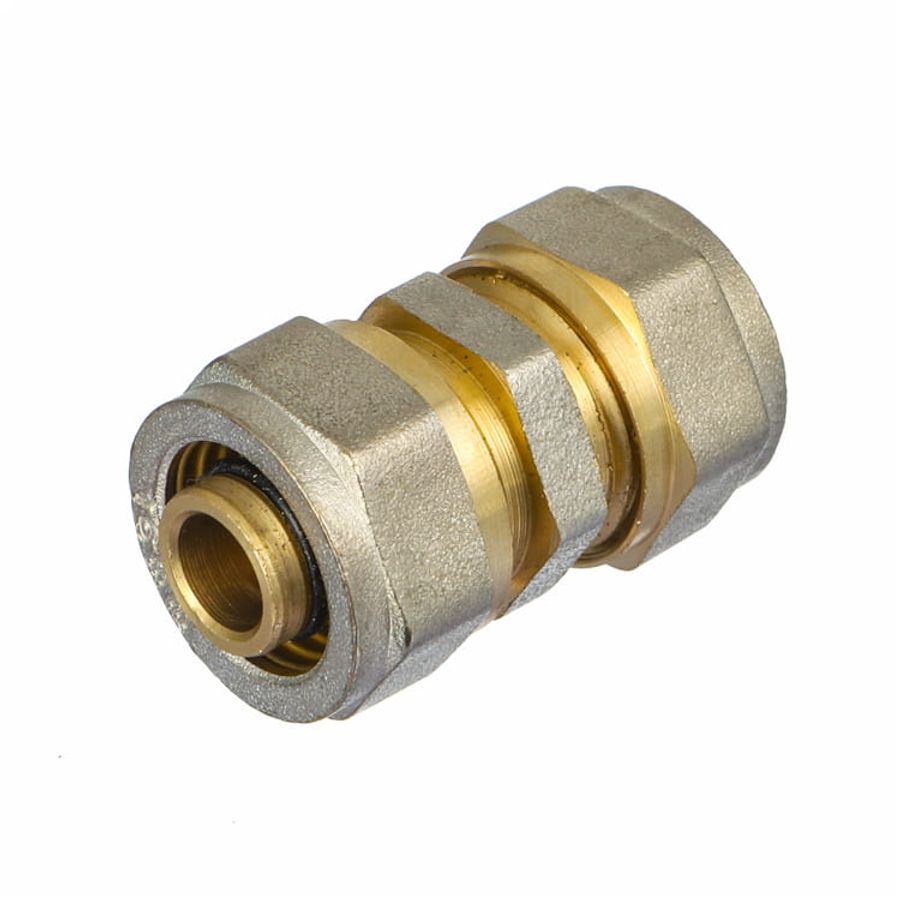
Le PEX ne peut pas être soudé du tout, donc chaque changement de direction, dérivation et réparation est un composant manufacturé. Les raccords à sertir et à coller serrent une bague en cuivre ou en inox sur une douille à barbelures ; les raccords à expansion étirent le PEX-a sur un raccord et laissent sa mémoire de forme le rétracter. Chaque méthode nécessite son propre outillage, et chaque raccord est un point de fuite potentiel de plus dans le système. Le compromis complet entre outillage et coût est détaillé dans PEX sertir vs expansion, et les familles de raccords dans Raccords PEX.
Là où le calcul fait le plus mal
L'asymétrie se cumule sous terre. Une boucle de sol de 16 mm court sur environ 100 m, et une boucle de 20 mm sur environ 120 m. Tout l'intérêt du tube en couronne est qu'une boucle se pose du collecteur au retour sans rien d'enterré entre les deux. Avec le PE-RT, toute épissure nécessaire se refusionne en tube. Avec le PEX, la même réparation signifie des manchons à insérer — deux nouveaux joints mécaniques dans la chape. Sur les parcours apparents avec de nombreux raccords, l'écart se réduit ; sur les boucles enterrées, il ne fait que se creuser.
Plafond de température : classes d'application, pas des allégations
Comparer des tubes sur un seul chiffre de pression à froid ne vous dit rien sur le service à chaud. Les deux côtés de la question PE-RT vs PEX sont spécifiés par rapport aux ISO 10508 classes d'application. Ces classes sont des profils température-temps agrégés sur une durée de vie de conception de 50 ans, à des pressions de conception jusqu'à 10 bar et des températures d'eau jusqu'à 100 °C. Les trois classes qui comptent pour cette décision :
| Classe | Service | Base de conception |
|---|---|---|
| Classe 1 | Alimentation en eau chaude sanitaire | 60 °C pendant 49 ans, pics à 80 °C |
| Classe 4 | Chauffage au sol, radiateurs basse température | Base de 50 ans, généralement 6–10 bar |
| Classe 5 | Radiateurs haute température | Pics jusqu'à 90 °C |
Regardez maintenant ce qu'un sol demande réellement. Les boucles de chauffage au sol fonctionnent à une température de départ de 35–45 °C. La surface du sol elle-même est plafonnée à 29 °C dans les pièces de vie, 33 °C dans les salles de bains et 35 °C dans les zones de bord. Par rapport à ces chiffres, les deux matériaux ont une marge confortable — c'est précisément pourquoi la température ne décide pas du choix pour le chauffage au sol, et pourquoi la soudabilité et le coût peuvent le faire à la place.
La marge supplémentaire du PEX est utile ailleurs. Cela signifie l'alimentation en eau chaude sanitaire dans les conditions de la classe 1 et les conduites d'alimentation de radiateurs vers la classe 5, où les températures de conception dépassent ce qu'un sol voit jamais. Un point de discipline pour les acheteurs : les deux matériaux perdent de la capacité de pression à mesure que la température augmente, donc comparer une pression à froid avec une pression à chaud est un concours truqué. Demandez la classe d'application et la pression de conception ensemble. Et vérifiez la fiche technique du tube spécifique avant de pousser une ligne vers la classe 5, car la capacité de classe est certifiée par produit, pas par famille de matériaux.
Vous stockez du tube pour chauffage au sol pour la revente ?
IFAN extrude du PE-RT (type I/II), du PEX-a et du PEX-b silane dans la même gamme de couronnes de 16 à 32 mm, avec barrière EVOH et certificats de lot par expédition. Un conteneur peut transporter le grade standard et le grade premium côte à côte.
MOQ 1 conteneur · tailles mixtes OK · marque OEM/privée disponible
Découvrez nos produits →Pourquoi le PE-RT domine le marché du chauffage au sol
Dans l'entrepôt de tout distributeur de chauffage au sol, le PE-RT occupe généralement l'étagère la plus profonde. La plupart des commandes de tuyaux PE-RT vs PEX pour planchers rayonnants y aboutissent pour quatre raisons — toutes mécaniques, toutes financières.
Une manipulation qui accélère l'installation
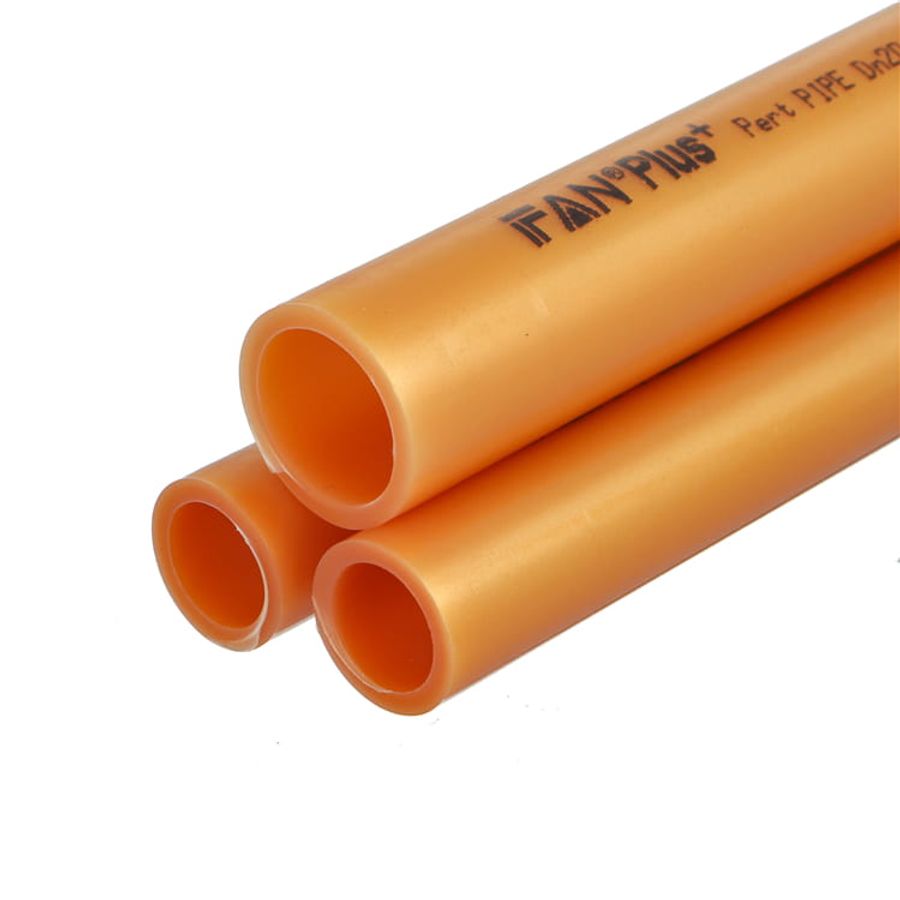
Le PE-RT est le membre le plus souple de la famille, ce qui se traduit par des courbes de fixation plus serrées, moins de raccords de changement de direction et une pose plus facile sur un chantier froid. La couronne PE-RT d'IFAN couvre 16–32 mm avec des parois de 2,0–4,4 mm et est classée jusqu'à 95 °C. La page produit mentionne également la résistance au gel et une recyclabilité à 100 % — des caractéristiques pratiques pour un tuyau expédié en hiver et destiné à vivre dans une chape pendant des décennies.
Joints dans la dalle
Parce qu'il se soude, le PE-RT permet à un installateur de réparer ou de prolonger une boucle et de se retrouver avec un tuyau plutôt qu'avec des raccords mécaniques. La nuance honnête : côté collecteur, les installateurs terminent encore couramment sur des raccords à compression ou à glissement. La page PE-RT d'IFAN répertorie les options en laiton à compression, à glissement et PPSU en plus du soudage. Le véritable avantage de la fusion réside dans la partie enterrée de la boucle, où aucun élément mécanique ne devrait jamais se trouver.
L'économie de la couronne
Le PE-RT s'extrude comme un polyéthylène conventionnel. Le PEX comporte une étape de traitement supplémentaire — peroxyde, silane ou faisceau d'électrons — ainsi que des vitesses de ligne plus lentes. C'est pourquoi la couronne de PE-RT se situe généralement en dessous du PEX à dimension égale, et pourquoi cet écart est structurel plutôt que promotionnel. Combinez une couronne moins chère avec des raccords par fusion au lieu de raccords usinés, et l'écart du système installé est plus large que l'écart du prix au mètre.
Une exigence s'applique également aux deux matériaux : une barrière d'oxygène. Les boucles de chauffage fermées partagent l'eau avec les chaudières en acier, les pompes et les collecteurs en laiton, et la norme DIN 4726 limite la perméation d'oxygène à 0,1 mg/(L·jour) à 40 °C. Le tuyau avec couche EVOH de l'une ou l'autre famille y répond — spécifiez donc la barrière pour les deux et considérez le « PE-RT » sans barrière comme un produit différent. Le guide des tuyaux de chauffage au sol couvre la barrière, le dimensionnement et la conception des boucles en détail.
La version concrète de cet argument se trouve dans le catalogue produits IFAN. La couronne PE-RT Hermelin est expédiée sous les références HL106-155 (16 × 2,0 mm × 100 m) et HL106-156 (20 × 2,0 mm × 100 m). Les deux sont en matériau vierge Grade A+, avec une garantie de 50 ans. Le seize-deux est la taille standard pour le chauffage au sol résidentiel, c'est donc la référence qu'un distributeur stocke en profondeur.
Là où le PEX gagne encore
L'histoire du PE-RT ci-dessus est une histoire de chauffage au sol. Sortez de cette application et le réseau réticulé commence à récupérer sa prime.
L'alimentation à haute température reste le territoire du PEX
La distribution d'eau chaude sanitaire et les conduites de radiateur fonctionnent à des températures plus élevées que tout plancher, et la marge de température plus large du PEX explique pourquoi il conserve ces spécifications. C'est une convention de spécification plus une marge d'ingénierie plutôt qu'une interdiction formelle du PE-RT. Mais la convention est réelle : les prescripteurs, les inspecteurs et les assureurs se tournent par défaut vers ce que des décennies de codes ont accepté. Vérifiez la classe certifiée du tuyau avant de substituer dans un sens ou dans l'autre.
Récupération des plis et résistance au froid
Pliez une longueur de PEX-a et vous pouvez généralement la remettre en forme avec un pistolet thermique — la mémoire de forme d'un réseau hautement réticulé. Pliez du PE-RT et vous devez le couper et souder une nouvelle pièce. Lors d'une rénovation avec des coins serrés et de longues tirées, la tolérance du PEX-a fait gagner du temps et des raccords. La couronne PEX-a d'IFAN est réticulée au peroxyde et classée de −40 °C à 110 °C, avec un rayon de courbure minimal de cinq fois son diamètre. Elle est répertoriée selon les normes ASTM F876/F877, NSF/ANSI 61 et ISO 15875. Le PEX tolère également mieux l'expansion due au gel que les tuyaux rigides — bien qu'aucun tuyau en plastique ne soit incassable, et cette affirmation ne devrait jamais être écrite de manière absolue.
Enfin, l'élan. Sur les marchés où le PEX a trente ans de codes, de raccords et d'installateurs formés derrière lui, changer la mémoire musculaire de tout un métier coûte plus cher que l'économie sur la couronne. Stockez selon le marché dans lequel vous vendez réellement.
De quoi est réellement fait l'écart de prix
« Le PE-RT est moins cher » est répété partout et expliqué presque nulle part. L'écart a deux composantes, et les distributeurs devraient les négocier séparément.
Le premier élément est le tuyau lui-même : résine plus conversion. Le PE-RT saute complètement l'étape de réticulation, son coût de conversion est donc celui d'une extrusion de polyéthylène ordinaire. Le PEX paie pour la chimie au peroxyde ou au silane et le temps de maintien que cette étape exige. Le deuxième élément est le raccord. Chaque raccord mécanique PEX ajoute un raccord usiné — en laiton ou en polymère technique — plus une bague et du temps d'outillage ; une soudure par fusion PE-RT ajoute un seul manchon moulé. Sur un projet avec des centaines de boucles, le nombre de raccords est un poste de coût à part entière.
| Élément de coût | PE-RT | PEX |
|---|---|---|
| Procédé d'extrusion | Standard, sans étape de réticulation | Plus étape peroxyde/silane/faisceau d'électrons |
| Raccord typique | Manchon moulé par fusion | Raccord usiné plus bague |
| Outillage | Soudeuse par fusion | Pince à sertir ou expanseur selon la méthode |
| Réparation dans la chape | Découpe, fusion, terminé | Raccords à insertion, deux joints |
Aucun des deux matériaux n'a de prix catalogue publié au niveau usine — les chiffres réels varient avec le volume du conteneur, la gamme de diamètres et la construction de la barrière, et toute offre sérieuse est établie sur demande. Ce qu'un distributeur peut structurer de manière fiable : IFAN produit du PE-RT (Type I/II), du PEX-a et du PEX-b silane dans la même gamme de serpentins de chauffage au sol de 16 à 32 mm. L'usine extrude des tuyaux depuis 1993, avec une quantité minimale de commande d'un conteneur et des tailles mixtes autorisées. Cela signifie qu'une seule commande peut porter un volume important de PE-RT en 16 mm ainsi qu'une quantité d'essai de PEX-a et un pack collecteur — sans engager un conteneur entier pour un seul grade.
Lequel stocker, lequel spécifier
Toute la comparaison PE-RT vs PEX se résume à deux règles — une pour l'entrepôt, une pour le projet.
| Travaux | Choisir | Pourquoi |
|---|---|---|
| Chauffage au sol dans chape neuve | PE-RT, barrière EVOH | Serpentin moins cher, soudures par fusion, pose la plus souple |
| Rénovation, angles serrés | PEX-a | Récupération des plis par mémoire de forme |
| Alimentation en eau chaude sanitaire | PEX | Marge plus large en conditions de classe 1 |
| Conduites de radiateurs | PEX (vérifier la classe) | Températures de service plus élevées |
| Conteneur mixte, nouveau marché | Les deux, codés par couleur | Profondeur de volume plus couverture premium |
Stockez du PE-RT en profondeur — le serpentin 16 × 2,0 mm avec barrière d'oxygène est l'unité de gestion de stock à fort volume — et gardez le PEX-a comme gamme premium pour la demande en rénovation et les travaux à haute température. Sur le chantier, spécifiez selon le projet et gardez les grades codés par couleur, afin qu'une substitution dans la chape soit visible plutôt que silencieuse. Et quel que soit le label, faites prouver l'offre : désignation normalisée, classe d'application, type de barrière, longueur du serpentin et garantie par écrit. Une garantie de 50 ans est la référence que le serpentin PE-RT Hermelin d'IFAN établit, et c'est une question légitime à poser à tout fournisseur.
La conclusion tient en trois lignes. Le PE-RT gagne le sol parce qu'il se soude, se plie et coûte moins cher à produire. Le PEX garde l'eau chaude et la rénovation parce que son réseau supporte des températures plus élevées et guérit les plis. Un distributeur qui sert les deux marchés achète les deux grades auprès d'une seule usine.Parcourez la gamme complète IFAN de chauffage au sol et de PEX — serpentin PE-RT, PEX-a et PEX-b, raccords et collecteurs — et construisez un conteneur mixte autour du marché que vous servez réellement.
Questions fréquentes
Peut-on souder par fusion un tuyau PEX ?
Non. La réticulation transforme le PEX en un polymère réticulé qui ne peut pas être refondu, donc chaque joint PEX est mécanique : sertissage, pince, expansion ou pressage. Le PE-RT peut être soudé précisément parce qu'il reste thermoplastique.
Quelle température le tuyau PE-RT peut-il supporter ?
Le tuyau PE-RT pour plancher chauffant est spécifié selon les classes d'application ISO 10508 et convient au service de classe 4 pour plancher ; le serpentin PE-RT d'IFAN est certifié jusqu'à 95 °C en continu. Pour une alimentation à haute température, vérifiez d'abord la classe certifiée du tuyau sur sa fiche technique.
Le PE-RT est-il moins cher que le PEX ?
Généralement oui. L'extrusion du PE-RT saute l'étape de réticulation nécessaire au PEX, et les manchons par fusion coûtent moins cher que les raccords à sertir ou à expansion. Les prix exacts sont basés sur devis — le volume du conteneur, la gamme de diamètres et la construction de la barrière font tous varier le chiffre.
Peut-on mélanger PE-RT et PEX dans un même système ?
Oui, via des raccords de transition mécaniques — jamais par fusion, car les matériaux diffèrent. Gardez chaque boucle homogène et changez de matériau au collecteur, où les deux se terminent déjà sur des raccords mécaniques.
Quel tuyau est le meilleur pour le chauffage au sol ?
Le PE-RT est le choix de volume pour les systèmes en chape neuve : pose la plus souple, soudures par fusion et serpentin moins cher. Le PEX-a mérite sa prime en rénovation et dans les angles serrés, où la récupération des plis par mémoire de forme paie.
Quelle est la durée de vie du tuyau PE-RT ?
Le cadre ISO 10508 est basé sur une durée de vie de conception de 50 ans à température et pression nominales. Le serpentin PE-RT d'IFAN pour plancher chauffant est garanti 50 ans — demandez à tout fournisseur d'indiquer la sienne par écrit.