
PEX Crimp vs Expansion: Which Connection to Use
Once you've chosen PEX, the next fork decides your tools, your fittings, and how the job goes: crimp or expansion? They're the two dominant ways to connect PEX, and they're not interchangeable — the fitting, the tool, and even the pipe type differ. Crimp (and its cousin, clamp) squeezes a ring onto an insert barb; expansion stretches the pipe open and lets it shrink back over the fitting. Each has real advantages in cost, speed, flow, and where it can be used. This guide compares them head to head — how each works, tools, cost, flow, freeze resistance, and reliability — so you pick the connection system that fits your work, not just the first tool you're handed.
For the wider picture on PEX types and fittings, see the complete PEX pipe guide; this article is the crimp-versus-expansion decision.
Key Takeaways
- Crimp/clamp squeezes a ring over an insert barb — cheap tools, works on any PEX.
- Expansion stretches the pipe over the fitting — full-flow, but PEX-a only.
- Crimp's insert barb narrows the bore slightly; expansion fittings keep flow larger.
- Crimp needs a go/no-go gauge; expansion needs an expander tool.
- Both are reliable when done right — most leaks are tool or system mismatches.
- Choose by pipe type, tools, budget, and how much tight-space work you do.

How Crimp (and Clamp) Works
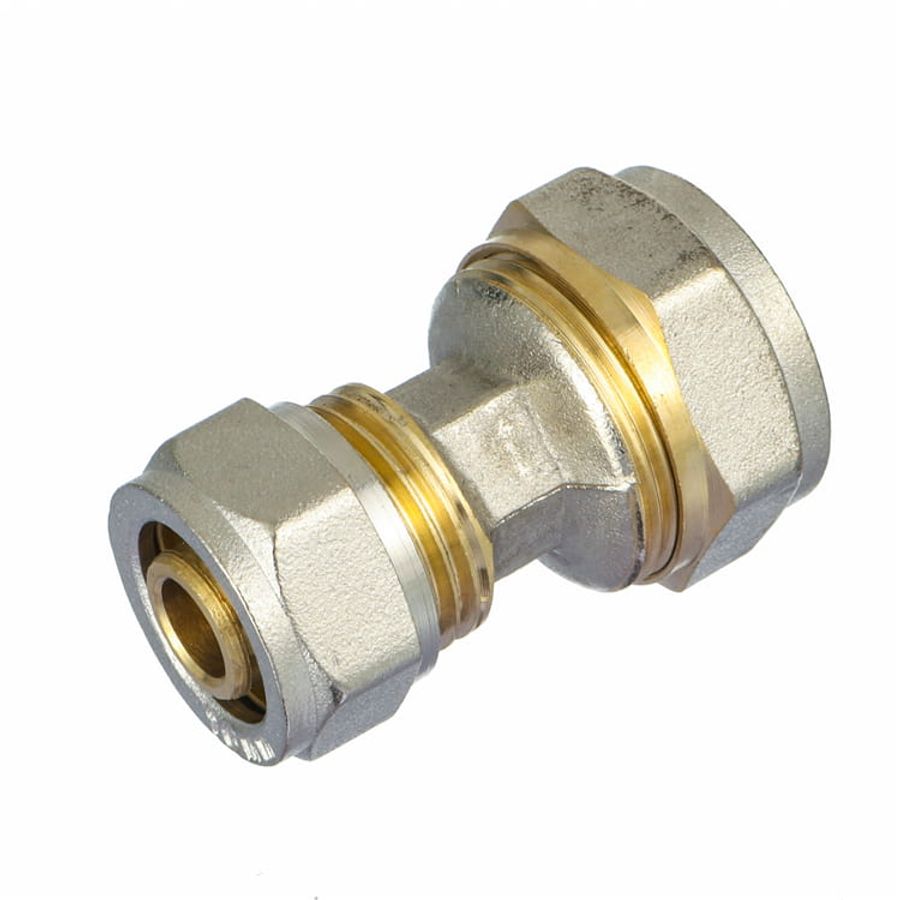
Crimp is the classic PEX connection. The fitting has a ribbed insert barb that slides inside the pipe; a copper crimp ring goes over the pipe at the barb, and a crimp tool squeezes the ring tight, clamping the pipe onto the barb to seal. The closely-related clamp (cinch) method uses a stainless-steel cinch ring tightened by a cinch tool instead of a copper ring — one tool covers all sizes and it's easier in tight corners. Both are simple, proven, and cheap, and both work on any PEX type (a, b, or c). The one catch: because the barb sits inside the pipe, it narrows the bore a little at each fitting, a small flow restriction. After crimping, you check the joint with a go/no-go gauge to confirm the ring is correctly compressed.
How Expansion Works
Expansion (cold-expansion) flips the approach. A reinforcing ring is slid onto the pipe end, then an expander tool stretches the pipe and ring open; you insert the fitting, and the pipe's "shape memory" shrinks it back tight around the fitting, gripping harder as it contracts. Because the fitting sits inside an expanded pipe rather than behind an inserted barb, expansion fittings have a larger bore and restrict flow less. The trade-off: expansion only works on PEX-a (and some PE-RT), because only PEX-a has the strong shape memory to shrink back reliably — PEX-b won't. It needs an expander tool, which is a bigger investment than a crimp or cinch tool, though modern battery expanders make it fast.
Crimp vs Expansion — Side by Side
| Factor | Crimp / Clamp | Expansion |
|---|---|---|
| Works on | Any PEX (a/b/c) | PEX-a (and some PE-RT) only |
| Tool cost | Low | Higher (expander) |
| Fitting bore / flow | Barb narrows bore | Full-flow, larger bore |
| Check tool | Go/no-go gauge | Visual (shrink-back) |
| Tight spaces | Cinch easiest | Needs expander clearance |
| Cold-weather install | Fine | Shrink-back slows when cold |
| Fitting cost | Low | Comparable to higher |
Flow and Pressure
The clearest technical difference is flow. A crimp fitting's insert barb sits inside the pipe, so it reduces the internal bore at every joint — on a run with many fittings, those small restrictions add up to a measurable flow reduction. An expansion fitting sits inside an expanded pipe, so its bore is larger and closer to the pipe's full internal diameter, giving less restriction and better flow per fitting. For most domestic plumbing the crimp restriction is minor and unnoticeable, but on a run with many fittings, a long manifold home-run, or a flow-sensitive application, expansion's full-flow advantage is real. Both systems carry the same rated pressure — the difference is flow, not pressure rating.
Sourcing PEX with the right fitting system?
Tell us your pipe type and connection method — we'll spec matched PEX, fittings, and valves from one source.
Request a QuoteTools and Cost of Entry
This is what decides many jobs. Crimp/clamp has the low entry cost: a manual crimp tool or a cinch tool is inexpensive, and the go/no-go gauge is cheap. That's a big reason crimp and clamp dominate for occasional users, small plumbers, and DIY. Expansion needs an expander tool — manual expanders exist, but the fast, practical route is a battery-powered expander, which is a larger investment. For a pro doing high volumes of PEX-a, that tool pays back through speed and the full-flow fittings; for someone doing occasional runs, the crimp/clamp toolkit is the sensible spend. Factor the tool into the true cost of the first job, not just the fittings — the tool gap is often the deciding number.
Speed and Ergonomics on the Job
On a big job, the connection method affects your day, not just the joint. Clamp (cinch) is often the fastest to learn and the friendliest in awkward spots — one tool, one squeeze, and the ratcheting cinch tool reaches into tight bays where a bulky crimp jaw or an expander head won't fit. Crimp with a copper ring is quick once you're set up, though the go/no-go check adds a step and some crimp tools are size-specific, meaning more kit to carry. Expansion with a battery expander is very fast in the open — expand, insert, done — but the expander head needs clearance around the fitting, so it's less comfortable in cramped cavities, and each expansion takes a moment for the pipe to shrink back before you can move on. Match the method to where you actually work: lots of tight retrofit spaces favour cinch; open new-build runs suit a battery expander.
Serviceability and Repairs
Neither crimp nor expansion is a removable connection — both are permanent, and a repair means cutting out the fitting and joining fresh pipe. That's normal for PEX and not a mark against either method. What differs is what a repair needs: a crimp/clamp repair only needs the cheap crimp or cinch tool you already carry, so a quick fix on a crimp system is low-friction; an expansion repair needs the expander on hand. If you don't own an expander, a leaking expansion joint is harder to fix on the spot. For situations where you genuinely want a removable, reusable connection — a temporary run, a fixture you'll swap — a push-fit fitting (a separate system) is the removable option; crimp and expansion are both for permanent joints. Factor in who will service the system later and what tools they'll have.
Reliability and Common Mistakes
Both systems are reliable when done correctly — most PEX leaks aren't the method's fault, they're an execution error. For crimp: the ring must be positioned correctly on the barb and compressed to spec, which is why the go/no-go gauge exists — an un-gauged crimp can be loose or over-crushed. For expansion: the pipe must be expanded the right amount and the fitting inserted before it shrinks back too far, and in cold conditions the shrink-back is slower, so you wait for a full seal. The universal rules: use the fitting system designed for your pipe (never an expansion fitting on PEX-b), stay within one validated brand/system, and don't mix components. Get those right and either method gives decades of leak-free service.
Where Press and Sliding-Sleeve Fit In
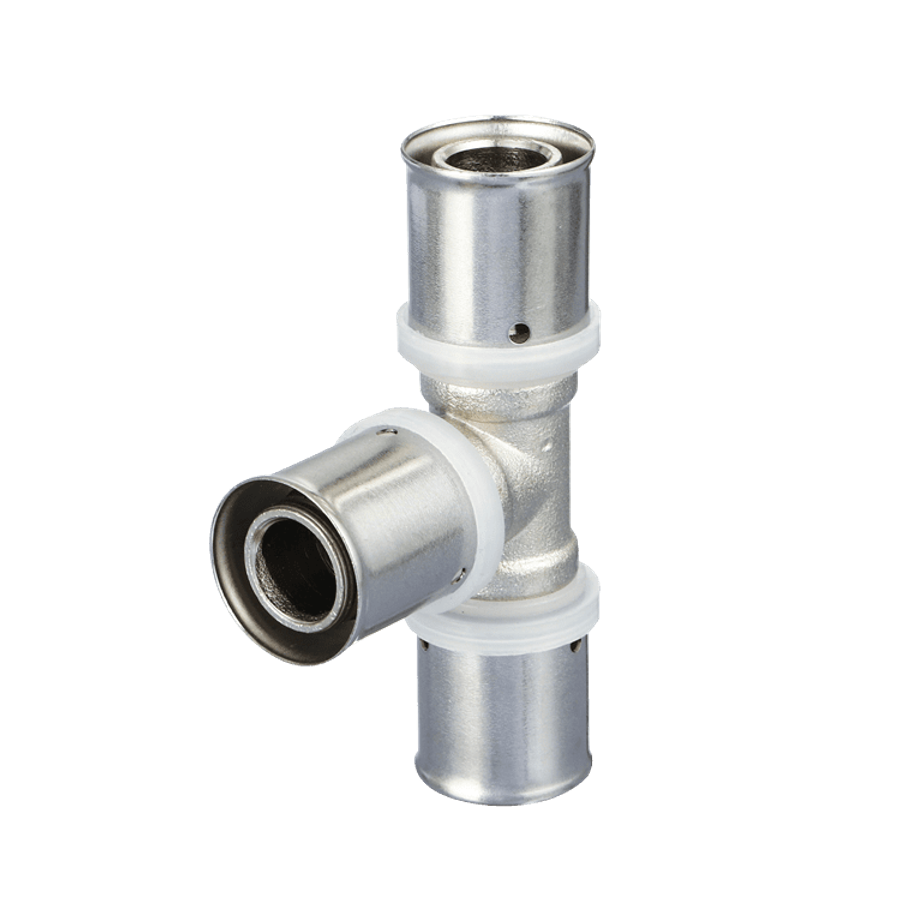
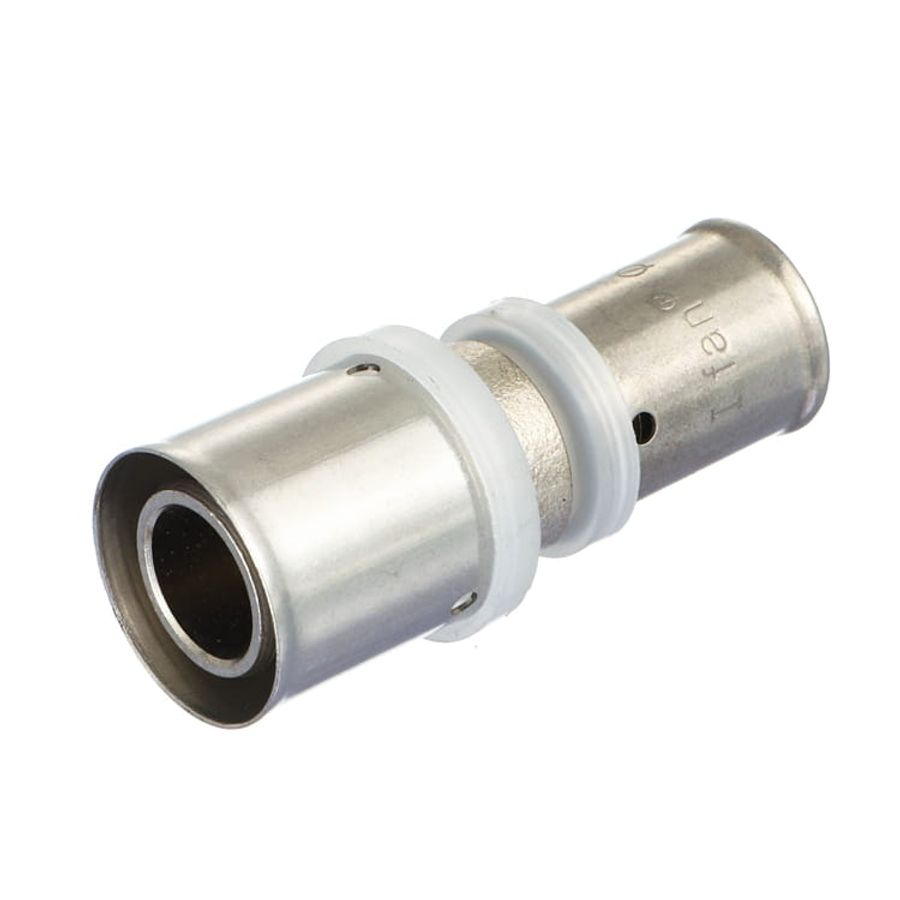
Crimp and expansion aren't the only two. Press fittings (a sleeve pressed with a jaw tool) and sliding-sleeve / axial fittings (a sleeve slid over the joint) are standard on PEX-AL-PEX multilayer pipe and some PEX systems — strong, uniform, full-flow joints common in heating and multilayer work. IFAN's PEX-AL-PEX and PE-RT systems use press and sliding-sleeve fittings, alongside PEX and its fittings and brass valves. If your project is multilayer or underfloor heating rather than plain PEX potable water, the press/sliding-sleeve route is likely the one you'll use — a reason to confirm the pipe and fitting system together before buying tools.
Larger Diameters and Manifolds
The choice can shift with the job's scale. On larger pipe diameters, the flow advantage of expansion's full-bore fittings grows, and expanding bigger pipe is where a powered expander really earns its place over hand tools. On a manifold home-run layout with many individual fixture lines, the number of end connections is high, so a fast, comfortable method pays off across dozens of joints — and full-flow fittings help keep pressure even across all the runs. For small-diameter, few-joint work, the low-cost crimp or cinch kit is more than enough. So beyond pipe type and budget, let the diameter and joint count nudge the decision: bigger and higher-volume leans expansion; smaller and simpler leans crimp/clamp.
Which Should You Choose?
Choose crimp or clamp if you want the lowest tool cost, use PEX-b, do standard plumbing, or work occasionally — it's the economical, universal default, and clamp is easiest in tight spaces.
Choose expansion if you run PEX-a, want full-flow fittings, do a high volume of work that justifies the expander tool, and value the larger-bore joints — common among busy pros.
Use press / sliding-sleeve for PEX-AL-PEX multilayer and heating systems. Whatever you pick, match the fitting to the pipe and never mix systems.
ASTM Standards Behind Each Connection Method
In North American projects, buyers and inspectors call out the connection method by its ASTM standard number, not by brand. Each joining system has its own standard, and the fitting stamp has to match the ring, tool, and pipe on the job. The pipe itself is covered separately by ASTM F876 (dimensions) and F877 (system performance), so a compliant joint means the pipe standard and the fitting standard both check out.
| ASTM Standard | Connection Method | Ring / Sleeve | Fitting Bore |
|---|---|---|---|
| F1807 | Copper crimp ring on insert (barb) fitting | Copper crimp ring | Restricted (barb steps down bore) |
| F2159 | Copper crimp ring on plastic (PPSU) insert fitting | Copper crimp ring | Restricted (plastic barb) |
| F2098 | Stainless-steel pinch clamp on insert fitting | Stainless cinch/pinch clamp | Restricted (barb) |
| F1960 | Cold-expansion (PEX-a) with reinforcing ring | PEX-a expansion ring/sleeve | Full-bore (near pipe ID) |
| F2080 | Cold-expansion with metal compression sleeve | Metal sleeve | Full-bore |
| F2434 | Metal insert fitting used with a crimp ring (F1807) or clamp | Copper ring or clamp | Restricted |
The bore column is why installers who care about pressure loss lean toward F1960: because the expanded pipe grips the outside of a full-diameter fitting, the flow passage stays close to the pipe inside diameter, while every insert-barb system (F1807, F2159, F2098) steps the bore down at each joint. For the material side of the joint, see our guide to PEX fittings.
Fitting Compatibility: What Works With What
The single most common field mistake is mixing systems that were never meant to meet. Crimp and clamp fittings are cross-compatible with each other and work on any PEX (a, b, or c) because they squeeze a ring onto a barb from the outside. Cold-expansion (F1960) is different: it relies on the pipe stretching and shrinking back, so it only works with PEX-a, and it uses its own expansion ring and fitting. You cannot crimp an expansion fitting, and you cannot expand a crimp fitting. The table below shows the workable combinations.
| Pipe / Fitting Combination | Works? | Notes |
|---|---|---|
| PEX-a + crimp/clamp fitting | Yes | PEX-a can be crimped like any other PEX |
| PEX-b or PEX-c + crimp/clamp fitting | Yes | Standard barbed connection |
| PEX-a + expansion (F1960) fitting | Yes | The only pipe that shrinks back to grip the fitting |
| PEX-b or PEX-c + expansion (F1960) fitting | No | PEX-b/c lack the shape memory to seal after expanding |
| Expansion fitting + crimp ring | No | Different geometry; will not seal or pass inspection |
| Crimp ring + expansion tool | No | Crimp fittings are not designed to be expanded onto |
| Push-fit (SharkBite-style) + any PEX | Yes | No tool; works on PEX, copper, CPVC with a stiffener insert in PEX |
Practical rule for a wholesale order: decide the method first, then buy the matching pipe, ring, and fitting family together so nothing on the pallet is orphaned. If you are still choosing pipe grades, our PEX-a vs PEX-b comparison covers why only PEX-a qualifies for the expansion system.
Crimp and Expansion vs Push-Fit (SharkBite-Style)
Push-fit fittings are the third option buyers weigh, so it helps to place them next to the two tooled methods. A push-fit joint uses an internal O-ring and a stainless grab ring, so it needs no crimper and no expander, connects in seconds, and is removable with a release clip. That convenience is why it dominates repair and emergency work. The trade-offs are cost per fitting and long-term philosophy: push-fits carry an elastomer O-ring that most manufacturers do not warrant for permanent concealed use as generously as a metal-to-plastic crimp or an expansion joint.
| Factor | Crimp / Clamp | Expansion (F1960) | Push-Fit |
|---|---|---|---|
| Tool needed | Crimper or clamp tool | Expander tool | None |
| Cost per fitting | Lowest | Low to mid | Highest |
| Removable | No (cut out) | No (cut out) | Yes (release clip) |
| Sealing element | Ring on barb (no O-ring) | Shrink-back grip (no O-ring) | Rubber O-ring |
| Best for | Volume rough-in | Cold weather, full-flow runs | Repairs, transitions, no-tool jobs |
For a plumber wiring a whole house, crimp or expansion wins on fitting cost once the tool is paid off. Push-fit earns its place for repairs, mixed-material transitions, and behind-access-panel work where you may need to disconnect later. Note that any push-fit on PEX needs the supplied stiffener insert so the grab ring bites correctly.
Common PEX Crimper Problems and How to Avoid Them
Most crimp joint failures trace back to the tool, not the fitting. A crimper is a calibrated jaw, and it drifts out of spec with use. The go/no-go gauge is the referee: after a crimp, the ring outside diameter must fall inside the gauge slot. If it does not, the joint is suspect and gets cut out. The issues below are the ones that send installers back to re-do joints.
- Out-of-calibration jaws: a crimper that has crimped thousands of rings loses its stop point; a ring that passed last month may under-crimp today. Check with the go/no-go gauge and recalibrate per the tool maker's schedule.
- Ring not square or too far from the fitting shoulder: the ring should sit about 1/8 in (3 mm) from the end of the pipe and square to the fitting. A cocked ring crimps unevenly and weeps.
- Pipe not fully seated on the barb: if the pipe bottoms short of the fitting shoulder, the last barb is not covered and the joint leaks under pressure.
- Wrong ring for the ring standard: a copper F1807 ring on an F2159 plastic fitting, or the wrong size ring, changes the compression and fails the gauge.
- Crimping in tight quarters: full-circle crimpers need clearance to close 360 degrees; a partial closing in a stud bay gives an incomplete crimp. This is where clamp (pinch) tools or the expansion method win.
- Double-crimping: crimping the same ring twice overworks the copper and can crack it; a failed crimp gets cut out, not re-squeezed.
The takeaway for buyers stocking crews: pair every crimp tool with its matching go/no-go gauge and a calibration routine, and keep clamp tools on hand for tight bays. For sizing rings and fittings across the range, see our PEX pipe sizes reference.
Frequently Asked Questions
Is crimp or expansion better for PEX?
Neither is universally better. Crimp/clamp is cheaper on tools and works on any PEX; expansion gives full-flow fittings but only works on PEX-a and needs a pricier expander tool. Choose by pipe type, tools, budget, and how much work you do — both are reliable when done correctly.
Can I use expansion fittings on PEX-b?
No. Expansion relies on PEX-a's shape memory to shrink back tight around the fitting; PEX-b lacks that memory and won't seal reliably. Use crimp or clamp fittings on PEX-b. Never put an expansion fitting on a pipe not rated for it — it's a leak waiting to happen.
Does crimp restrict water flow?
Slightly — a crimp fitting's insert barb sits inside the pipe and narrows the bore a little at each joint. On most domestic plumbing it's unnoticeable, but on runs with many fittings or flow-sensitive applications, expansion's larger-bore fittings give better flow. Both carry the same pressure rating.
What's the difference between crimp and clamp?
Both squeeze a ring over an insert barb. Crimp uses a copper ring compressed by a crimp tool (often size-specific); clamp (cinch) uses a stainless cinch ring tightened by one tool that fits all sizes and is easier in tight spots. Both work on any PEX and are checked for a correct joint.
Are crimp PEX fittings permanent or removable?
Crimp and clamp fittings are permanent. The copper ring or stainless clamp compresses onto the barbed fitting and cannot be loosened, so the only way to remove one is to cut the pipe and ring off and start with a fresh fitting. If you need a joint you can disconnect later, use a push-fit (SharkBite-style) fitting, which releases with a clip, instead of crimp or expansion.
How do PEX expansion fittings work?
Expansion (ASTM F1960) uses PEX-a pipe, which has shape memory. You slide an expansion ring over the pipe end, insert an expander tool head, and stretch both the pipe and ring open. The tool comes out, you push the fitting in, and within seconds the pipe shrinks back and clamps tightly around the full-bore fitting. No O-ring is involved; the grip comes from the plastic contracting onto the fitting.
Which PEX is used for expansion connections?
Only PEX-a works with cold-expansion (F1960) fittings. PEX-a is made by the Engel method and has the shape memory needed to expand and shrink back around the fitting. PEX-b and PEX-c do not recover their shape reliably after expanding, so they are limited to crimp and clamp connections. If a spec calls for the expansion system, the pipe must be PEX-a.
Can I use crimp fittings on expansion PEX pipe?
Yes for the pipe, no for mixing systems. PEX-a expansion pipe can be crimped with standard copper rings or stainless clamps like any PEX. What you cannot do is crimp a ring onto an expansion (F1960) fitting, or expand pipe onto a crimp fitting. The fitting families are not interchangeable. Choose one method and buy the matching pipe, ring, and fitting together.