
PEX Fittings Explained: Crimp, Clamp, Expansion & Push-Fit
The pipe is only half of a PEX system — the fittings are what decide whether a joint holds for decades or weeps behind a wall. And "PEX fittings" is not one thing: there are several connection methods (crimp, clamp, expansion, push-fit) and two very different fitting materials (brass and engineered polymer), and they are not freely interchangeable. Pick the wrong combination and the fitting either won't seal, corrodes early, or needs a tool you don't own. This guide lays out the main types of PEX fitting, the materials they're made from, how each connection method works, and how to match the fitting to your pipe size, type, and project — so you order pipe and fittings that actually go together.
For the wider picture on PEX types, sizes, and applications, see the complete PEX pipe guide; this article focuses on the fittings.
Key Takeaways
- Four main connection methods: crimp, clamp (cinch), expansion, and push-fit — each needs its own tool and ring.
- Two fitting materials: brass (lead-free for potable) and engineered polymer (PPSU/poly) — poly resists corrosion, brass is more hard-wearing.
- Crimp, clamp, and push-fit fittings insert a barb into the pipe, slightly narrowing the bore; expansion fittings do not.
- Expansion fittings only work with PEX-a (and some PEX-c) because those grades remember their shape.
- Match the fitting size and standard to the exact pipe — nominal vs metric OD do not interchange.
- Push-fit needs no tool and works on PEX, copper, and CPVC — handy for repairs, pricier per joint.

The Four Main Types of PEX Fitting
PEX fittings are grouped by how they connect to the pipe, and there are four mainstream methods. Each uses a different ring or mechanism and a different tool, so the method you choose shapes your whole toolkit and, to some extent, which grade of PEX you can use.
| Method | How it seals | Works with |
|---|---|---|
| Crimp | A copper ring squeezed around pipe + barb | All PEX (a/b/c) |
| Clamp (cinch) | A stainless clamp ring pinched shut | All PEX (a/b/c) |
| Expansion | Pipe expanded, shrinks onto the fitting | PEX-a (some PEX-c) |
| Push-fit | Internal O-ring + grip ring, no tool | PEX, copper, CPVC |
Crimp and clamp are the workhorses of North American PEX plumbing — cheap fittings, modest tool cost, and they work on any PEX grade. Expansion is the premium method tied to PEX-a. Push-fit is the tool-free option for repairs and awkward spots. For a deeper look at the two most common insert methods, see PEX crimp vs expansion fittings.
Fitting Materials: Brass vs Polymer
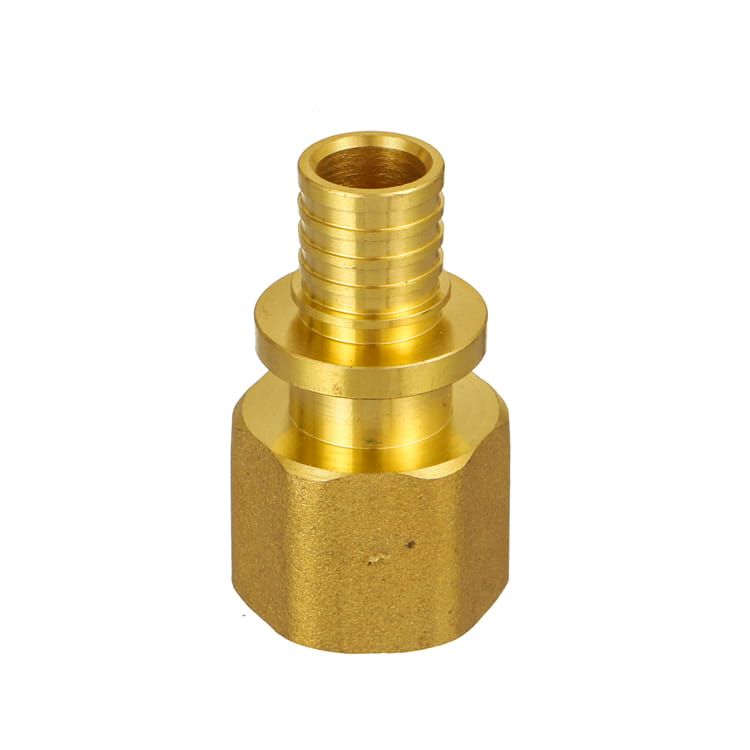
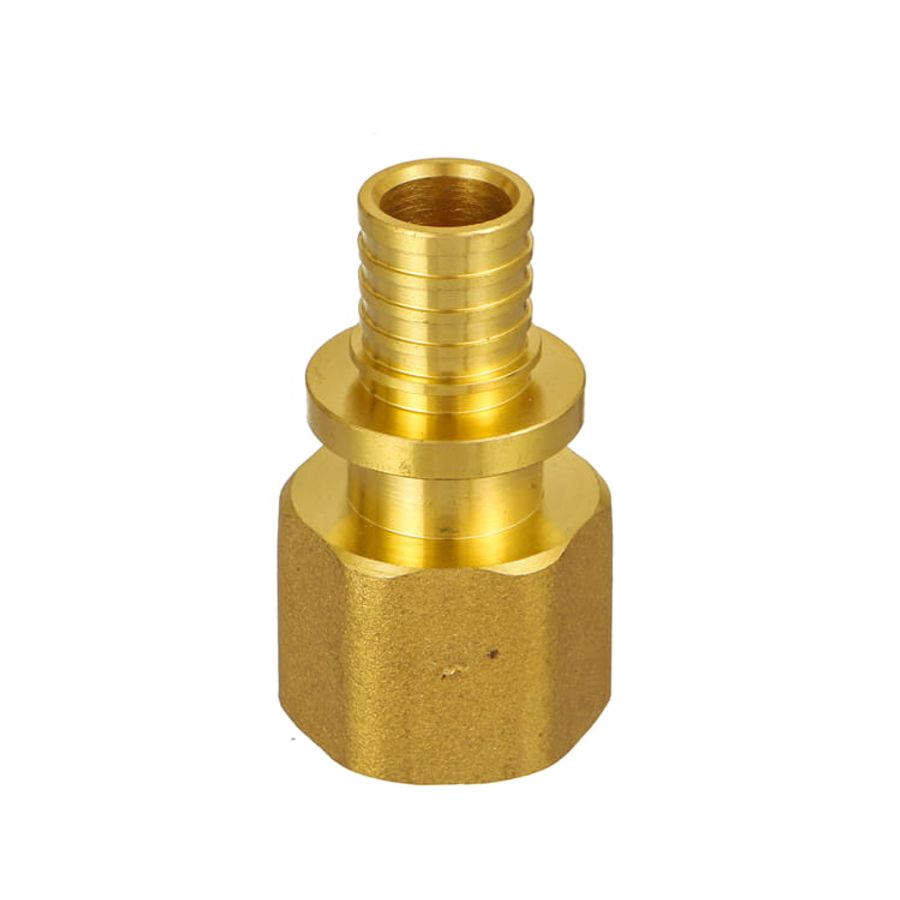
Cutting across the connection method is the fitting's material, and this is where corrosion and water-quality questions live. PEX insert fittings come in two main materials. Brass — specifically low-lead or lead-free brass such as a lead-free alloy — is strong, reusable, and long proven, but ordinary brass can be attacked by aggressive water (dezincification), so potable systems want a lead-free, dezincification-resistant grade. Engineered polymer (often PPSU, sometimes called "poly" fittings) doesn't corrode, resists dezincification entirely, and weighs less, which is why it's popular where water chemistry is aggressive; the trade-off is that a polymer fitting's barb is a little more easily damaged than brass under repeated handling. Both are fine for potable water when made to the right standard — the choice is mostly about water chemistry, cost, and preference. What matters is that the fitting carries a potable approval and, if brass, is a lead-free grade.
Crimp and Clamp Fittings — the Everyday Choice
Crimp (PEX crimp) uses a copper ring slid over the pipe end; the pipe goes onto the fitting's barb, the ring sits over the joint, and a crimp tool compresses the ring to a precise diameter — you check it with a go/no-go gauge. It's fast, cheap per joint, and works on all PEX. The catch is that crimp tools are sized per diameter (or use interchangeable jaws), and a bad crimp is only caught by the gauge, so gauging every joint matters. Clamp (cinch / ASTM F2098) uses a stainless-steel clamp ring with a pinch-off ear; a cinch tool squeezes the ear to close the ring. One cinch tool covers all sizes, which is why clamp is popular with smaller crews, and the stainless ring resists corrosion better than copper. Both methods push a barb into the bore, so each joint slightly narrows flow — a minor effect on a normal run, worth noting on a long line with many joints. For potable systems, both are proven and code-accepted across most of North America.
Expansion Fittings — PEX-a Only
Expansion (cold expansion, ASTM F1960) works on a completely different principle. Instead of squeezing a ring onto the pipe, an expansion tool stretches the pipe end and a reinforcing ring, the fitting is inserted, and the pipe shrinks back down onto the fitting as its shape-memory pulls it tight. This gives a full-bore joint with no barb pinching the flow, and the seal actually strengthens as the pipe contracts. The critical limitation: expansion only works with PEX-a (and some PEX-c) because those grades have the shape-memory to snap back — you cannot use expansion fittings on PEX-b. So the connection method partly dictates the pipe grade you must buy. Expansion is prized in cold climates and for its freeze-tolerance, but the tool is the priciest of the four and the fittings cost more. If you're weighing it against crimp, our crimp vs expansion comparison covers the trade-offs in depth.
Push-Fit (Push-to-Connect) Fittings
Push-fit fittings need no tool at all: an internal O-ring seals against the pipe and a stainless grip ring holds it, so you cut the pipe square, mark the insertion depth, and push. Their party trick is versatility — the same fitting works on PEX, copper, and CPVC, which makes them ideal for repairs, transitions between pipe types, and tight spots where a crimp tool won't fit. Most are removable with a release clip, so they're reusable. The downsides are cost — several times the price of a crimp fitting per joint — and that many plumbers prefer not to bury push-fit connections in a wall long-term, reserving them for accessible locations. As a repair and transition fitting, though, push-fit is hard to beat for speed.
Matching the Fitting to Pipe Size and Type
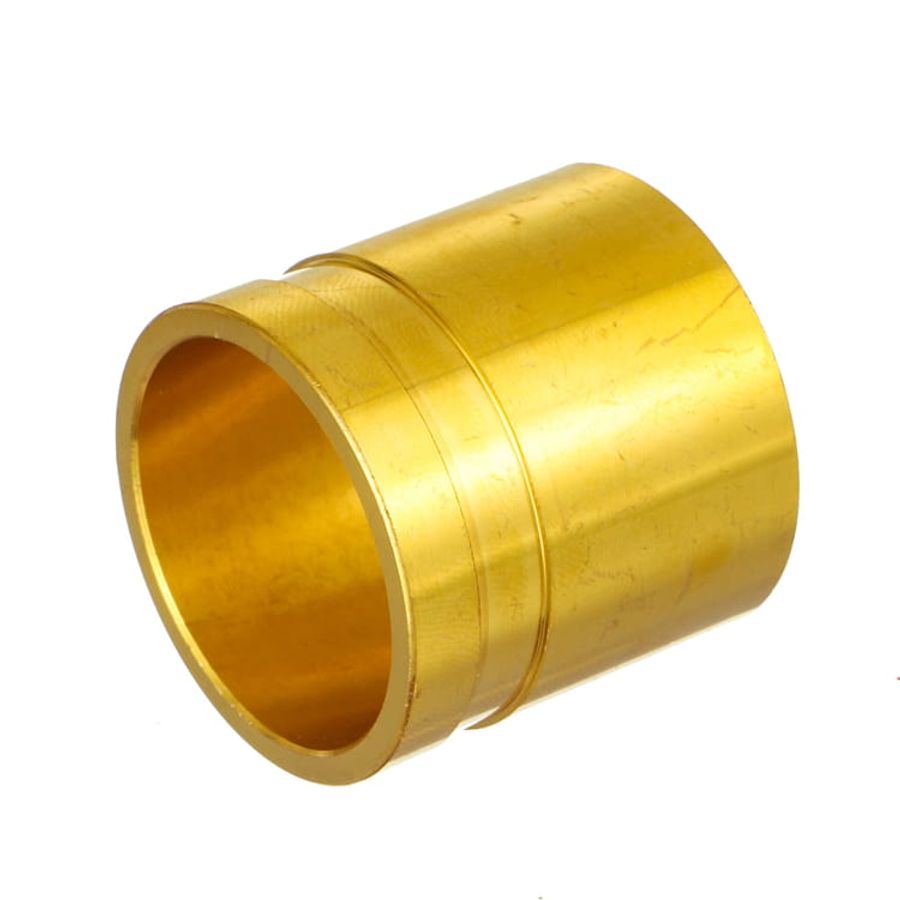
Whatever method you use, the fitting has to match the pipe on three axes. Size and convention: a ½" nominal fitting and a 16 mm metric-OD fitting are not the same — order pipe and fittings in the same sizing system (see PEX pipe sizes). PEX grade: crimp, clamp, and push-fit take any grade, but expansion demands PEX-a — so decide the method before you buy the pipe. Standard and approval: the fitting should carry the potable-water approval and standard for your market, and its ring type (copper crimp ring, stainless clamp, F1960 ring) must match the tool. A fitting that's the right diameter but the wrong system or grade will look close and still fail to seal — the reason mixed-source pipe and fittings cause so many callbacks. Buying pipe, rings, and fittings dimensionally matched from one source removes that whole class of error.
Fittings for PEX-AL-PEX and Manifolds
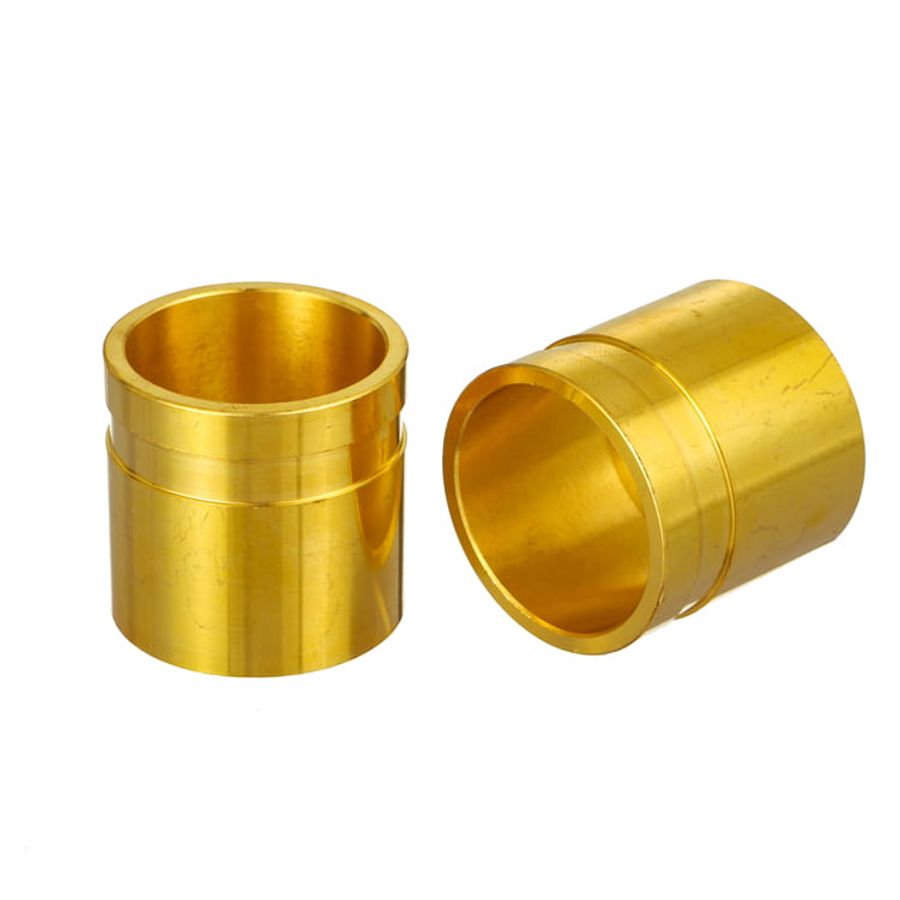
Multilayer PEX-AL-PEX (and PE-RT for heating) uses its own fitting families — typically press fittings or sliding-sleeve (compression-sleeve) fittings sized to the pipe's exact OD — rather than the crimp/clamp rings of plain PEX. Because the aluminium layer makes the pipe hold its bent shape, these systems are common in underfloor heating, where the pipe runs in long loops from a manifold. A manifold is itself a distribution fitting: each fixture or heating loop connects to its own port, so sizing and fitting selection happen per port. For manifold systems, match every loop's fitting to the exact pipe OD and keep the whole run in one fitting family — mixing a press system with a sliding-sleeve system across the same manifold is a common source of leaks.
How to Choose PEX Fittings for a Project
For a buyer specifying a system, the decision order is: pick the connection method first (it sets the tool and, for expansion, the pipe grade), then the material (lead-free brass or polymer, guided by water chemistry and budget), then confirm size, standard, and potable approval. A typical potable job in North America runs crimp or clamp with lead-free brass or poly fittings; a cold-climate or premium job may run PEX-a expansion; a repair kit leans on push-fit. Buy the rings and the go/no-go gauge for whatever method you choose, and standardise a crew on one method so tools and technique stay consistent. On a bulk order, the biggest saving isn't the cheapest fitting — it's ordering pipe, fittings, rings, valves, and manifolds pre-matched so nothing arrives in the wrong system. That single-source match is exactly what avoids the "close but won't seal" callbacks that eat a project's margin.
Need PEX pipe and fittings matched from one source?
Tell us your method, size, and grade — we'll quote matched PEX, PEX-AL-PEX, fittings, rings, valves, and manifolds together.
Request a QuoteCommon PEX Fitting Mistakes
Using expansion fittings on PEX-b. Expansion needs PEX-a's shape-memory — on PEX-b the joint won't hold. Decide the method before buying the pipe grade.
Mixing sizing conventions. A ½" nominal fitting on 16 mm metric pipe (or vice versa) looks right and won't seal. Keep pipe and fittings in one system.
Skipping the go/no-go gauge. A crimp that isn't gauged is unverified — an over- or under-crimped ring can pass a pressure test then weep later. Gauge every joint.
Ignoring the fitting material for the water. Ordinary brass in aggressive water can dezincify — use a lead-free, DZR grade or polymer where the water chemistry demands it.
Burying push-fit long-term. Push-fit is superb for repairs and accessible spots, but many plumbers keep it out of sealed walls — use crimp, clamp, or expansion for concealed runs.
Frequently Asked Questions
What are the different types of PEX fitting?
There are four main connection methods: crimp (copper ring), clamp or cinch (stainless ring), expansion (cold expansion, PEX-a only), and push-fit (tool-free, works on PEX, copper, and CPVC). Cutting across those, fittings are made from either lead-free brass or engineered polymer. Crimp and clamp are the everyday choice; expansion is premium; push-fit suits repairs.
Are brass or plastic PEX fittings better?
Both are fine for potable water when made to standard. Lead-free brass is strong and long-proven but needs a dezincification-resistant grade in aggressive water; engineered polymer (PPSU) doesn't corrode and resists dezincification entirely but has a slightly softer barb. Choose by water chemistry, cost, and preference — and always confirm a potable approval.
Do all PEX fittings work with all PEX pipe?
No. Crimp, clamp, and push-fit fittings work with any PEX grade, but expansion (F1960) fittings only work with PEX-a (and some PEX-c) because those grades have the shape-memory to shrink back onto the fitting. You also have to match the sizing convention — a nominal fitting won't fit a metric-OD pipe. Decide the connection method before you buy the pipe.
What is the most reliable PEX fitting?
All four methods are reliable when done correctly. Expansion (PEX-a) gives a full-bore joint with no barb restriction and is favoured in cold climates; crimp and clamp are proven and economical for general potable work when every joint is gauged. Push-fit is reliable but usually kept for accessible locations. Reliability depends more on correct installation — right size, right grade, gauged rings — than on the method itself.